Inspiration
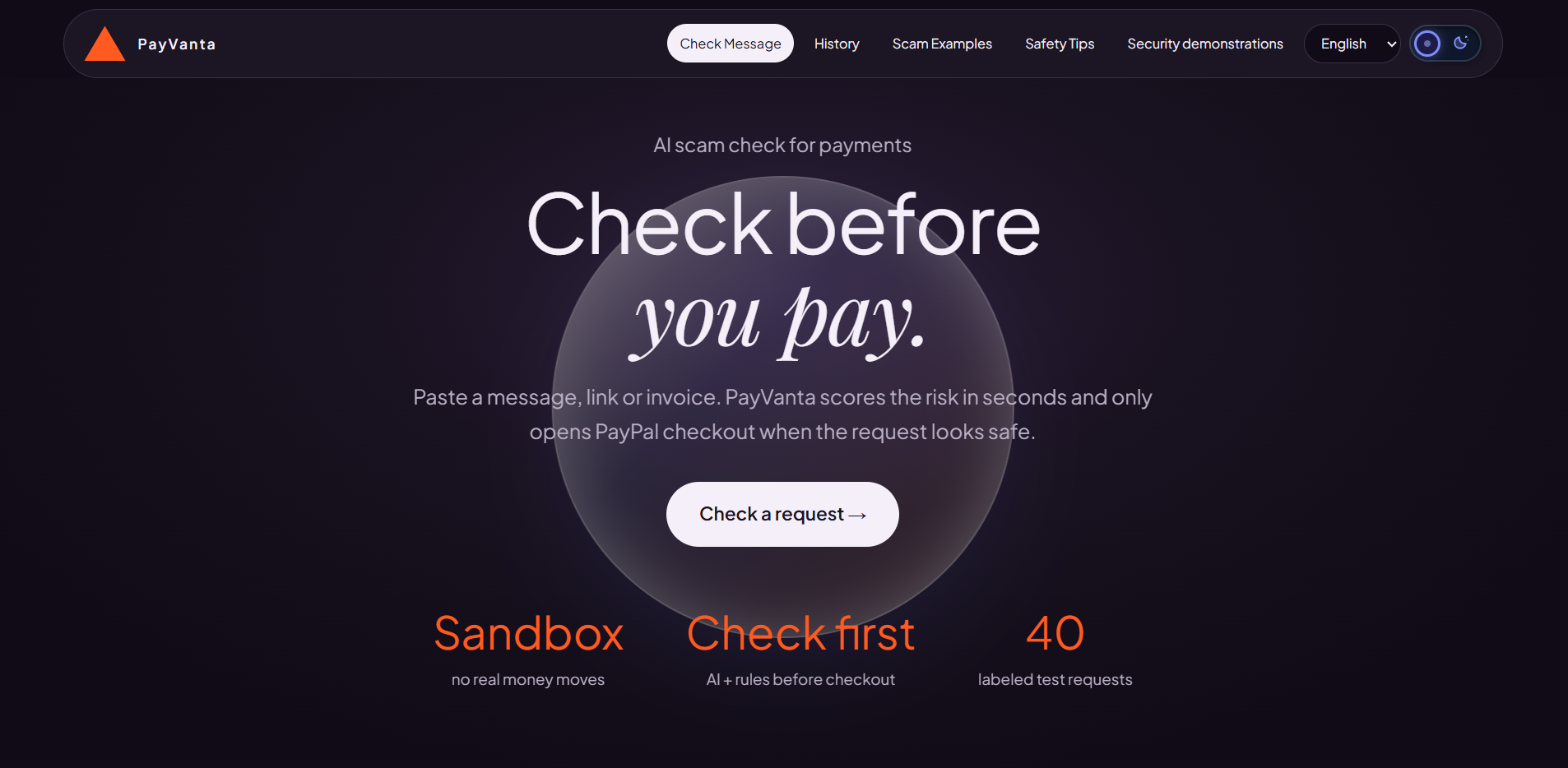
The idea behind PayVanta came from seeing how frequently people fall victim to online payment scams, especially fake UPI requests, suspicious payment links, and messages pretending to be from banks or trusted payment services. I wanted to build something that could help people identify suspicious payment requests before they lose money. Instead of creating just another scam detection tool that displays warnings, I wanted to take it a step further and connect scam detection directly to the payment process. This idea became PayVanta.
What it does
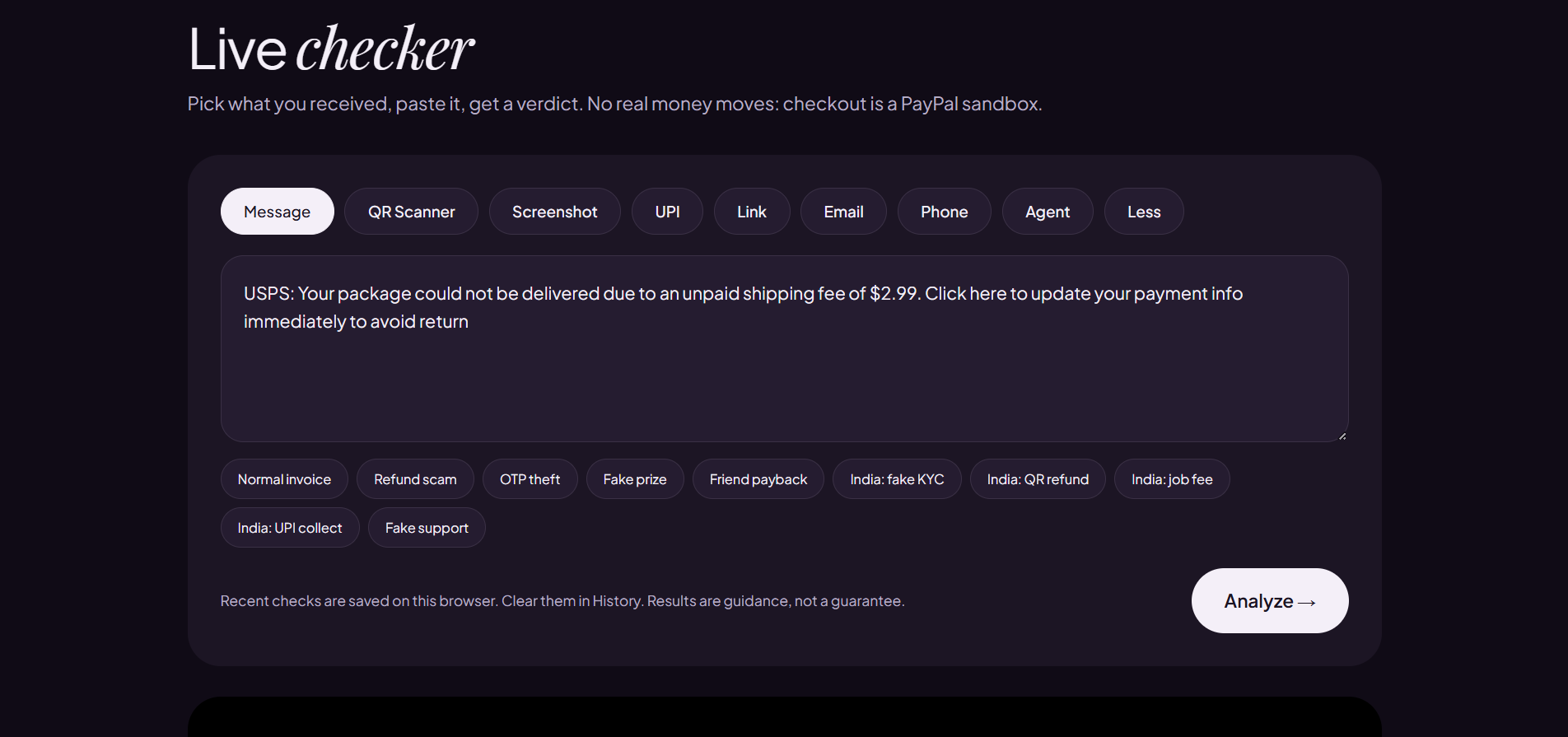
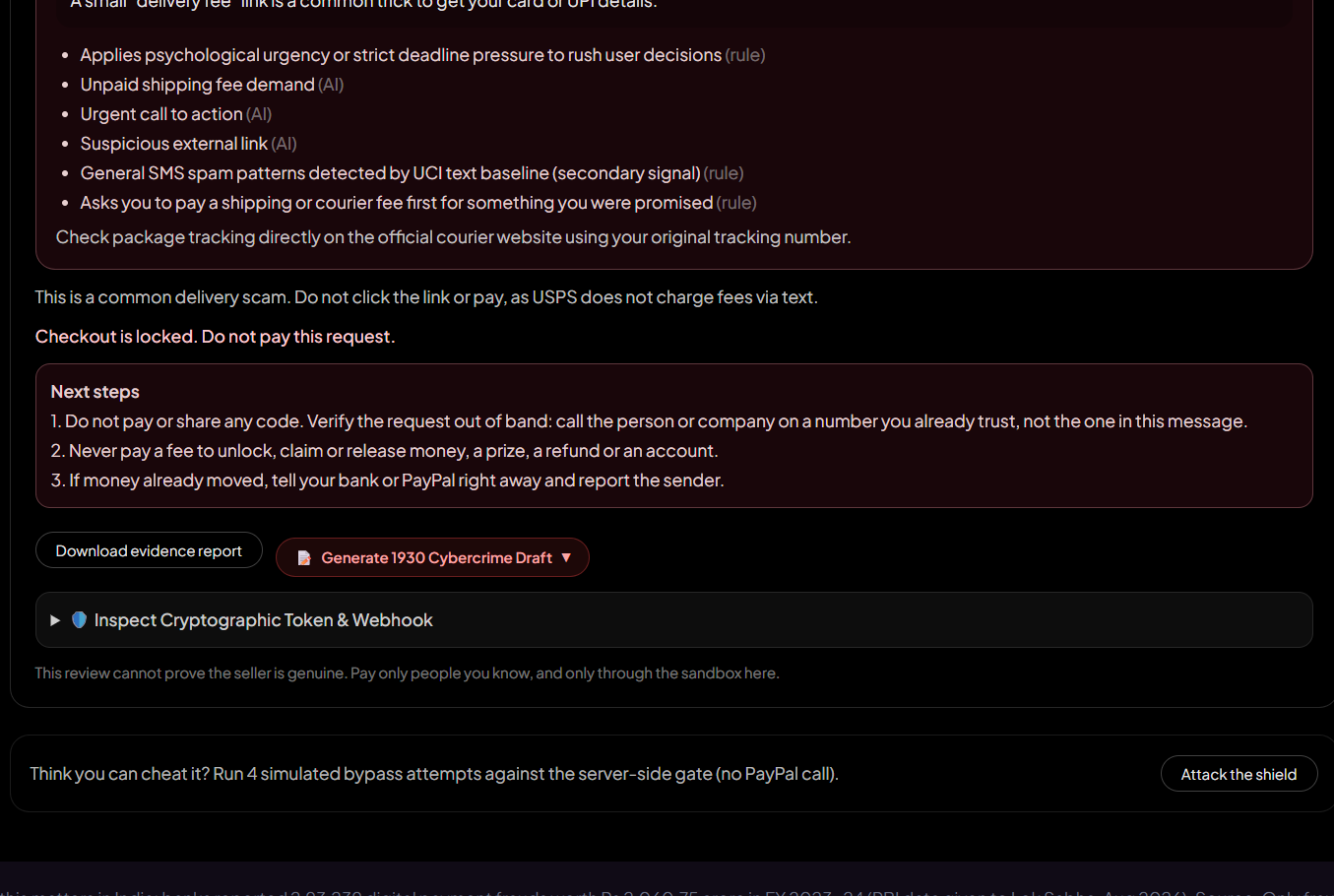
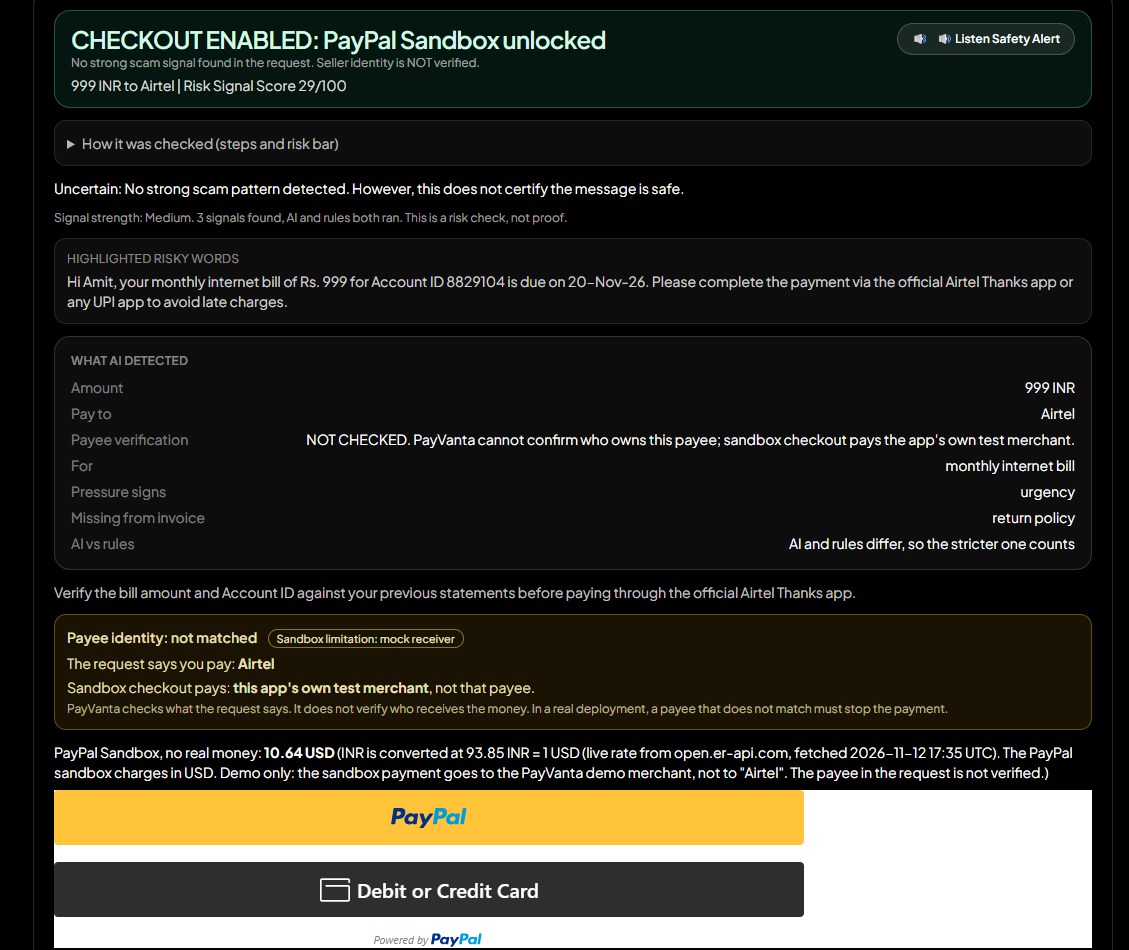
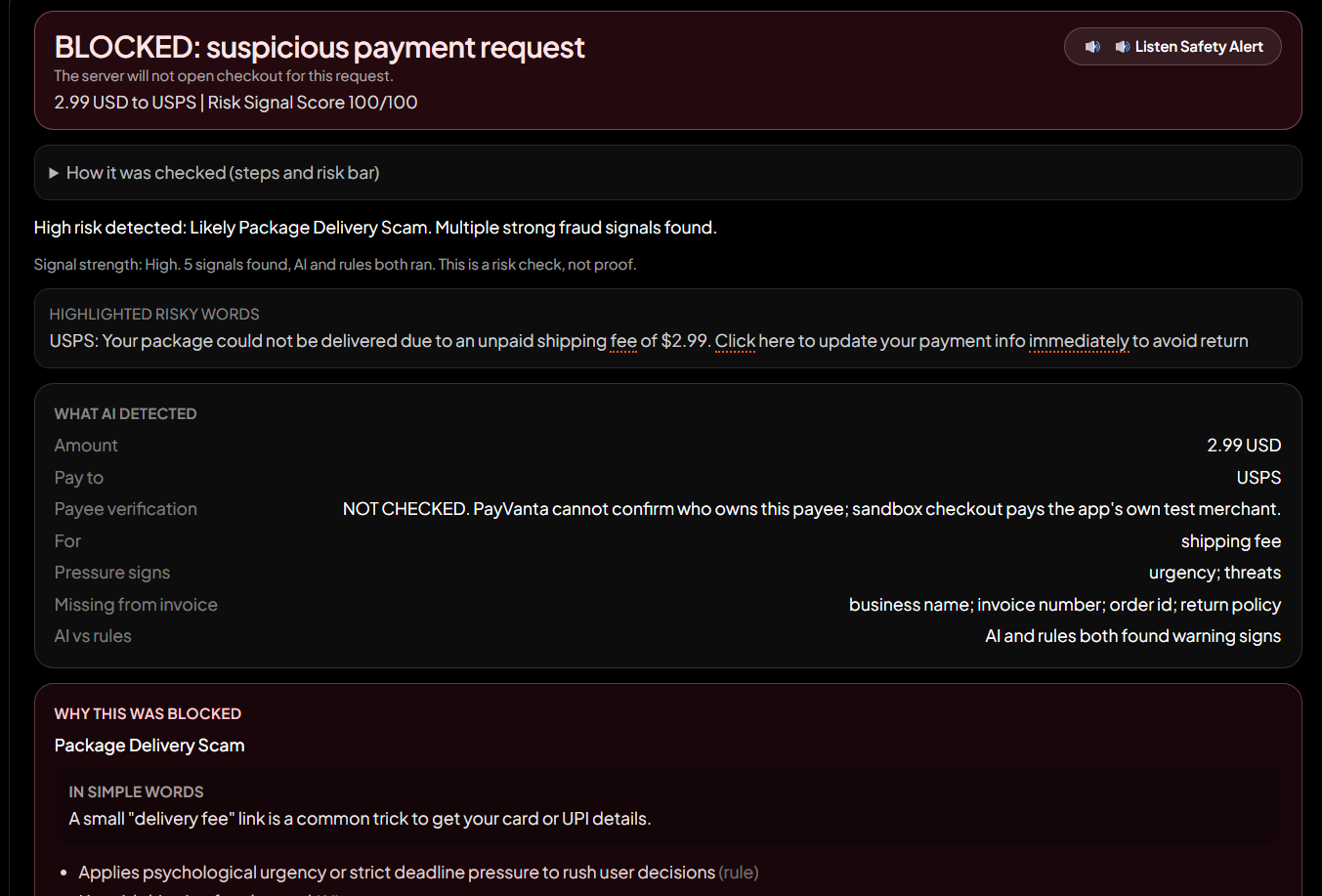
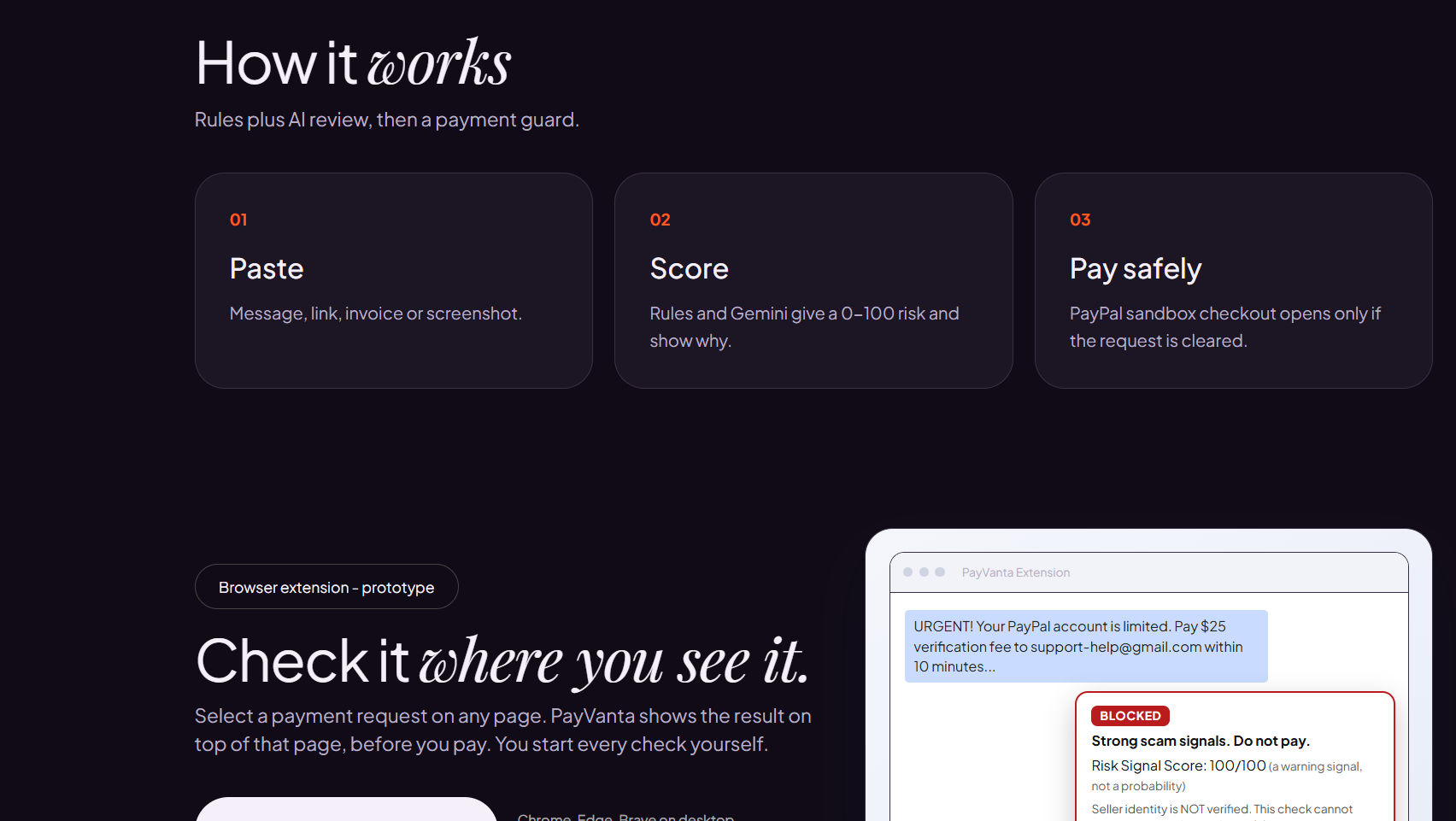
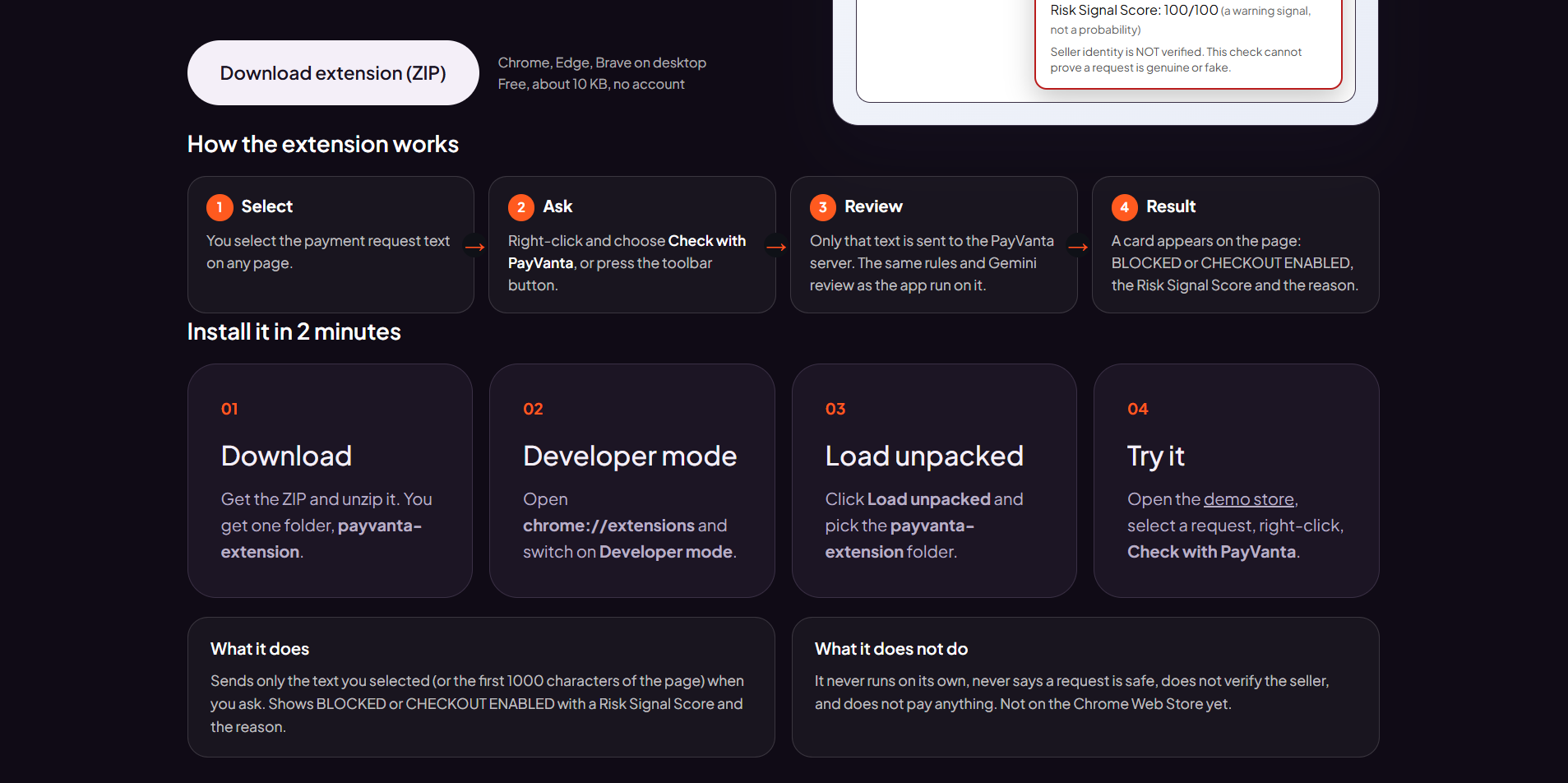
PayVanta is an AI-powered pre-payment security platform that analyzes payment requests before users proceed with a transaction. It combines Google Gemini AI, rule-based detection, and a local spam detection model to identify suspicious patterns and provide risk assessments. It supports eight checker modes: Message, QR Scanner, Screenshot, UPI, Link, Email, Phone, and an experimental AI Agent. Its key feature is a secure payment authorization system that allows PayPal Sandbox checkout only after the server successfully reviews the request. It also includes a Security Inspector, token validation, replay protection, multilingual support, and a browser extension prototype.
How we built it
We built PayVanta using React and JavaScript for the frontend and Node.js with Express for the backend. Google Gemini AI is integrated with rule-based scam detection and a local spam detection baseline to analyze payment requests. We used the PayPal Sandbox API to demonstrate the payment workflow without involving real money. One of our main focuses was implementing intent-bound payment authorization through signed, single-use tokens linked to the reviewed amount and currency. We also developed QR and screenshot analysis, a security dashboard, multilingual interfaces, and an experimental AI Agent.
Challenges we ran into
One of the biggest challenges was connecting AI-based scam detection with actual payment authorization. We wanted to ensure that a payment could not proceed simply because a user clicked the checkout button. Integrating Gemini AI with PayPal Sandbox, handling API timeouts and quota limitations, implementing token validation, and preventing payment tampering required considerable debugging and testing. We also faced deployment and frontend-backend communication issues. To handle AI failures safely, we implemented a fail-closed approach that keeps checkout locked whenever the required review cannot be completed.
Accomplishments that we're proud of
We are proud of turning a simple scam detection idea into a working platform that connects AI-based risk analysis with a server-side payment security mechanism. Implementing signed authorization tokens, amount binding, expiry checks, and replay protection was one of our biggest achievements. We also successfully integrated PayPal Sandbox, developed eight checking modes, and created a Security Inspector with simulated attack demonstrations. Our backend regression suite has also passed 100 tests, helping us validate the main security workflows.
What we learned
While building PayVanta, we gained practical experience in full-stack development, AI integration, payment gateway APIs, backend security, token-based authorization, and deployment. We also learned that AI alone is not enough to build a secure payment system. The backend must enforce the decisions made during the review process. Handling unexpected failures and designing a system that fails safely were some of the most valuable lessons from this project.
What's next for PayVanta
We plan to improve PayVanta with more advanced fraud detection, better database integration, improved multilingual analysis, and a more reliable AI Agent. We also want to explore integrations with e-commerce platforms, freelance marketplaces, and invoicing applications so payment requests can be reviewed before checkout is generated. Our long-term vision is to make checking a payment request a simple and essential step before anyone sends money.
PayVanta – Check the intent before you pay.
Built With
- ai
- chrome
- css
- express.js
- git
- github
- google-gemini-ai
- html
- javascript
- machine-learning
- manifest-v3
- node.js
- paypal
- paypal-sandbox
- qr-code-scanner
- react
- render
- rest-api
- uci-spam-dataset
- vercel
- vite
