-
-
Problem
-
Solution
-
Architecture
PayType Guard — Understand Before You Transact.
Inspiration
PayType Guard was inspired by a personal experience.
PayType Guard was born out of a personal experience that changed how I viewed digital payments.
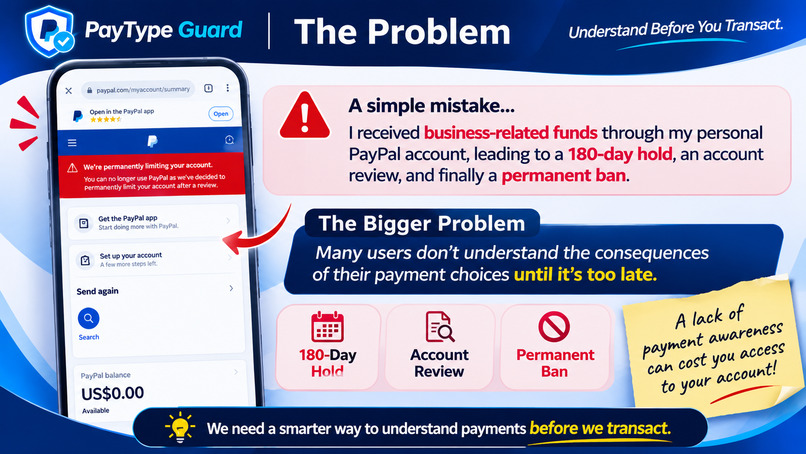
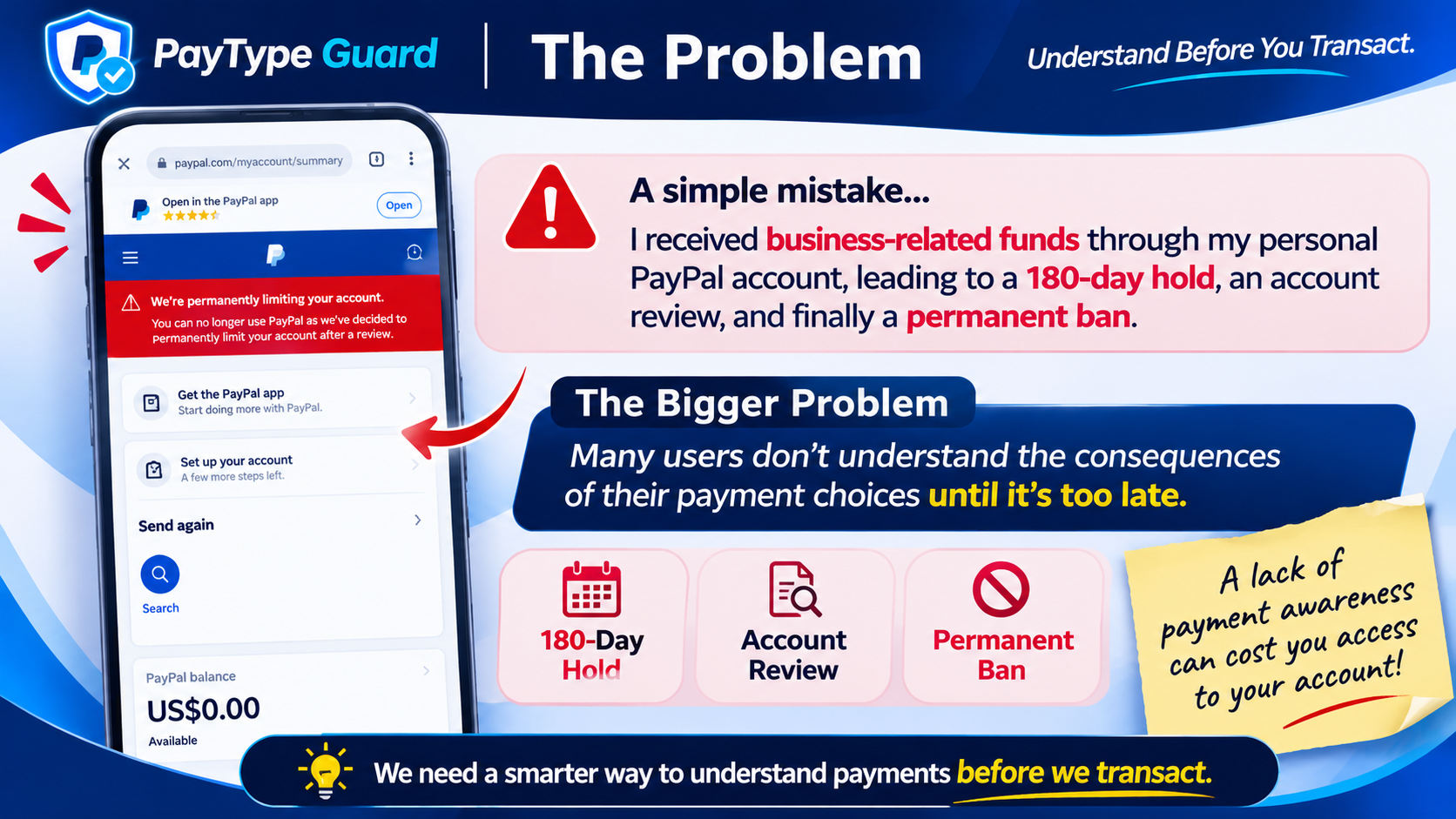
I received funds for a business-related purpose through my personal PayPal account because of confusion on the sender's side about the appropriate payment type. What followed was a 180-day hold on my funds, an account review, and eventually a permanent limitation of my PayPal account.
Losing access to my account made me realise how costly a simple misunderstanding about payment choices can become. It also raised an important question: What if users could understand the implications of a transaction before sending or receiving money?
I realised that many people only discover the consequences of their payment decisions after experiencing holds, reviews, or account limitations.
That personal experience inspired me to build PayType Guard — a solution designed to help users make informed payment decisions before problems arise.
What it does
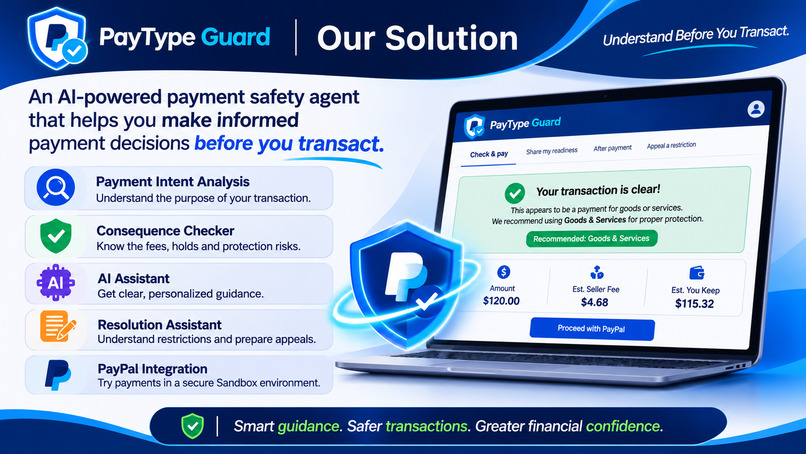
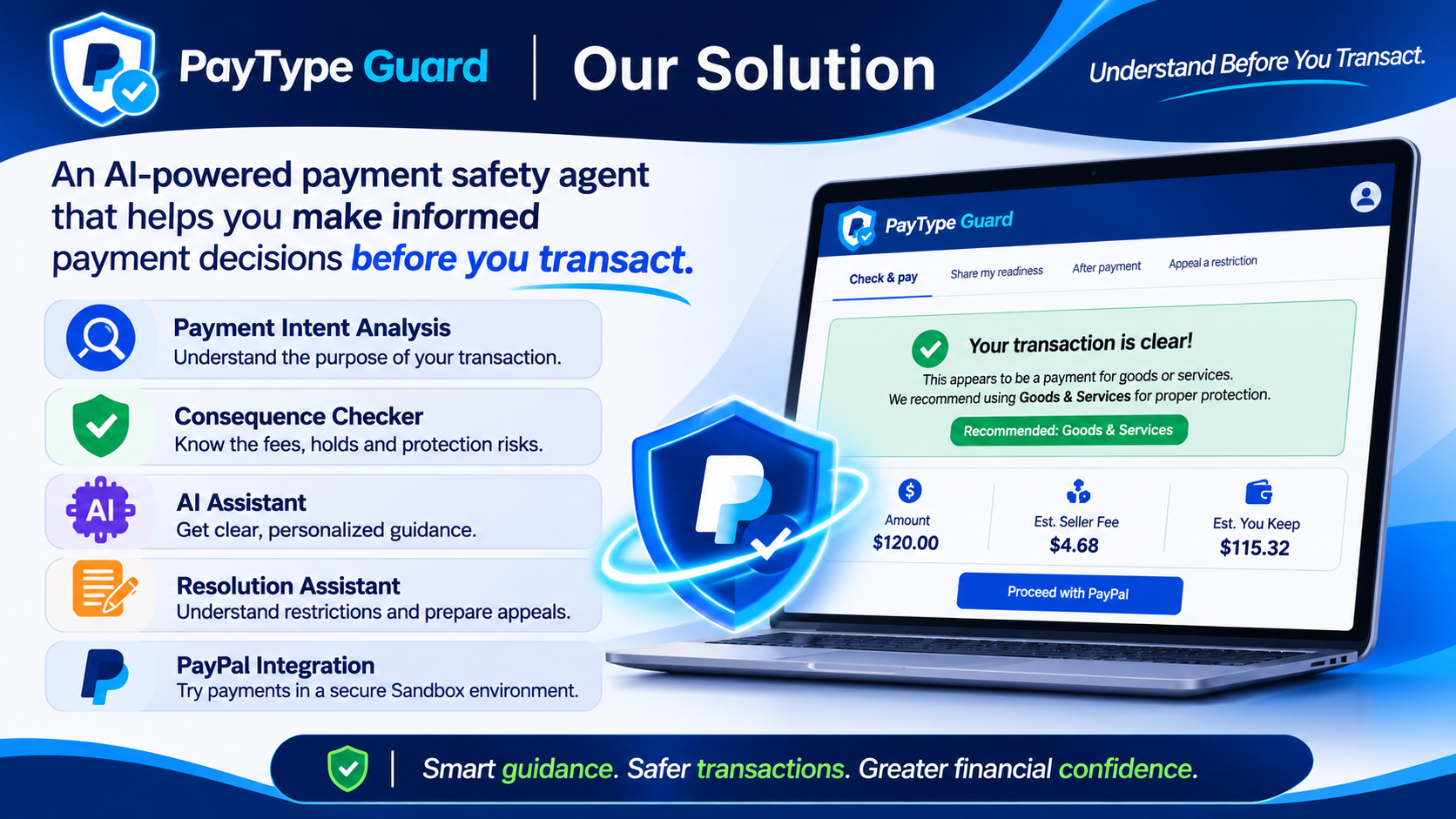
PayType Guard is an AI-powered payment safety agent designed to help users make informed payment decisions before transacting.
It analyses payment intent, explains the differences between personal and commercial payment purposes, highlights applicable fees and potential payment holds, and guides users through payment-related situations.
Its core capabilities include:
- Payment Intent Analysis: Understands the purpose of a transaction and helps users identify an appropriate payment category.
- Payment Consequence Checker: Explains potential fees, holds, and relevant payment conditions before a transaction.
- AI Payment Assistant: Provides contextual guidance and helps users understand incoming payment notifications.
- Resolution Assistant: Helps users interpret account limitation notices and prepare structured appeal drafts based on their actual circumstances and supporting evidence.
- PayPal Integration: Uses PayPal developer technologies to demonstrate payment workflows in a controlled Sandbox environment.
Our goal is simple: help people understand before they transact.
How we built it
We approached PayType Guard as a combination of payment intelligence, AI assistance, and payment workflow integration.
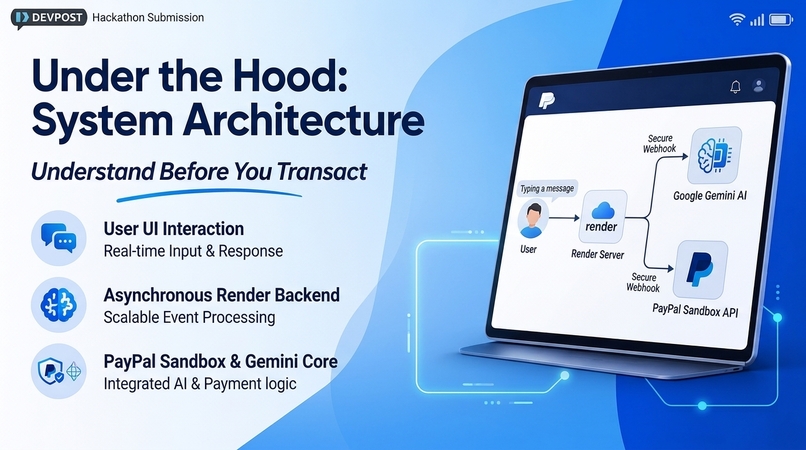
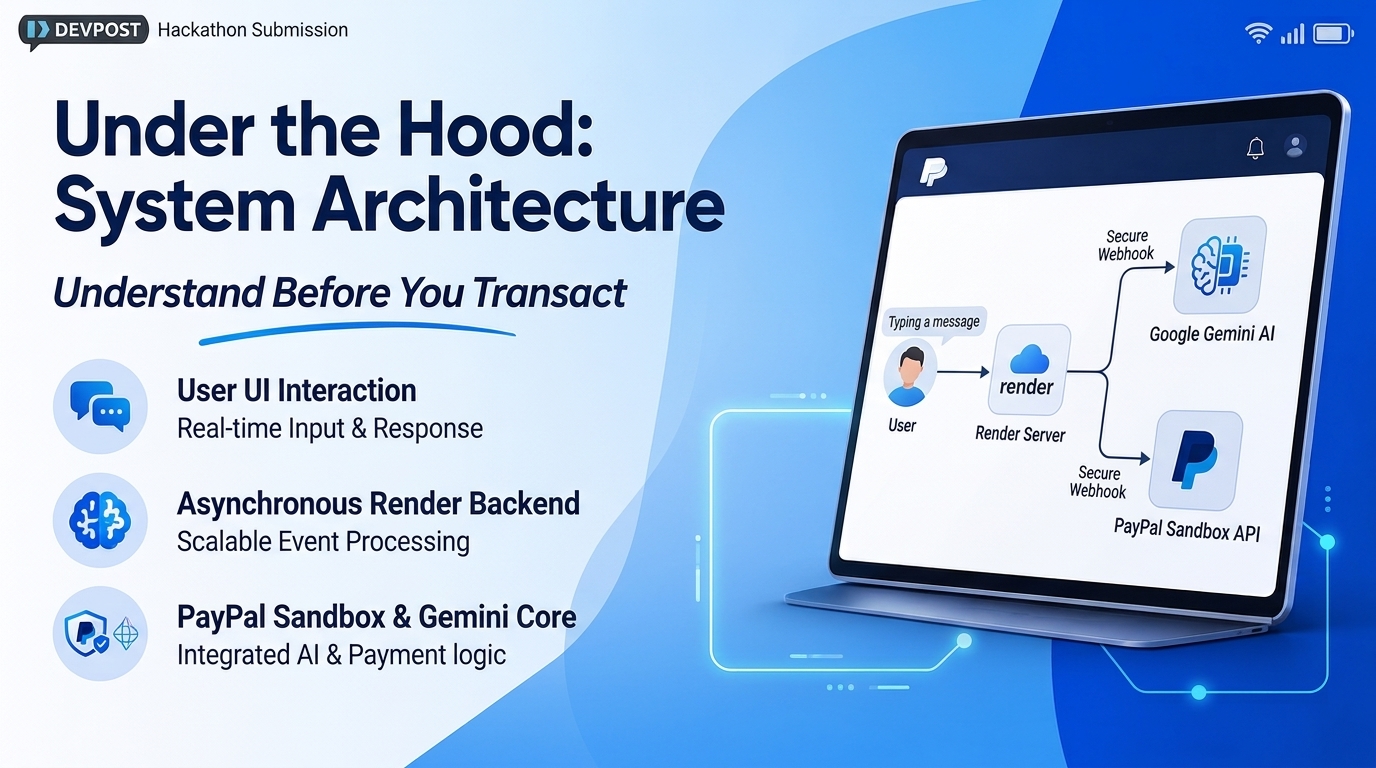
The proposed architecture brings together three key components:
PayPal Developer Technologies: PayPal Sandbox and Checkout APIs provide a controlled environment for demonstrating payment creation, approval, capture, and transaction status updates.
Artificial Intelligence: An AI-powered assistant interprets transaction purposes, explains payment implications in accessible language, and helps users navigate payment-related challenges.
Policy and Decision Logic: A structured decision layer supports consistent fee calculations, payment guidance, and the distinction between verified information and potential risks.
We designed the system around a simple principle: AI should not just answer questions; it should help users make better-informed financial decisions.
Challenges we ran into
One of our biggest challenges was understanding the relationship between payment types, account usage, and PayPal's risk and protection mechanisms.
We discovered that payment holds and account limitations are not automatic outcomes of a particular transaction type. They depend on several factors and PayPal's review processes.
Another challenge was defining what an external application can actually access through PayPal's developer APIs. We had to distinguish between information available through authorised integrations and internal account-risk information that third-party applications cannot directly access.
We also had to consider how to make AI guidance reliable without allowing it to invent policies, guarantee outcomes, or generate unsupported appeal claims.
These challenges helped us narrow the scope and establish a more responsible approach to building the solution.
Accomplishments that we're proud of
We are proud to have transformed a personal financial setback into an innovation with the potential to help other PayPal users.
Some of our key accomplishments include:
- Identifying a real-world payment awareness problem.
- Developing a clear product concept centred on prevention rather than reaction.
- Designing an AI-assisted approach to understanding payment intent and potential consequences.
- Establishing a PayPal integration strategy using Sandbox technologies.
- Building a foundation for a solution that combines financial awareness, AI, and payment workflows.
Most importantly, we are proud that PayType Guard is driven by a problem we genuinely understand.
What we learned
This project taught us that financial technology is not just about making transactions faster; it is also about helping people understand the decisions behind those transactions.
We learned the importance of understanding API limitations, verifying financial policies, designing responsible AI systems, and separating factual information from predictions.
We also learned that personal experiences can reveal problems that deserve broader technological solutions.
What's next for PayType-Guard
Our vision is to develop PayType Guard into a reliable AI-powered payment safety companion.
Our next priorities are:
- Complete and strengthen the PayPal Sandbox integration.
- Improve AI-powered payment intent analysis.
- Expand the verified knowledge base for payment policies and fees.
- Develop more comprehensive payment monitoring and notification workflows.
- Improve the Resolution Assistant with evidence-based appeal preparation.
- Explore additional payment platforms and financial ecosystems in the future.
We envision a future where users do not have to learn about payment consequences through costly mistakes.
PayType Guard — Understand Before You Transact.
