-
-
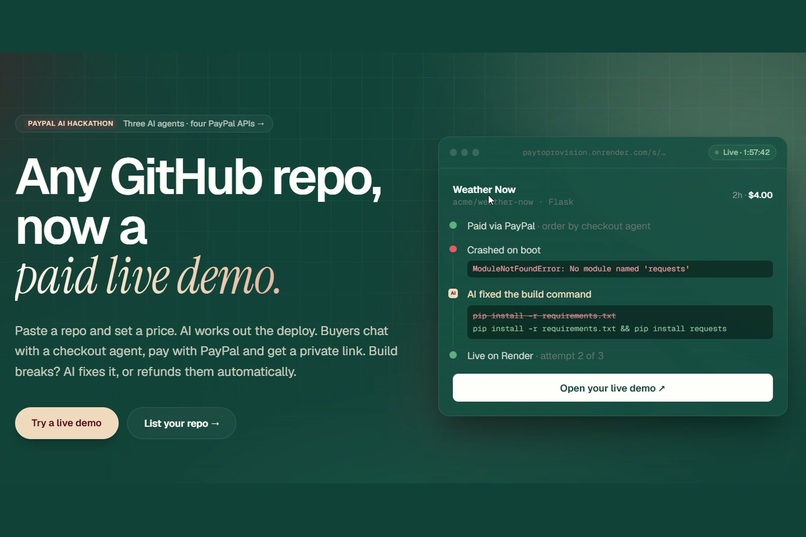
Any GitHub repo, now a paid live demo
-
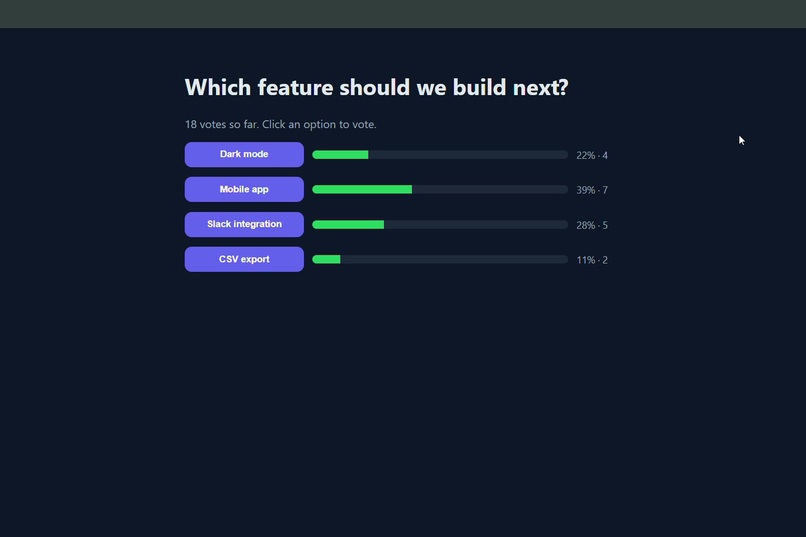
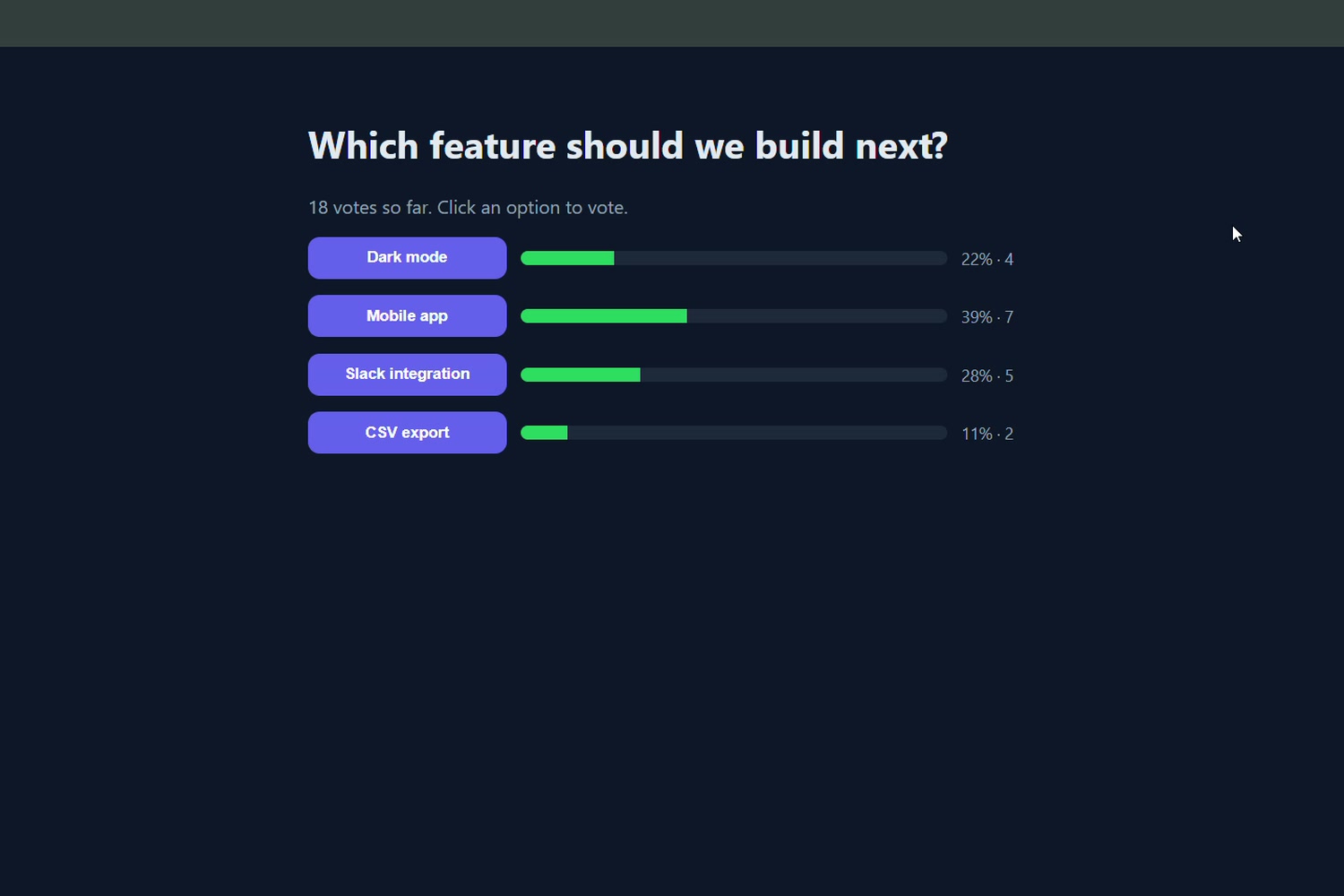
The buyer’s own live copy of the app
-
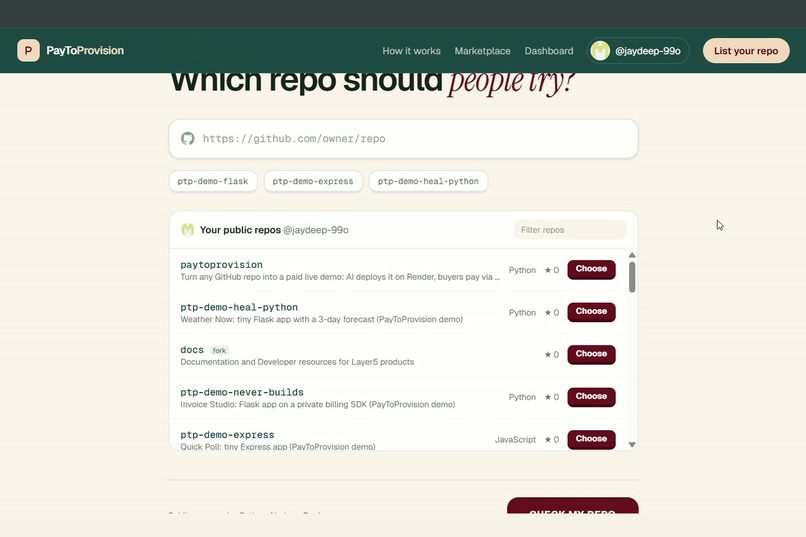
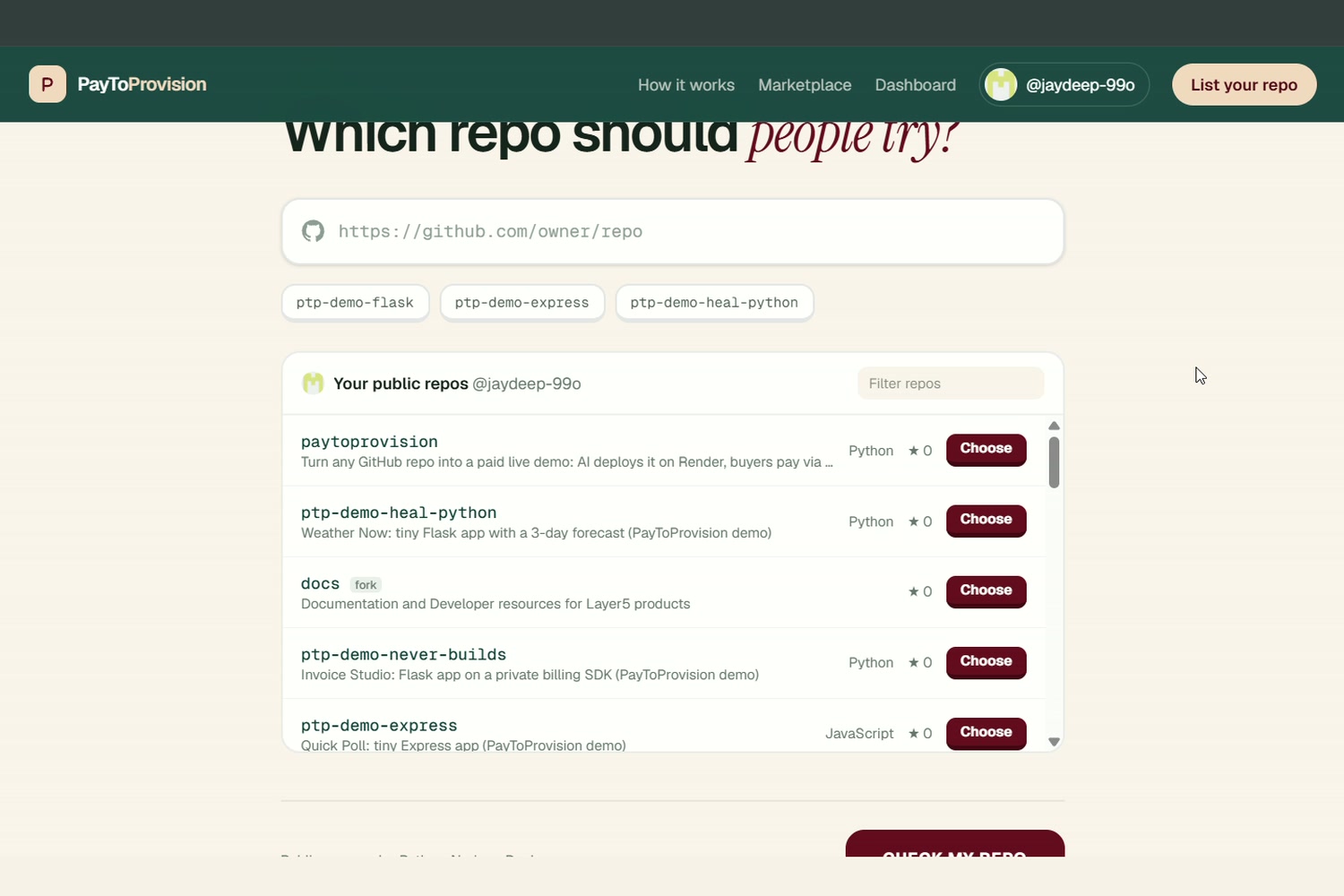
Owners sign in with GitHub and pick a repo
-
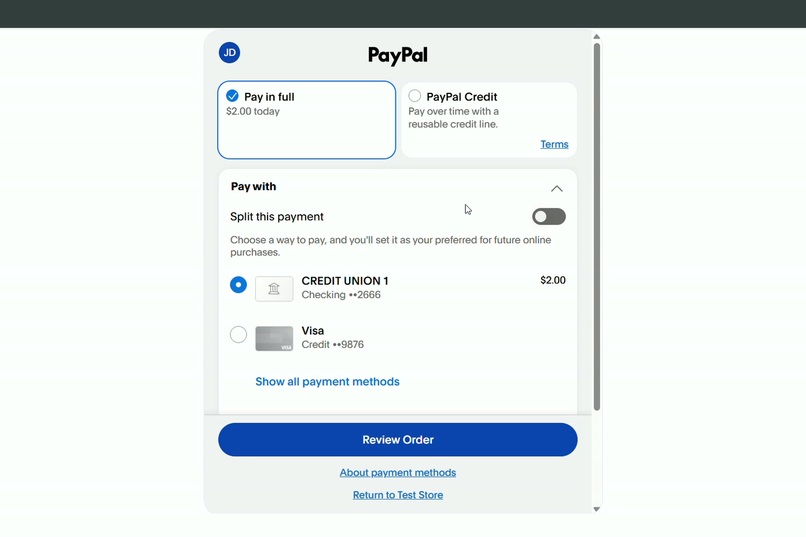
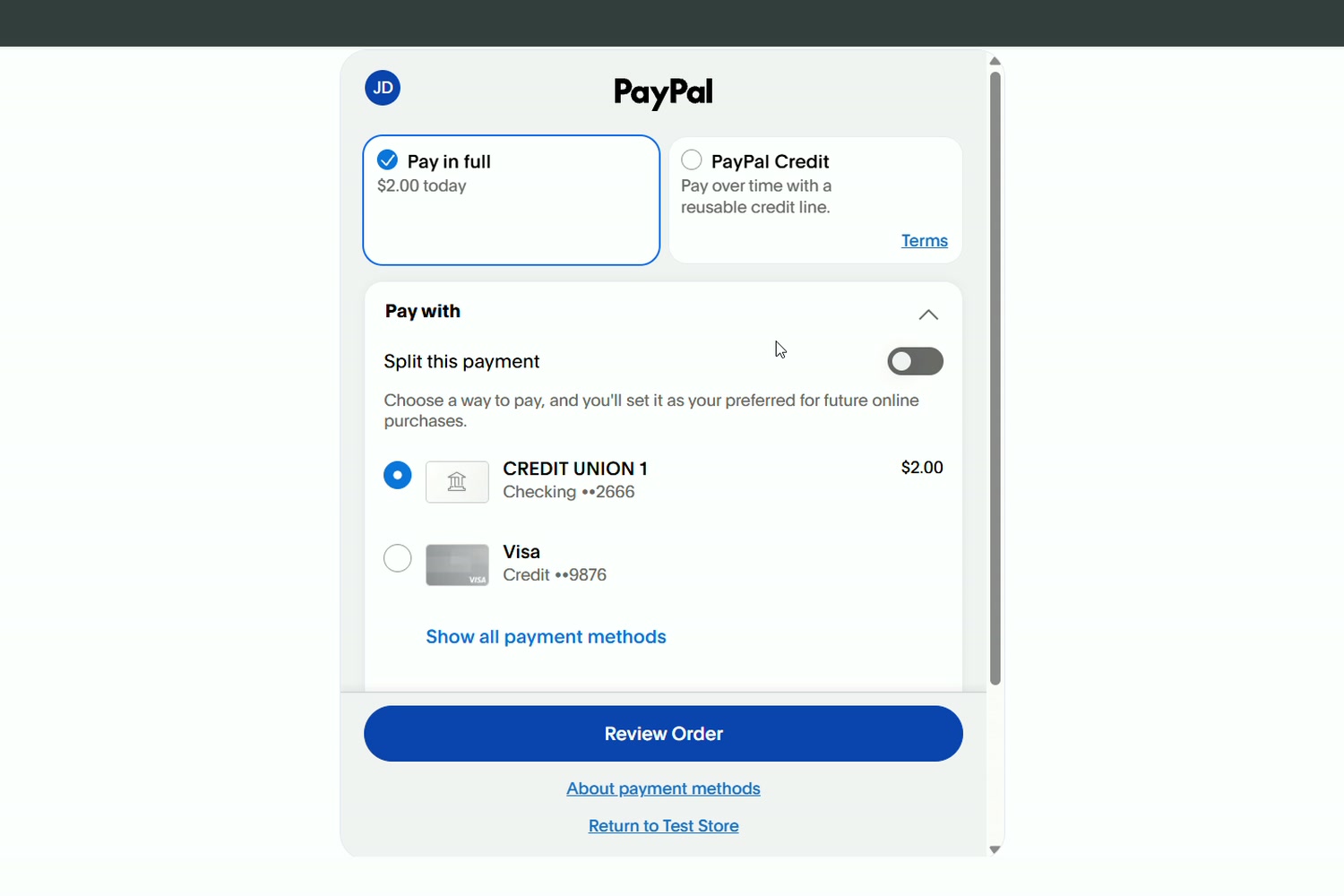
The buyer pays with PayPal (sandbox)
-
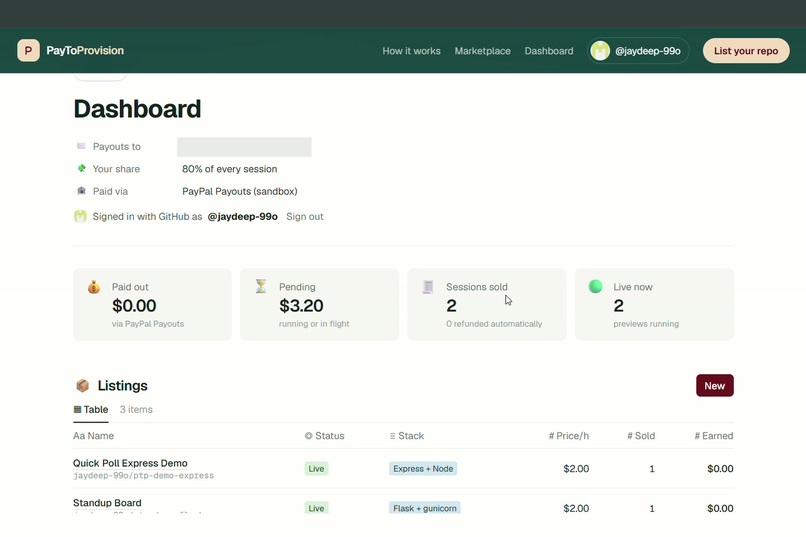
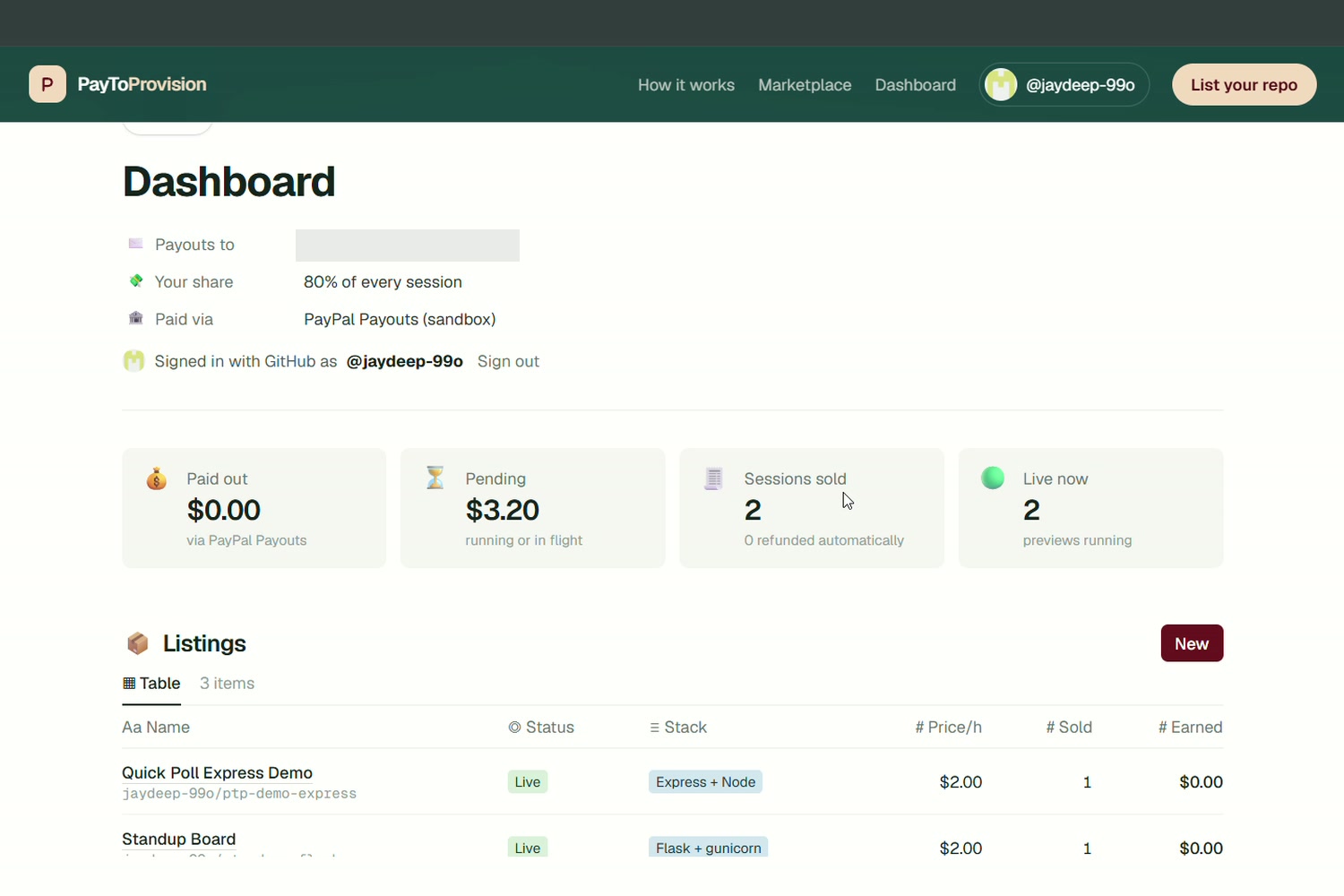
Owner dashboard: listings, sessions and the 80% PayPal payout
-
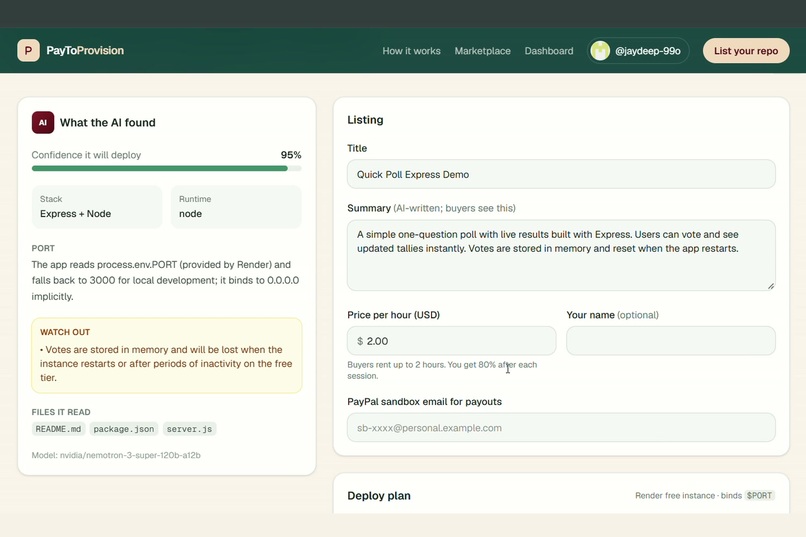
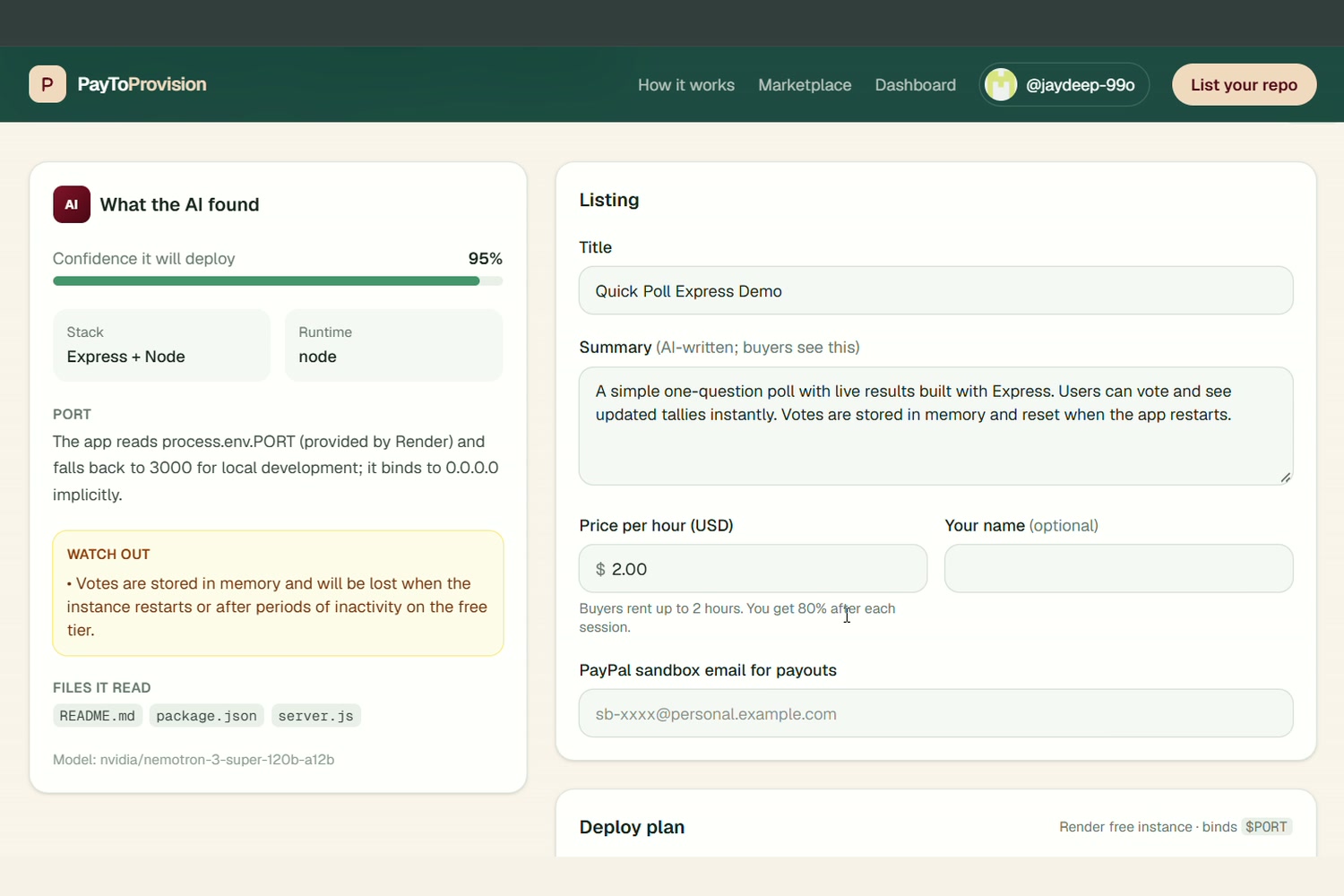
AI reads the repo and writes the deploy plan, with a 95% confidence score
-
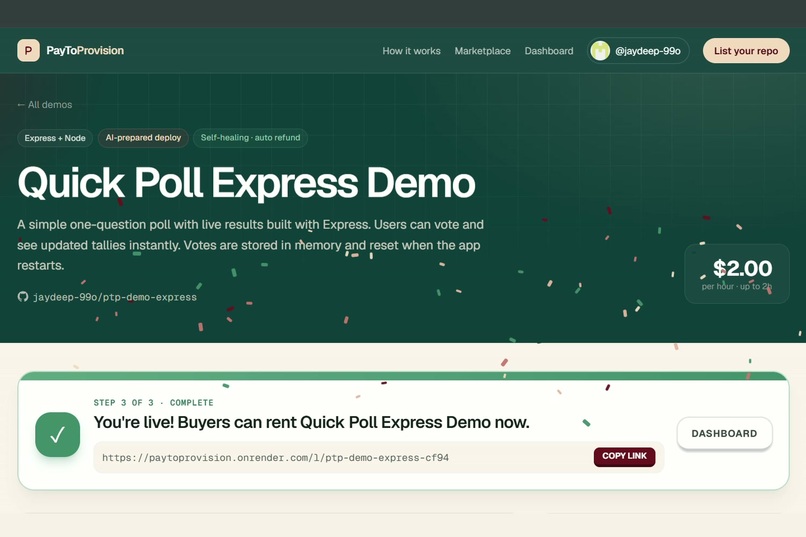
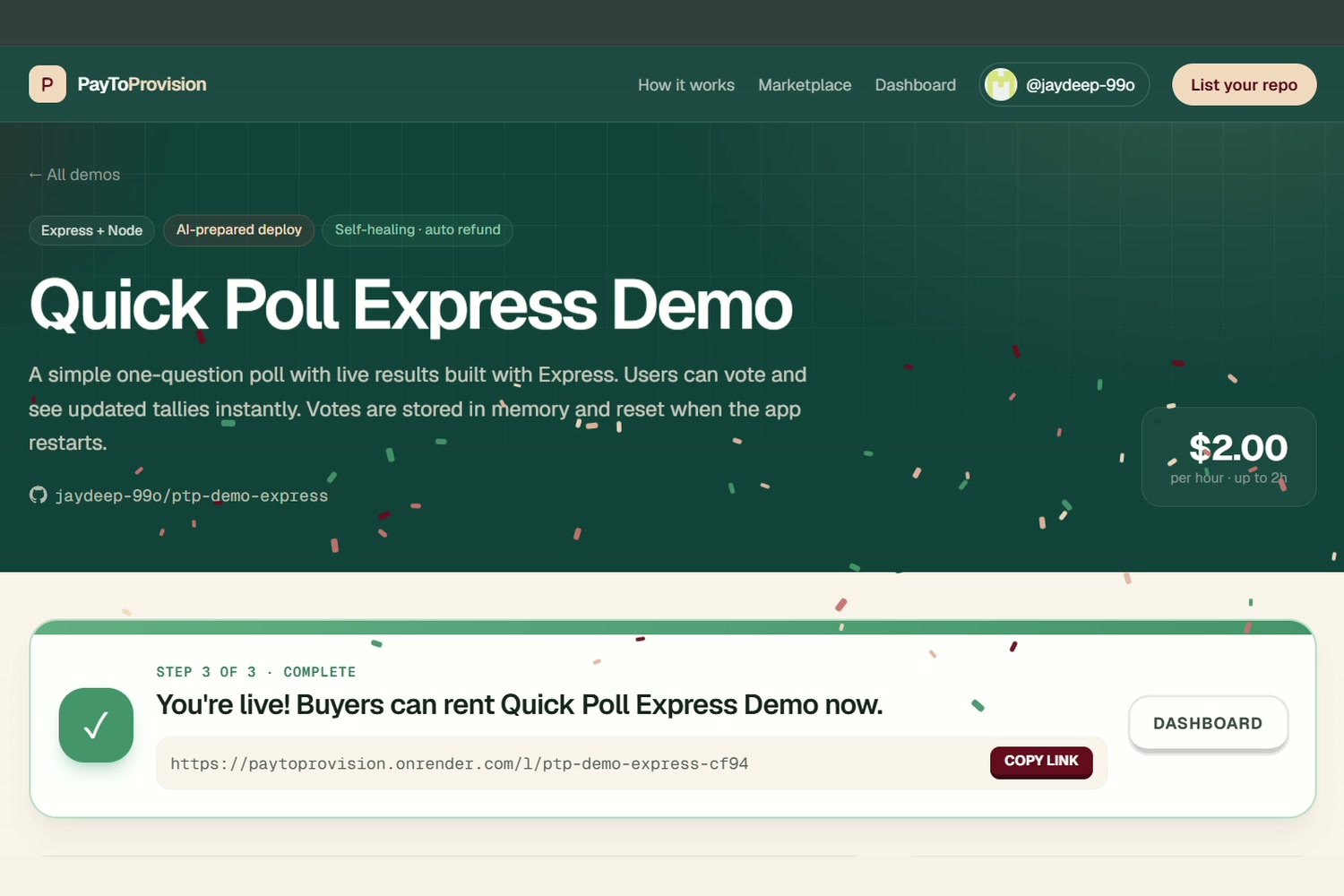
Published: buyers can rent it right away
-
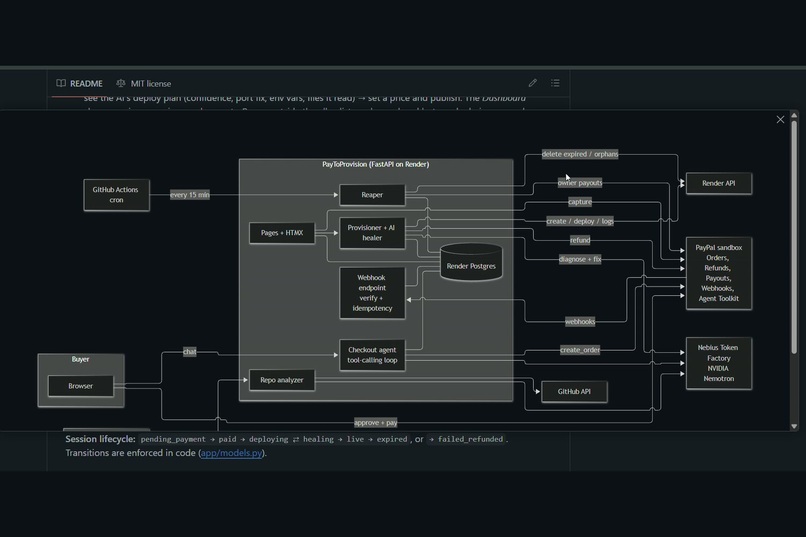
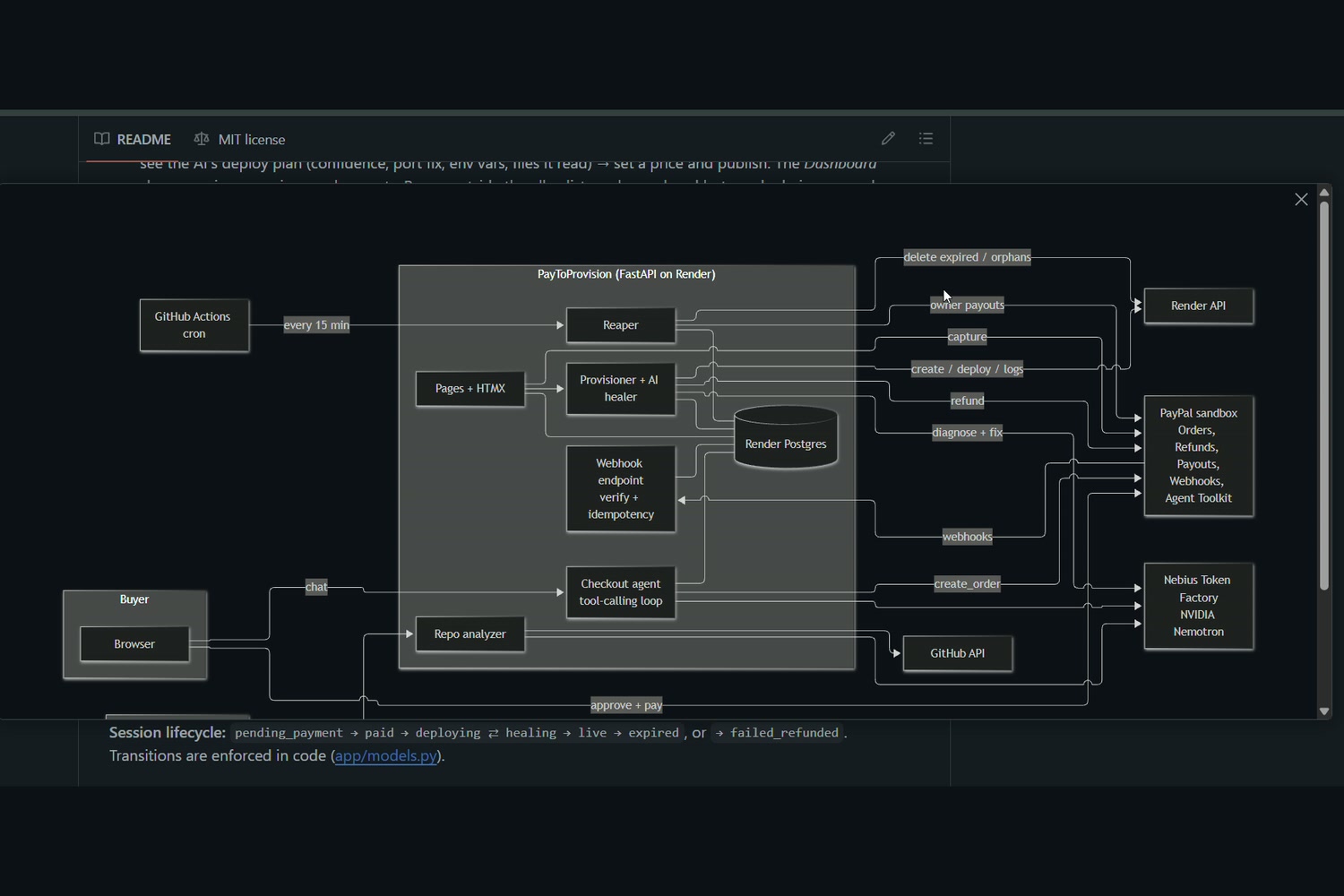
Architecture: FastAPI on Render, PayPal APIs, Nebius Nemotron, GitHub Actions
-
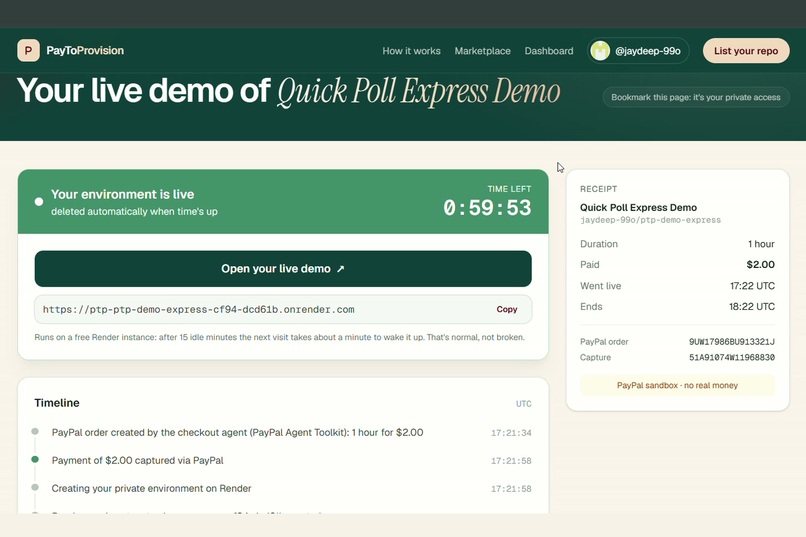
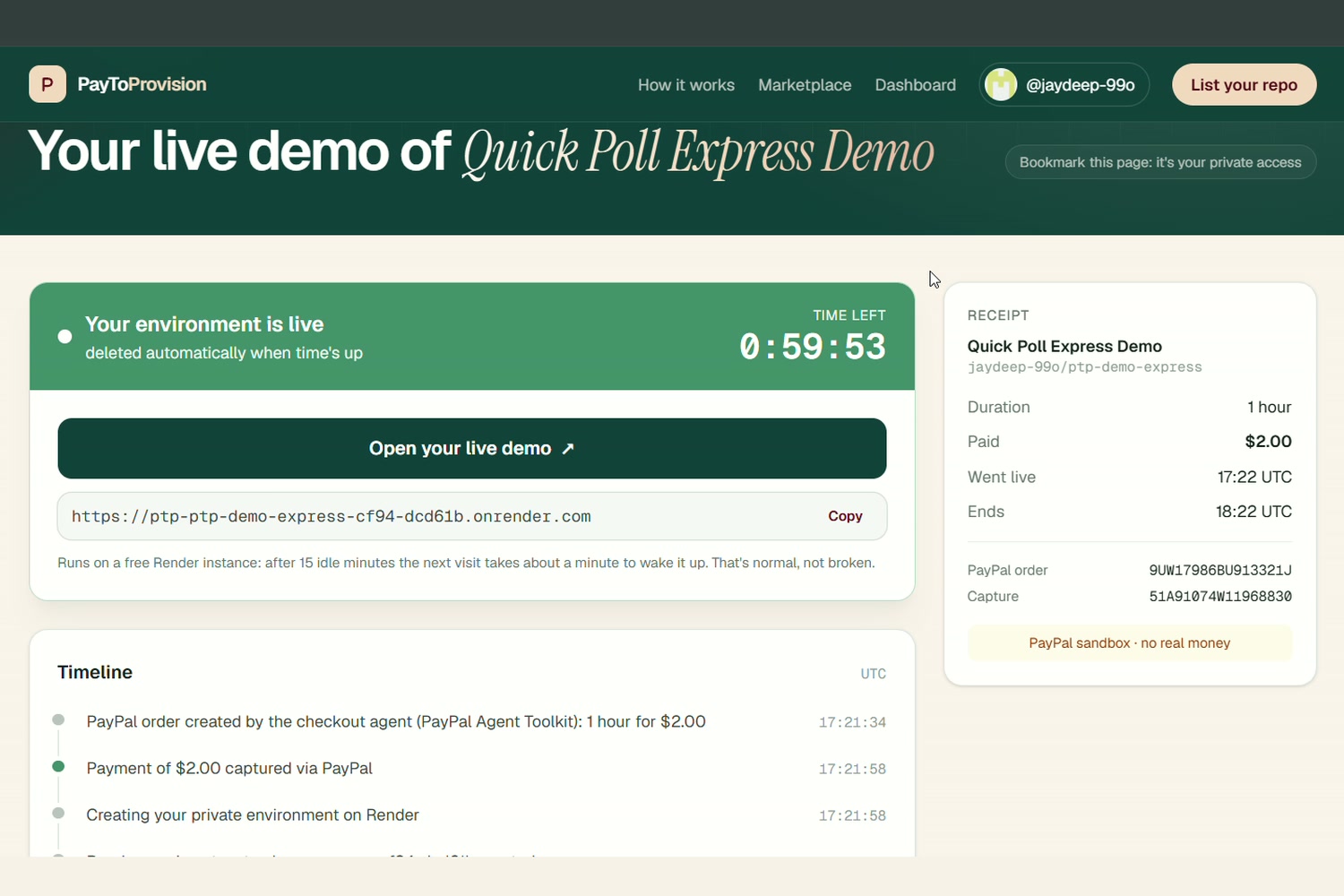
A private Render instance goes live, with a countdown and timeline
-
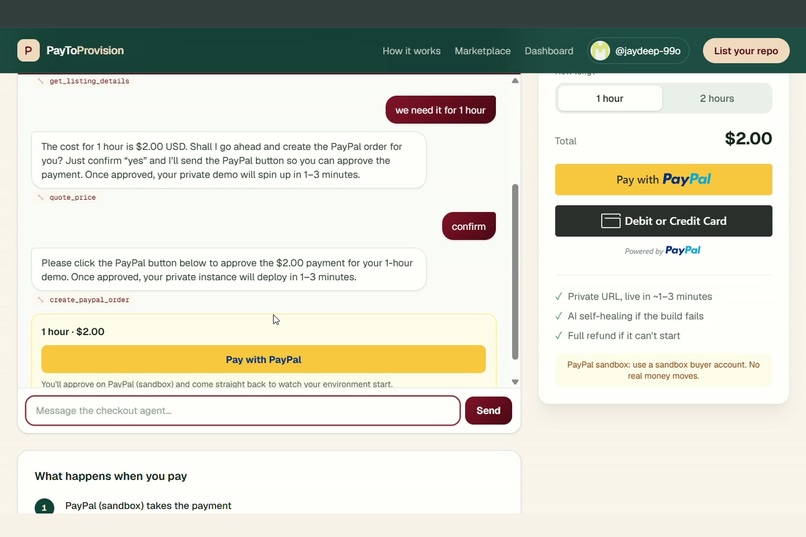
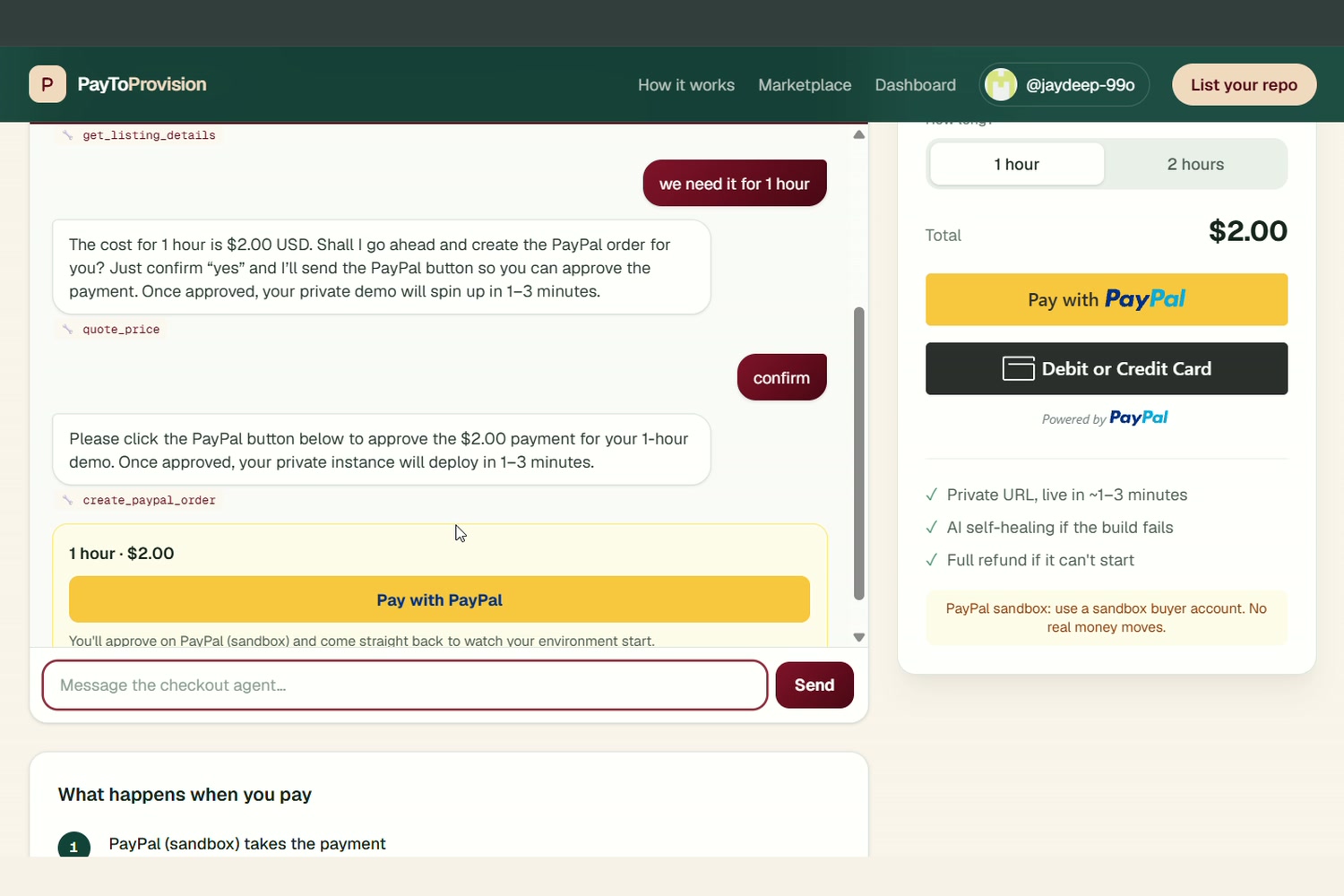
The AI checkout agent quotes and creates the PayPal order (Agent Toolkit)
Inspiration
Great side projects sit unused on GitHub because trying them means cloning, installing and configuring someone else's code. Owners have no simple way to offer a hosted demo, let alone get paid for one.
What it does
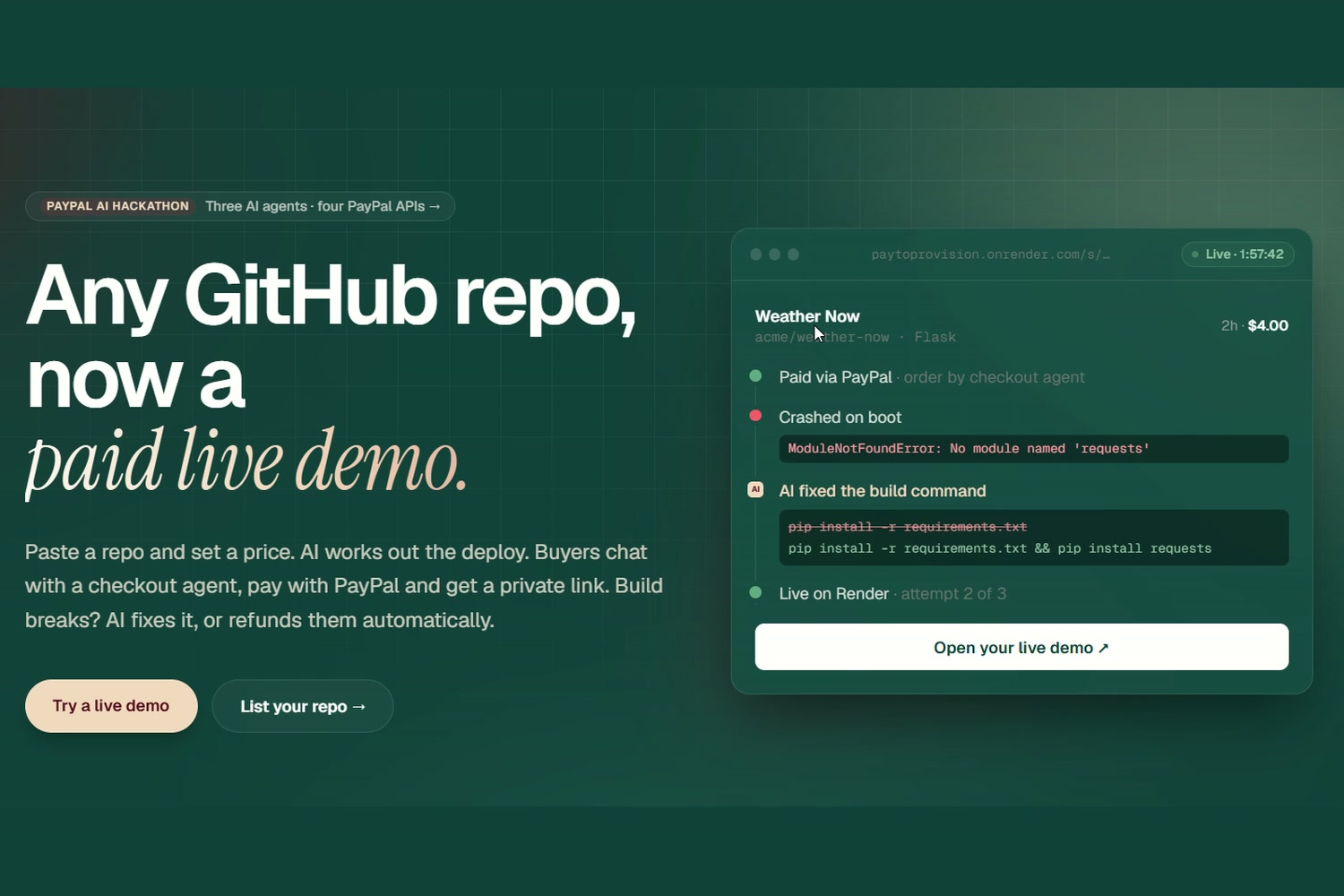
- Owners sign in with GitHub, pick a repo and set an hourly price. AI (NVIDIA Nemotron on Nebius Token Factory) reads the README, manifests and entry files and writes a deploy plan: runtime, build and start commands, env vars, a confidence score, and a fix for hardcoded ports.
- Buyers chat with an AI checkout agent: ask what the app does, say how long they want it. The agent quotes the price and creates a real PayPal order with the PayPal Agent Toolkit.
- After the payment is captured, the app creates a private Render instance through the Render API and streams progress until the buyer gets a live link with a countdown.
- Self-healing: if the deploy fails, the AI reads Render's build and runtime logs, fixes the config and redeploys. If it can't be fixed, the buyer is refunded automatically through PayPal.
- When time is up, the instance is deleted and the owner is paid 80% via PayPal Payouts.
How we built it
- App: FastAPI, Jinja2, HTMX and Tailwind; SQLAlchemy and Alembic on Render Postgres.
- PayPal: Orders v2 with the JS SDK, Agent Toolkit, Refunds, Payouts, and Webhooks with signature verification and idempotency.
- Render: a Blueprint for the platform, the REST API for each buyer's preview (create, deploy, logs, delete), and a cron reaper for expiry and payouts.
- AI: Nemotron with strict JSON outputs and tool calling for three agents: repo analyzer, self-healing deployer, checkout agent.
- CI/CD: GitHub Actions runs lint, a migrations check, 162 tests and Terraform validation, then deploys the exact commit to Render and smoke-tests production.
Challenges we ran into
- Making AI-written deploy configs safe: schema validation, port guardrails and capped retries.
- Money correctness: idempotent captures, webhook deduplication, refunds that retry, payouts only after expiry.
- Protecting free credits from abuse: global daily budgets for AI calls and deploys, rate limits, an allowlist, max 3 concurrent previews.
Accomplishments that we're proud of
A real end-to-end loop: an agent sells, PayPal charges, Render deploys, the AI repairs a genuinely broken app, and the owner gets paid, all automated.
What we learned
Agentic commerce works best when the agent can only act through narrow, verifiable tools, and the money moves only on server-side checks.
What's next
Private repos through a GitHub App, Docker-based apps, PayPal live mode, and subscriptions for longer access.
Built With
- fastapi
- github-actions
- htmx
- nebius
- nvidia-nemotron
- paypal
- paypal-agent-toolkit
- postgresql
- python
- render
- sqlalchemy
- tailwindcss
- terraform
