


Inspiration
I am a first-semester B.Tech Computer Science and Engineering (CSE) student. Coming into college, I didn’t have deep web development skills or advanced technical expertise. I wasn't aiming to invent a groundbreaking algorithm or build complex AI models—I simply wanted to use technology to address an urgent, real-world crisis happening right outside my doorstep. I am from Bihar. This year, our region suffered severe flooding originating from torrential rains and swollen rivers flowing down from Nepal. As waters submerged entire villages, destroying homes, crops, and livelihoods, I saw the devastation firsthand. While watching the tragedy unfold, I began researching how aid reaches those affected. What I found was disheartening: while generous people donate millions to massive relief drives, very little money actually reaches the ground level in a timely manner. Heavy administrative overhead, middleman delays, and high processing fees reduce the net impact of donations. Large NGOs often show big campaigns, but people in remote rural areas—who urgently need basic necessities like emergency health kits, clean water, women's sanitary products, nutritional support, and educational continuity—are left waiting.
What it does
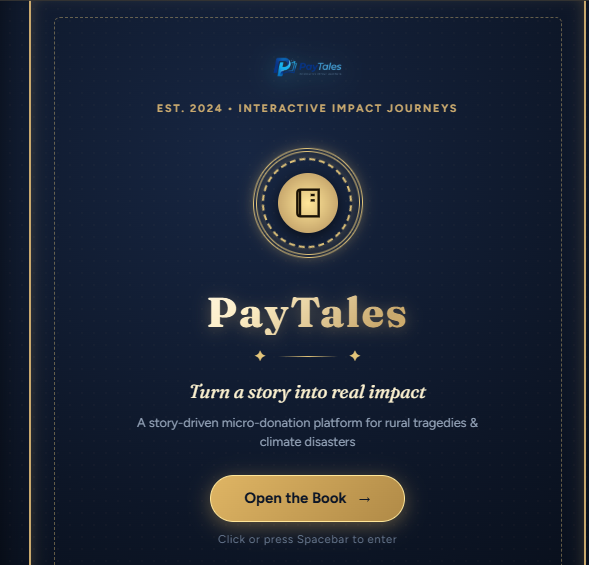
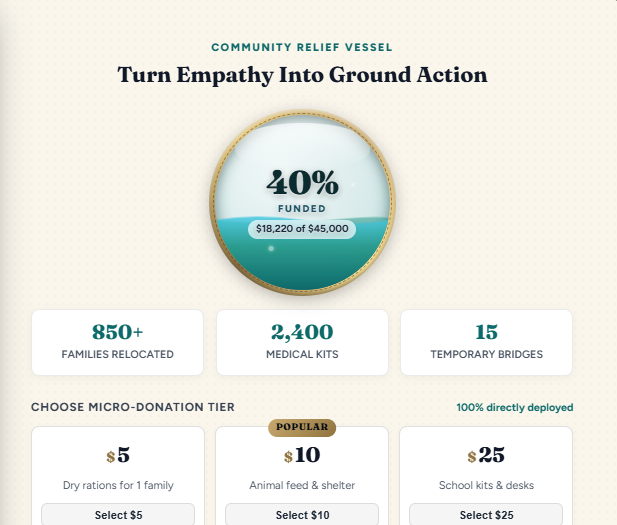
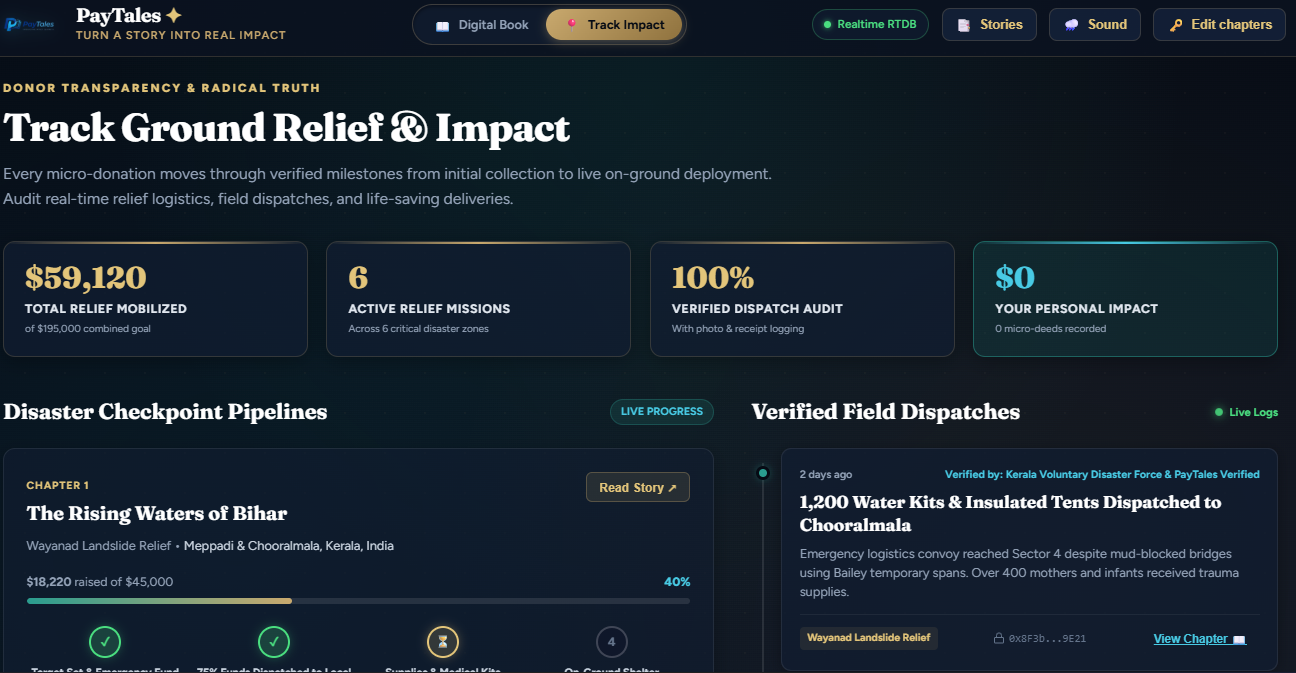
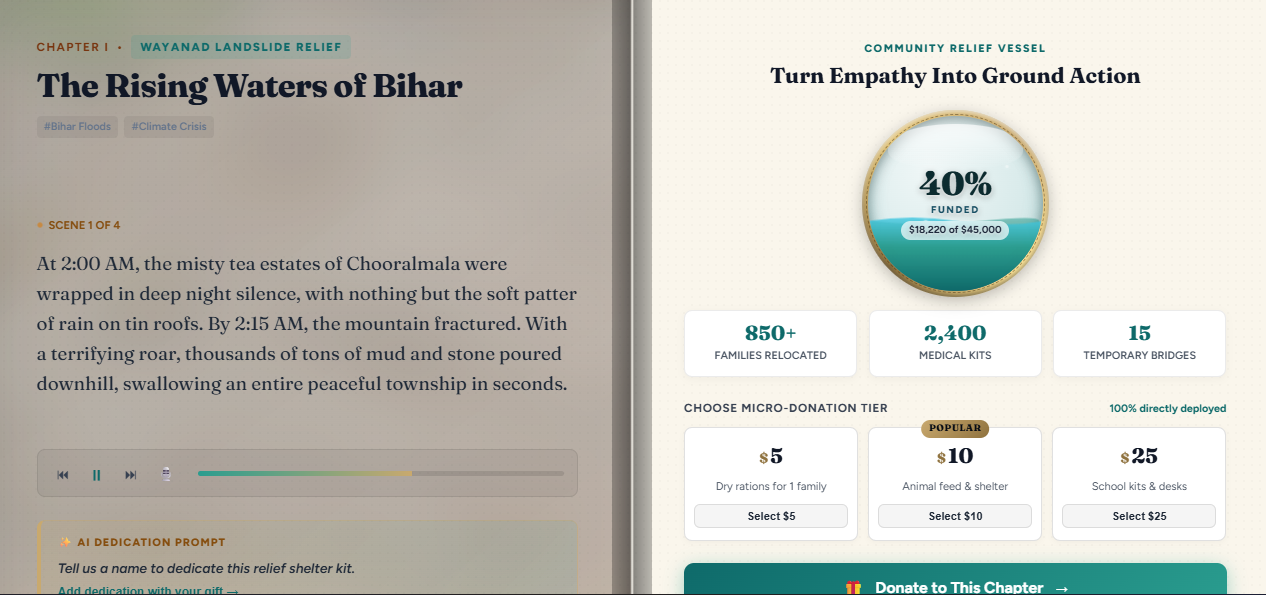
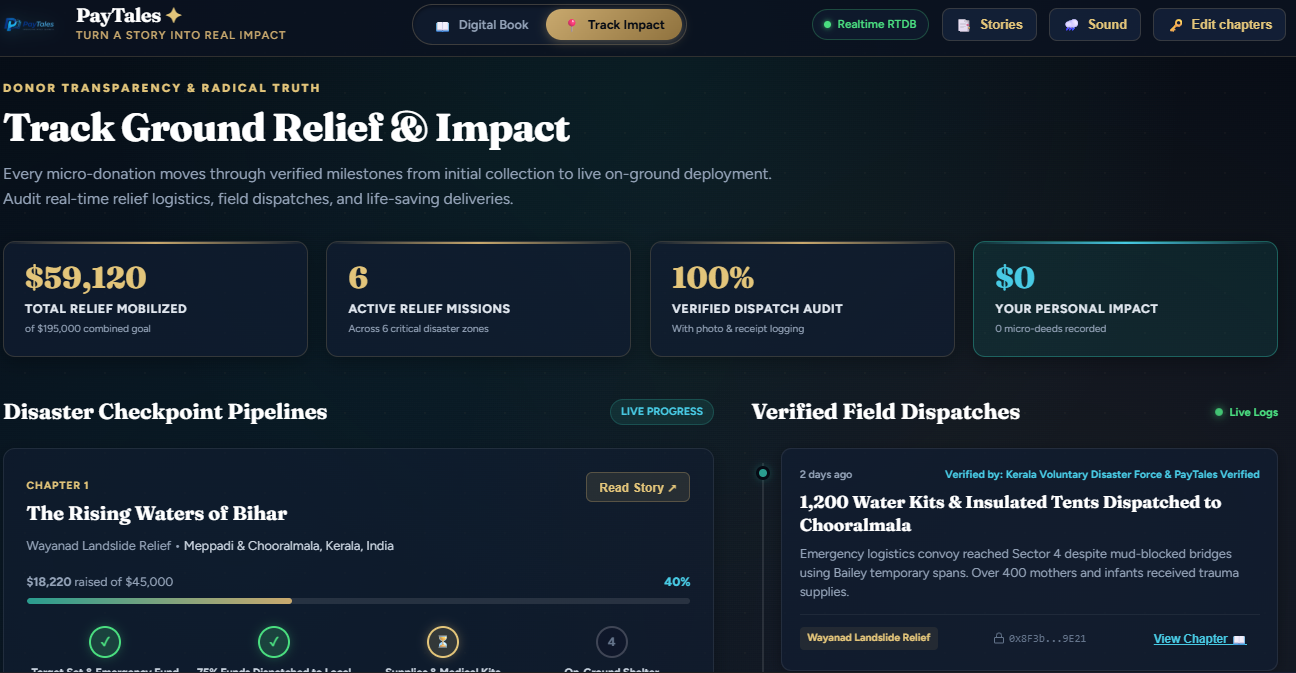
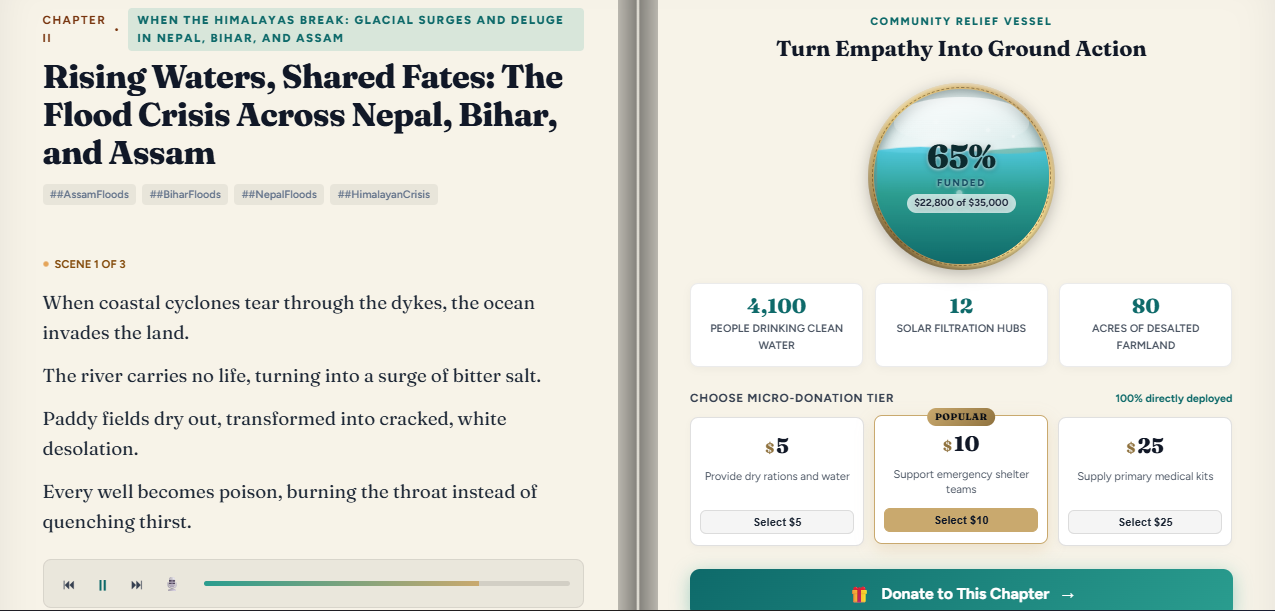
I wanted to build PayTales to bridge this gap: a platform that pairs real, verified stories from rural ground zero with direct, micro-funding channels powered by PayPal, ensuring every contribution creates a direct and trackable impact.
How we built it
As a beginner, building a full-stack platform was intimidating. I decided to focus on functional simplicity, transparency, and ease of use rather than complex engineering.
Simple Tech Stack: I used clean HTML, CSS, and basic JavaScript to keep the interface fast and lightweight, ensuring it loads easily even on poor, low-bandwidth rural networks.
PayPal Integration: I integrated the PayPal SDK for simple, secure, and internationally accessible transactions, enabling anyone around the world to support local causes.
Story-Based Relief: Instead of abstract pool funding where money gets lost in big budgets, PayTales breaks down aid into specific, human-centered "stories." A donor doesn't just "donate to a flood fund"—they directly fund basic needs like sanitary products, nutrition packs, or educational supplies for a specific village community.
Challenges we ran into
The Learning Curve: Being in my first semester of B.Tech CSE, concepts like handling webhooks, asynchronous JavaScript, and securely integrating payment gateways like PayPal were completely new to me. I spent countless hours reading documentation, watching tutorials, and debugging errors.
Designing for Trust: Building a donation platform requires deep trust. Designing an interface that clearly highlights real problems, shows funding progress, and transparently tracks impact was challenging but necessary.
Optimizing for Rural Access: The platform needed to load quickly on low-end smartphones and spotty mobile networks typical in flood-hit rural sectors.
Accomplishments that we're proud of
Going Beyond Theory to Real Impact: As a first-semester student with no prior web development experience, taking an idea from scratch to a working, real-world platform was a massive milestone.
Bypassing the Middleman: Designing a direct, story-driven micro-funding model that connects donors straight to ground-level rural needs, removing bureaucratic delays and ensuring help reaches those who need it most.
Highlighting Overlooked Basic Needs: Successfully creating a platform structured around critical, often neglected priorities—such as women's hygiene and sanitation, child nutrition, emergency health supplies, and education continuity in flood-hit zones. Lightweight & Accessible Design: Building an ultra-responsive interface optimized specifically for weak 2G/3G connectivity, ensuring people in remote rural areas can access and interact with the platform without friction.
What we learned
Tech with Purpose: You don't need complex frameworks to build something meaningful. Solving a genuine problem with basic web development tools can create real-world relief.
Practical Development: I gained hands-on experience in API integration, frontend structure, and financial transaction flows.
Empathy in Engineering: I realized that technology is most powerful when it empowers those who are often ignored, helping highlight ground-level realities and deliver help directly where it's needed most.
What's next for PayTales
PayTales started as a response to the floods in Bihar, but the ultimate goal is to expand it into a transparent direct-aid portal where verified micro-causes—from emergency flood relief to village girl-child education and basic health needs—can share their stories and receive direct support.
