-
-
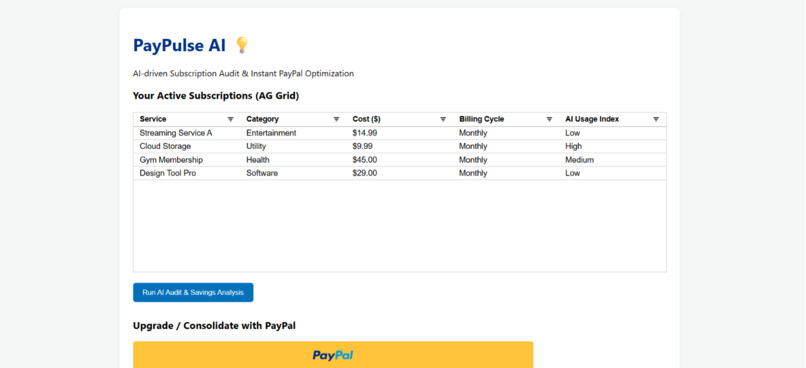
Dashboard
-
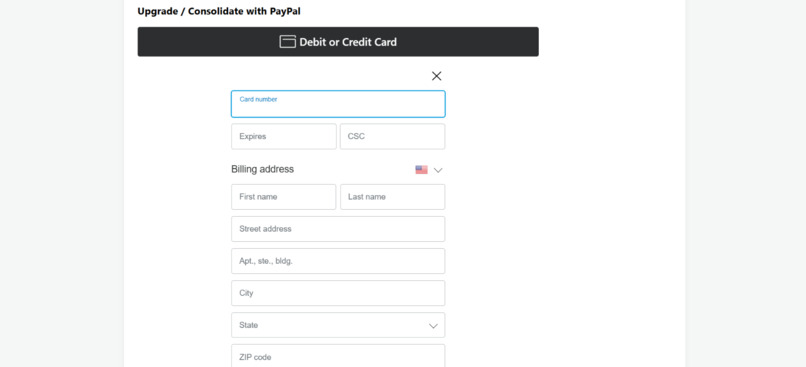
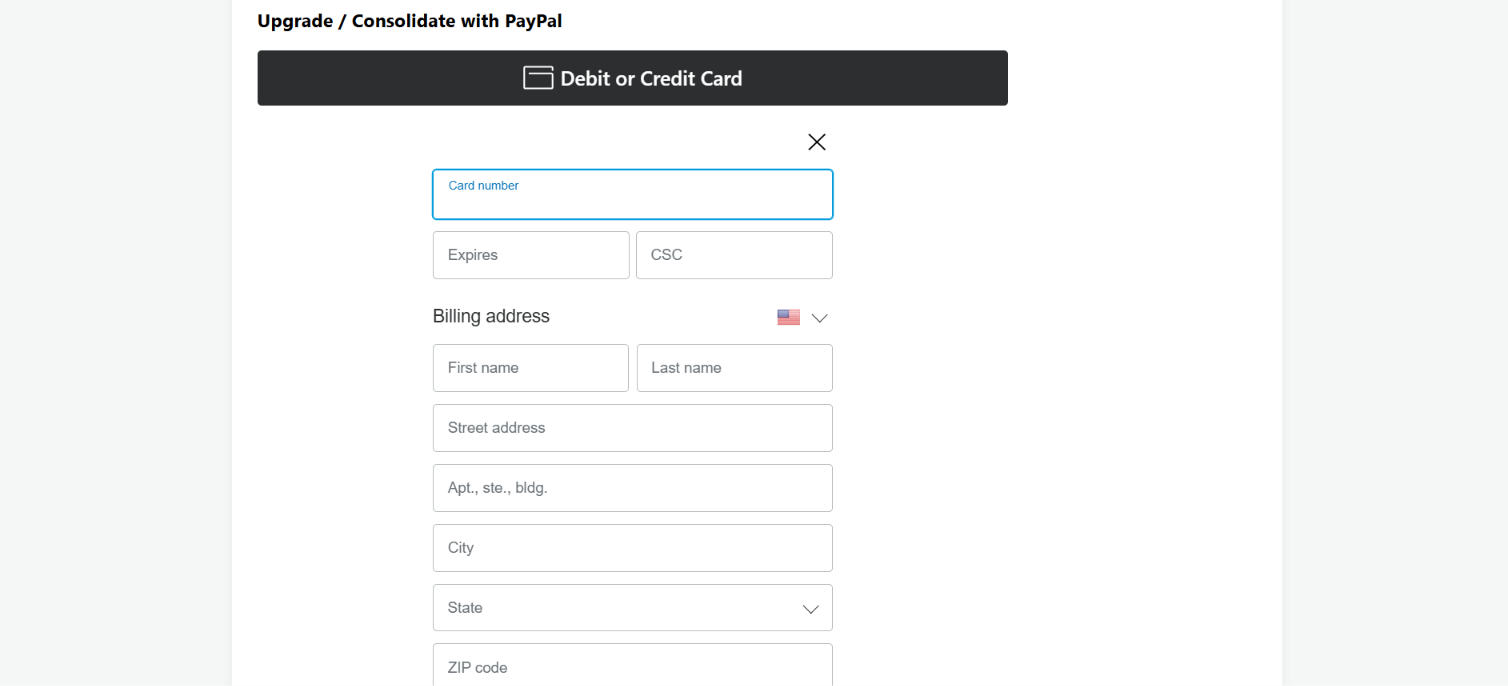
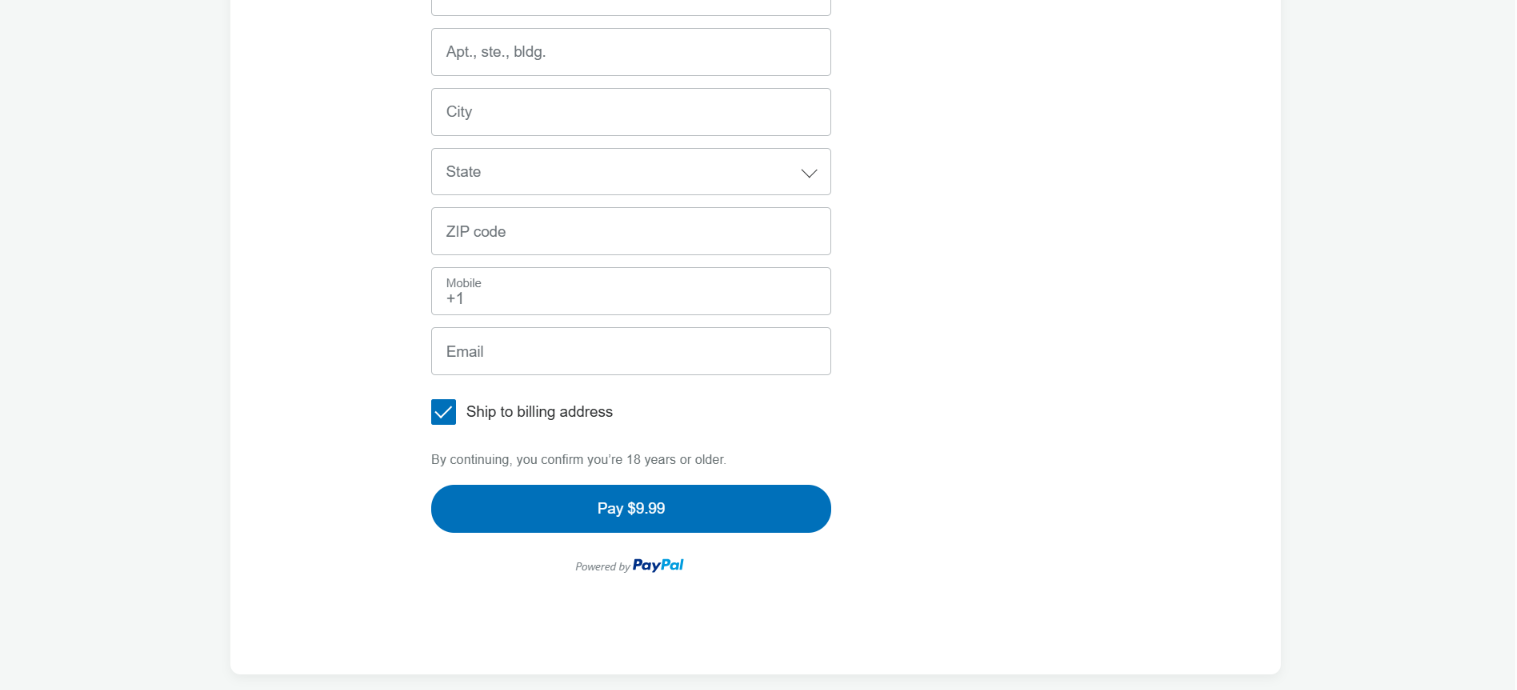
Card Payment
-
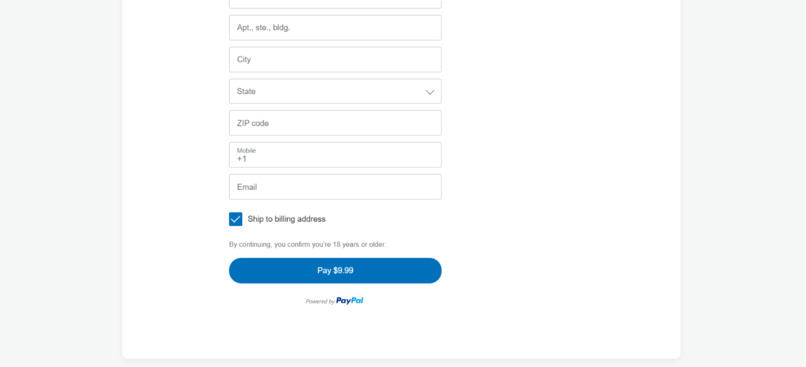
Card Payment
-
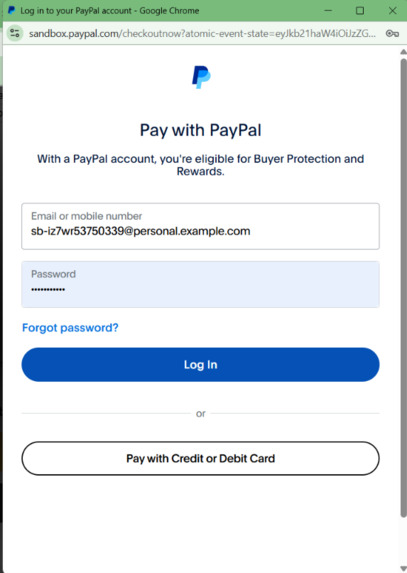
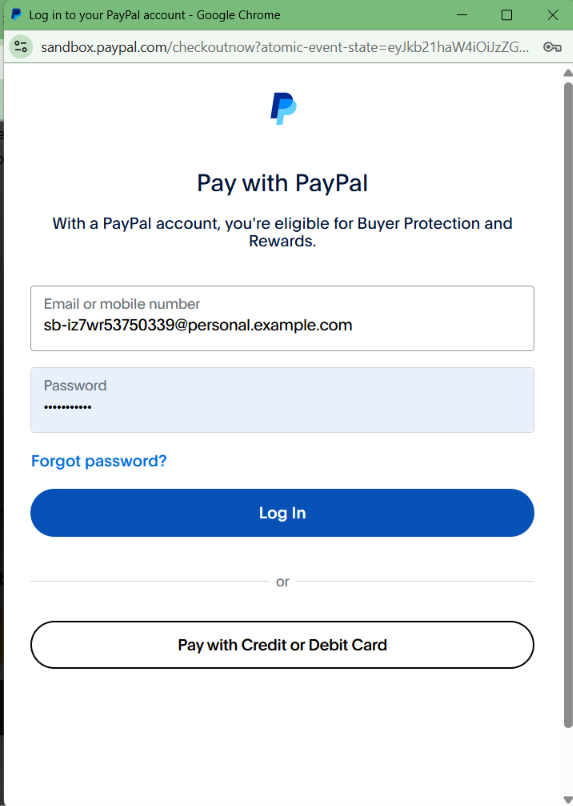
User Login
-
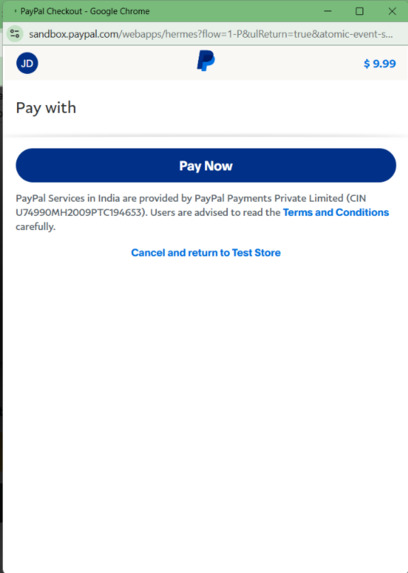
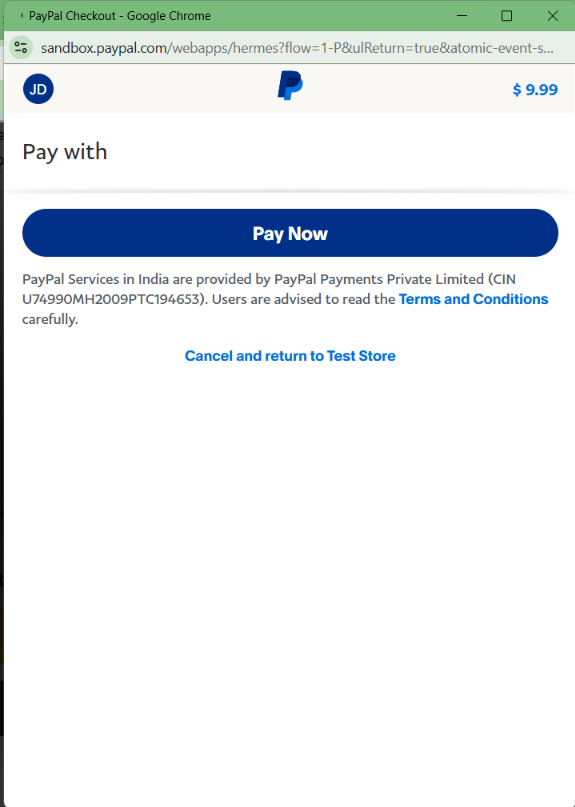
Payment options
-
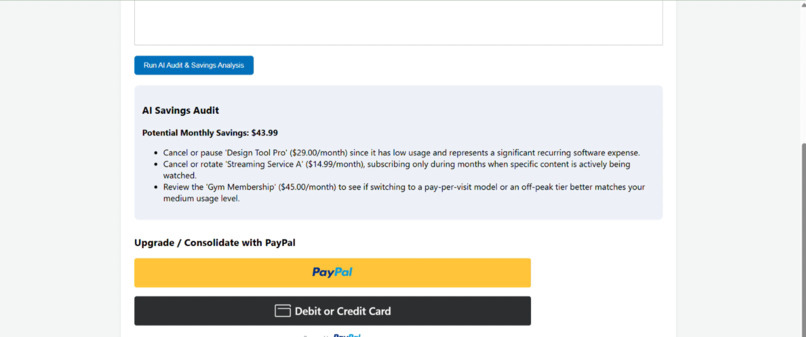
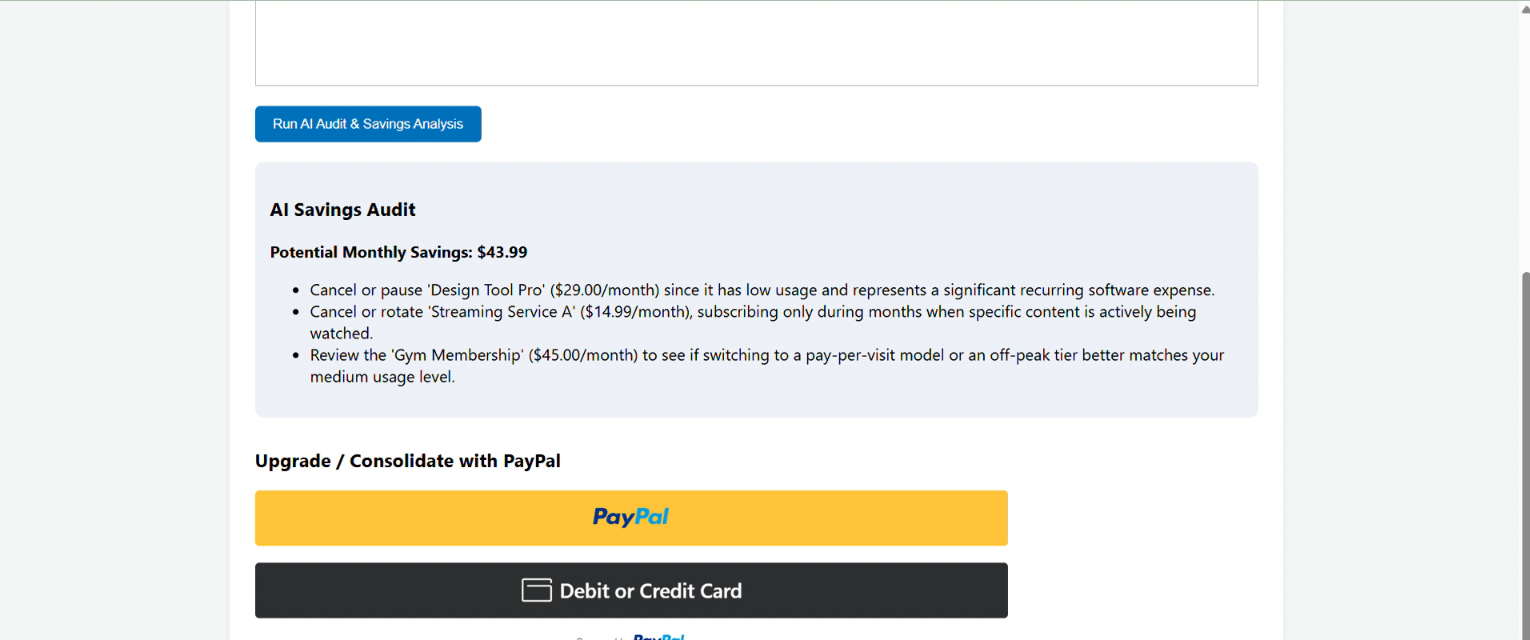
Savings description
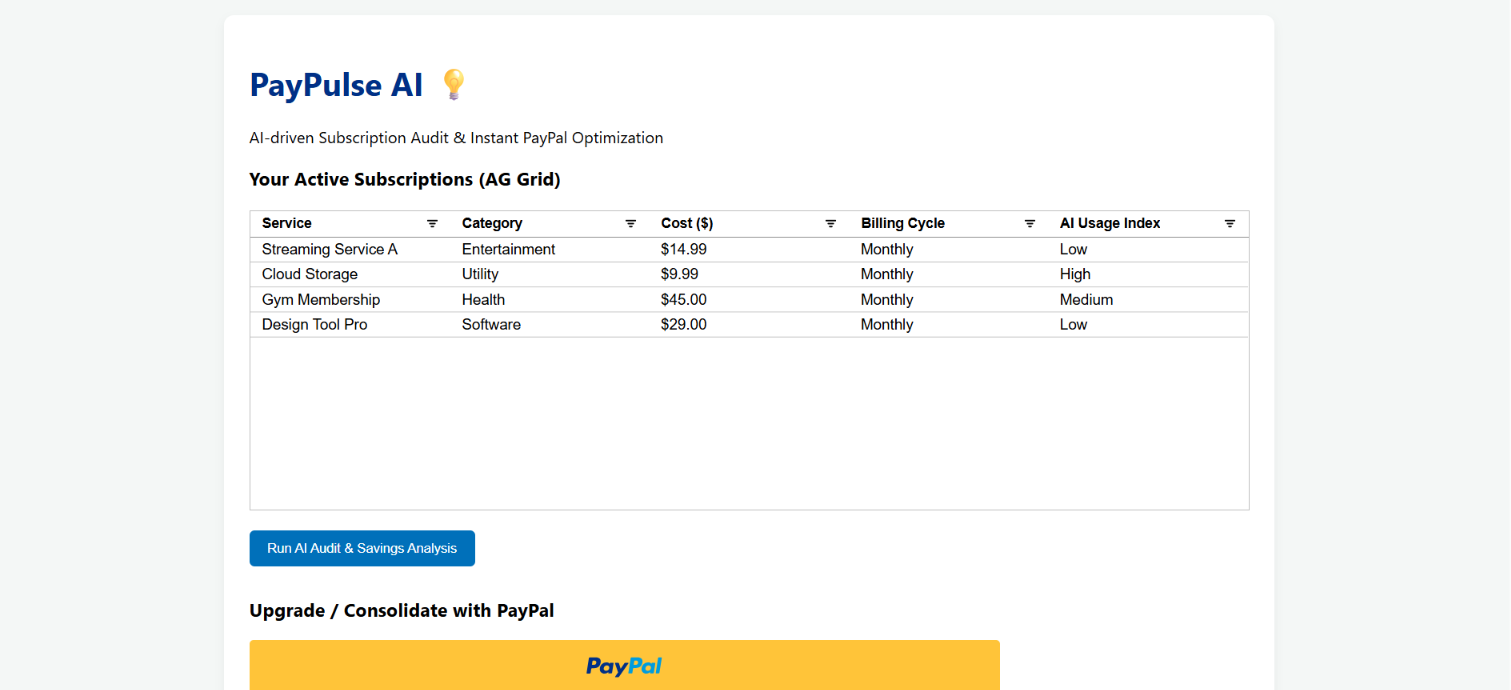
Inspiration
Managing recurring digital subscriptions has become an overwhelming headache. Between streaming platforms, SaaS tools, and monthly memberships, most people lose track of active auto-renewals—silently burning hundreds of dollars annually on services they rarely use. We built "PayPulse AI" to act as an automated financial co-pilot: a tool that scans your subscriptions, pinpoints hidden redundancies, and surfaces actionable savings instantly.
What it does
PayPulse AI provides a clean, data-driven dashboard for tracking and optimizing subscription spend:
Interactive Spend Tracker:Uses AG Grid to display, sort, and organize monthly subscription costs in real time. AI-Powered Financial Audits:Leverages Google's Gemini models to analyze spending patterns, flags duplicate services, and generates custom cost-cutting insights. Premium Insights Access:Integrates the PayPal JavaScript SDK to deliver instant, secure transactions for unlocking advanced financial reports.
How we built it
We built PayPulse AI using a decoupled, resilient web architecture:
Frontend:
Built with vanilla HTML5, CSS3, and JavaScript, paired with "AG Grid" for high-performance table UI and the "PayPal JS SDK " for payment processing.
Backend:
Powered by "Node.js" and "Express.js", communicating with the Google Gen AI SDK (gemini-3.8-flash) to parse subscription data and return structured JSON recommendations.
Challenges we ran into
- Handling AI Overload & Model Resilience
During peak server demand, direct model invocations triggered 503 Service Unavailable capacity errors or deprecation exceptions across legacy aliases. We resolved this by engineering a multi-model fallback loop on the server using active production endpoints (gemini-3.8-flash, gemini-3.6-flash, gemini-3.5-flash-lite) combined with exponential backoff:
// Resilient retry & fallback loop structure
for (const modelName of candidateModels) {
  try {
    const model = genAI.getGenerativeModel({ model: modelName });
    const result = await model.generateContent(prompt);
    return res.json(parseJSON(result));
  } catch (err) {
    if (isOverloaded(err)) await delay(exponentialBackoff);
  }
}
- PayPal Sandbox Currency & Session Conflict
Integrating PayPal Sandbox presented strict environment friction:
Session Collisions:Browser session overlap between the merchant developer login and the test buyer popup caused instant logouts.
Regional Restrictions:Local merchant accounts threw UNSUPPORTED_PAYEE_CURRENCY errors when attempting cross-border USD transactions.
We solved this by establishing a US-region Sandbox Business profile, configuring explicit $USD$ parameters in the SDK initialization, and enforcing isolated browser profiles for test buyer flows.
Accomplishments that we're proud of
Zero-Downtime Fallback Pipeline:Built a resilient AI audit endpoint that gracefully handles model spikes and service degradation without failing user requests. Seamless Payment Integration:Successfully debugged and wired the full PayPal Sandbox checkout workflow to dynamically grant premium access upon verification. Clean & Performant UI:Delivered a fast, clutter-free dashboard interface using AG Grid that processes financial inputs instantly.
What we learned
We deepened our understanding of building production-grade LLM integrations, handling real-world SDK authorization traps, and structuring resilient Node.js microservices.
On the data side, we modeled potential annual savings $S(C)$ by evaluating redundant monthly subscriptions $C_i$ against a recommended cancellation weight $r_i \in [0, 1]$:
$$S(C) = 12 \times \sum_{i=1}^{n} (C_i \cdot r_i)$$
Where the total projected annual savings $\text{AnnualSavings}$ simplifies to:
$$\text{AnnualSavings} = 12 \times \sum_{i \in \text{Redundant}} \text{Cost}_i$$
What's next for PayPulse AI
Plaid API Integration:Connect live bank feeds to automatically import transactions instead of relying on manual subscription entry. One-Click Cancellations:Partner with subscription management protocols to let users cancel unwanted services directly from the dashboard. Predictive Renewal Alerts:Implement automated email/SMS reminders 48 hours before annual or monthly auto-renewals trigger.
Built With
- ag-grid
- dotenv
- express.js
- gemini-flash
- generative-ai
- google-gemini-api
- javascript
- json
- latex
- node.js
- paypal
- paypal-js-sdk
- rest-api
- sandbox-testing
