-
-
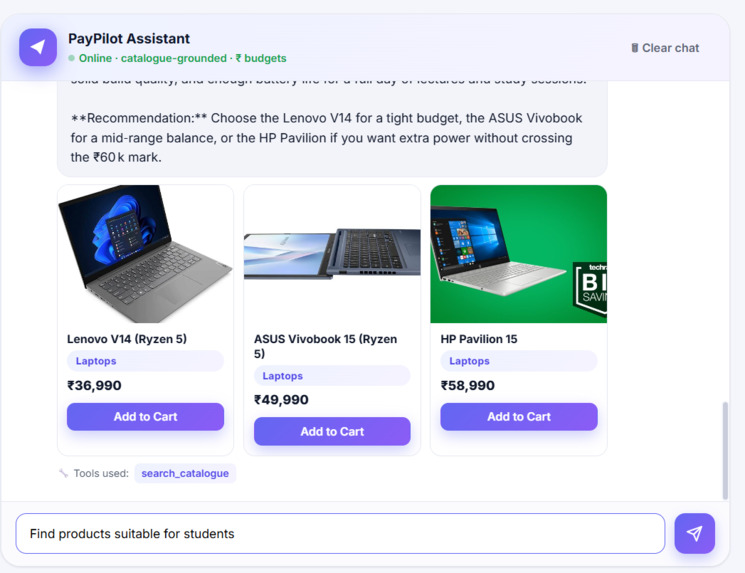
product catalog at ai assistant
-
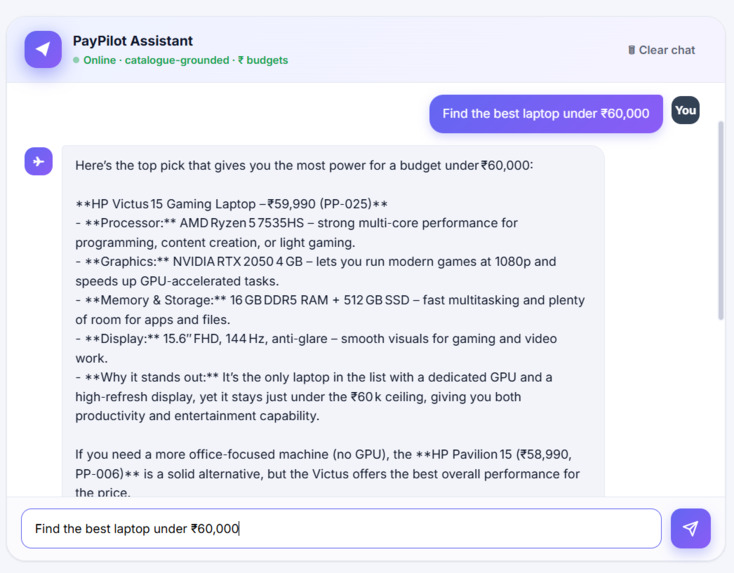
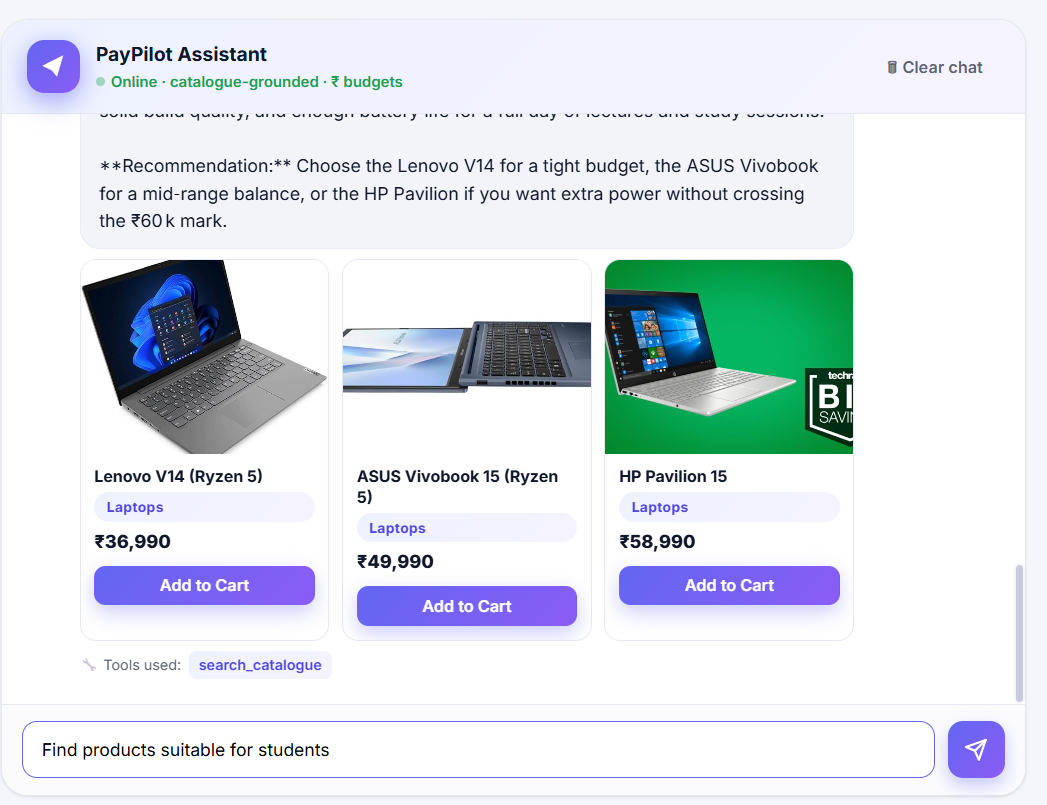
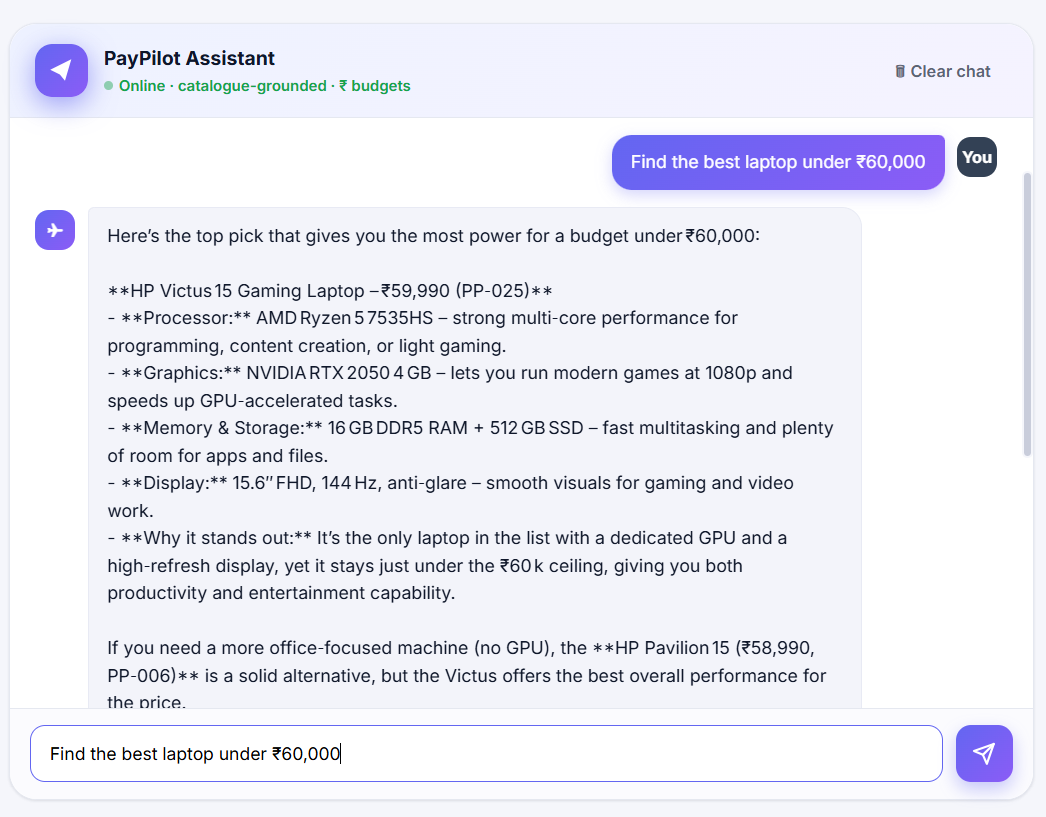
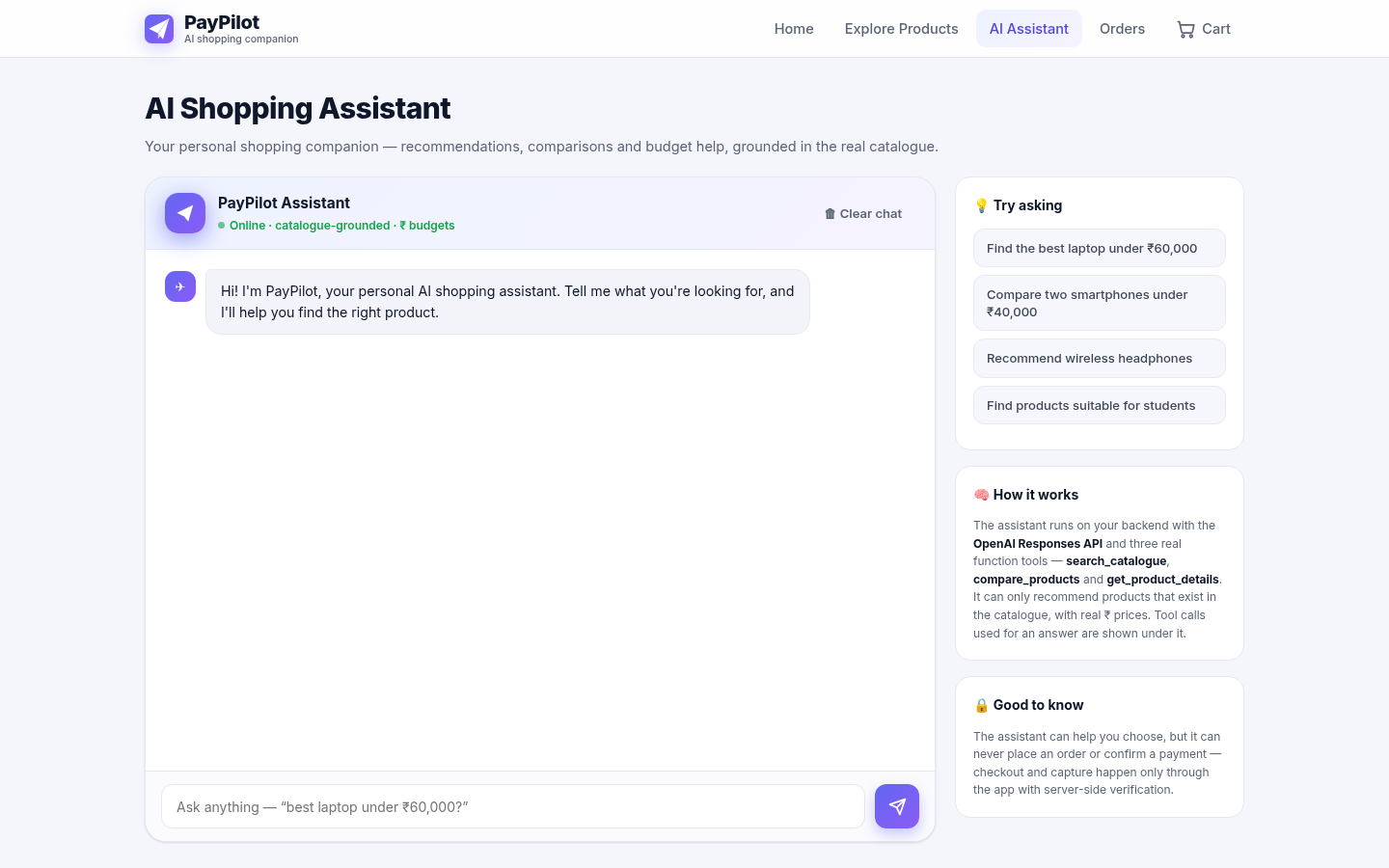
ai helps according to when asked
-
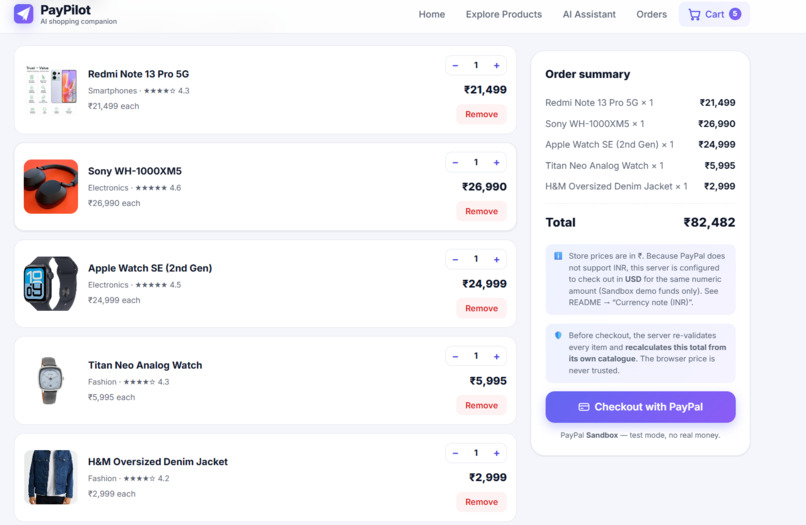
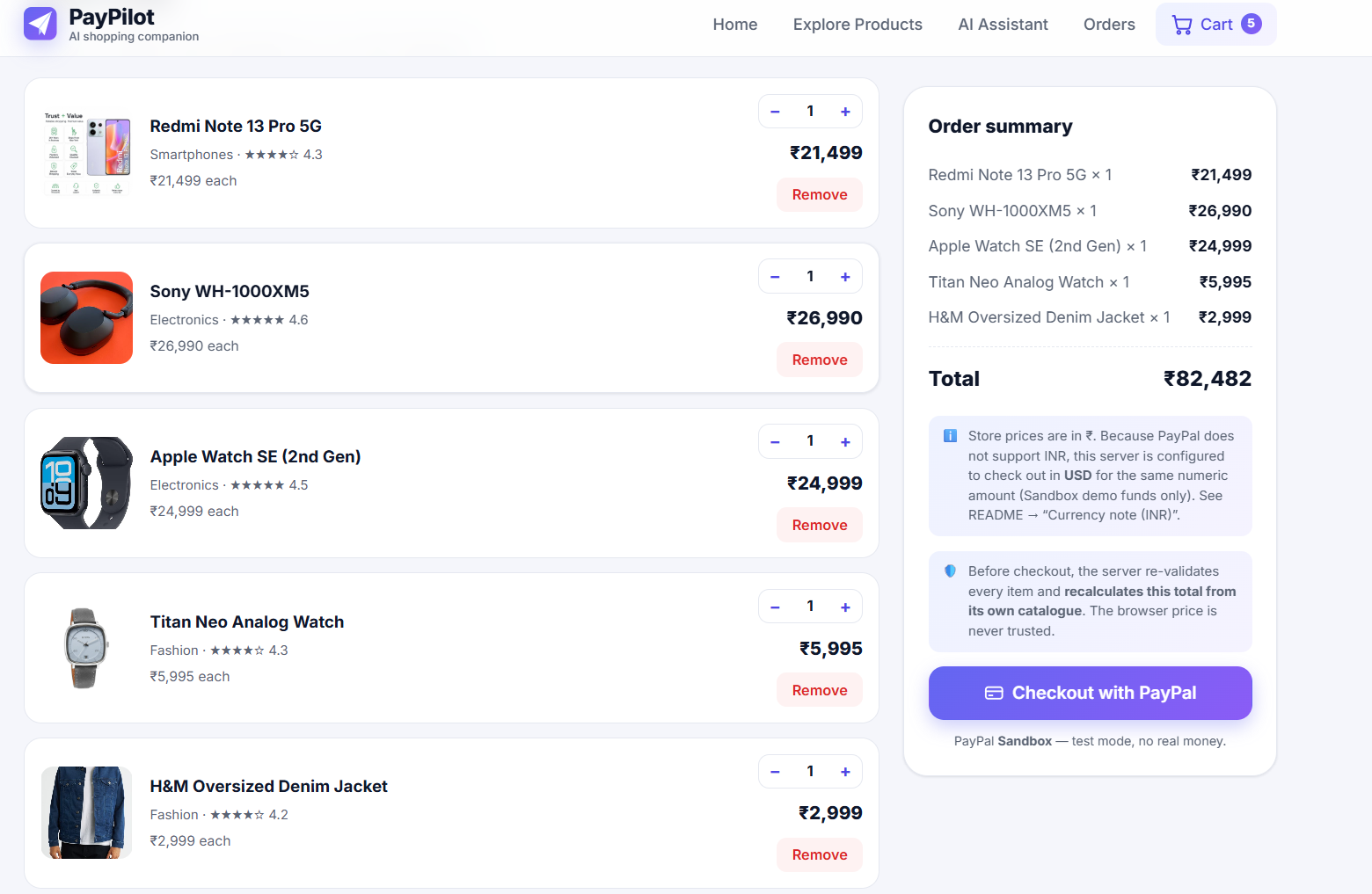
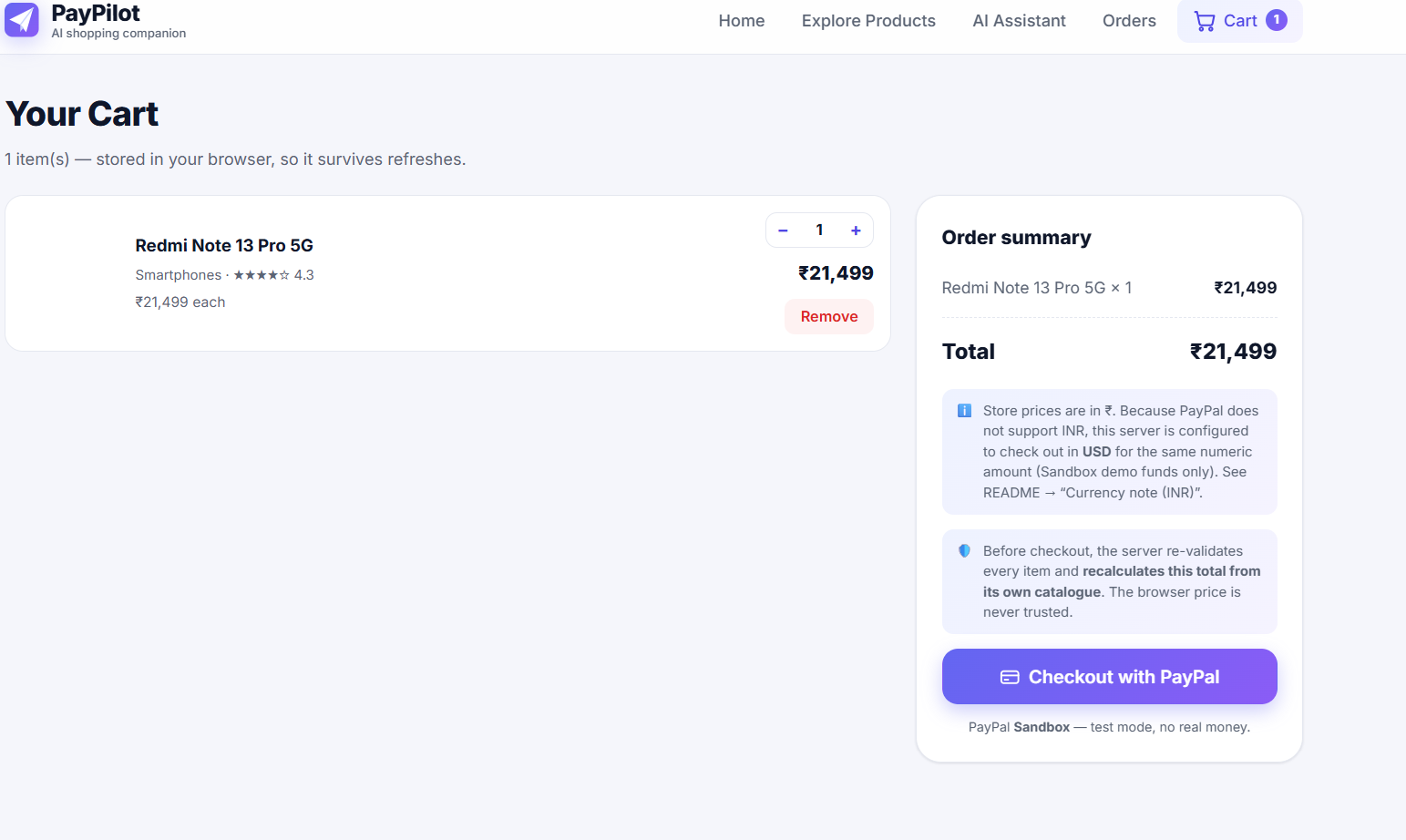
cart to manage items
-
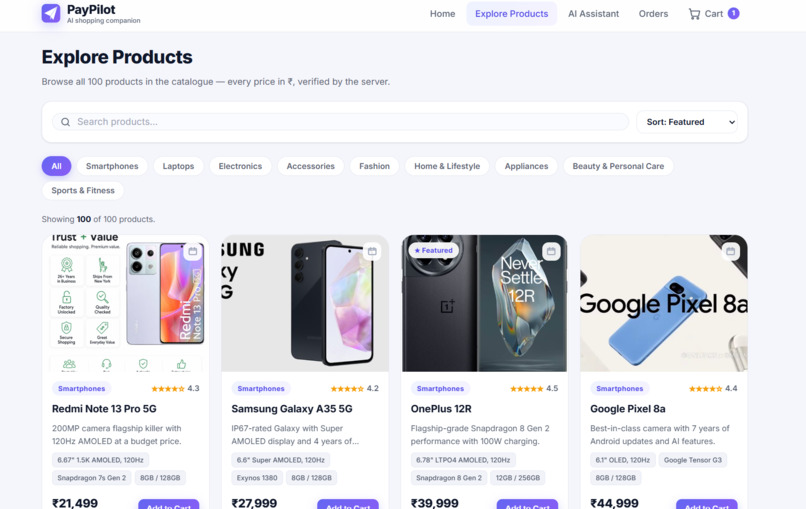
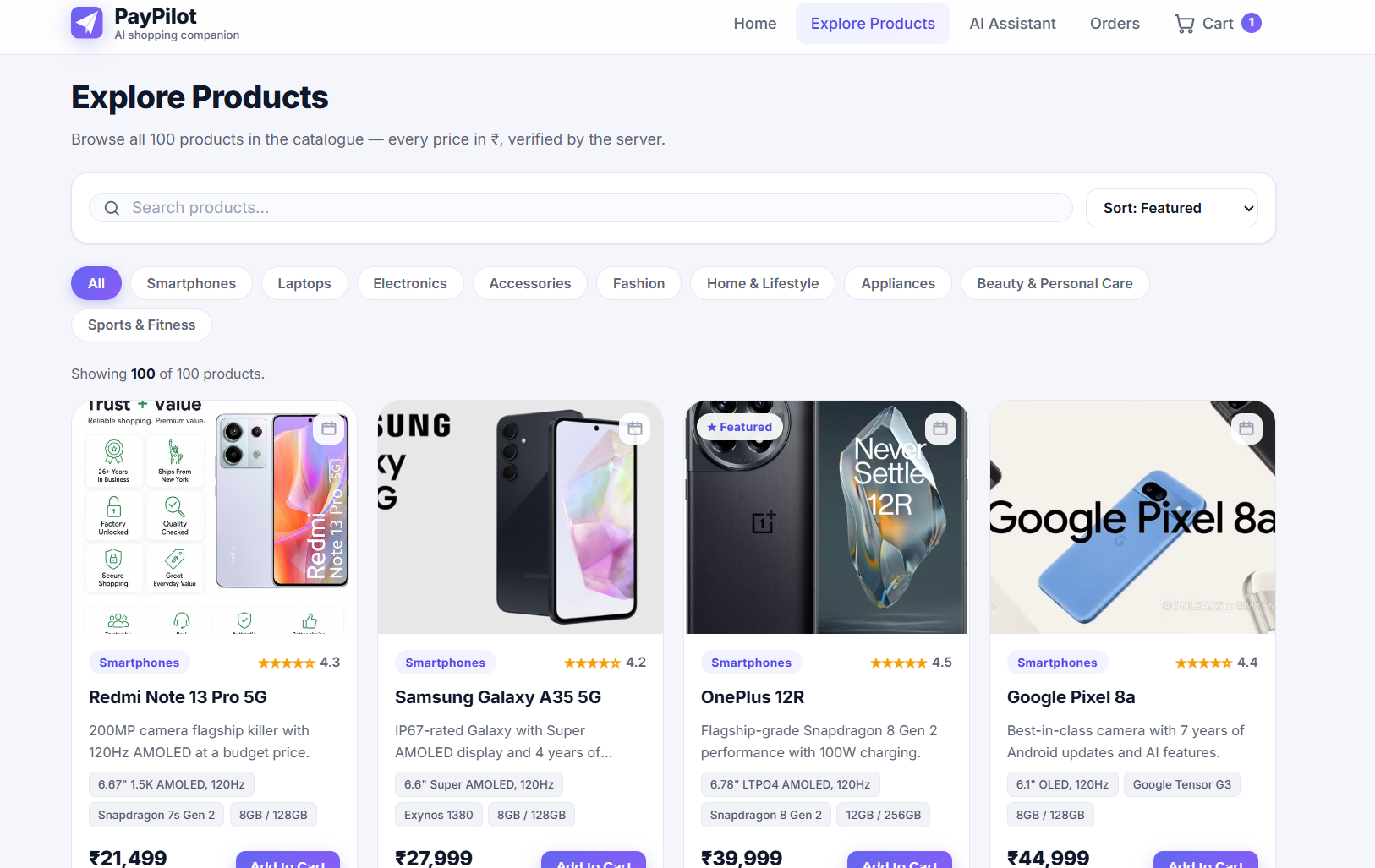
explore page shows different items
-
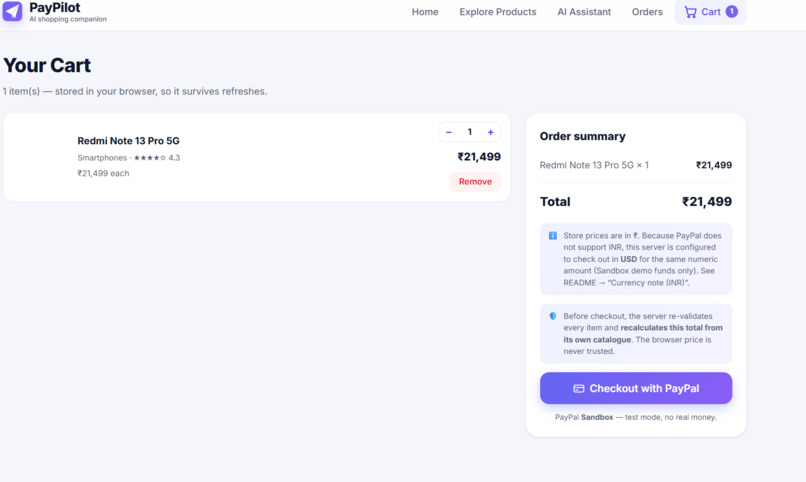
your orders are here
-
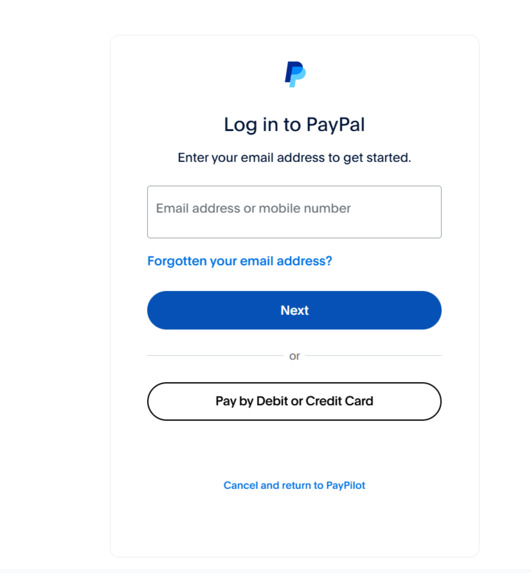
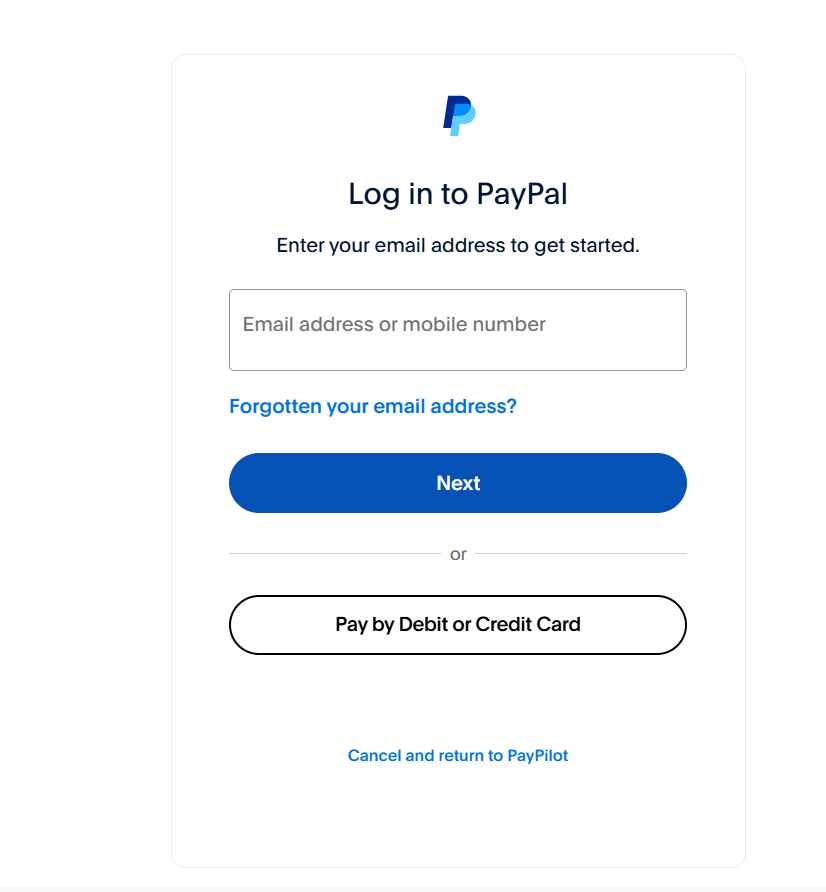
u need to open your paypal account to do payment
-
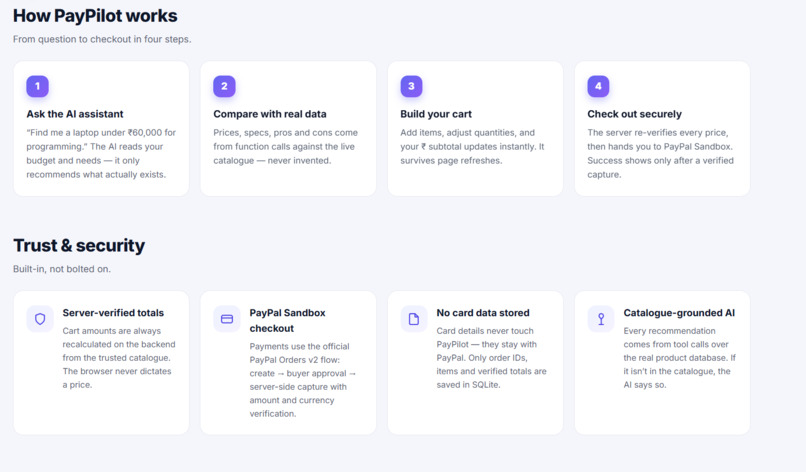
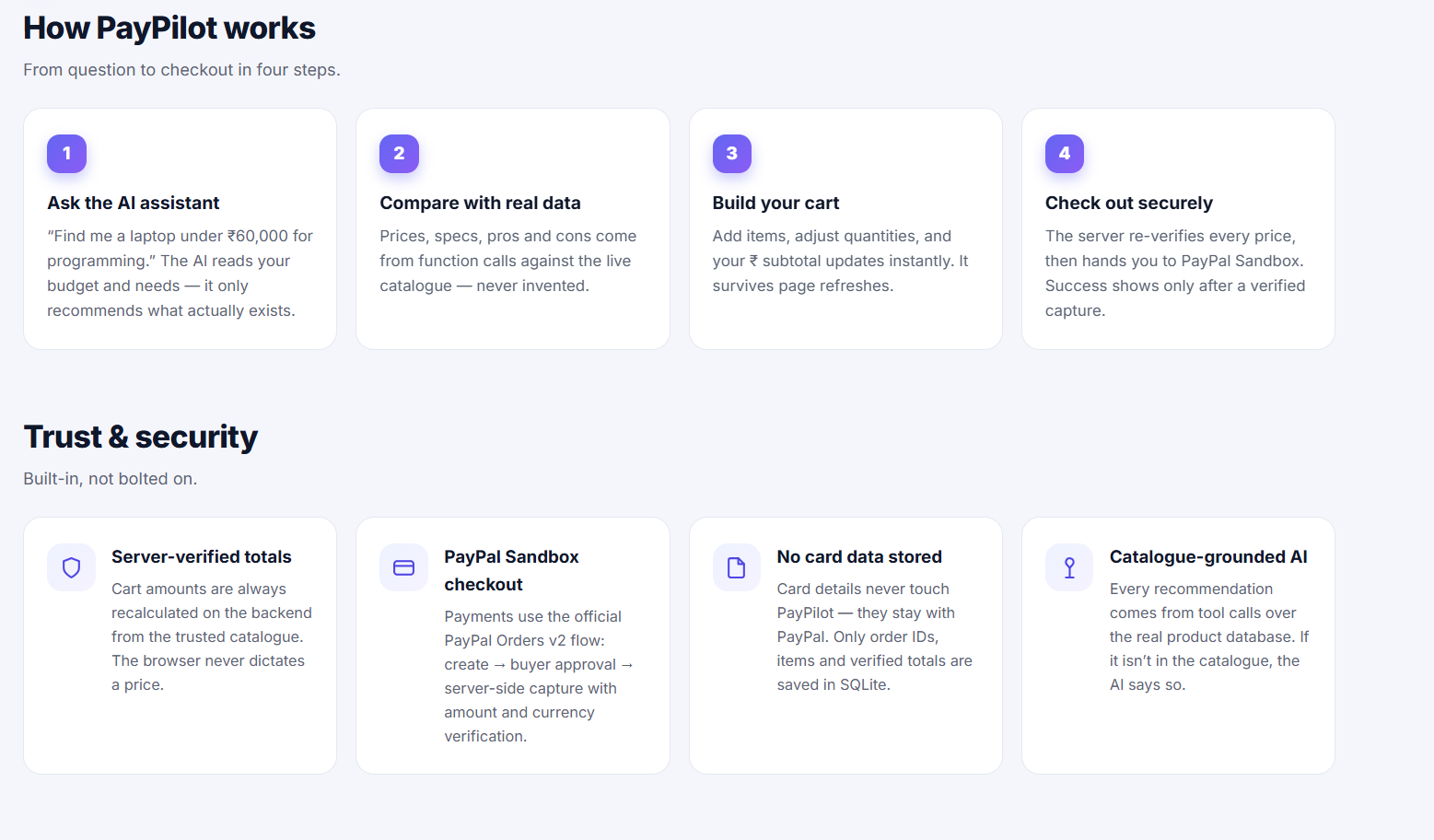
shows how paypilot works
-
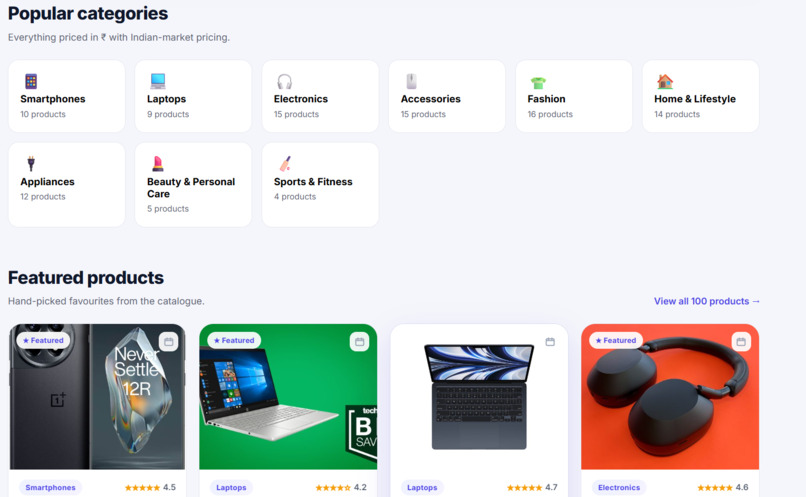
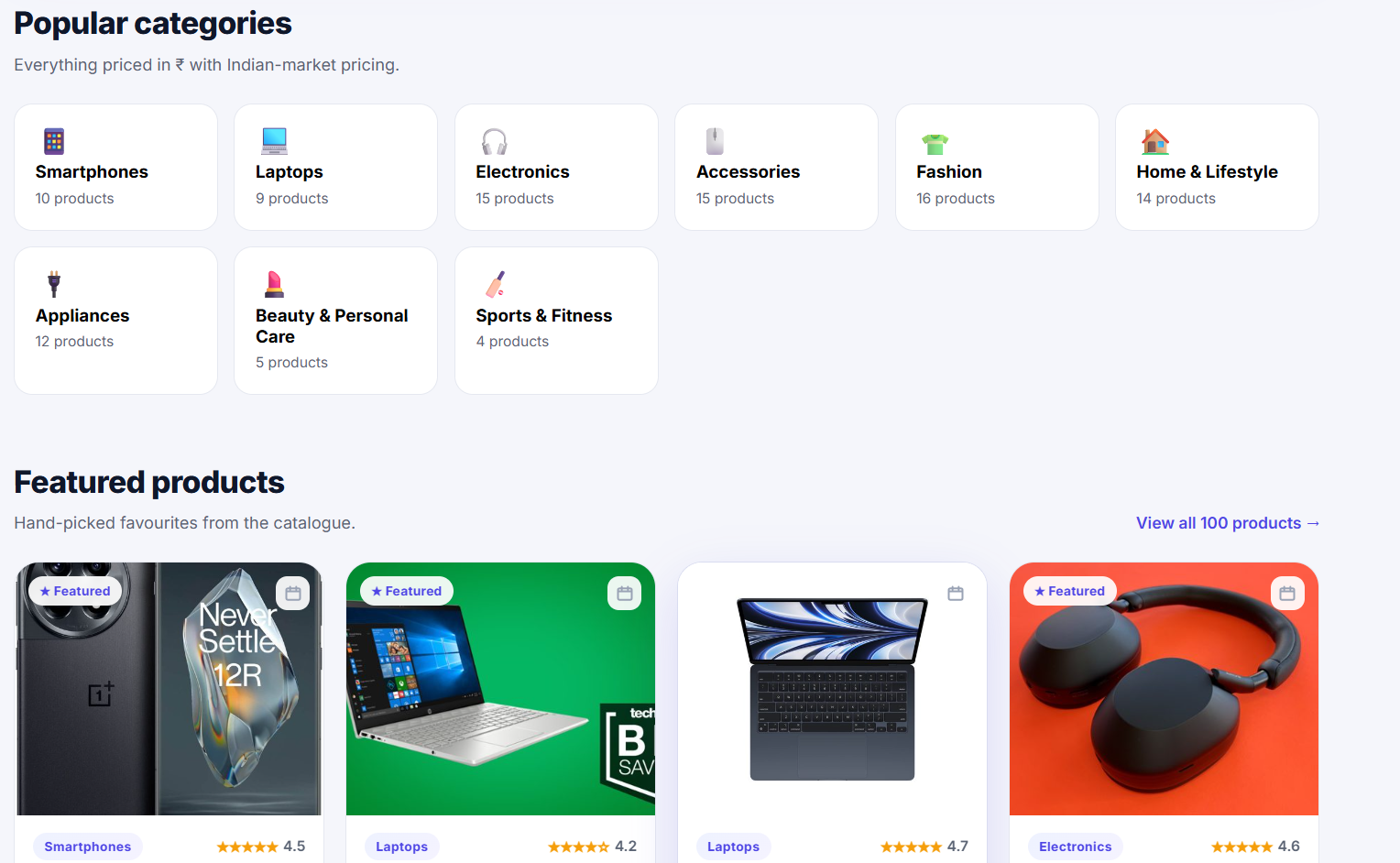
give diff items in catagories
-
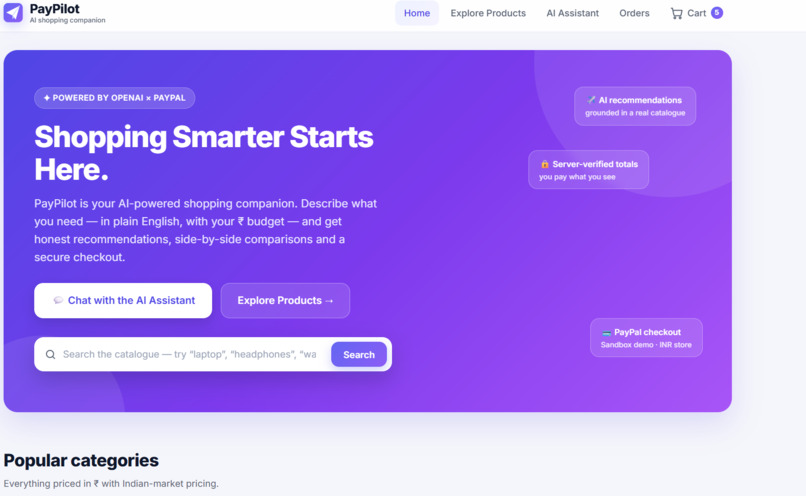
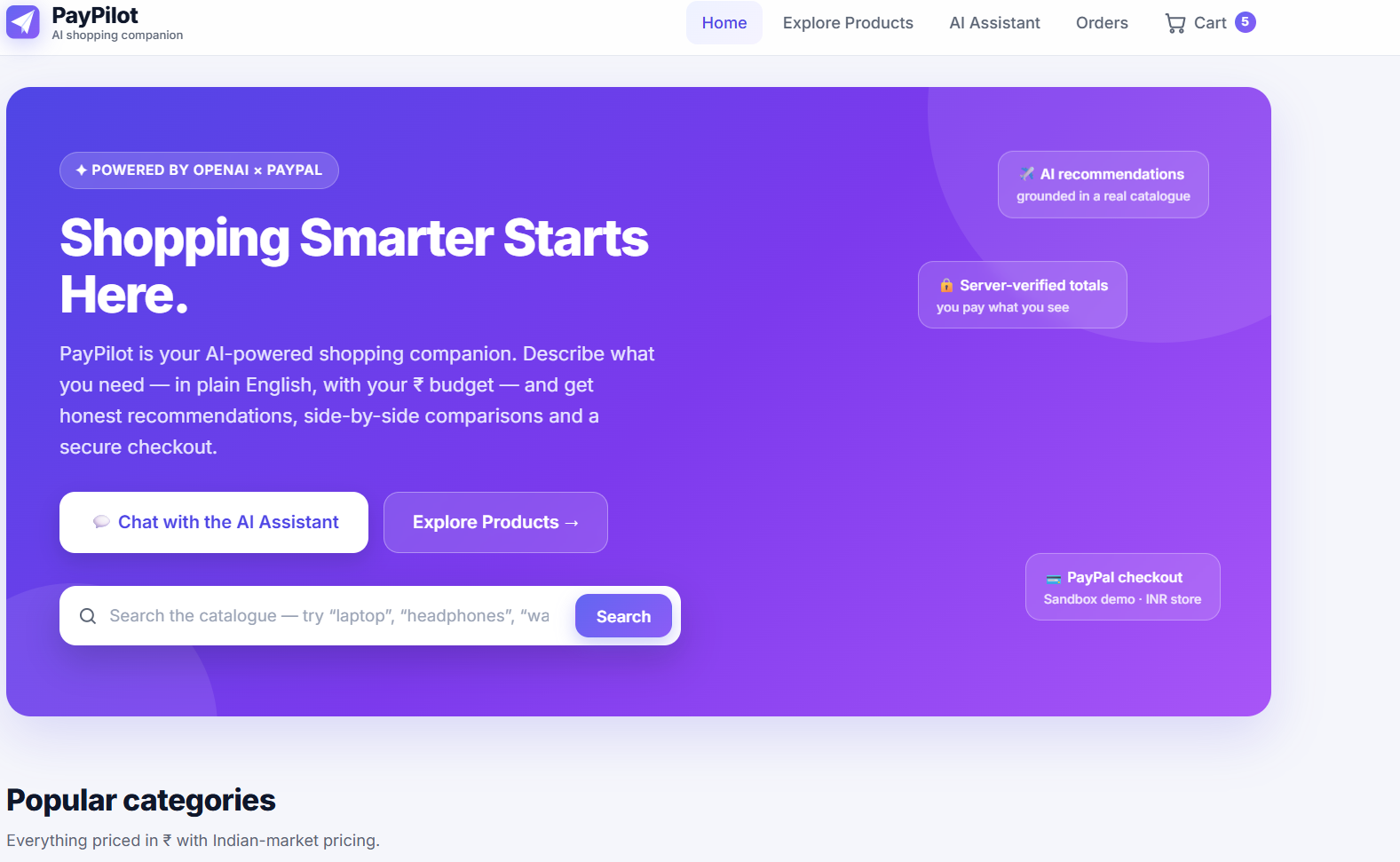
this is the home page , directs u everywhere
-
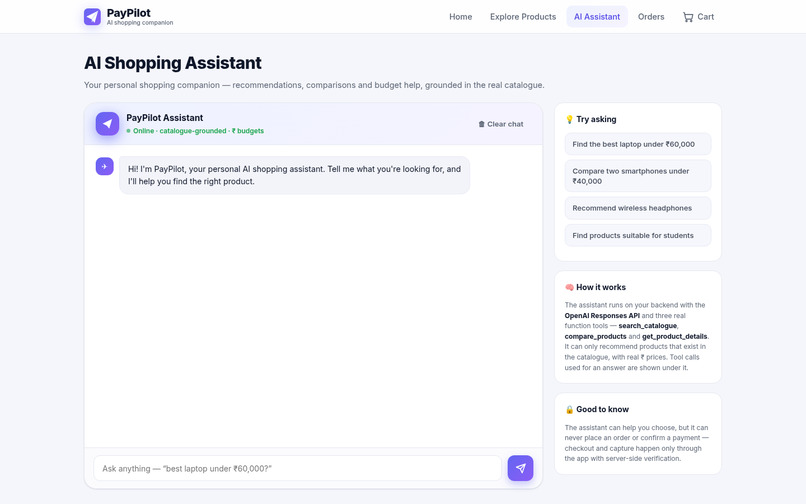
this is the assistant
Inspiration
When I registered for the PayPal AI Hackathon, I wanted to build something that could solve an actual real-life problem rather than just creating a project for the sake of participating.
As Gen-Zs, most of us shop online. But whenever we want to buy something, we often end up spending a lot of time checking different brands, comparing prices, looking for discounts and figuring out which product is actually worth buying. Sometimes, finding the right product takes more time than actually buying it!
I started thinking, why not make this easier? Why not make online shopping simpler?
That was the thought that inspired me to build PayPilot.
Another factor was that AI-powered shopping assistants and agentic AI were becoming increasingly popular topics. I wanted to explore this area, understand how it works and try building something around it. Of course,** integrating PayPal into the project was also an important part, considering that this was a PayPal AI Hackathon**. PayPilot is still at an early stage, and I know there is a lot of room for improvement, but I see it as a starting point that can be developed into something much bigger.
What it does
_ How PayPilot Works_
PayPilot makes online shopping more conversational and convenient. Users simply start by telling the AI shopping assistant what they are looking for, along with their preferences and budget. The AI understands their requirements and searches through the available product catalogue to find relevant options. It can then help users compare different products, understand their features and choose what suits them best. Once they find something they like, they can add it to their shopping cart, review their selected products and proceed towards checkout using the integrated PayPal payment functionality. The idea is to bring the entire journey, from understanding what a user needs to helping them make a purchase, into one simple platform without having to spend hours searching and comparing products manually.
How we built it
I built PayPilot using Python for the backend, along with HTML, CSS and JavaScript for the frontend.
For the AI functionality, I used the** Groq API** to connect the application with an AI model and power its shopping assistant capabilities.
The main idea behind PayPilot is to allow users to describe what they are looking for instead of manually going through countless products. The AI assistant helps users discover relevant products, compare available options and make better shopping decisions based on their requirements and budget.
The application also includes a product catalogue, a shopping cart and a payment integration using PayPal, bringing the shopping experience closer to a complete journey, from product discovery to checkout.
I used Render to deploy the application and make it accessible online. [https://paypilot-com.onrender.com] this is the link.
Challenges we ran into
One of the biggest challenges was definitely the amount of prompting required throughout the development process.
Since I was using AI-assisted coding, getting the desired output in one go was not always possible. I had to write prompts repeatedly, make changes, explain what wasn't working and refine the results until I got something close to what I wanted.
Another major part was testing the website again and again. I had to check almost every feature individually, make sure everything was working as expected and fix issues whenever something broke.
Collecting products and building the product catalogue was another challenge. For now, the catalogue is quite limited, and adding more products with proper details and information is something I would like to improve in the future.
There were also moments when one small change affected another part of the application, which meant going back, checking the code and testing the entire flow again.
But I think these challenges were an important part of the experience. They helped me understand that even when AI makes development easier, building a functional application still requires patience, testing, problem-solving and a lot of effort.
Accomplishments that we're proud of
All i am proud of is that i made it , i tried my best , learned and explored new topics which help me learn. I know can to better , i will keep working on this , banging the bushes around. that's it it was great and help grow as a learner .
What we learned
One of the biggest things I learned during this project was how much can be achieved through** AI-assisted development, prompting and what people commonly call vibe coding**.
Since I used AI tools extensively throughout the development process, I got a better understanding of how to communicate my requirements through prompts, break down features, refine outputs and debug things when they didn't work as expected.
It also gave me valuable insights into different aspects of web development, backend logic, API integration, deployment and connecting different components to build a complete application.
Another thing was revising my Python knowledge. Since I used Python to build the backend of PayPilot, I got to revisit concepts I had learned earlier and understand how they are used in an actual project.
Overall, this experience taught me that building a project is not just about writing code. It is also about understanding the problem, experimenting with different approaches, testing your work and continuously improving it.
What's next for PayPilot
PayPilot is currently a starting point, and I would love to take it further by expanding the product catalogue, improving the AI assistant, making recommendations more personalized and refining the overall shopping experience.
This project has been a great learning experience for me, and I'm glad I got the opportunity to explore AI-powered development while trying to solve a problem that I could personally relate to.
PayPilot — Less Searching. Smarter Choosing. Seamless Shopping.
