PayPilot — Your AI-Powered Payment Operations Copilot
Inspiration
Managing payments is more than processing transactions. Businesses must continuously monitor payment performance, understand revenue trends, identify anomalies, manage pending orders, and make informed operational decisions.
We were inspired by the gap between the large amount of payment data businesses collect and how difficult it can be to turn that data into meaningful action. Traditional dashboards provide numbers, but business owners often need to investigate multiple screens before understanding what is happening.
We wanted to build something more intelligent: a payment operations copilot that combines analytics, AI-powered insights, and secure human oversight in one unified platform.
What is PayPilot?
PayPilot is an AI-powered payment operations dashboard designed to help businesses understand their payment ecosystem.
It brings together payment monitoring, business analytics, anomaly detection, cash-flow forecasting, and approval workflows into a single interface.
Instead of simply displaying financial metrics, PayPilot helps users interpret them and identify what deserves attention.
Our goal is to transform payment operations from a reactive process into a more proactive, insight-driven experience.
What We Built
PayPilot includes several interconnected capabilities:
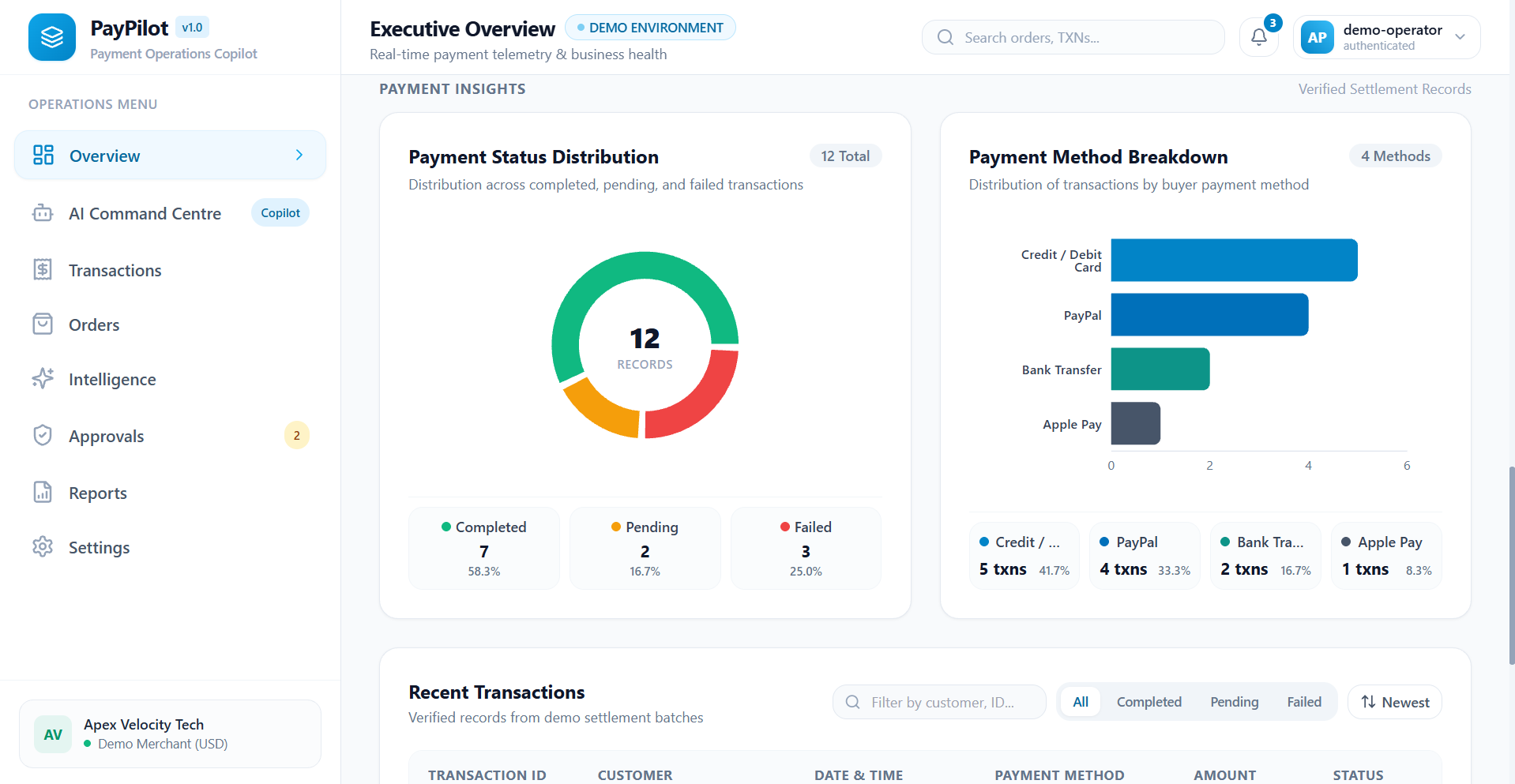
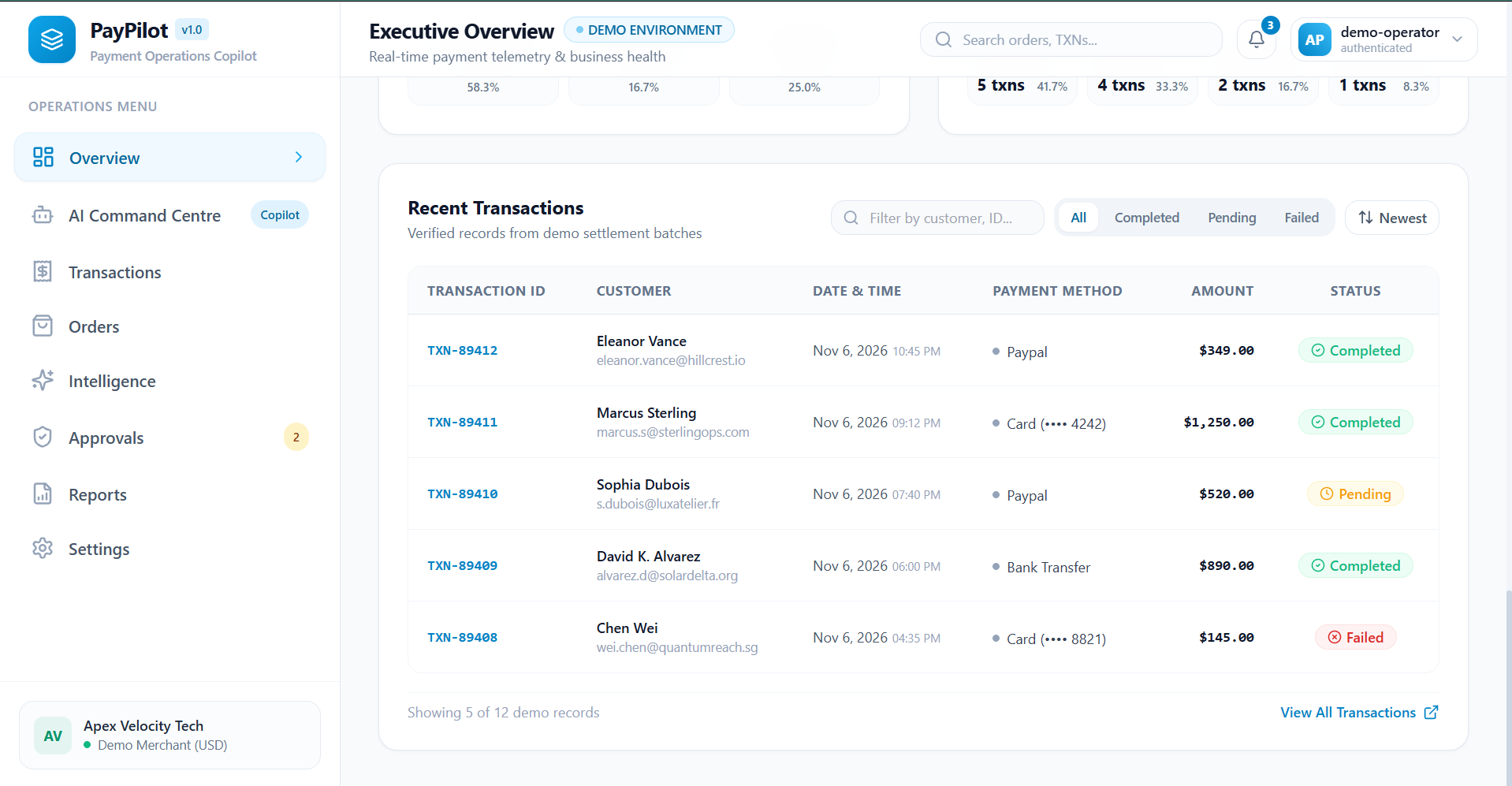
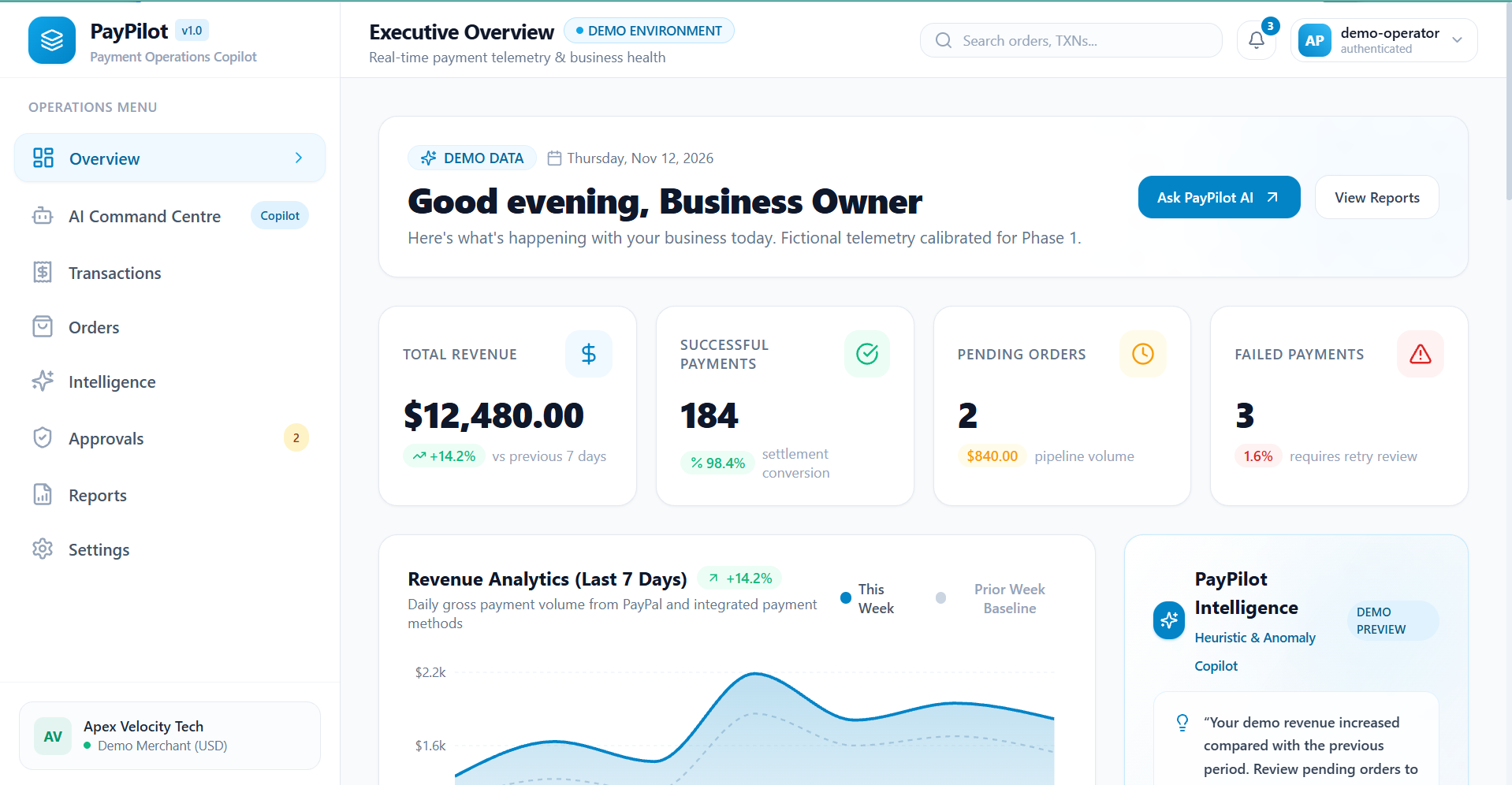
- Executive Overview: A unified dashboard displaying revenue metrics, payment status distribution, payment methods, transaction activity, and financial trends.
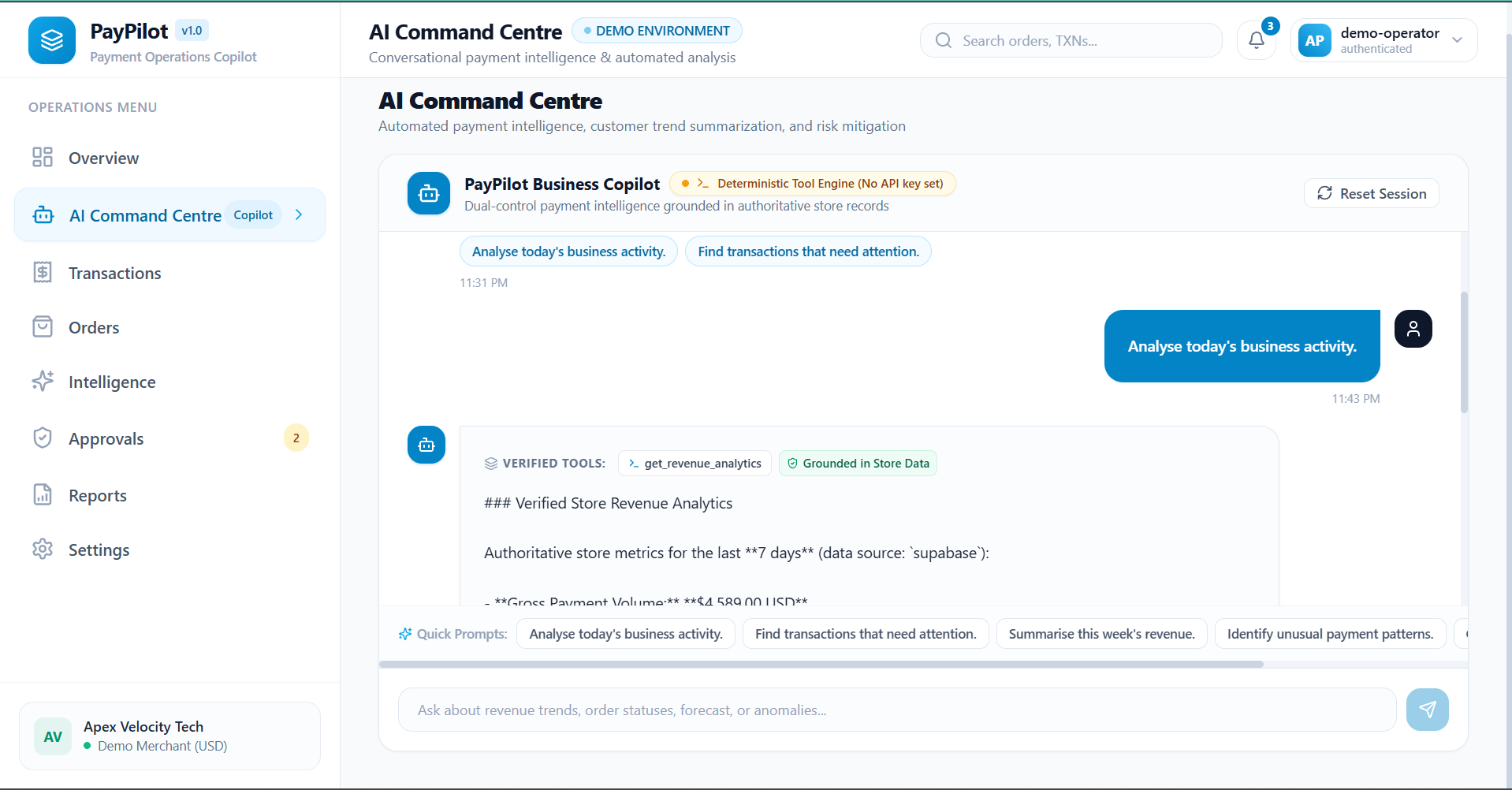
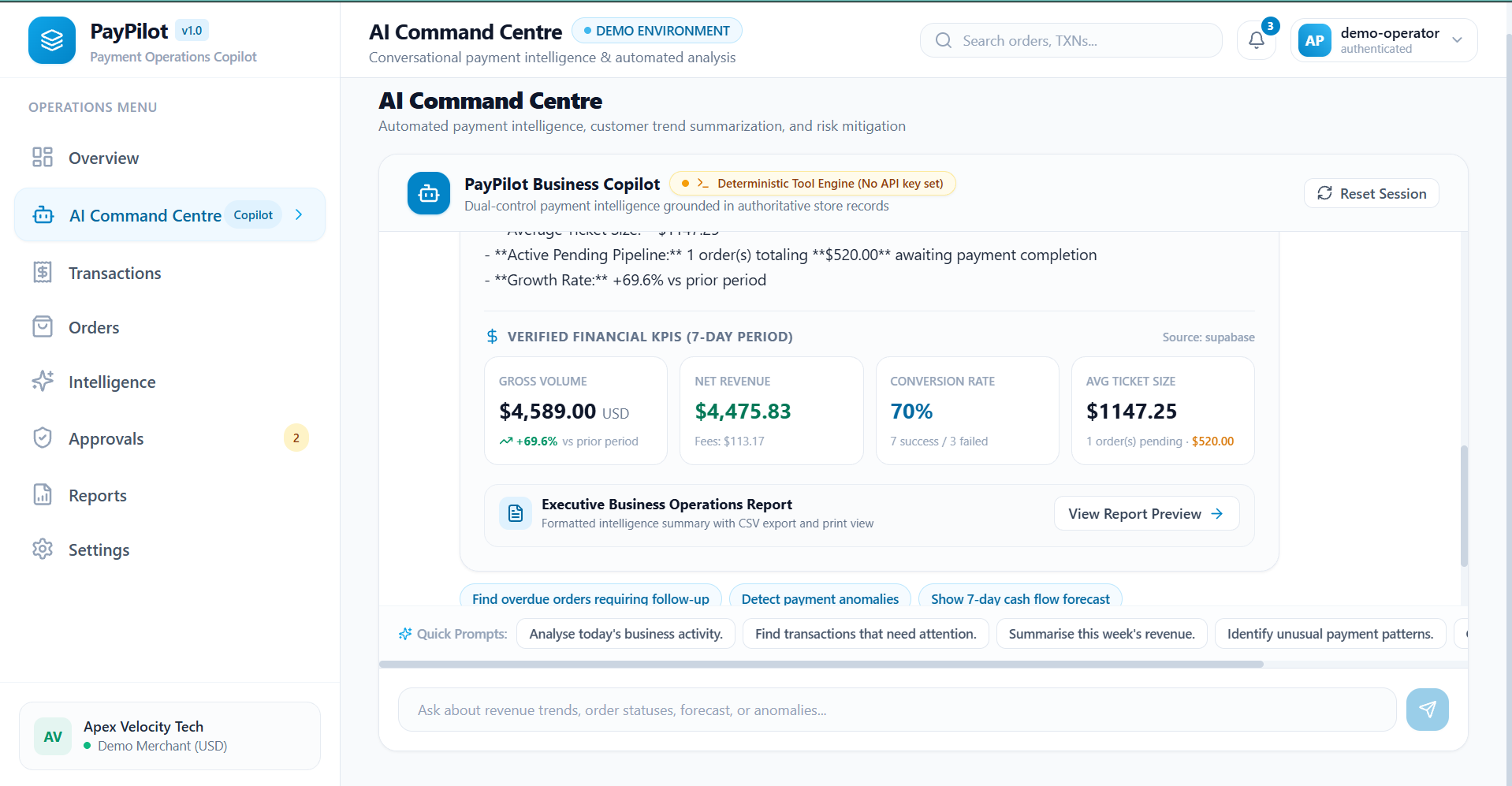
- AI Command Centre: A conversational interface that allows users to ask business-related questions and receive structured insights.
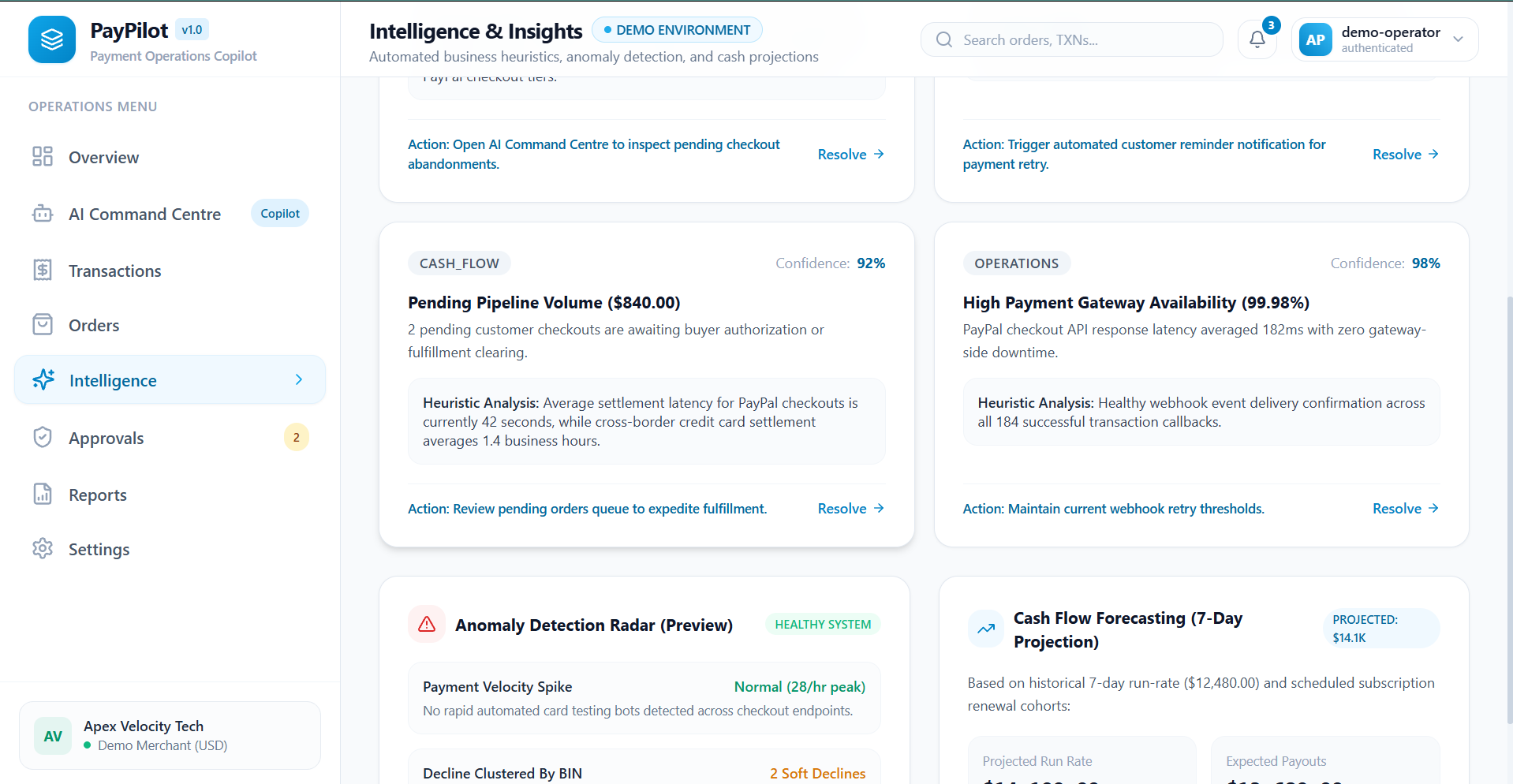
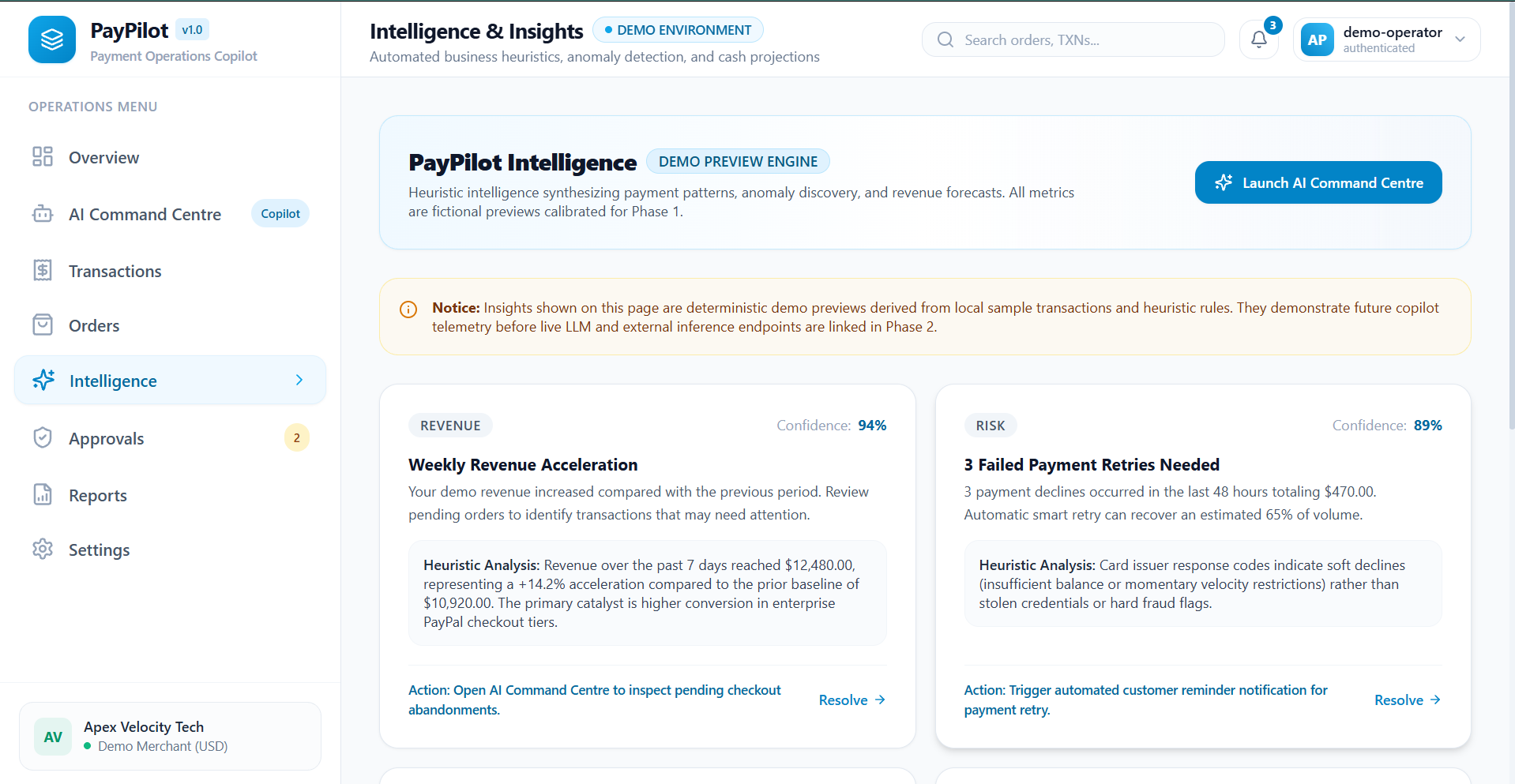
- Payment Intelligence: Analytics for revenue, payment performance, overdue orders, anomalies, cash-flow forecasts, and business recommendations.
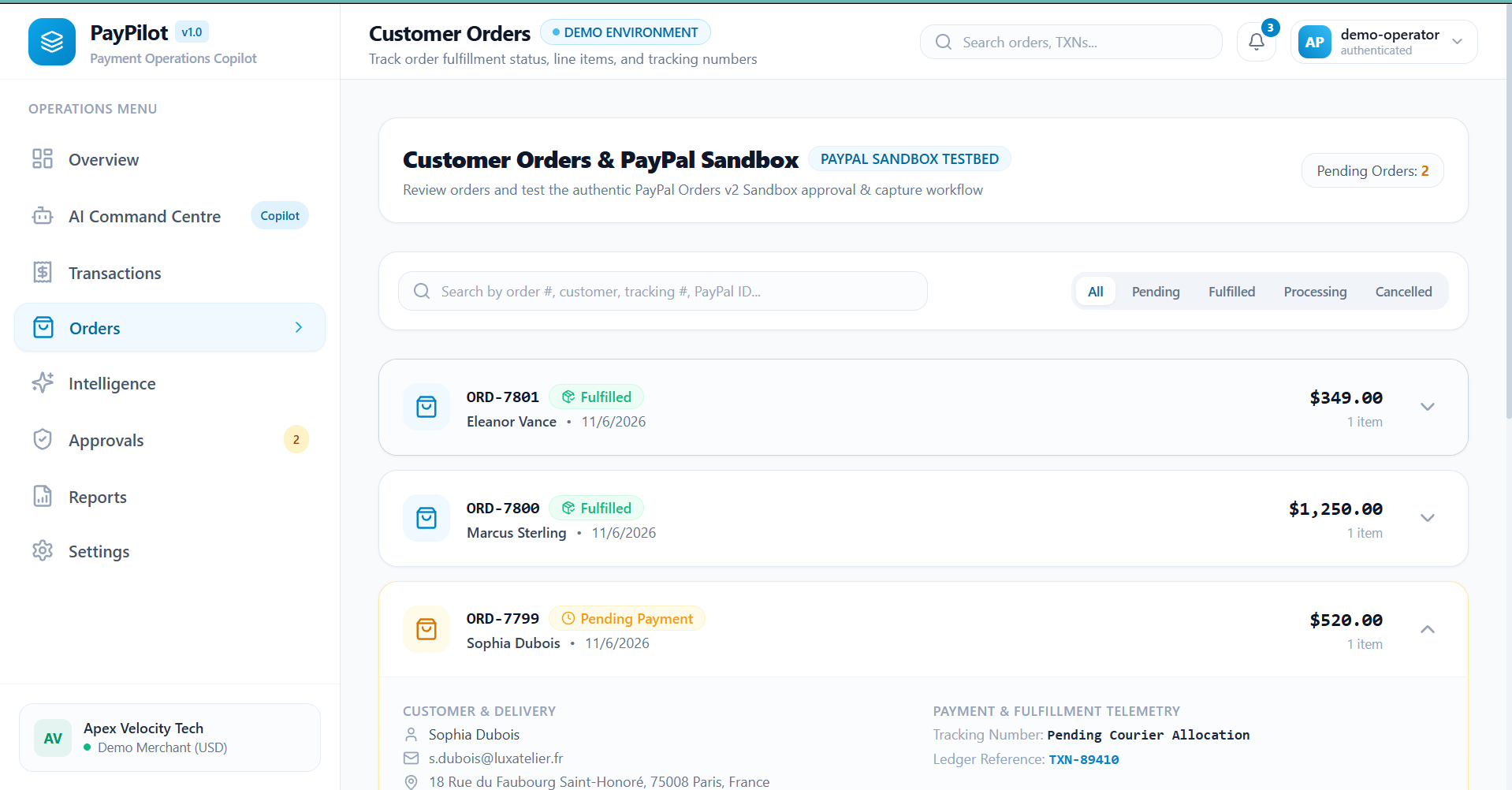
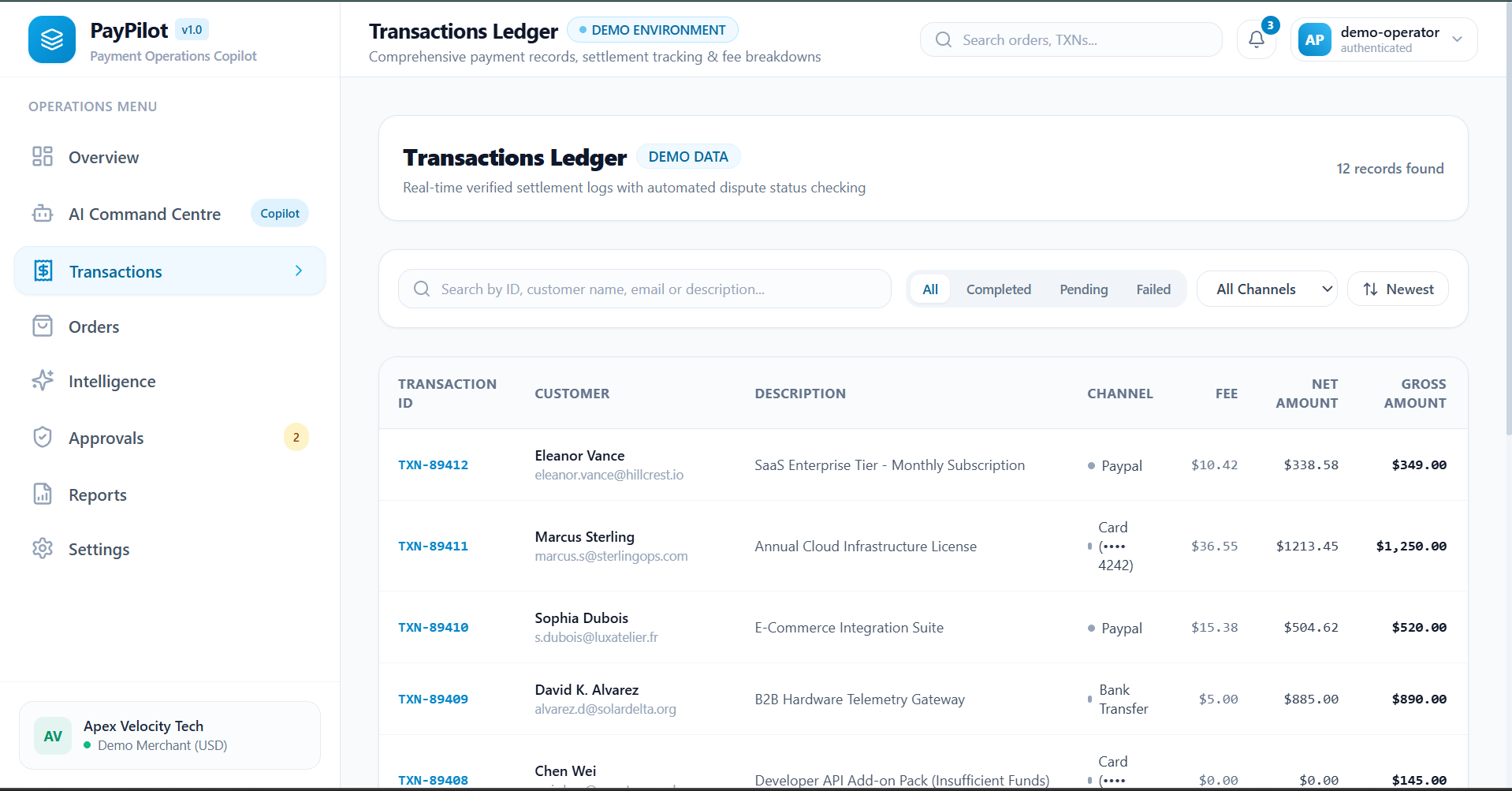
- Transaction and Order Management: Searchable payment records with detailed status information.
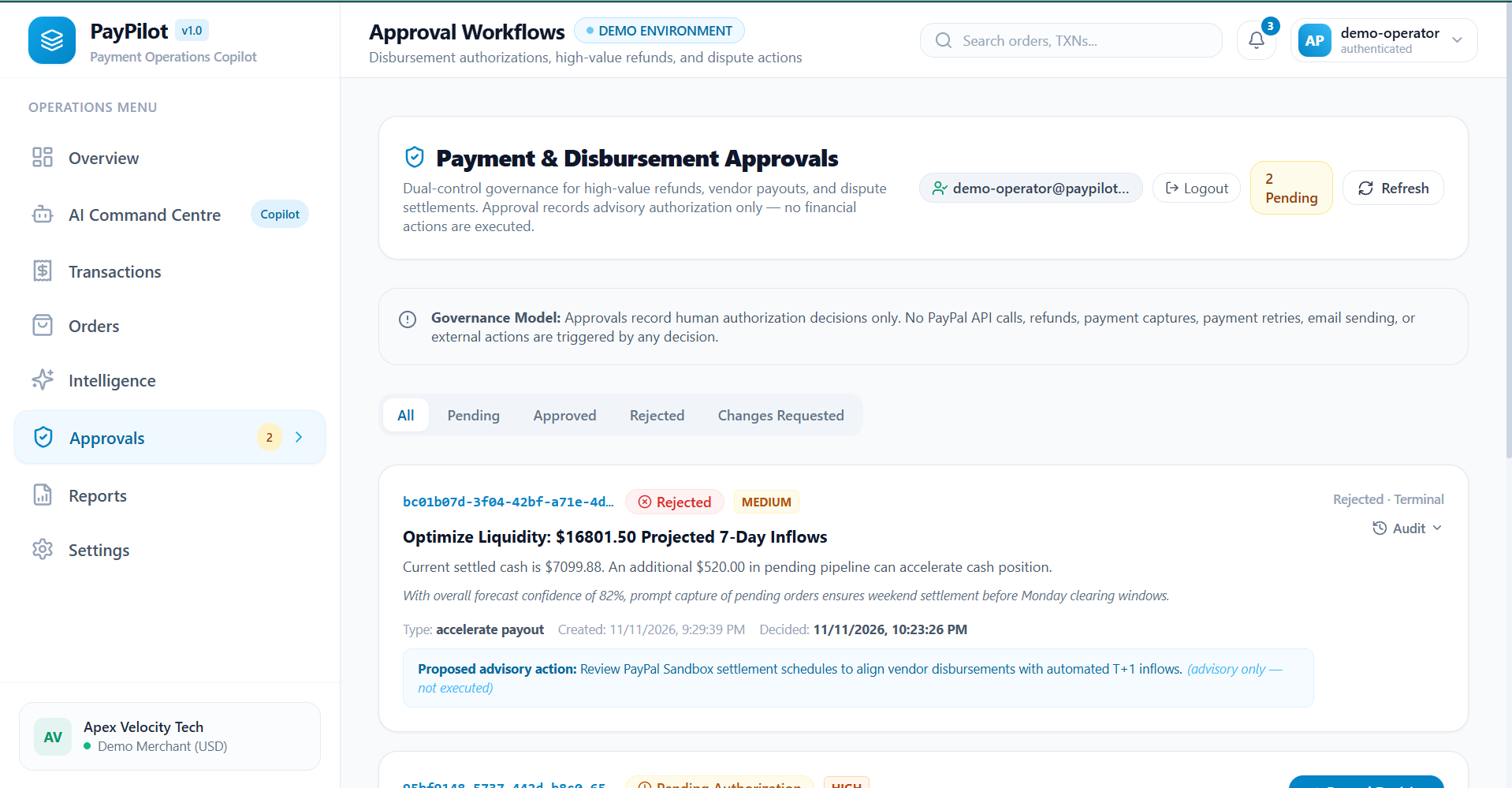
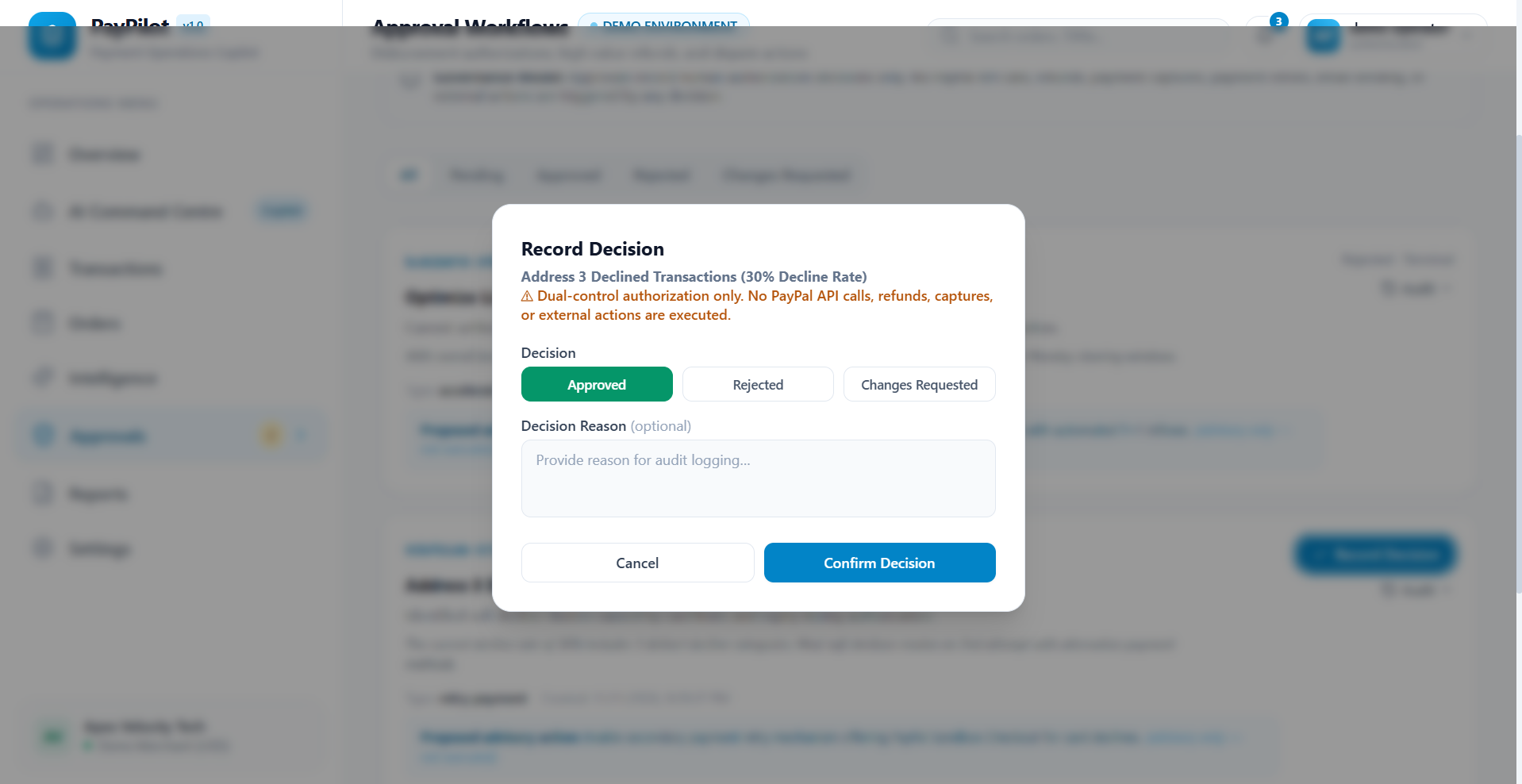
- Approval Workflows: A dual-control approval system for proposed financial operations, with persistent records and an audit trail.
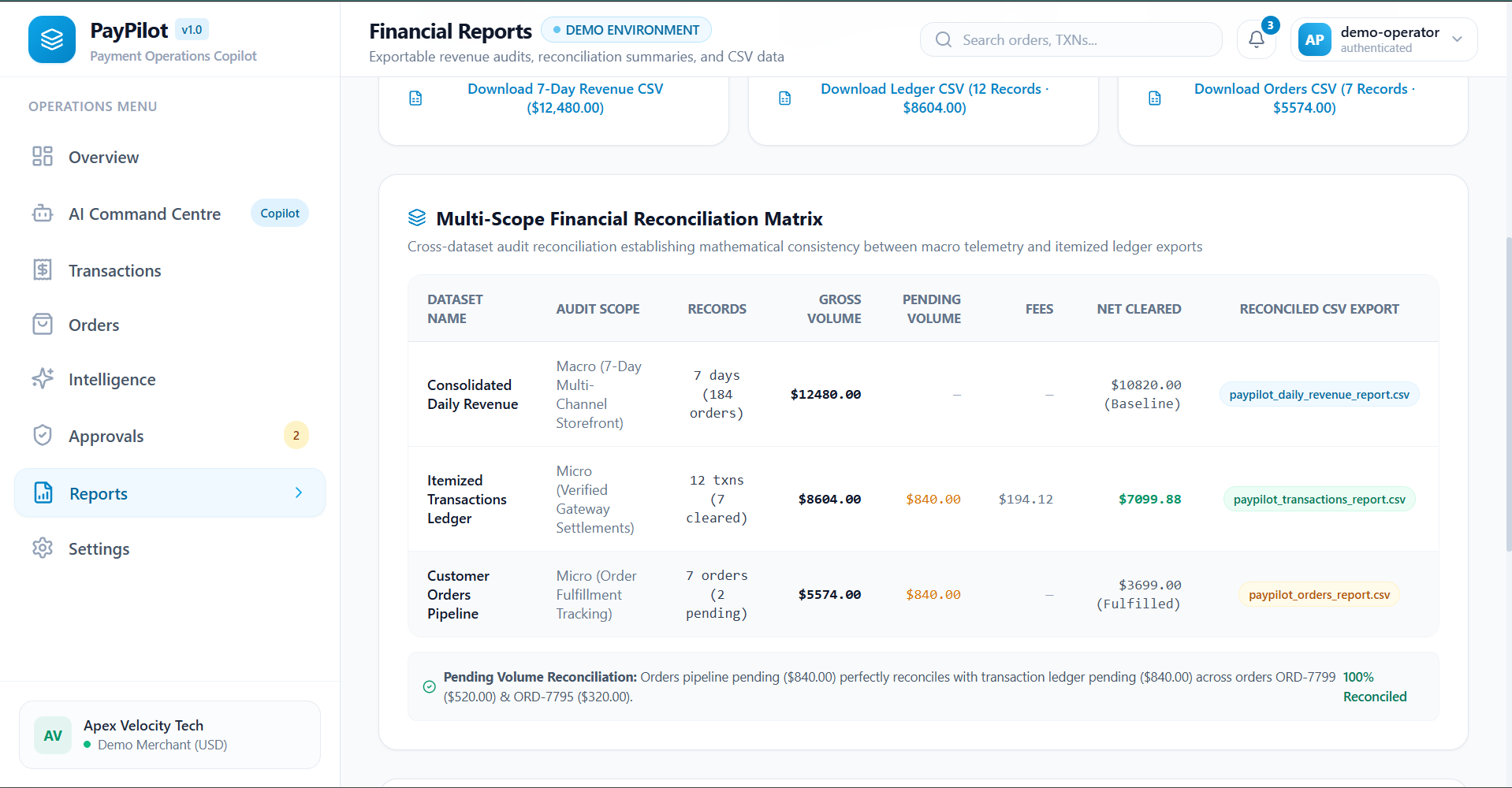
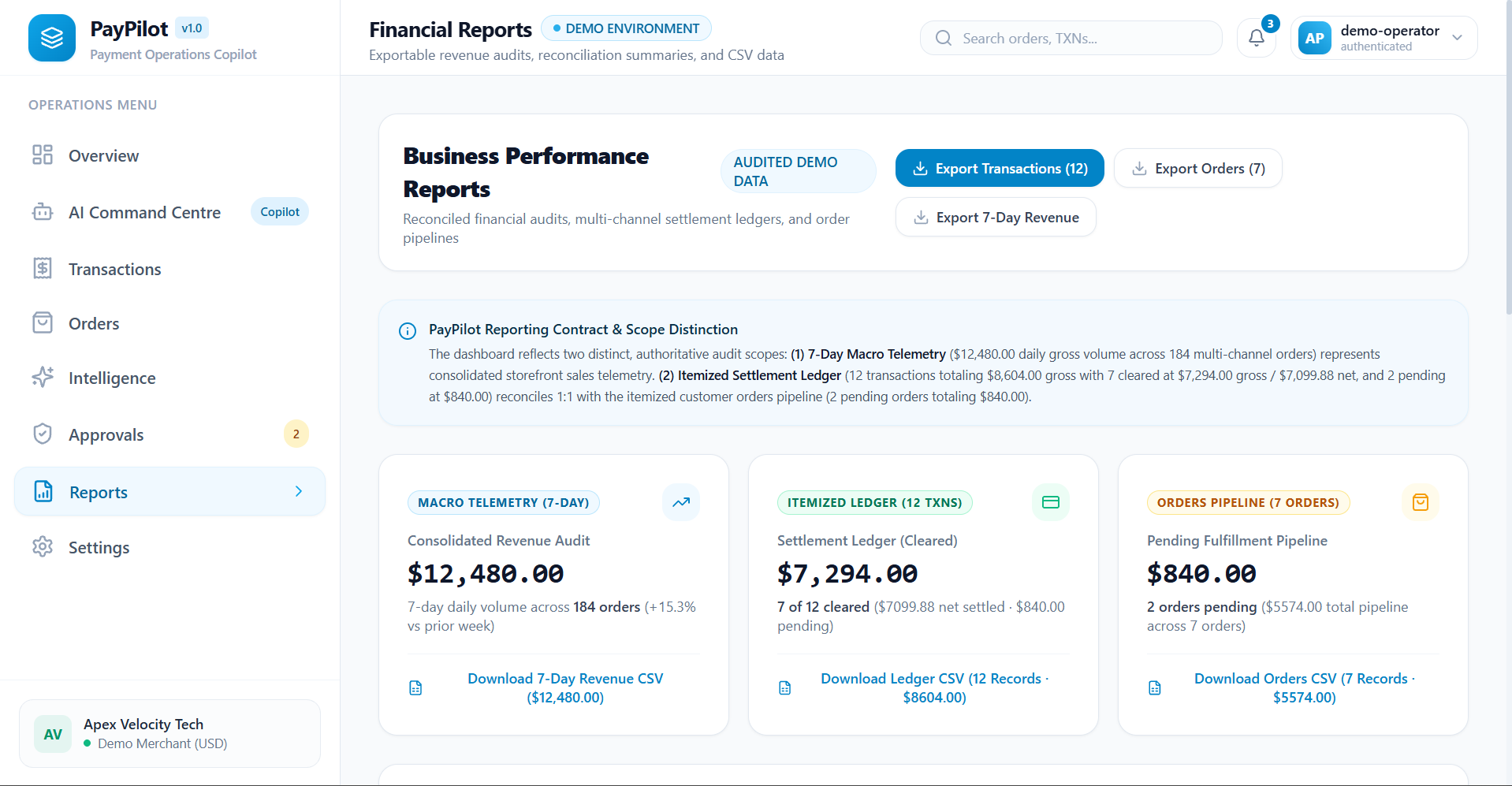
- Reports: Financial summaries, downloadable reports, and reconciliation insights.
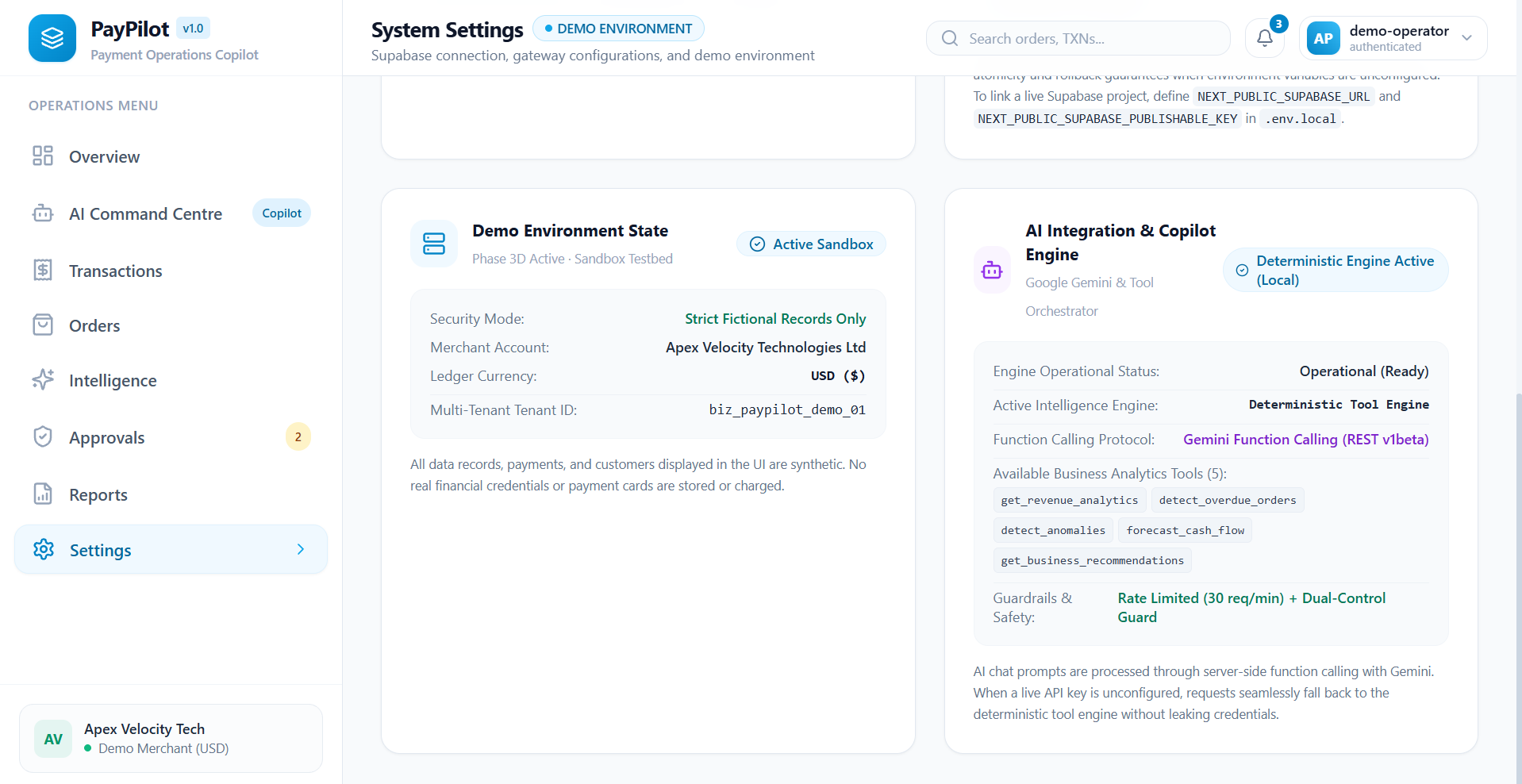
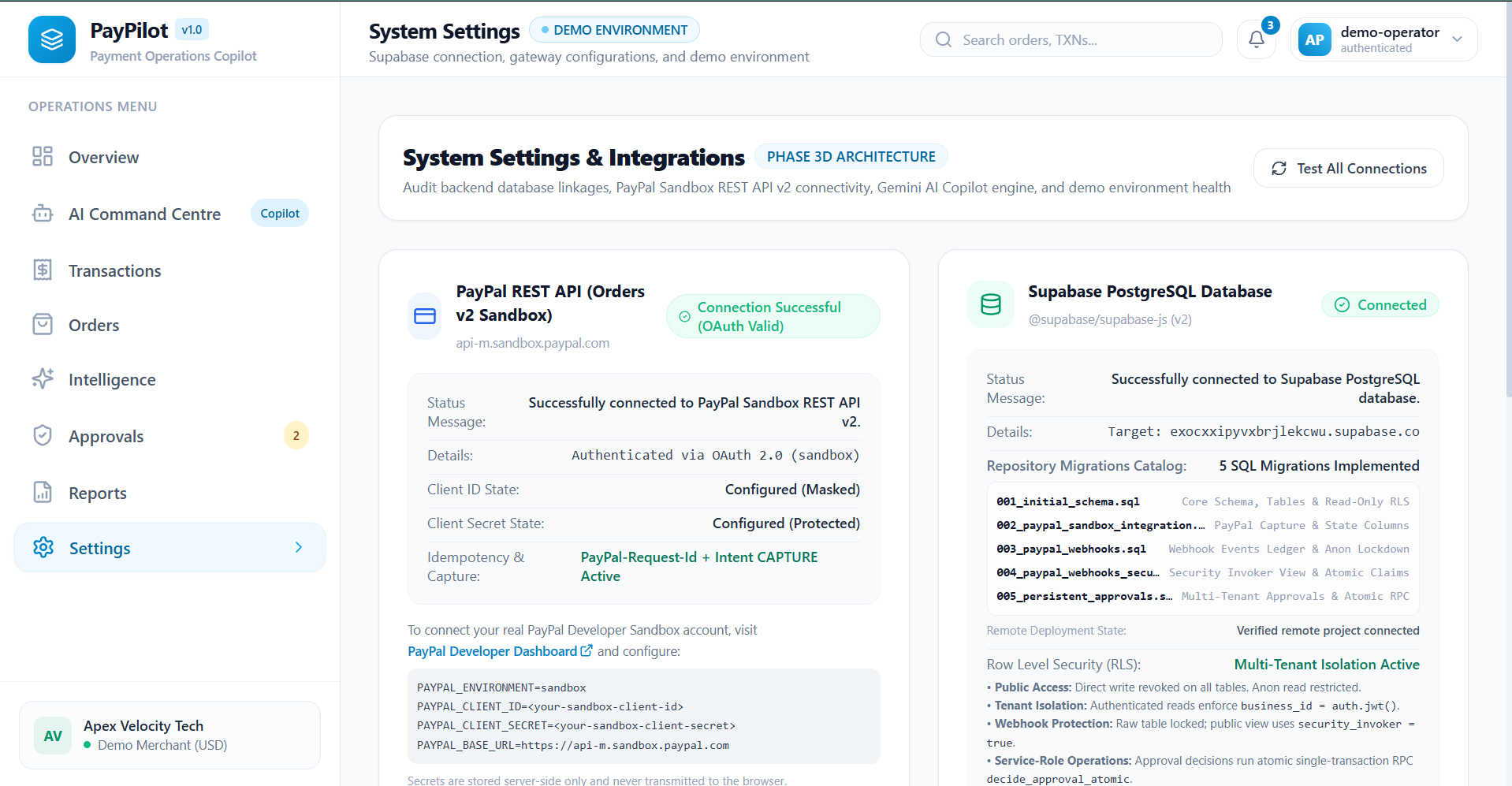
- Integrations: Supabase for persistent data and authentication, alongside PayPal Sandbox connectivity.
The platform is designed around a simple principle: AI should help people make better decisions, while important financial decisions remain under human control.
How We Built It
PayPilot was developed using a modern full-stack architecture.
Frontend
- Next.js
- React
- TypeScript
- Tailwind CSS
- Recharts
- Lucide Icons
Backend and Data
- Next.js API routes
- Supabase PostgreSQL
- Supabase authentication
- Row-Level Security (RLS)
- Persistent approval and audit records
AI and Payment Integration
- Google Gemini integration with a tool-calling architecture
- Deterministic analytics fallback
- PayPal Orders API v2 Sandbox
- PayPal OAuth 2.0
- Webhook verification and idempotency safeguards
The frontend communicates with server-side API routes, which handle data access, authentication, AI orchestration, and integration logic.
For AI-powered analytics, the system uses business tools to retrieve relevant information rather than relying entirely on free-form model responses. This helps ground insights in available business records.
The application is deployed on Vercel, with Supabase providing persistent backend services.
Challenges We Faced
One of our biggest challenges was integrating multiple systems while maintaining a consistent and reliable application.
We had to carefully handle authentication across local development and production deployment environments. We also worked on tenant isolation, persistent approval records, audit history, and secure server-side handling of credentials.
Another challenge was ensuring that analytics remained consistent across the Overview, Transactions, Orders, and Reports sections. We focused on reconciling data sources and making the distinction between consolidated dashboard metrics and itemized records clear.
Building an AI interface introduced another challenge: ensuring that responses were grounded in business data and that the AI could not directly execute sensitive financial operations.
These challenges taught us that building a useful AI application requires more than connecting a model to a user interface. Reliability, security, data consistency, and thoughtful user experience are equally important.
What We Learned
Through PayPilot, we learned how to develop and deploy a full-stack application involving AI, payment APIs, authentication, databases, and analytics.
We gained practical experience with:
- Designing a full-stack application architecture.
- Integrating AI through structured tool calling.
- Working with payment APIs and sandbox environments.
- Implementing authentication and multi-tenant data isolation.
- Building persistent approval and audit workflows.
- Testing, debugging, and deploying an application to production.
Most importantly, we learned to treat AI as a decision-support tool rather than an unrestricted system that should automatically execute important financial actions.
What's Next?
We envision PayPilot evolving into a more comprehensive payment operations platform.
Future improvements could include deeper payment-provider integrations, more advanced anomaly detection, improved forecasting, customizable business analytics, and stronger production authentication.
Our long-term vision is to make payment operations more transparent, intelligent, and accessible to businesses of different sizes.
PayPilot — Understand your payments. Anticipate what matters. Make better decisions.
Built With
- ai-agents
- artificial-intelligence
- authentication
- data-analytics
- data-visualization
- fintech
- full-stack
- generative-ai
- google-ai
- google-gemini
- javascript
- next.js
- node.js
- oauth-2.0
- payment-processing
- paypal
- paypal-sandbox
- postgresql
- react
- recharts
- rest-api
- supabase
- tailwind-css
- typescript
- vercel

