-
-
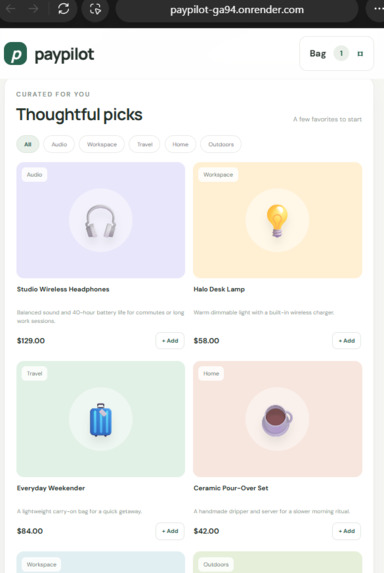
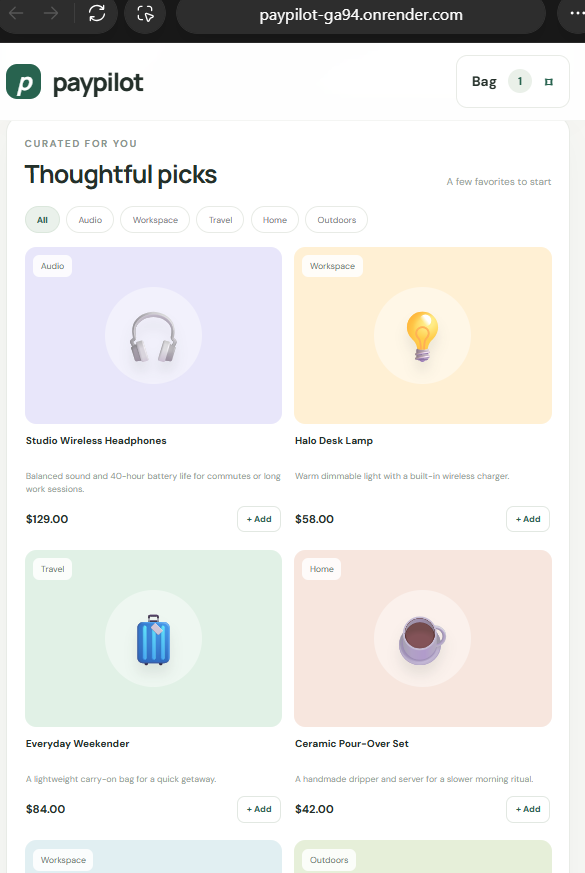
Front Page
-

Searching Product
-
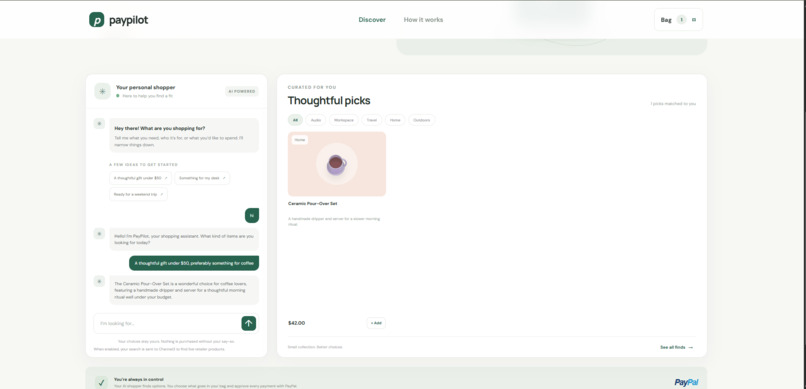
AI assistant

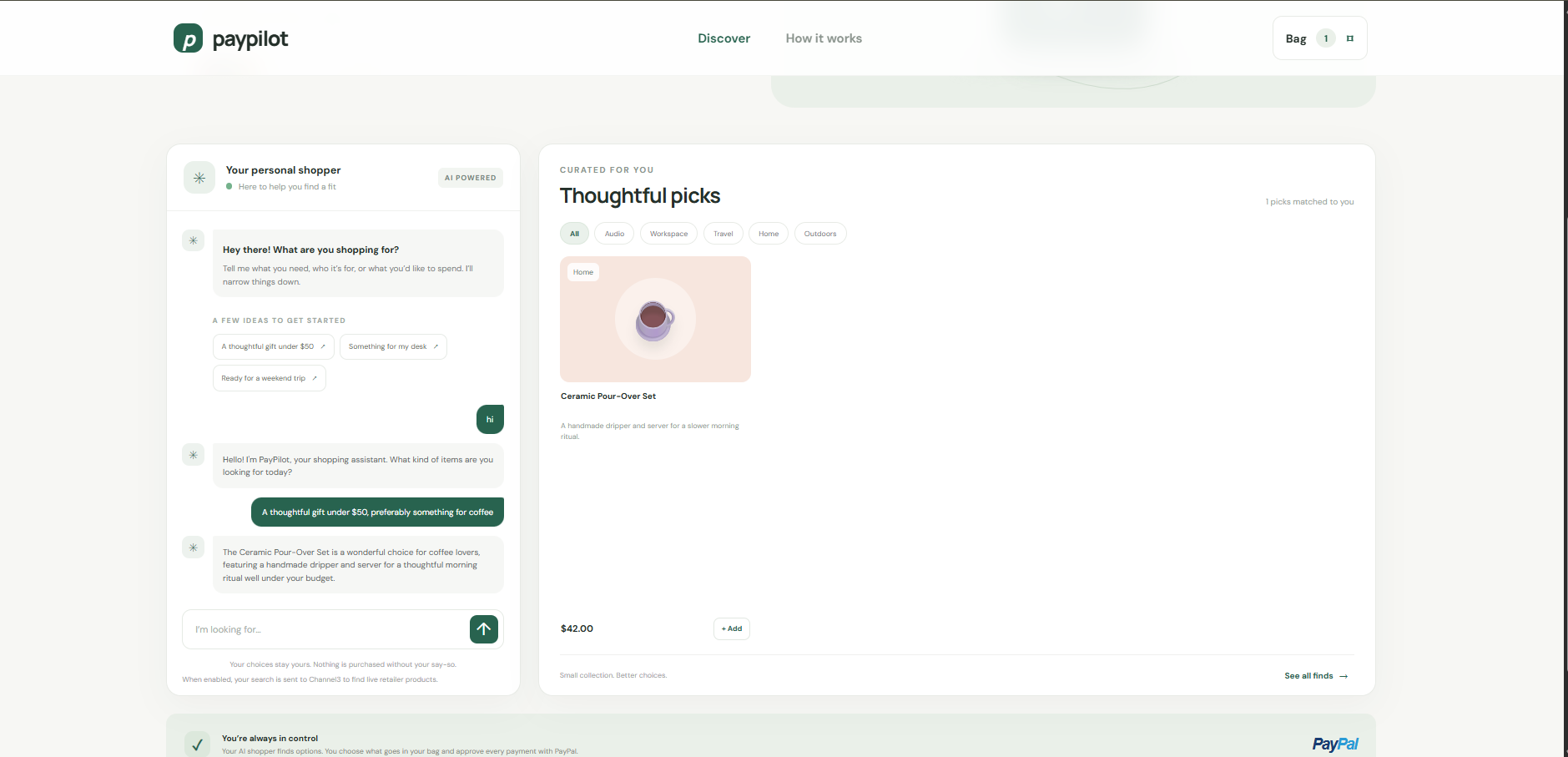
Inspiration: I wanted to make online shopping feel less overwhelming. Instead of browsing a huge catalog, shoppers can describe what they need, who it’s for, and what they want to spend. PayPilot turns that request into a few relevant options, while leaving every decision—and every purchase—in the shopper’s hands. How I built it: PayPilot uses a Node.js and Express server with a browser-based storefront. Gemini interprets shopping requests and recommends products from PayPilot’s curated catalog and, when configured, Channel3’s live product search. For curated products, PayPal Sandbox handles checkout: the server calculates prices and creates the order, then captures it only after the shopper approves it through PayPal. AI can recommend products, but it cannot place or approve an order. What I learned: Connecting APIs takes more than getting them to respond. Secrets need to stay on the server, AI recommendations need to be checked against real product IDs, and checkout should use trusted prices instead of values supplied by the browser. I also learned to keep retailer offers separate from the PayPal demo cart so shoppers know where each purchase happens. Challenges: My first AI setup depended on OpenAI credits, which ran out. I added Gemini support so PayPilot could use another AI provider, while keeping OpenAI optional and a basic catalog-matching fallback available. I also had to work through outdated PayPal examples and use the current Orders v2 flow for creating and capturing Sandbox payments. Free hosting and manual deployment added another step: getting the code, environment variables, and deployed version in sync.
6:26 PM
Built With
- channel3api
- css
- express.js
- geminiapi
- html
- javascript
- node.js
- render
- sandbox

Log in or sign up for Devpost to join the conversation.