-
-
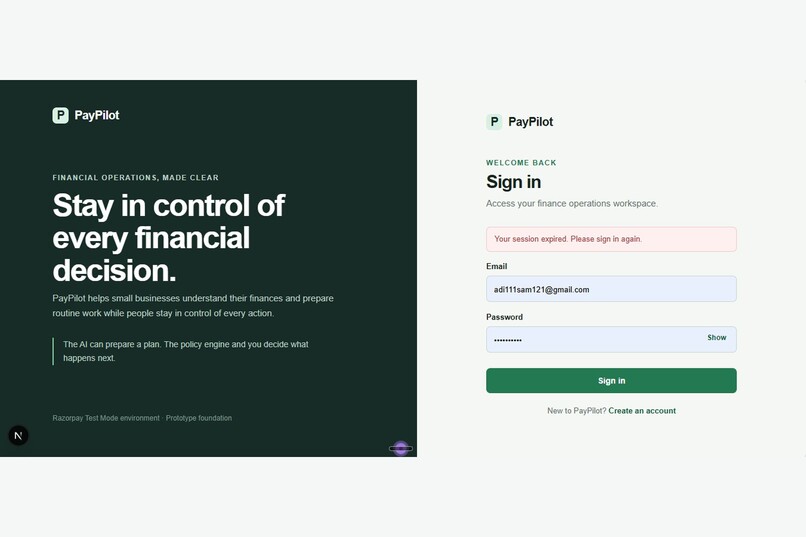
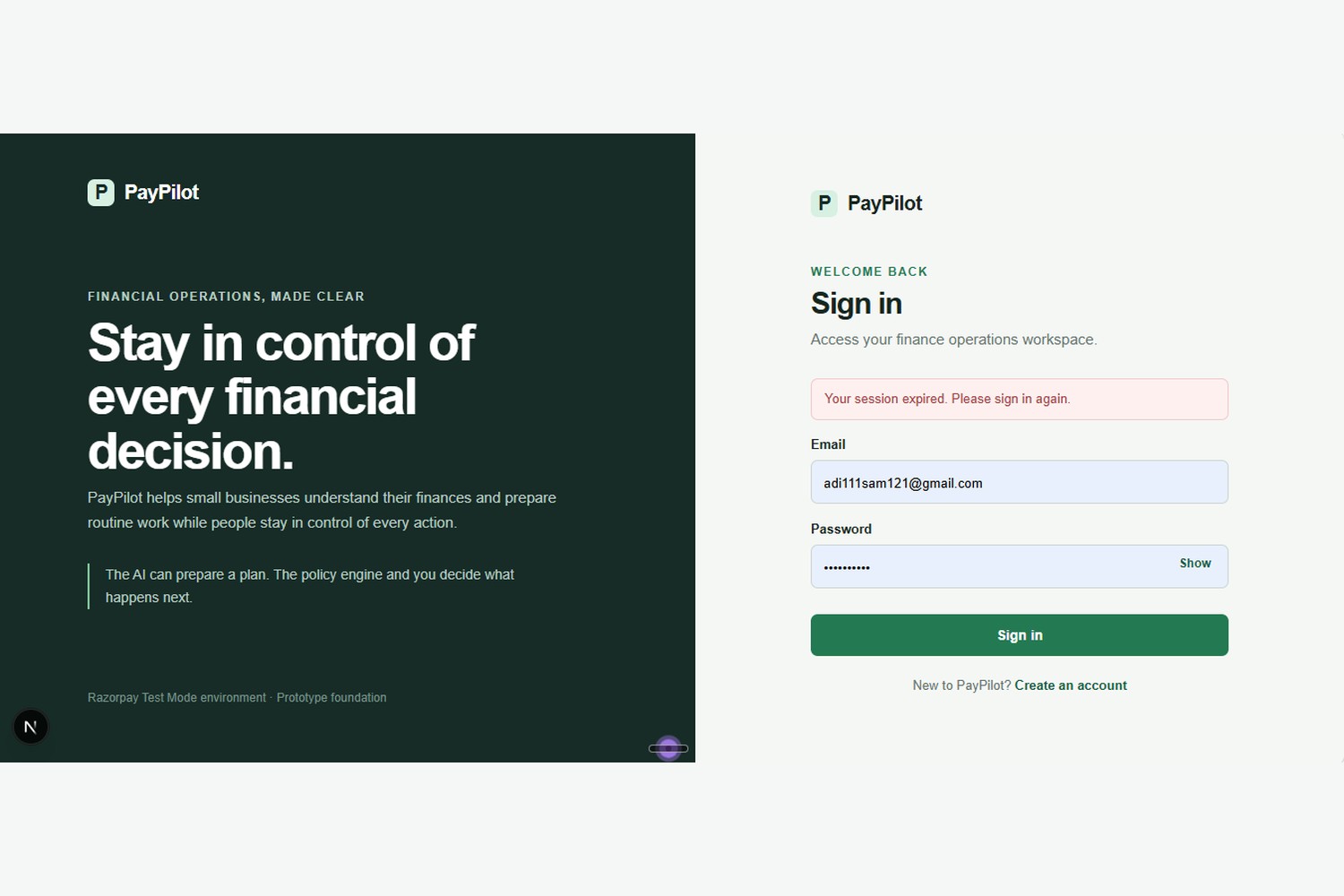
PayPilot's secure login page with a clean, user-friendly financial workspace.
-
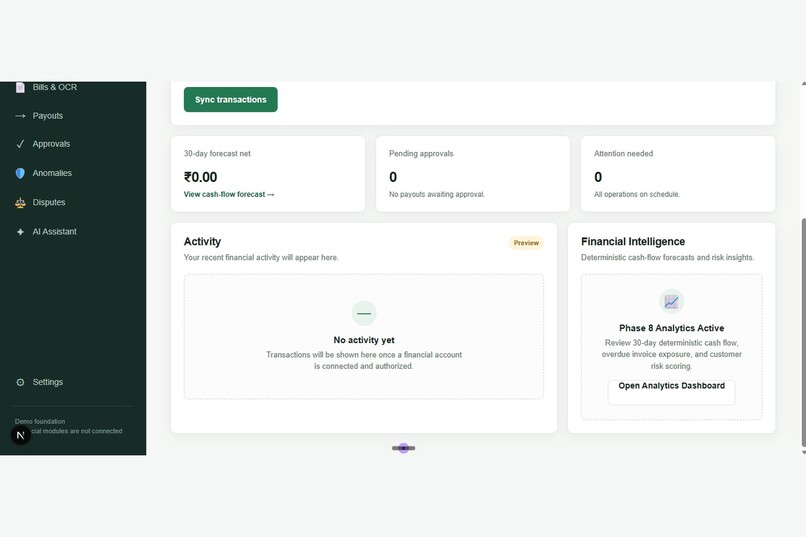
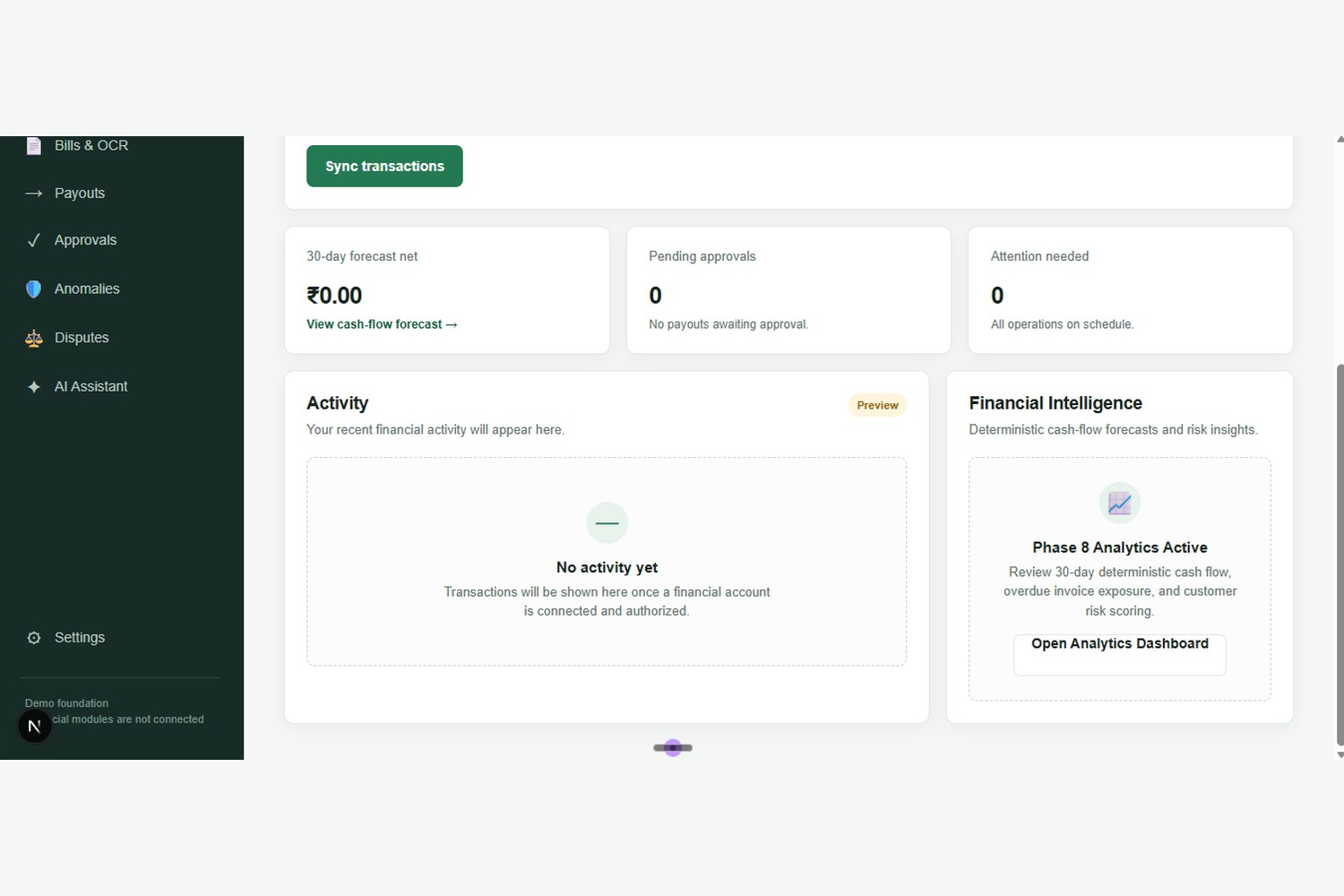
Dashboard activity summary and financial intelligence overview.
-
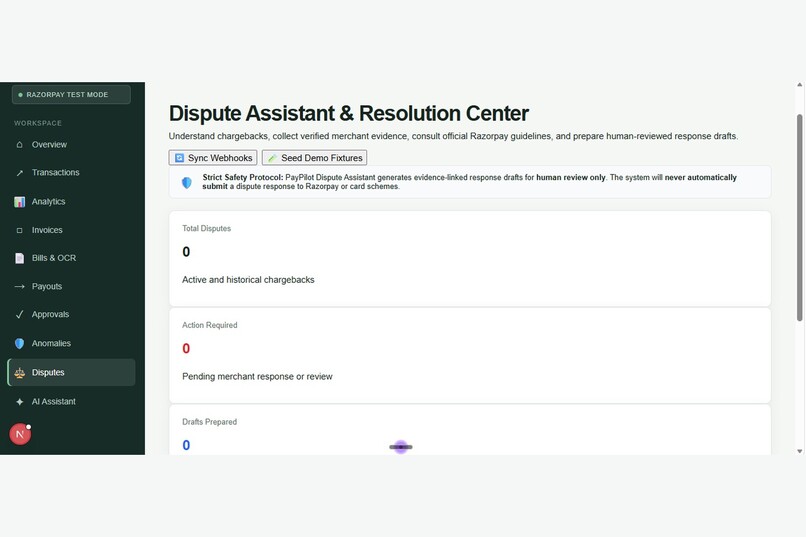
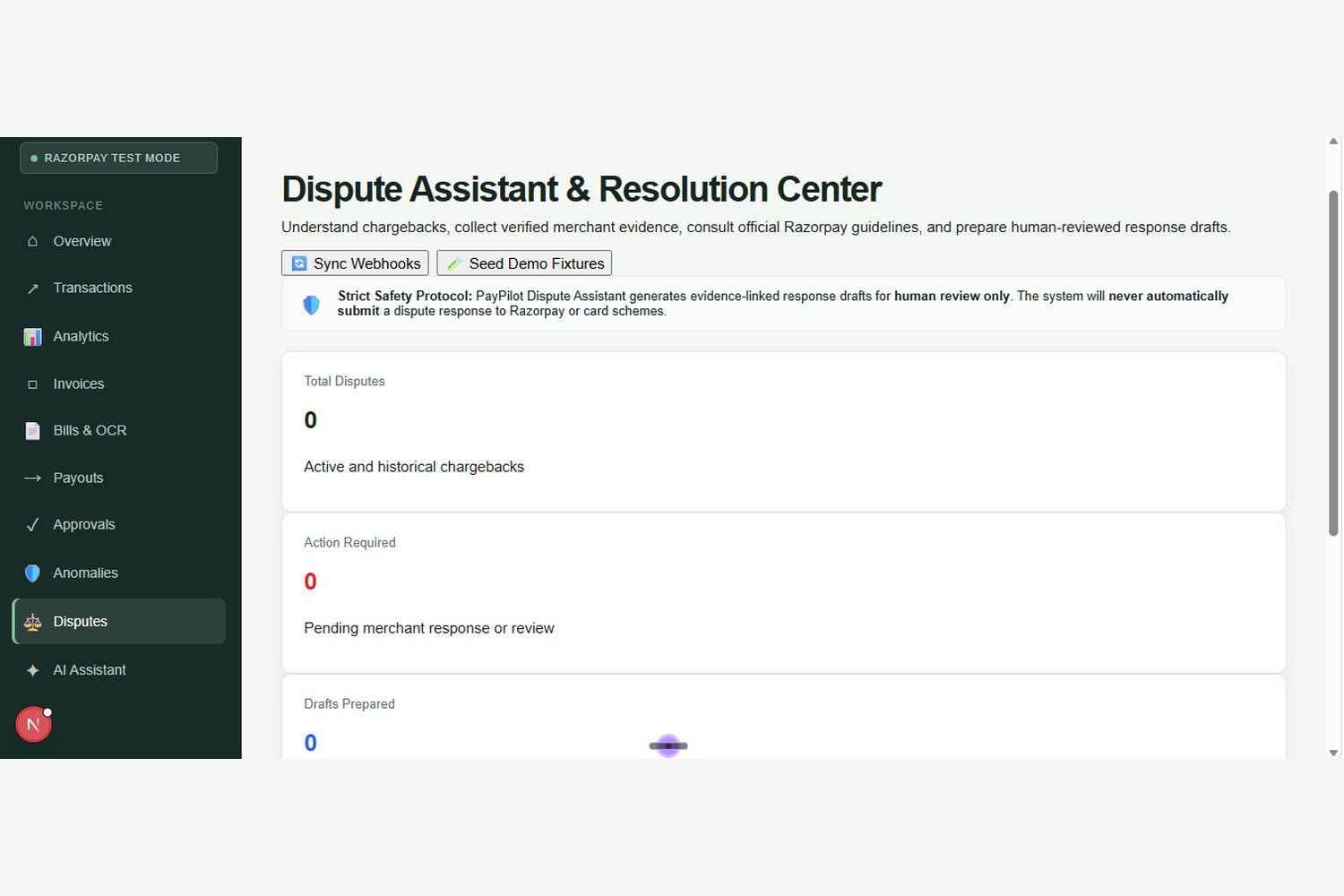
Dispute resolution center for organizing chargebacks and preparing evidence-based responses.
-
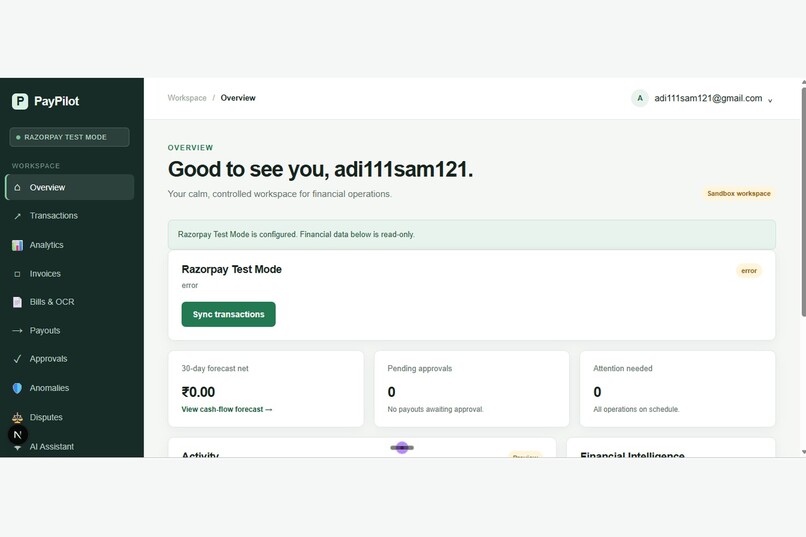
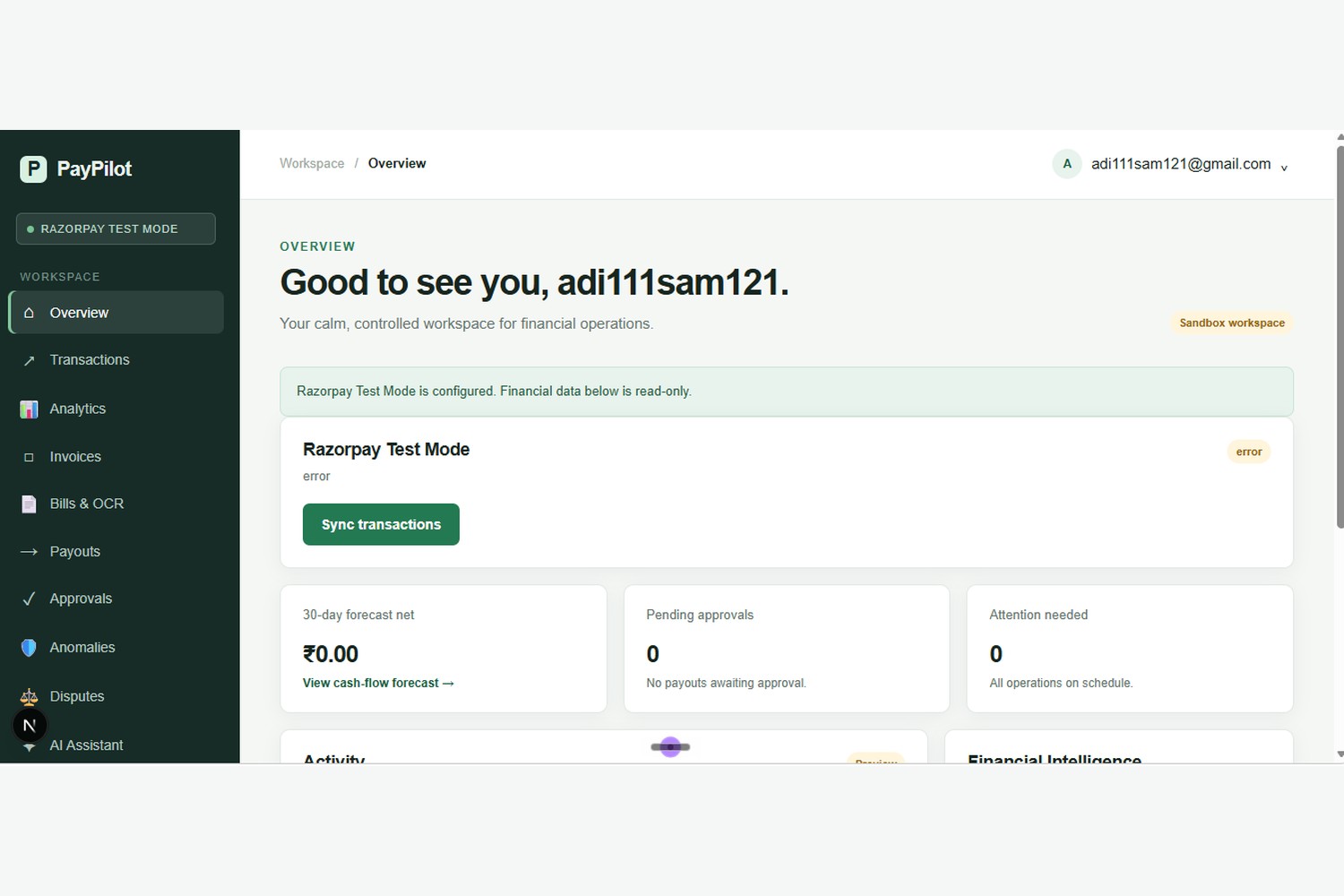
Main dashboard showing financial overview, Razorpay integration, and key activity metrics.
-
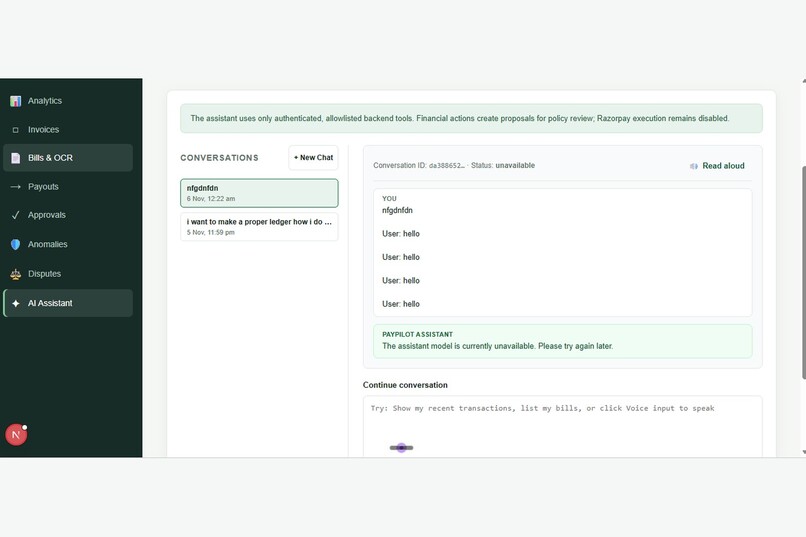
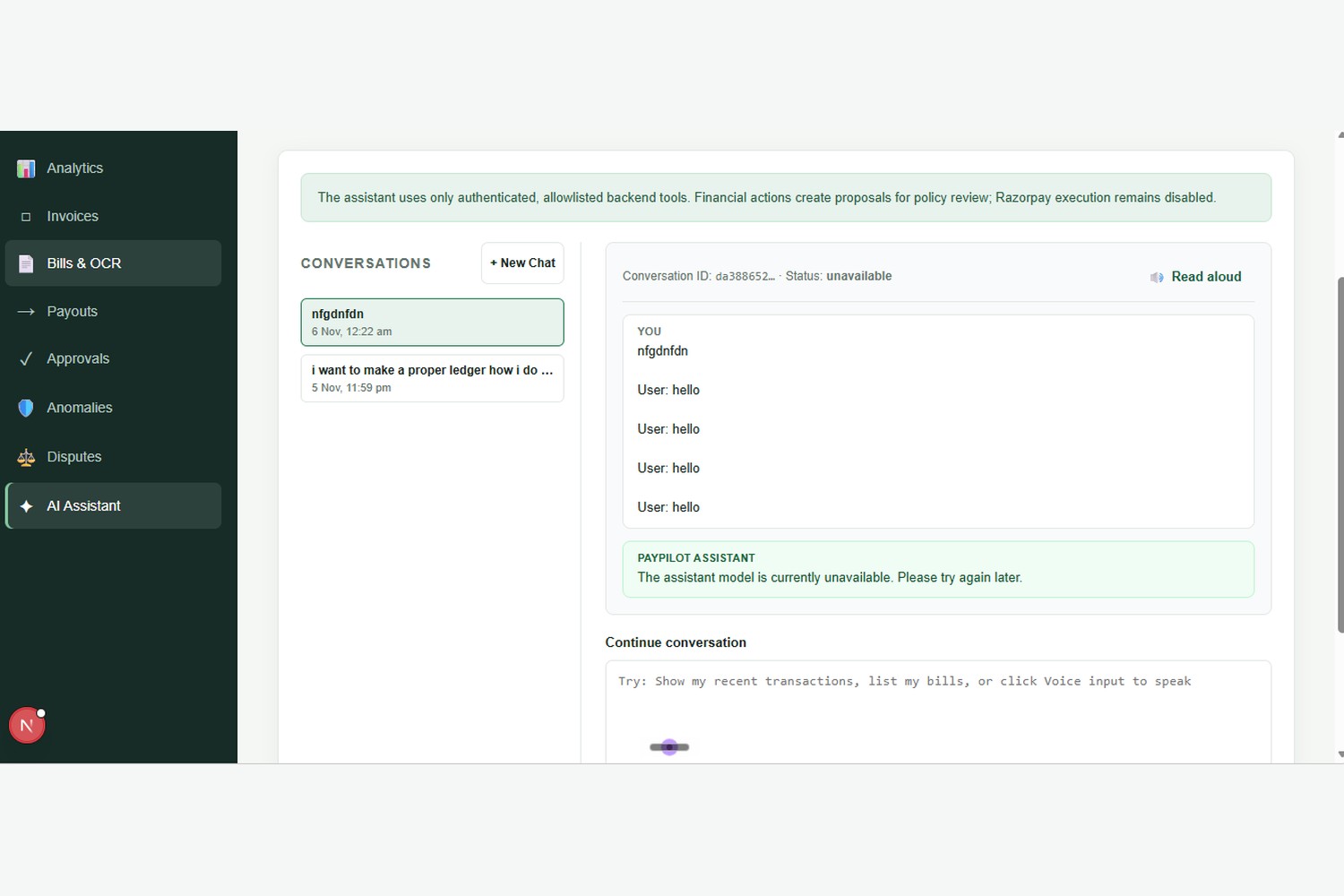
AI Financial Assistant for conversational financial insights and controlled operations.
-
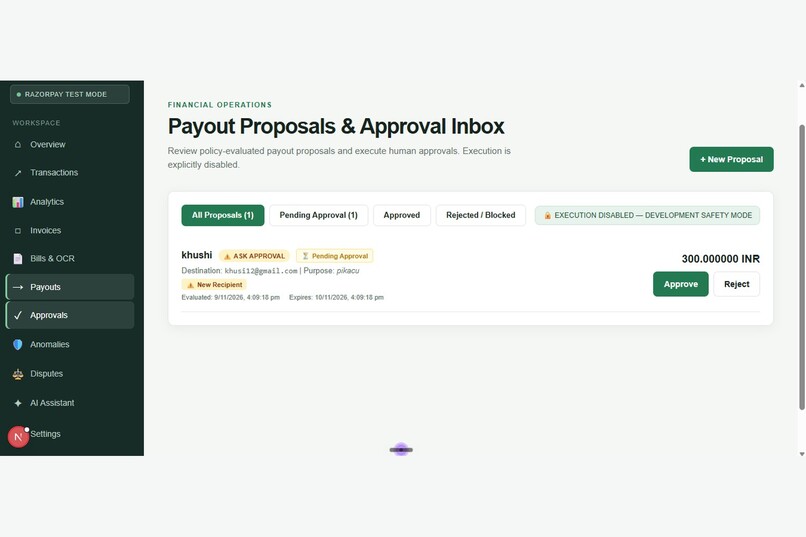
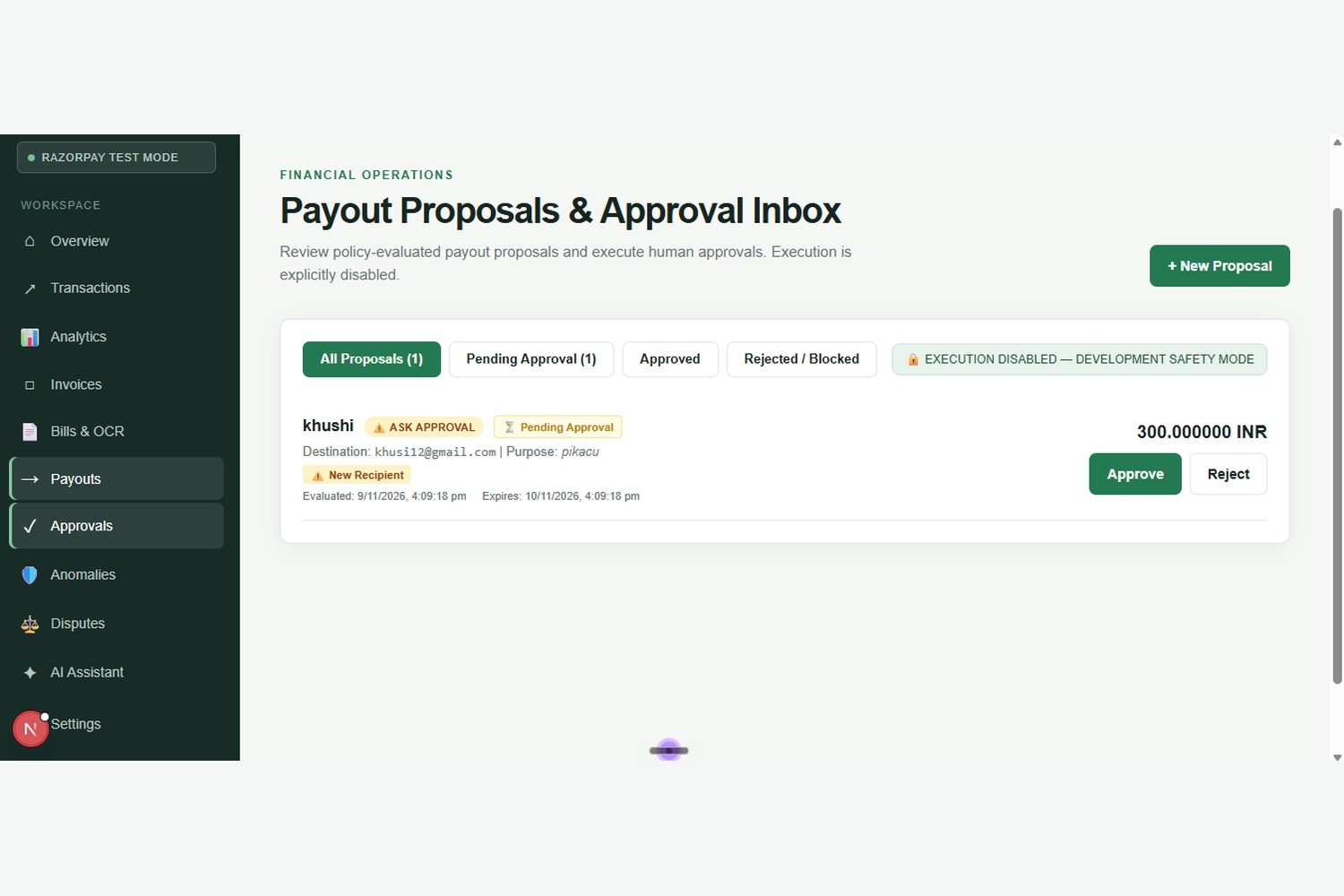
Payment proposals and approval inbox with policy-based financial controls
-
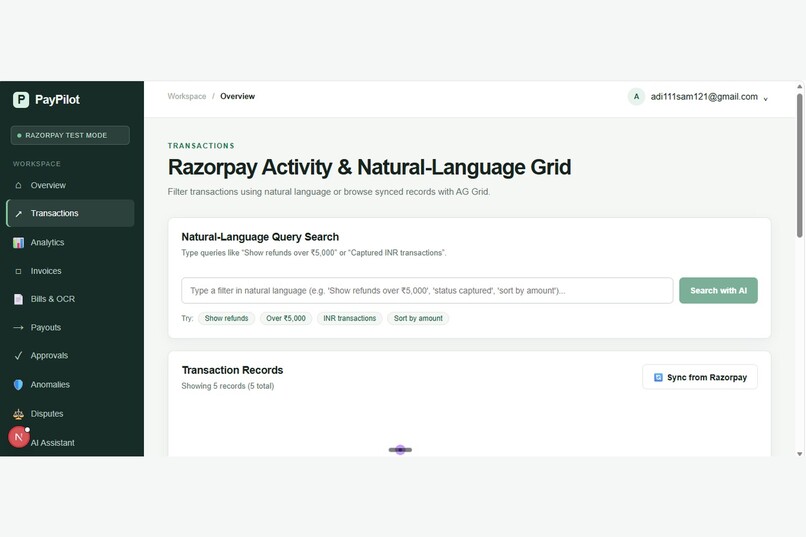
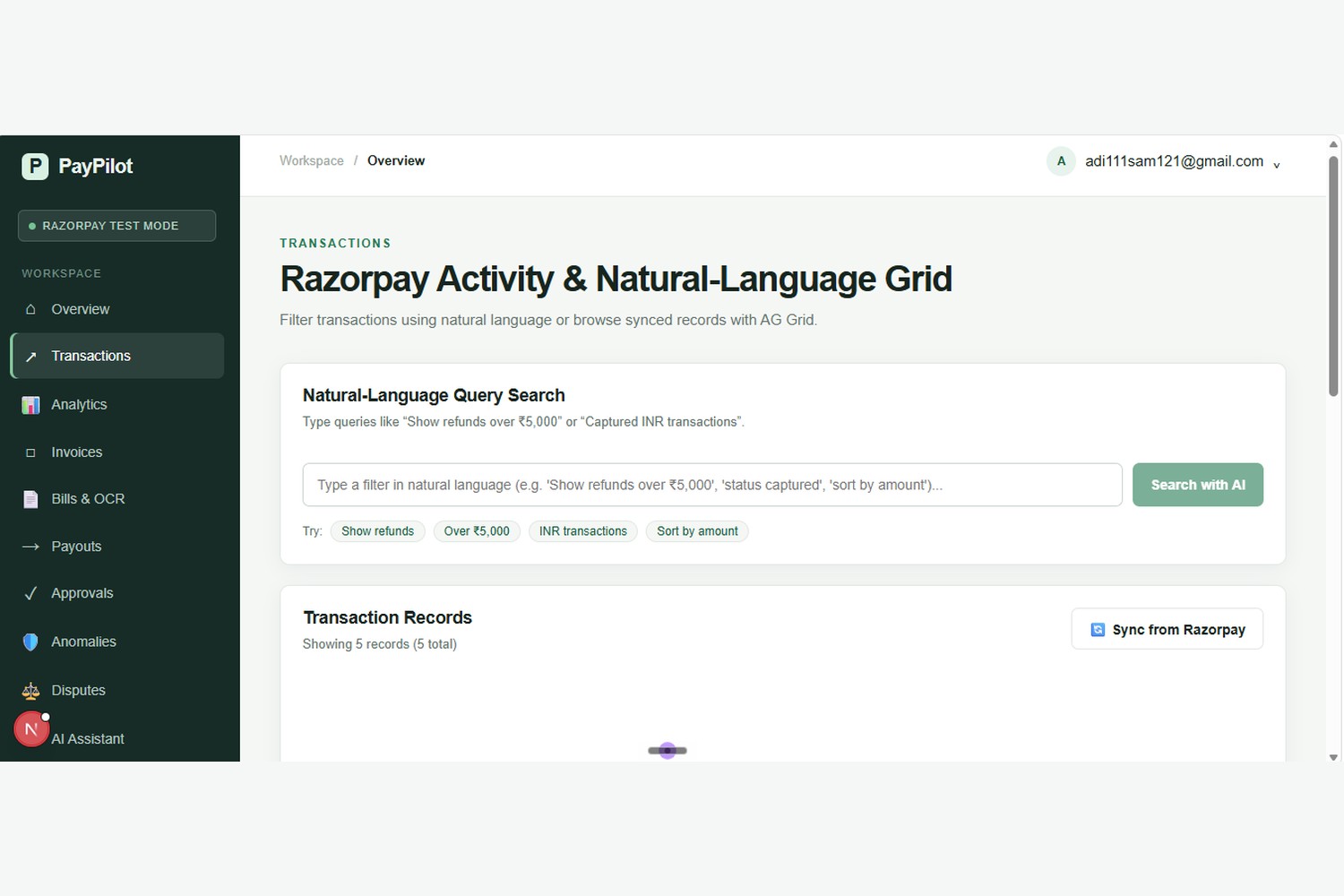
Transaction management with natural-language AI search and transaction records.
-
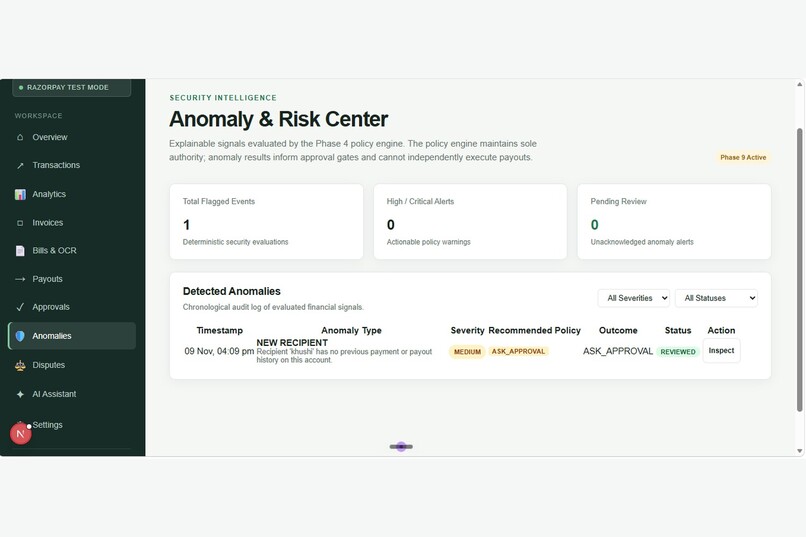
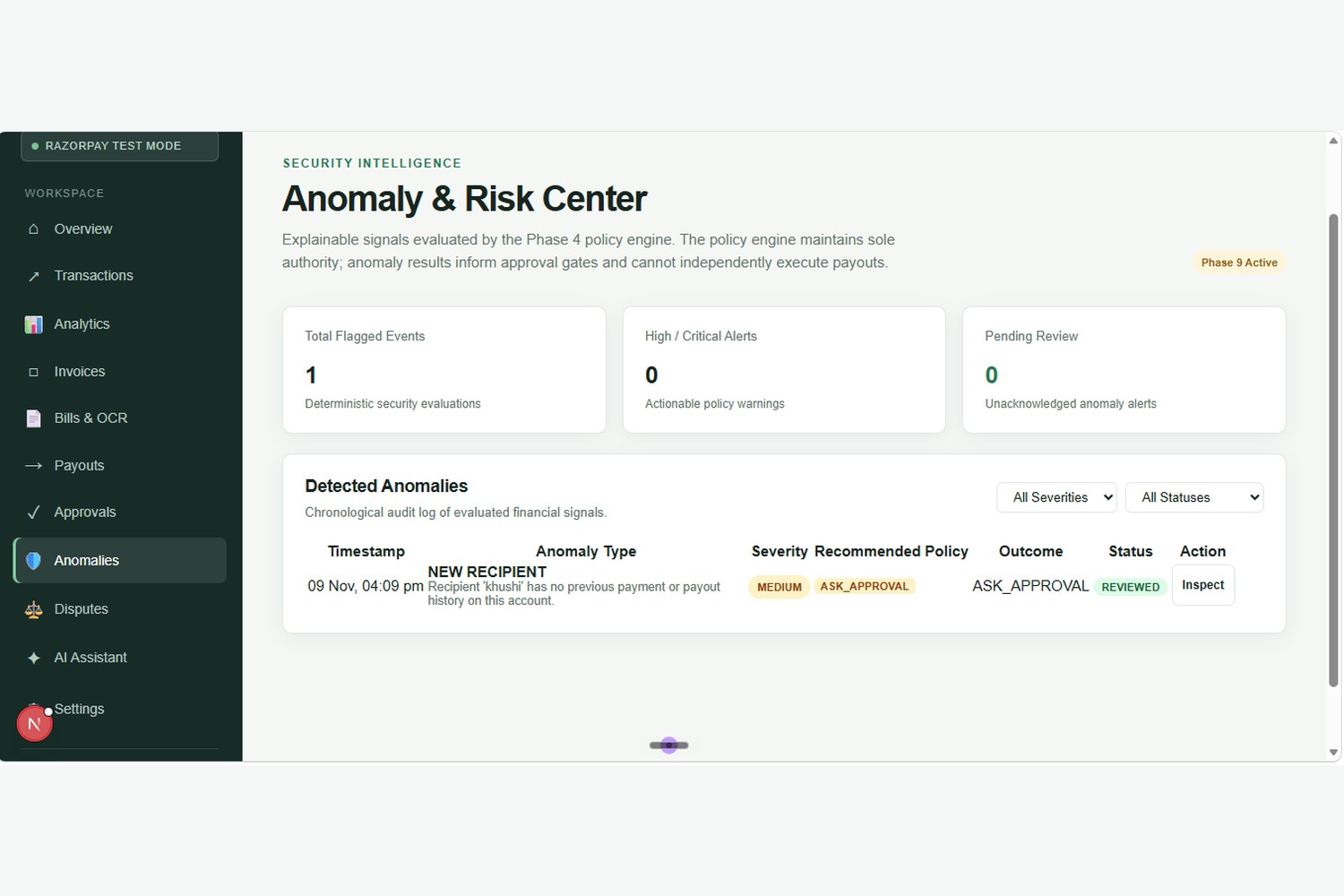
Anomaly detection and risk monitoring with explainable security alerts.
-
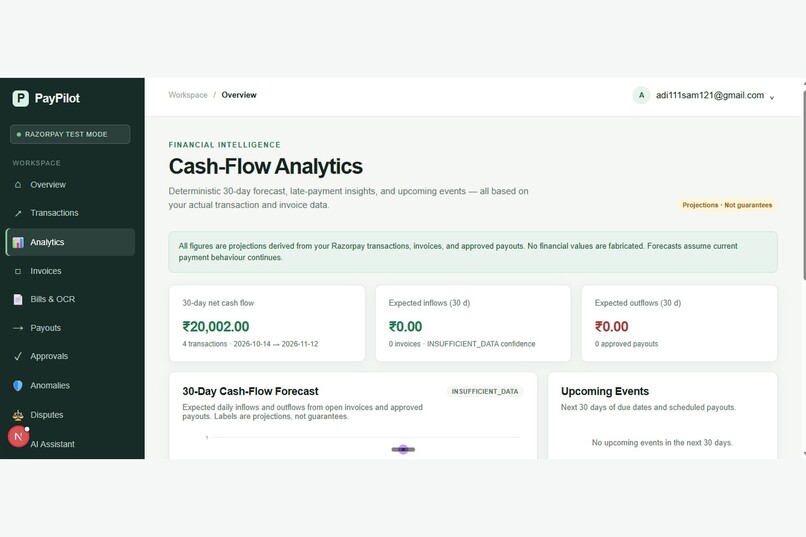
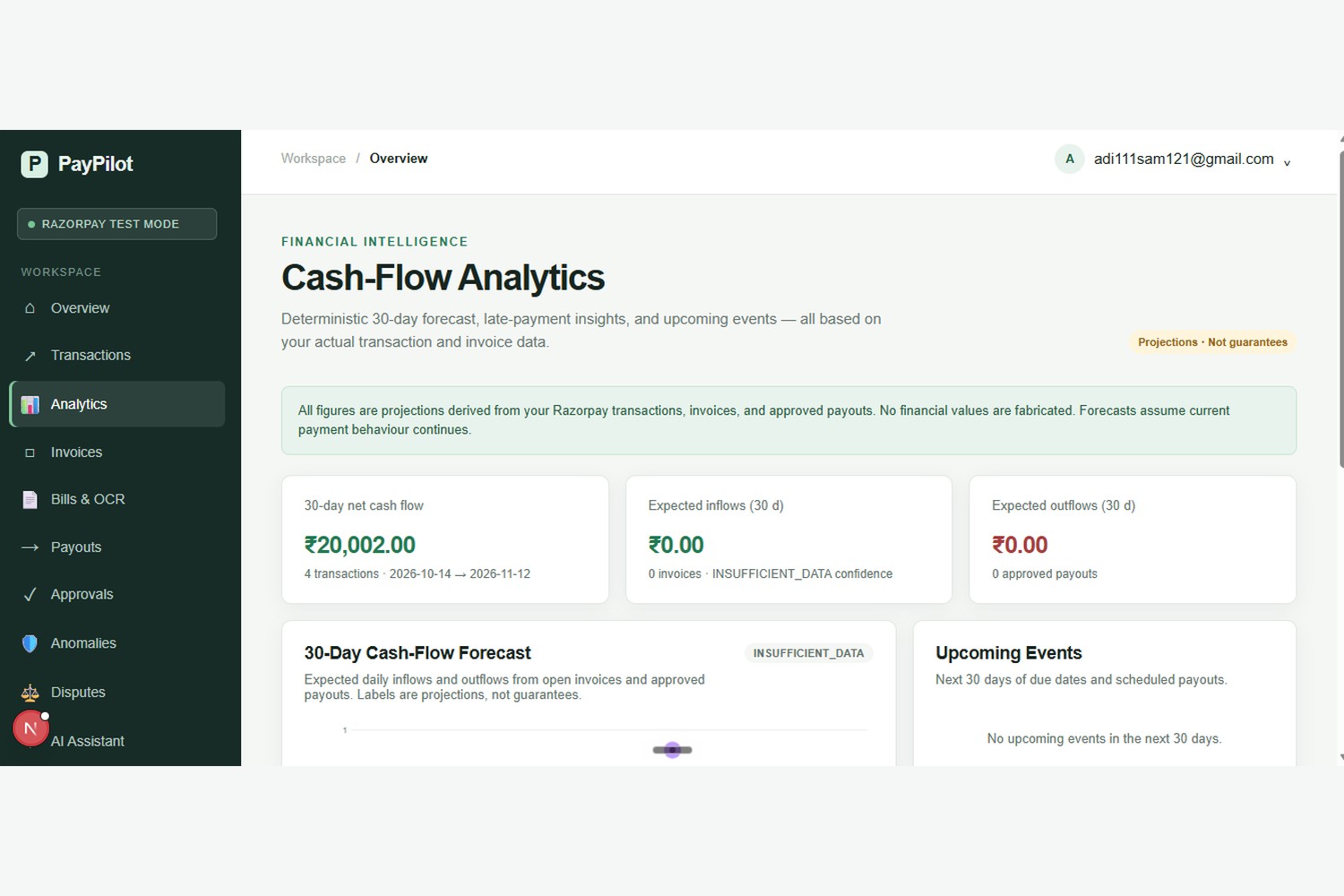
Cash-flow analytics with financial forecasts, inflows, and outflows.
-
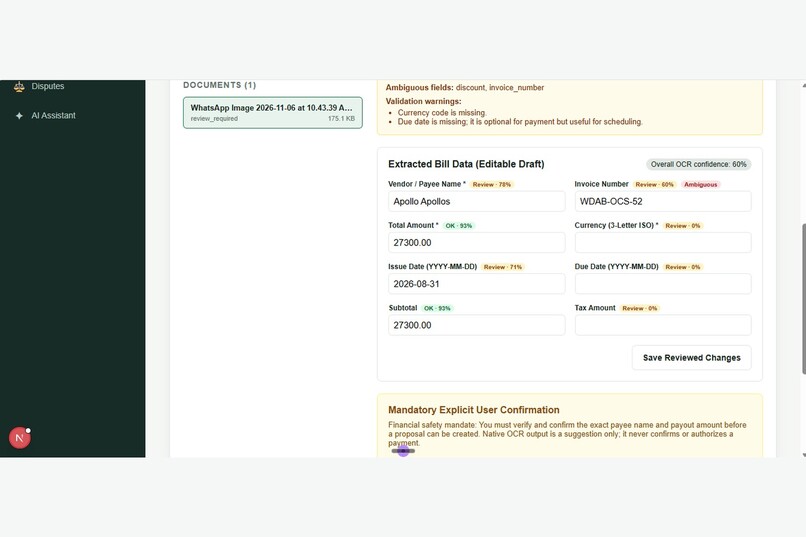
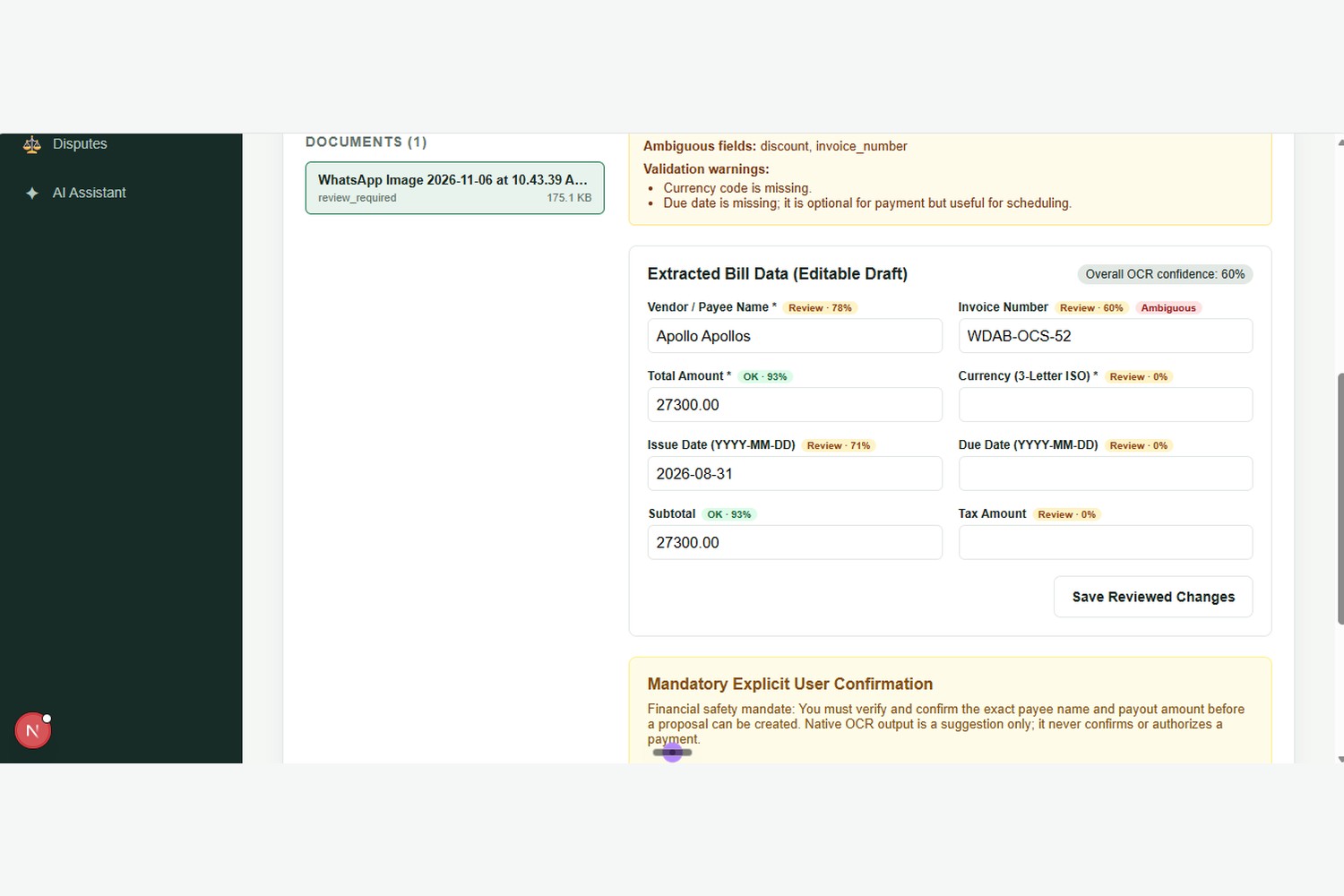
Editable invoice data with OCR confidence scores and human verification.
-
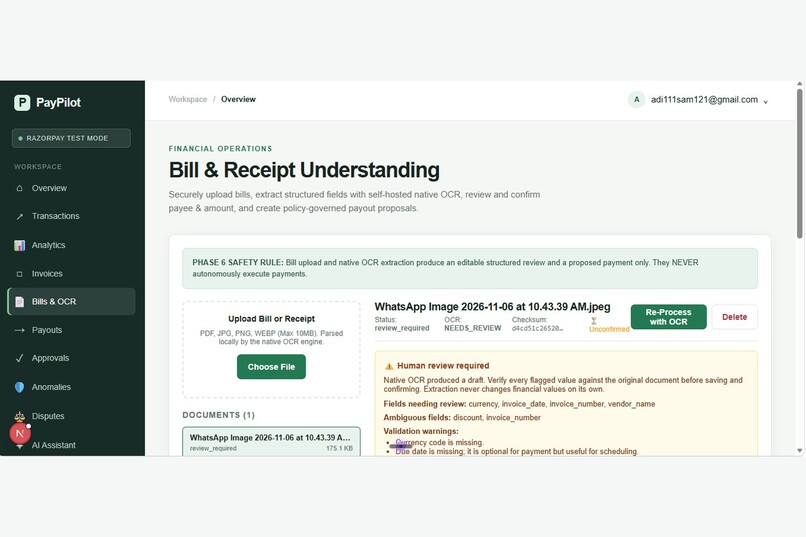
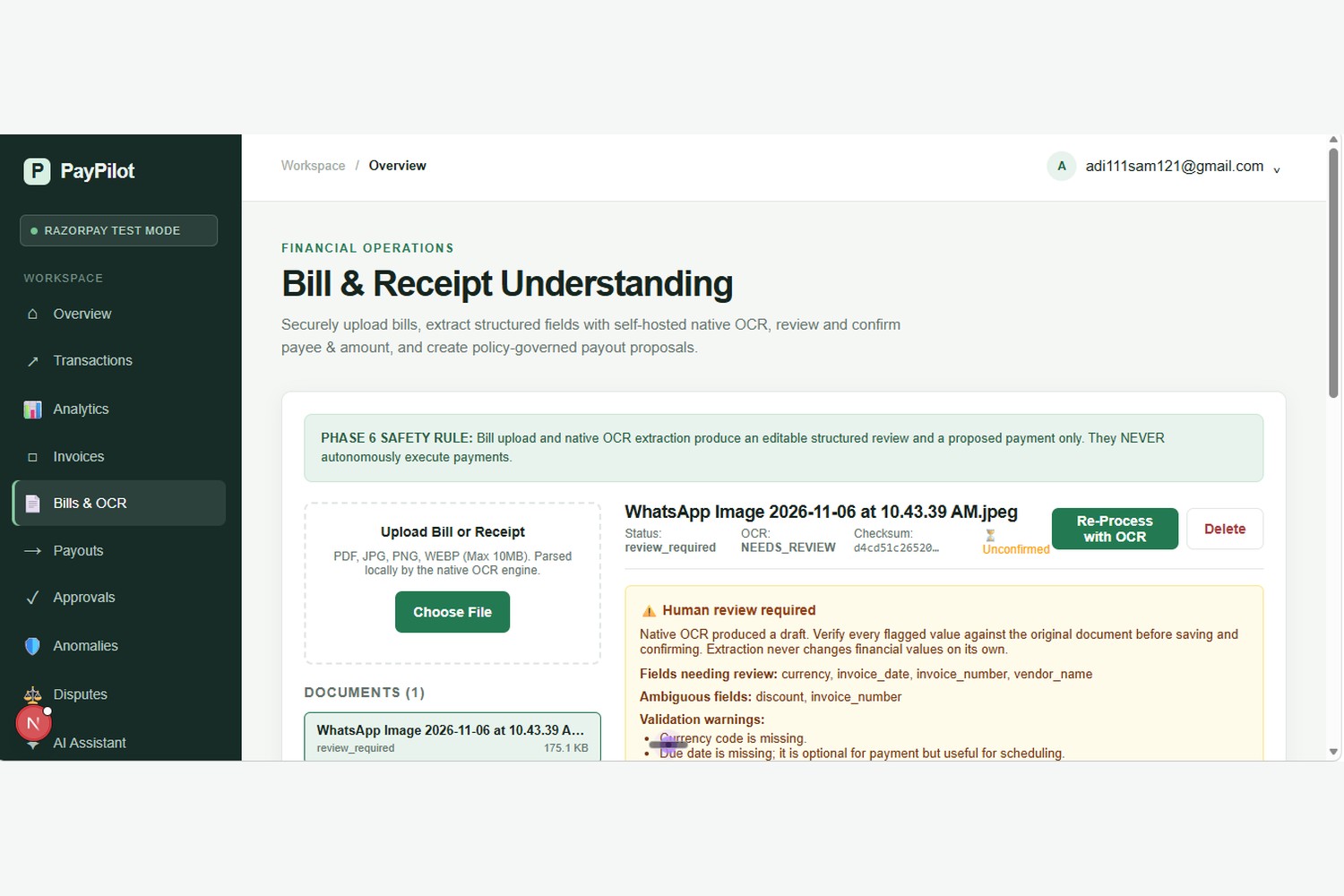
Smart bill and receipt upload with OCR-based document extraction.
About PayPilot
Inspiration
Managing personal and business finances often involves juggling multiple platforms, manually processing bills and invoices, tracking transactions, and keeping up with payment approvals. These tasks can be time-consuming, repetitive, and prone to human error.
We built PayPilot with a simple vision: to make financial management smarter, easier, and more transparent through AI.
The idea was to create an intelligent financial copilot that brings expense management, bill processing, transaction tracking, and payment approval workflows together in one platform.
Instead of simply displaying financial data, PayPilot aims to help users understand their finances, identify important patterns, and make better-informed financial decisions.
What We Built
PayPilot is an AI-powered financial management platform designed to simplify everyday financial operations.
Key capabilities include:
- AI Financial Assistant: An intelligent conversational interface that helps users interact with financial information and gain useful insights.
- Smart Bill Processing: Upload invoices and receipts and extract relevant information using OCR and document-processing technologies.
- Transaction Management: Organize and monitor financial transactions through a centralized dashboard.
- Payment Approval Workflow: Generate payment proposals and evaluate them through a policy-based approval engine.
- Financial Insights: Identify spending patterns, anomalies, and potentially important financial activities.
- Payment Integration: Connect with payment platforms such as Razorpay to support financial workflows.
- Secure Authentication: Protect access to financial information through authenticated backend APIs.
How We Built It
PayPilot was developed using a modern full-stack architecture.
Frontend
- Next.js
- React
- TypeScript
- Tailwind CSS
Backend
- Python
- FastAPI
- SQLAlchemy
- Alembic
Database
- PostgreSQL
AI and Document Processing
- Groq API for AI-powered language-model interactions
- OCR and document-processing tools for extracting invoice and receipt information
Financial Integration
- Razorpay API and webhook integration
The frontend communicates with the FastAPI backend through authenticated APIs. PostgreSQL manages financial records and application data, while the AI and document-processing components provide intelligent assistance and bill extraction capabilities.
A major architectural decision was to separate AI recommendations from actual financial execution. PayPilot is designed around a human-in-the-loop approach: AI can assist with analysis and payment proposals, but financial actions must follow the policy engine and approval workflow. Autonomous payment execution is not enabled.
Challenges We Faced
Building PayPilot involved several technical challenges:
AI Integration: Integrating an AI assistant into a financial application required handling API configuration, model availability, rate limits, and failures reliably.
OCR Accuracy: Extracting structured information from different invoice and receipt formats was challenging, especially with scanned PDFs, image quality variations, and inconsistent document layouts.
Payment Gateway Integration: Working with Razorpay APIs, test environments, webhook signatures, and transaction synchronization required careful debugging and validation.
Database and Backend Reliability: Designing transaction models, database migrations, authentication, and reliable API communication required significant attention.
Financial Safety: One of the most important challenges was ensuring that AI-generated suggestions could not independently trigger payments. We addressed this through a policy-based approval architecture.
End-to-End Integration: Connecting the frontend, backend, database, AI services, OCR engine, and payment integrations into one cohesive application required extensive testing and troubleshooting.
What We Learned
Developing PayPilot helped us gain practical experience in:
- Building full-stack applications using Next.js and FastAPI.
- Designing REST APIs and integrating PostgreSQL.
- Working with AI APIs and language models.
- Implementing OCR-based document-processing workflows.
- Integrating payment gateways and handling webhooks.
- Managing authentication, database migrations, and application security.
- Designing human-in-the-loop financial approval systems.
- Debugging complex issues across multiple application layers.
Most importantly, we learned that building an AI-powered financial application is not just about making AI generate useful answers. It is about building a reliable, secure, transparent, and responsible system around those capabilities.
What's Next?
We envision PayPilot evolving into a comprehensive financial copilot with improved document extraction, more accurate financial insights, intelligent anomaly detection, expanded payment integrations, and a more powerful approval-management experience.
Our ultimate goal is to make financial operations simpler and smarter while keeping users in control of every important financial decision.
PayPilot — Smarter Finance. Better Decisions. Complete Control.
Built With
- 2.0
- apis
- artificial
- character
- developer
- fastapi
- gpt
- intelligence
- language
- models
- oauth
- openai
- optical
- paddleocr
- paypal
- platform
- postgresql
- python
- razorpay
- react
- recognition
- rest
- sandbox
- sqlalchemy
- typescript
