
Inspiration
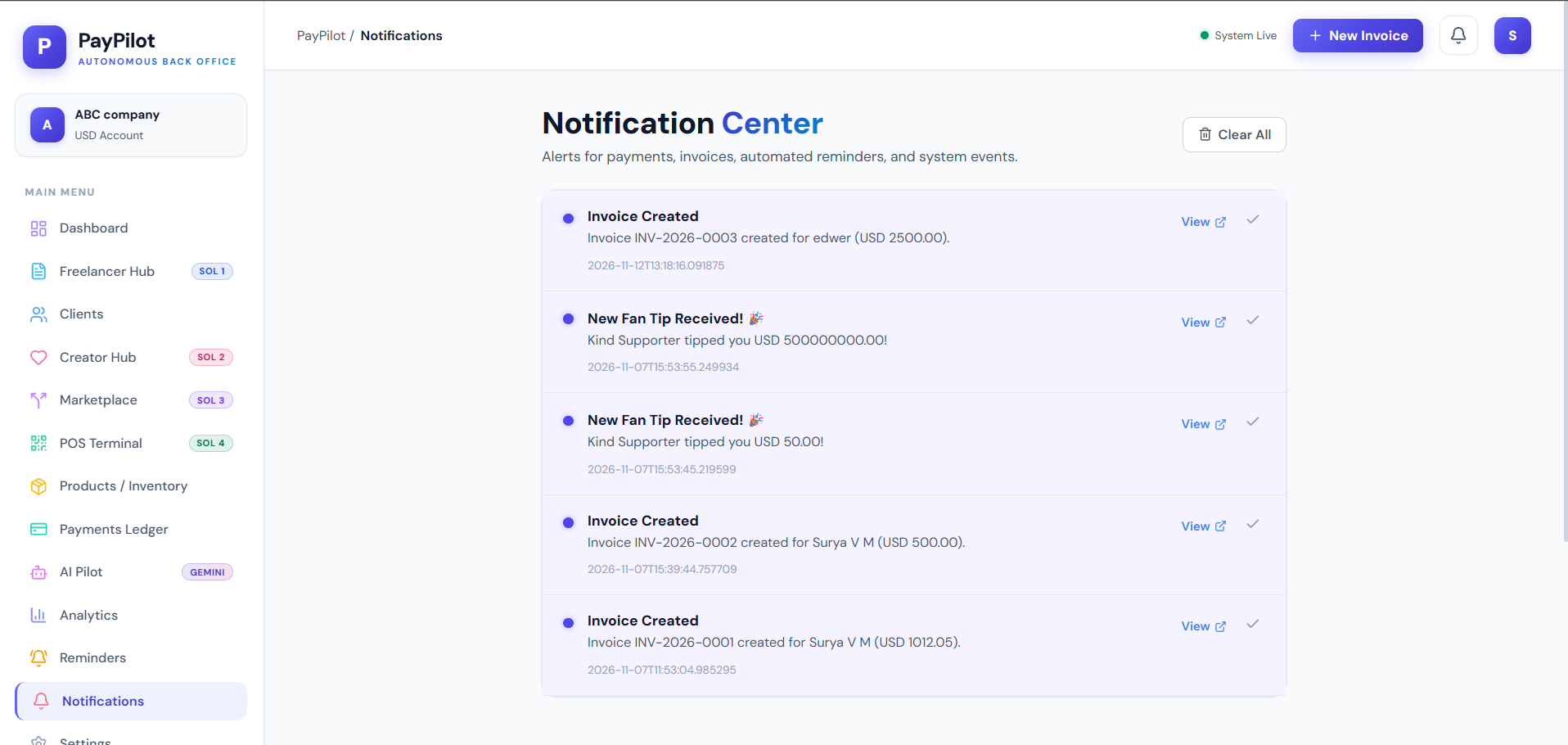
Every freelancer, independent creator, small business owner and marketplace operator faces a common challenge: managing money across multiple platforms.
Freelancers struggle with international invoicing and delayed payments. Creators manage tips and memberships across different tools. Marketplace owners need to handle vendor commissions and payouts, while retail merchants need simple and reliable payment systems.
We noticed that most financial platforms focus on processing transactions but offer limited intelligence to help businesses understand their financial health.
We asked ourselves: What if a payment platform could do more than move money? What if it could predict cash-flow problems, identify risky payment behaviour and recommend smarter financial decisions?
That idea inspired PayPilot, a unified financial management platform combining PayPal-powered commerce solutions with an AI Financial Intelligence Layer powered by Google Gemini.
What it does
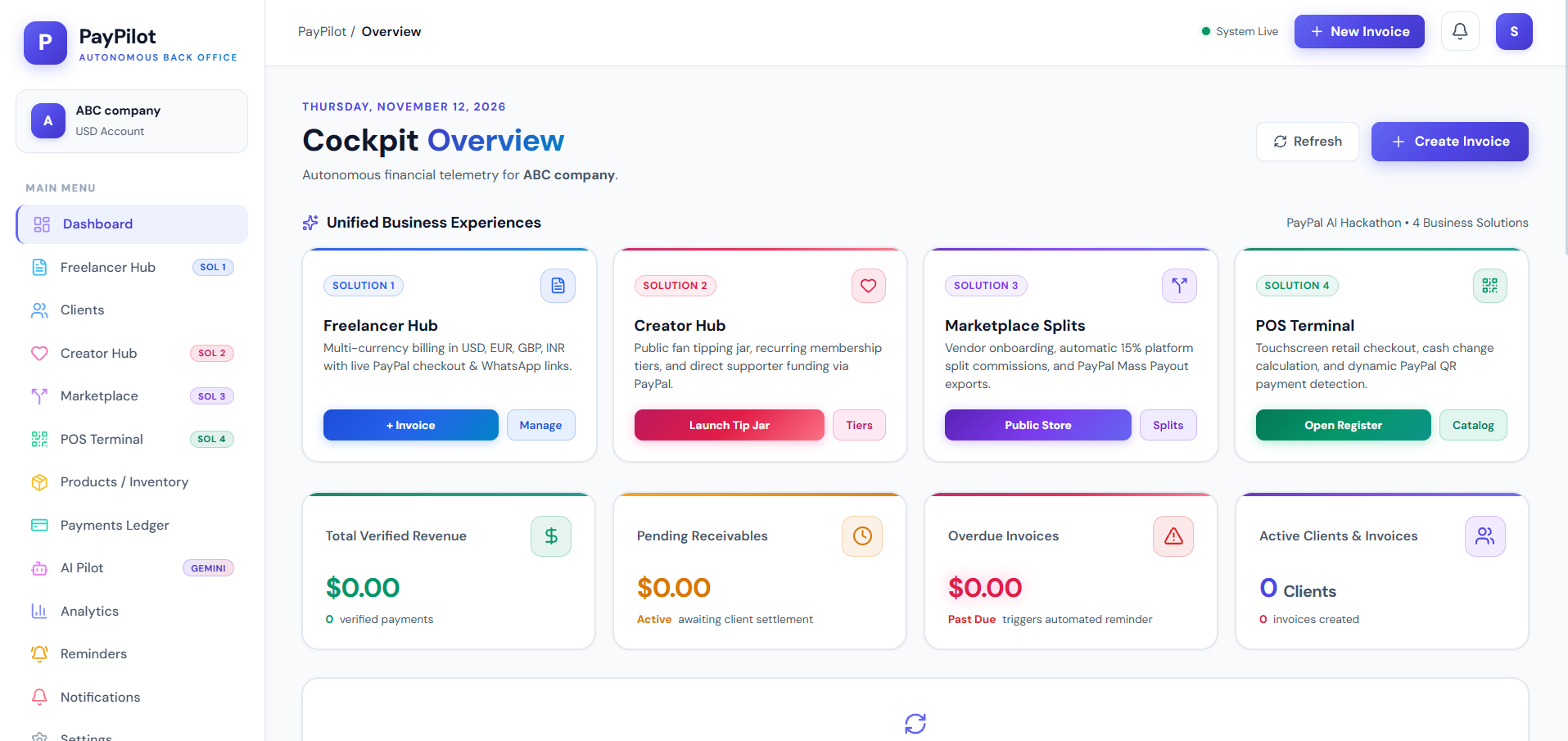
PayPilot brings four business solutions into one platform:
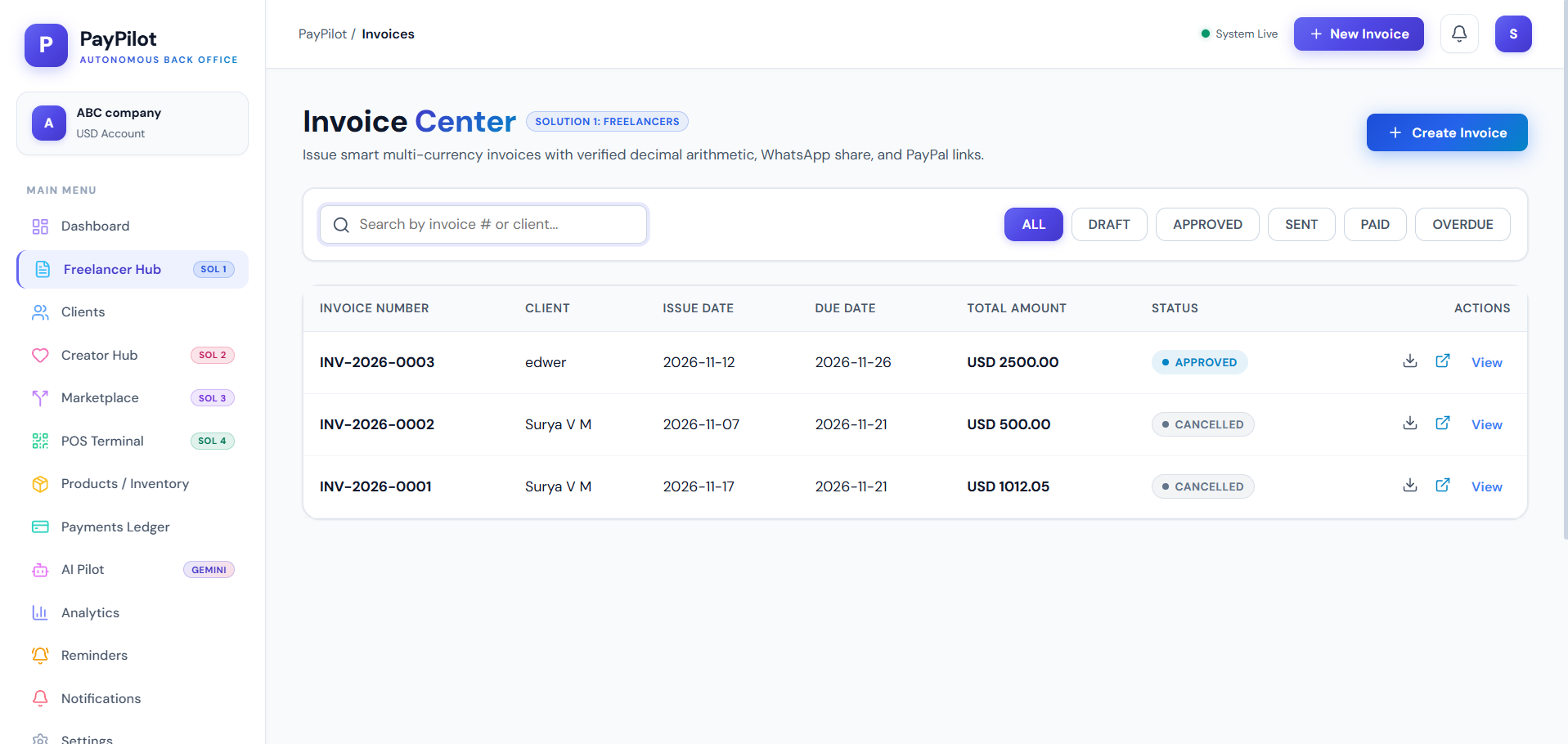
1. Freelancer Hub
- Create professional invoices in multiple currencies.
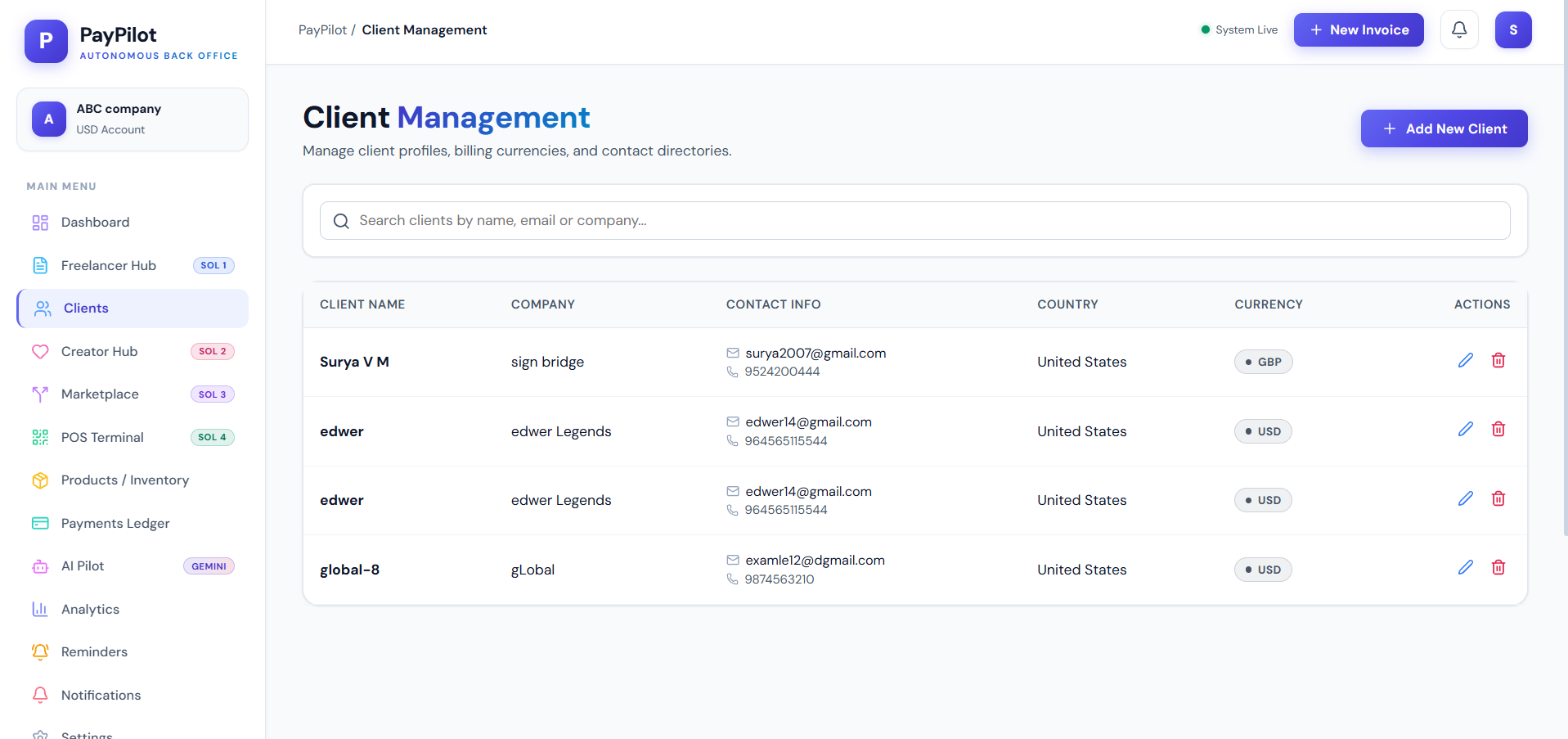
- Manage clients, taxes, discounts and payments.
- Generate PDF invoices and share PayPal checkout links.
- Track paid, pending and overdue invoices.
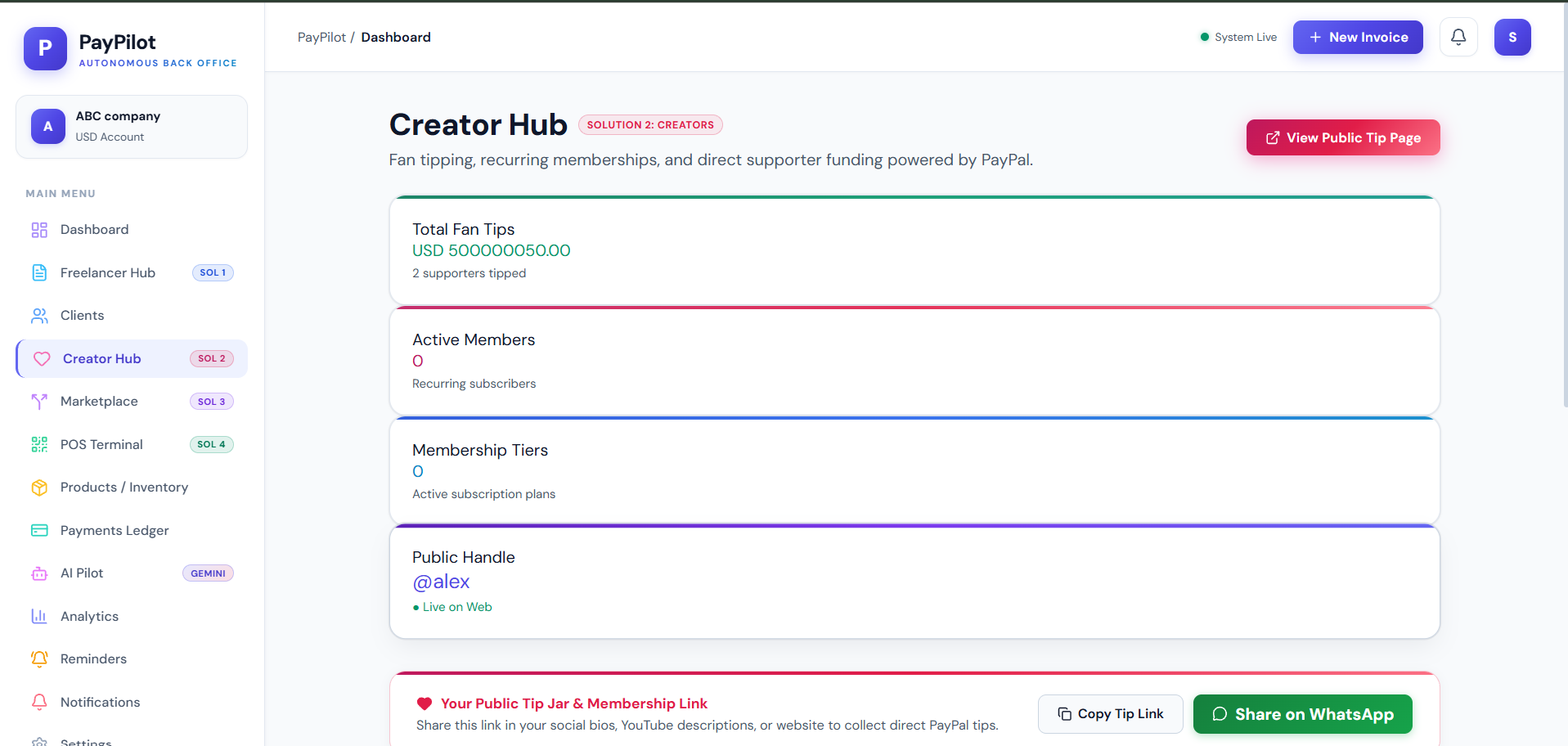
2. Creator Hub
- Create public tipping pages.
- Accept custom and preset tips.
- Manage creator membership tiers and subscriptions.
3. Marketplace Engine
- Manage products and multiple vendors.
- Calculate platform commissions and vendor earnings.
- Support marketplace order management and payout workflows.
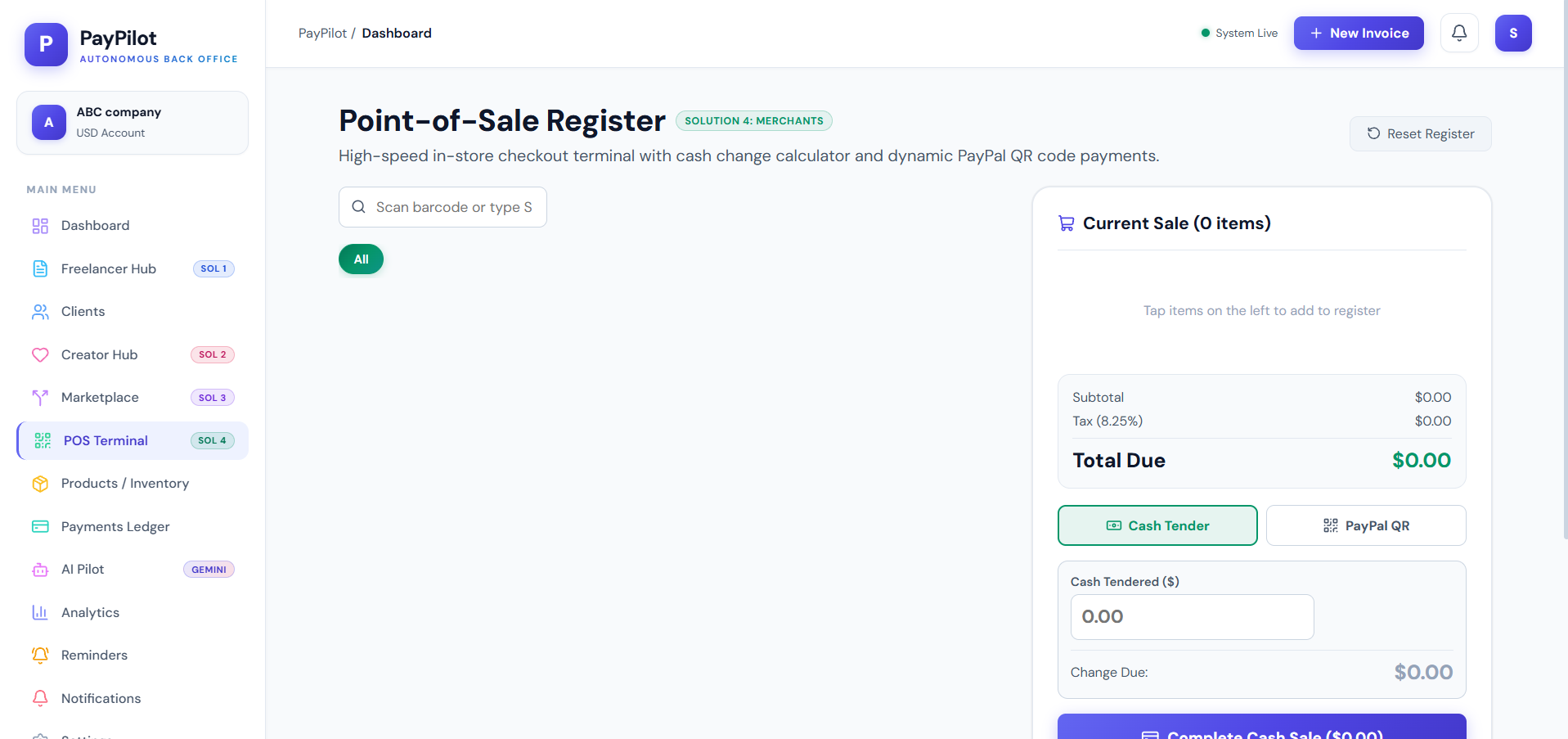
4. Point-of-Sale (POS) Terminal
- Manage products and inventory.
- Process cash payments with automatic change calculation.
- Generate PayPal QR-based checkout experiences.
- Track orders and update stock.
5. AI Financial Intelligence Cockpit
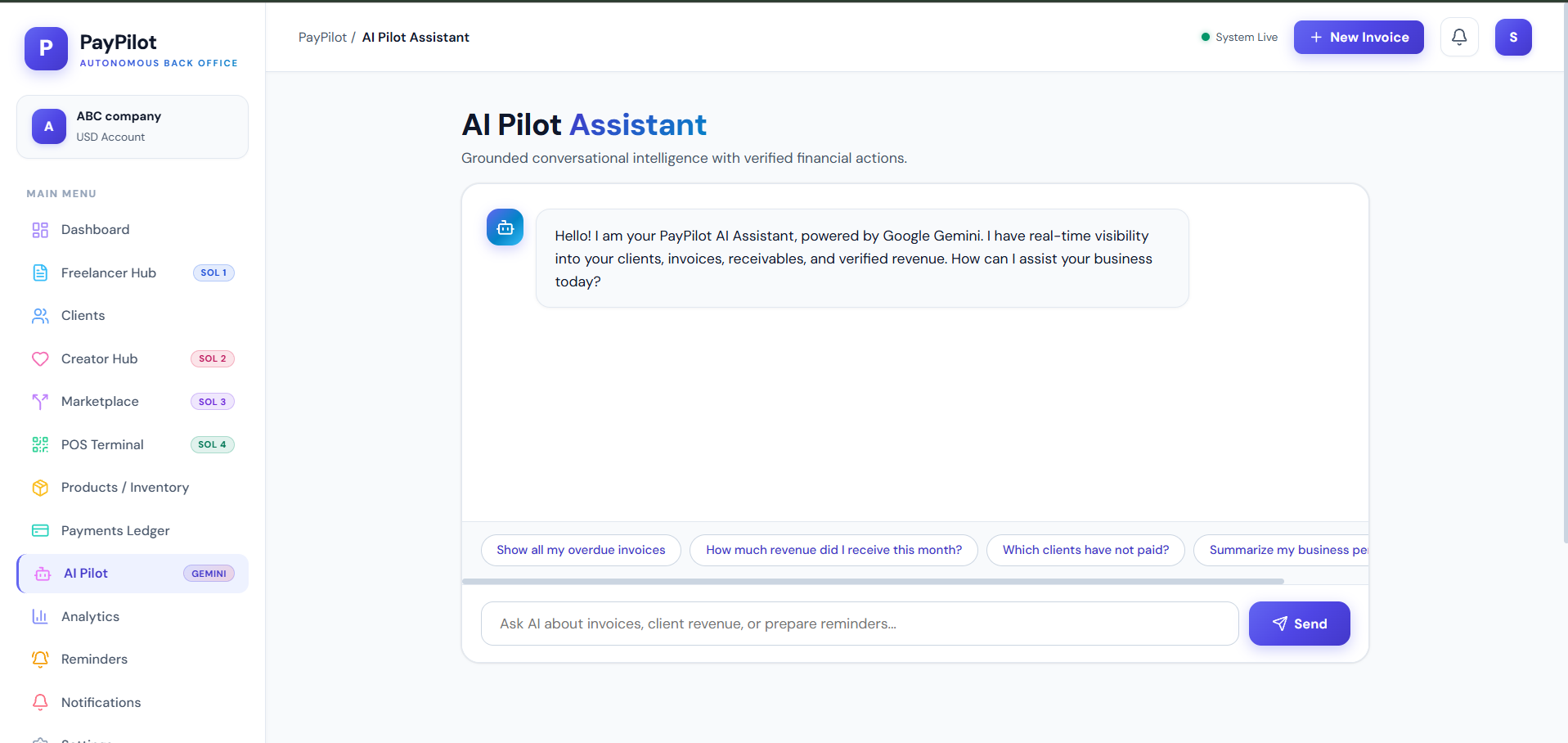
This is PayPilot's key differentiator. Instead of using AI only as a chatbot, we use it to turn financial data into actionable intelligence.
- Cash-flow forecasting to identify potential financial deficits.
- Client payment behaviour analysis to identify late-payment risks.
- Financial anomaly detection to identify unusual revenue patterns and overdue invoices.
- Financial health scoring to understand business liquidity.
- Gemini-powered recommendations with quantified financial impact.
- Human-confirmed actions such as generating payment reminders.
How we built it
PayPilot uses a separated frontend and backend architecture.
Frontend
- React 19
- Vite
- Tailwind CSS
- Recharts for financial visualizations
- Lucide React for icons
Backend
- Python
- FastAPI
- SQLAlchemy
- Pydantic
- Alembic
Database
- Supabase PostgreSQL for persistent cloud storage.
- SQLite in-memory databases for isolated automated testing.
Payment Integration
- PayPal Developer REST APIs.
- PayPal Orders API.
- PayPal Smart Payment Buttons.
- Server-side payment capture verification.
- PayPal webhook integration.
- PayPal Mass Payouts workflow support.
AI Integration
- Google Gemini through the official Google GenAI SDK.
- A dedicated Python Financial Intelligence Engine calculates financial metrics.
- Gemini interprets verified financial metrics and generates structured recommendations.
Deployment Architecture
- Frontend prepared for Vercel.
- Backend prepared for Render.
- Supabase for cloud database persistence.
Challenges we ran into
1. Making AI trustworthy in financial applications
We did not want an AI model to invent financial figures or calculate balances inaccurately. We separated deterministic Python calculations from Gemini's reasoning. Python calculates financial metrics, while Gemini generates explanations and recommendations based on those results.
2. Secure PayPal payment verification
We needed to ensure that payment confirmations could not simply be trusted from the frontend. Our backend verifies payment information with PayPal before updating payment records.
3. Multi-currency accuracy
Handling different currencies creates risks involving decimal precision and rounding. We used Python's Decimal type for financial calculations to reduce floating-point inaccuracies.
4. Safe AI recommendations
We wanted AI to recommend actions without allowing it to move money independently. We implemented explicit user confirmation, ownership validation and audit logging before supported actions are executed.
5. Bringing four business models together
Combining freelancer invoicing, creator payments, marketplace operations and retail POS into one consistent platform required careful database design and modular backend architecture.
Accomplishments that we're proud of
- Built a unified platform supporting four different business models.
- Integrated PayPal payment workflows into the platform.
- Developed an AI Financial Intelligence Engine for cash-flow forecasting, debtor profiling and anomaly detection.
- Built a Gemini-powered recommendation system grounded in calculated financial metrics.
- Created a Financial Intelligence Cockpit with financial health indicators, forecasts, risk analysis and recommendation cards.
- Implemented user-level data isolation and confirmation-based financial actions.
- Created 21 automated unit and integration tests, all passing in the reported test runs.
- Separated frontend and backend into independent directories.
- Successfully pushed the reorganized project to GitHub.
What we learned
- AI in fintech should provide real financial intelligence rather than just conversational responses.
- Deterministic calculations and AI reasoning should work together to produce trustworthy results.
- Secure payment verification must happen on the backend.
- Multi-tenant data isolation is essential when handling financial information.
- PayPal APIs provide a flexible foundation for different commerce and payment experiences.
- A modular architecture makes applications easier to maintain, test and deploy.
What's next for PayPilot
Our vision is to evolve PayPilot into a more intelligent and proactive financial management platform.
1. Advanced Marketplace Payments
Expand marketplace checkout with automatic multi-party payment routing using the appropriate PayPal Commerce Platform capabilities.
2. Recurring Freelancer Invoicing
Introduce recurring invoices and automated PayPal billing for monthly retainers and subscription services.
3. Smarter Payment Reminders
Expand payment reminders through email and WhatsApp Business integrations.
4. Predictive Inventory Management
Use historical sales patterns to recommend when merchants should restock products.
5. More Advanced Financial Intelligence
Improve cash-flow predictions, client risk analysis and anomaly detection using richer historical transaction data.
Our long-term goal is simple: Help businesses move beyond tracking money and start making smarter financial decisions with PayPilot.
Built With
- alembic
- api
- authentication
- buttons
- fastapi
- gemini
- javascript
- jwt
- lucide
- payment
- paypal
- postgresql
- pydantic
- pytest
- python
- react
- recharts
- render
- reportlab
- sdk
- sqlalchemy
- supabase
- tailwind
- vercel
