PayPilot AI – Your Intelligent Shopping Companion
Inspiration
Online shopping offers thousands of products, but choosing the right one within a budget can be confusing. Users often compare products across multiple pages, struggle to identify suitable options, and lose track of their spending.
We built PayPilot AI to make shopping smarter, simpler, and more budget-conscious through an AI-powered shopping assistant.
What it does
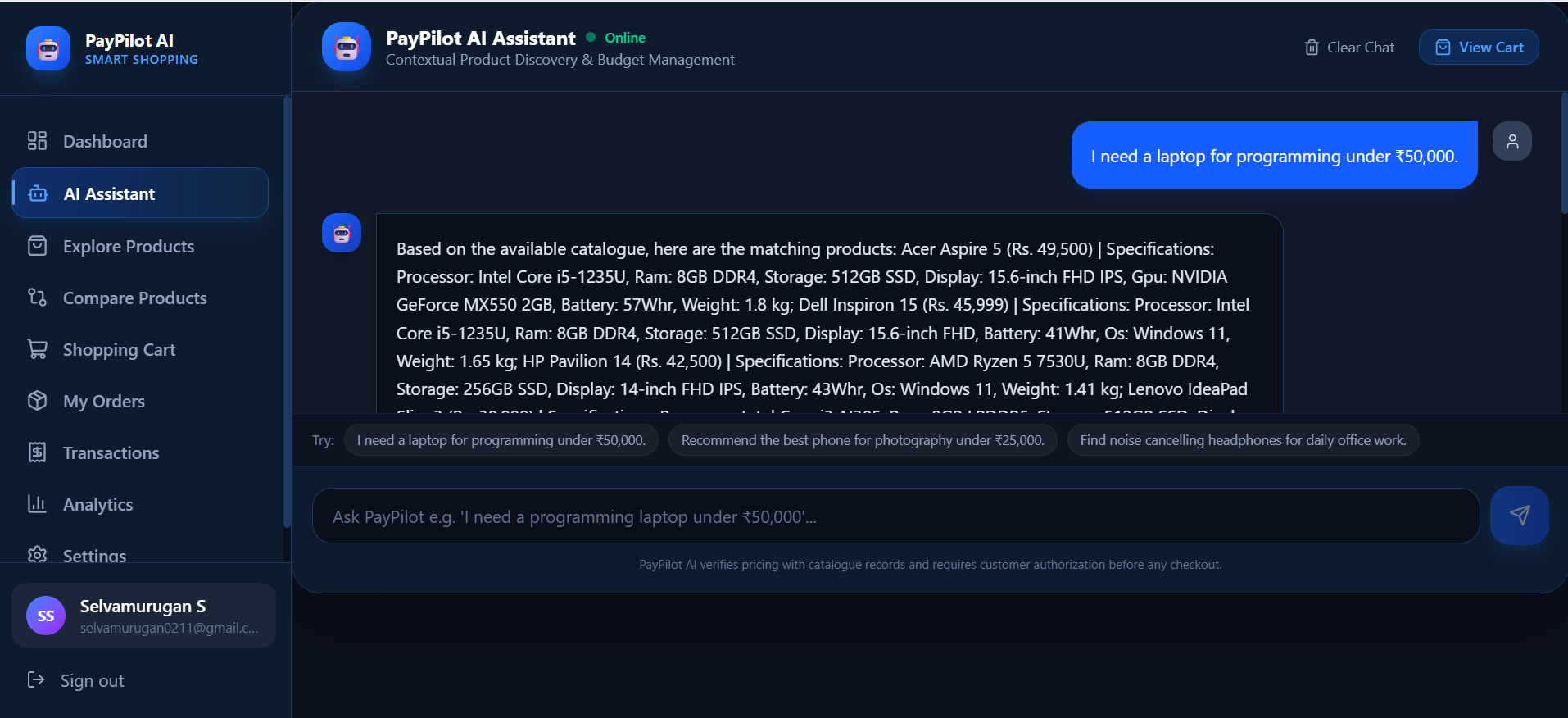
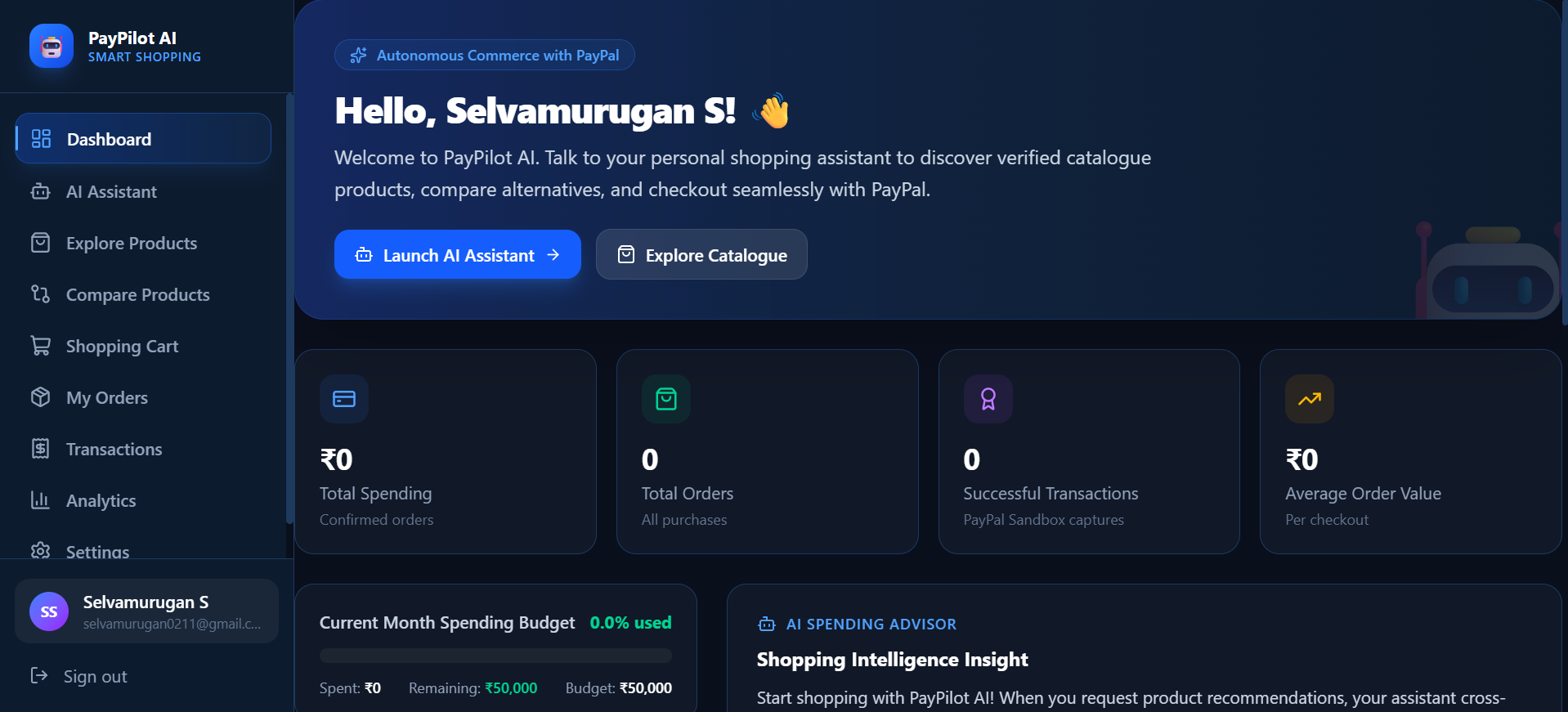
PayPilot AI is a full-stack AI shopping assistant that helps users discover products, get personalized recommendations, and manage their shopping budgets.
Key features include:
- AI Shopping Assistant: Ask questions in natural language and receive relevant product recommendations.
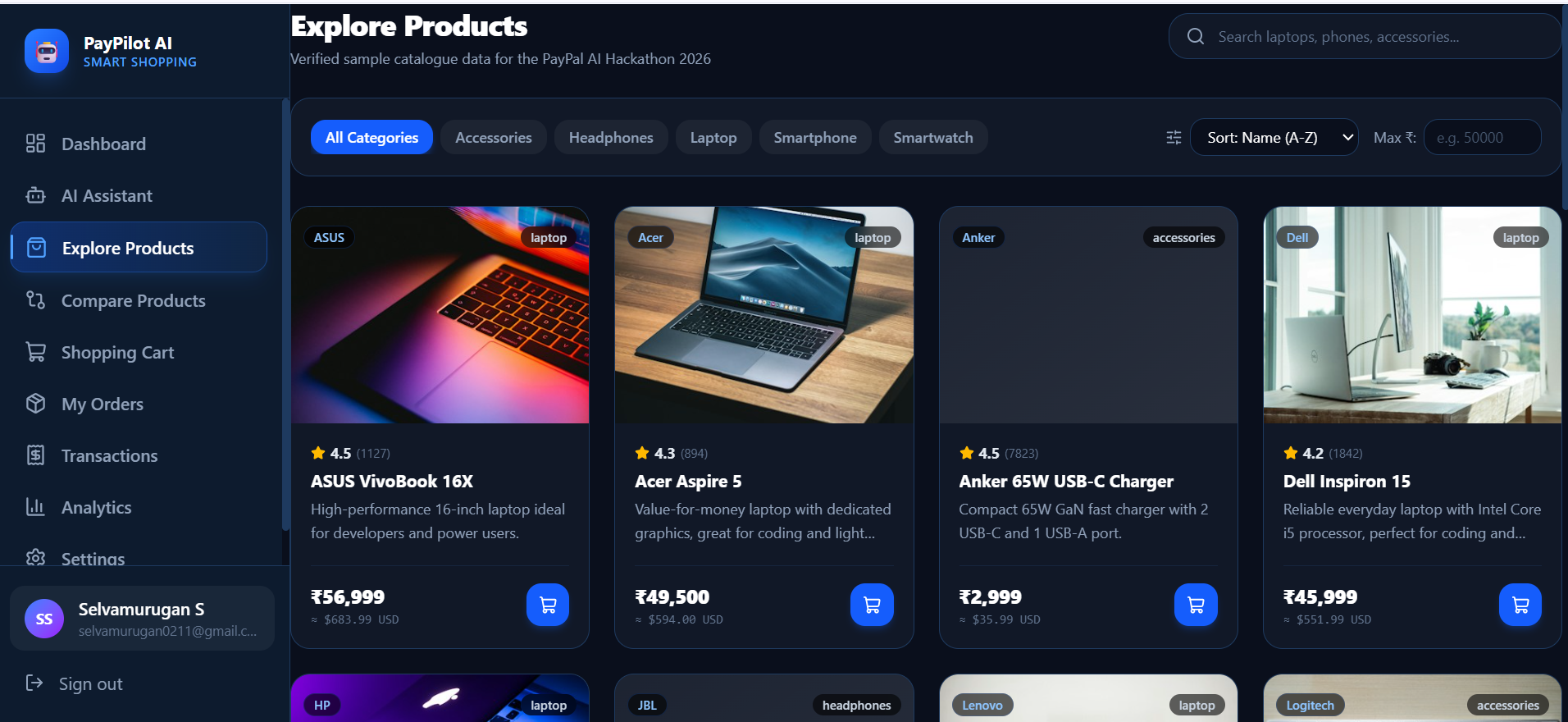
- Smart Product Discovery: Explore products across categories such as laptops, smartphones, headphones, smartwatches, and accessories.
- Budget-Aware Recommendations: Find products that match your requirements and spending limits.
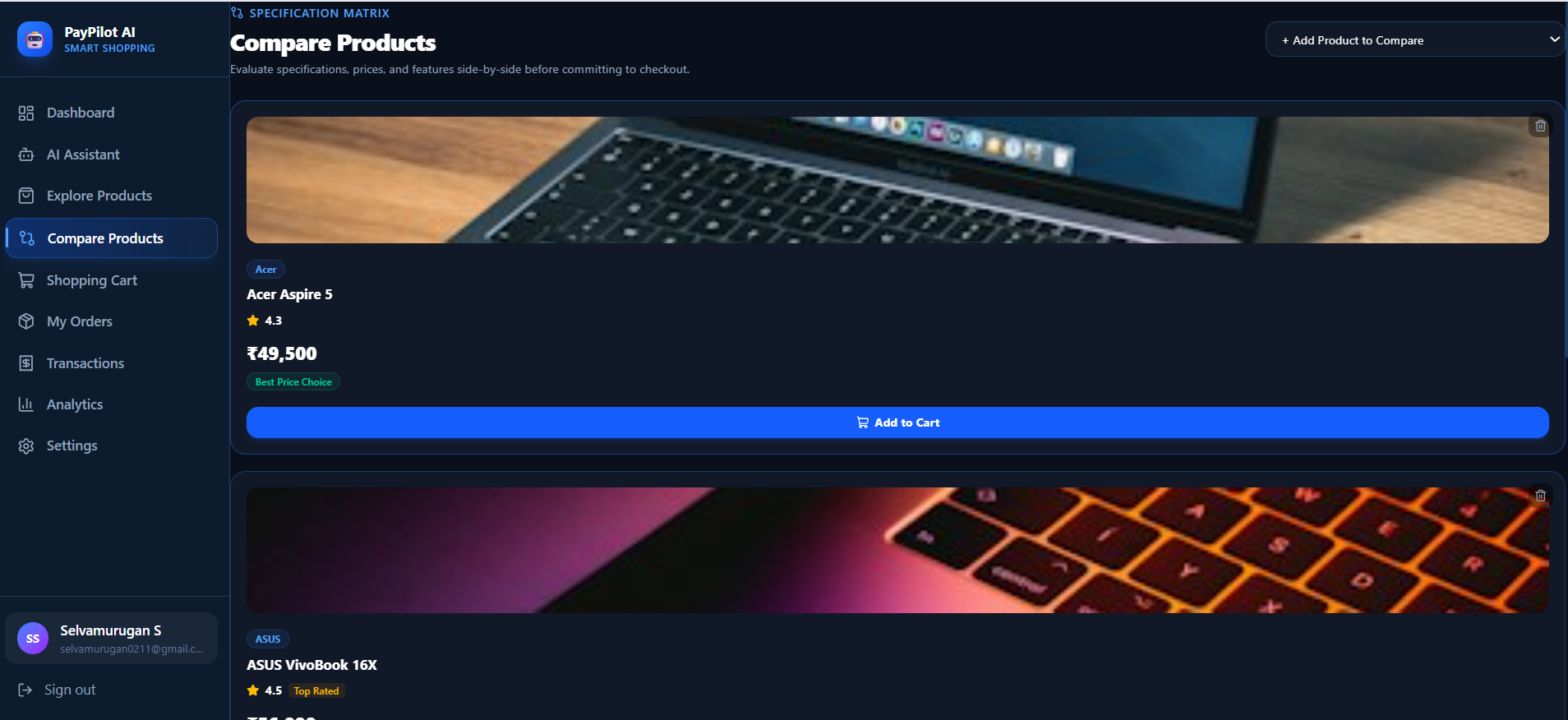
- Product Information: View product specifications, prices, and availability.
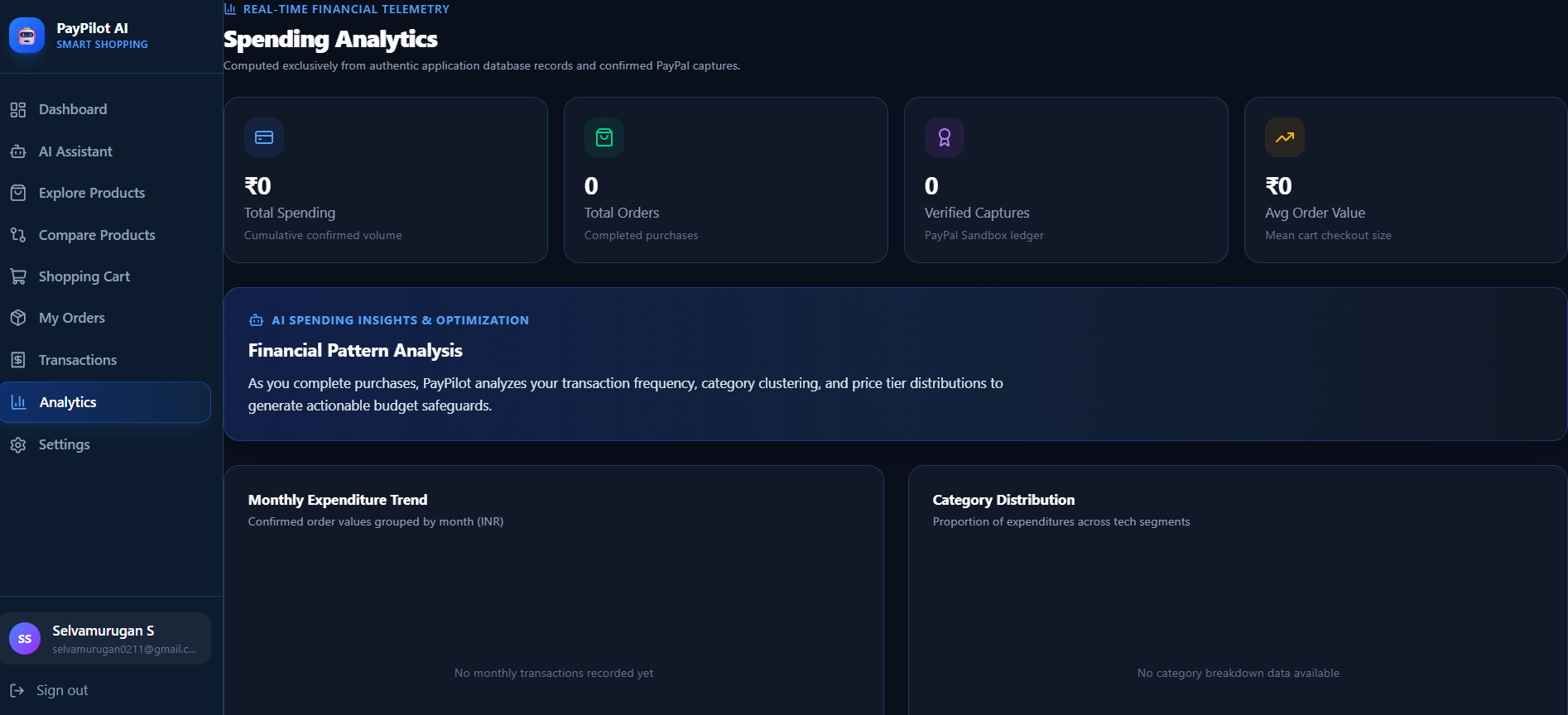
- Budget Tracking: Keep track of shopping expenses and remaining budget.
- User Authentication: Register and log in to access personalized functionality.
- PayPal Sandbox Integration: Explore the checkout flow using PayPal's sandbox environment.
How we built it
We developed PayPilot AI using a modern full-stack architecture.
Frontend: React, TypeScript, Vite, and Tailwind CSS.
Backend: Python, FastAPI, and SQLAlchemy.
Database: SQLite.
AI: Gemini integration with OpenRouter support and a deterministic fallback for reliable product recommendations.
Payments: PayPal Sandbox integration.
The frontend communicates with the FastAPI backend through REST APIs. The backend handles authentication, product catalogue operations, AI-assisted recommendations, budget-related functionality, and checkout integration.
Challenges we faced
One of the main challenges was making AI-generated product recommendations consistent with the actual product catalogue.
AI responses can sometimes include irrelevant products, incorrect categories, or recommendations that do not match the user's budget. We addressed this by adding deterministic fallback logic and backend validation to keep recommendations aligned with available catalogue data.
Another challenge was handling AI provider failures and timeouts. We improved timeout handling and added a fallback mechanism so that the shopping assistant can still provide useful catalogue-based responses when the AI provider is unavailable.
Integrating frontend, backend, database, authentication, and PayPal Sandbox functionality into one application was also an important engineering challenge.
What we learned
Building PayPilot AI helped us gain practical experience in full-stack application development, REST API integration, AI service reliability, database management, product filtering, authentication, and payment sandbox integration.
We also learned that a useful AI application needs more than a language model: it needs validation, reliable backend logic, and a good user experience.
What's next
We plan to improve recommendation personalization, expand the product catalogue, enhance budget insights, and further strengthen the shopping and checkout experience.
PayPilot AI — Shop smarter. Spend wiser.
Built With
- artificial-intelligence
- fastapi
- gemini
- openrouter
- paypal
- python
- react
- rest-api
- sqlalchemy
- sqlite
- tailwind-css
- typescript
- vite
