-
-
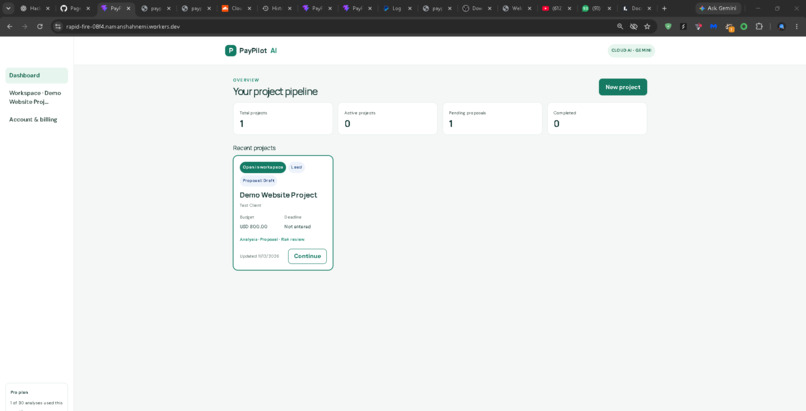
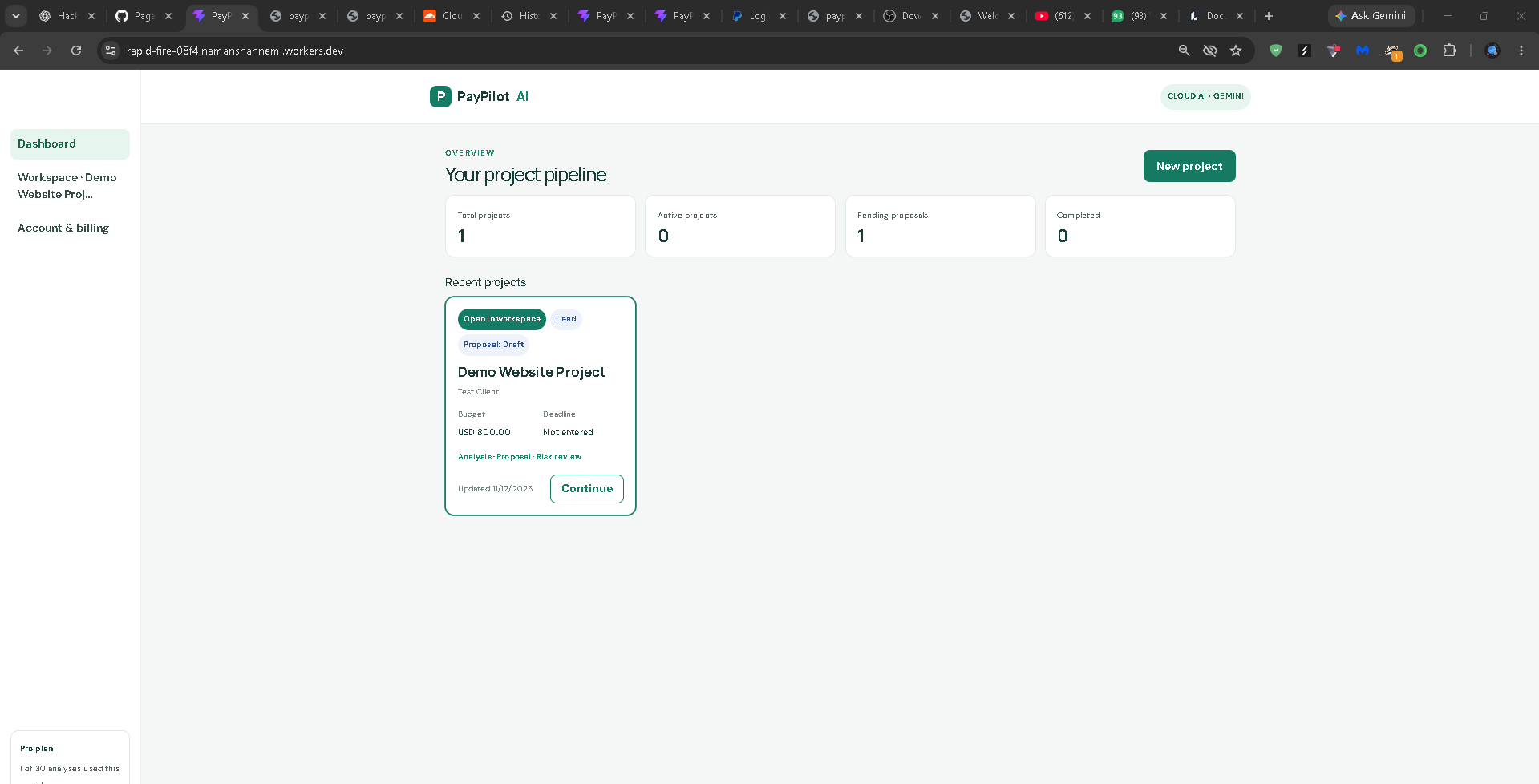
Dashboard
-
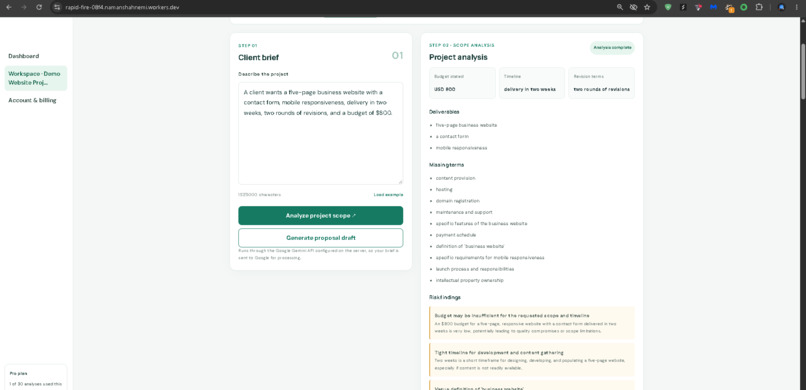
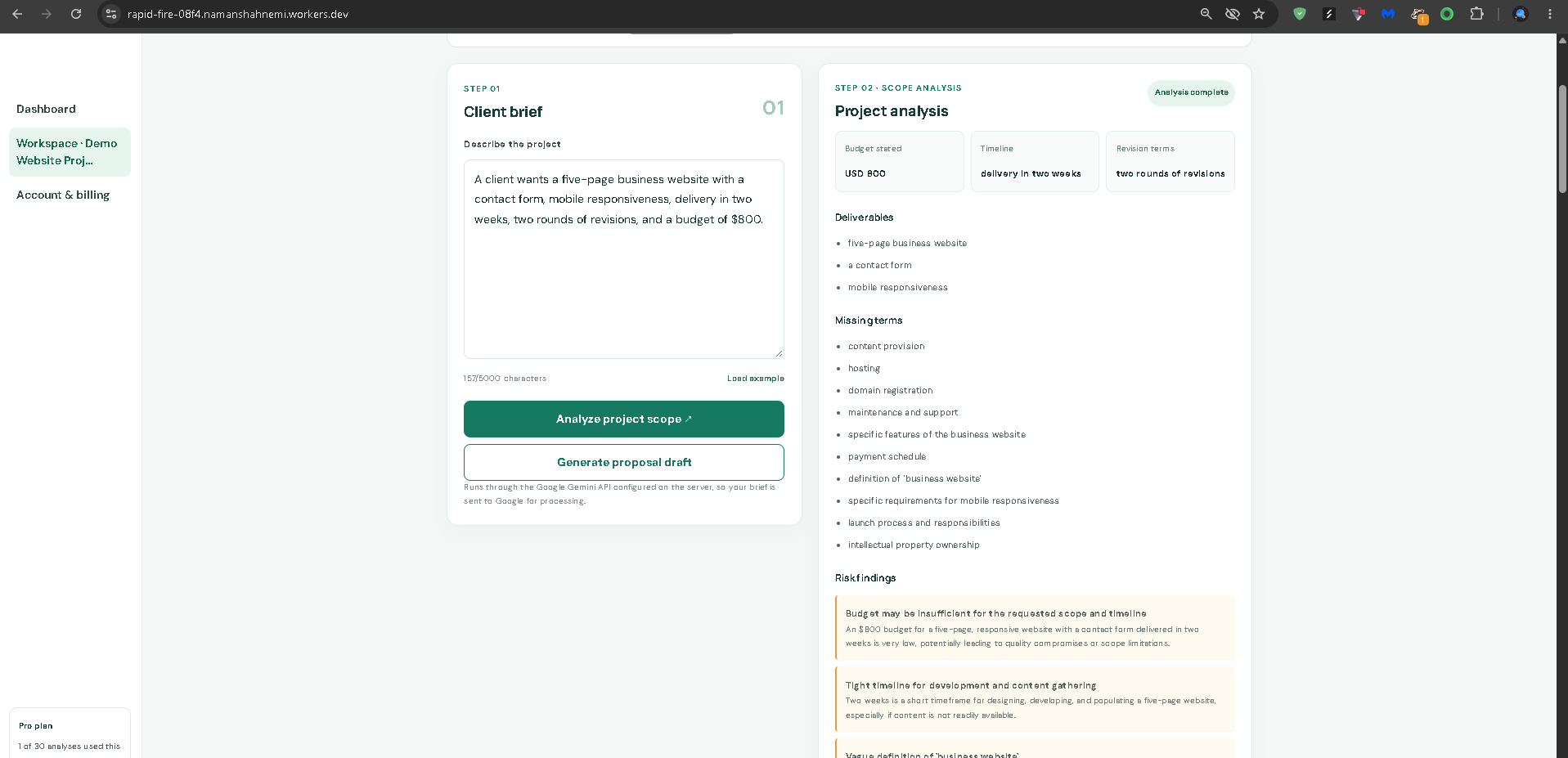
Project analysis
-
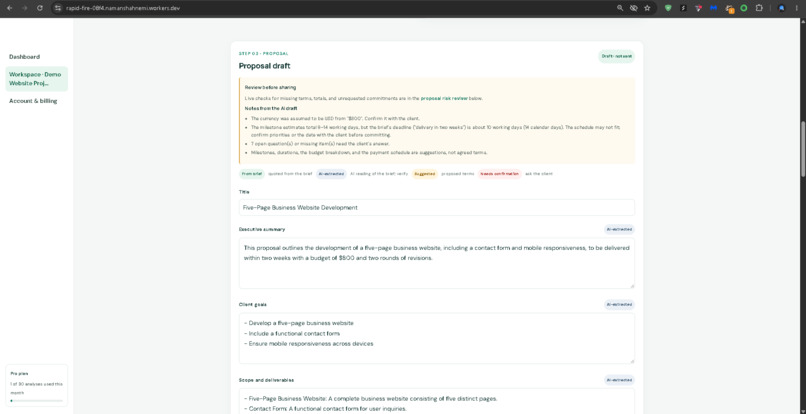
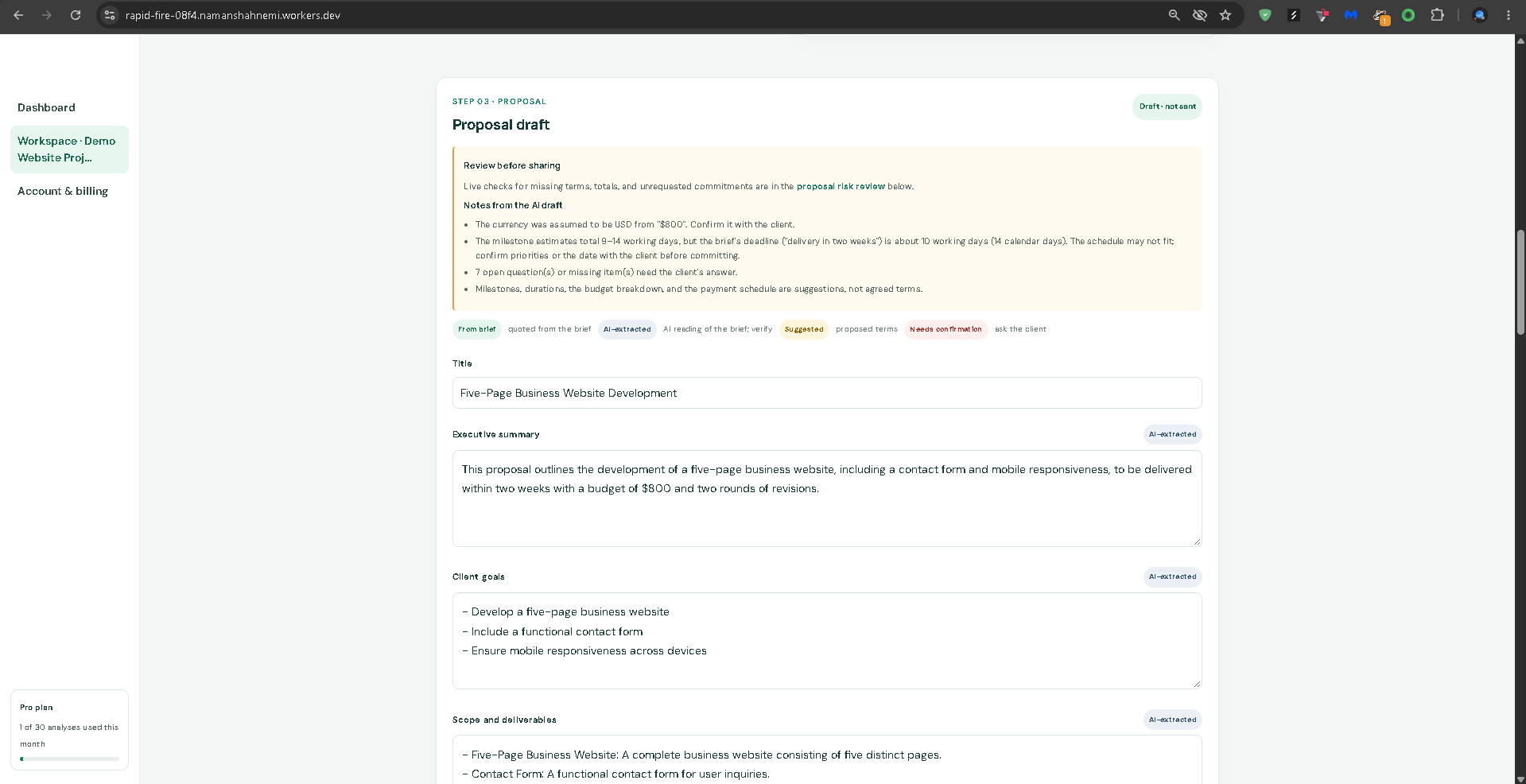
Proposal generation
-
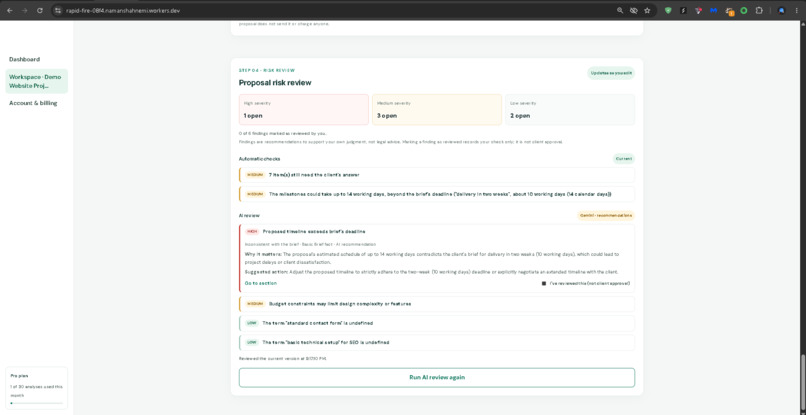
Risk review
-

Payment Integration
-
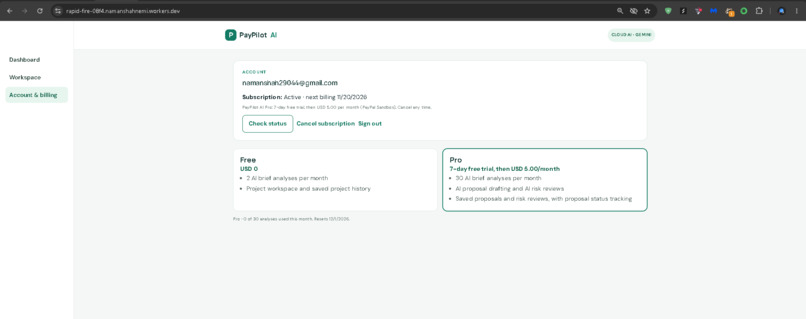
Payment Confirmed
PayPilot AI: From Scope to Cash
1. Inspiration
Freelancers often lose time and money because project requirements are unclear, budgets are poorly estimated, deadlines are unrealistic, and important client expectations are missed.
We wanted to build a platform that helps freelancers make better decisions before committing to a project, rather than simply generating text.
This idea became PayPilot AI, an AI-powered scope-to-cash intelligence platform.
2. What It Does
PayPilot AI helps freelancers transform client briefs into structured project plans, professional proposals, risk assessments, and payment workflows.
Core Features
- Project Analysis: Analyzes project requirements, scope, budget, and timelines.
- AI Proposal Generation: Converts project information into structured, professional proposals.
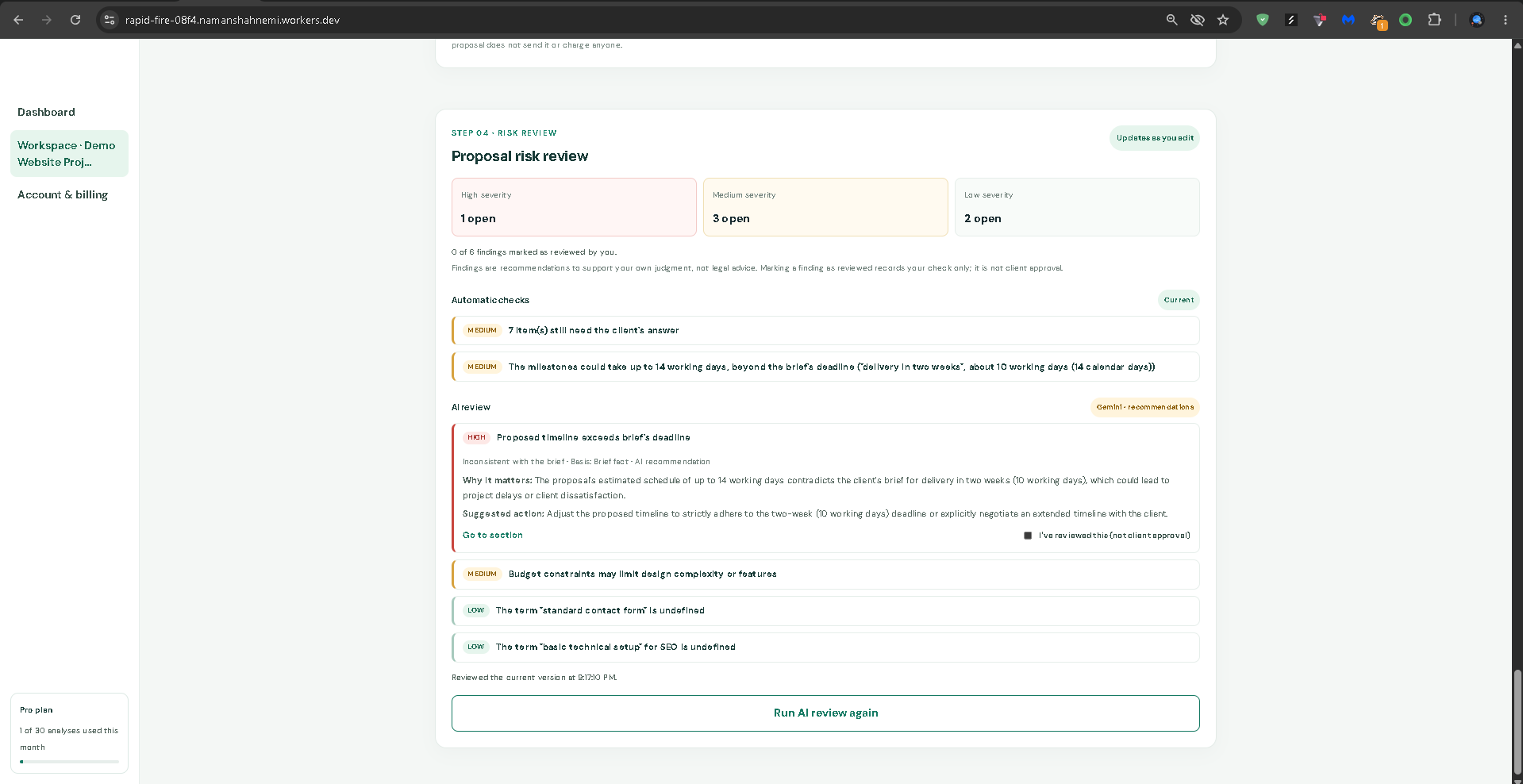
- Risk Review: Identifies potential scope gaps, timeline conflicts, unclear requirements, and project risks.
- Client Questions: Generates relevant questions to clarify requirements before accepting a project.
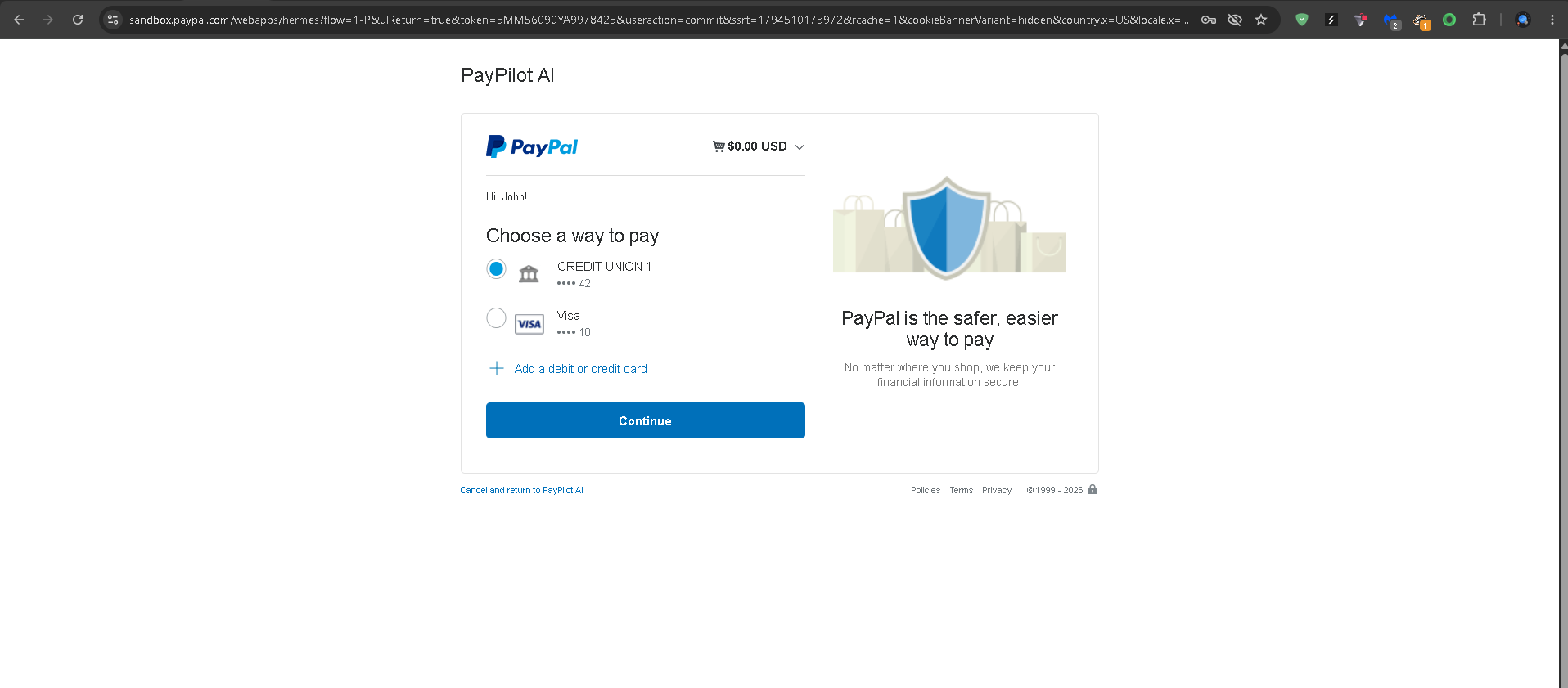
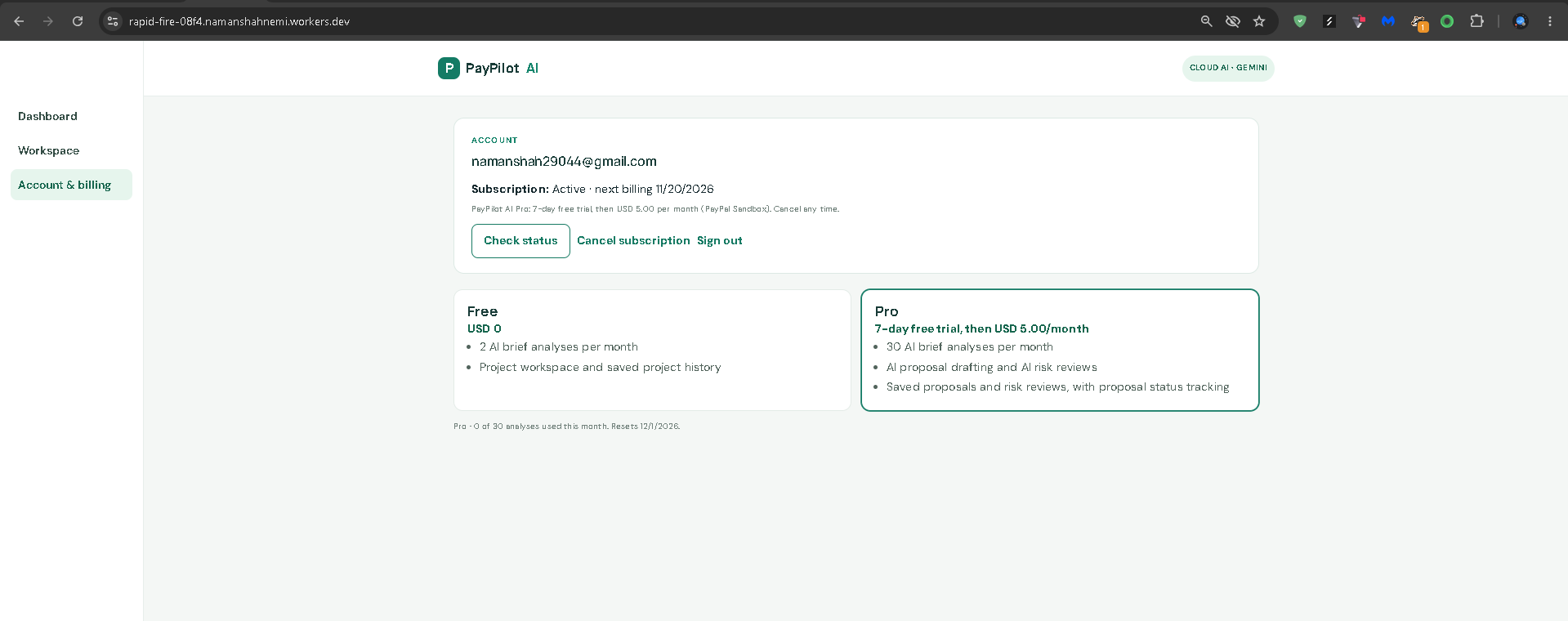
- PayPal Integration: Supports payment workflows through PayPal Sandbox.
3. How We Built It
PayPilot AI uses a TypeScript-based application architecture.
Technology Stack
| Component | Technology |
|---|---|
| Frontend | React, TypeScript, Vite |
| Backend | Node.js, Express.js, TypeScript |
| Database | PostgreSQL |
| AI Integration | Google Gemini API |
| Payment Integration | PayPal Sandbox |
| Containerization | Docker |
| CI/CD | Jenkins |
| Frontend Hosting | Cloudflare Workers |
| Backend Hosting | Render |
The frontend communicates with the backend through API endpoints. PostgreSQL provides persistent data storage, while Gemini powers the AI-driven project analysis, proposal generation, and risk review features.
PayPal Sandbox provides the payment integration environment.
4. Challenges We Faced
One of our biggest challenges was making AI-generated output useful for actual freelance project decisions instead of producing generic responses.
We also worked on:
- Handling temporary AI provider failures through bounded retry logic.
- Validating project information and API requests.
- Maintaining reliable data persistence.
- Testing payment-related workflows.
- Building a reliable CI pipeline.
We implemented automated unit tests, PostgreSQL integration tests, Docker image checks, and application smoke tests using Jenkins.
5. What We Learned
Building PayPilot AI helped us understand how to combine AI capabilities with real application workflows.
We gained practical experience in:
- Integrating AI APIs into full-stack applications.
- Designing and implementing backend APIs.
- Integrating payment infrastructure.
- Managing persistent application data.
- Containerizing applications with Docker.
- Automating testing and validation through Jenkins.
Most importantly, we learned that building a useful AI product requires more than integrating a model. It requires reliable application logic, meaningful outputs, proper validation, and a clearly defined user problem.
6. What's Next
We plan to continue improving PayPilot AI through:
- More advanced project intelligence and scope analysis.
- Detailed financial and budget insights.
- Improved client collaboration workflows.
- More comprehensive project lifecycle management.
- Production-ready payment workflows.
Our goal is to help freelancers make better project decisions, reduce uncertainty, and manage their work more effectively.
PayPilot AI: From Scope to Cash.
Built With
- api
- cloudflare
- docker
- express.js
- gemini
- jenkins
- node.js
- paypal
- postgresql
- react
- render
- sandbox
- typescript
- vite
- workers
