Inspiration
Procurement within businesses is still a largely manual process. This can often involve searching across multiple vendors to compare prices and specifications. Then checking company budgets against purchasing policies and getting authorizations. Finally making payments.
We saw an opportunity to revolutionize this process with the use of agentic AI.
Rather than creating just another recommendation chatbot, we wanted to build an intelligent system that would be able to manage the purchasing workflow, provide recommendations and help with preparation.
This led us to create ProcuraPay AI, which is a system that can provide Autonomous Procurement with human Controlled Payments.
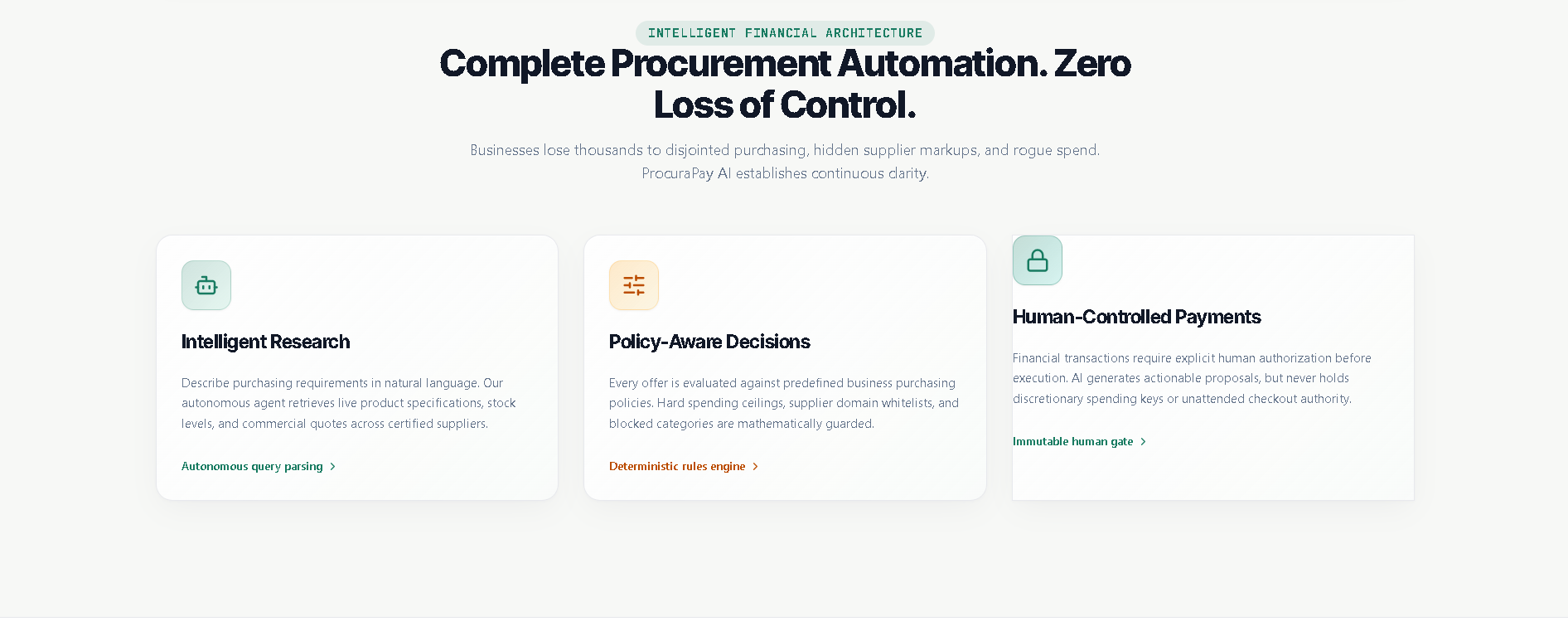
AI should take care of the complex parts of procurement whilst keeping human control of the finances.
Functionality
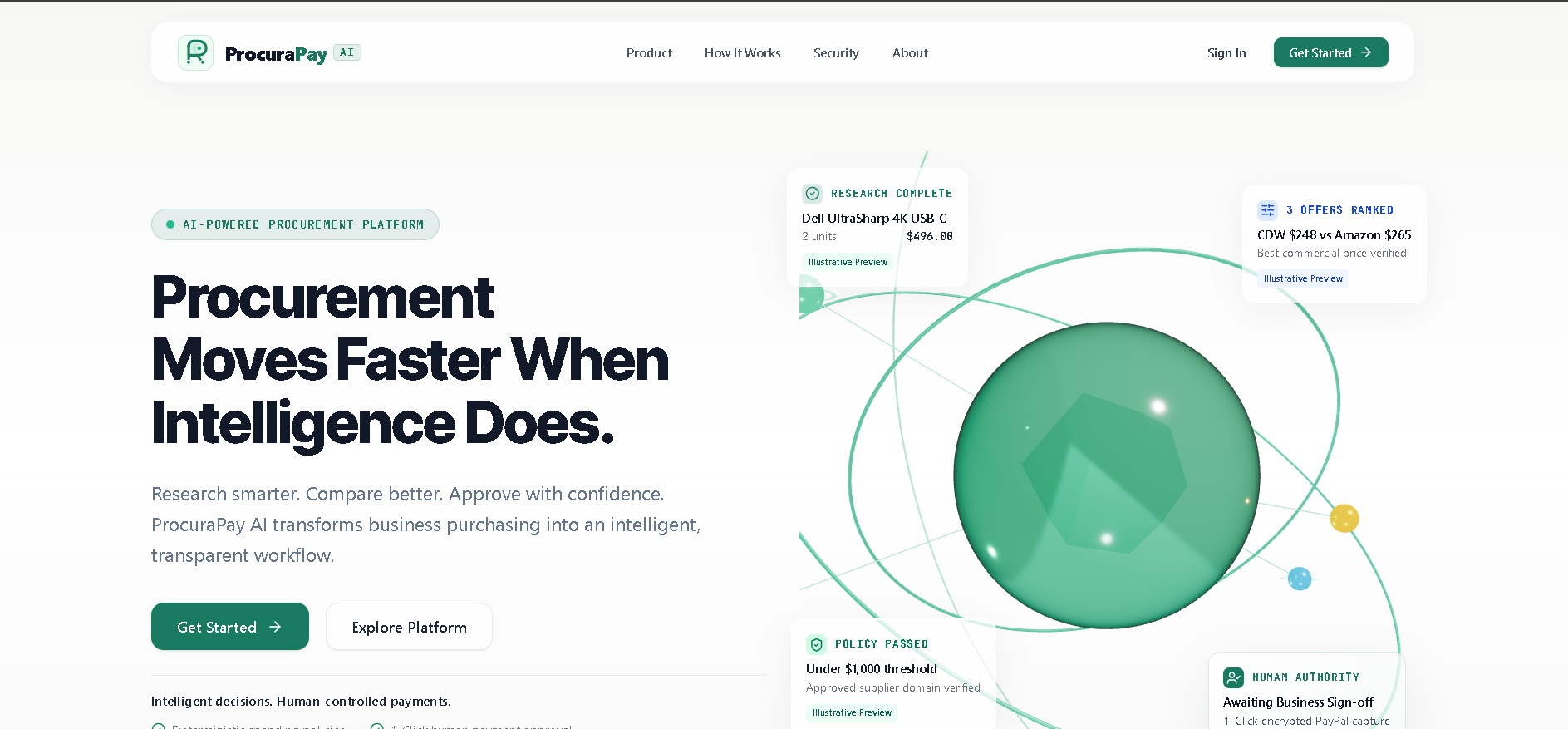
ProcuraPay AI is an AI powered B2B procurement and payments platform. It allows users to make purchases by using natural language, and outputs a clean purchase proposal. Users can:
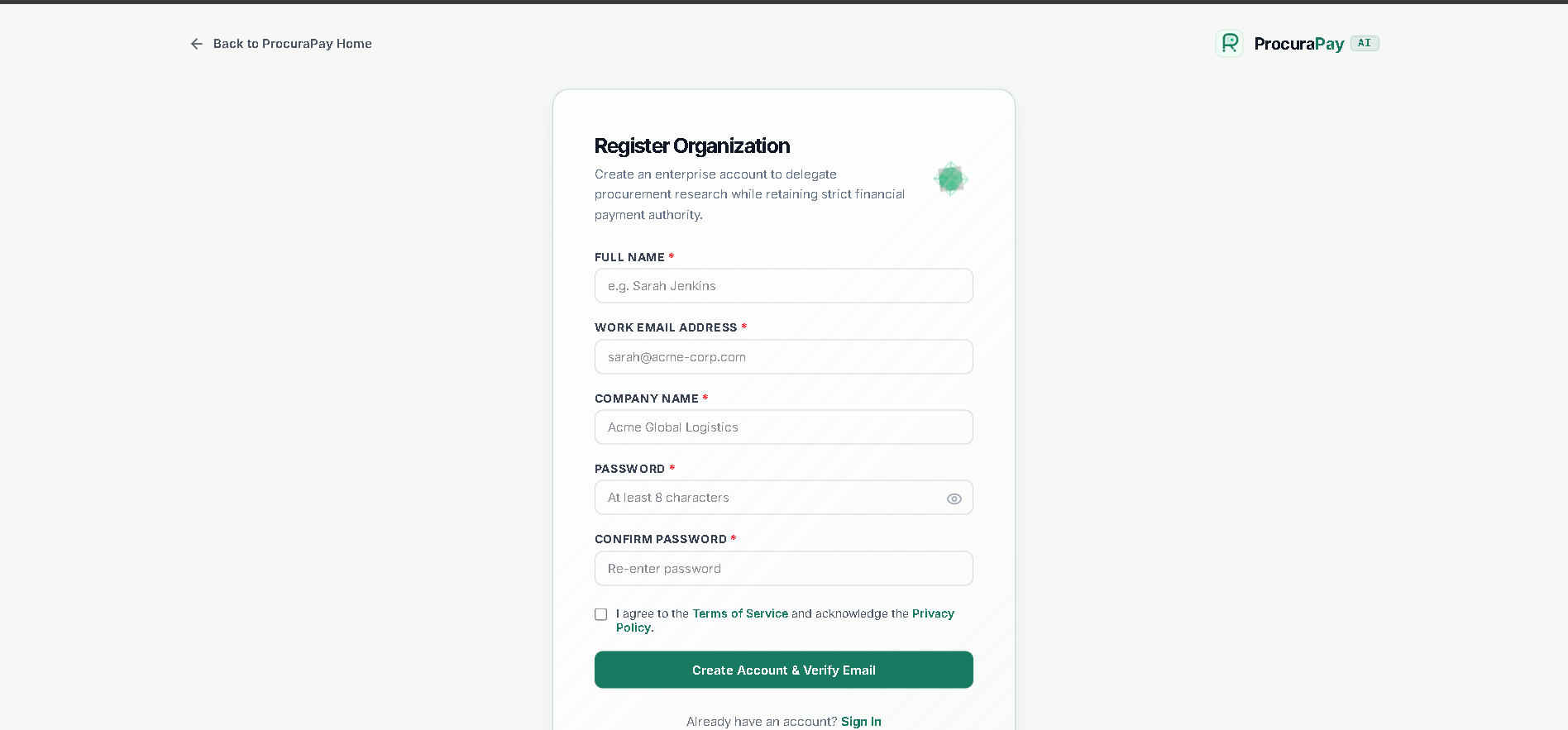
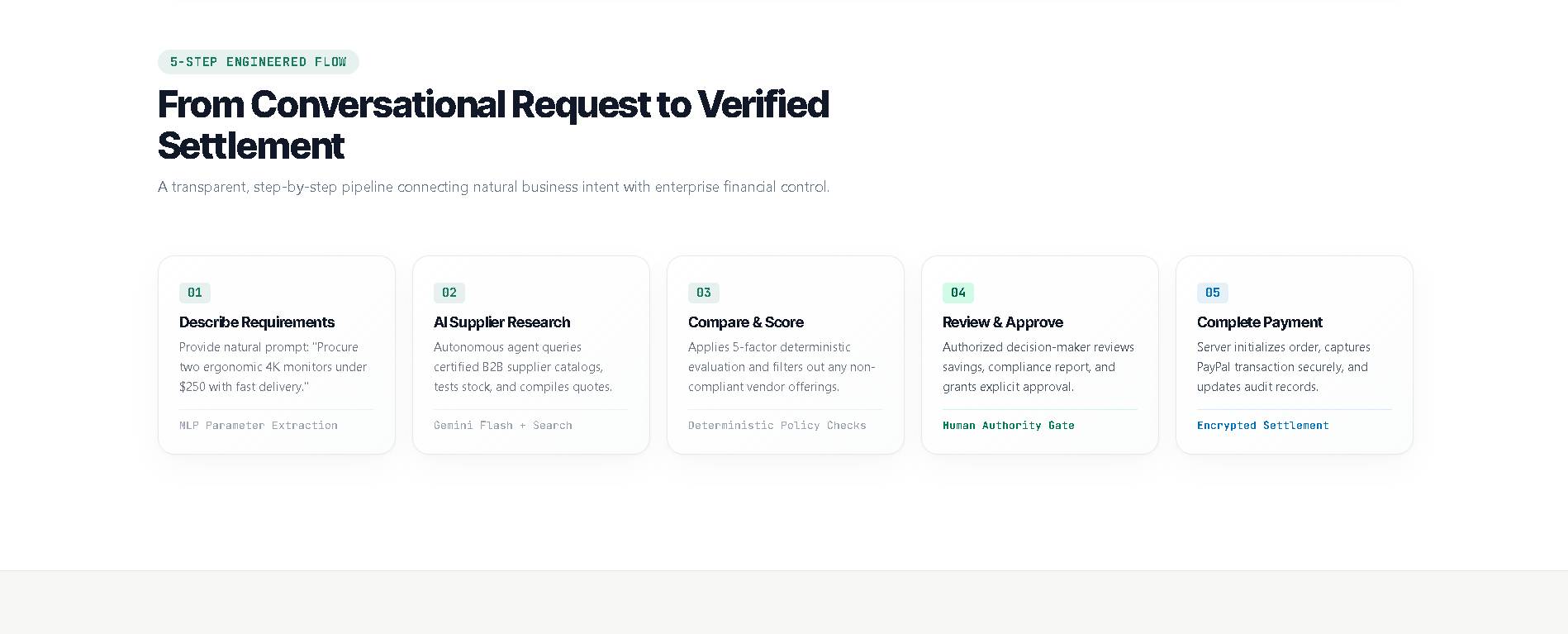
Describe what they want to buy: Create a list of what they want to purchase using natural language rather than manually filling out complex forms. AI Research: The AI will interpret the request and research relevant products and offers. Intelligent Comparison: Compare products based on price, specs, availability and vendor. Policy Check: Ensure purchases fit within budgets and procurement policies. Purchase Proposal: Clean and clear recommendations are generated with comparisons and cost breakdowns.
Human Authorization: Requires an authorized user to approve the purchase. Payment Integration: Using PayPal to create payments. Transaction History: Track transactions. Our aim was to go beyond recommendations from AI systems to create a real agentic commerce solution.
Technology Used
We created a modular application to allow for the separation of different technologies. This allows for a frontend, backend, AI, policies and payments. Frontend: Next.js & React. TypeScript. Tailwind CSS & shadcn/ui. Three.js & React Three Fiber. Framer Motion. Backend: Node.js & Express.js. TypeScript. Modular API. Database & Authentication: Supabase PostgreSQL. Supabase Auth. Row Level Security. AI: Gemini API. Structured Output. Product Discovery Tool. Comparison Tool. Budget Calculator. Policy Checker. Proposal Generator. Payments: PayPal Developer APIs. Server Side Payments.
Webhook Verification. A key point we focused on was ensuring there was a clear separation between recommendation from AI and authorizing payments.
Challenges
One of the main challenges we faced was designing an AI agent that went beyond just generating realistic text. We needed to ensure the AI could interact with tools, understand what the user wanted to purchase, compare real product information and make accurate recommendations. Other challenges included: Agentic AI: Ensuring multiple AI tools were working together to create a predictable purchase flow. Reliable Data: Ensuring product pricing, specs and availability weren’t made up. Deterministic Policies: Ensuring purchasing policies weren’t being decided by the AI model. Secure Payments: Ensuring there was a secure separation between recommendations, authorizations and payments. Transaction Management: Ensuring payments were handled correctly including duplicates, errors and verification. Integration: Ensuring multiple services were working together as one application. User Friendly: Ensuring a complex procurement process was easy to use. Overall this pushed us to make sure our solutions were reliable, clear and secure.
Achievements
We are very proud of the idea of having an agentic AI that can manage purchases but have a human controlled payment system. Some of our major achievements include: Creating a fully agentic procurement architecture. Using tools to create an AI flow rather than just standard chatbot responses. Separating the AI from deterministic purchasing policies. Creating a human authorization step. Creating a plan for secure payments using PayPal. Creating an organization aware database and authorization system. Creating a unique design for an enterprise fintech application with 3D interactivity and Liquid Glass elements. Most importantly we are creating with the idea that autonomous systems should be helping to improve efficiency without losing control.
Learnings
Creating ProcuraPay AI has taught us that building an agentic AI product involves much more than just linking an LLM to an API. We have learnt: AI agents should be using tools and have restrictions. Use deterministic business logic for financial decisions. Human authorization is key part of an agentic system. Create reliable integrations. Handle asynchronous payments and webhook verification. Ensure multi-tenancy data is secure with the correct authorizations. Create clear interfaces to show what the AI is doing. We have learnt that the best AI applications aren’t always fully automated but doing the right things to automate.
Future of ProcuraPay
We envisage ProcuraPay AI becoming an intelligent procurement infrastructure.
Our future features will include:
Advanced Supplier Discovery: More product and supplier discovery using more verified data sources. Multi Vendor Procurement: More advanced supplier comparisons. Intelligent Budget: Insights into spend and smarter budgeting. Advanced Procurement Policies: Configurable approval flows, departmental budgets and purchasing limits. Invoice Intelligence: Using AI to extract, verify and reconcile invoices. Supplier Management: Supplier profiles, insights and procurement history. Advanced Analytics: Clear spend reports, purchasing trends and cost savings. Enterprise Integrations: Accounting, ERP and inventory systems. Payment Expansion: Investigate what payments can be supported within businesses and marketplaces. Improved AI: Make procurement agents more contextual, reliable and able to manage complex purchasing processes.
Ultimately we want ProcuraPay AI to become a trusted agentic commerce platform that can be used by businesses to outsource the complex parts of procurement to intelligent agents without losing control of their money.
Built With
- ai
- api
- css
- developer
- drei
- express.js
- fiber
- framer
- gemini
- next.js
- node.js
- paypal
- postgresql
- react
- shadcn/ui
- supabase
- tailwind
- three
- three.js
- typescript
