PayPilot AI — Intelligent Payment Management & Financial Intelligence
->Inspiration
Small businesses increasingly accept digital payments, but receiving payments is only one part of managing a business. Understanding transaction activity, identifying unusual patterns, monitoring categories, and making informed financial decisions can still require manual effort.
We wanted to explore how AI could make payment data more understandable and useful for business owners.
That idea led us to build PayPilot AI— an intelligent payment management and financial analytics platform that combines PayPal payment workflows with AI-powered financial assistance.
->What it does
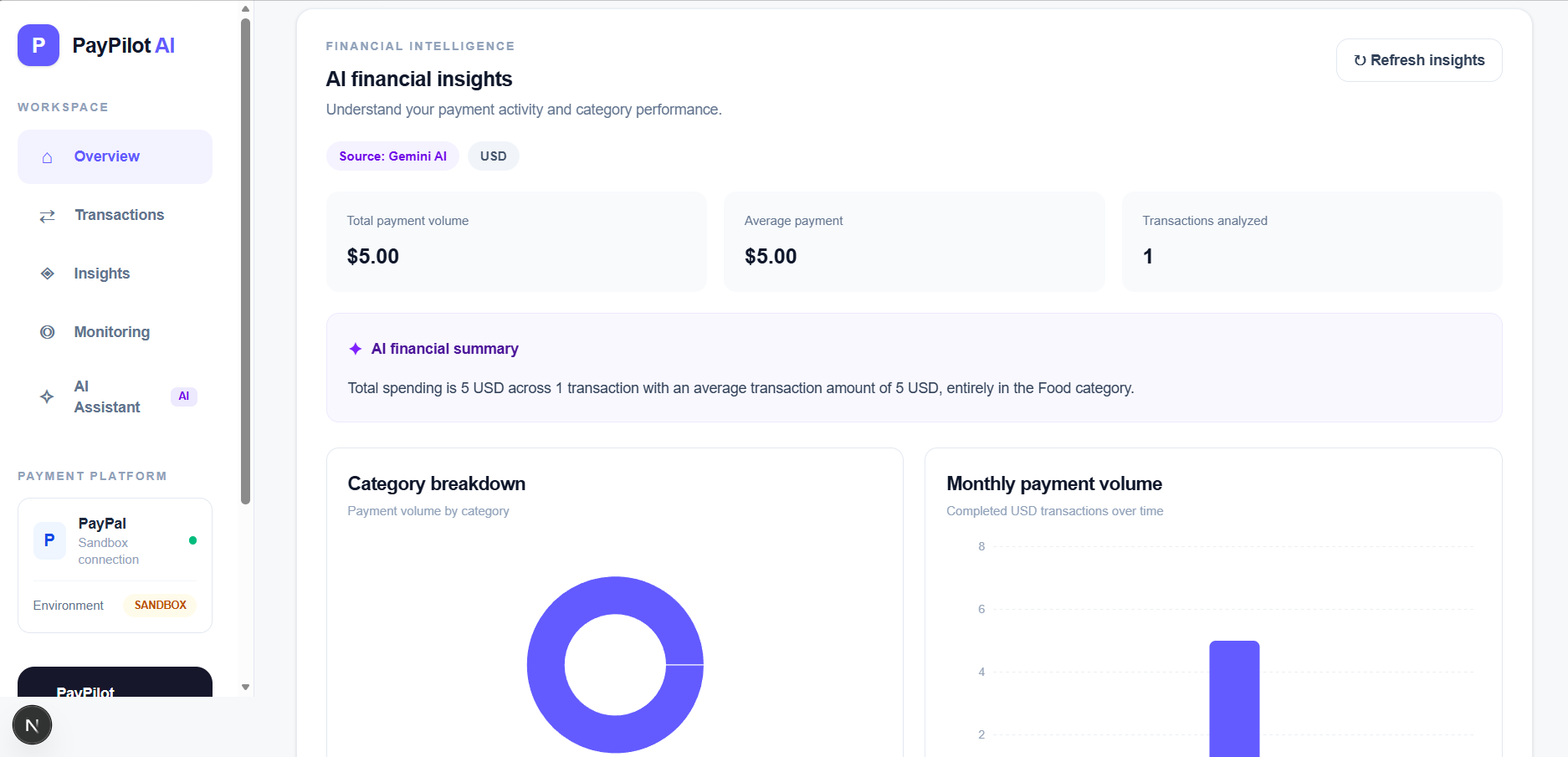
PayPilot AI brings payment activity, transaction analytics, monitoring, and AI assistance together in one business dashboard.
Its key capabilities include:
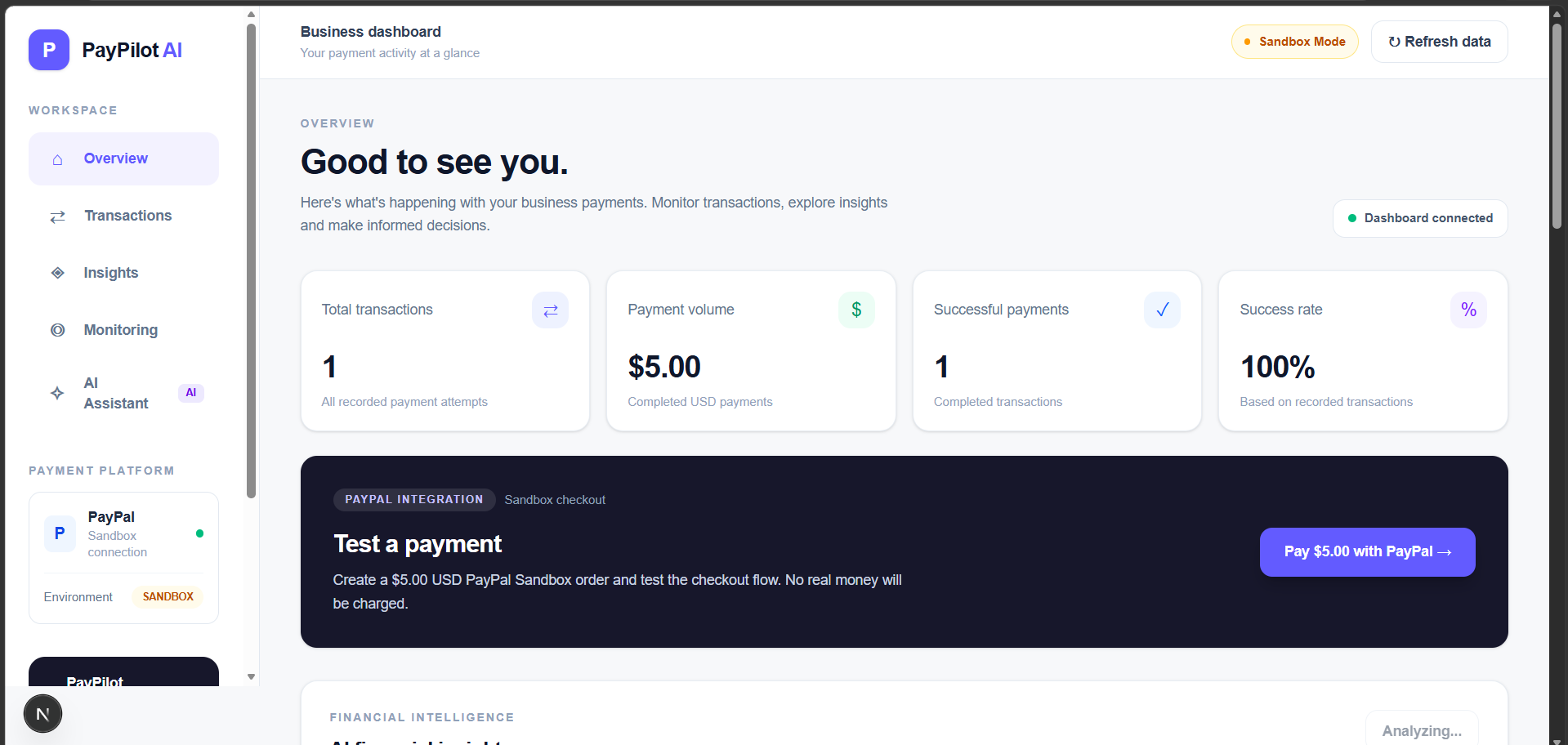
- PayPal Integration: Create PayPal Sandbox checkout orders and record completed test transactions.
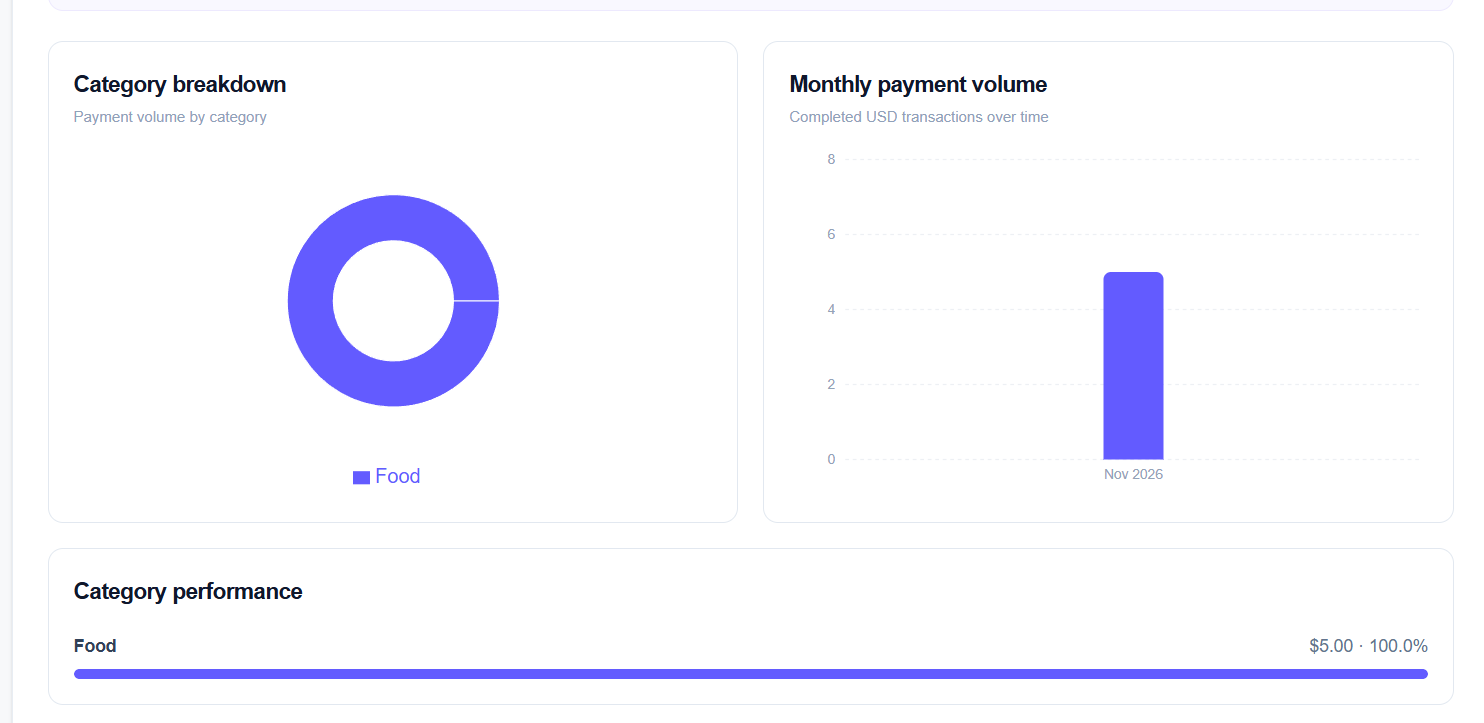
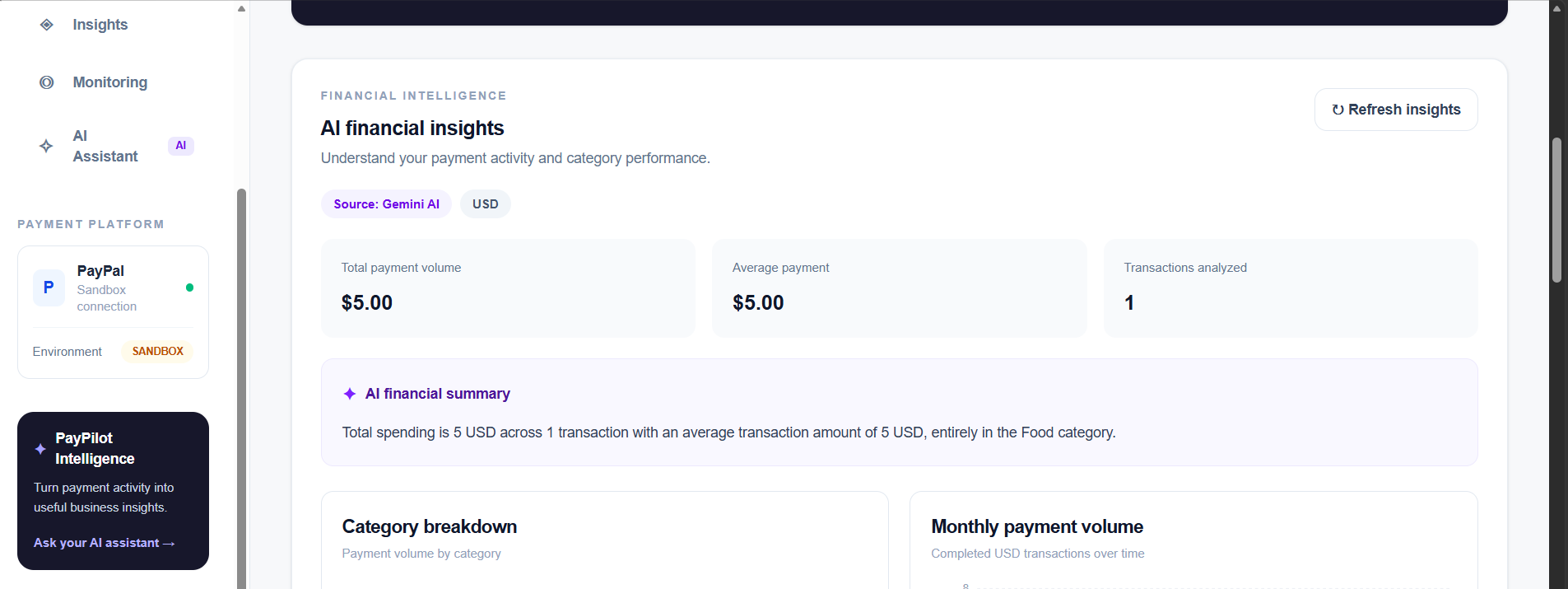
- Financial Dashboard: View transaction counts, payment volume, average transaction value, success rate, and financial charts.
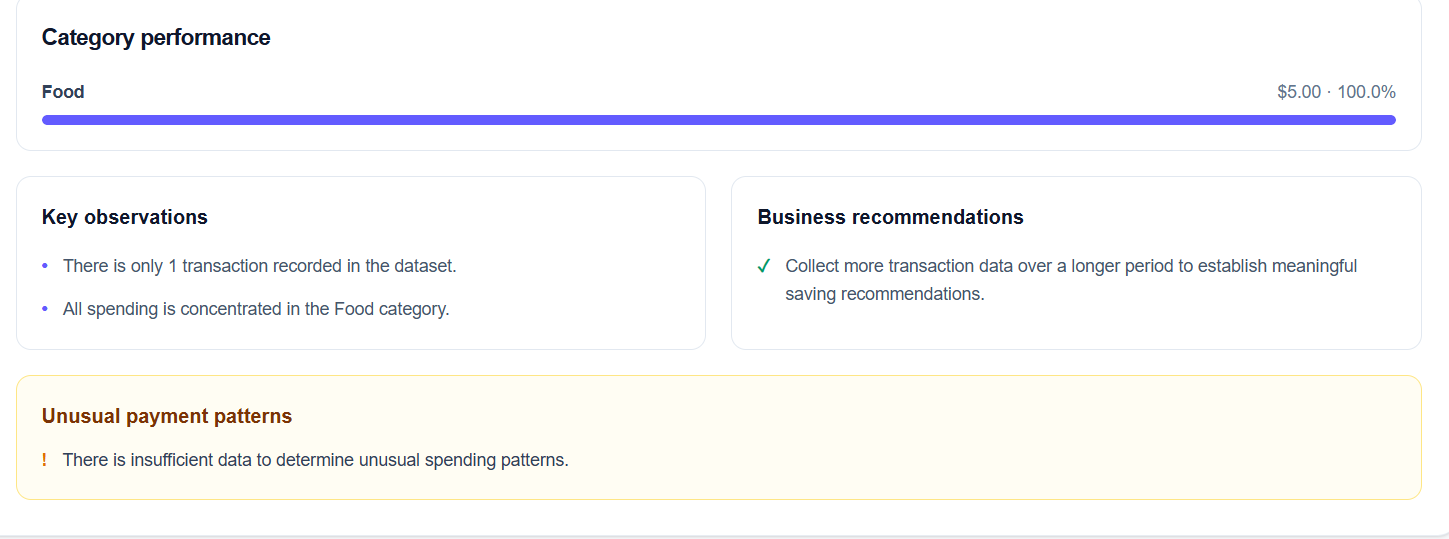
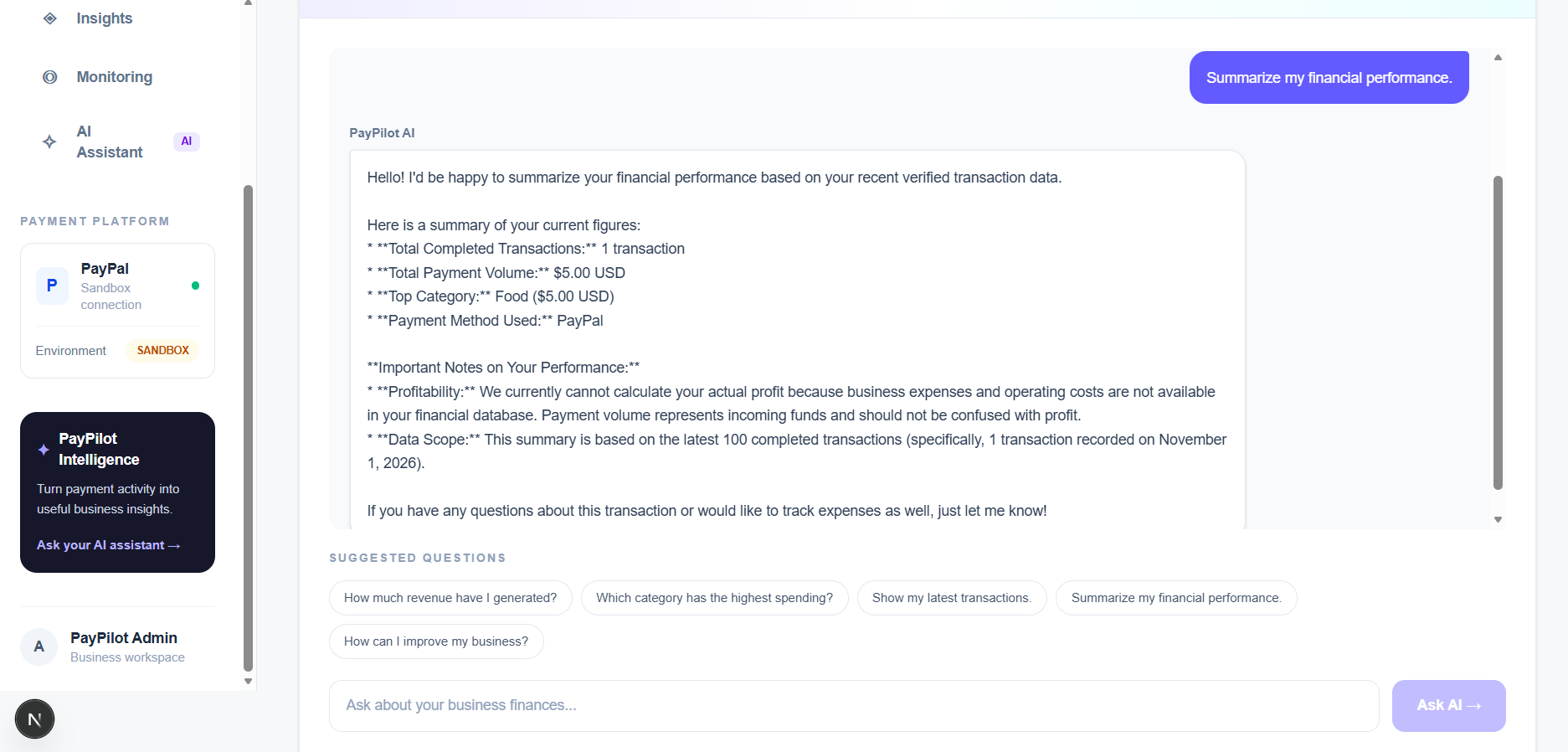
- AI Financial Insights: Generate summaries, category observations, and business recommendations from available transaction data.
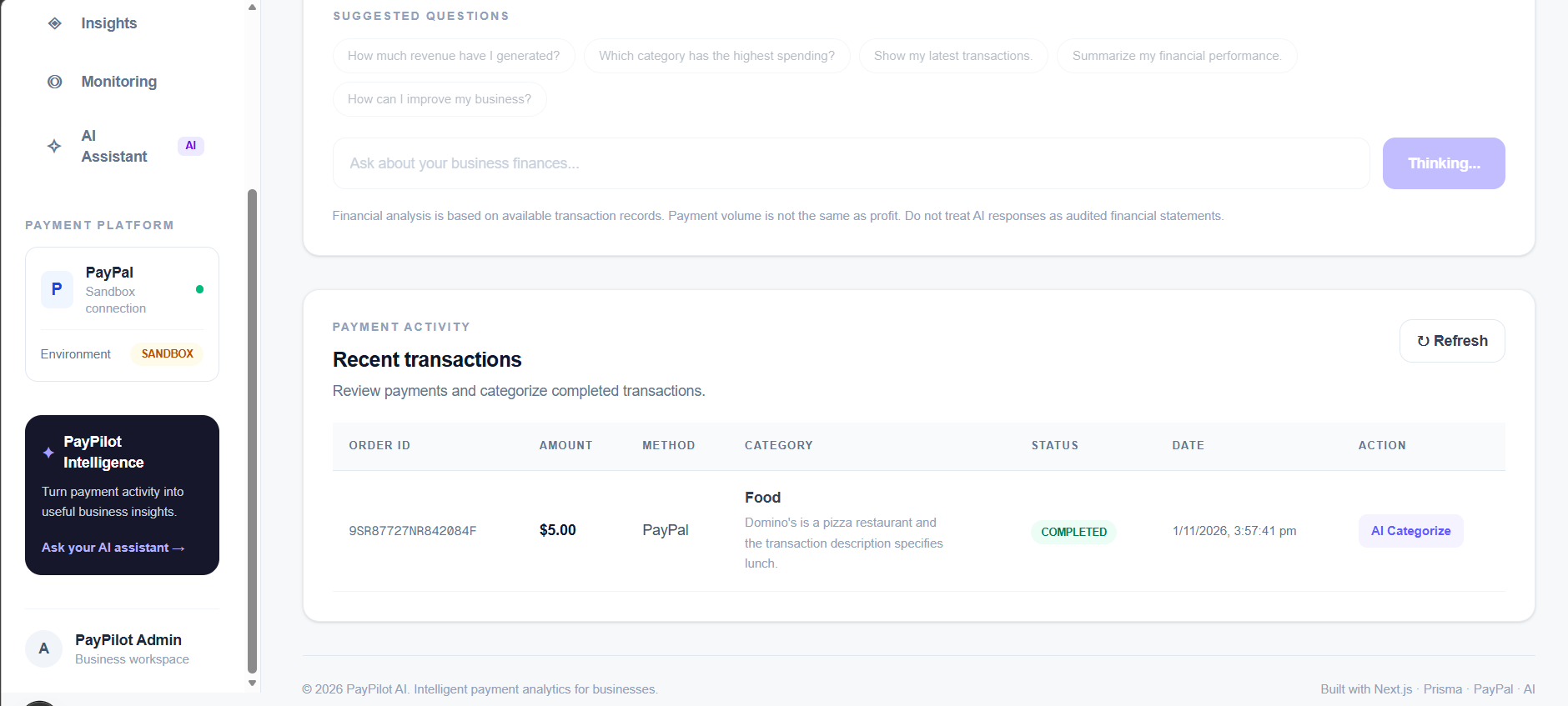
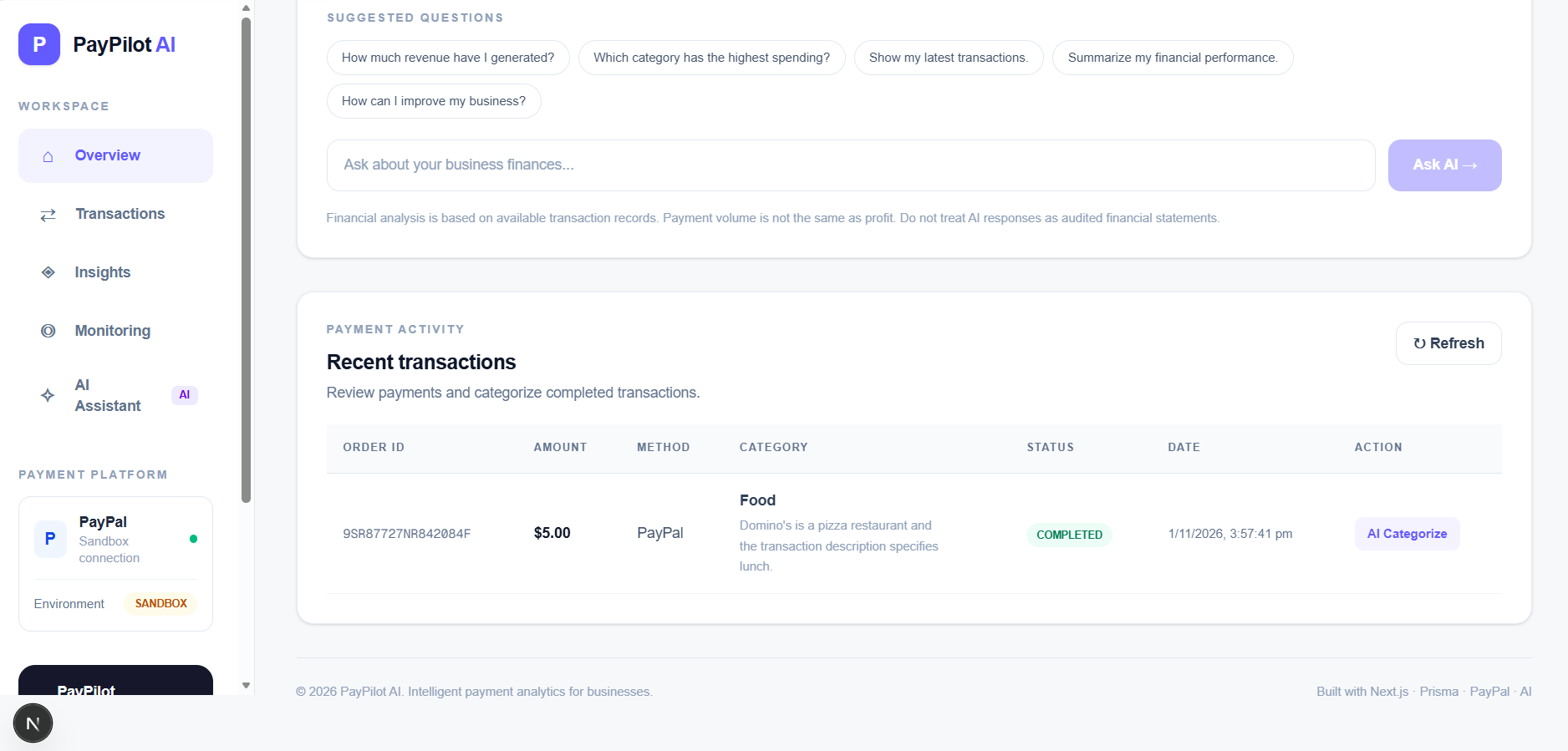
- Transaction Categorization: Organize transactions into categories and review category-level payment activity.
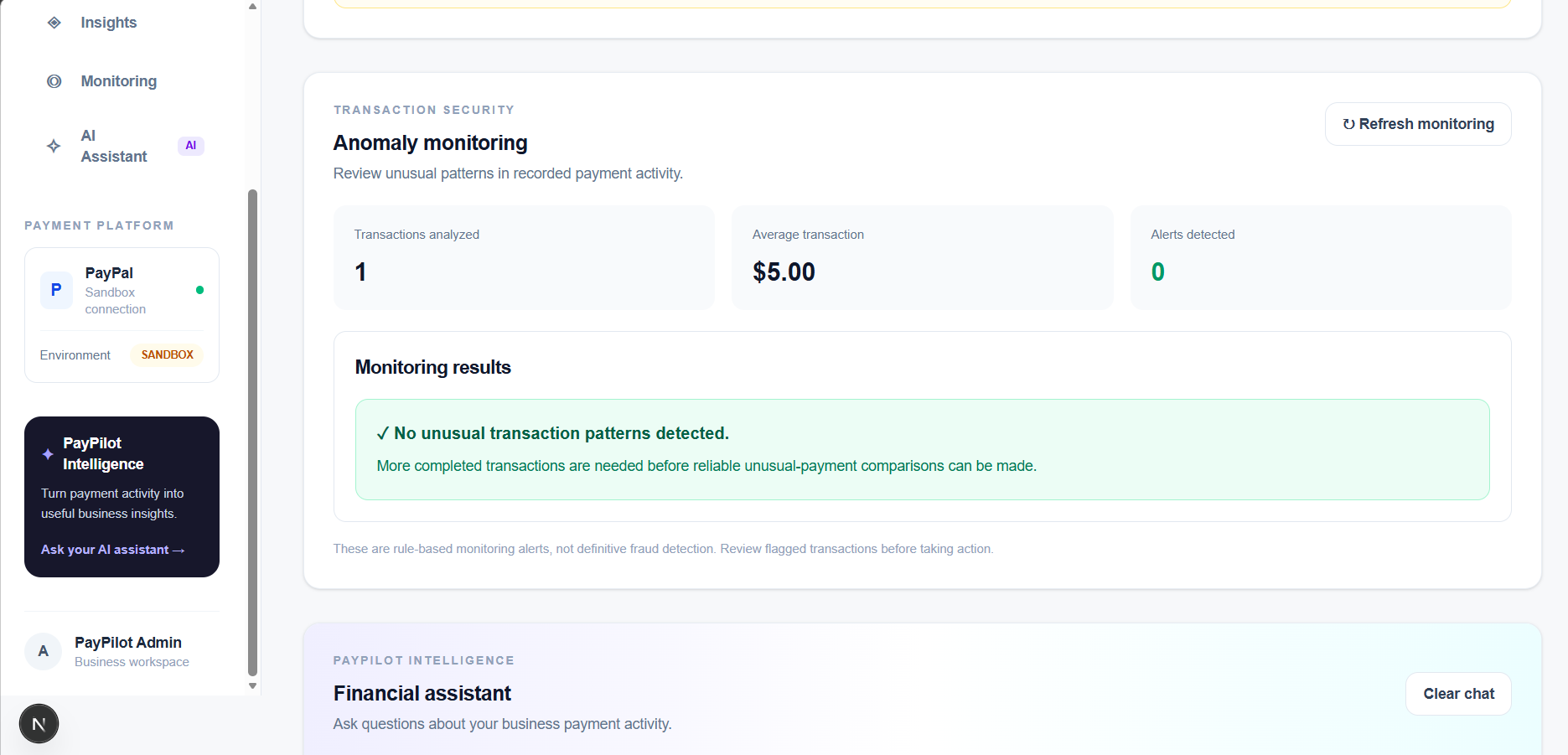
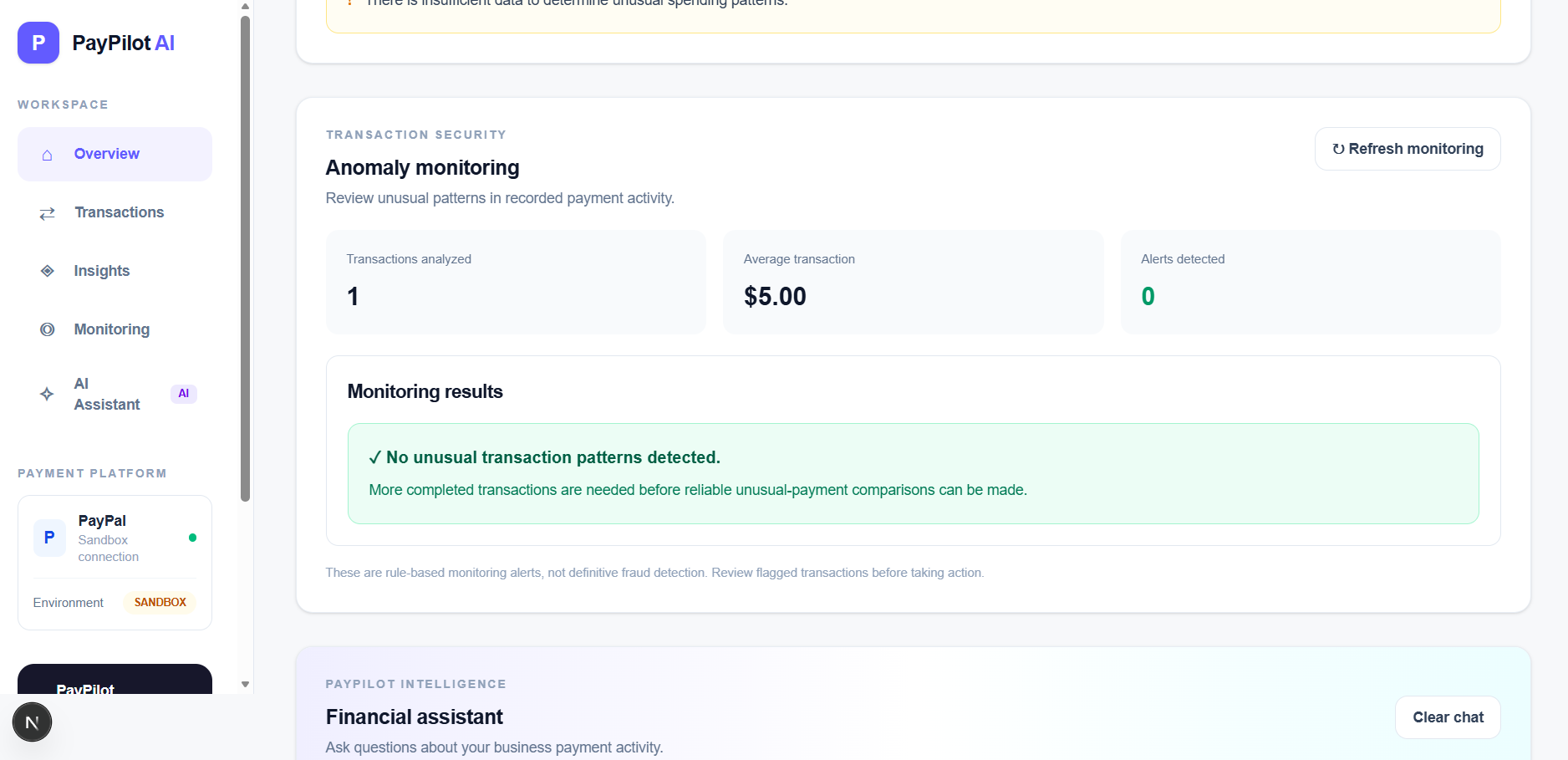
- Anomaly Monitoring:Analyze transaction values using rule-based monitoring and flag potentially unusual patterns for review.
- Financial AI Assistant:Ask natural-language questions about payment activity and receive answers based on available transaction records, with local fallback functionality when the AI service is unavailable.
-> How we built it
We built PayPilot AI as a full-stack web application using Next.js, React, TypeScript, and Tailwind CSS.
The payment workflow uses the PayPal Server SDK in Sandbox mode. Transaction records are stored using Transaction records are stored using Prisma ORM with Neon PostgreSQL, providing persistent cloud-based transaction storage.
The dashboard uses financial data retrieved from the application's backend and presents it through interactive visualizations built with Recharts.
For AI capabilities, we integrated Google Gemini to support financial summaries and natural-language assistance. We also implemented local fallback functionality so essential financial responses and insights remain available when the external AI service is unavailable.
The anomaly monitoring feature uses rule-based analysis of recorded transaction values. It is designed to highlight patterns that deserve attention rather than claim to provide definitive fraud detection.
-> Technical architecture
The application follows this general workflow:
- A merchant interacts with the PayPilot AI dashboard.
- PayPal Sandbox handles the test checkout workflow.
- The backend processes payment information and stores transaction records.
- Prisma ORM and Neon PostgreSQL provide persistent transaction storage.
- Dashboard components display payment analytics and category information.
- AI services and local fallback logic generate financial insights and assistant responses.
- Monitoring logic analyzes recorded transactions and produces review alerts.
->Challenges we faced
One of our main challenges was connecting payment workflows with a financial analytics system.
We needed to ensure that completed payment records were stored correctly and that dashboard metrics were calculated from the available transaction data.
Another challenge was integrating an external AI service while maintaining useful application behavior when the service was unavailable or its usage limits were reached. We addressed this with local fallback functionality.
We also had to distinguish payment volume from actual profit and ensure that anomaly alerts were presented as indicators for review, not confirmed fraud.
->What we learned
Building PayPilot AI helped us understand how payment APIs, backend services, databases, analytics, and AI capabilities can work together in a single application.
We gained practical experience with PayPal Sandbox integration, transaction persistence, API development, financial data visualization, AI integration, and fallback system design.
Most importantly, we learned that useful financial AI should be grounded in actual transaction records and communicate its limitations clearly.
-> What's next
Our future plans include:
- More advanced merchant analytics and financial forecasting.
- Improved transaction classification.
- More robust anomaly monitoring.
- Multi-currency reporting.
- A mobile-friendly merchant experience.
- Production payment integration through appropriate regulated payment providers.
-> Project vision
Our vision is to make financial intelligence more accessible to businesses by bringing payment activity, analytics, monitoring, and AI-powered assistance into one platform.
PayPilot AI — Understand your payments. Discover your insights. Make smarter decisions.
-> Current implementation status
PayPilot AI is a working hackathon MVP. Its current PayPal integration uses Sandbox mode, and no real-money transactions are processed. AI-generated insights are informational, and payment volume should not be interpreted as net profit.
