-
-
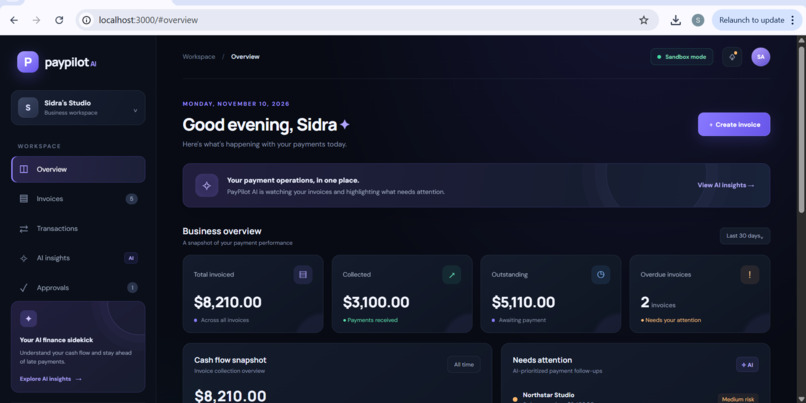
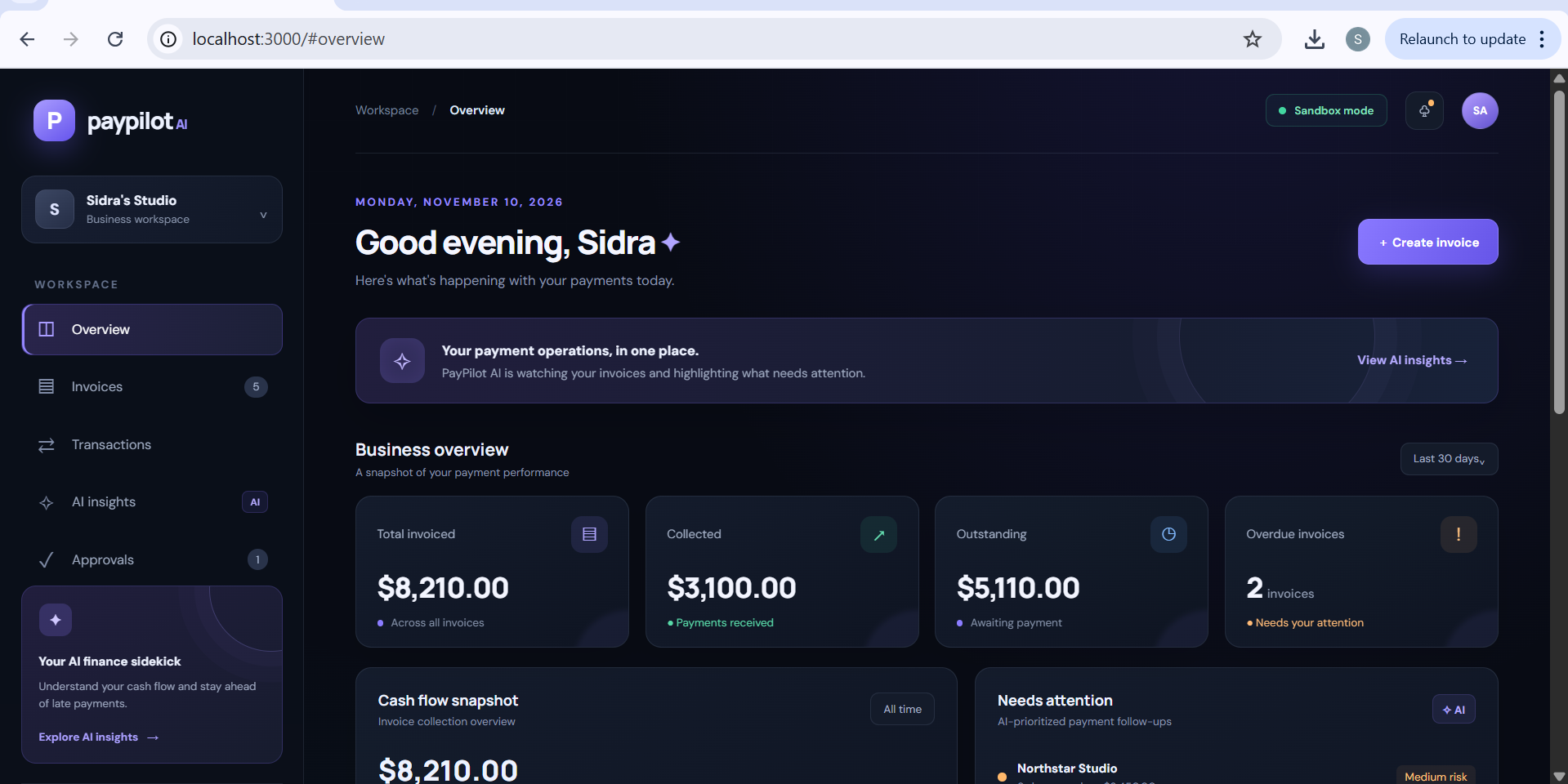
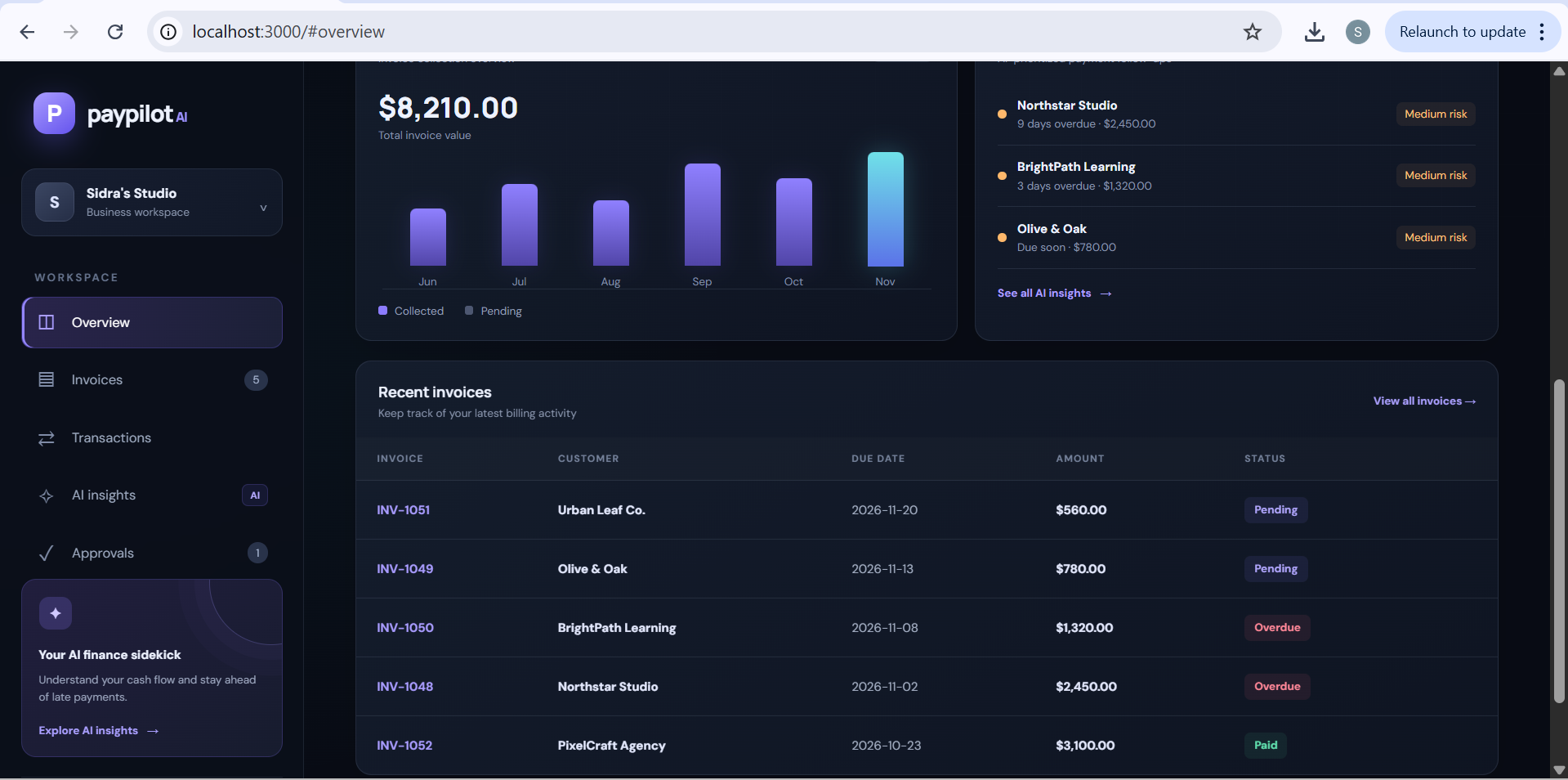
1. Main Dashboard
-
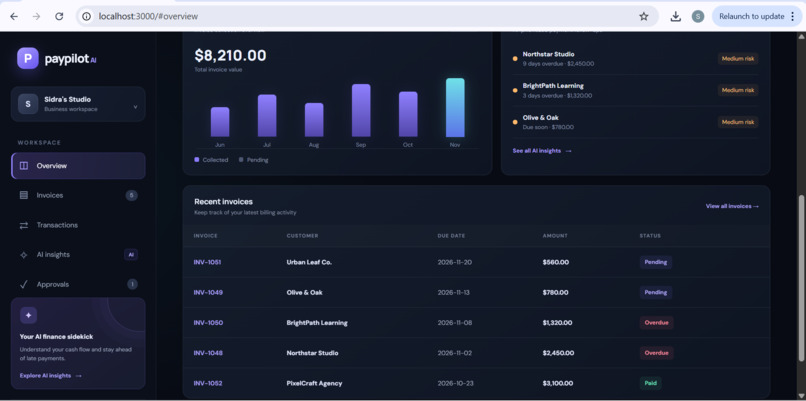
2. Main Dashboard
-
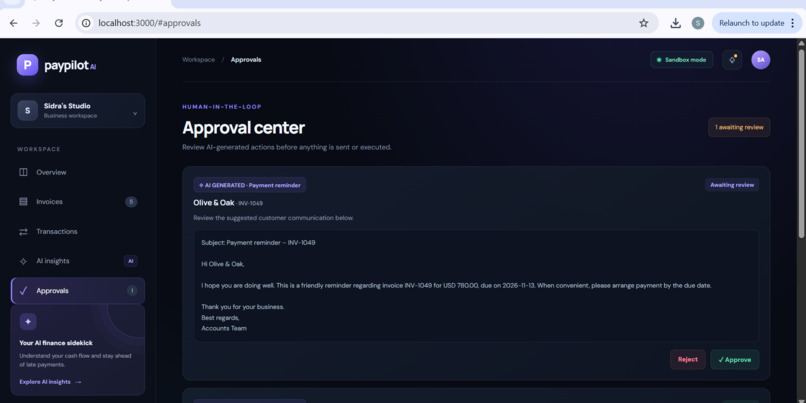
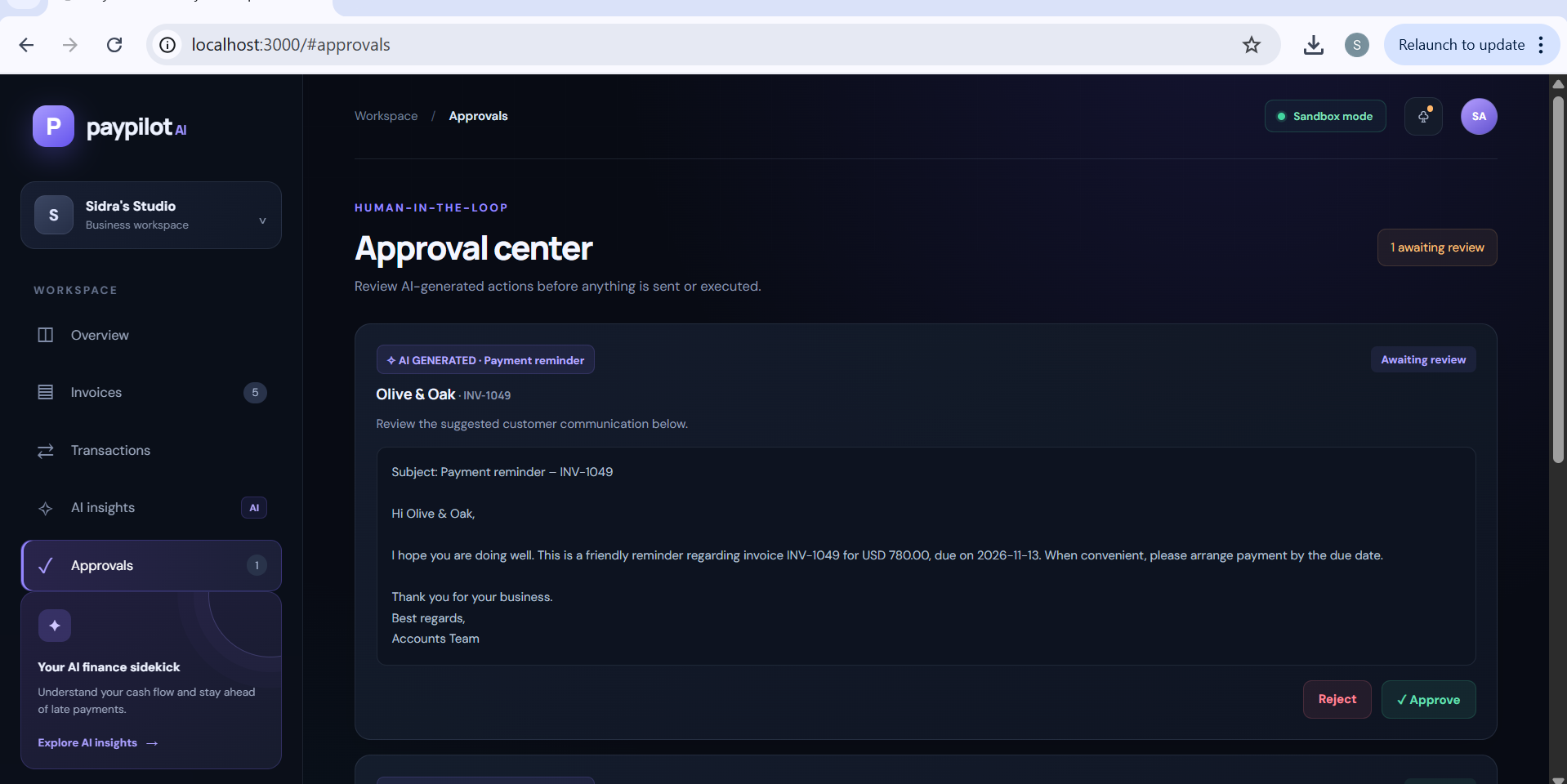
3. Approval Center
-
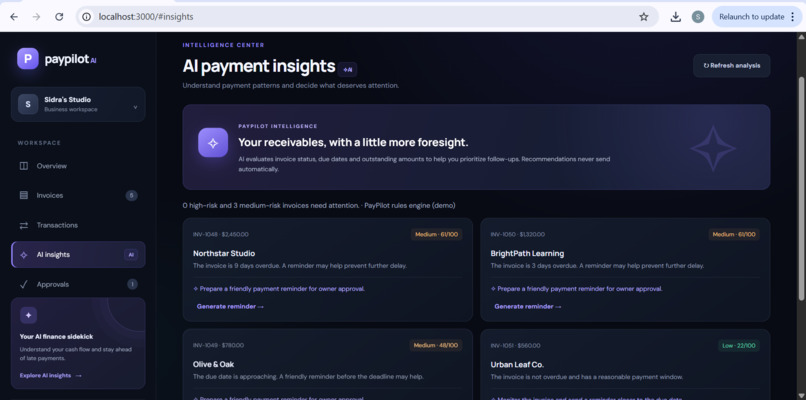
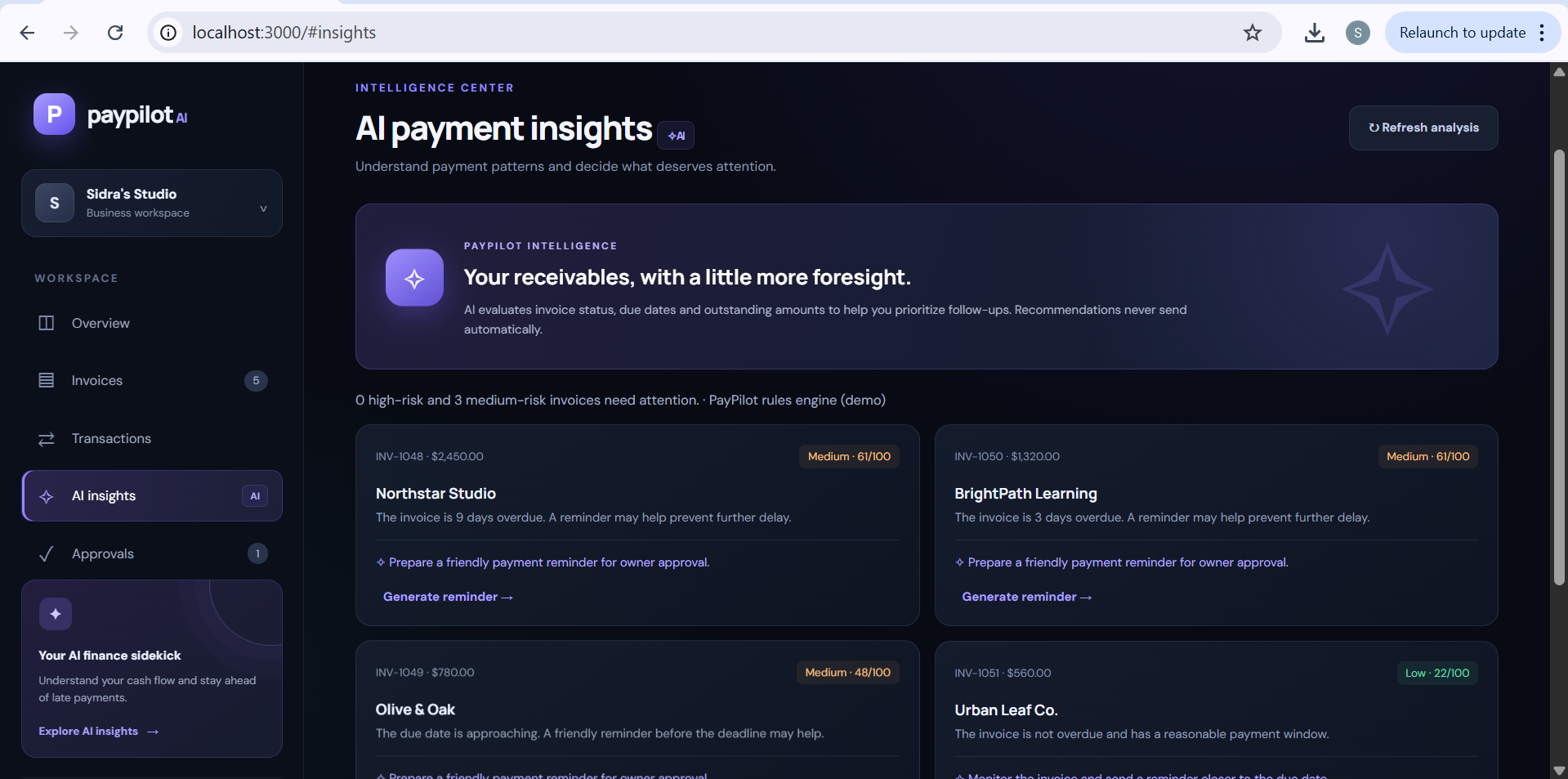
4. AI Insights
-
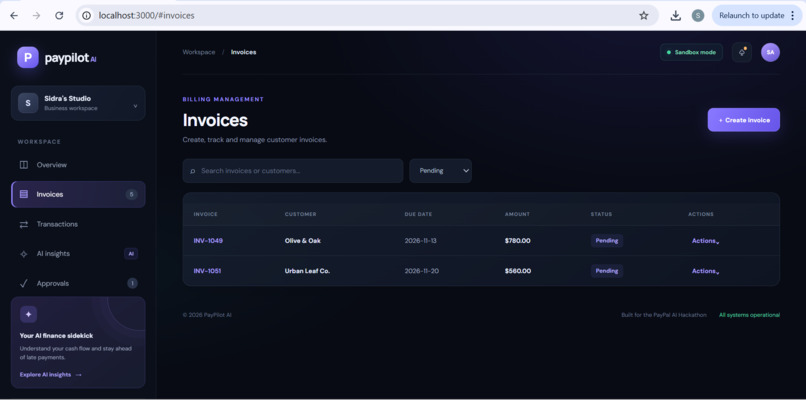
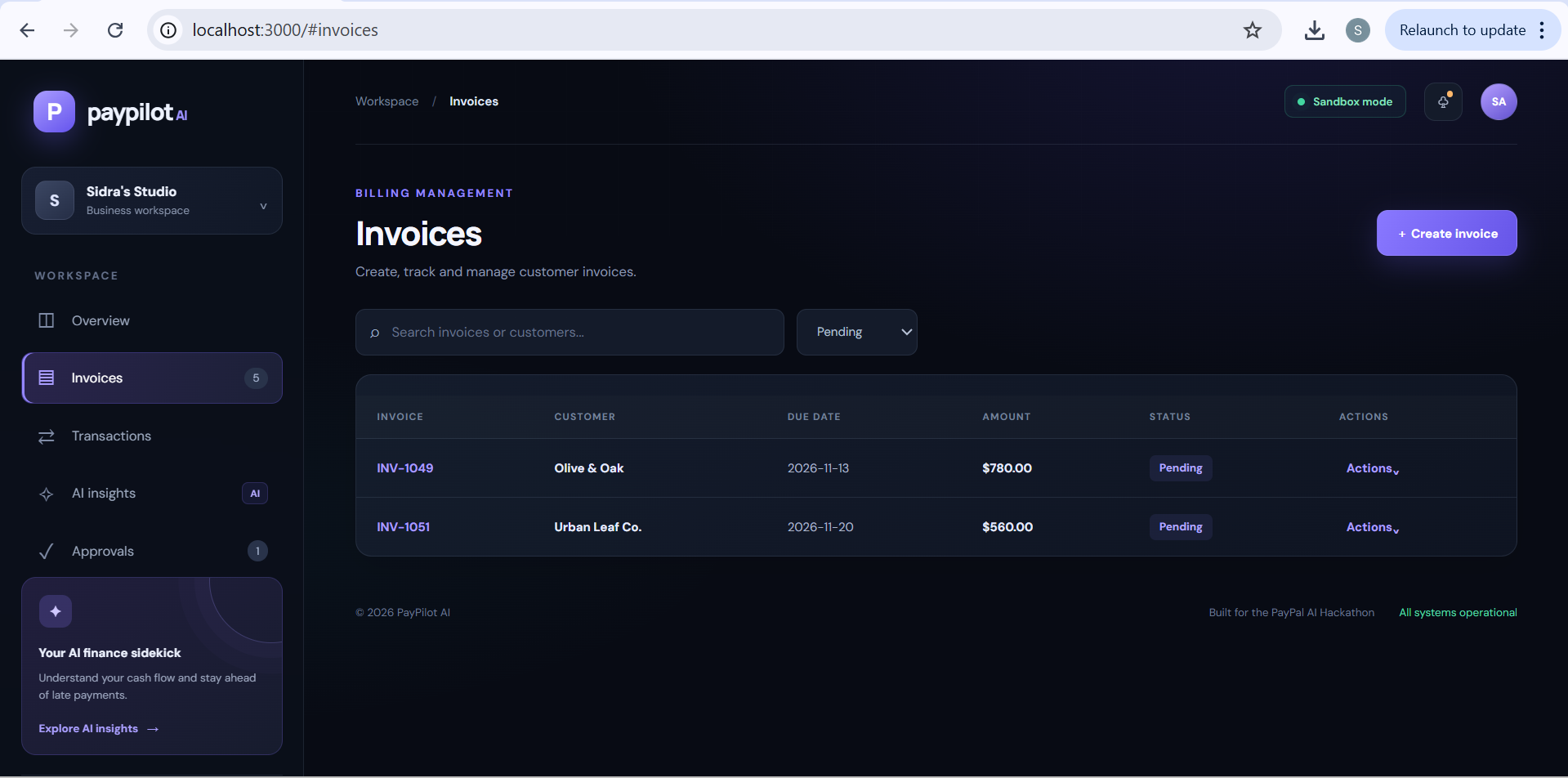
5. Invoice Management
-
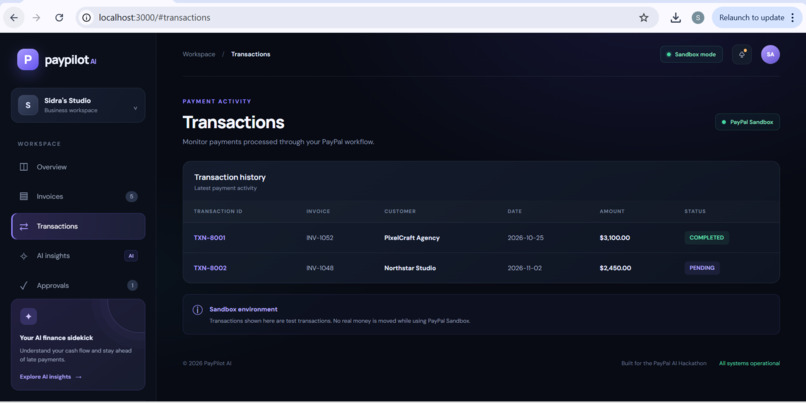
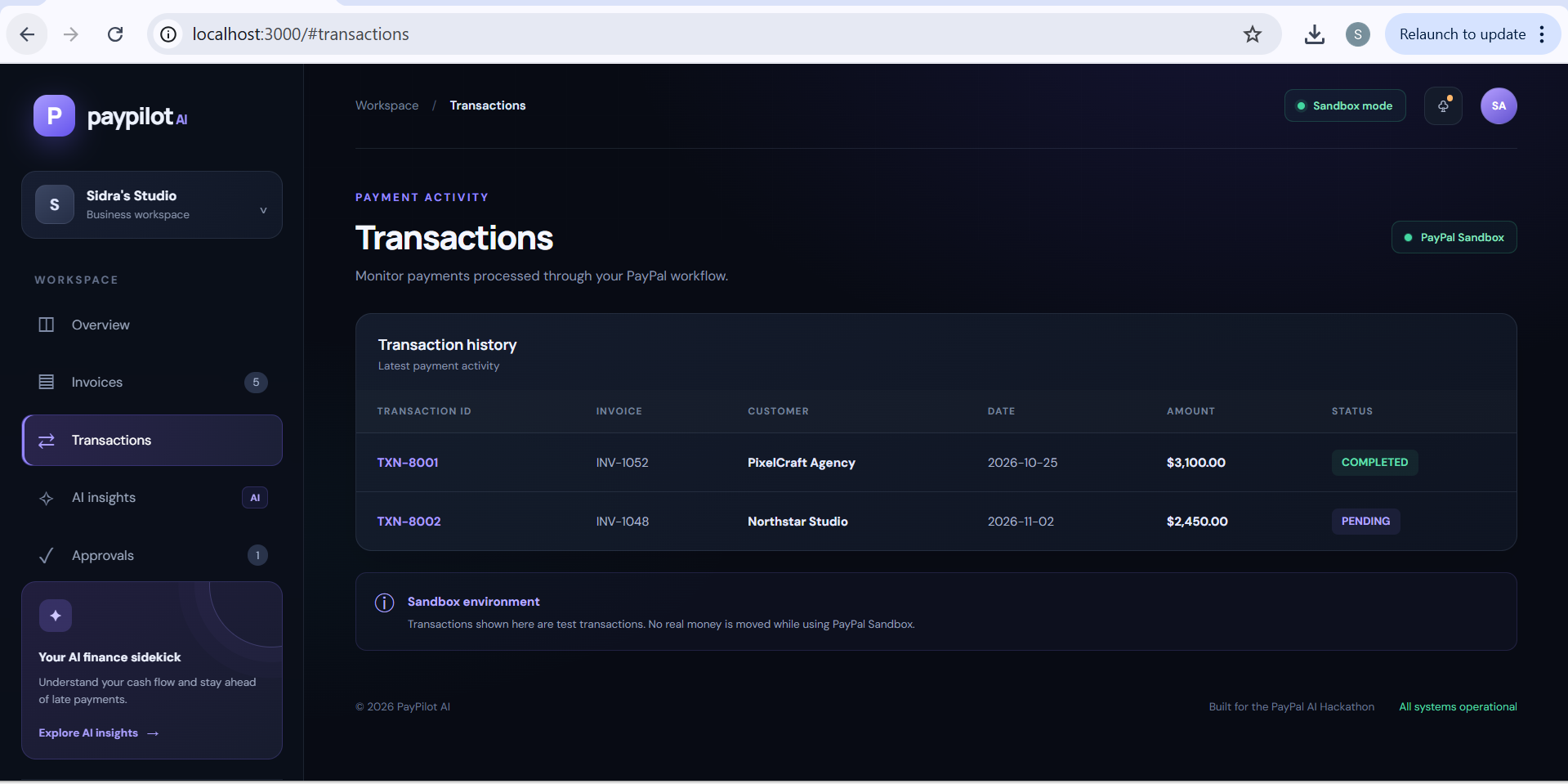
6. Transactions
-
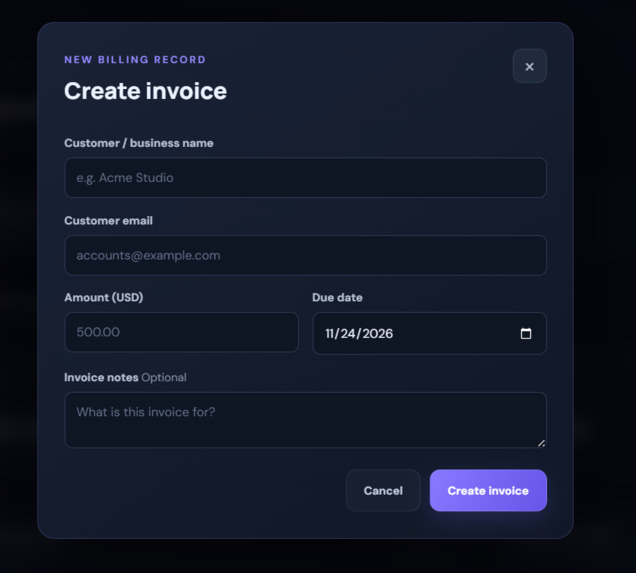
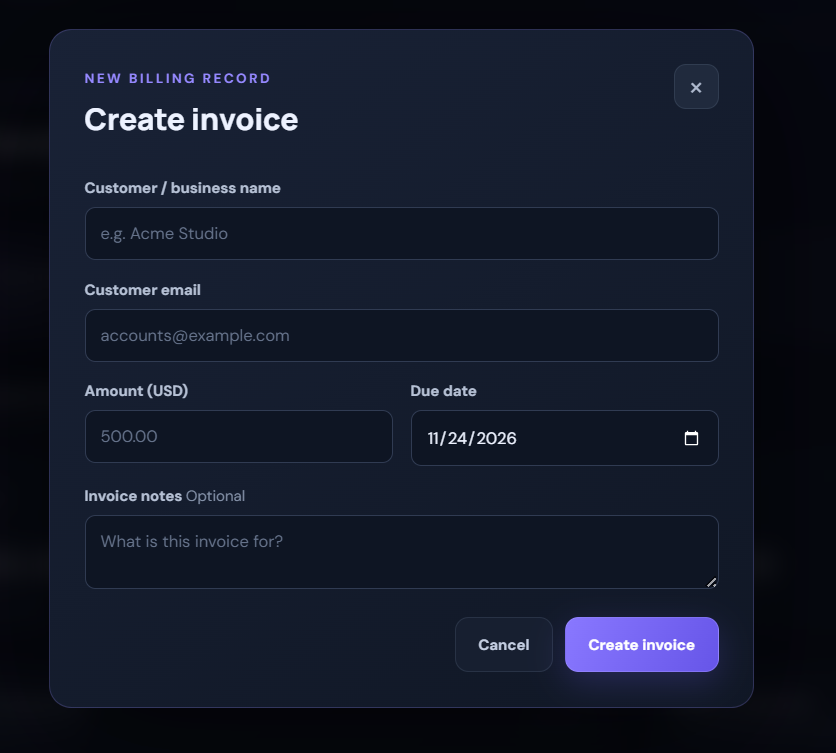
7. Create Invoice
PayPilot AI — Your AI Payment Operations Agent
Inspiration
Small businesses often struggle with managing unpaid invoices, tracking payment statuses, identifying overdue customers, and sending repetitive payment reminders. These manual tasks consume valuable time and can negatively affect cash flow.
We wanted to build a solution that makes payment operations simpler, smarter, and more organized.
That's how PayPilot AI was created — an AI-powered payment operations assistant that combines artificial intelligence with PayPal payment technology to help small businesses manage their receivables more efficiently while keeping humans in control.
What it does
PayPilot AI provides a centralized workspace for managing invoices, understanding payment delays, and handling payment-related workflows.
Its key features include:
- Smart Invoice Management: Create, search, filter, and update invoices while tracking paid, pending, and overdue payments.
- AI-Powered Payment Insights: Analyze outstanding invoices, identify payment risks using transparent rules-based scoring, explain why invoices need attention, and recommend next steps.
- AI-Assisted Follow-ups: Generate personalized and professional payment reminder drafts using AI.
- Human Approval Workflow: Review, approve, or reject AI-generated reminders before taking action. AI does not independently send customer messages.
- PayPal Sandbox Integration: Create PayPal Checkout orders and capture buyer-approved payments through the PayPal REST API.
- Transaction Tracking: Maintain a record of captured payments and update invoice statuses.
- Business Dashboard: View receivables, collected payments, outstanding balances, overdue invoices, and recent activity.
How we built it
We developed PayPilot AI as a web application with a lightweight frontend and a Node.js backend.
Technology Stack:
- HTML5, CSS3, JavaScript
- Node.js and Express.js
- PayPal REST Checkout Orders API (Sandbox)
- OpenAI / Google Gemini API for AI-assisted reminder generation
- Local JSON storage for prototype data
The application includes a demo mode so users can explore its core functionality without configuring external API credentials. PayPal Sandbox and AI provider integrations can be enabled through environment variables.
Challenges we faced
One of our main challenges was combining AI-powered assistance with payment workflows while maintaining user control and security.
We addressed this by introducing a human approval system. AI can analyze invoices and prepare reminders, but business owners remain responsible for approving actions.
Another challenge was integrating PayPal payment processing with invoice management. We designed a workflow that creates checkout orders, captures buyer-approved payments, and updates transaction records.
We also focused on making the prototype accessible through demo data and fallback functionality when external API credentials are unavailable.
What we learned
Building PayPilot AI helped us understand how AI can be integrated into real-world business workflows rather than being limited to conversational interfaces.
We explored payment API integration, backend development, AI-assisted automation, API security, and the importance of human oversight when developing financial applications.
What's next for PayPilot AI?
Our vision is to evolve PayPilot AI into a more intelligent payment operations platform with:
- Machine learning-based payment delay prediction trained on historical payment data.
- Advanced customer payment behavior analysis.
- Automated but consent-based follow-up workflows.
- Multi-business support and persistent database integration.
- More payment providers and financial analytics.
PayPilot AI — Smarter payment operations. Better business decisions. Human control.
Built With
- ag
- artificial-intelligence
- automation
- css
- express.js
- fintech
- google-gemini
- html
- javascript
- node.js
- openai
- paypal
- rest-api
- web-development

