-
-

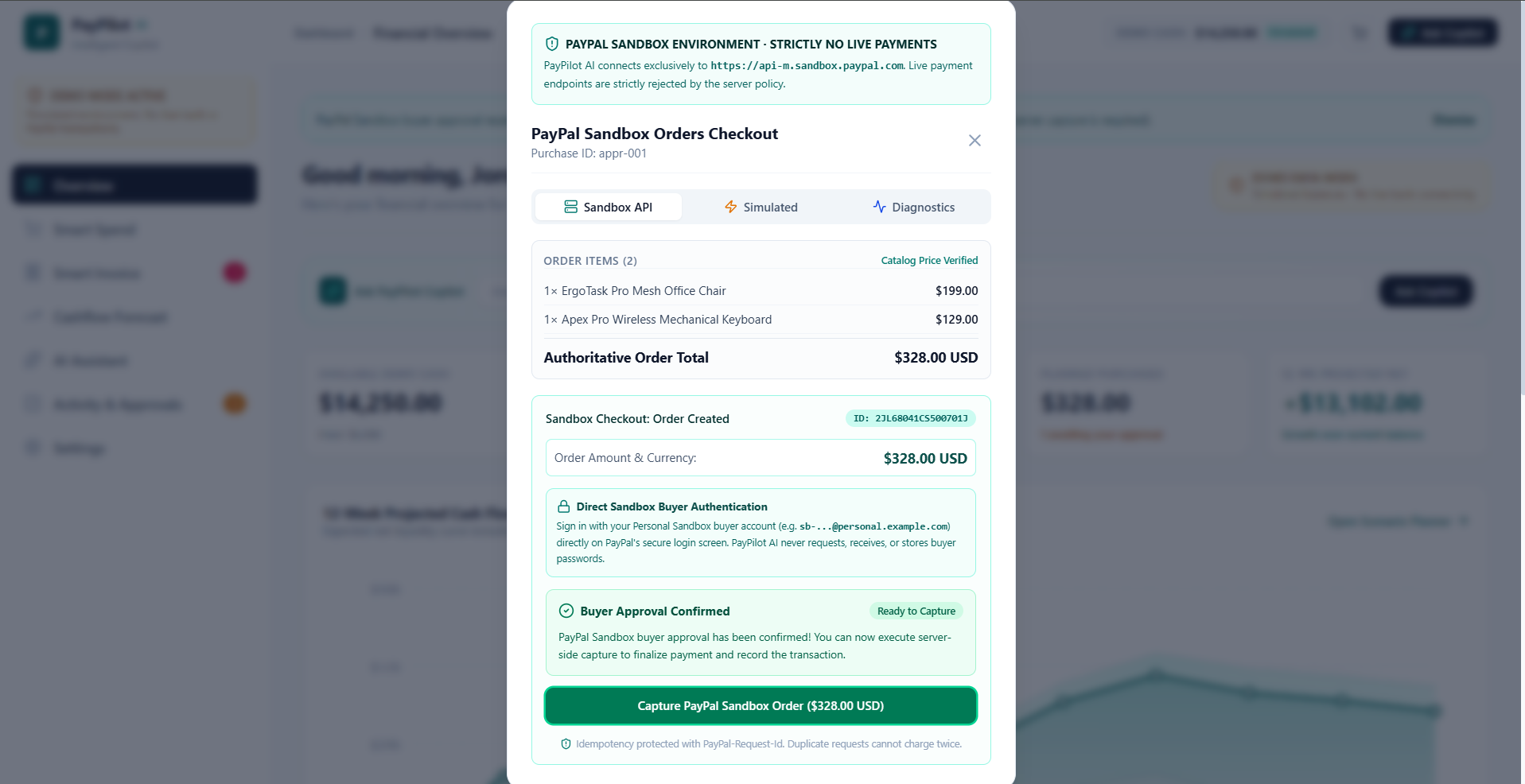
Buyers review order details and authorize payment directly through PayPal's secure Sandbox checkout experience.
-
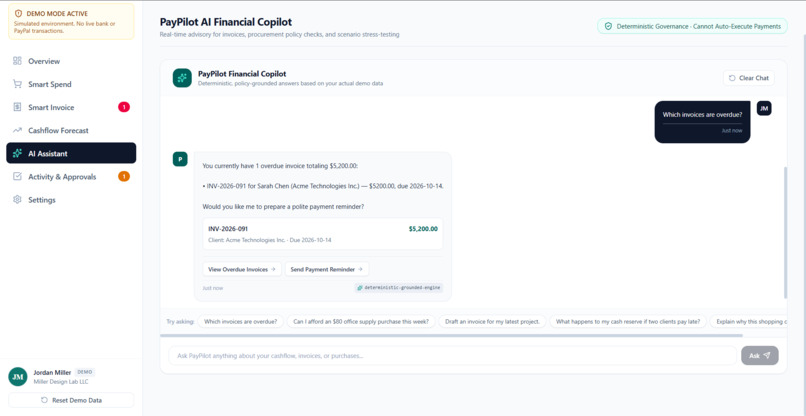
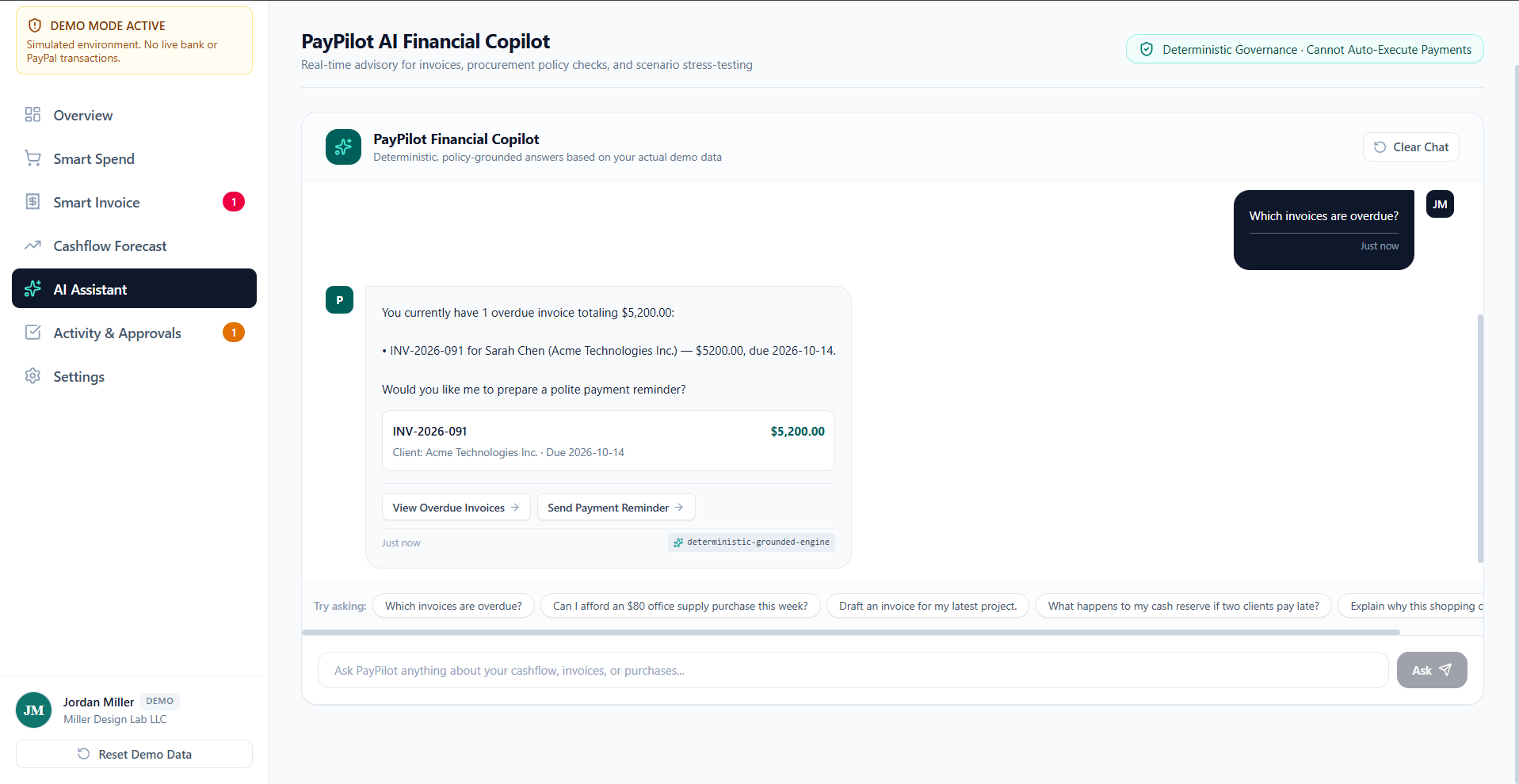
Ask questions about invoices, cash flow, and purchases; receive data-grounded insights and intelligent recommendations.
-
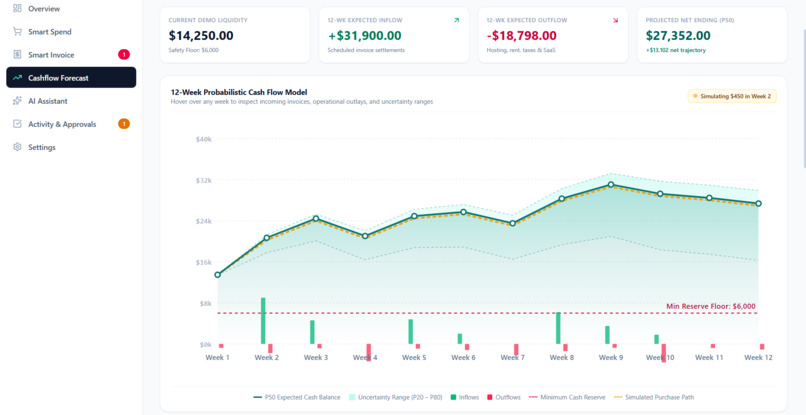
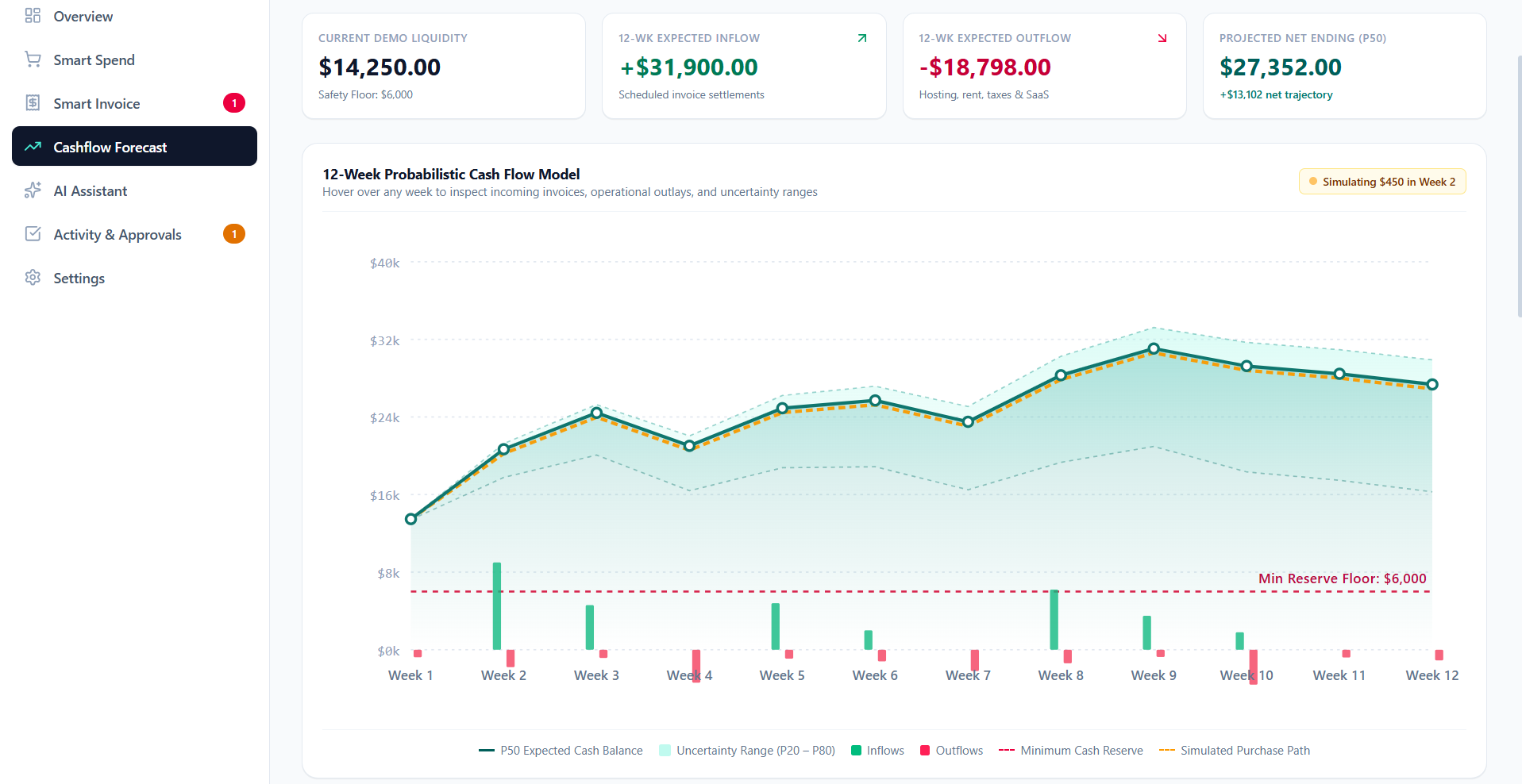
Explore 12-week balance predictions, uncertainty ranges, expected inflows, and outflows to plan spending proactively.
-
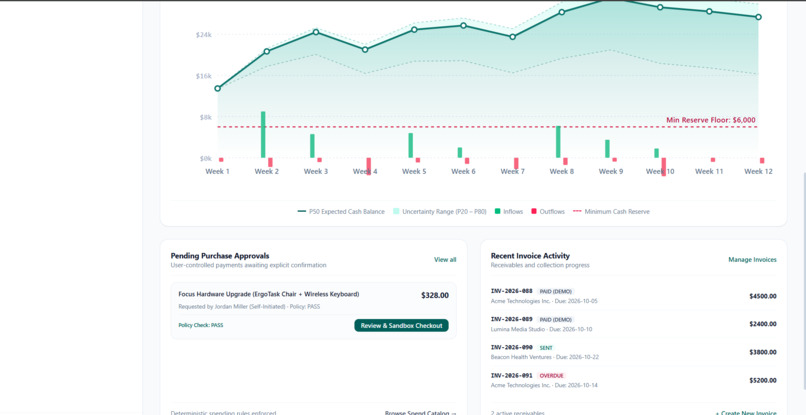
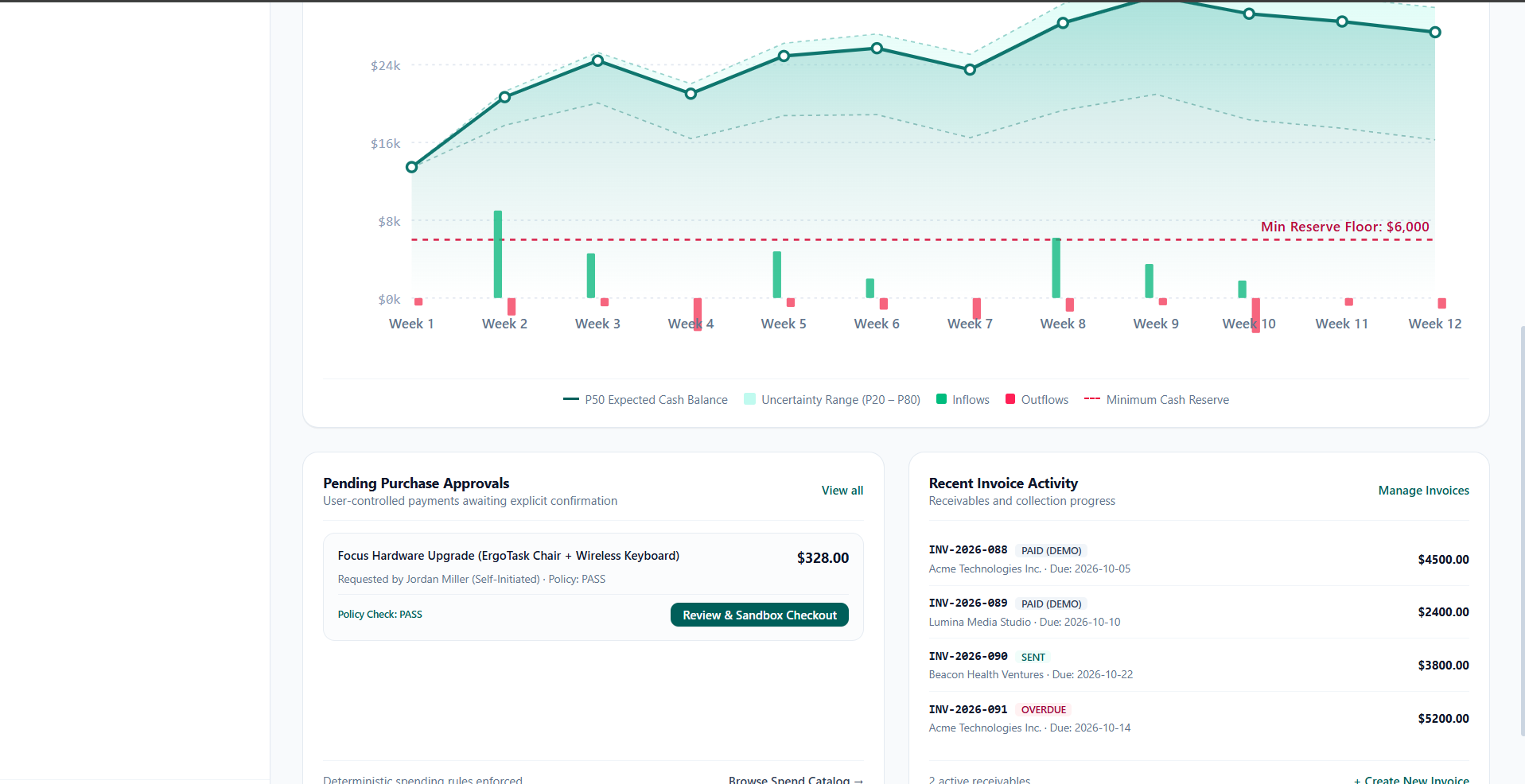
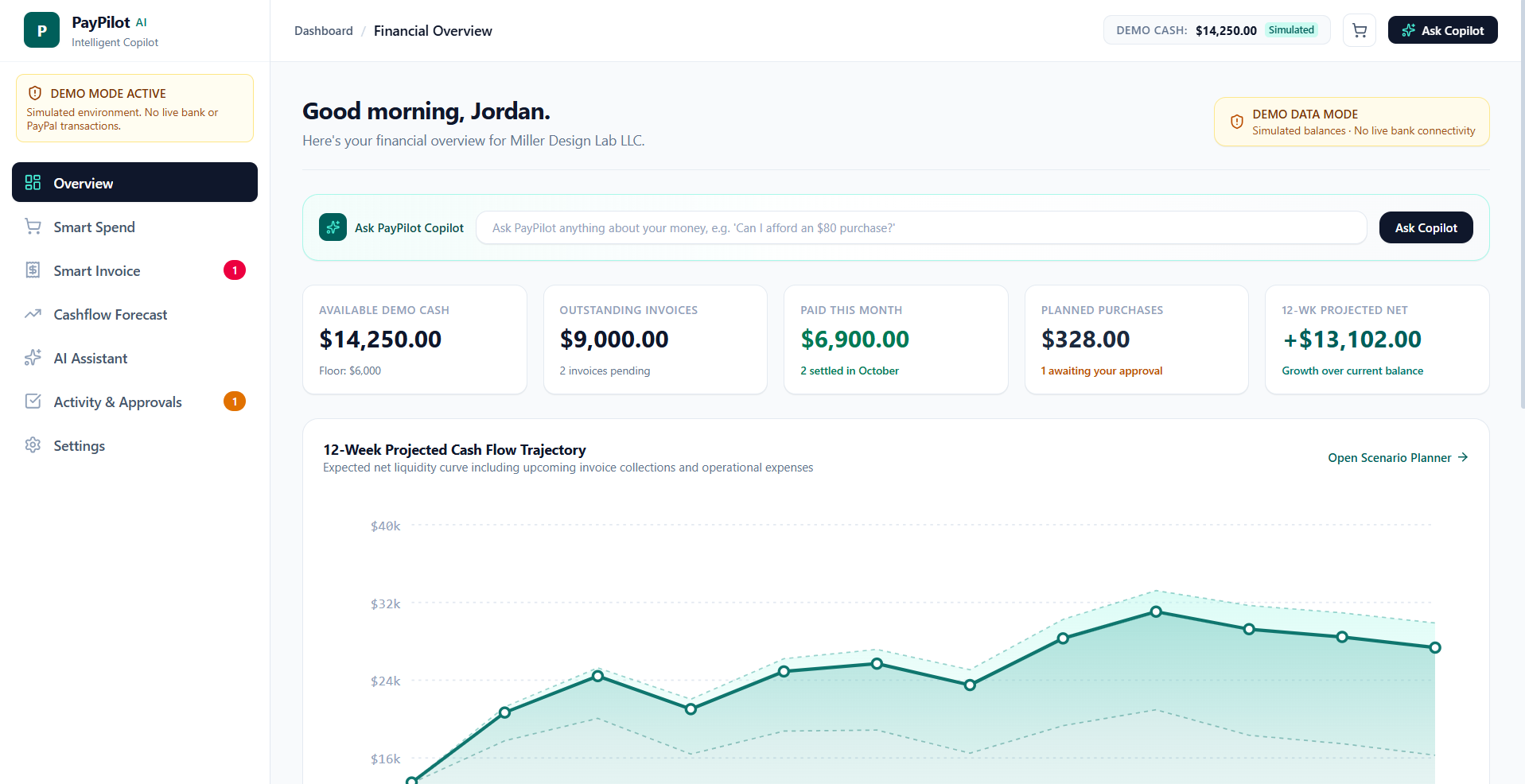
Track projected balances, invoice collections, expenses, and purchase approvals to understand liquidity and manage spending.
-
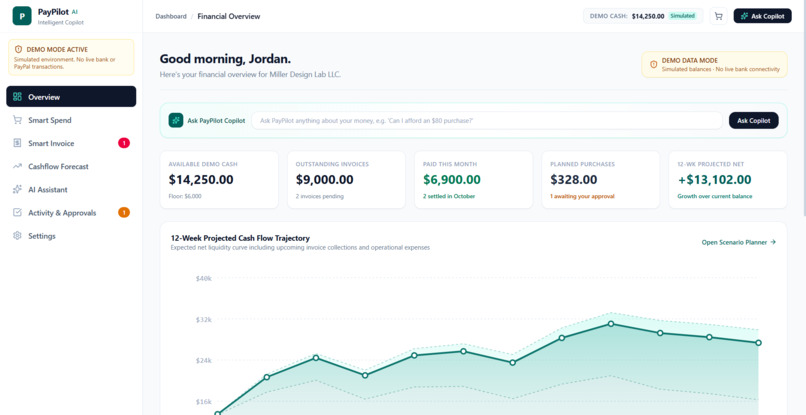
A unified view of cash balances, invoices, payments, planned purchases, and AI-powered financial insights
-
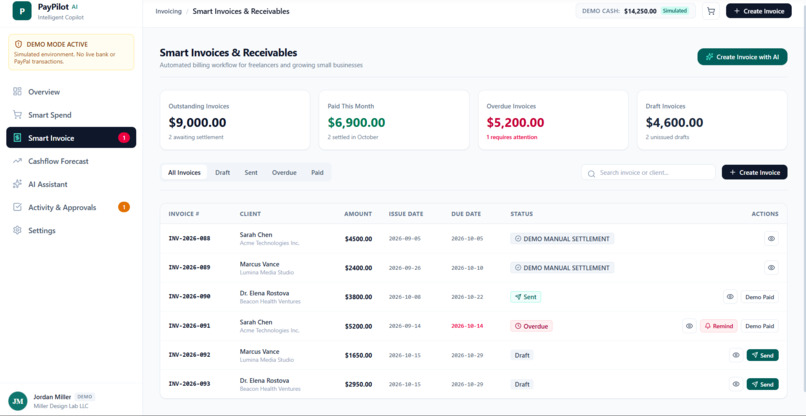
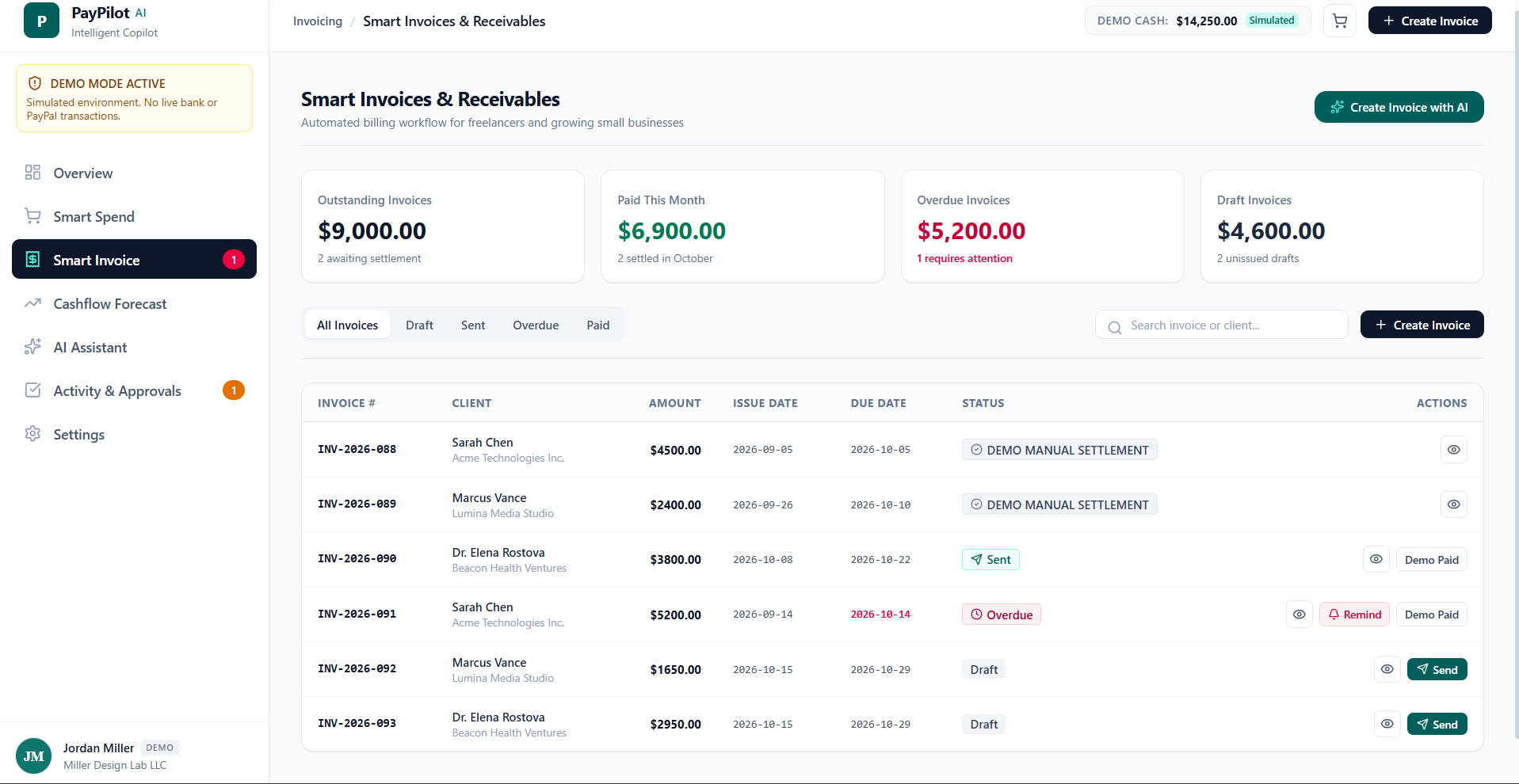
Create and track invoices, monitor payment statuses, identify overdue receivables, and manage reminders from one dashboard.
-
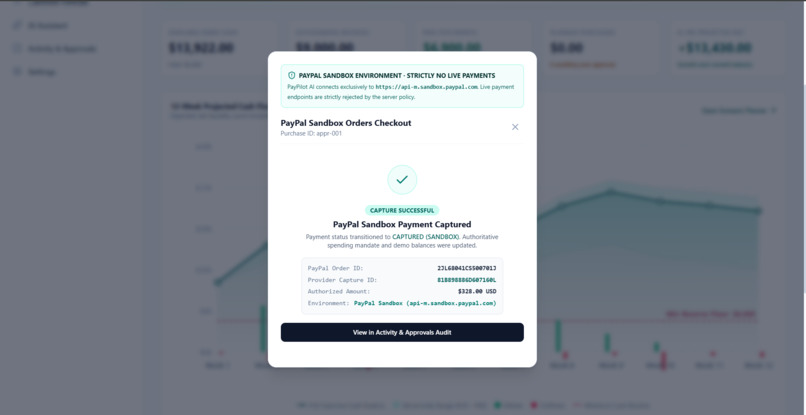
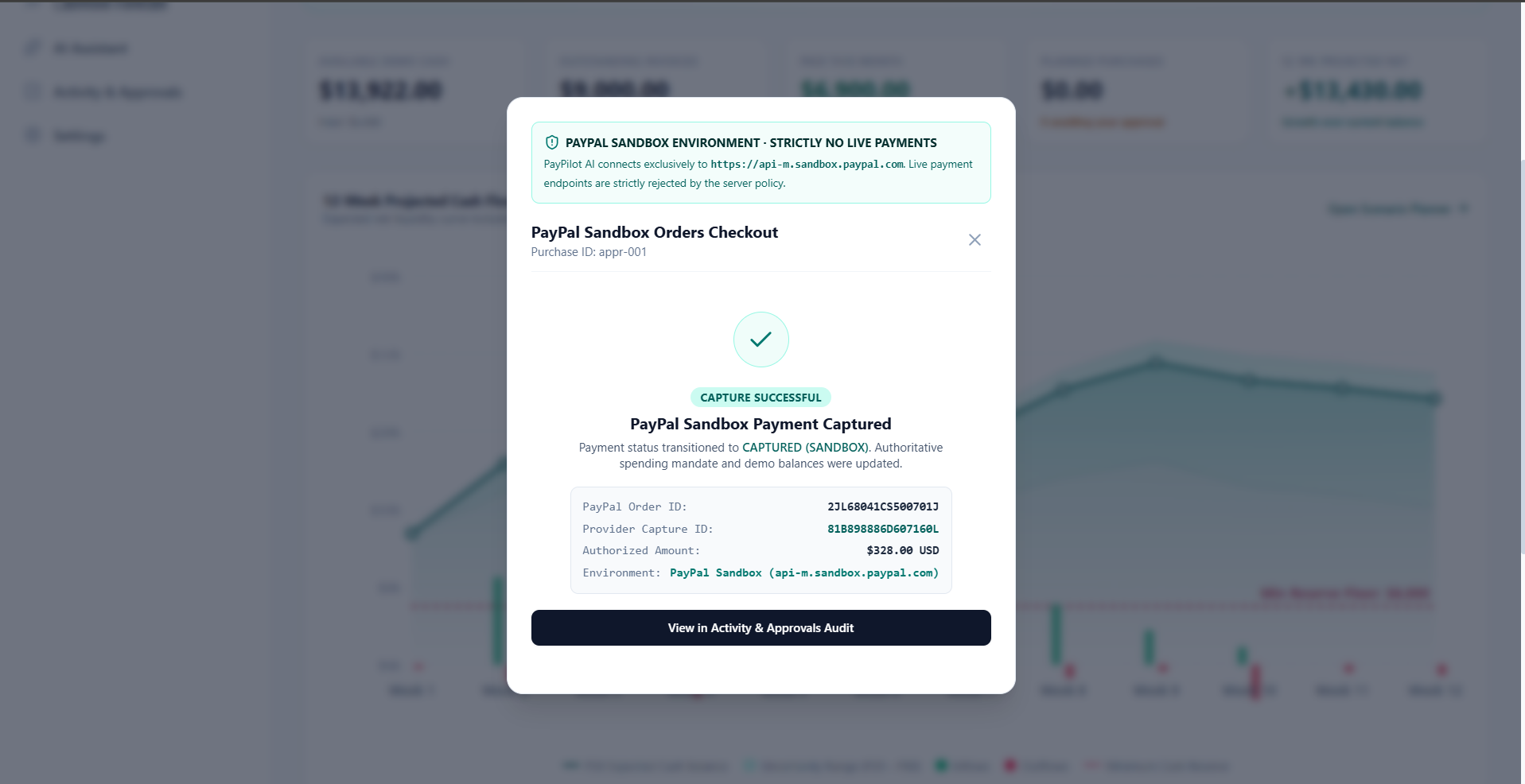
Confirm payment capture and display transaction IDs and amount, demonstrating the complete PayPal order workflow.
-
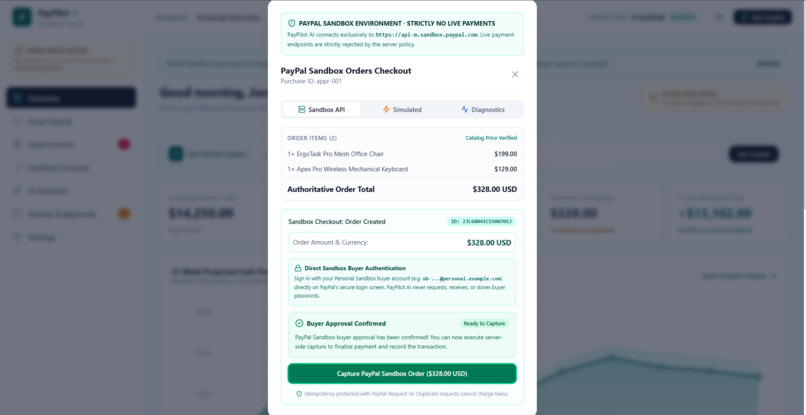
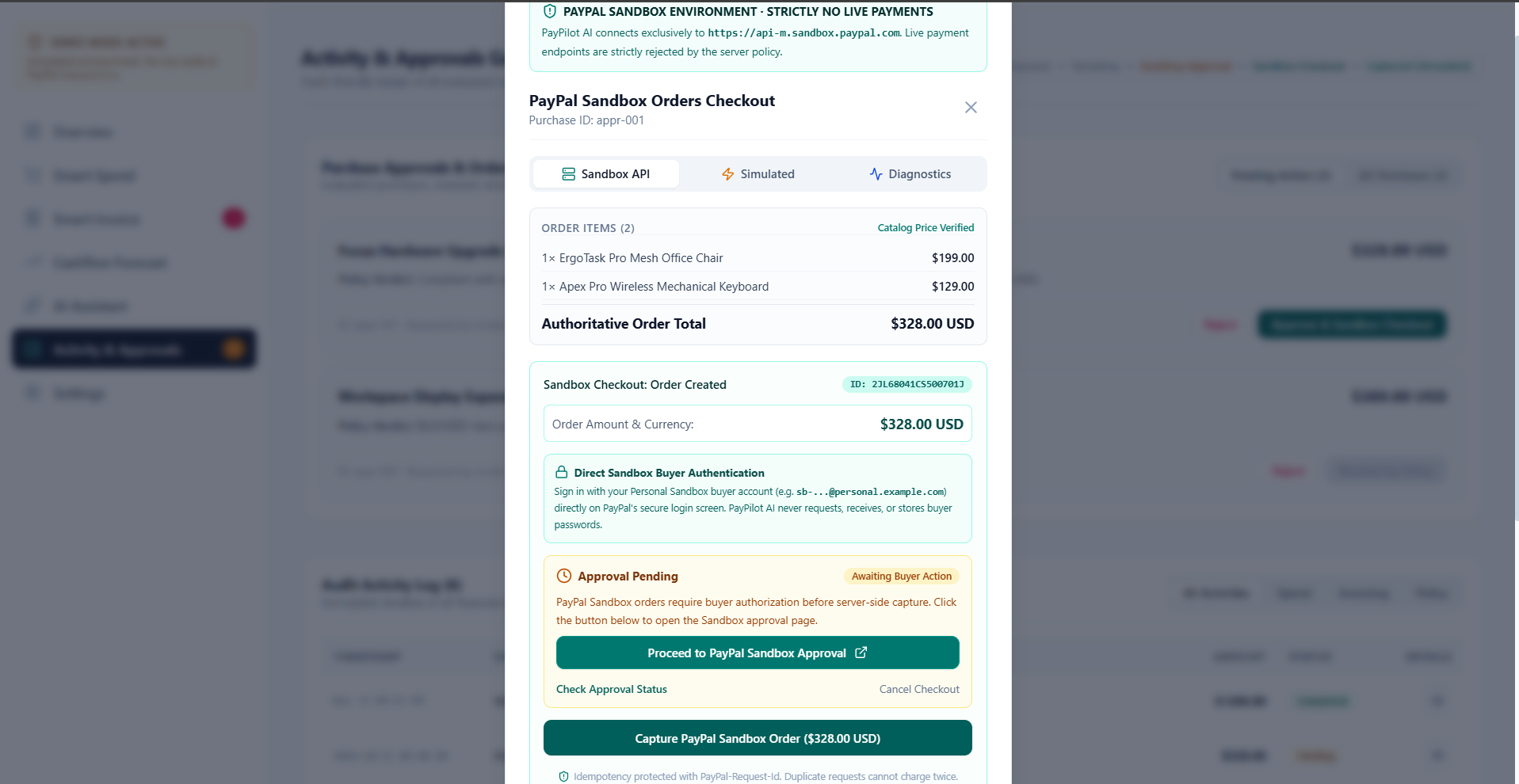
PayPilot verifies PayPal Sandbox authorization and prepares the approved order for server-side payment capture.
-
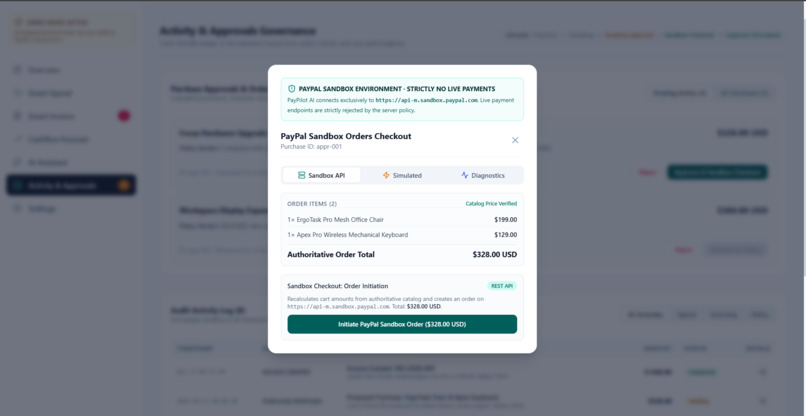
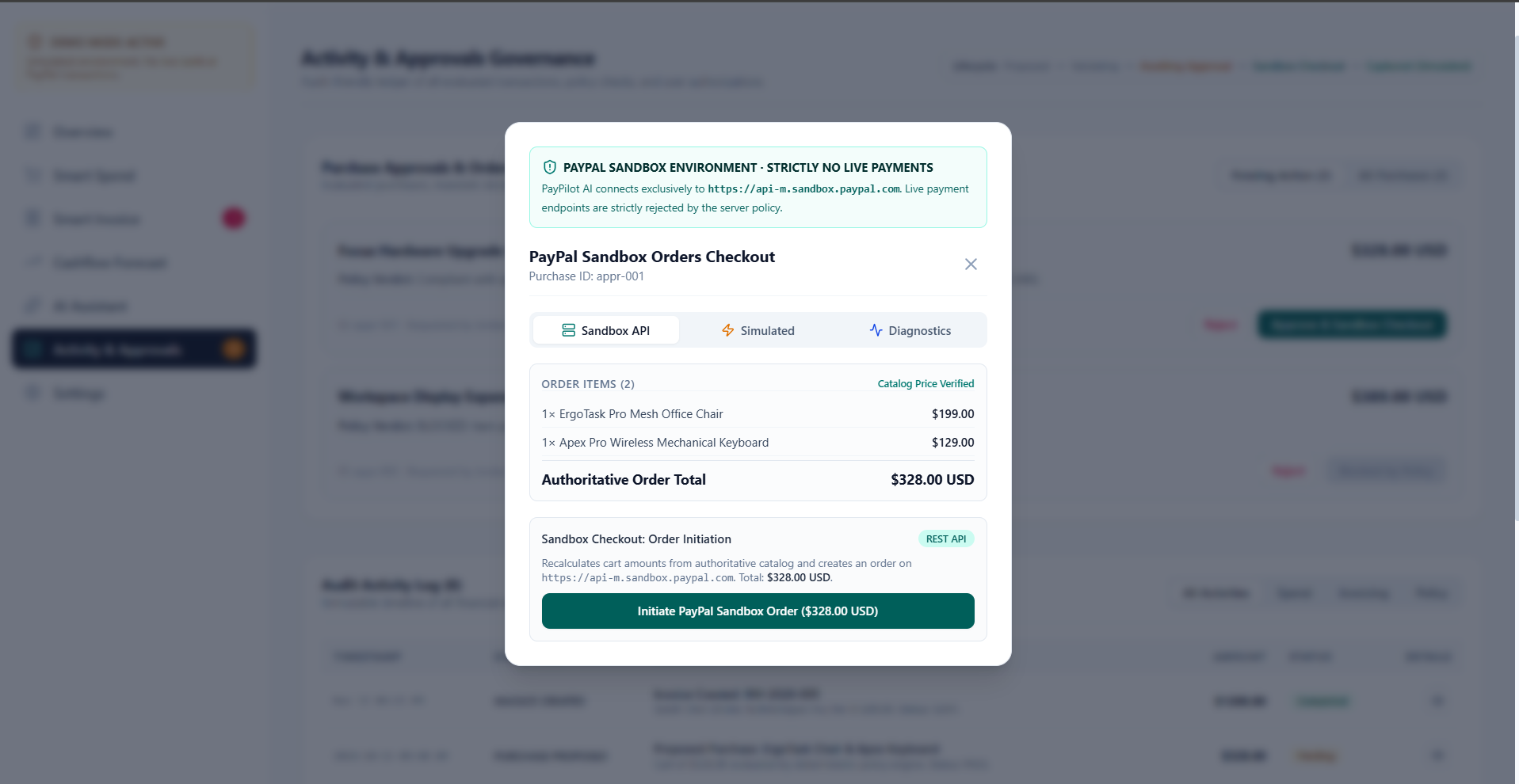
Create orders using verified catalog prices and authoritative totals in a controlled, sandbox-only checkout workflow.
-
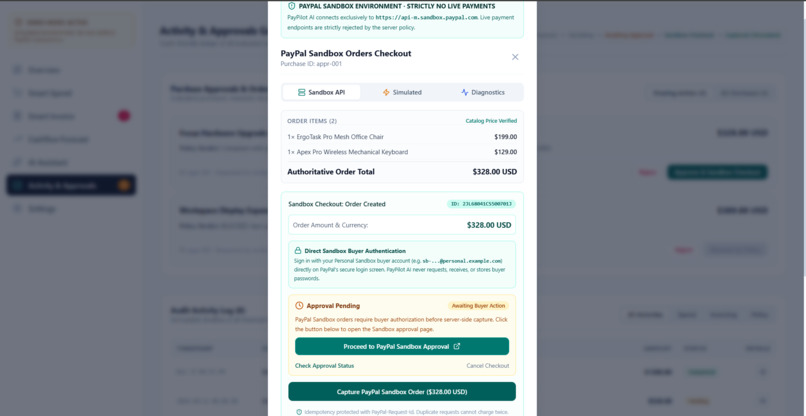
Verify buyer approval before server-side capture, with secure PayPal authentication and idempotency safeguards.

Inspiration
Managing money involves more than making payments. Consumers need to make smart purchasing decisions, while freelancers and small businesses need to create invoices, follow up on payments, and understand whether they can afford upcoming expenses.
These tasks are often handled across separate tools, making it difficult to connect spending decisions with expected income and future cash flow.
We envisioned PayPilot AI as one intelligent financial copilot that brings these activities together. Instead of simply telling users what to buy or what to pay, PayPilot AI helps them understand their options, evaluate financial decisions, and stay in control of every payment.
Our core principle is simple: AI should make financial decisions easier to understand, not take control away from the user.
What It Does
PayPilot AI combines three connected capabilities in one application.
1. Smart Spend — Intelligent Shopping
Users describe what they need in natural language. The AI helps discover and compare products, propose a shopping cart, and explain purchase recommendations.
A deterministic spending policy engine checks the proposed cart against user-defined budgets, per-item limits, and permitted categories. Users review the decision and explicitly approve the purchase before proceeding to PayPal checkout.
The AI recommends; the user authorizes.
2. Smart Invoice — AI-Powered Invoicing
Freelancers and businesses can describe an invoice in natural language and receive a structured draft containing client details, line items, quantities, prices, and payment terms.
Users can review and edit the draft before confirming it. The application is designed to support PayPal invoicing, invoice status tracking, and payment reminders, helping reduce repetitive administrative work.
3. Cashflow Copilot — Financial Intelligence
PayPilot AI connects expected invoice payments with planned purchases and expenses to help users understand their financial position.
Its forecasting module is designed to present P20, P50, and P80 cash-flow scenarios, alongside expected inflows, outflows, and a configurable minimum cash reserve.
Users can ask questions such as:
- “Can I afford an $80 office supply purchase this week?”
- “Which invoices are overdue?”
- “What happens if two clients pay late?”
- “Why was this shopping cart blocked?”
The goal is to turn financial information into clear, actionable insights rather than another collection of disconnected dashboards.
How We Built It
PayPilot AI is being developed as a modular, full-stack application with a shared financial data model.
Frontend: React, TypeScript, and a responsive component-based interface provide the dashboard, shopping workspace, invoicing screens, cash-flow visualizations, and approval workflows.
AI layer: Gemini is intended to interpret natural-language requests, draft invoices, compare products, and explain financial insights through structured outputs and controlled tools.
Business logic: Deterministic application services validate spending mandates, calculate invoice totals, evaluate cash-flow scenarios, and enforce approval requirements. The AI model does not have independent authority to approve or capture payments.
Backend and data: The planned architecture uses server-side services and a shared database to manage users, spending mandates, shopping carts, invoices, approvals, forecasts, and audit events.
Payments: PayPal REST APIs and the PayPal Sandbox are planned for checkout, order capture following the required buyer approval, invoicing, and payment-status updates. Verified webhook events will be used where appropriate to synchronize payment states.
The project is being developed in stages, starting with the core interface and functional demo workflows before adding persistent storage, AI integrations, and PayPal Sandbox operations.
Safety and User Control
Financial automation requires clear boundaries. PayPilot AI is designed around several principles:
- Explicit approval: The user must authorize consequential payment actions.
- Deterministic spending rules: Hard spending limits cannot be overridden by an AI recommendation.
- Verified payment status: An AI response or a button click cannot establish that a payment succeeded.
- Secure integrations: Credentials belong on the server, never in client-side code or public repositories.
- Transparent environments: Demo data, PayPal Sandbox activity, and any future live transactions must be clearly distinguished.
- Auditable actions: Important decisions and approval transitions should be recorded for review.
These safeguards are part of the architecture, not optional features added after the AI functionality.
Challenges We Are Tackling
Combining two different financial workflows: Shopping and invoicing serve different users and have different payment lifecycles. We are addressing this by creating separate modules that share financial context, user identity, approval mechanisms, and audit infrastructure.
Keeping AI separate from financial authority: Natural-language models can misunderstand instructions or produce incorrect values. Our approach is to let AI interpret and recommend while deterministic services validate amounts, enforce policies, and control state transitions.
Making cash-flow insights meaningful: Forecasts depend on uncertain payment timing and future expenses. We are designing the forecasting layer to distinguish expected income from confirmed receipts and to communicate uncertainty instead of presenting projections as guarantees.
Integrating payment workflows safely: Creating an order, obtaining buyer approval, capturing a payment, sending an invoice, and confirming a payment are distinct operations. We are treating them as separate states with explicit validation and failure handling.
Building a credible end-to-end prototype: The challenge is not simply to demonstrate AI-generated text. It is to connect recommendations, policy checks, user approvals, financial records, and payment-provider workflows into a coherent experience.
What We Are Learning
Through PayPilot AI, we are exploring how to build agentic applications that combine language models with reliable software systems.
Key learning areas include structured AI outputs, tool-based agent workflows, deterministic policy enforcement, payment API integration, webhook verification, financial data modeling, cash-flow forecasting, and end-to-end testing.
Most importantly, we are learning that useful financial AI is not just about making a model more capable. It is about designing the right boundaries between intelligent recommendations and actions that affect real money.
Impact
PayPilot AI aims to help consumers make more informed purchases and help freelancers and small businesses spend less time on invoicing and financial administration.
By connecting incoming payments, planned expenses, and purchasing decisions, it aims to make everyday financial decisions more transparent and manageable.
Our longer-term vision is a financial copilot that helps users understand not only what they can do with their money, but also how today's decision affects tomorrow's cash flow.
What's Next
Our next milestones are to complete the unified interface, connect Gemini to controlled application tools, implement the shared backend and database, integrate PayPal Sandbox for both purchasing and invoicing, and validate the complete experience through automated tests.
The final goal is a working, demonstrable prototype in which users can create an invoice, explore their cash-flow outlook, evaluate a purchase, and explicitly authorize a sandbox checkout—all from one application.
PayPilot AI — Intelligent money management, with the user always in control.
Built With
- express.js
- fintech
- javascript
- node.js
- paypal
- paypalapi
- react
- rest
- tailwind
- typescript
- vite
- webhooks

