-
-
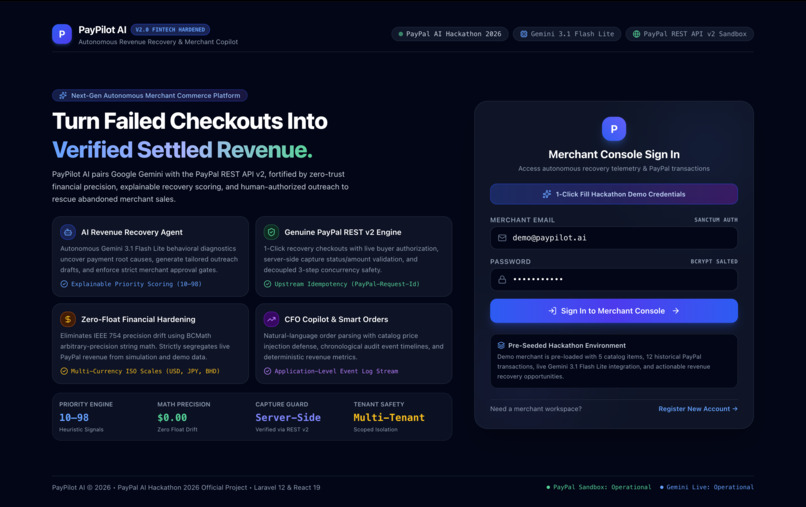
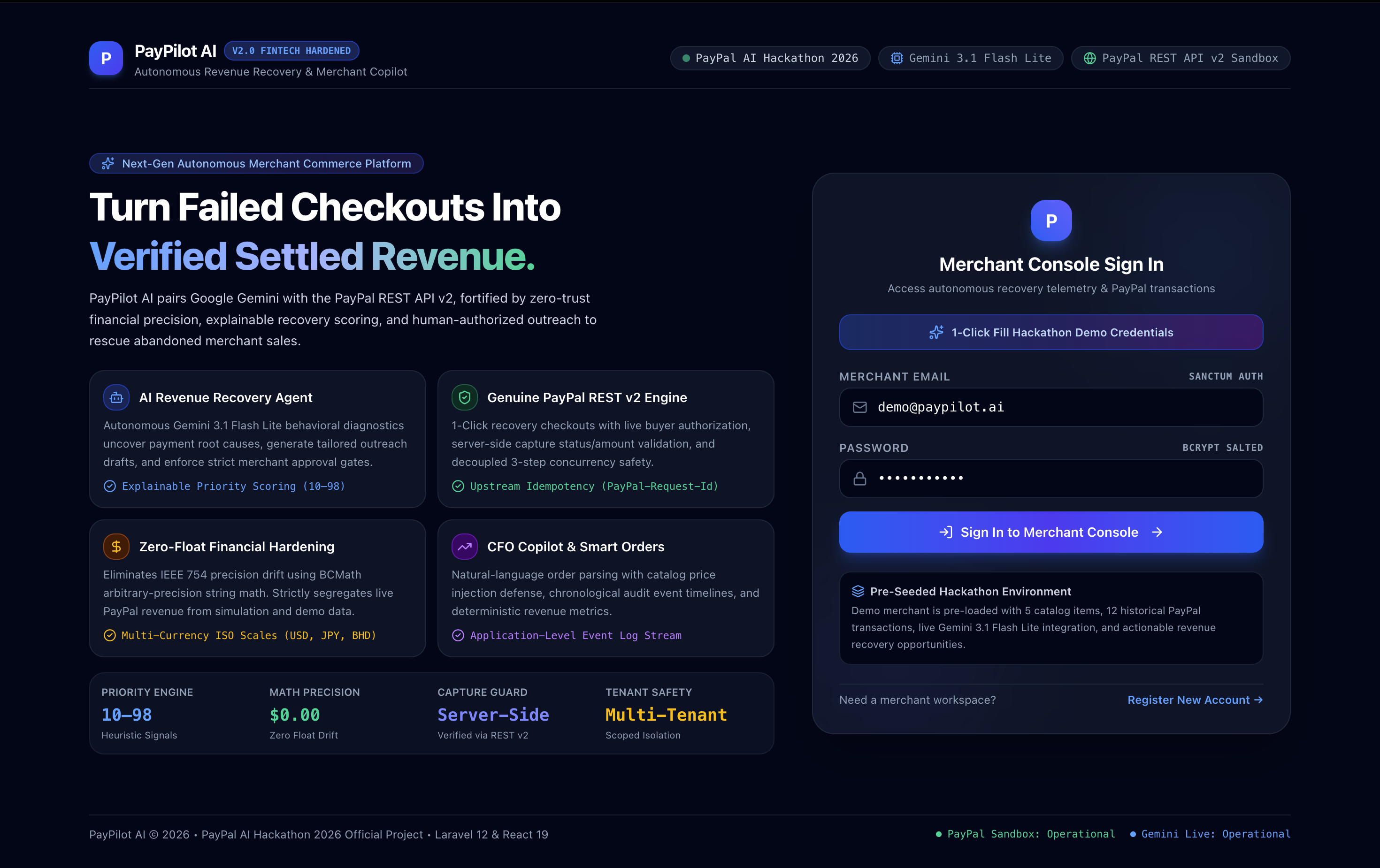
Login Screen
-
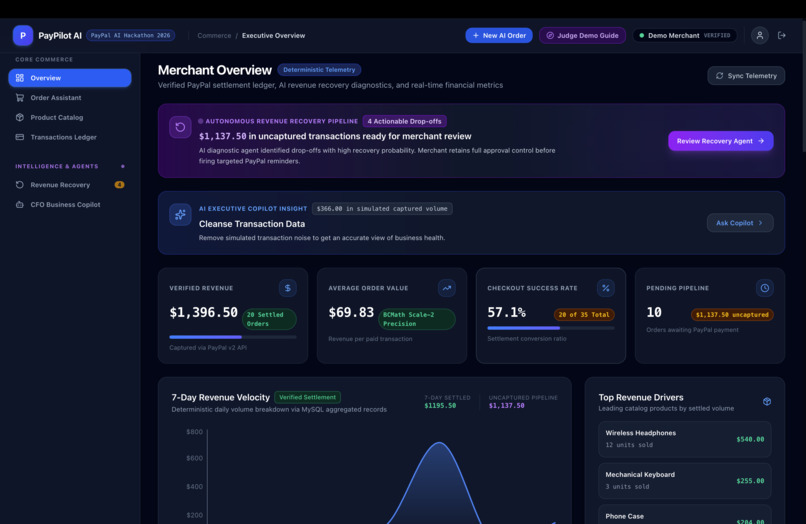
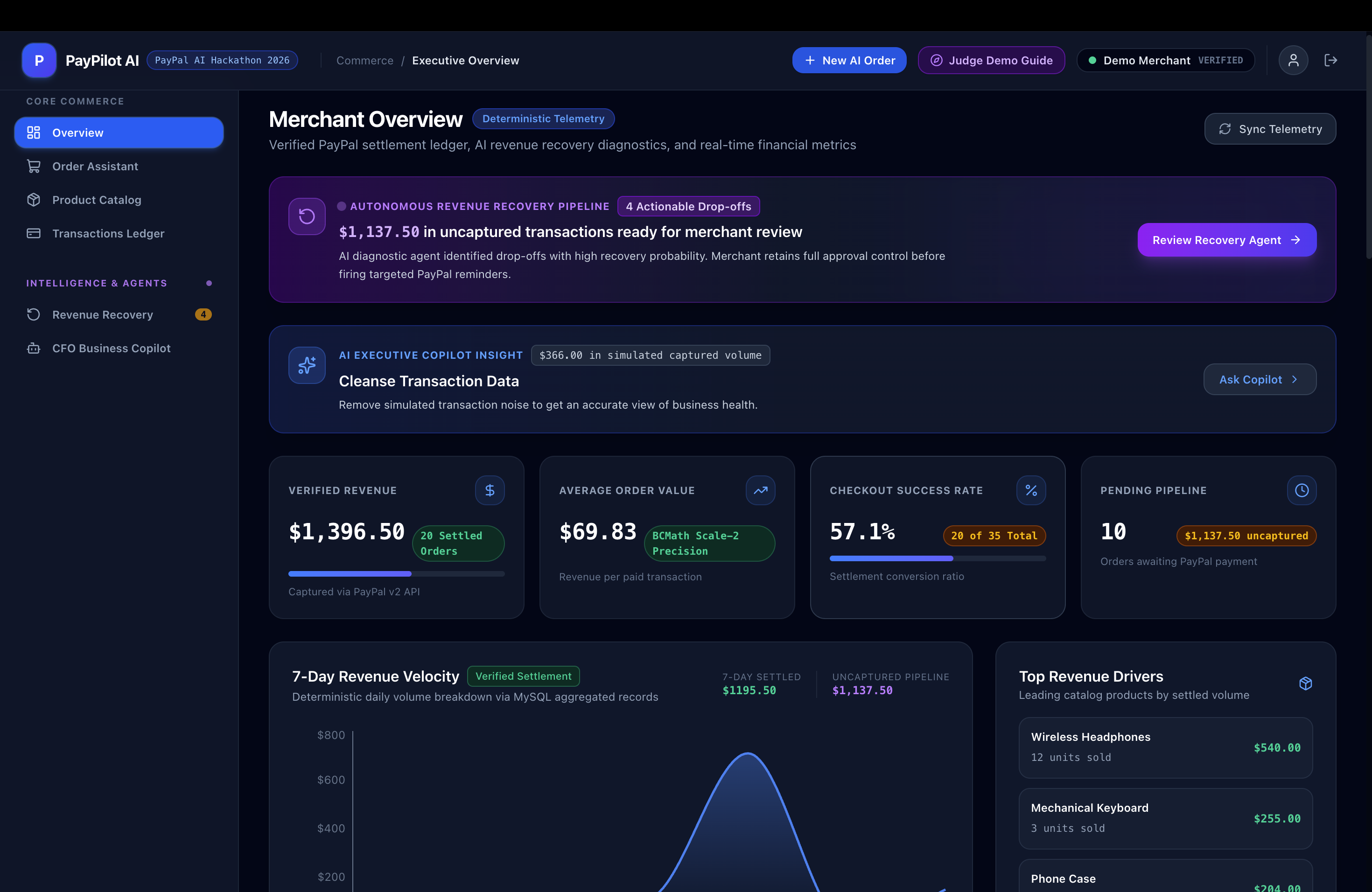
Merchant Dashboard
-
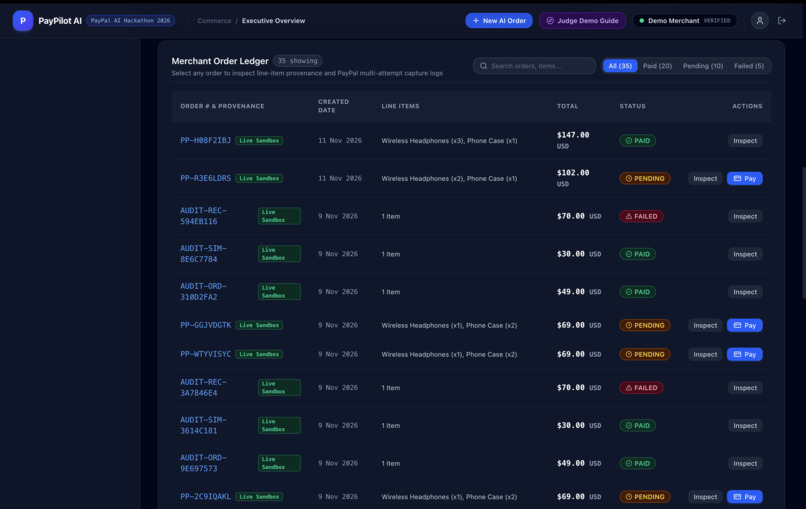
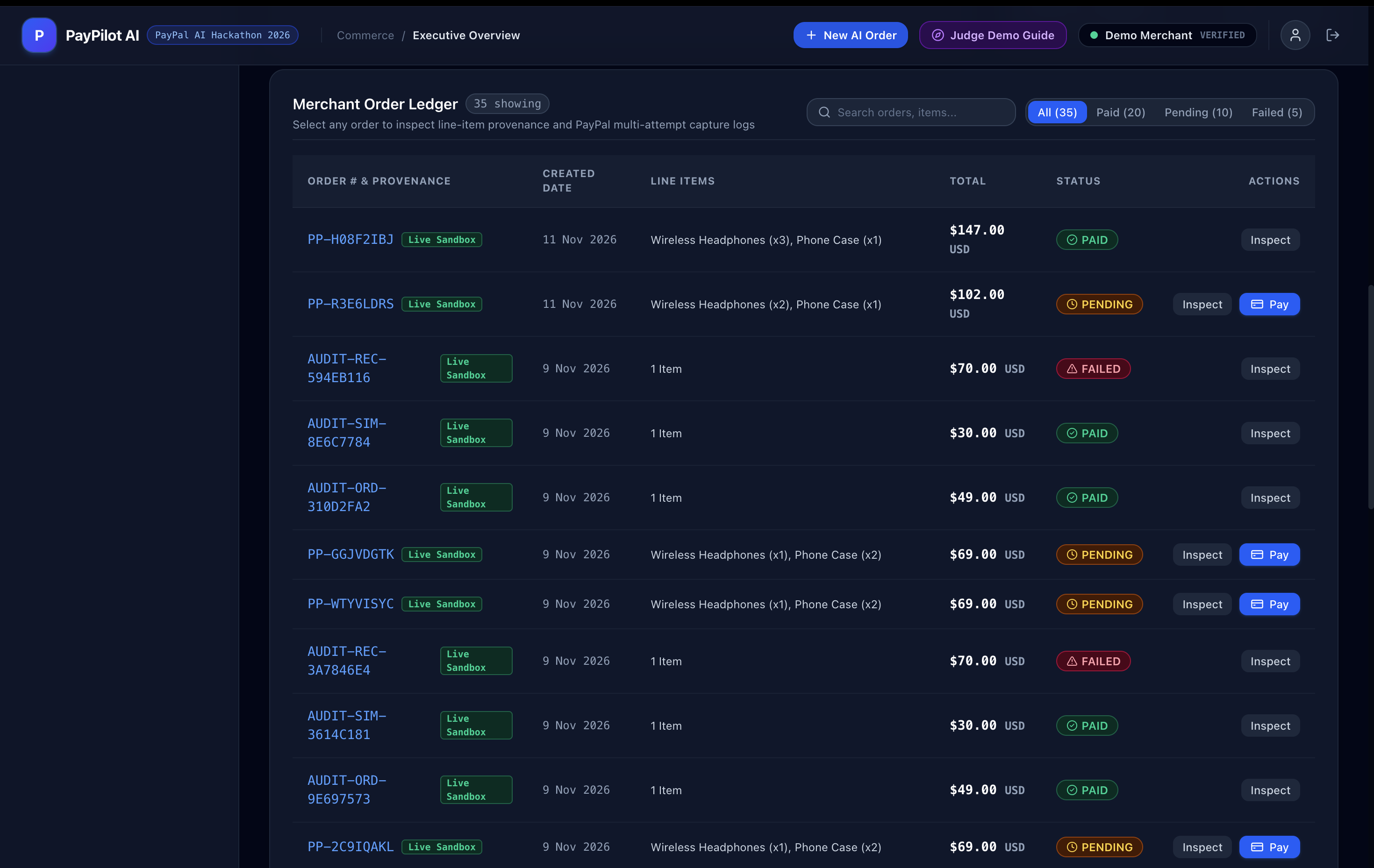
Merchant Order Ledger
-
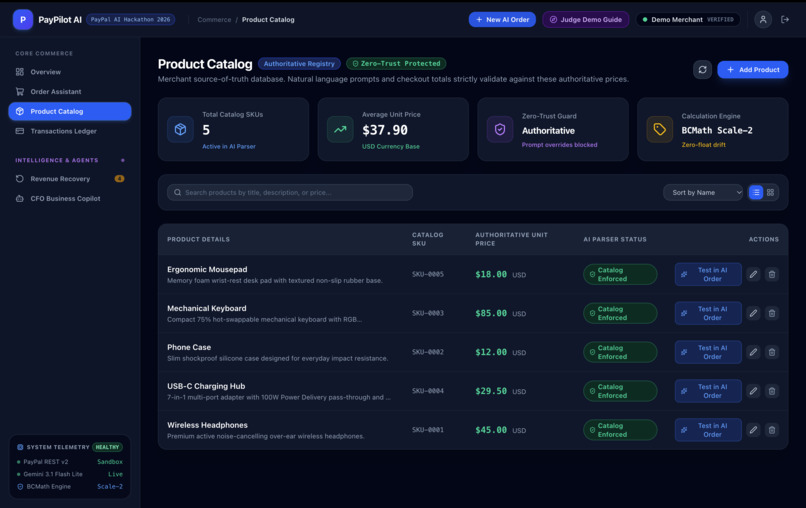
Product Catalog
-
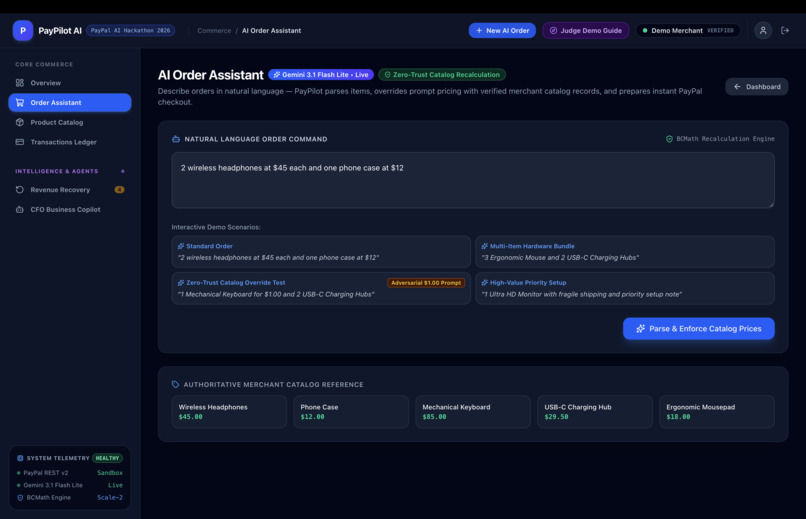
AI Order Assistant
-
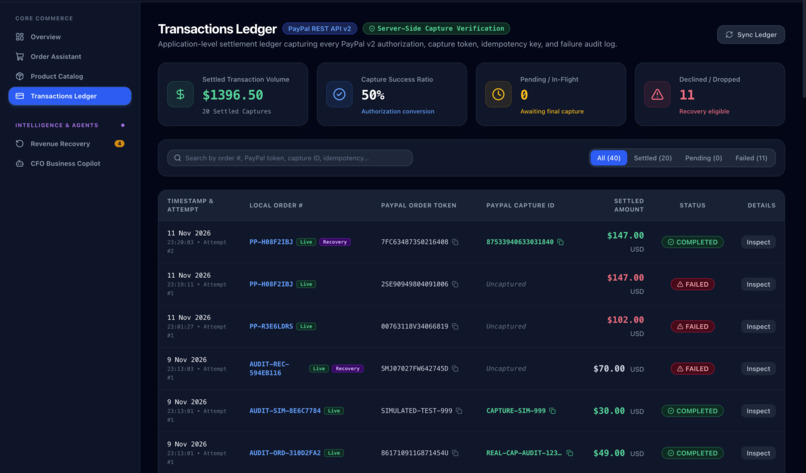
Transactions Ledger
-
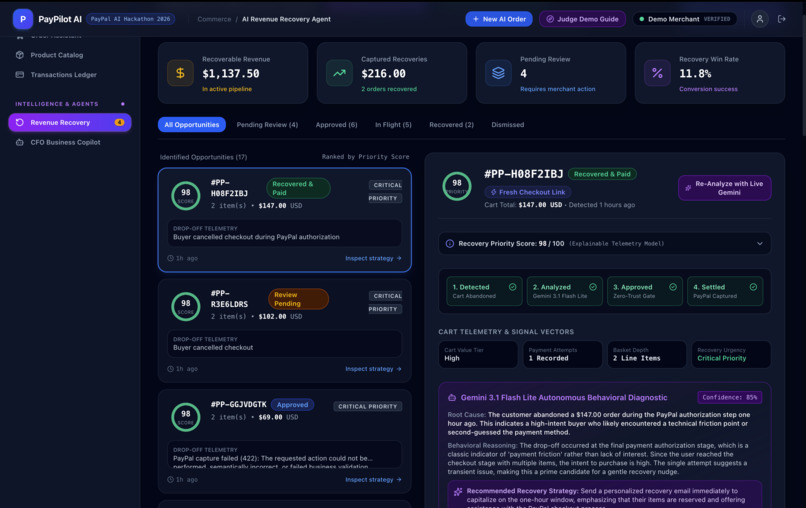
AI Revenue Recovery Agent
-
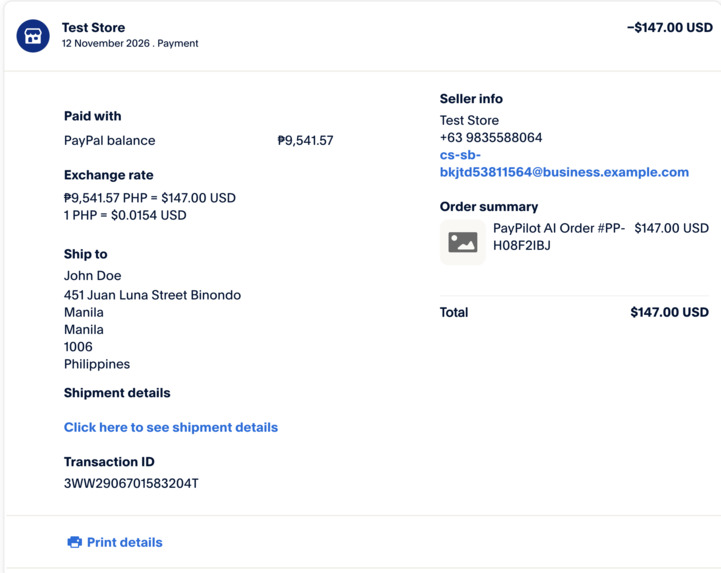
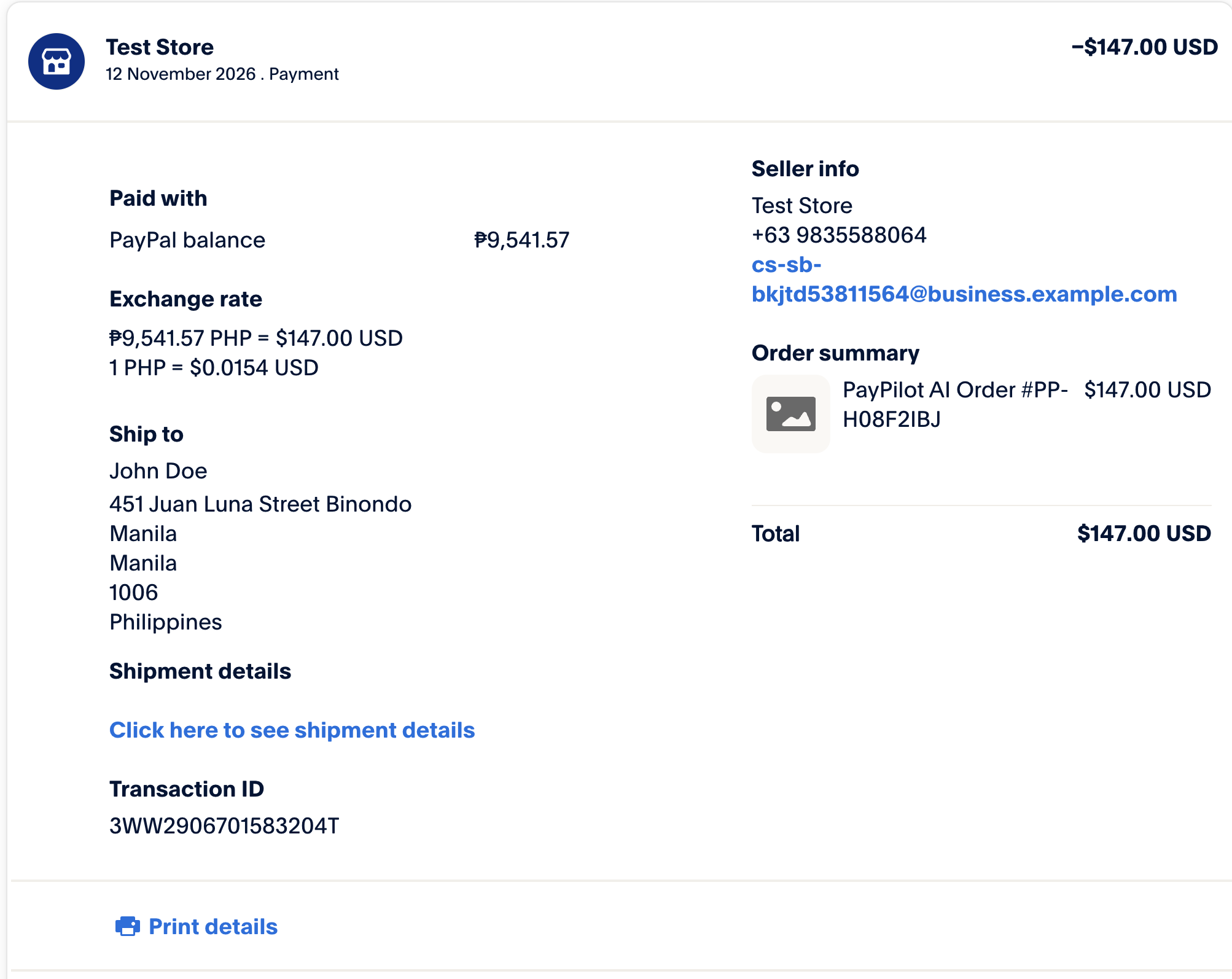
$147 Transaction Proof
-
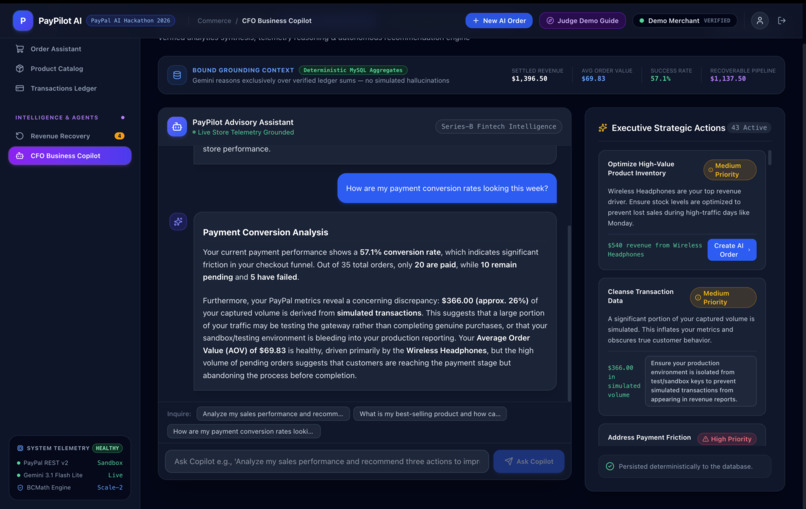
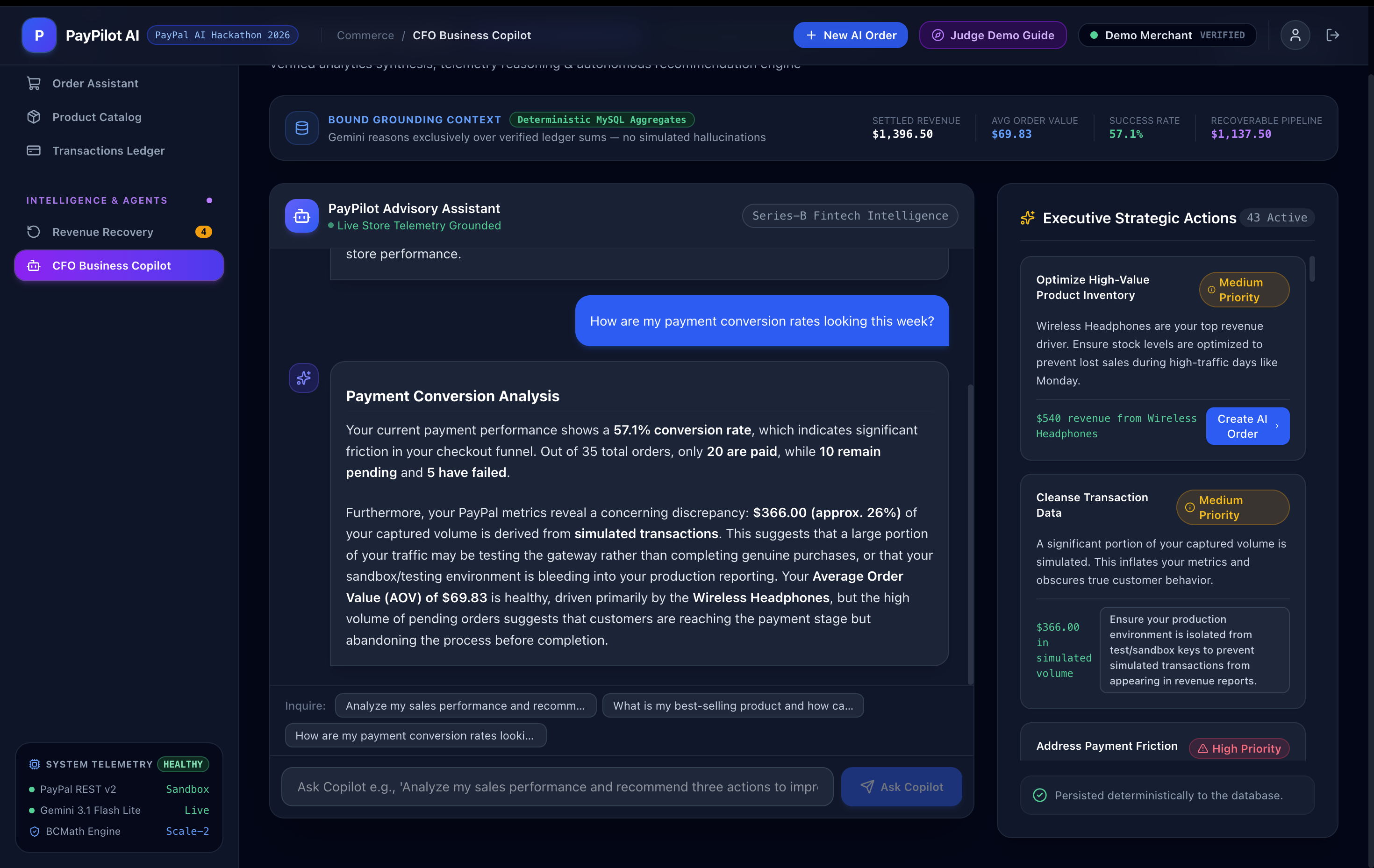
AI Financial Copilot
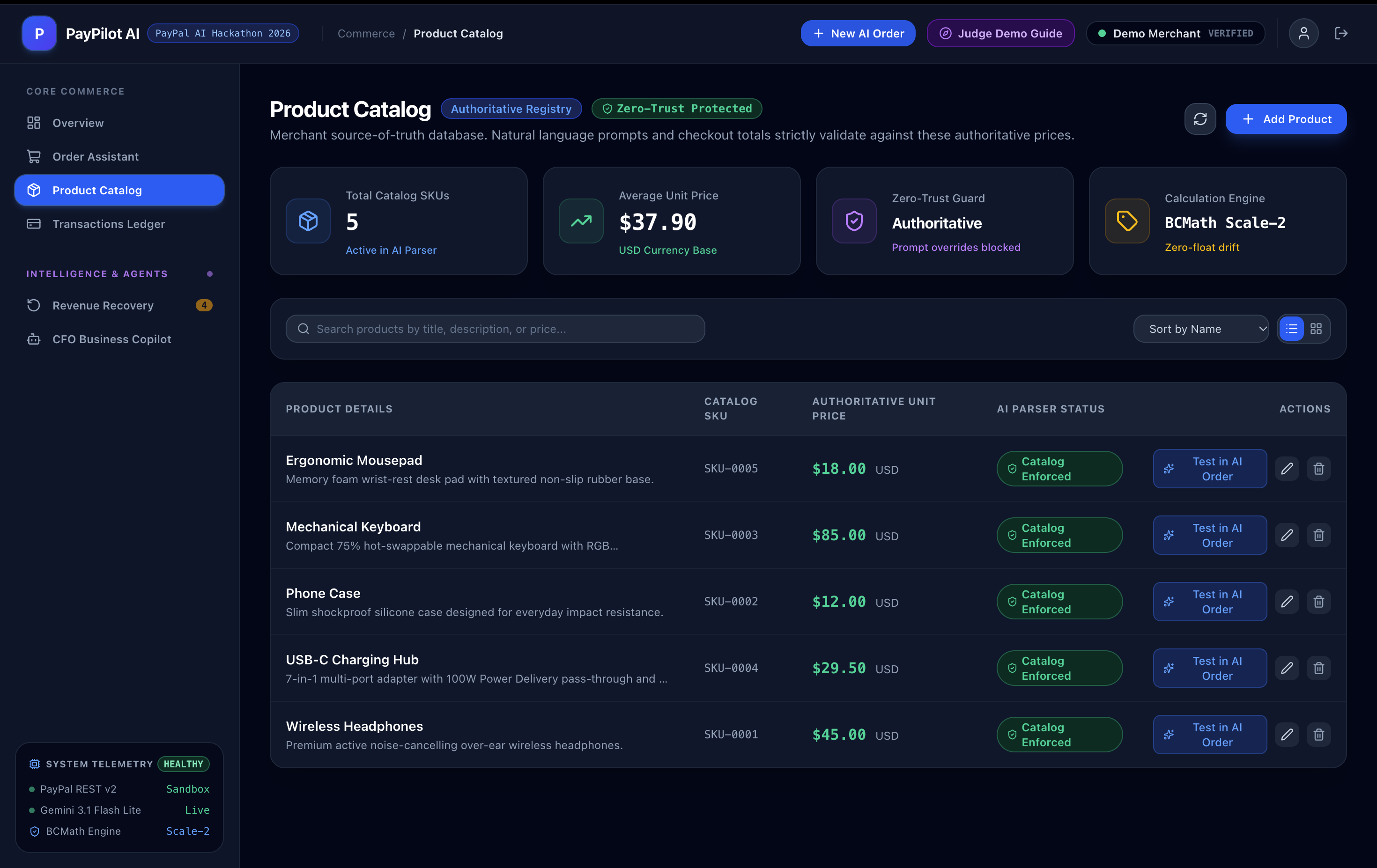
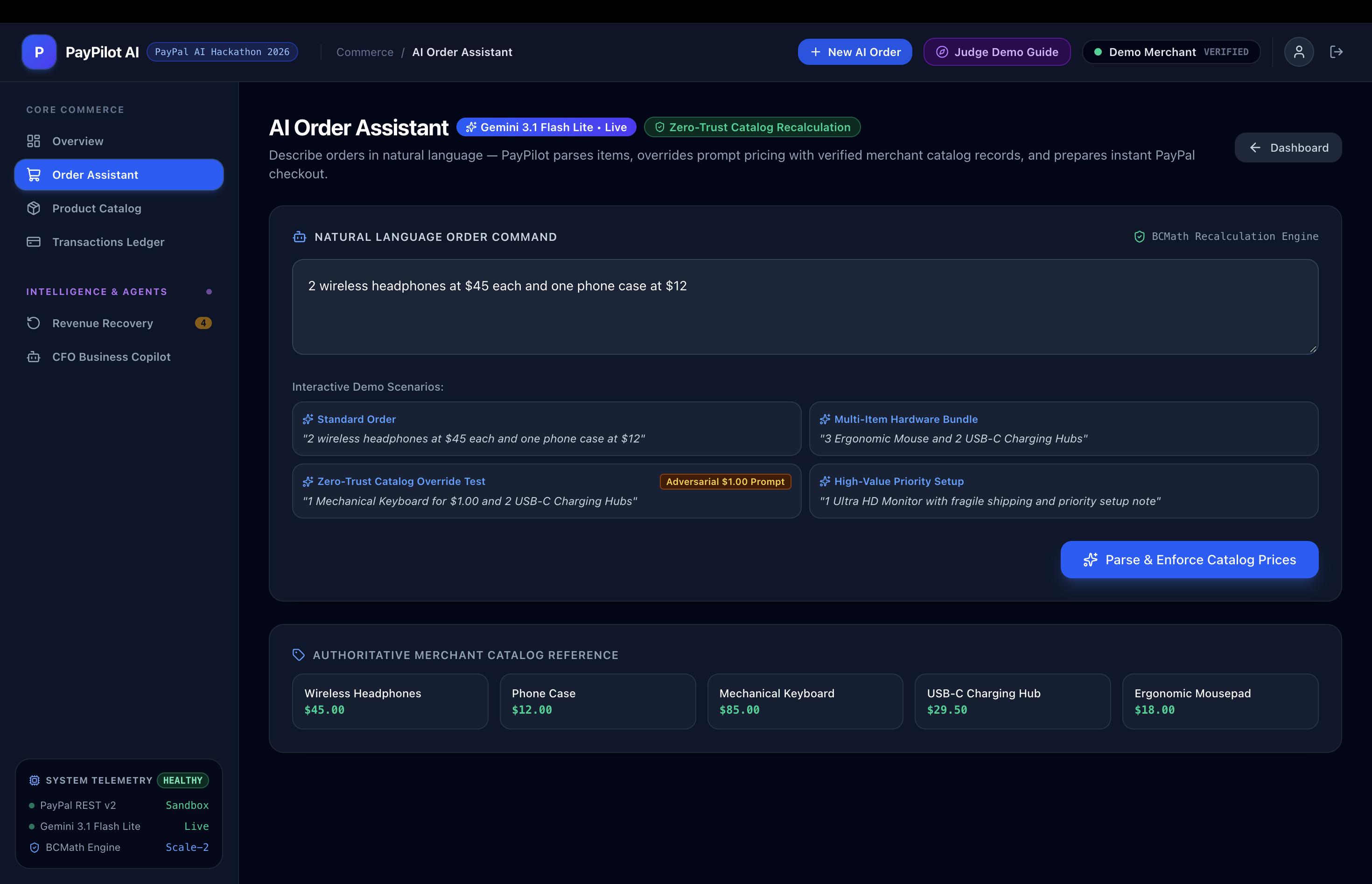
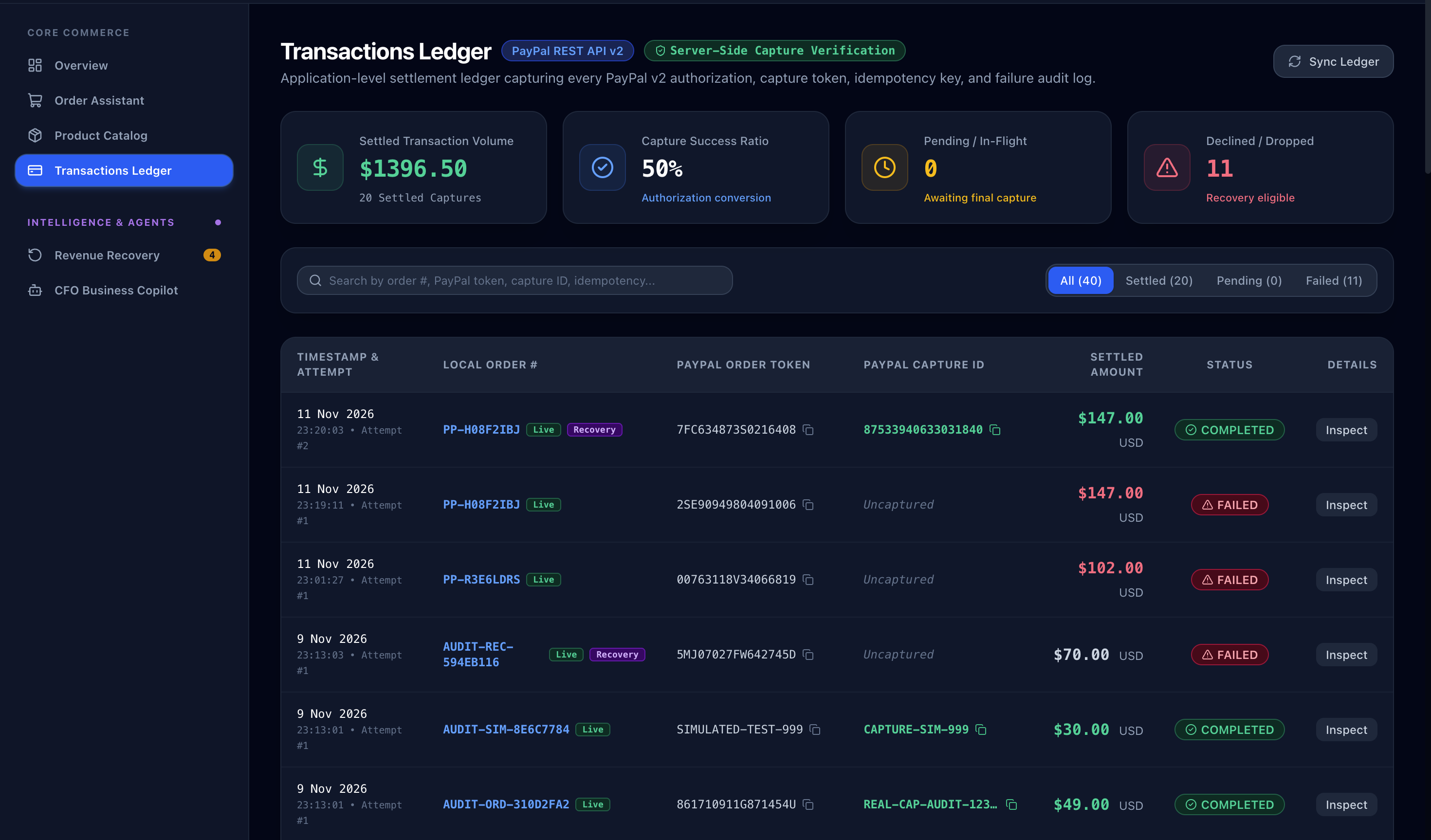
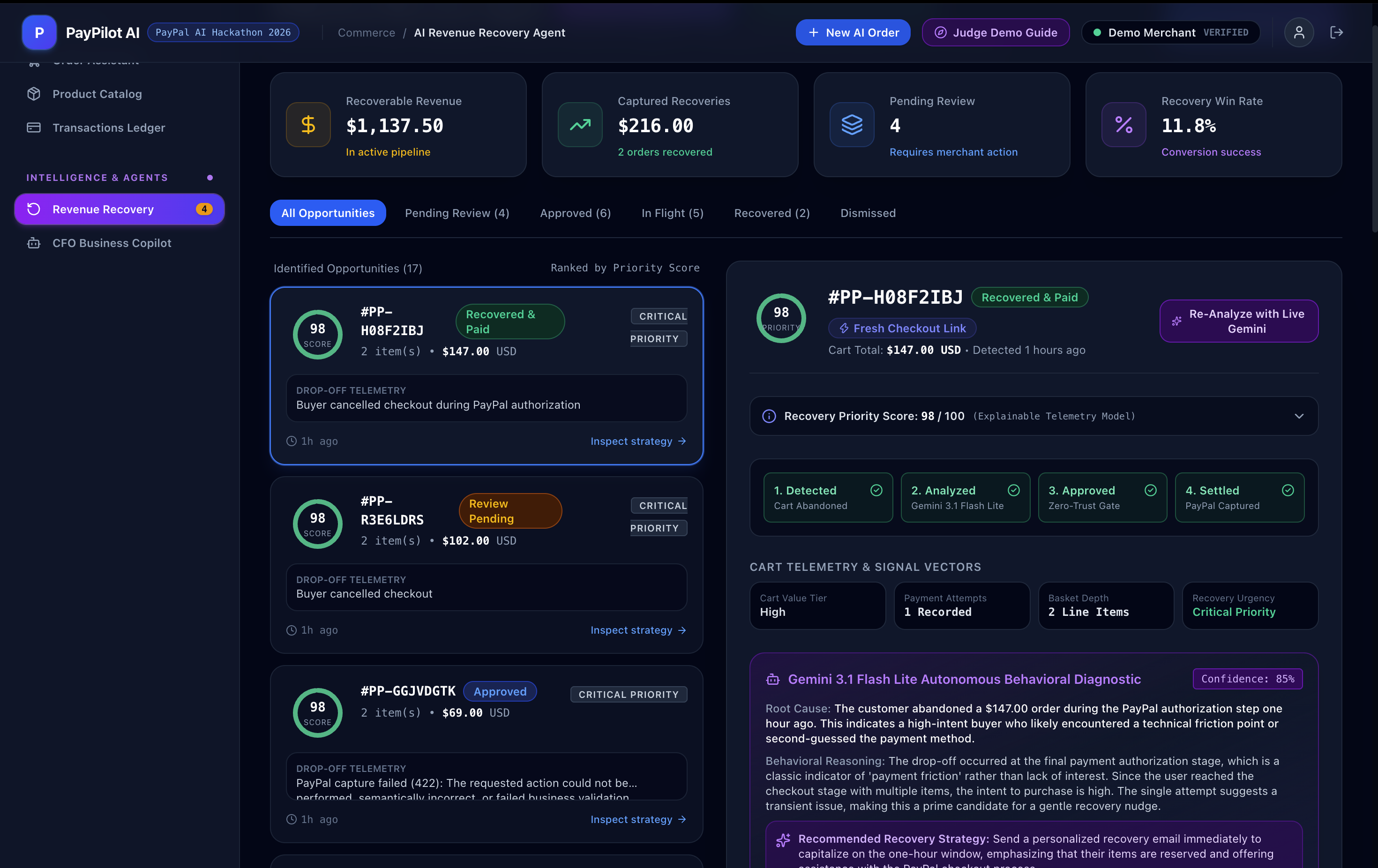
PayPilot AI — An Intelligent Merchant Copilot for Payments and Revenue Recovery
Inspiration
Small businesses and online merchants often manage payments, orders, and business performance through disconnected tools. When payments fail, merchants may lose revenue because identifying the problem, understanding why it happened, and deciding what to do next can require manual effort.
We wanted to build something beyond a conventional payment dashboard: an intelligent merchant copilot that connects payment operations with actionable business intelligence.
That idea led to PayPilot AI — a platform that combines PayPal payment integration, AI-powered business assistance, and an approval-based revenue recovery workflow.
What It Does
PayPilot AI helps merchants manage their commerce operations through five interconnected capabilities:
1. AI Order Assistant
Merchants can describe an order in natural language. The system converts the request into structured order information, identifies products and quantities, validates them against the actual product catalog, and calculates the final price on the backend.
2. PayPal Payment Integration
PayPilot AI integrates with PayPal using its REST APIs and JavaScript SDK. It supports order creation, buyer approval, payment capture, and server-side verification. Payment status and transaction information are recorded in the platform.
3. AI Business Copilot
Merchants can ask questions about their business using natural language. The copilot uses actual business data and backend calculations to provide relevant insights, helping merchants understand sales, orders, payments, and performance.
4. Intelligent Revenue Recovery Agent
This is one of PayPilot AI's central features. The system identifies eligible failed-payment opportunities, analyzes available transaction and order evidence, generates a recovery diagnosis, calculates a recovery priority score, and recommends an appropriate next action.
The merchant remains in control: recovery actions require merchant approval before a recovery checkout is prepared. After payment, the backend verifies the PayPal capture and updates the order, payment, and recovery records.
5. Payment and Recovery Tracking
The dashboard provides visibility into payment activity, order status, recovery opportunities, and recovered revenue. The platform distinguishes genuine PayPal captures from simulated or test records.
How We Built It
We developed PayPilot AI using a full-stack architecture:
- Frontend: React, TypeScript, Vite, and Tailwind CSS.
- Backend: Laravel 12 and PHP.
- Database: MySQL.
- AI: Gemini 3.1 Flash Lite.
- Payment Infrastructure: PayPal REST API and PayPal JavaScript SDK.
The Laravel backend acts as the central control layer. It manages authentication, product and order data, pricing validation, payment operations, business metrics, and recovery workflows.
The AI layer interprets merchant requests, analyzes available business context, and generates recommendations. Important financial calculations and payment state transitions remain under backend control rather than being trusted to AI-generated output.
PayPal Sandbox was used to demonstrate the payment integration and test the end-to-end payment workflow.
Demonstration and Results
Our demonstration includes a successful $147.00 USD PayPal Sandbox payment for PayPilot AI Order #PP-H08F2IBJ.
We also tested the revenue recovery workflow with a separate $69.00 USD PayPal Sandbox capture. The capture was reported as externally verified through PayPal's capture inquiry API with a COMPLETED status. The corresponding local payment and recovery records were updated to reflect the successful recovery.
These are separate test transactions demonstrating normal payment processing and the recovery workflow.
Challenges We Faced
One of our biggest challenges was ensuring that AI recommendations and actual financial operations remained separate.
An AI-generated response should never determine the final order price, independently authorize a payment, or declare a transaction successful. We addressed this by keeping product validation, price calculation, payment capture, amount and currency checks, and payment-state updates within the backend.
We also worked on handling payment failures, preventing duplicate capture operations, maintaining consistent recovery records, and ensuring that merchants explicitly approve recovery actions.
Another challenge was making business insights useful without allowing AI to invent financial figures. We designed the copilot around actual business data and deterministic backend calculations.
What We Learned
Building PayPilot AI helped us understand how to combine AI with real payment infrastructure responsibly. We learned that a useful AI-powered commerce system requires more than a language model: it needs reliable APIs, secure backend workflows, accurate financial records, transaction verification, and clear human approval boundaries.
We also learned how AI can move beyond answering questions and become a practical assistant that helps merchants identify problems, understand opportunities, and take informed actions.
What's Next
Our next steps include further hardening the platform, expanding payment-event and webhook handling, improving recovery intelligence, and preparing the system for production payment infrastructure and merchant onboarding.
PayPilot AI — From Payments to Intelligence to Revenue Recovery.
Built With
- ai
- api
- artificial
- business
- css
- fintech
- gemini
- generative
- intelligence
- laravel
- learning
- machine
- mysql
- payment
- paypal
- php
- processing
- react
- rest
- tailwind
- typescript
