Inspiration
Making digital payments should be simple, but users still need to enter payment details carefully and understand what they are approving. I wanted to explore how AI could make the payment process more natural while keeping the user in control.
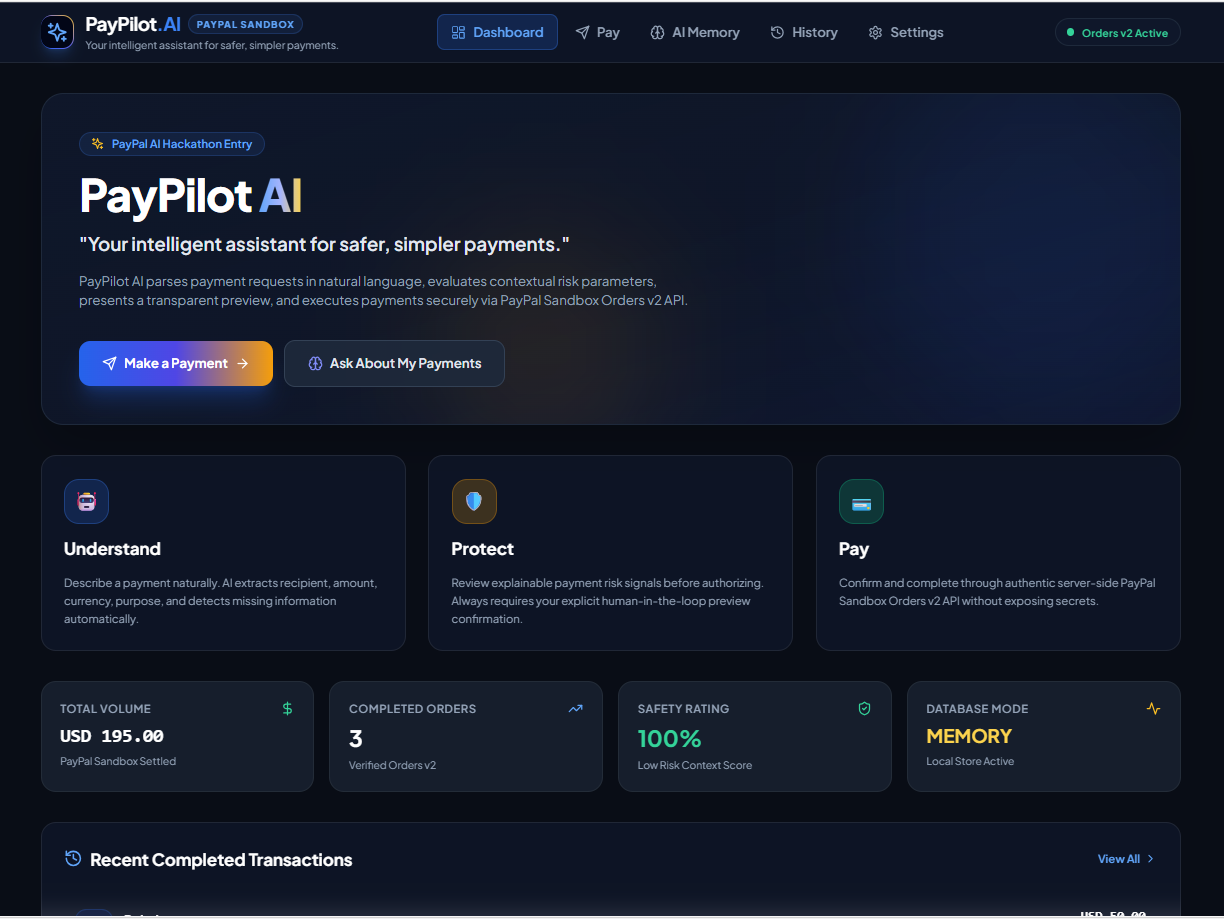
That idea inspired PayPilot AI: an AI-powered payment assistant that lets users describe a payment in natural language, review the extracted details, and proceed through a confirmation-based PayPal Sandbox payment flow.
What it does
PayPilot AI is designed to connect natural-language payment requests with a structured payment workflow. Its key features include:
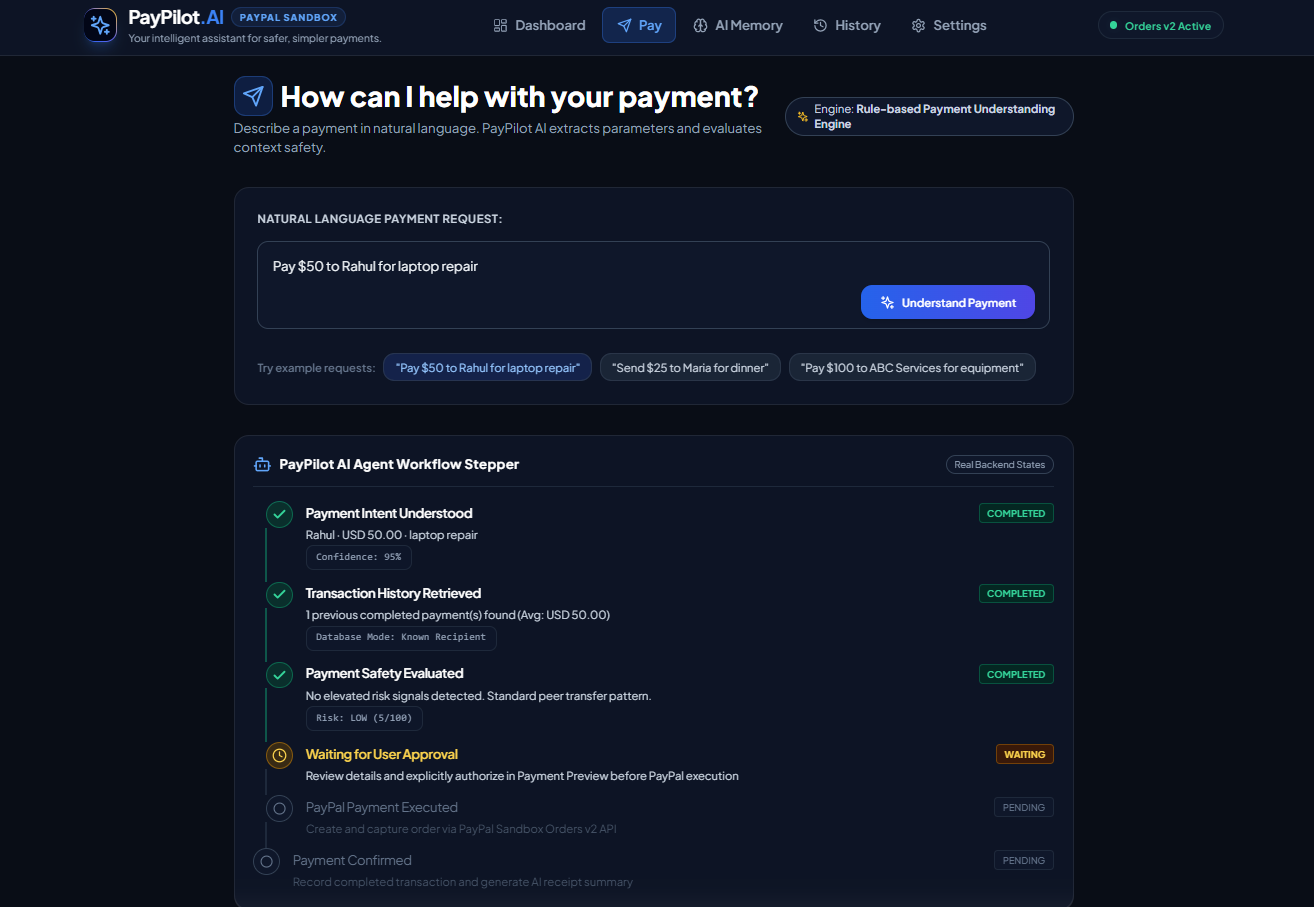
- AI-powered payment understanding:Extracts details such as recipient, amount, currency, and payment purpose from a user's request.
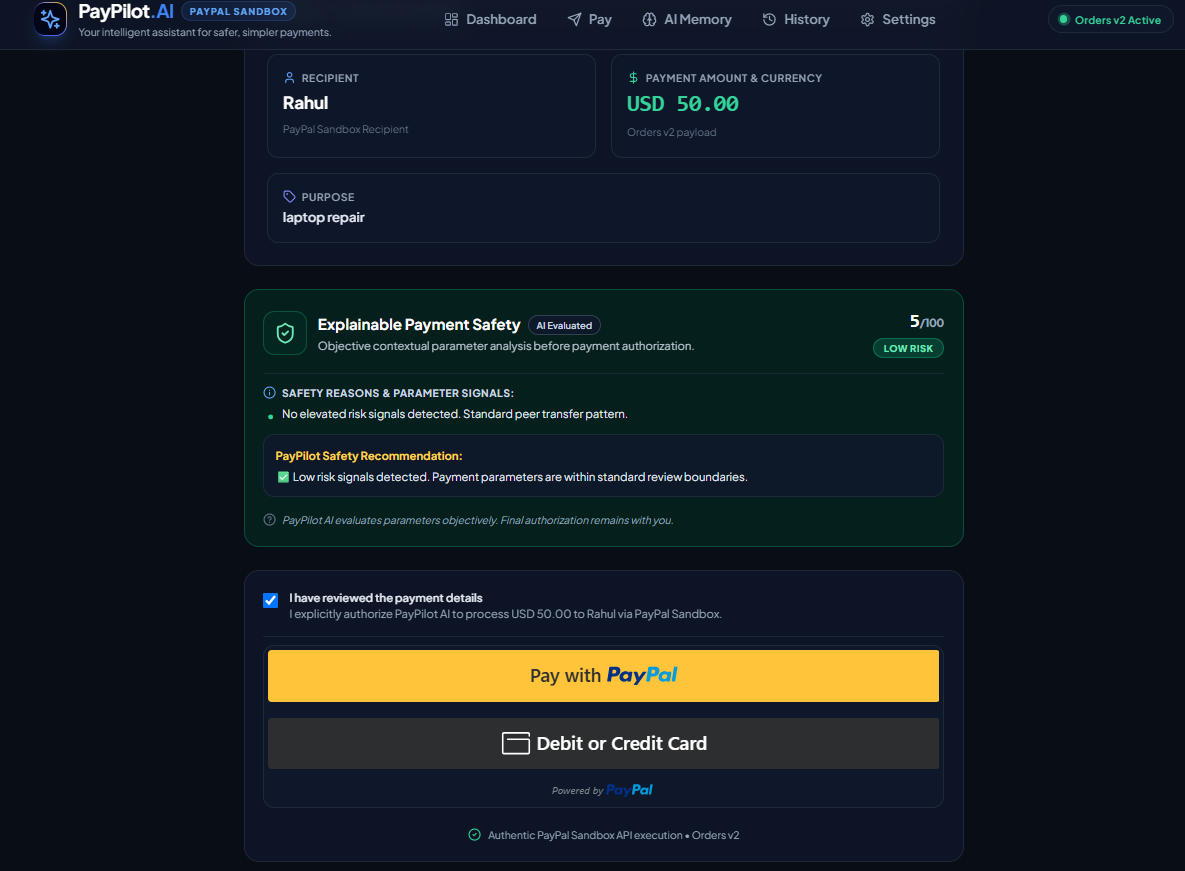
- Payment preview:Helps users review payment details before proceeding.
- Risk analysis: Evaluates payment information and highlights potential risks using explainable rules and available transaction history.
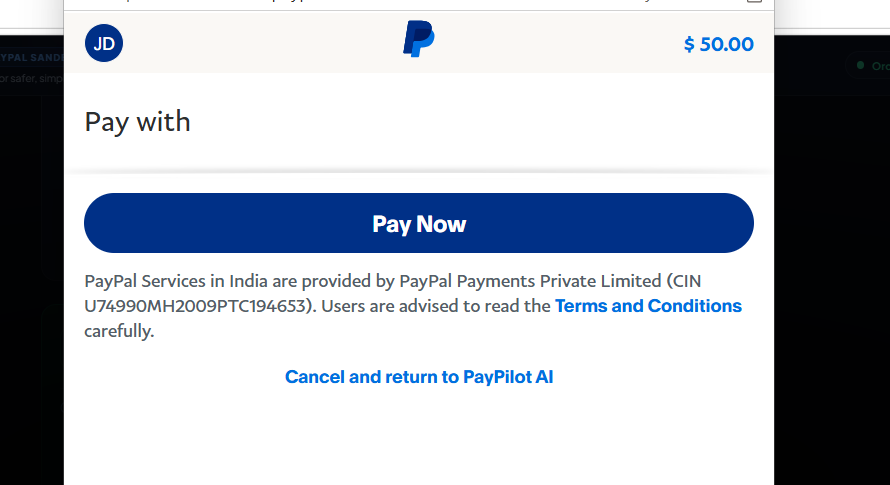
- PayPal integration: Uses the PayPal Sandbox Orders API as the payment integration target, keeping development and testing separate from real-money transactions.
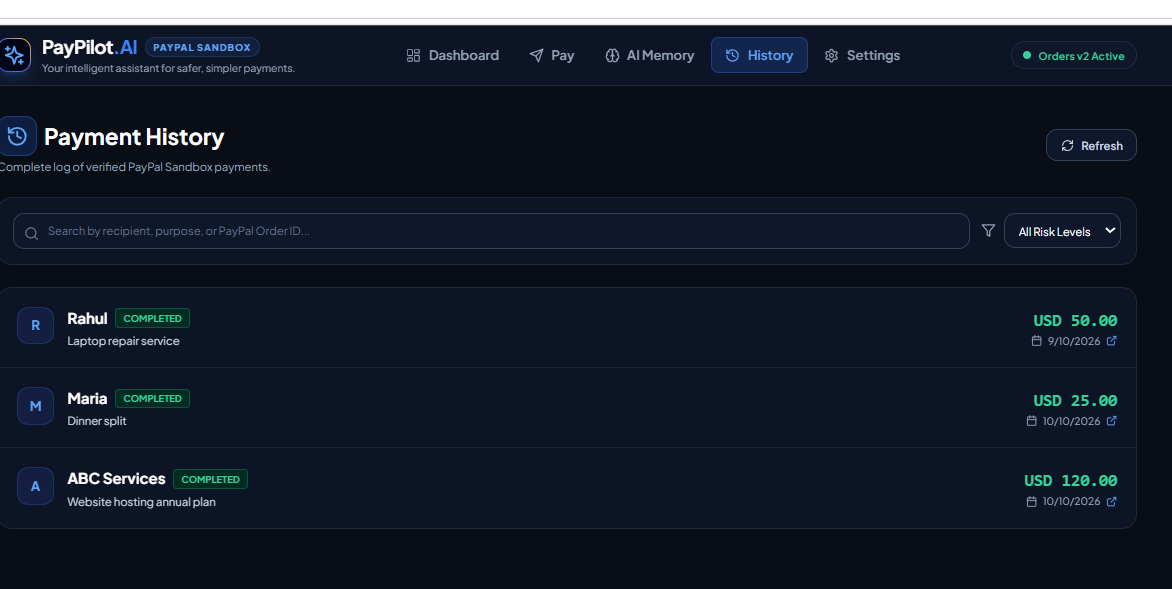
- Transaction workflow: Separates payment preparation, approval, and capture so the application can represent payment states more clearly.
- AI provider flexibility: Supports an AI provider abstraction with configured providers and a fallback option.
How I built it
I developed PayPilot AI using React, Vite, TypeScript, and Tailwind CSS for the frontend, with Node.js, Express, and TypeScript on the backend. The project includes a structured payment-intent model, AI provider modules, payment validation, risk analysis, and a PayPal REST API service.
I focused on separating the AI interpretation step from payment execution. The goal is to ensure that AI helps prepare a payment request while the user reviews the details and remains responsible for confirming the payment.
Challenges I faced
One of the main challenges was connecting natural-language AI output to a reliable payment workflow. Payment details must be validated before an order is created, and incomplete or ambiguous requests need to be handled carefully.
I also worked through challenges involving PayPal Sandbox checkout, currency compatibility, API errors, and the distinction between order creation, buyer approval, and successful capture. These issues reinforced the importance of validating server responses rather than assuming a payment succeeded.
What I learned
Building PayPilot AI helped me understand how AI applications can integrate with payment APIs, how to structure a full-stack TypeScript project, and why payment systems need validation, clear status handling, risk checks, and secure server-side credentials.
Most importantly, I learned that AI should assist with financial workflows without replacing user consent or reliable payment verification.
What's next
My next steps are to finish validating the complete Sandbox payment flow, strengthen automated tests for failure and cancellation scenarios, improve transaction-history integration, and make error messages more useful. I also want to continue improving the interface so users can understand each stage of a payment clearly.
PayPilot AI explores a simple principle: make payments easier to initiate, safer to review, and clearer to understand—with the user always in control.
Built With
- ai
- api
- artificial
- css
- express.js
- generative
- intelligence
- node.js
- payment
- paypal
- processing
- react
- rest
- tailwind
- typescript
- vite


Log in or sign up for Devpost to join the conversation.