-
-
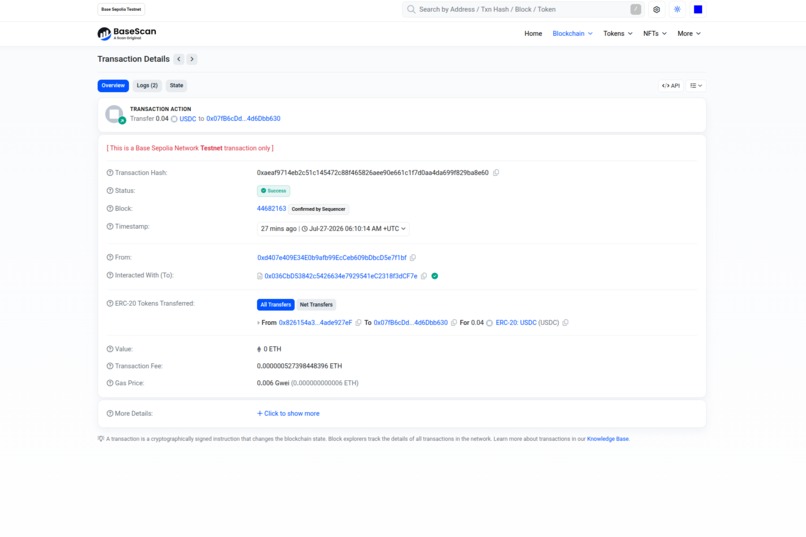
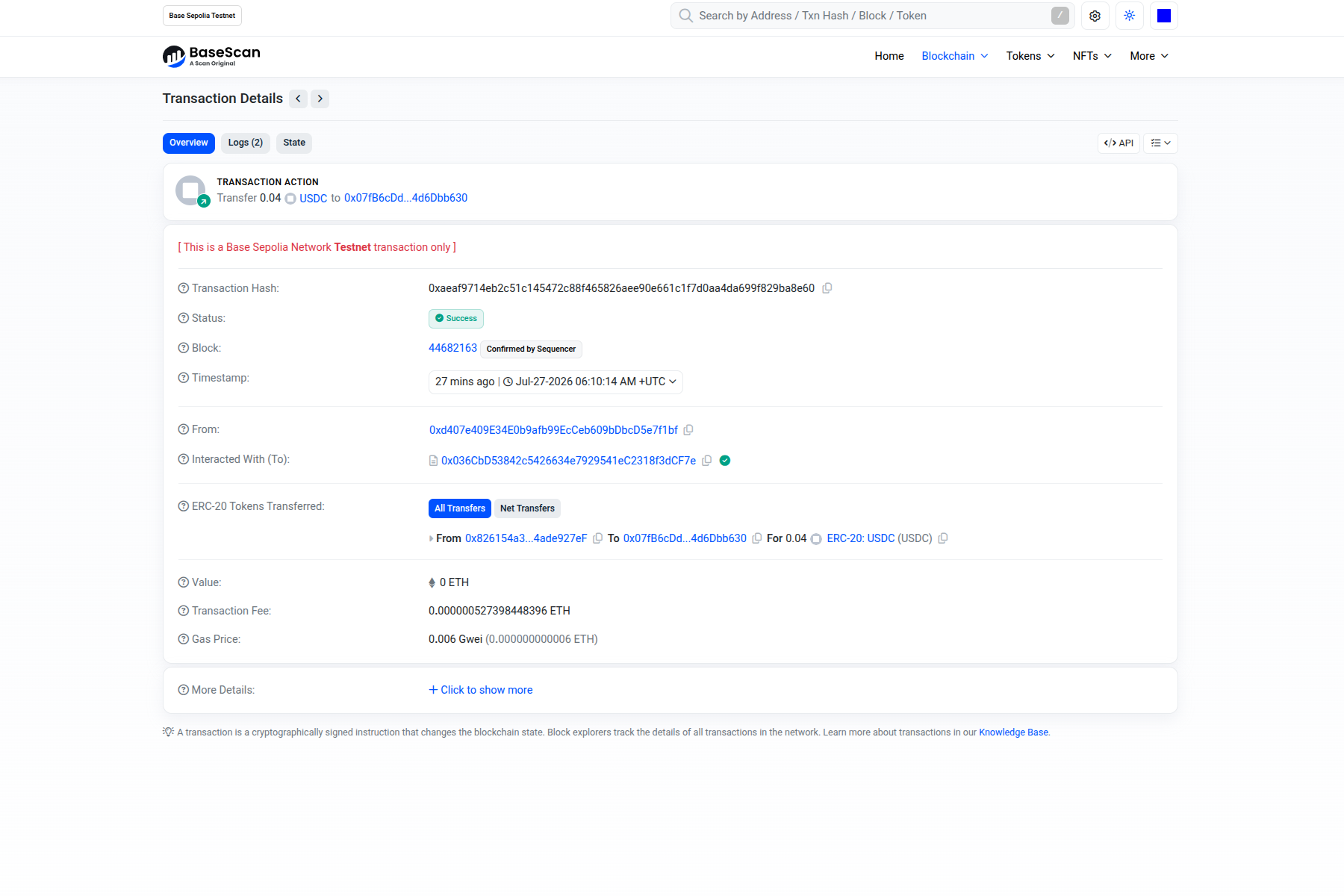
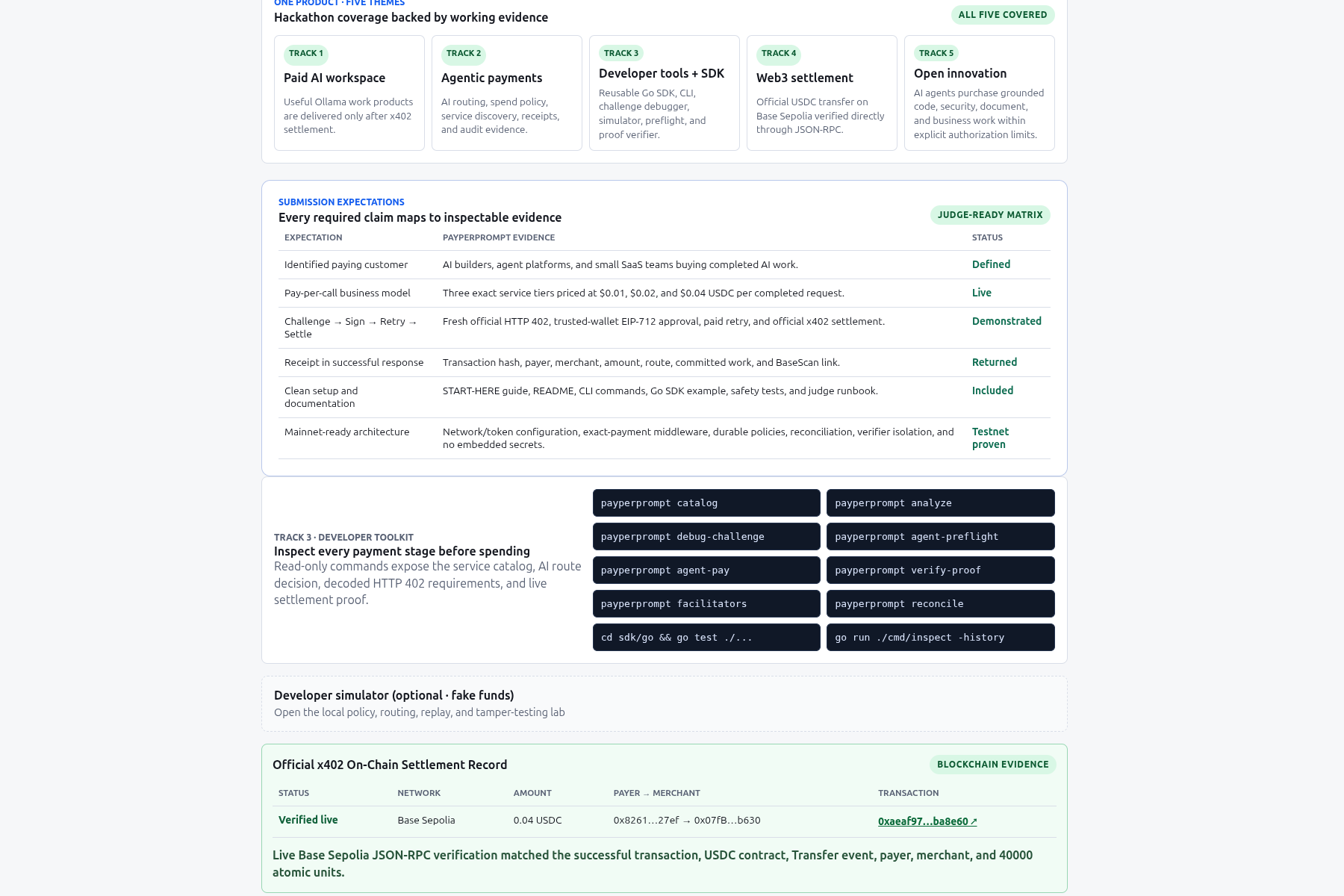
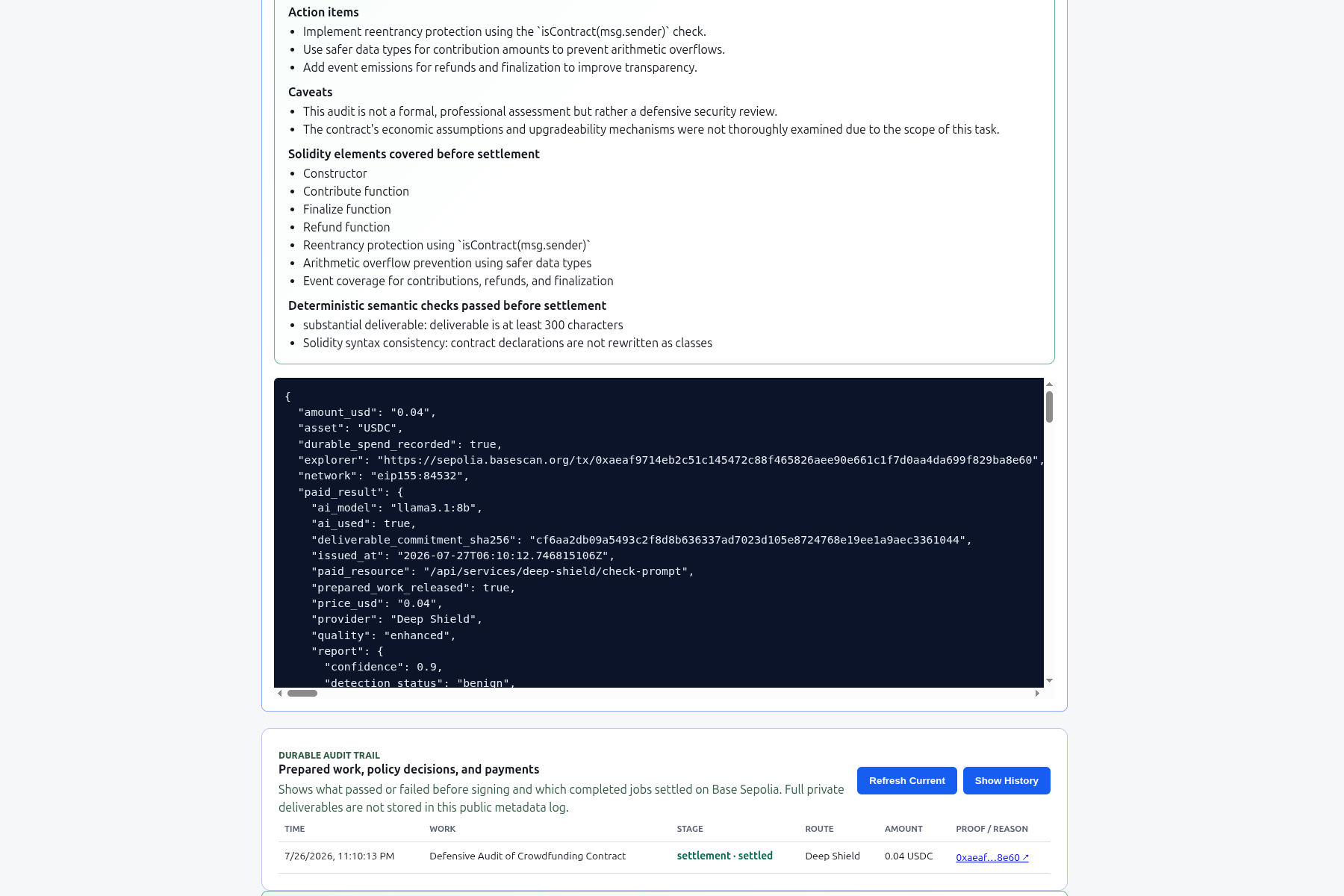
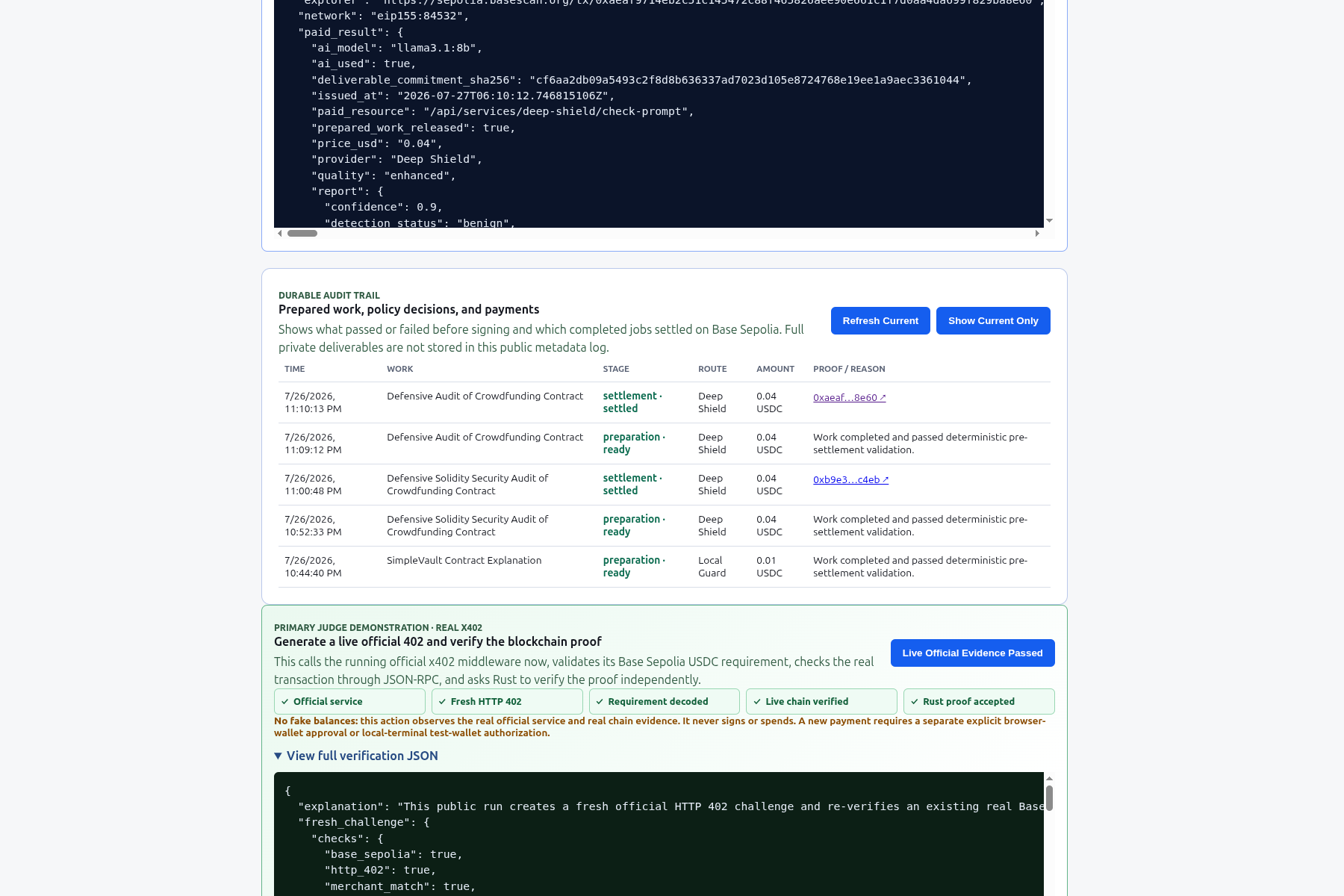
BaseScan transaction proof
-
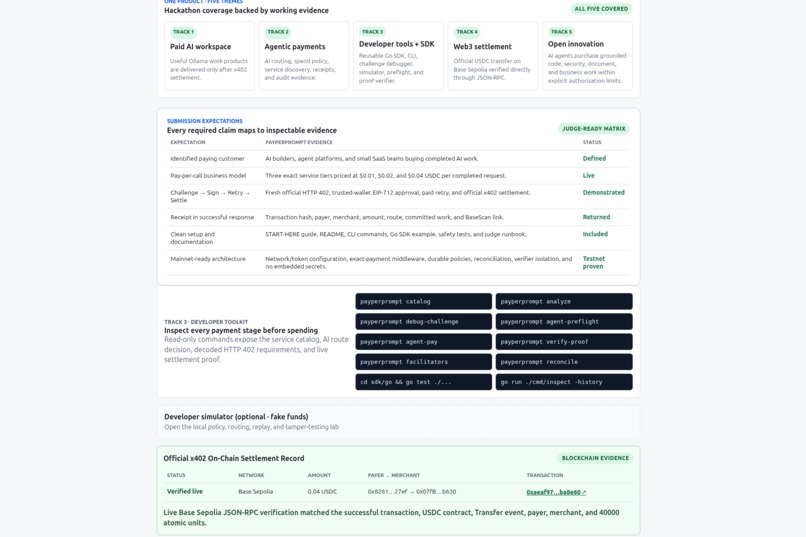
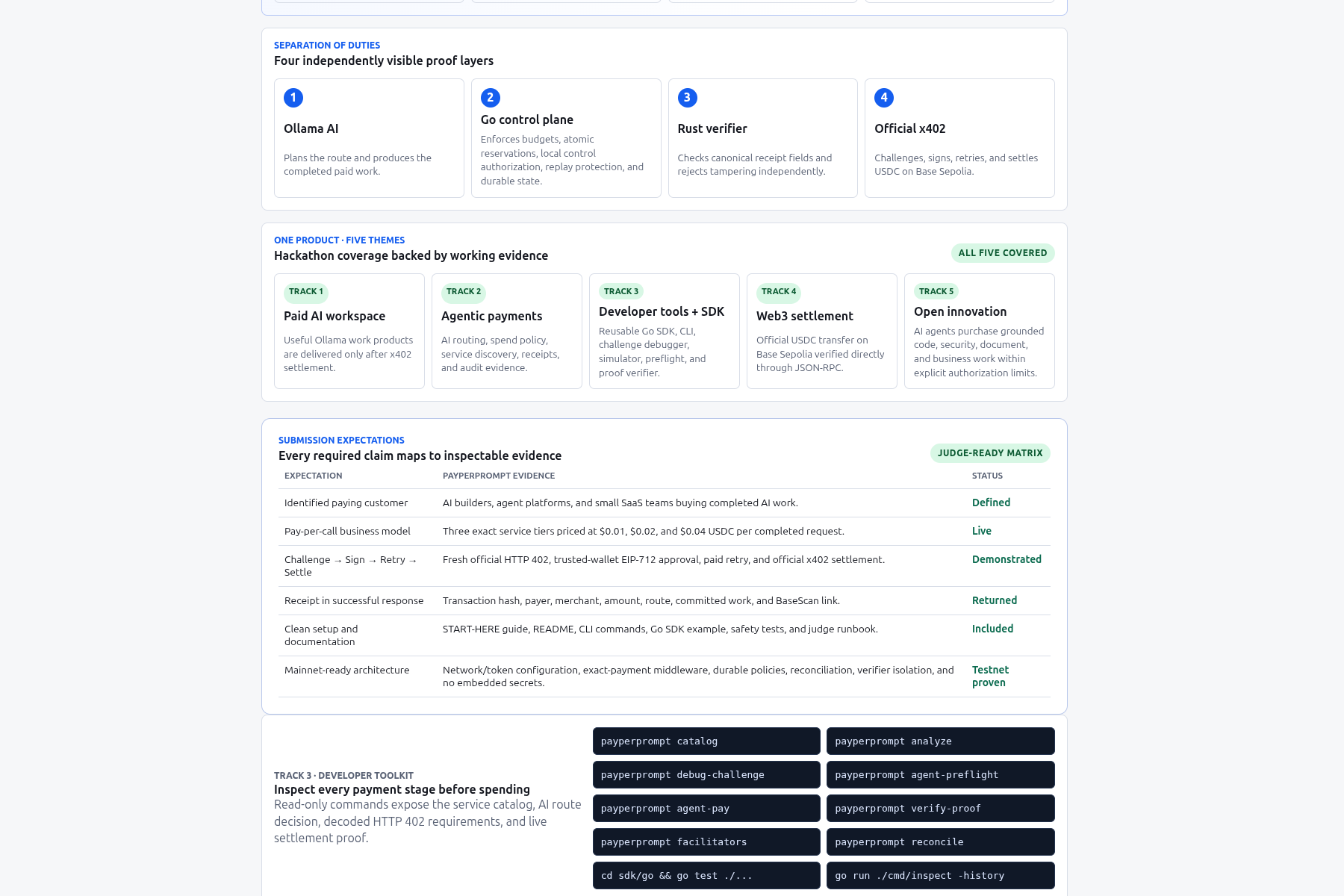
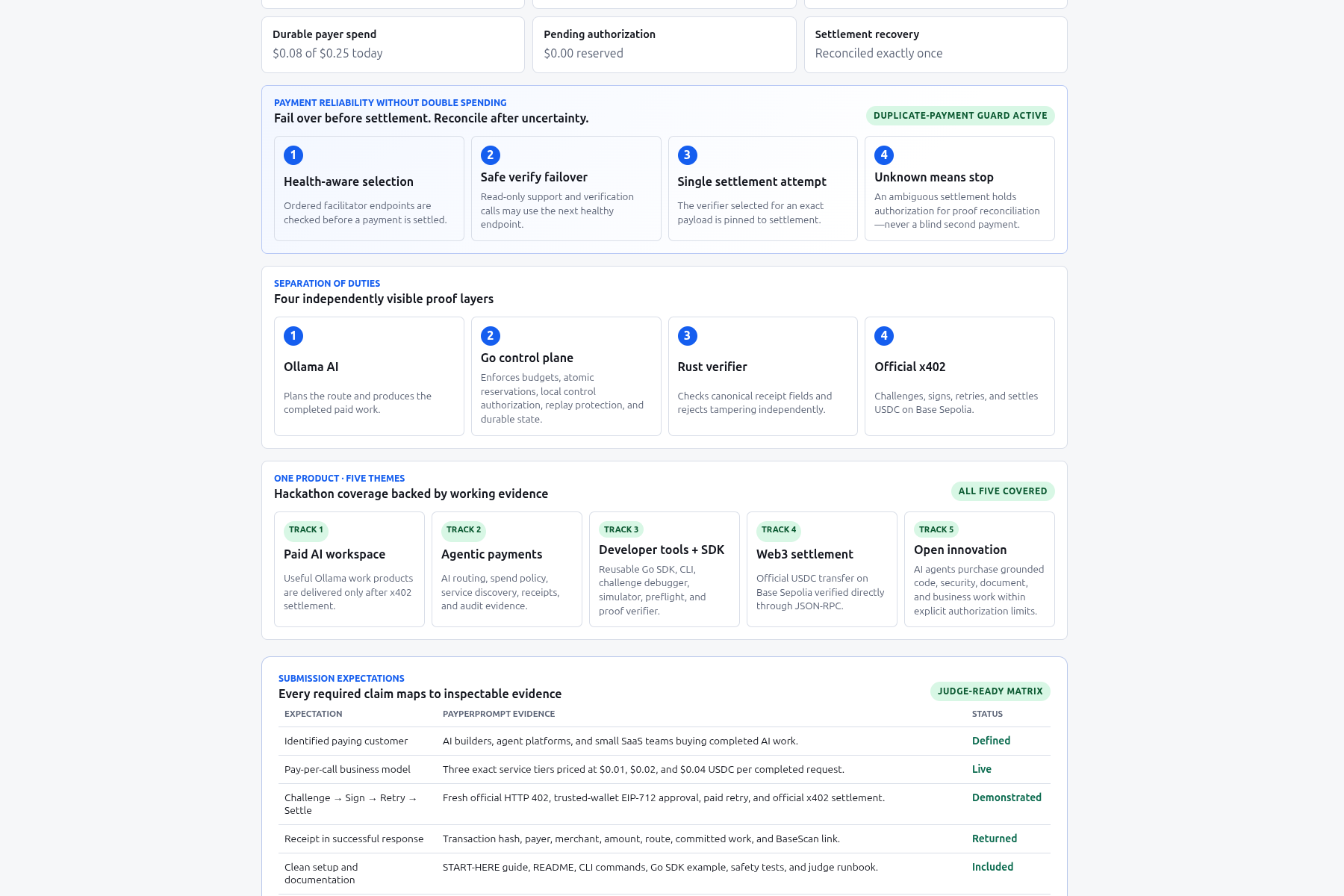
Developer toolkit, SDK and submission matrix
-
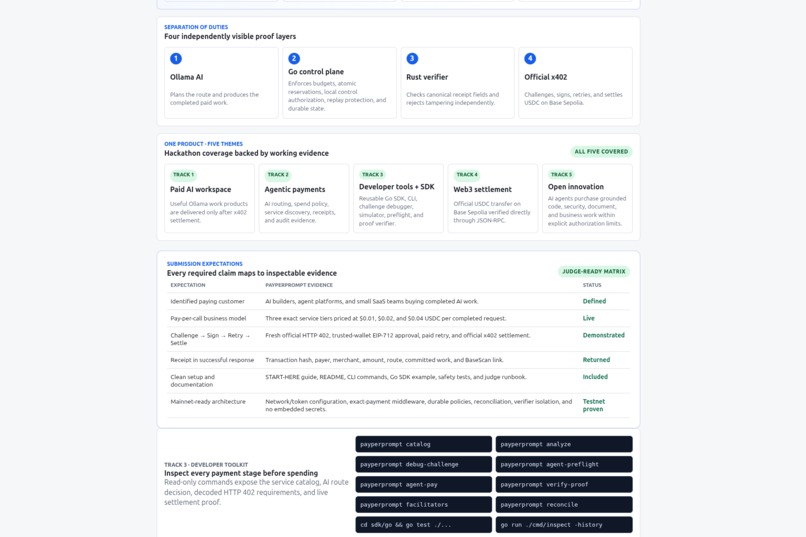
Five-track coverage
-
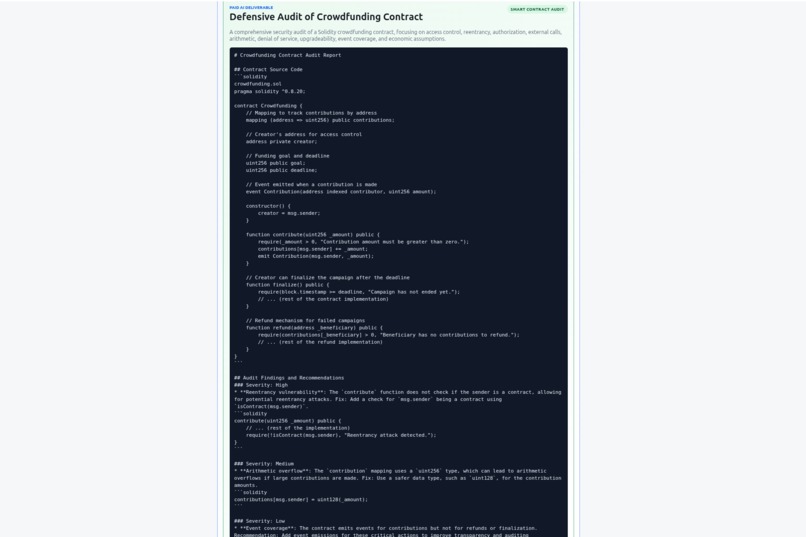
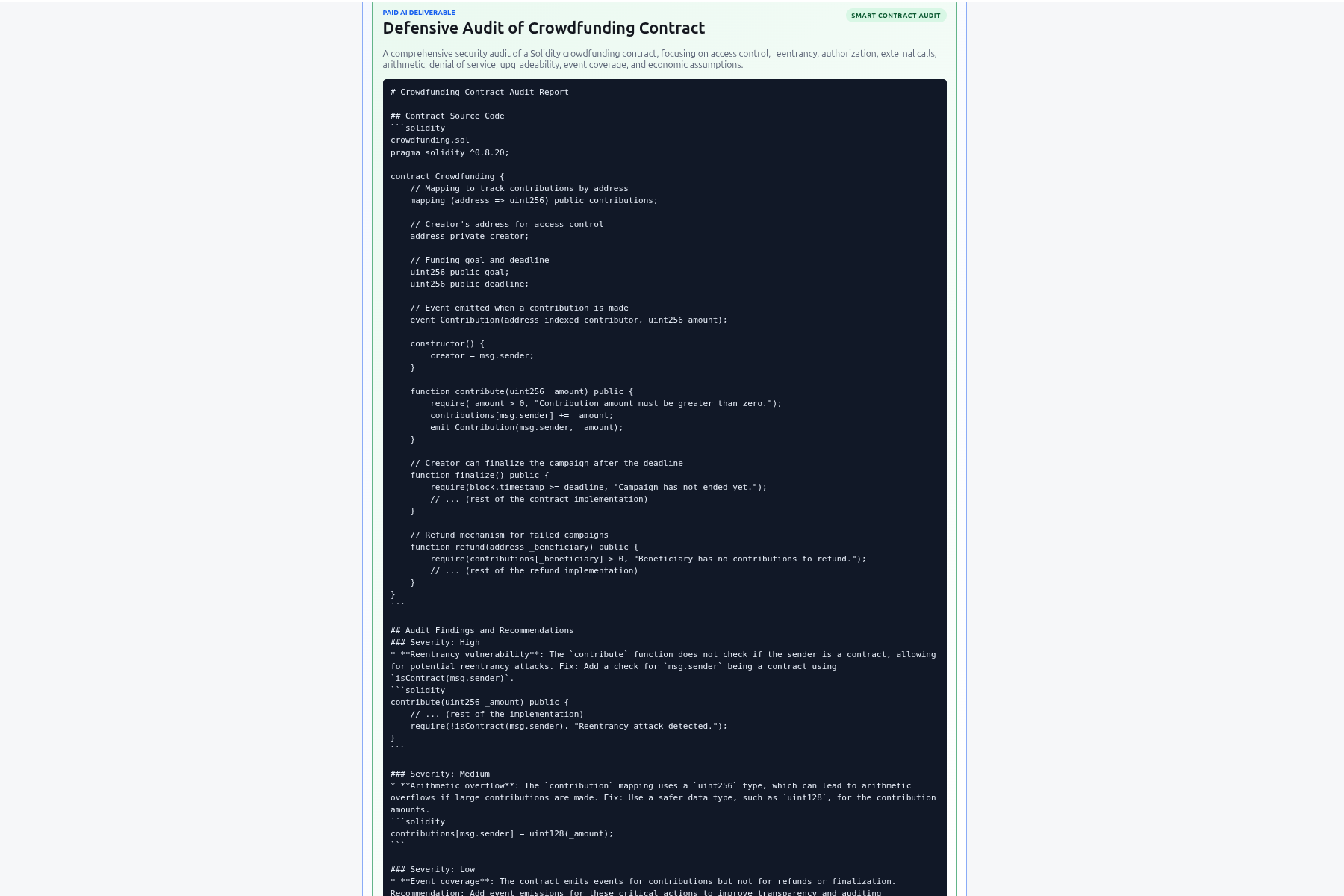
Completed paid AI deliverable
-
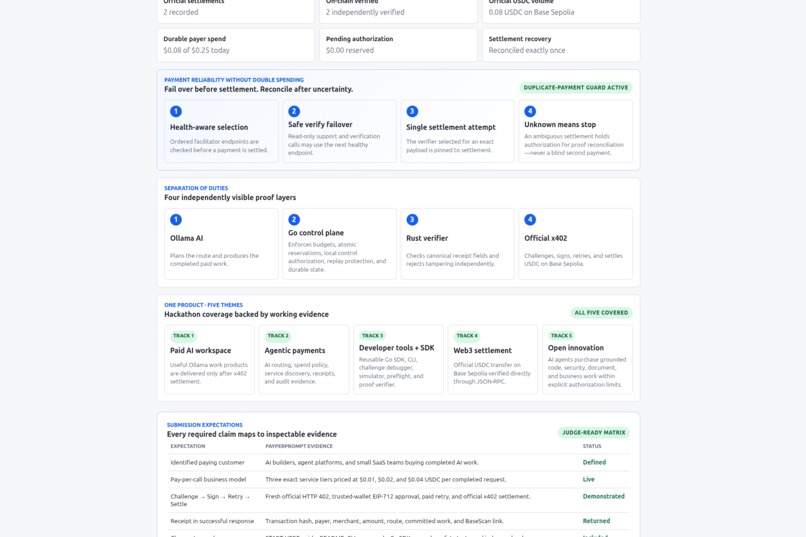
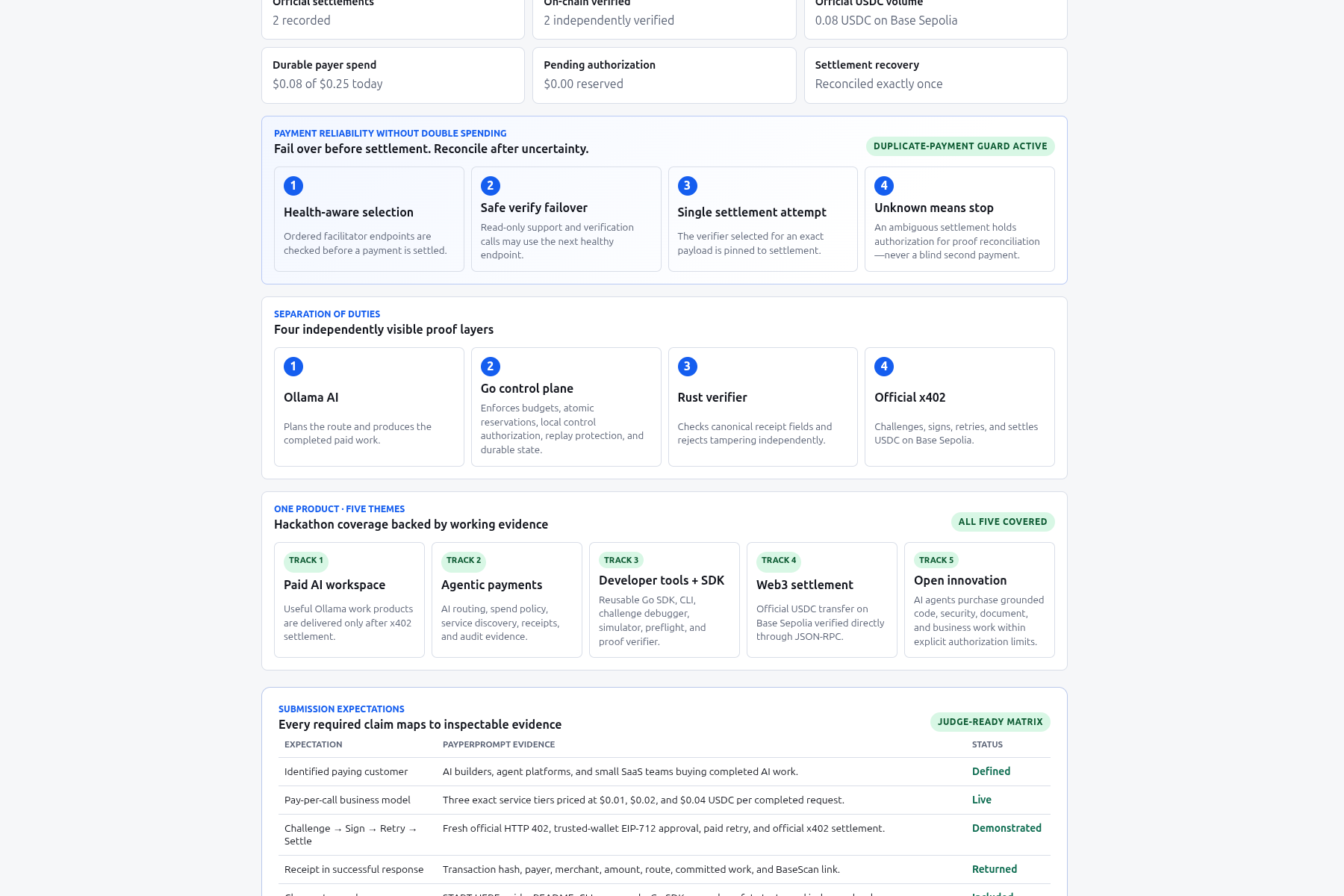
Four proof layers: Ollama, Go, Rust and x402
-
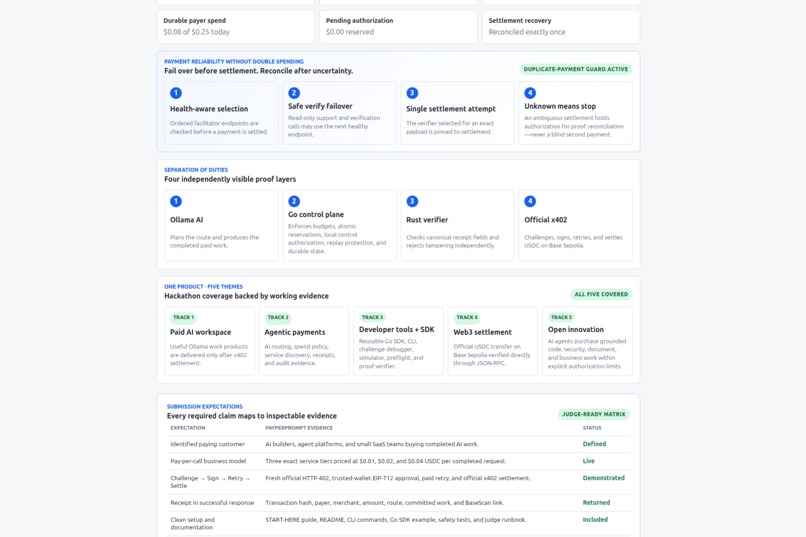
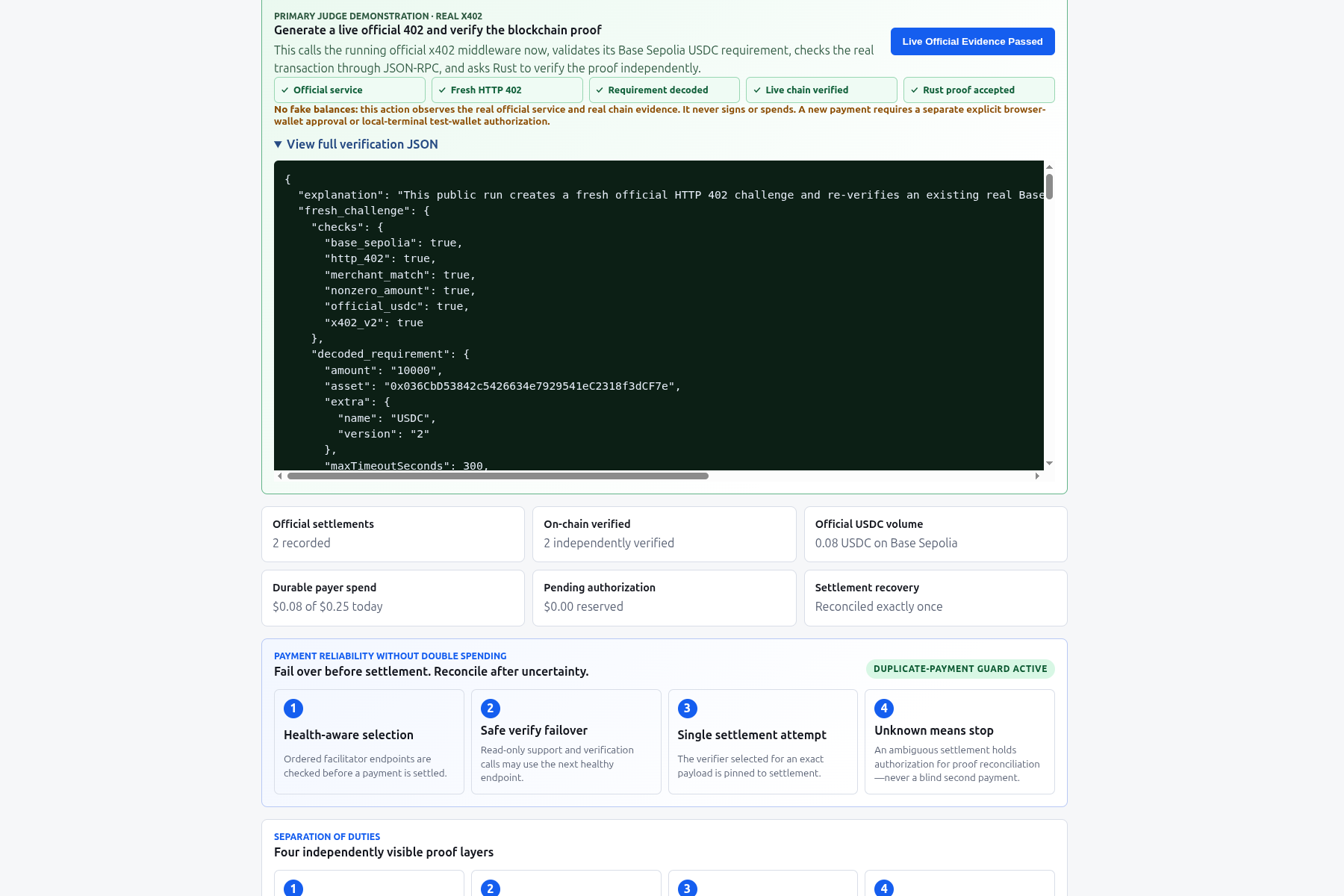
Payment reliability and reconciliation
-
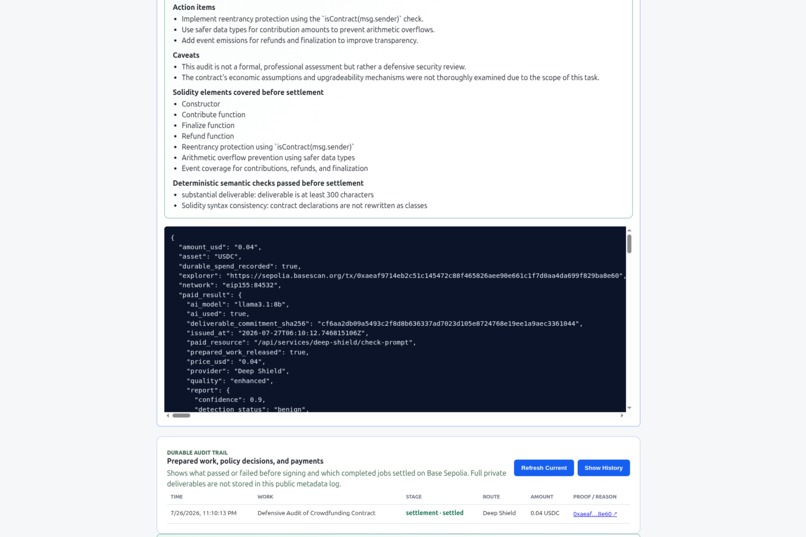
Successful response with transaction receipt
-
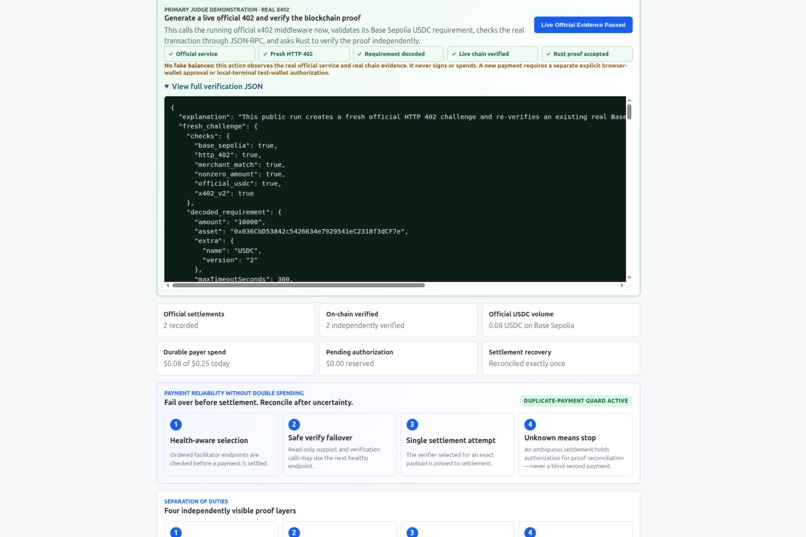
Live x402 evidence passed
-
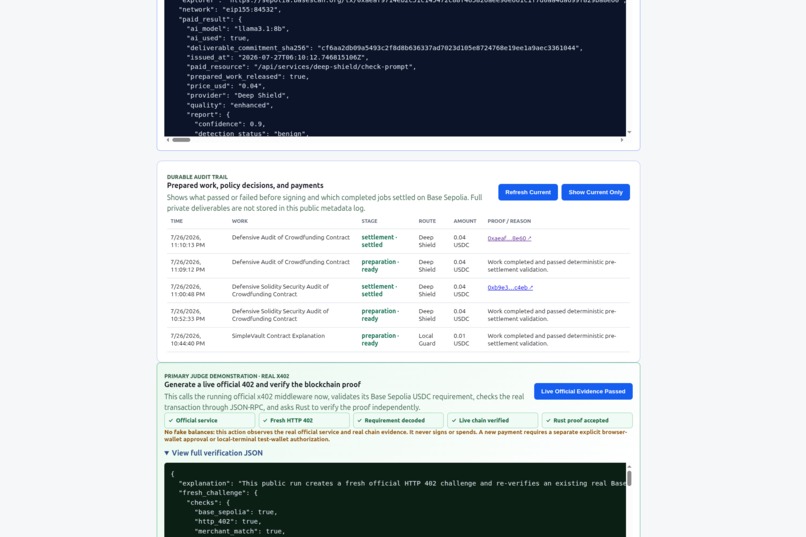
Durable audit trail
-
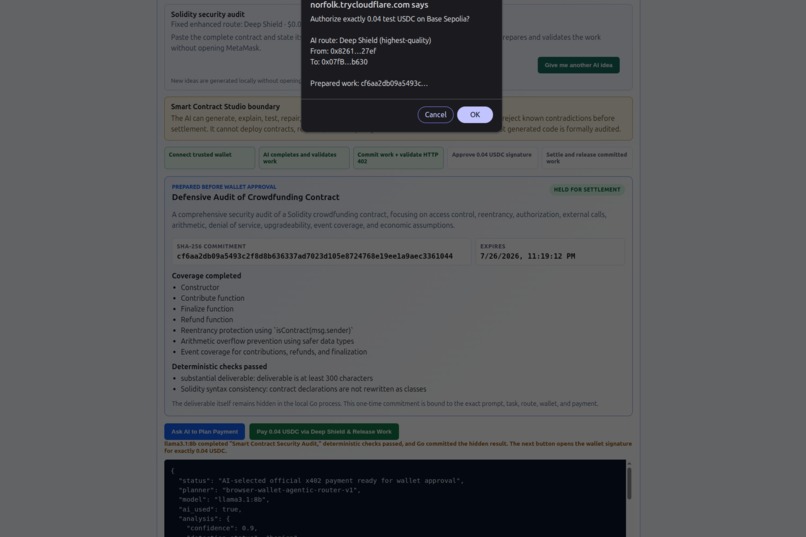
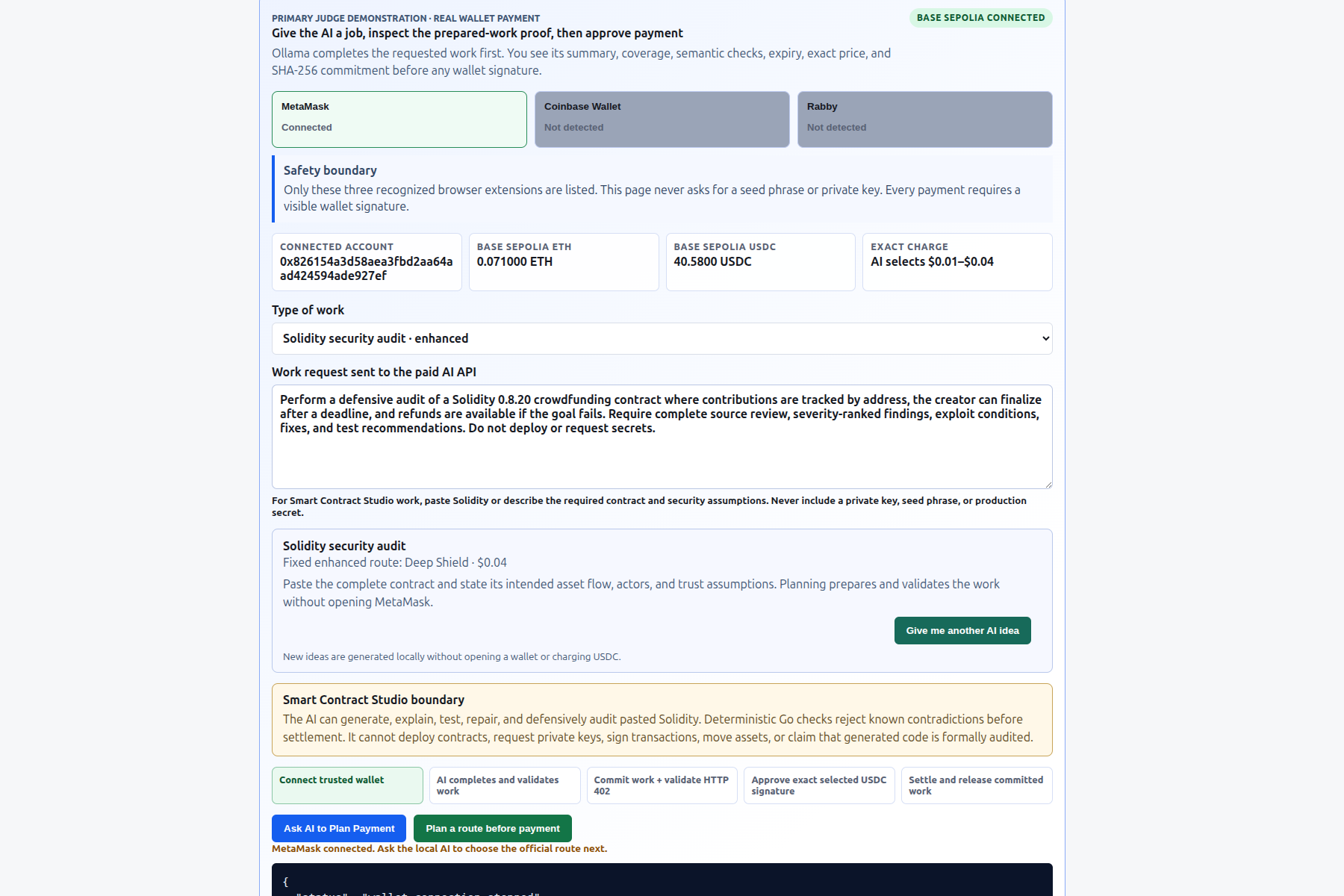
Exact wallet USDC request
-
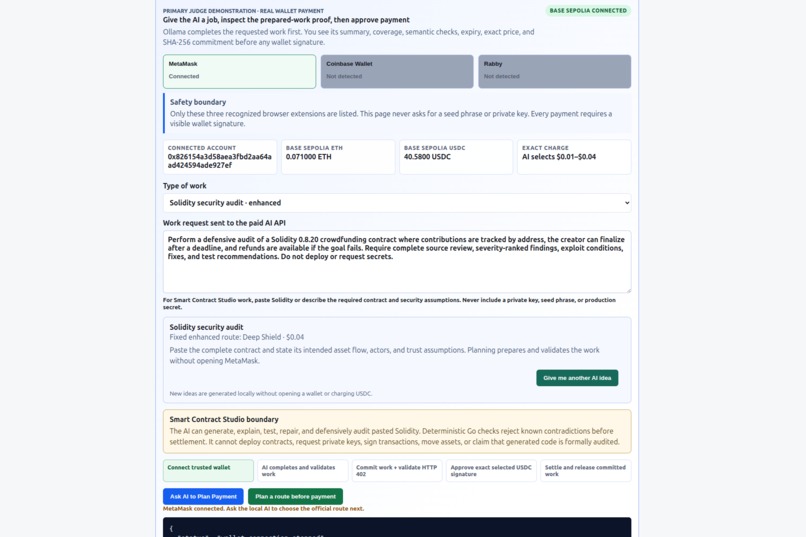
AI work request
-
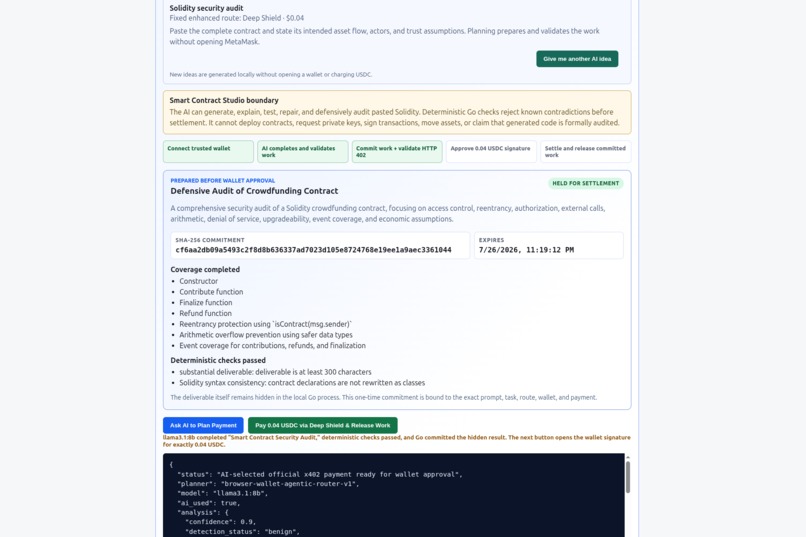
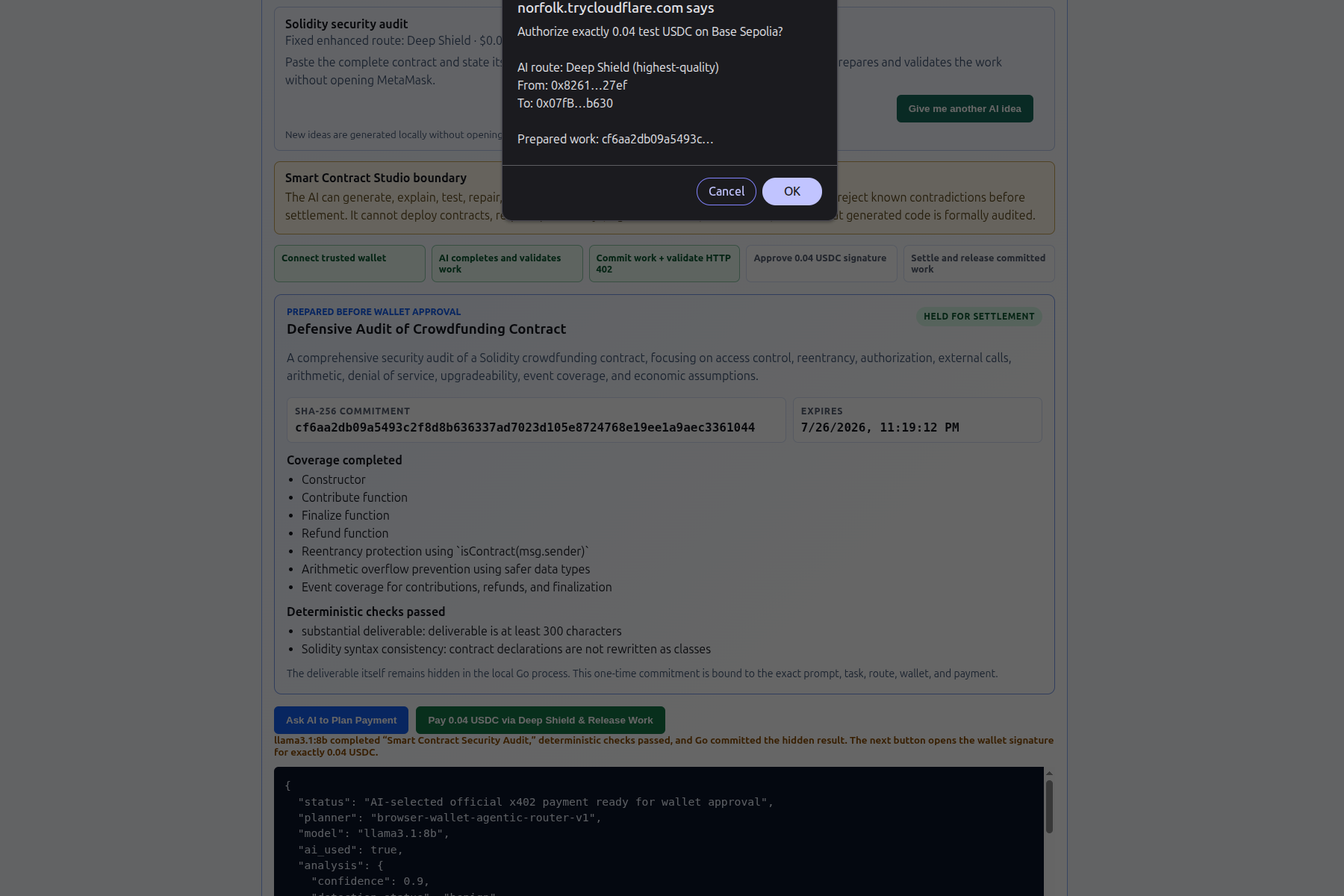
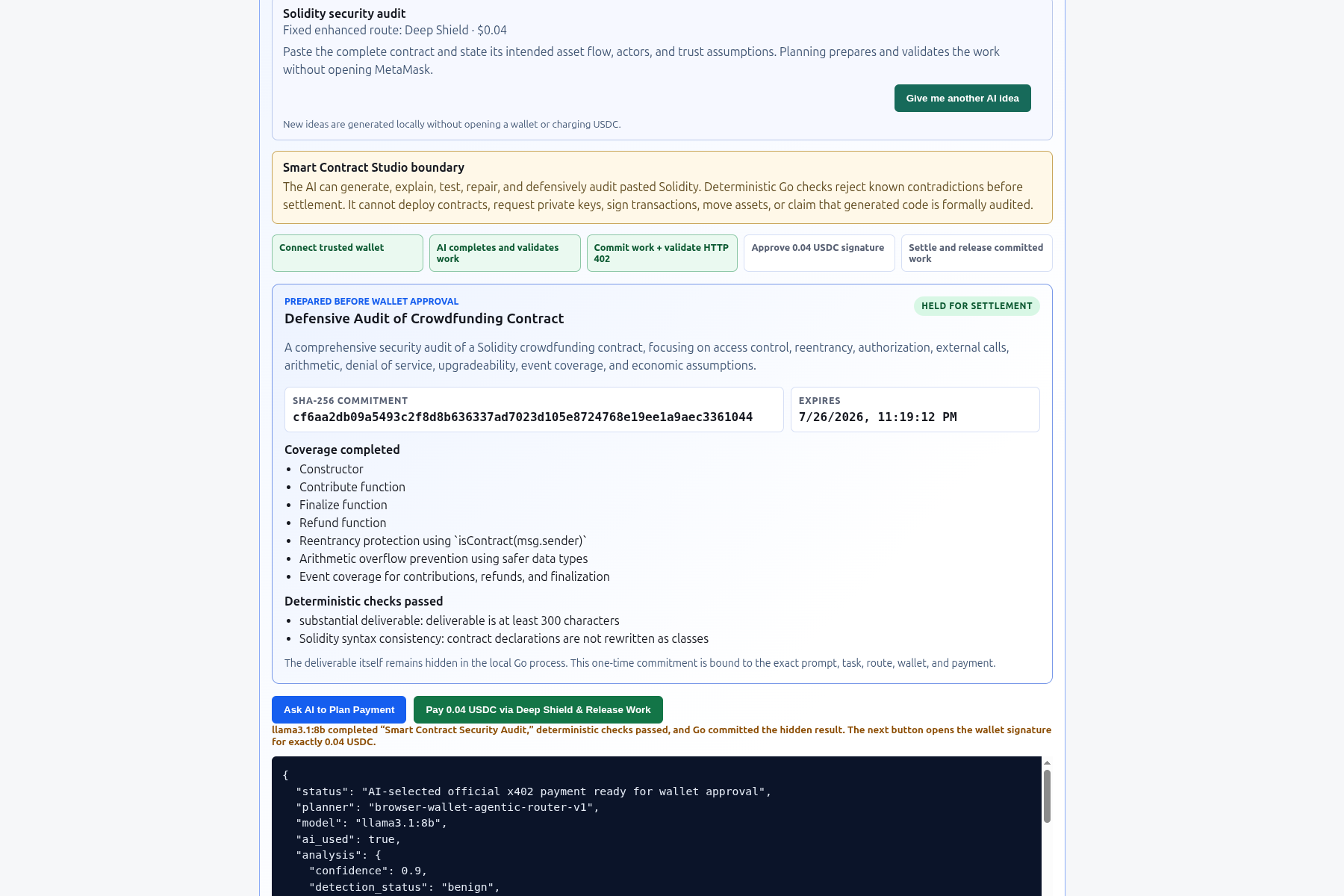
Prepared work proof before payment
-
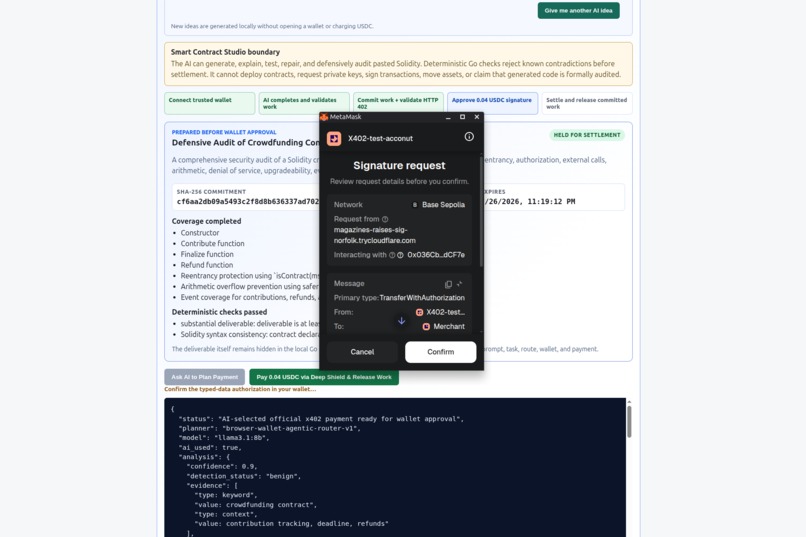
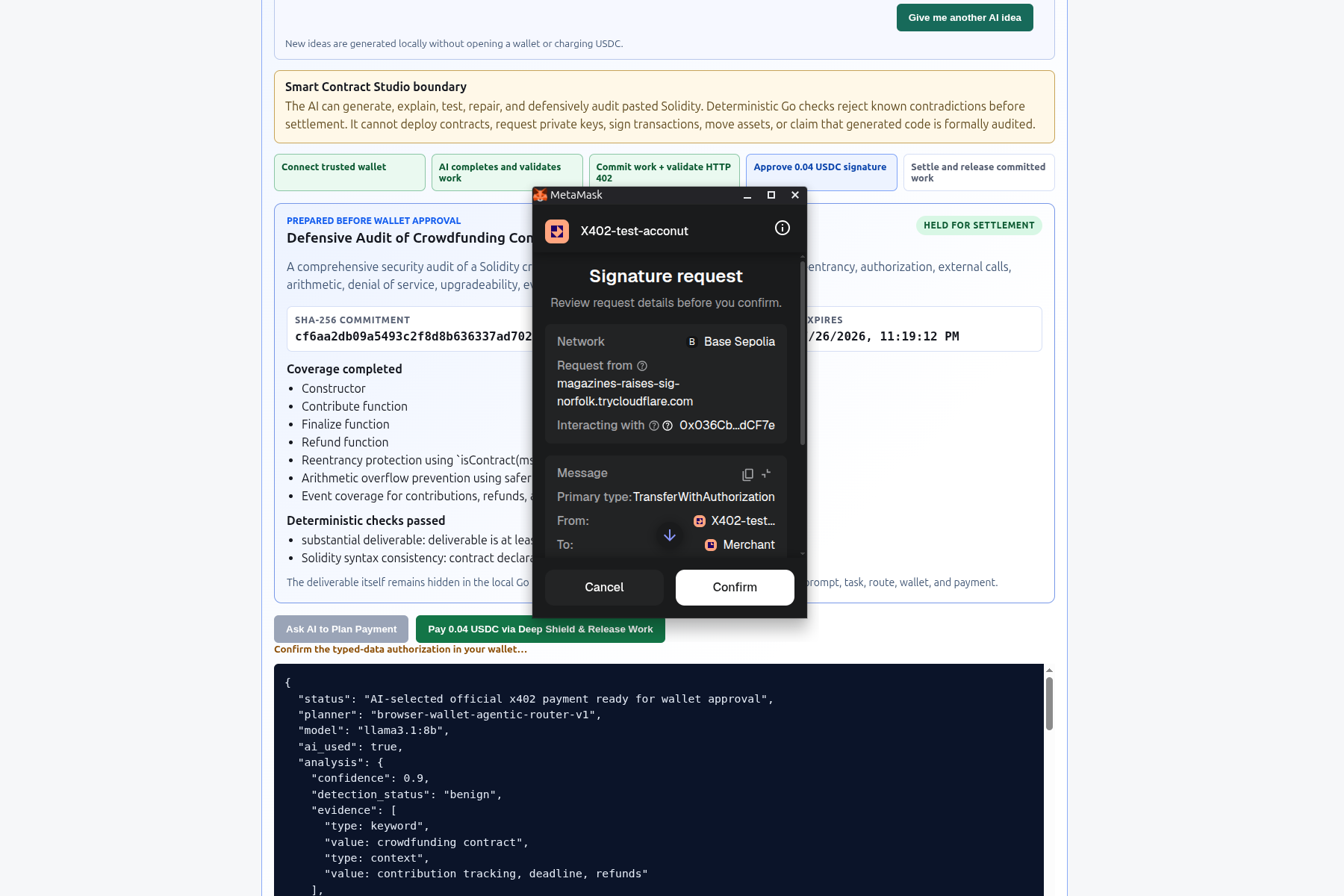
Wallet signature approval
-
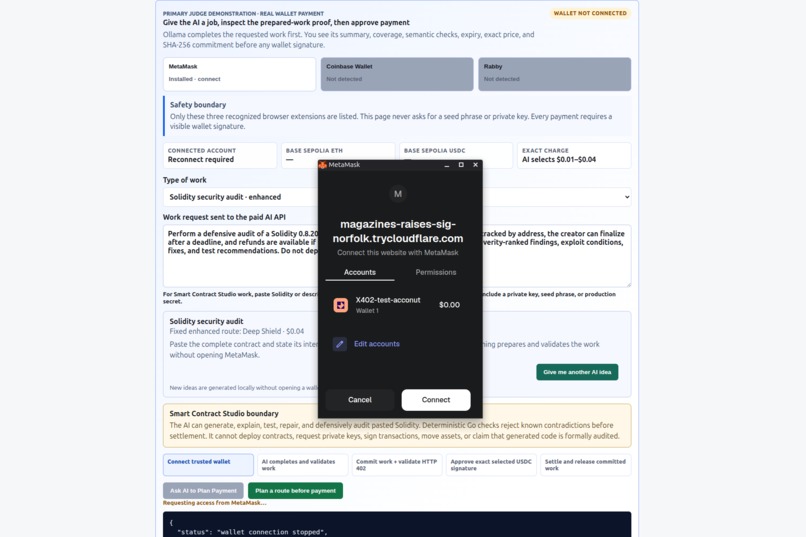
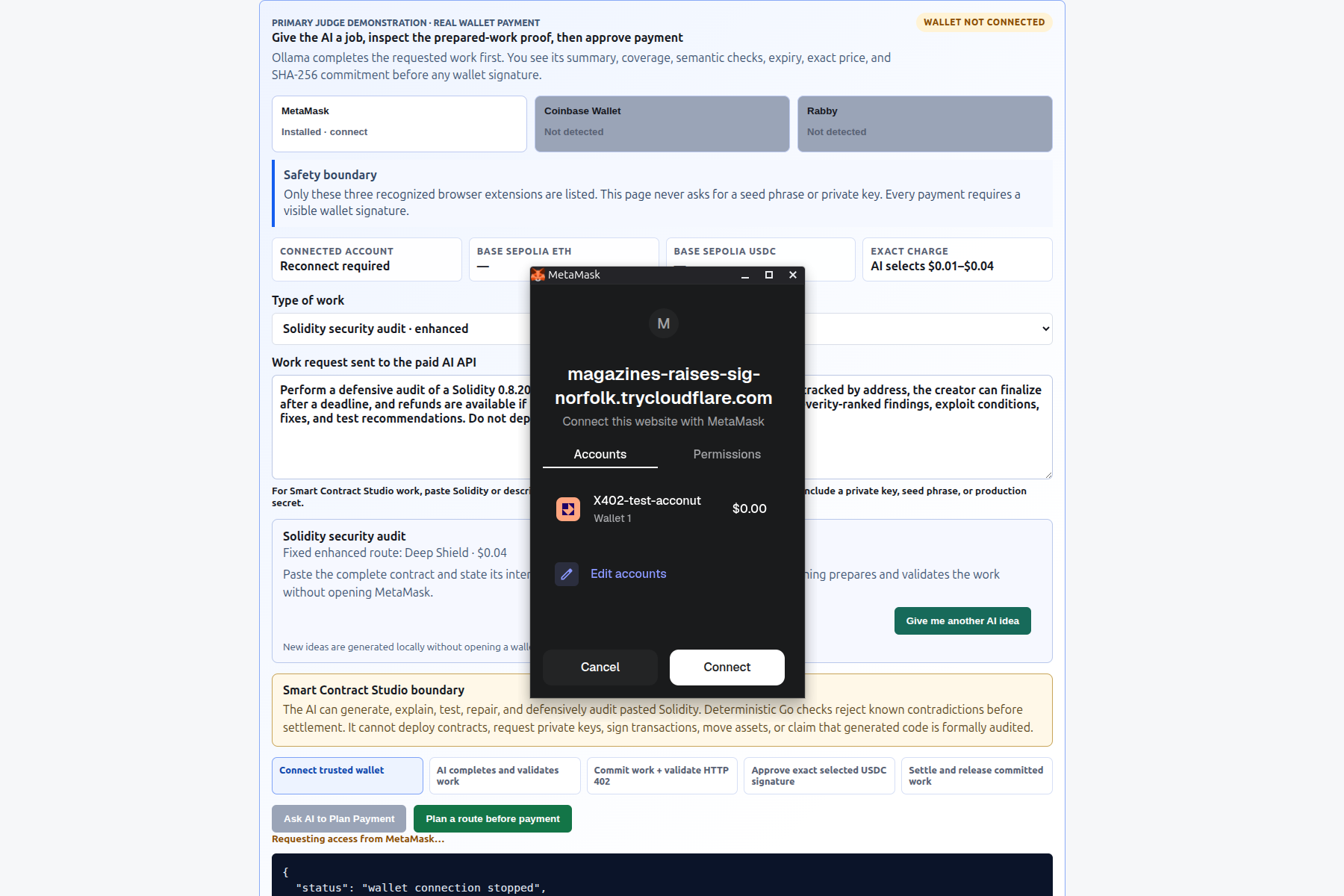
Wallet connected on Base Sepolia
-
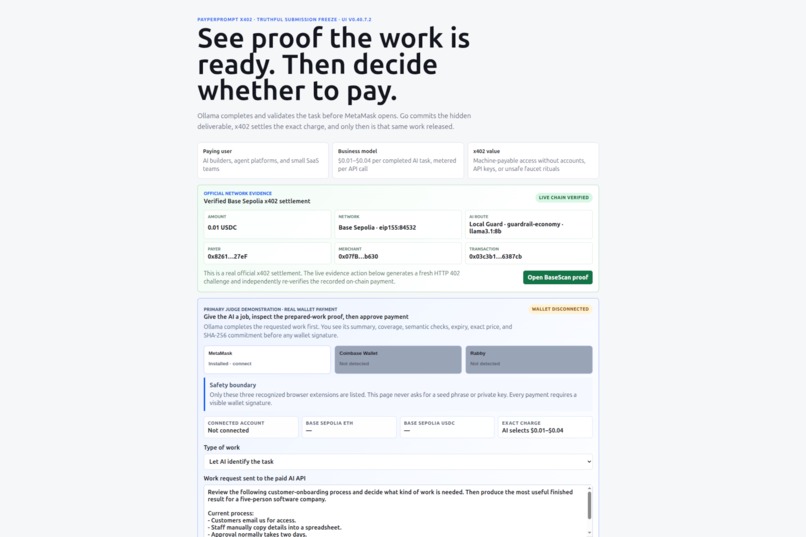
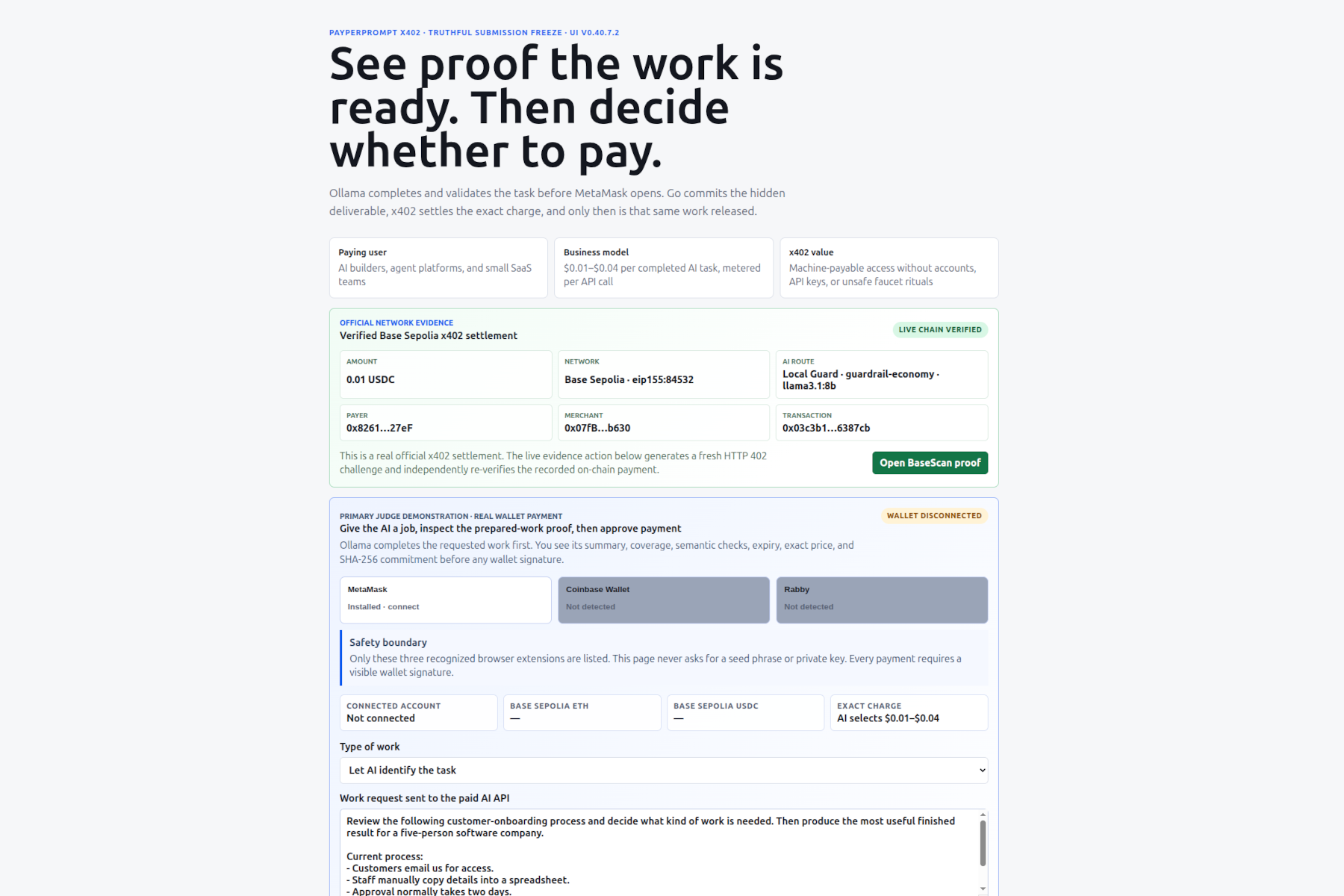
Hero and product value
Inspiration
AI agents can already call APIs and make decisions, but buying digital work still creates a basic trust problem: how does the buyer know useful work exists before paying for it?
A normal paywall proves that money moved. It does not prove what was purchased, whether the result was ready, whether the price matched policy, or whether the delivered result is the same work the buyer expected.
PayPerPrompt started as a paid prompt-safety API and grew into a broader idea: proof-before-payment AI commerce.
The AI completes the requested work first. Go validates and commits the hidden deliverable. The buyer sees a summary, coverage, deterministic checks, expiry, route, exact USDC price, and SHA-256 commitment before a wallet opens. Official x402 settlement then releases only that exact committed result.
The paying customers are AI builders, agent platforms, and small SaaS teams that need useful work without subscriptions, account provisioning, or uncontrolled agent spending.
What it does
PayPerPrompt is a prepared-work AI workspace with three exact service tiers:
- Local Guard: 0.01 USDC
- Rapid Policy: 0.02 USDC
- Deep Shield: 0.04 USDC
The user submits a real request for writing, analysis, code review, bug triage, meeting actions, document work, prompt-security review, or bounded Solidity assistance.
The system then follows this lifecycle:
Prepare -> Ground -> Commit -> Challenge -> Sign -> Retry -> Settle -> Release -> Verify
- Ollama identifies the task and selects cost, latency, or enhanced quality.
- The work is completed before payment.
- Go applies task-specific quality and source-grounding checks.
- The full deliverable stays hidden while Go exposes its proof and SHA-256 commitment.
- The protected API returns an official HTTP 402 payment requirement.
- A trusted browser wallet displays the exact Base Sepolia USDC authorization.
- The user explicitly approves the payment.
- The request retries and official x402 middleware settles it.
- Only the previously committed work is released.
- The successful response includes the work, receipt, route, amount, payer, merchant, transaction, commitment, and BaseScan link.
- Go checks the transfer through Base Sepolia JSON-RPC, and Rust independently checks proof consistency.
Preparation is free. If Ollama is unavailable, validation fails, the commitment expires, or spending policy denies the route, MetaMask cannot open and the user cannot be charged.
Why it is different
PayPerPrompt does not ask the buyer to pay for an AI promise. It uses a commit-and-release pattern:
- useful work is prepared first;
- the hidden result is bound to a cryptographic commitment;
- price and policy are visible before consent;
- settlement releases that exact result once;
- independent evidence connects payment to the purchased work.
It is not a custodial escrow and does not deploy contracts or hold customer funds. The innovation is at the HTTP application layer: binding prepared work, wallet consent, x402 settlement, and a verifiable receipt into one lifecycle.
How I built it
I built PayPerPrompt as a solo developer, directing the product design, architecture, security boundaries, testing, and live payment verification. The implementation combines local AI inference with deterministic controls, explicit wallet consent, official x402 settlement, and independent proof verification.
The system has four independently visible proof layers:
- Ollama AI identifies the task, selects a service route, and prepares the requested work.
- Go control plane grounds AI output, validates quality, commits the hidden deliverable, enforces durable spending policies, reserves budgets atomically, prevents replay, and reconciles uncertain settlements.
- Official x402 middleware generates the HTTP 402 challenge, validates the paid retry, and settles Base Sepolia USDC.
- Rust verifier independently checks canonical receipt fields and rejects altered or inconsistent evidence.
The project also includes:
- a dependency-free Go SDK for integrating PayPerPrompt services;
- a Go CLI for service discovery, route analysis, challenge debugging, payment preflight, payment execution, facilitator diagnostics, proof verification, and reconciliation;
- current audit evidence with bounded history available on request;
- task-specific quality and source-grounding gates;
- prepared-work expiry and one-time release controls;
- durable per-wallet spending policies and atomic budget reservations;
- idempotency and replay protection;
- health-aware failover for read-only facilitator operations;
- a single-attempt settlement boundary that prevents blind duplicate payments;
- crash-safe proof reconciliation for ambiguous settlement outcomes;
- an optional fake-fund simulator for repeatable developer testing;
- a Smart Contract Studio that can generate, explain, test, repair, and defensively review Solidity without deploying contracts, signing transactions, moving assets, or handling secrets.
The public interface exposes only trusted injected browser-wallet providers: MetaMask, Coinbase Wallet, and Rabby. The application never requests a seed phrase or private key. Every real payment requires a visible wallet signature for an exact USDC amount.
The official demonstration runs on Base Sepolia using official testnet USDC. Successful responses include the completed work, selected route, exact amount, payer, merchant, transaction hash, prepared-work commitment, and BaseScan link. Go verifies the on-chain transfer through Base Sepolia JSON-RPC, while the independent Rust service verifies the recorded proof’s internal consistency.
Challenges I faced
Treating AI output as untrusted
The model sometimes omitted source elements or produced confident but incorrect contract claims. I added deterministic source findings, semantic coverage checks, bounded correction, and fail-closed payment preparation. Unsupported claims cannot simply pass because they sound convincing.
Preventing payment for failed work
Earlier designs produced the result after settlement. I reversed the order: prepare and validate first, commit the hidden result, then allow payment.
Avoiding duplicate settlement
Failing over a read-only verification call is safe. Repeating an uncertain settlement may pay twice. PayPerPrompt pins the selected facilitator for settlement and enters reconciliation when the result is ambiguous.
Keeping testnet evidence honest
The optional simulator uses fake local funds and is clearly labelled. Official claims come from explorer-verifiable Base Sepolia USDC transfers checked through JSON-RPC and independently verified by Rust.
Making a complex system judgeable
The final dashboard presents the paying customer, prices, prepared-work proof, wallet boundary, audit event, live chain evidence, four proof layers, all five tracks, and developer tooling on one page.
Accomplishments
- Completed real browser-wallet x402 payments on Base Sepolia.
- Returned transaction receipts in successful paid responses.
- Bound prepared and released work to matching SHA-256 commitments.
- Implemented three exact pay-per-call service tiers.
- Enforced durable per-wallet budgets and atomic reservations.
- Added idempotency, replay controls, exactly-once recovery, and safe facilitator behavior.
- Independently verified official proofs in Rust.
- Rejected altered receipts and contradictory Solidity analysis.
- Built a reusable Go SDK, CLI, challenge debugger, simulator, and proof tools.
- Demonstrated one coherent product across all five hackathon tracks.
Verified proof
The representative prepared-work transaction is:
- Network: Base Sepolia (
eip155:84532) - Asset: official Base Sepolia USDC
- Provider: Rapid Policy
- Route:
guardrail-fast - Amount: 0.02 USDC (
20000atomic units) - Transaction:
0xfcf4b744479fed99b483d9bd665b67af014c6cb56e55e1492e1bee121dc4c3e5 - Prepared/released commitment:
fb1667e4c2b5c0de9fc8e2ae2d6f1c33f1496c0569d2475180147c069ab98338
Open the transaction on BaseScan
At the time of the final proof capture, the dashboard reported 17 recorded settlements, 17 independently verified proofs, and 0.34 USDC of official Base Sepolia volume.
What I learned
x402 is more than a paywall. Its strongest use is machine-to-machine commerce where the buyer can inspect the requirement, apply policy, consent to an exact price, receive the result, and verify the transaction without creating an account.
I also learned that AI payment systems need separation of duties:
- AI prepares and recommends.
- Deterministic policy controls.
- The wallet consents.
- x402 settles.
- Independent verification proves.
MVP scope and production path
This is a working hackathon MVP, not a claim of finished production infrastructure.
The public demonstration deliberately accepts a configured disposable Base Sepolia payer. That allow list is a safety interlock for repeatable judging, not a claim of open multi-wallet customer on boarding. The architecture separates wallet identity, policy, network, token, merchant, signing, settlement, and verification so broader wallet registration and multi-tenant isolation can be added without placing private keys in the application.
A production launch would still require stable hosting, authenticated wallet registration, merchant isolation, managed secrets, database-backed multi-tenancy, rate limiting, monitoring, incident response, an external security review, and explicit mainnet controls.
What's next
- authenticated multi-wallet and multi-merchant on boarding;
- independent service providers with signed service manifests;
- stable production hosting and observability;
- PostgreSQL-backed tenant and audit isolation;
- provider reputation and service discovery;
- external security review before mainnet operation;
- future research into standardized post-quantum signatures for long-lived service manifests when compatible wallet and x402 tooling exists.
PayPerPrompt is testnet-proven and mainnet-configurable. It is not represented as a formally audited or production-deployed system.

Log in or sign up for Devpost to join the conversation.