-
-
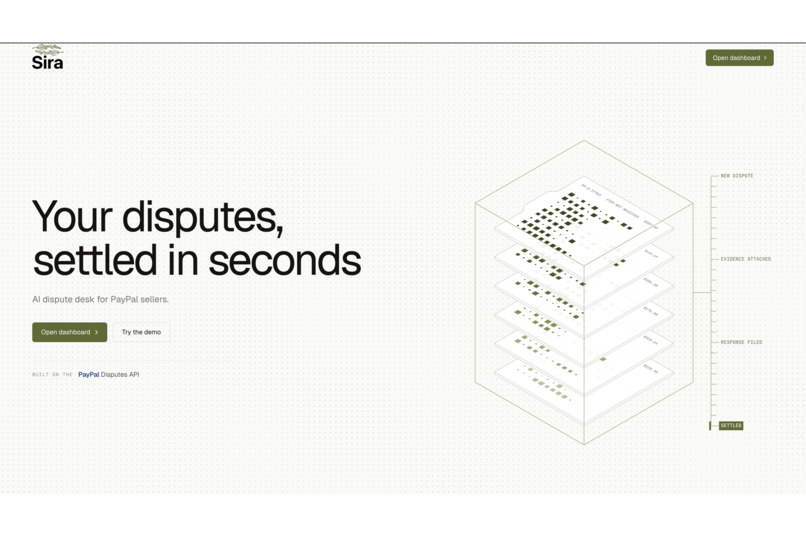
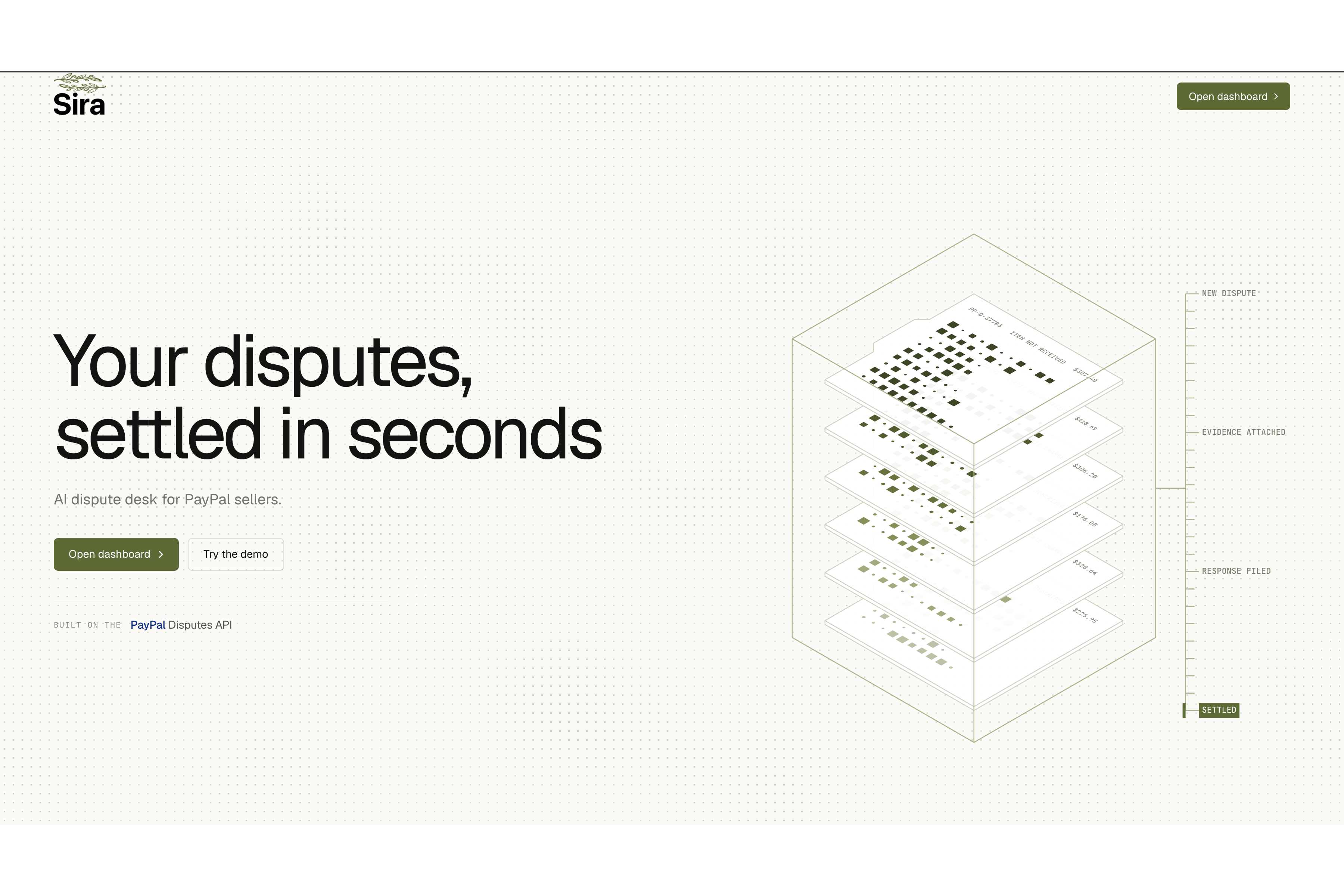
Landing page
-
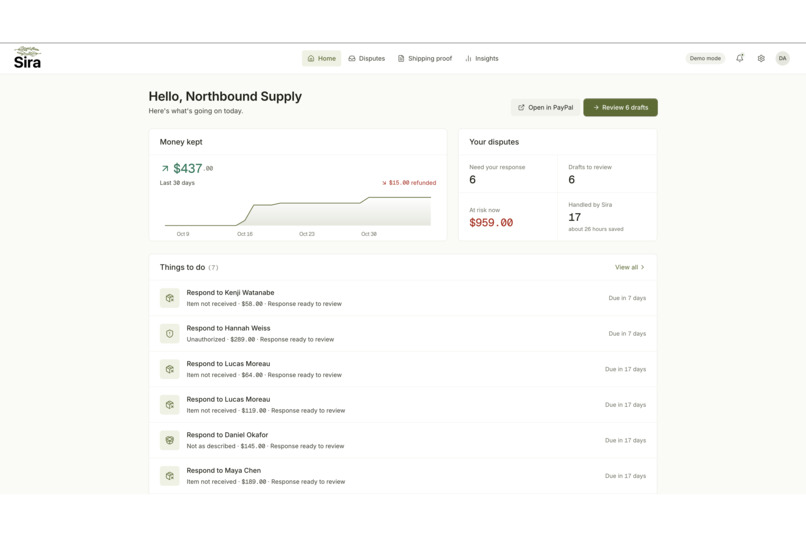
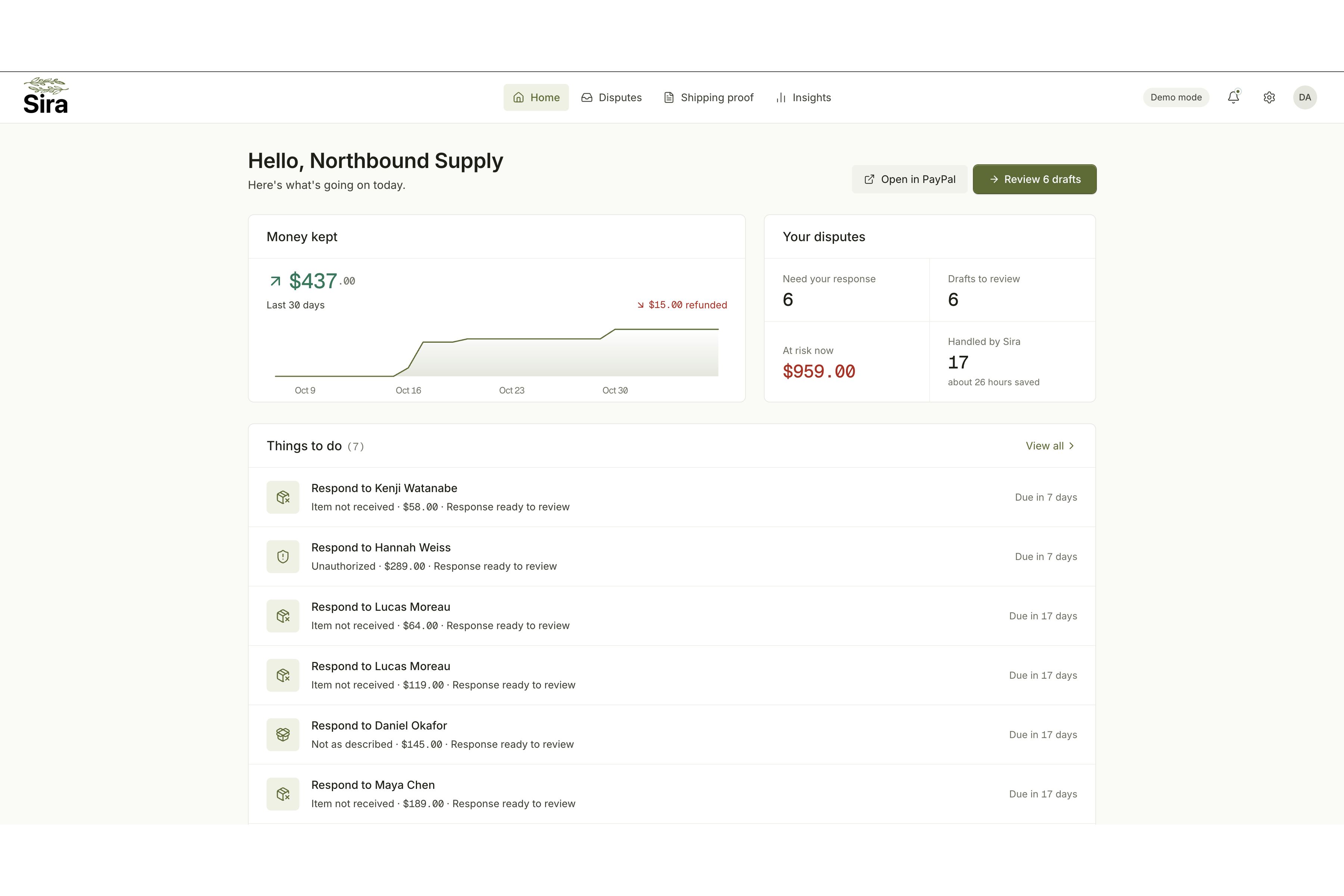
Home
-
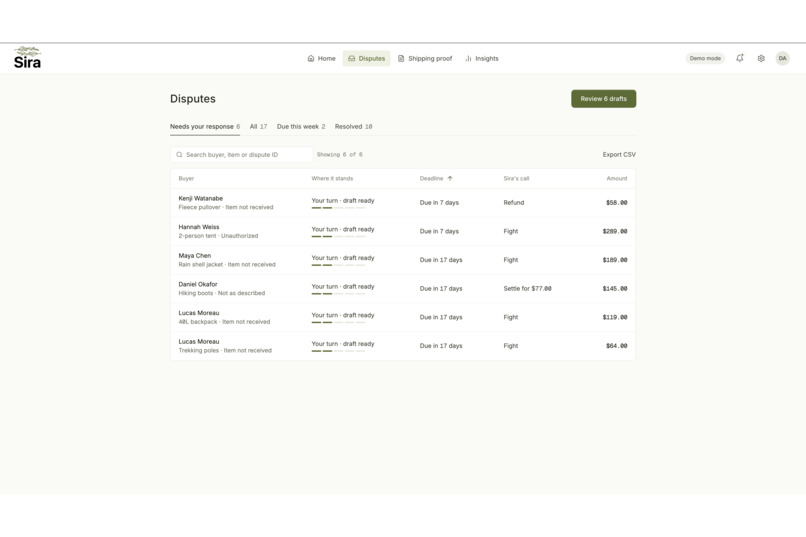
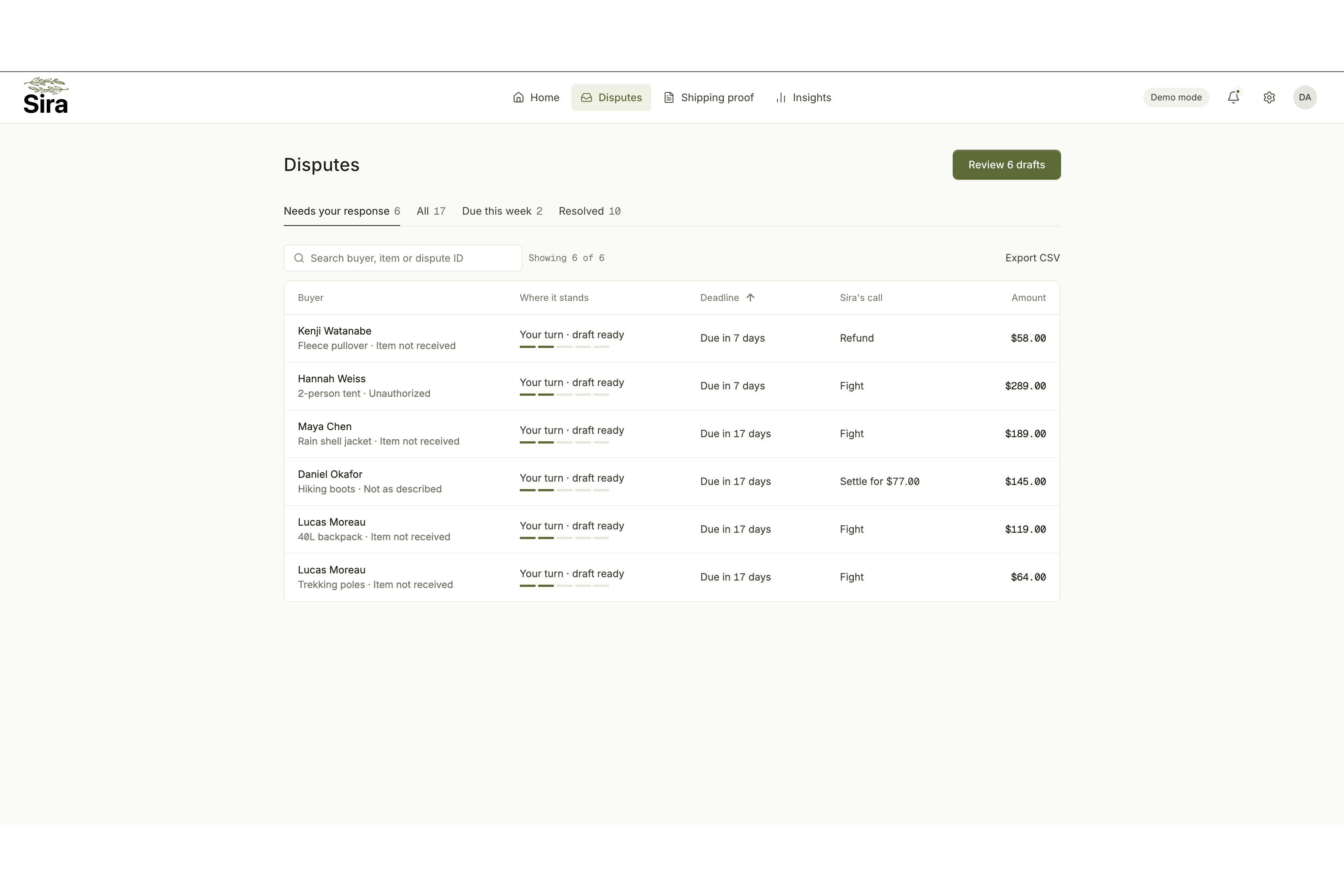
Disputes
-
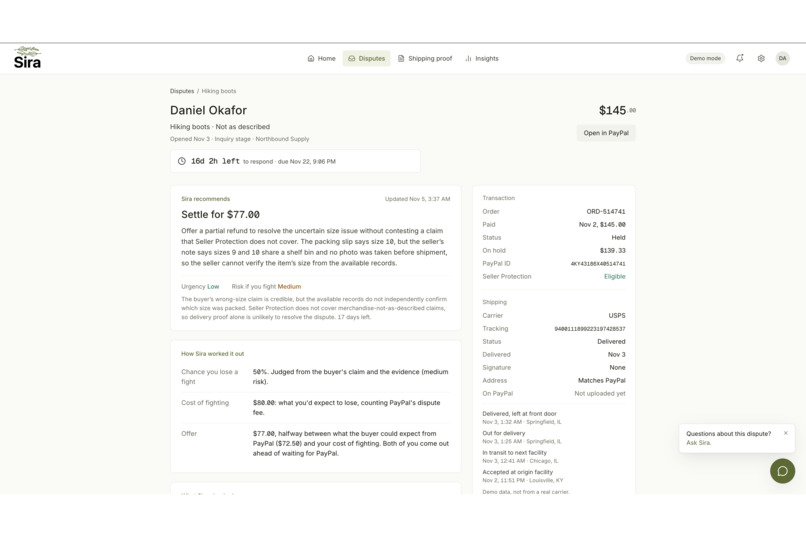
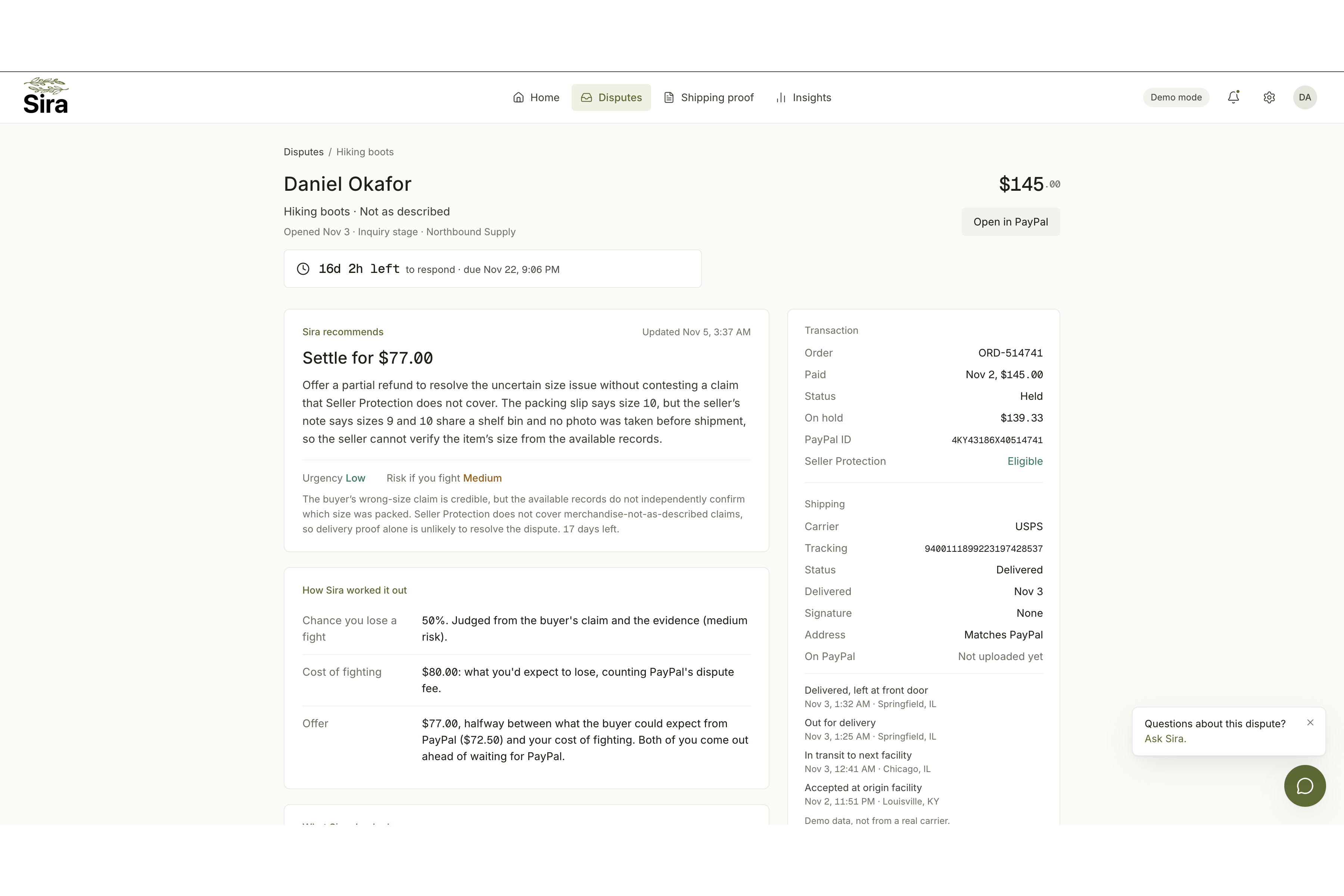
Dispute overview
-
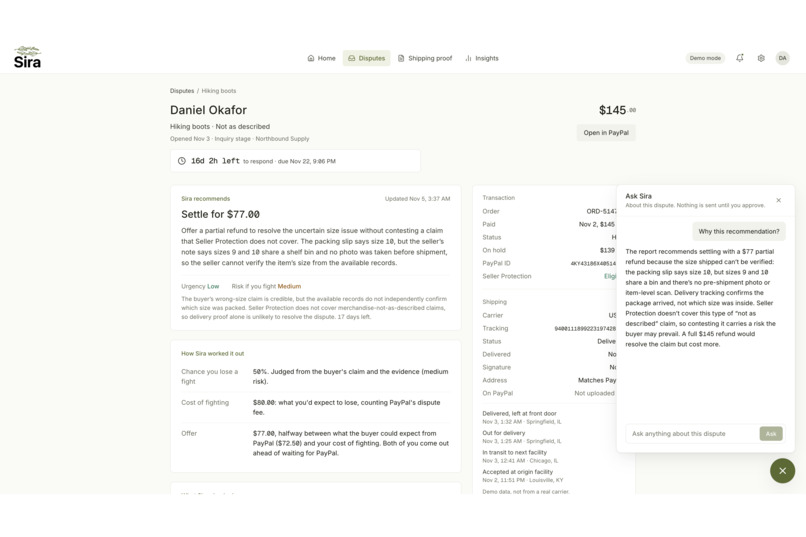
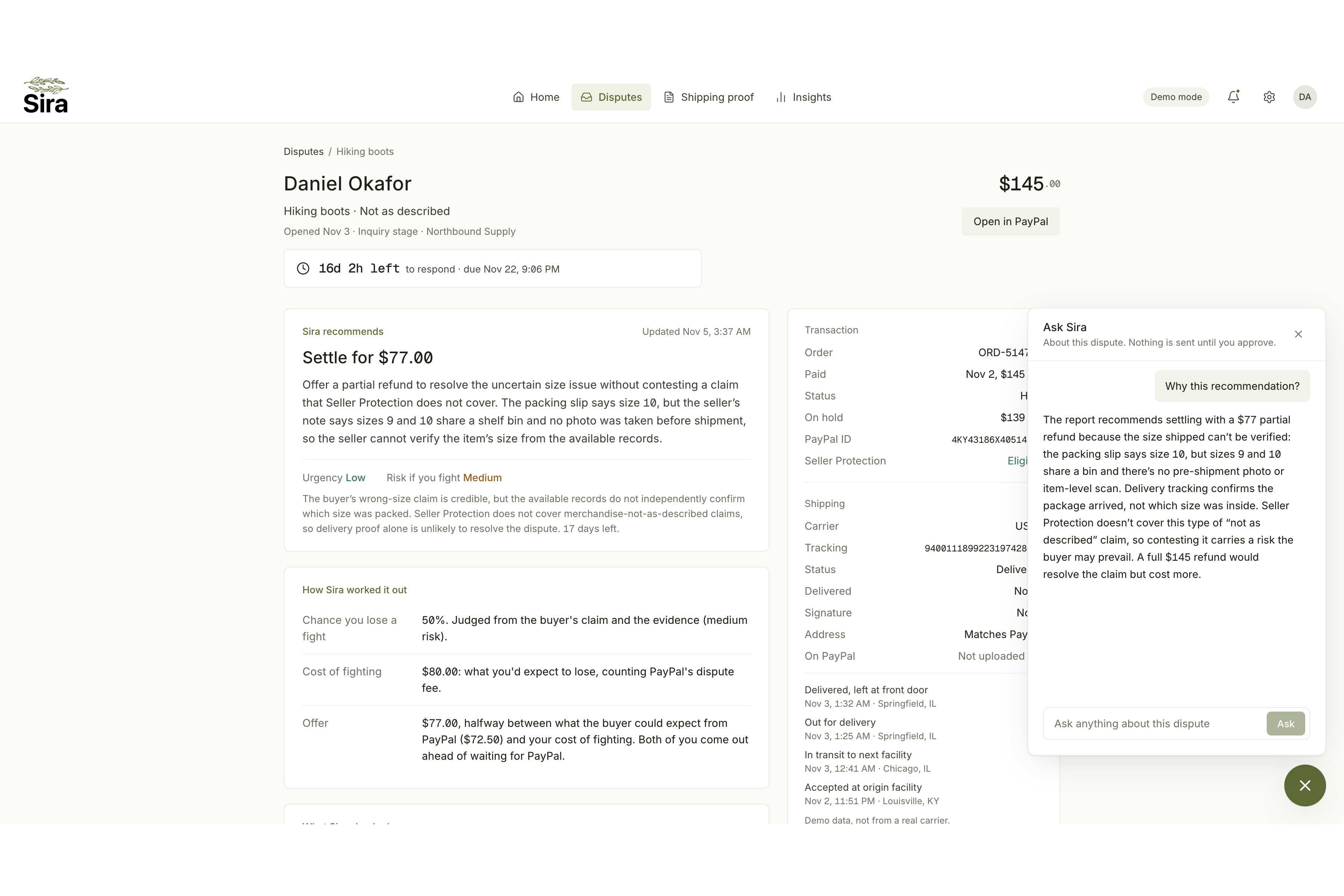
AI chat function
-
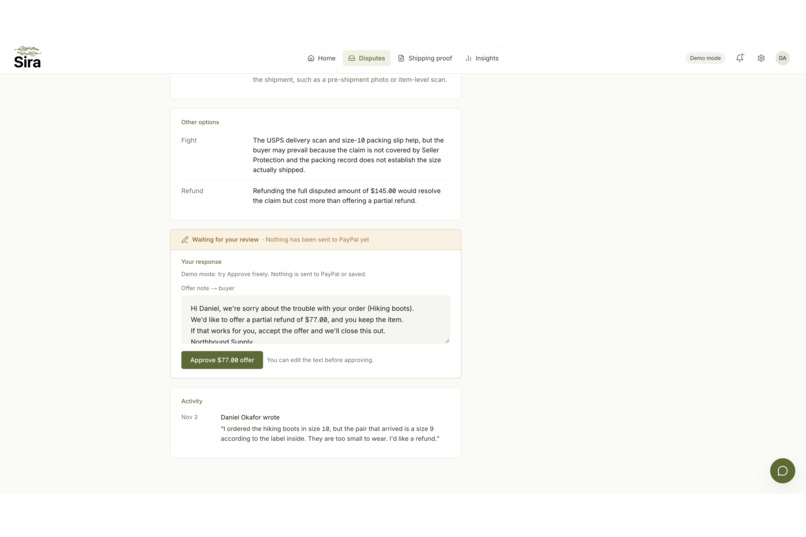
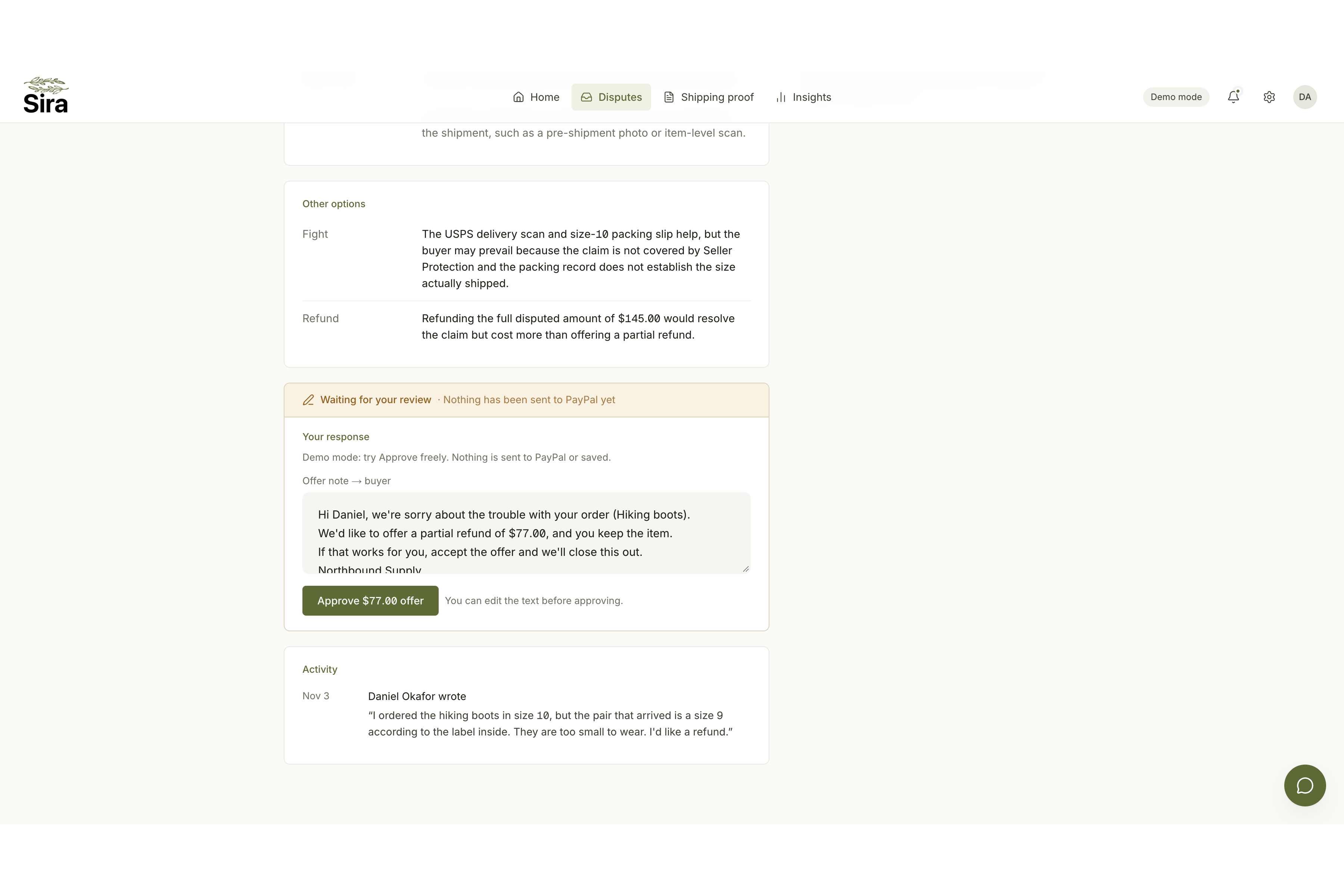
Drafted response
-
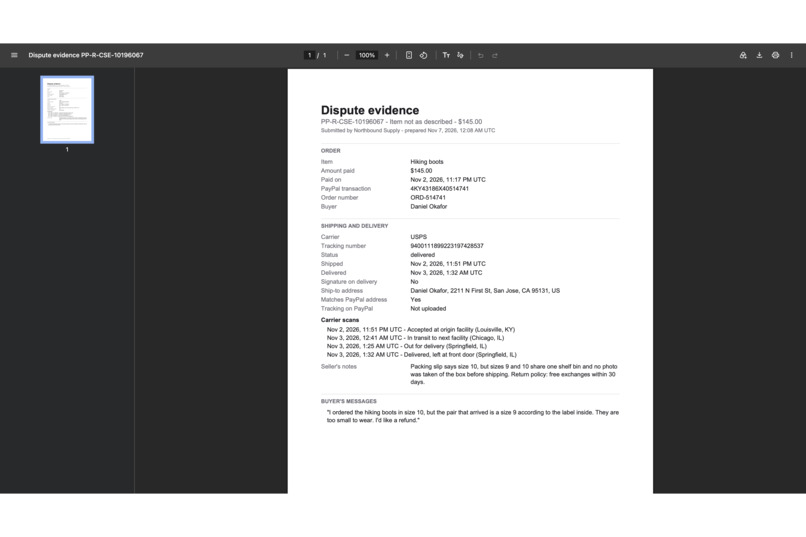
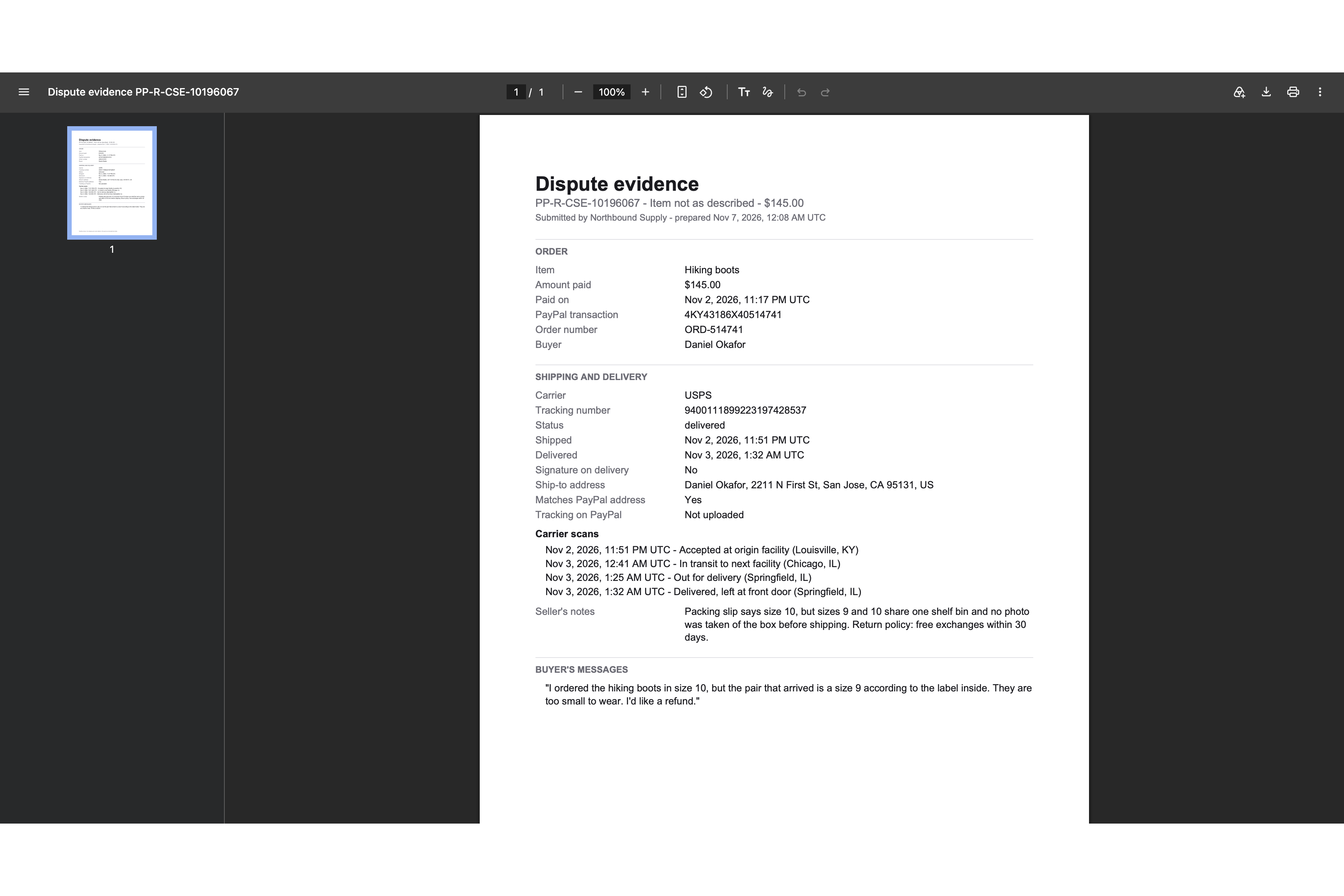
Evidence pack
-
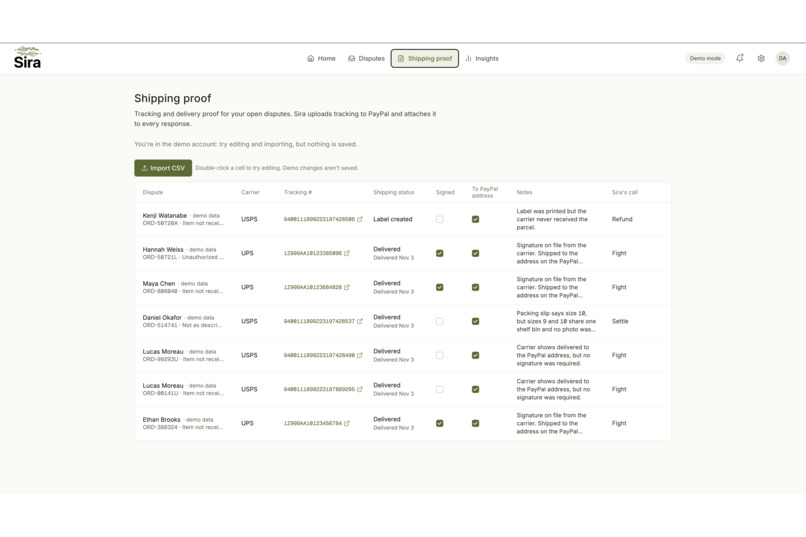
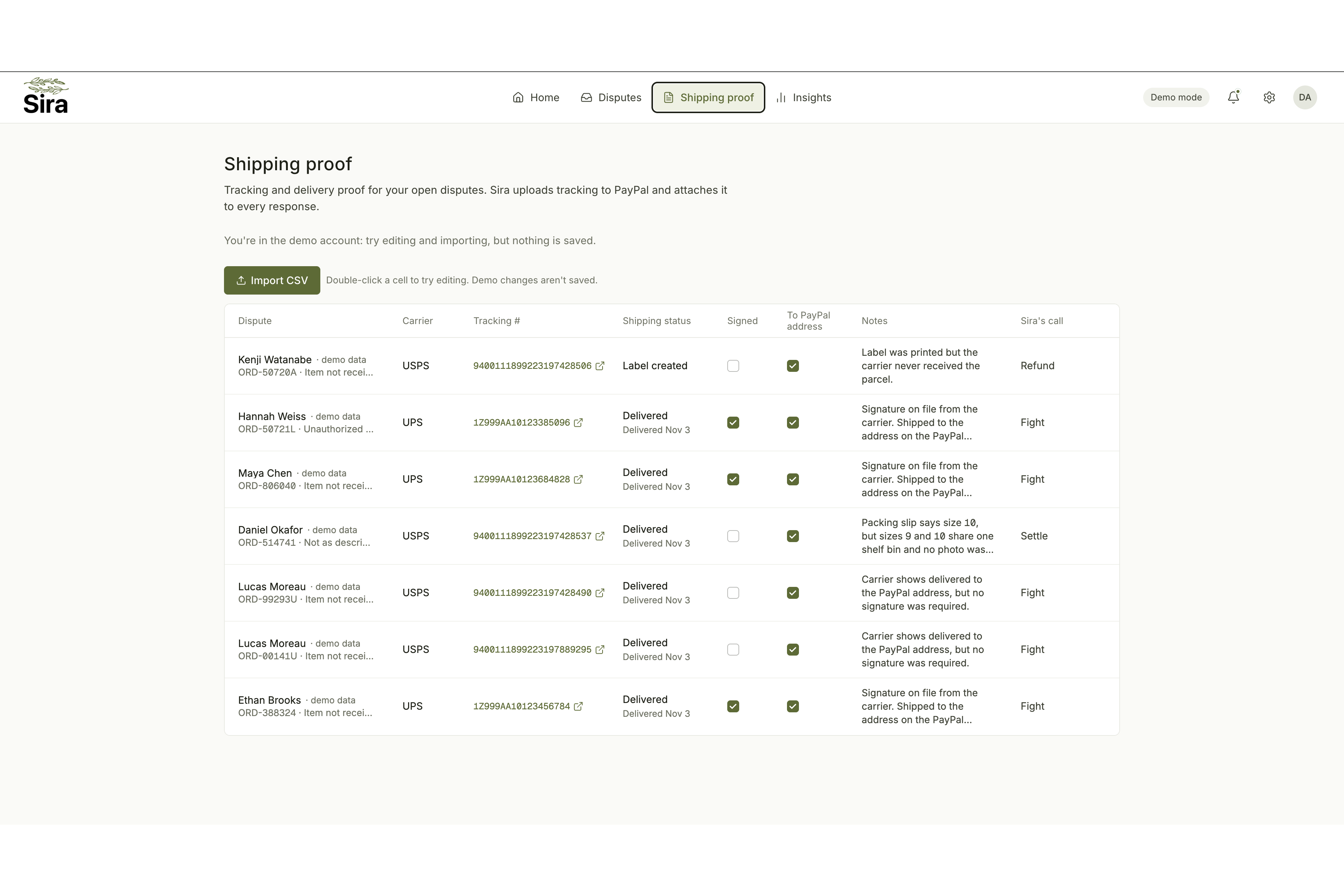
Shipping proof
-
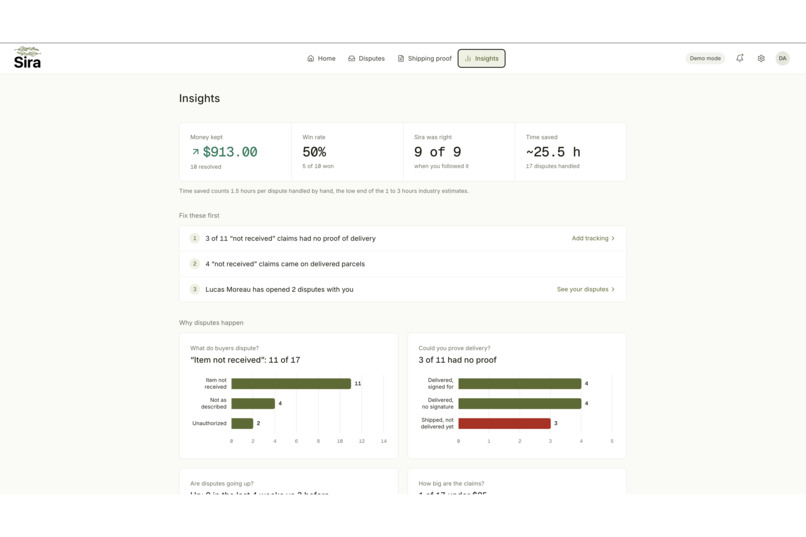
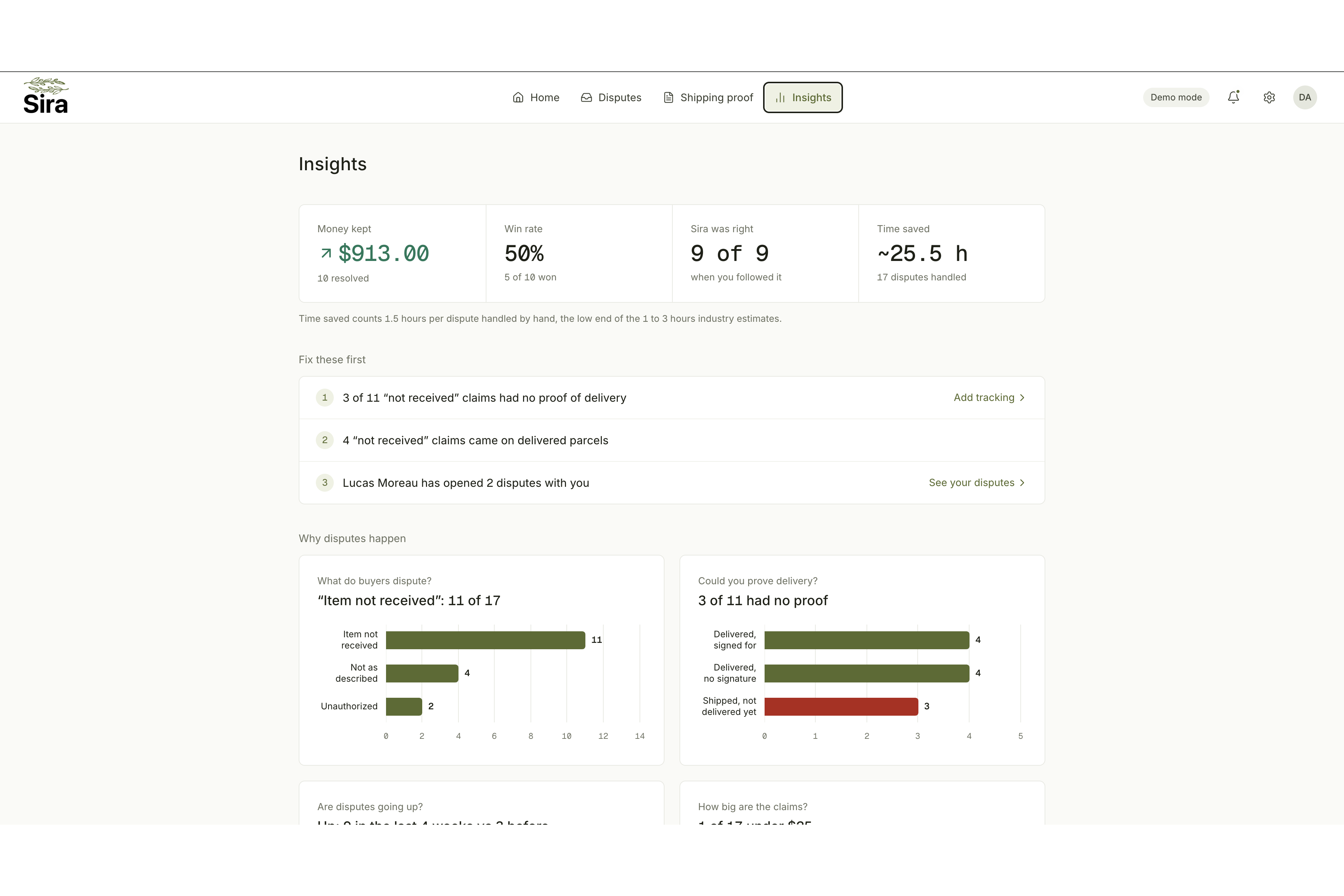
Insights
-
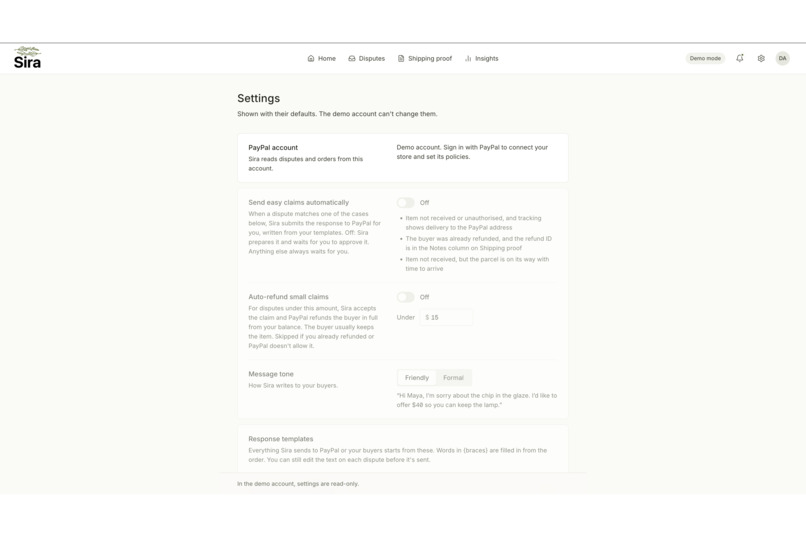
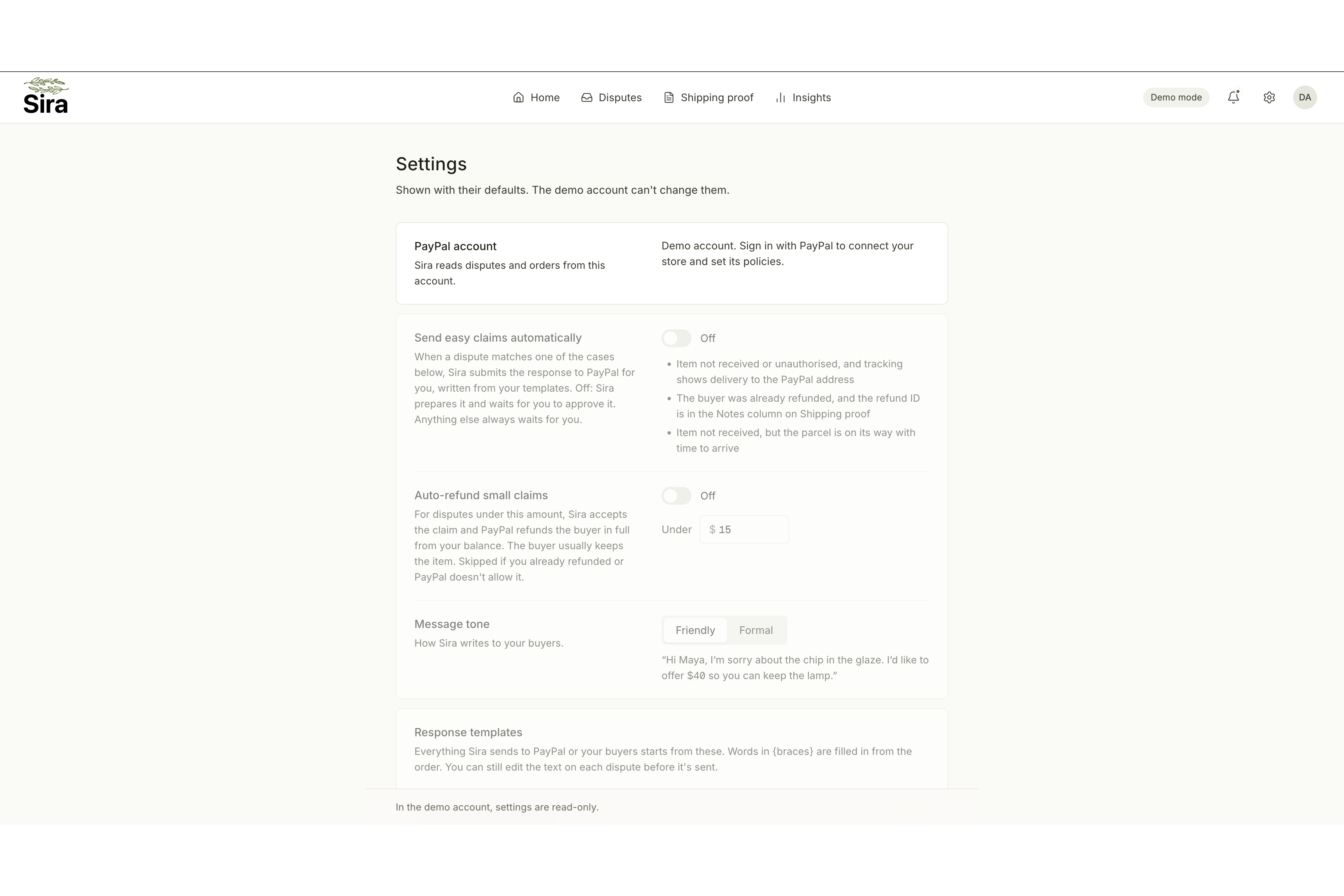
Settings
Inspiration
Disputes stood out to us on PayPal's list of ideas. When we looked into them, we found a lot of people struggling across the internet, and several of our own friends had been through the same thing.
We also couldn't find any software made for small sellers: people who aren't technical, don't have time to learn another tool, and just want the problem fixed. Yet when a dispute opens, it can feel like the odds are against them. Businesses often side with the buyer to protect the customer relationship, so sellers can end up giving away money even when they did nothing wrong.
We built Sira to change that. It gathers solid, concrete evidence and prepares the response, so a seller doesn't have to spend hours collecting documents, and doesn't overpay when the facts are on their side. Being the buyer shouldn't win the case on its own. The evidence should.
What it does
Sira is an AI dispute desk for PayPal sellers. When a dispute arrives, Sira:
- Investigates the case using the dispute, the transaction and the store's shipping records
- Recommends whether to fight, settle or refund, and explains why
- Drafts the response, with a PDF evidence pack ready to attach
- Waits for the seller: nothing reaches PayPal until they click Approve, unless the seller has turned on an automatic rule
Sellers can also ask Sira questions about a case and have it revise the draft. The Insights tab shows the time saved, the money kept and how often Sira's advice held up, plus why disputes keep happening.
For small or simple cases, sellers can turn on automatic rules. For example, they can have Sira refund any dispute under $15, or send easy claims without waiting for approval. These rules are off by default, and they run on fixed checks, not the AI's judgment.
How we built it
Sira is built with Next.js and TypeScript, with Supabase for data and Vercel for hosting. Sira has a verified PayPal webhook endpoint for live dispute events. Because the sandbox doesn't send them, a scheduled sync brings in disputes during testing. The agent uses OpenAI models and the PayPal Agent Toolkit, which we limited to read-only tools so it can look things up but never act. Sellers sign in with Log in with PayPal.
We decided early on that the money maths shouldn't be left to a model. Sira's settlement formula runs in plain code, where \( p \) is the chance the seller loses, \( A \) is the disputed amount and \( F \) is PayPal's dispute fee:
$$C = p(A + F) \qquad B = pA \qquad O = \frac{B + C}{2} = p\left(A + \frac{F}{2}\right)$$
\( C \) is what fighting is expected to cost the seller, and \( B \) is what the buyer can expect by waiting for PayPal. Any offer between them leaves both sides better off, so Sira offers the midpoint.
Challenges we ran into
- Trusting an AI with money. A model that sounds confident can still be wrong, so every answer is checked against hard rules, like never accepting a claim that was already refunded. If an answer breaks a rule, the model gets one chance to fix it.
- Measuring "good" advice. We wrote a set of test disputes with known right answers, so we could tell whether each prompt change actually helped.
- Keeping a public demo safe. Demo mode runs every check and builds every request, but sends nothing to PayPal.
- Partner access. Connecting any seller's account needs PayPal partner approval, so we scoped the project around the sandbox and Log in with PayPal.
Accomplishments that we're proud of
We took on a big real-world problem for the sellers who are most often left out. In our research, we couldn't find a tool focused on helping small and medium businesses save time and money on disputes.
We're proud that Sira is easy to use. There's nothing technical for the seller to deal with: we handle the complexity behind the scenes, including the settlement formula we designed, so the seller just sees a clear recommendation. We kept the interface, colors and overall design simple on purpose.
We're also proud of what we've seen so far. Across our test disputes and demo data, Sira shows how much money a small seller could keep instead of losing it. We can't wait to see it work with real sellers.
What we learned
Our research showed us how much time disputes really take from sellers, and how much that time is worth. Every hour a seller gets back is an hour they can put into growing their business. Across many small businesses, that adds up to more jobs, more income and stronger local economies. A problem that looks small on one seller's screen turned out to matter far more than we first thought.
We also learned that AI can do a lot, but only with the right direction. It wasn't enough to connect a model and ask for an answer. We had to work out exactly what a good response looks like, keep the evidence accurate, and communicate clearly what we needed: a seller who doesn't lose money they had every right to keep.
That's why guidelines and guardrails became the heart of the project. Clear rules, checks on every answer and test cases with known results are what turned a capable model into something a seller can actually trust.
What's next for Sira
- PayPal partner onboarding, so any seller can connect their store in one click
- A pilot with real sellers, to measure real outcomes in place of sample data
- More sources of shipping and order data from the platforms sellers already use
Built With
- ag-charts
- ag-grid
- jose
- log-in-with-paypal
- next.js
- node.js
- openai
- paypal
- paypal-agent-toolkit
- paypal-disputes-api
- paypal-webhooks
- pdf-lib
- postgresql
- react
- supabase
- tailwindcss
- typescript
- vercel
- zod
