Inspiration
Some people do everything right. They save every month and pay every bill on time, and when they ask a bank for a small loan the answer is still no, because they have no credit history. The bank isn't judging how they behave with money. It just has nothing to look at.
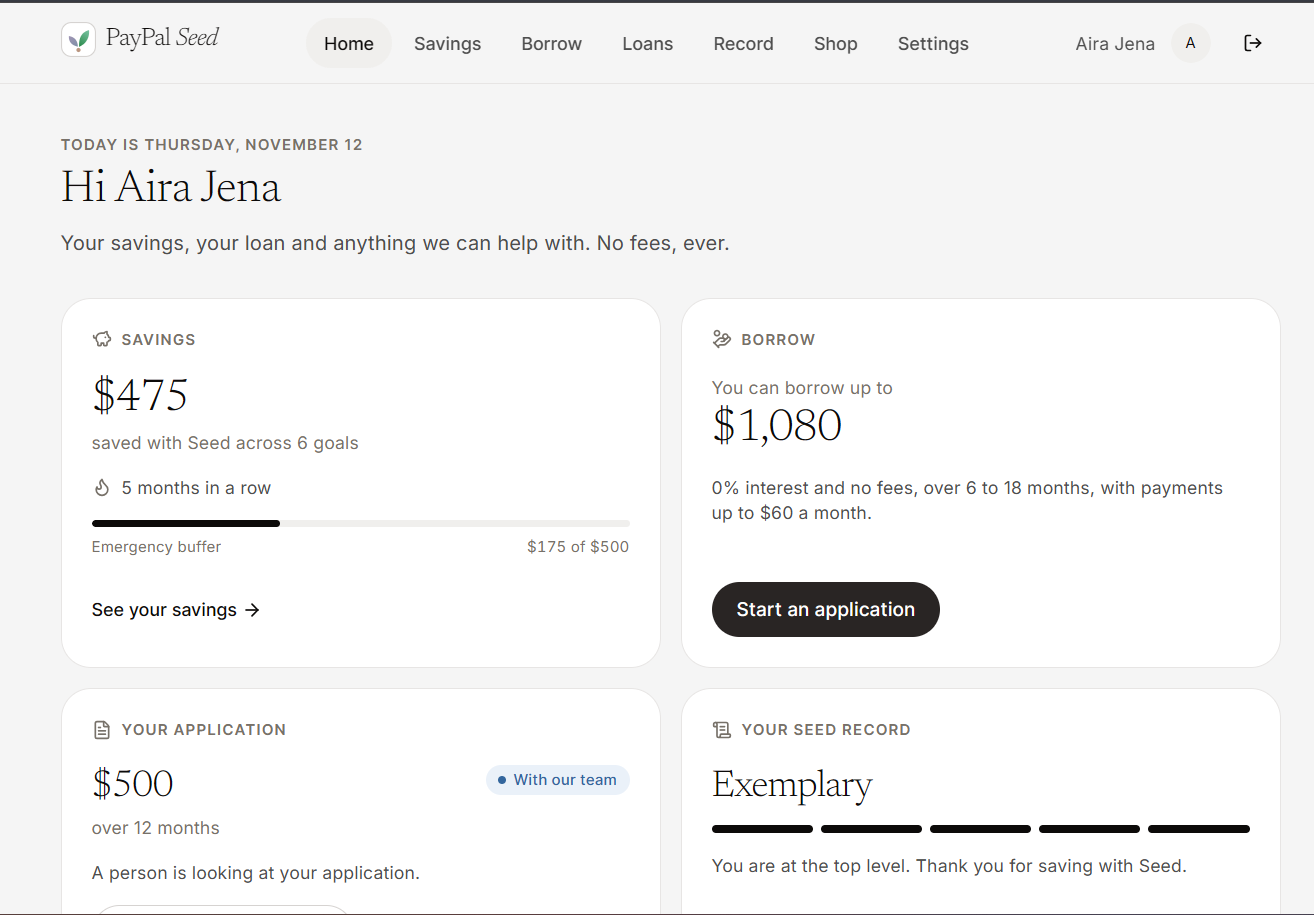
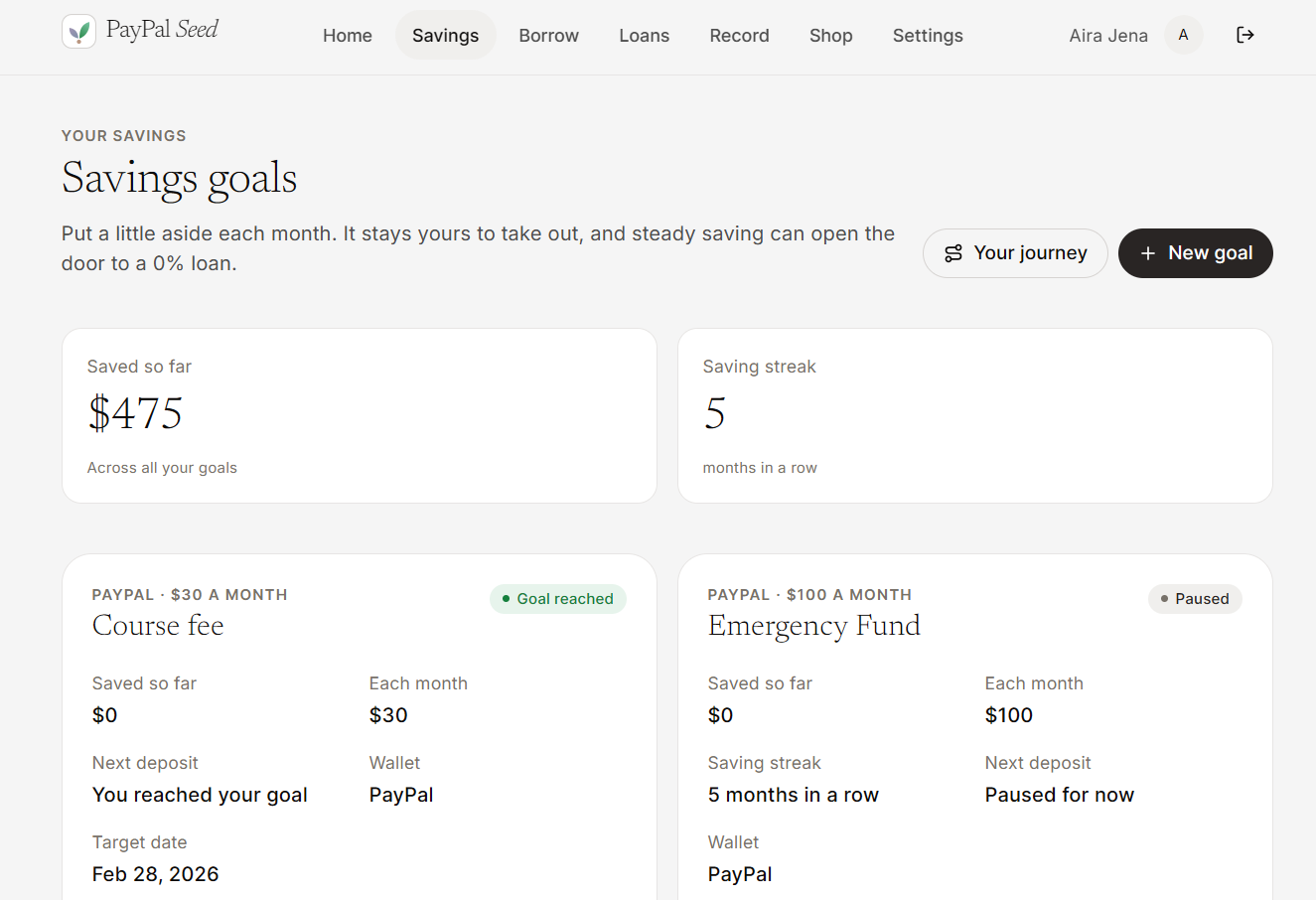
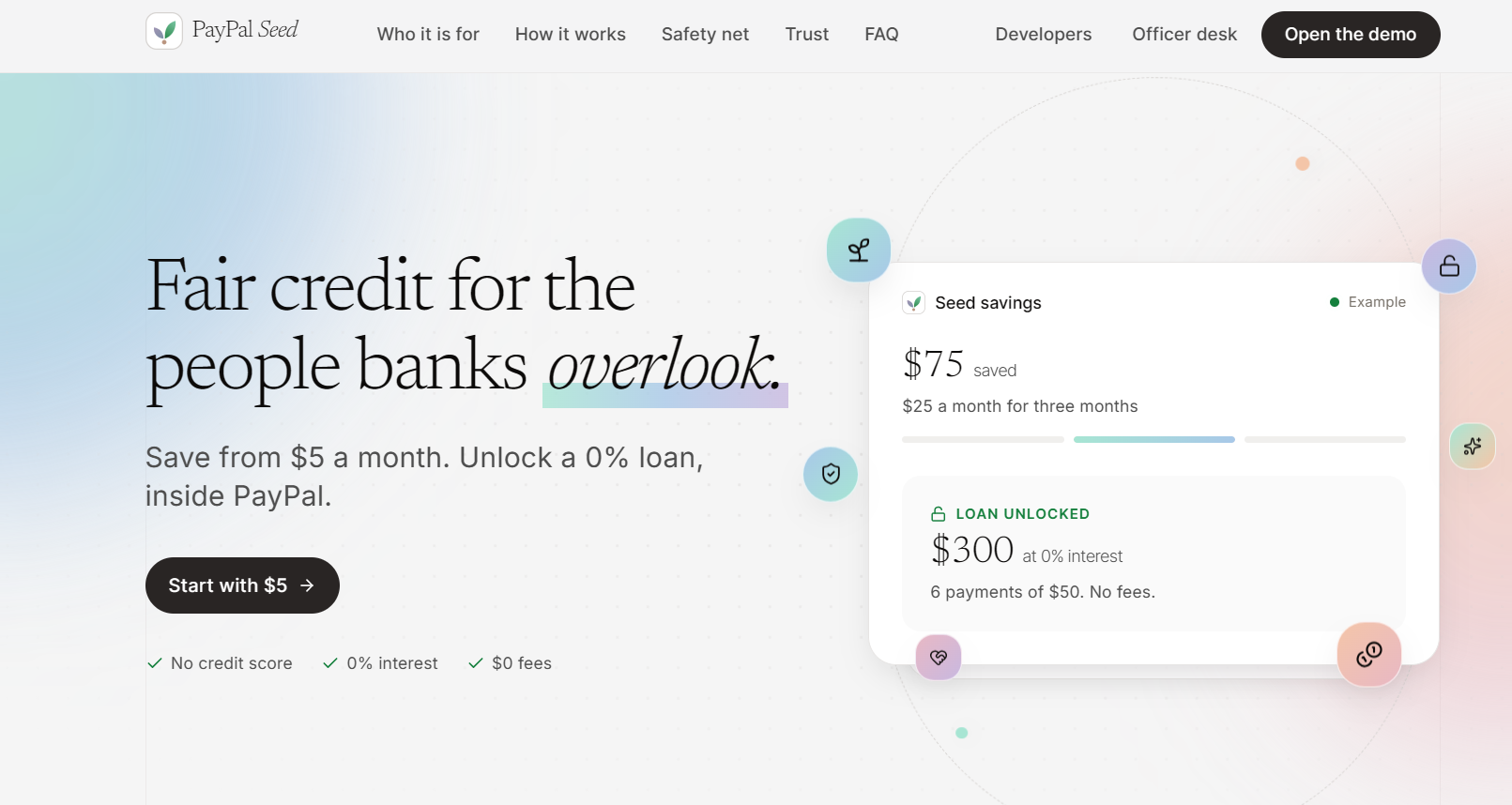
Many of those people already live inside PayPal. We asked a simple question: what if the habit itself were the proof? If you save a little every month, that is a record. Seed turns it into a way in: save, unlock a 0% loan, build a record of trust. No credit score and no fees.
We also wanted help to come before a missed payment, not after a penalty.
What it does
- Save. A member signs in with PayPal and creates a goal from $5 a month. PayPal Subscriptions does the monthly pull.
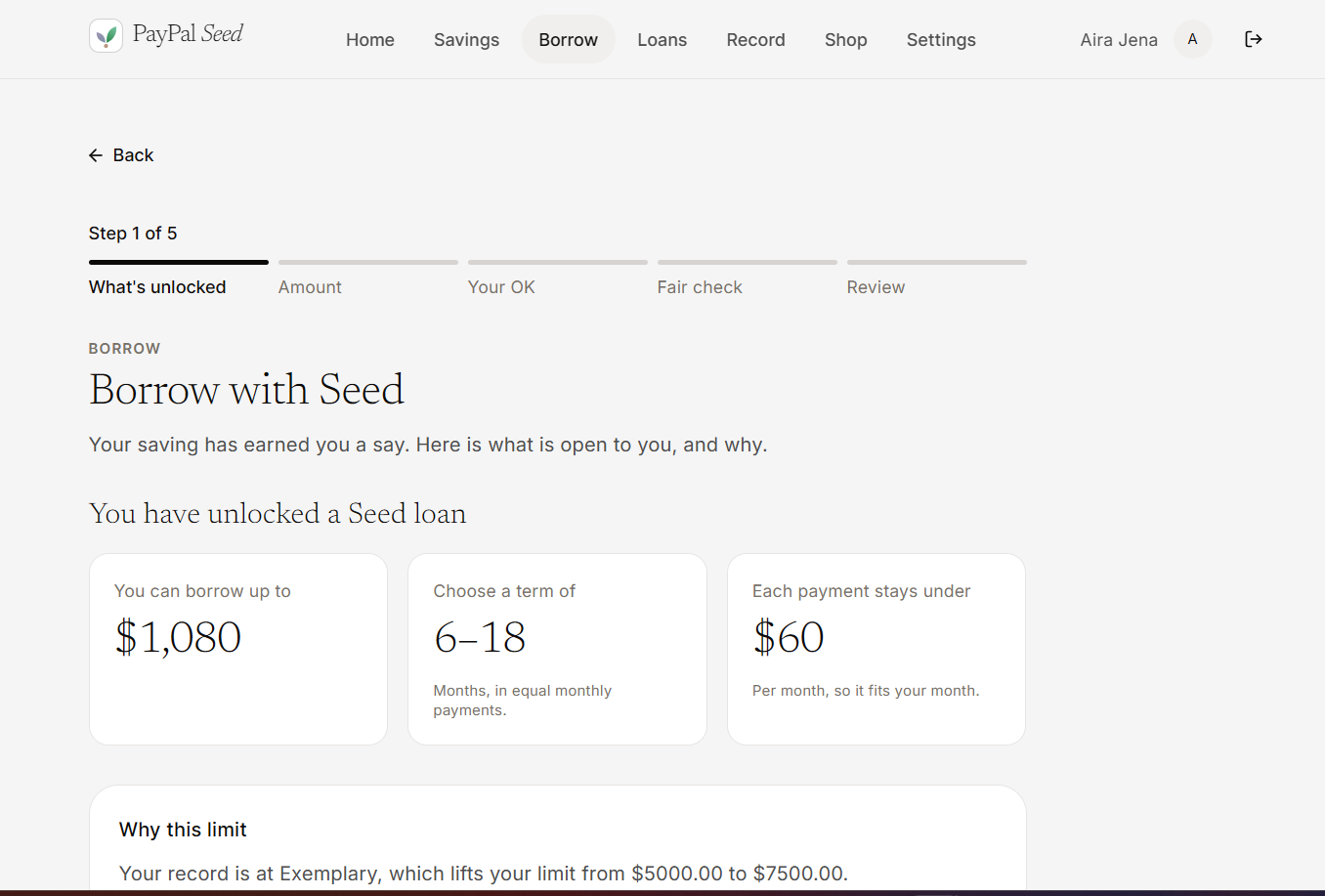
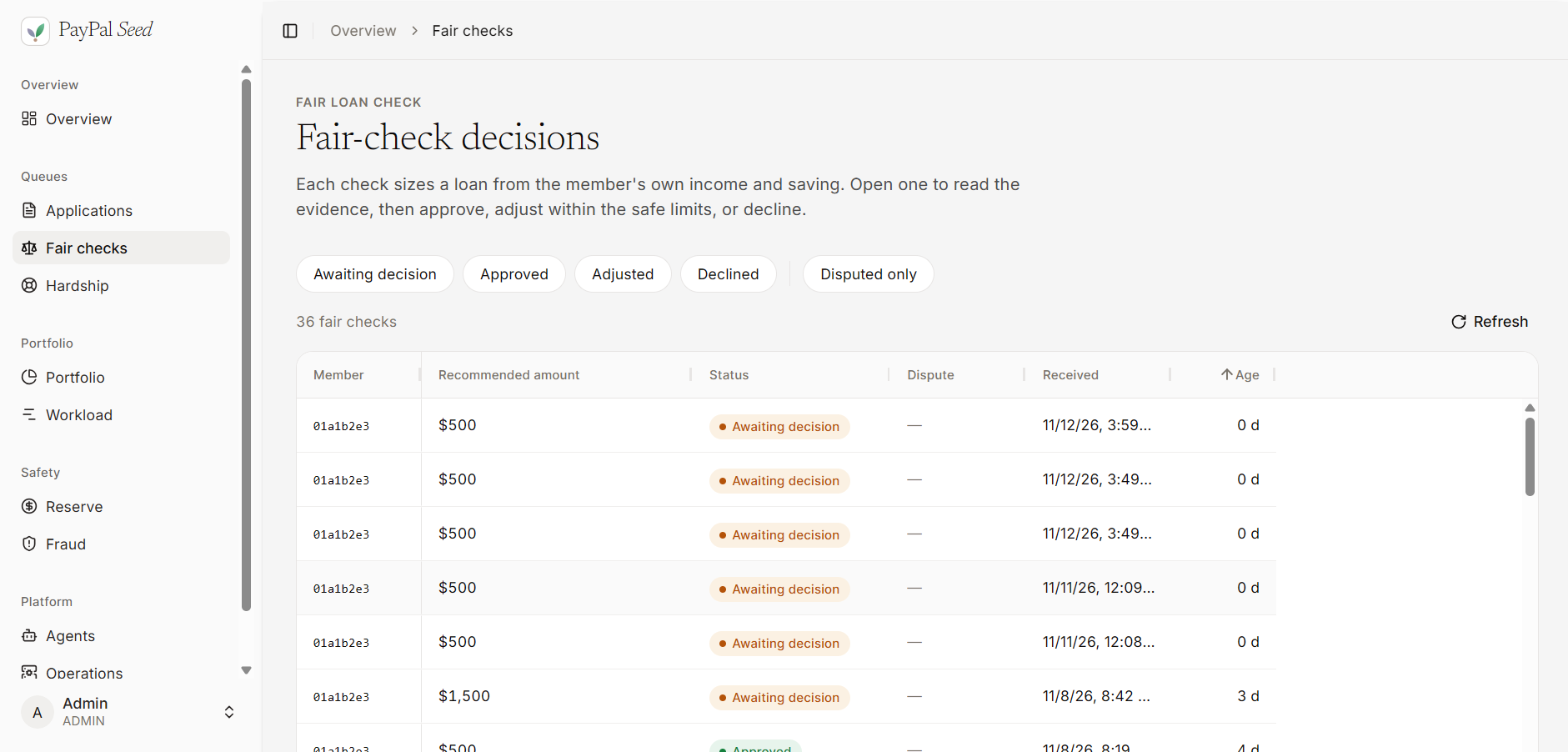
- Borrow. A steady saving streak unlocks a small loan at 0%. A fair check sizes it from the member's own income and saving.
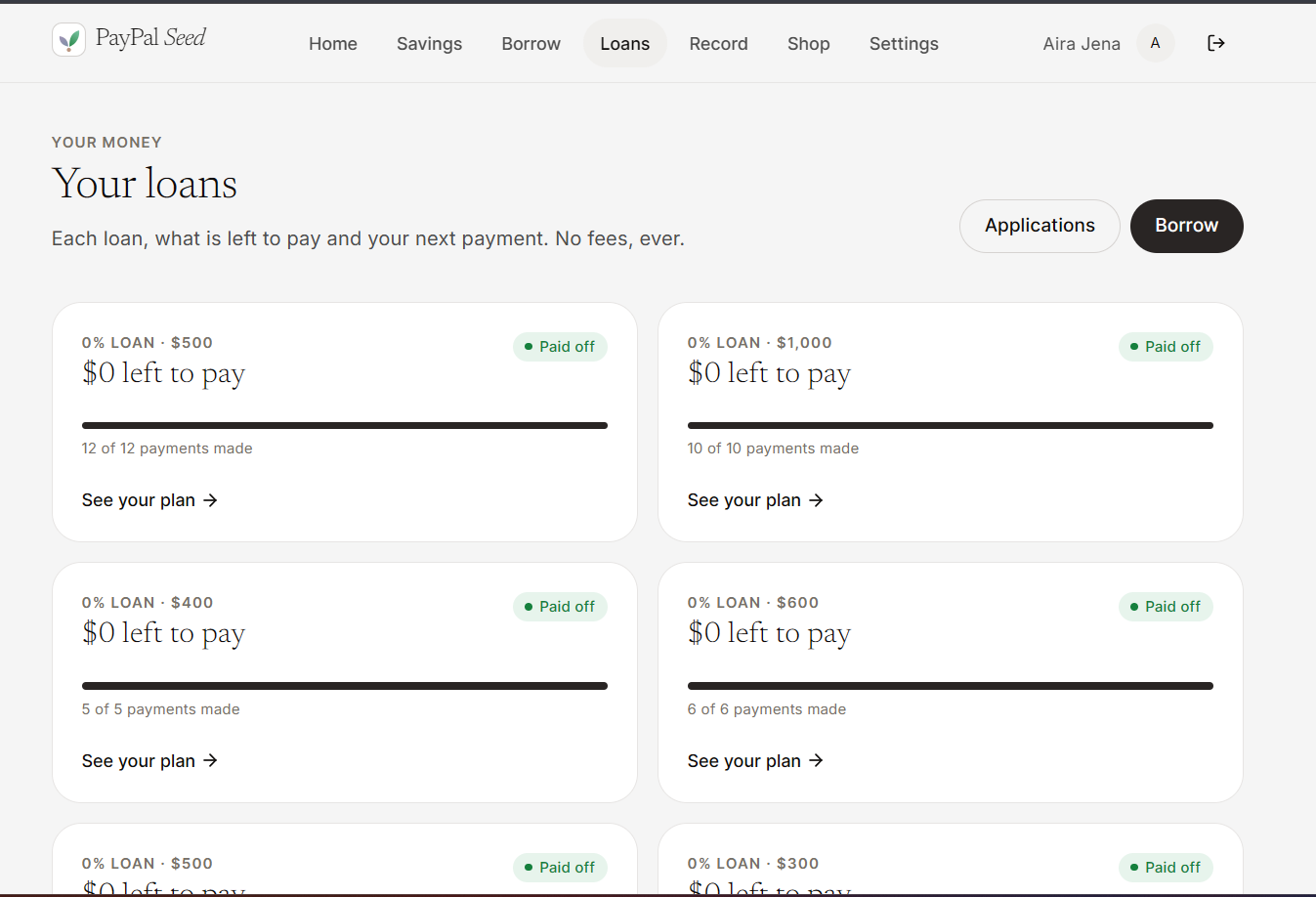
- Repay. Pay now with PayPal, or autopay. The plan is drawn as a timeline.
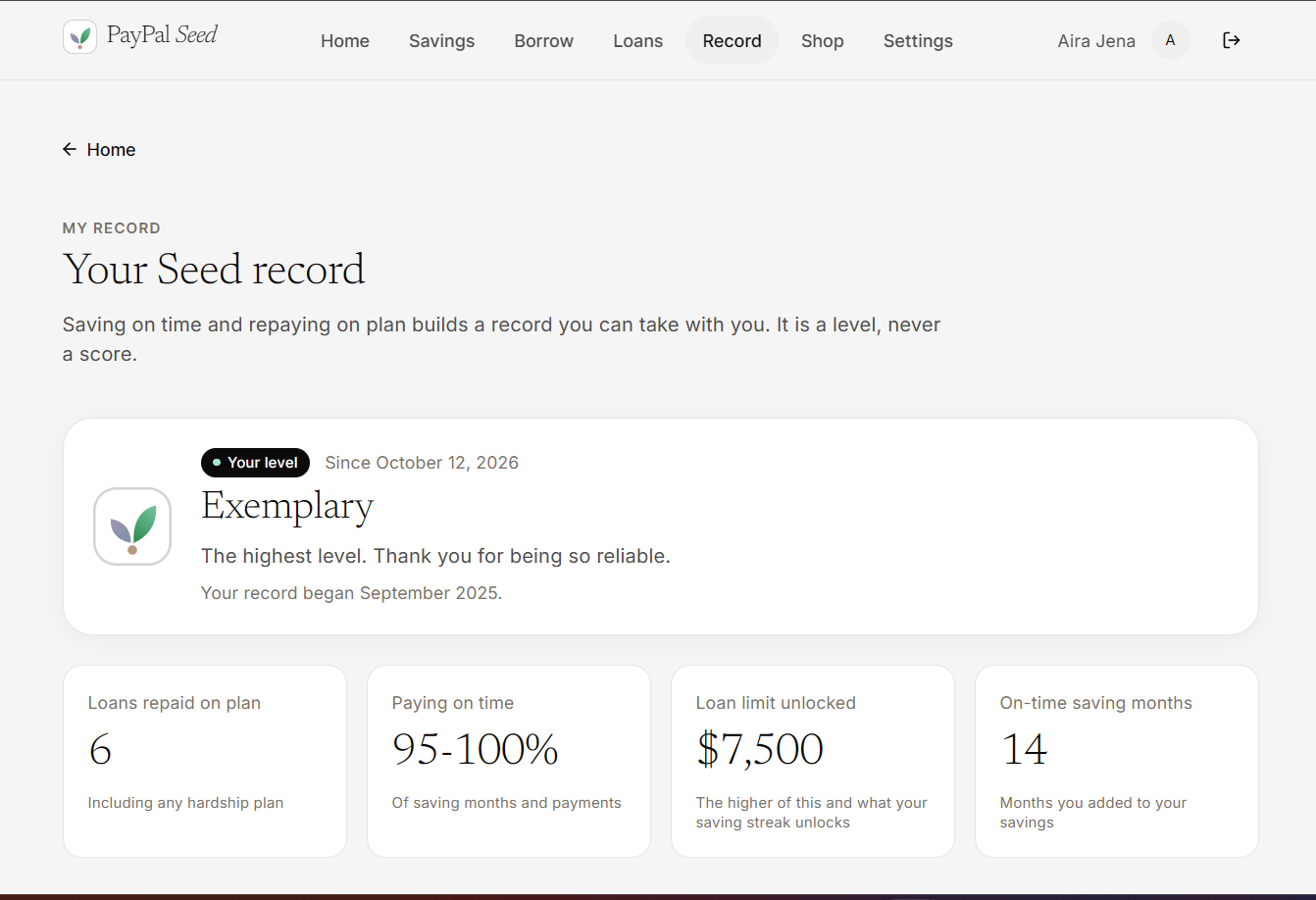
- Build a record. Every on-time month adds to a signed record with five levels. Another lender can verify it with one call, through an SDK generated by APIMatic.
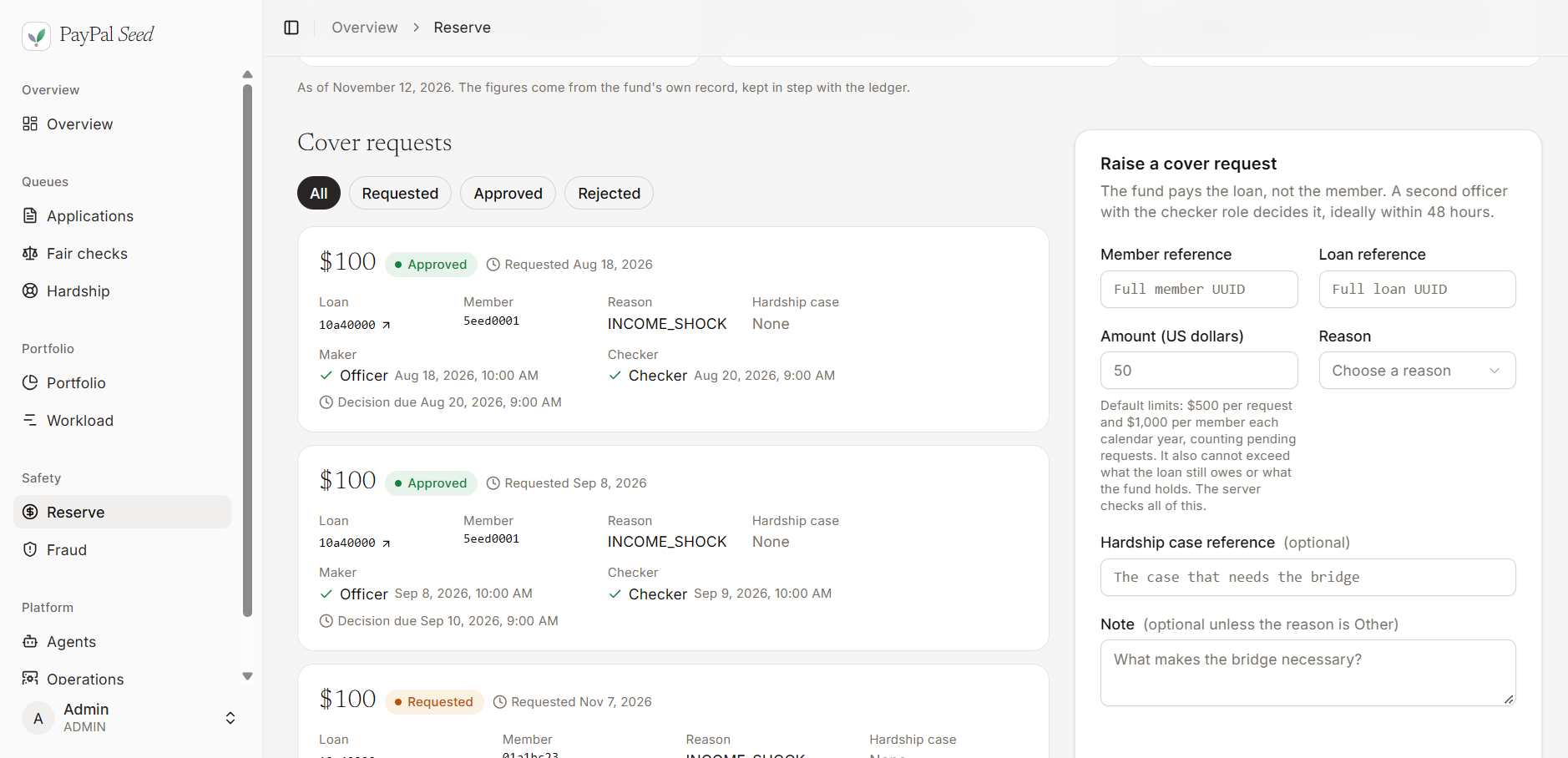
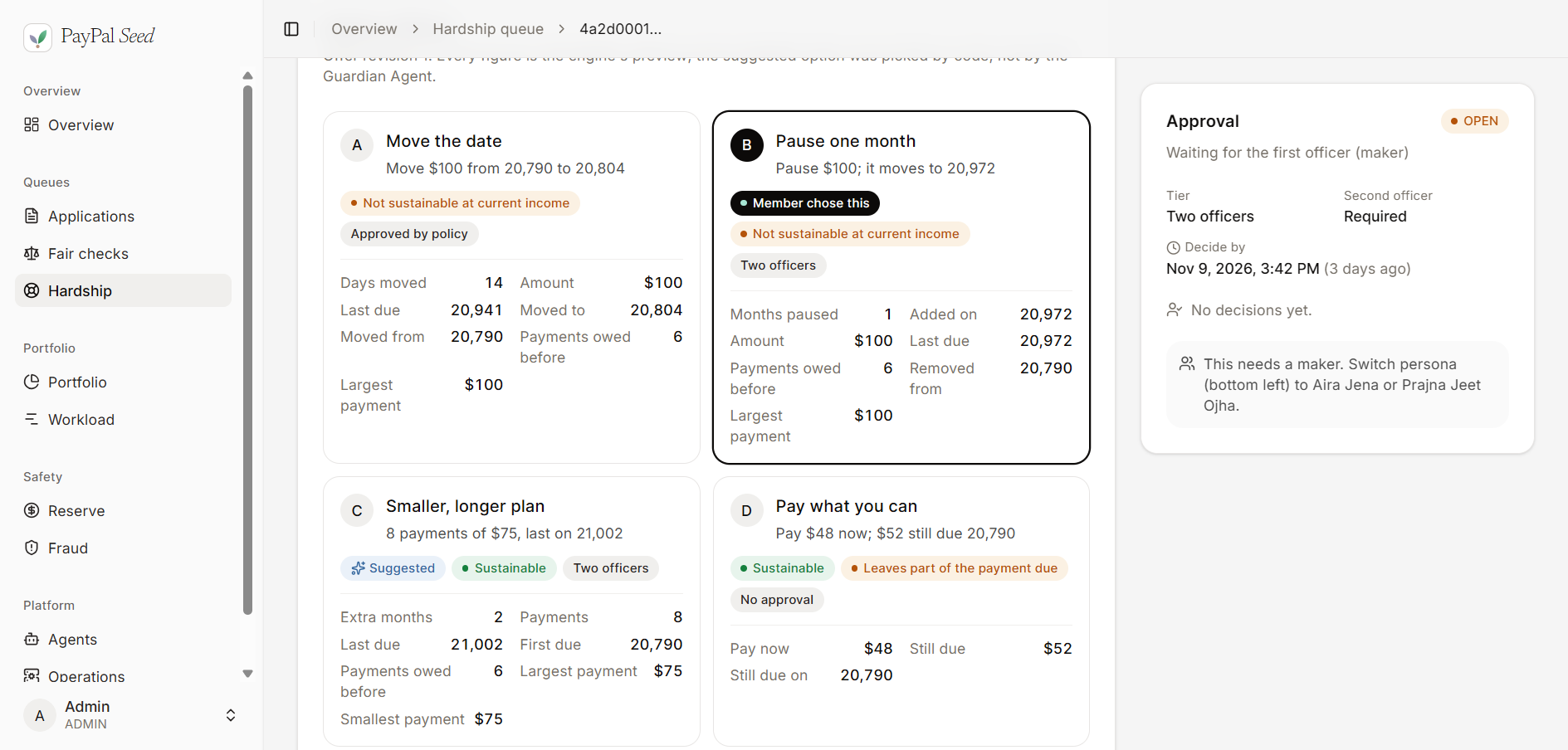
- Get help early. A Guardian Agent spots a likely missed payment and proposes options: a new date, a longer plan, or a cover from a community safety fund.
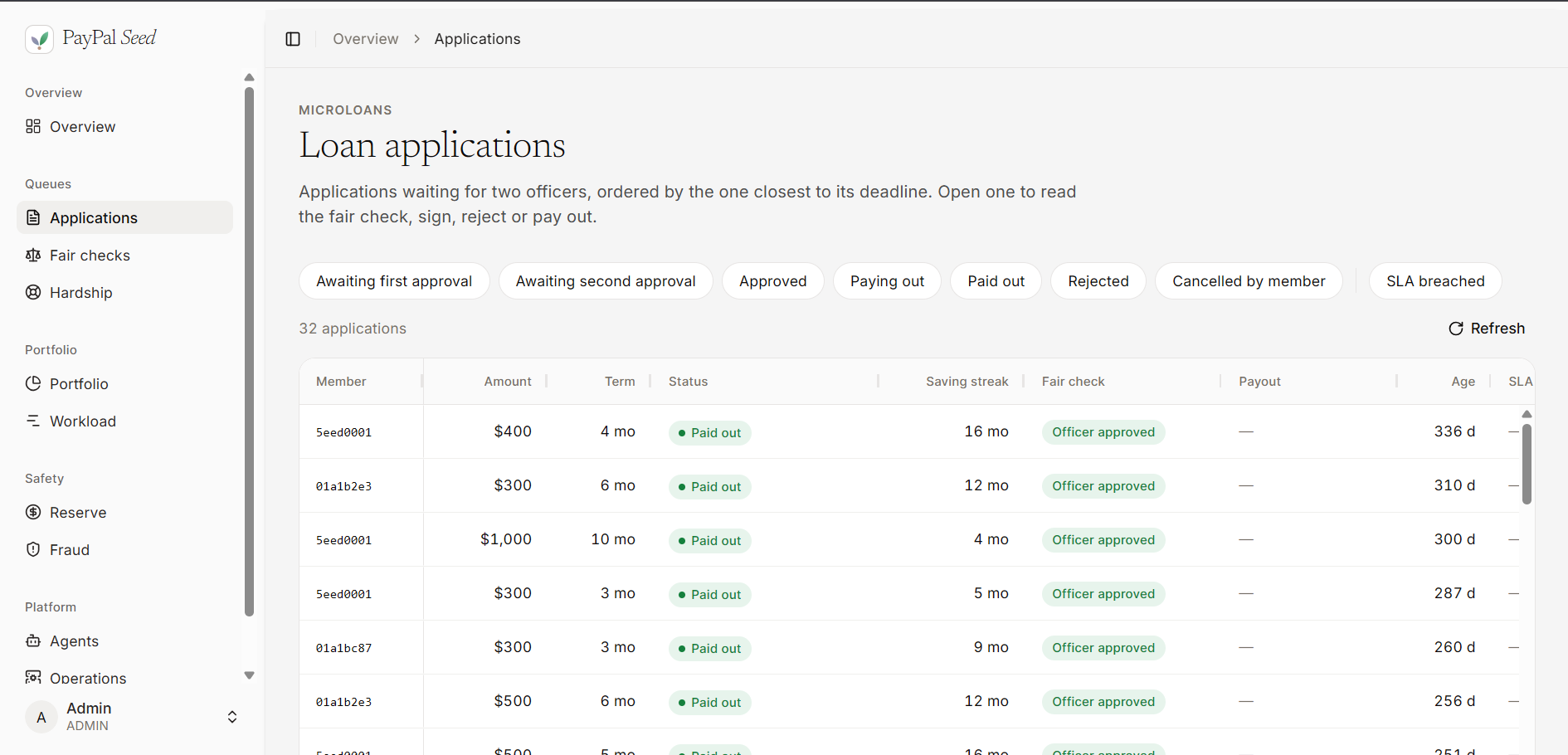
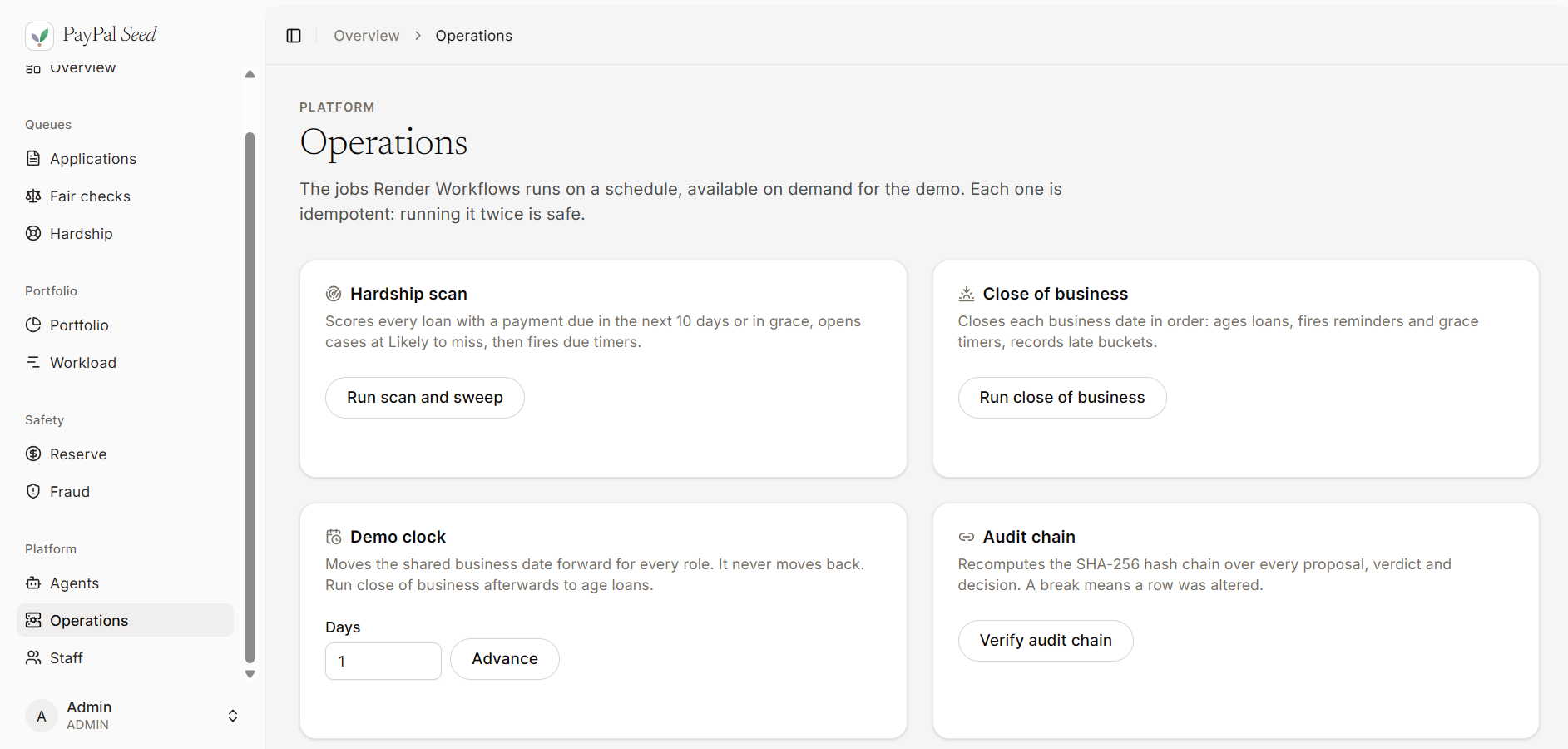
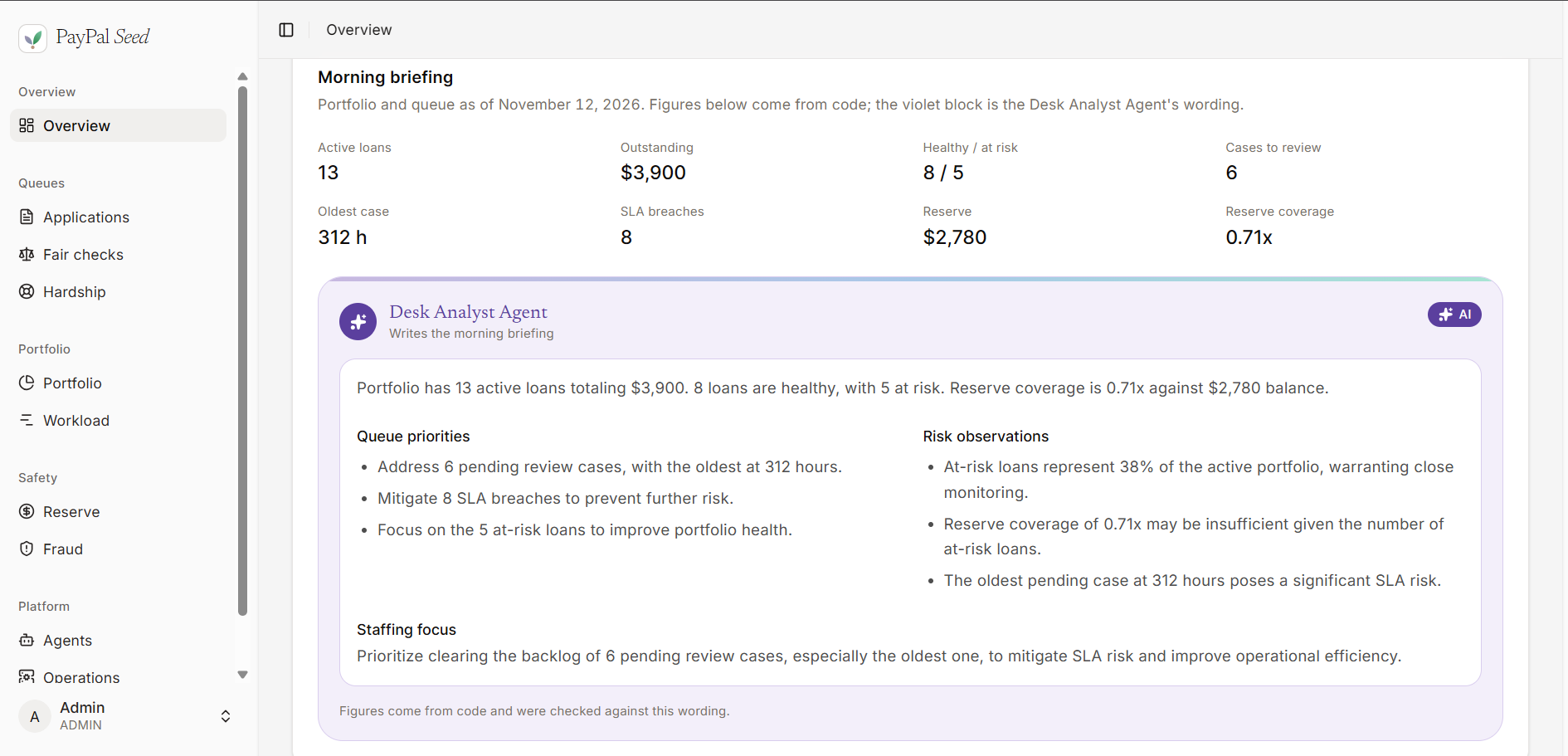
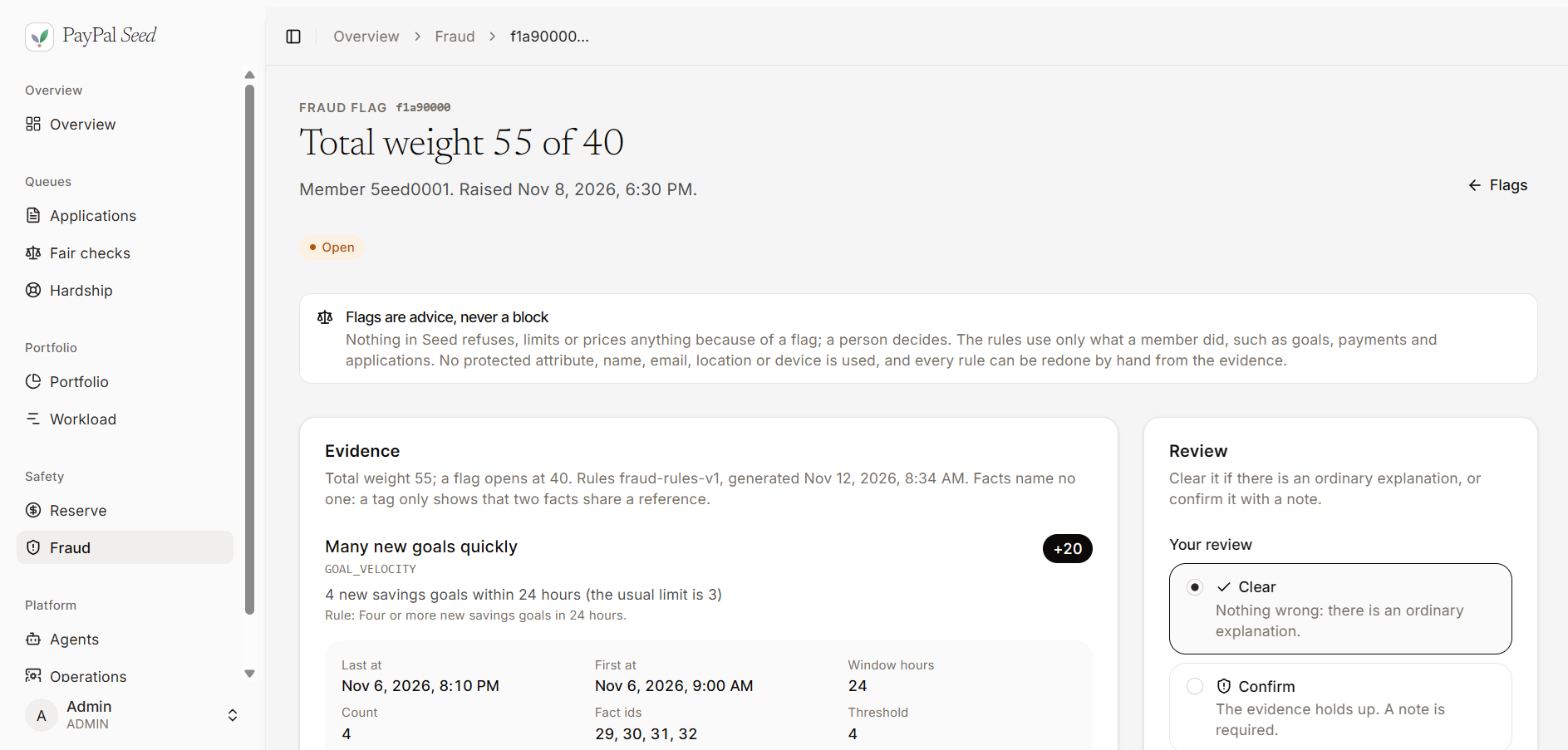
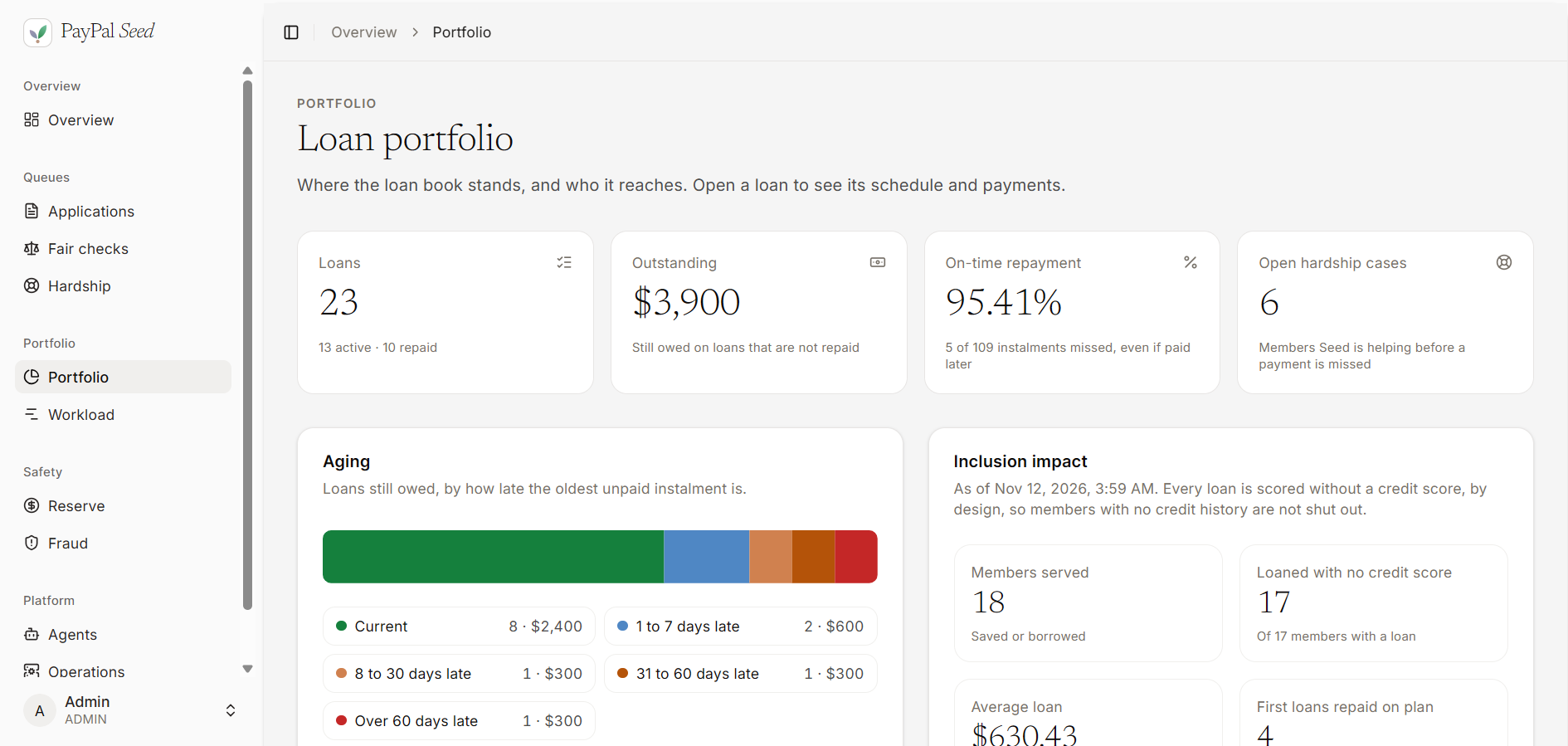
- The desk. Loan officers review fair checks, hardship cases, the loan book, fraud flags and the reserve. Two different people approve every change to a loan.
How we built it
One rule runs through the whole project: AI proposes, code checks, people decide.
- Backend: Java 21, Spring Boot 3 and Spring Modulith, as 15 bounded modules with a PostgreSQL schema each. Money is whole cents. The ledger is double-entry, and money records are append-only, enforced by database triggers.
- Frontend: Next.js 16 and React 19, with a member app and an officer desk. AG Grid runs the desk queues and Bryntum draws the repayment timelines, with the old plan kept as ghost events.
- PayPal: Log in with PayPal, Subscriptions, Orders with the JS SDK, Payouts, Transaction Search and verified Webhooks, all in the sandbox.
- AI: five agents (Guardian, Savings Coach, Underwriting, Trust and Desk Analyst) on Gemini 2.5 Flash Lite through OpenRouter, with Llama and Mistral as fallbacks. Every agent output is labelled with a star and its name.
- Hosting: Render, from one Blueprint.
A small piece of maths shows the flavour of it. Take a loan of principal P, paid in n whole-dollar instalments. The instalments must satisfy
$$\sum_{i=1}^{n} a_i = P \qquad \text{and} \qquad \max_i a_i - \min_i a_i \le 1$$
A property test checks this on thousands of random loans on every build.
The same idea guards the AI. Let F_text be the dollar figures in a model's sentence, and F_code the figures our code computed. The sentence is shown only if
$$F_{\text{text}} \subseteq F_{\text{code}}$$
Otherwise a plain template is shown, and the page says so.
Challenges we ran into
- Making the AI never wrong about money. Language models love to round, convert and invent numbers. We built a shared checker that compares every figure with the code's, and found real bugs in it: a regex that missed some amounts and an allowed-figure set that was too strict for the Guardian.
- Webhooks that lie about order. PayPal events arrive late, twice or out of order. Everything is idempotent, and a goal can activate from a pull-sync even if a webhook never comes.
- Sandbox limits. The sandbox refuses Venmo payouts, so every member is paid through PayPal. We found that by testing it and built around it.
- A retired model. The model id we planned to use was no longer served, so we moved to Gemini 2.5 Flash Lite and measured the cost: cents per thousand runs.
- A fairness bug. A member who had repaid every loan was still blocked from borrowing again, because the old loan still counted as active. We found it in our own demo, wrote a test that failed without the fix, and fixed it.
- Keeping the boundaries honest. Tests fail the build if a module reaches into another, if an engine imports Spring, or if anything but the payments module calls PayPal.
What we learned
- Put the model last. The best use of AI here is explaining decisions that code has already made, and showing clearly which words came from a model.
- Design for the model being down. Template fallbacks and a kill switch meant a failed model never broke a page.
- Boring is a feature in money code. Idempotency keys, append-only tables and a double-entry ledger catch mistakes before they cost anyone.
- Fairness is a product decision, not a model setting. Members see options, never a score, and a loan paid by the community fund is never held against them.
What's next
Single sign-on for staff, agent evaluation suites in CI, a full Spanish translation, and a CDN rule in front of the public routes.
Built With
- ag-grid
- bryntum-scheduler-pro
- claude-ai
- docker
- fastapi
- java-21
- jooq
- mcp-(model-context-protocol)
- next.js
- openrouter
- paypal-js-sdk
- paypal-rest-apis
- pnpm
- postgresql
- postman
- python
- react-19
- render
- spring-boot
- spring-modulith
- tailwind-css
- turborepo
- typescript
- zapier
