-
-
customer-dashboard-1
-
customer-dashboard-2
-
explore-1
-
explore-2
-
explore-3
-
explore-4
-
explore-5
-
runner-dashboard-1
-
runner-dashboard-2
-
vendor-dashboard-1
-
vendor-dashboard-2
-
vendor-dashboard-3
Local Town Runners
Discover local. Support your neighbors. Deliver along the way.
Inspiration
“Hey Fred, I’m headed there anyway. Want me to pick that up?”
Small towns already have the ingredients for local commerce: independent shops, home businesses, talented makers, and neighbors willing to help. Finding what is available and coordinating the purchase, pickup, and handoff can still take several disconnected conversations.
We started in Louisiana, Missouri, with a simple idea: connect a local purchase with a trip someone is already making.
What it does
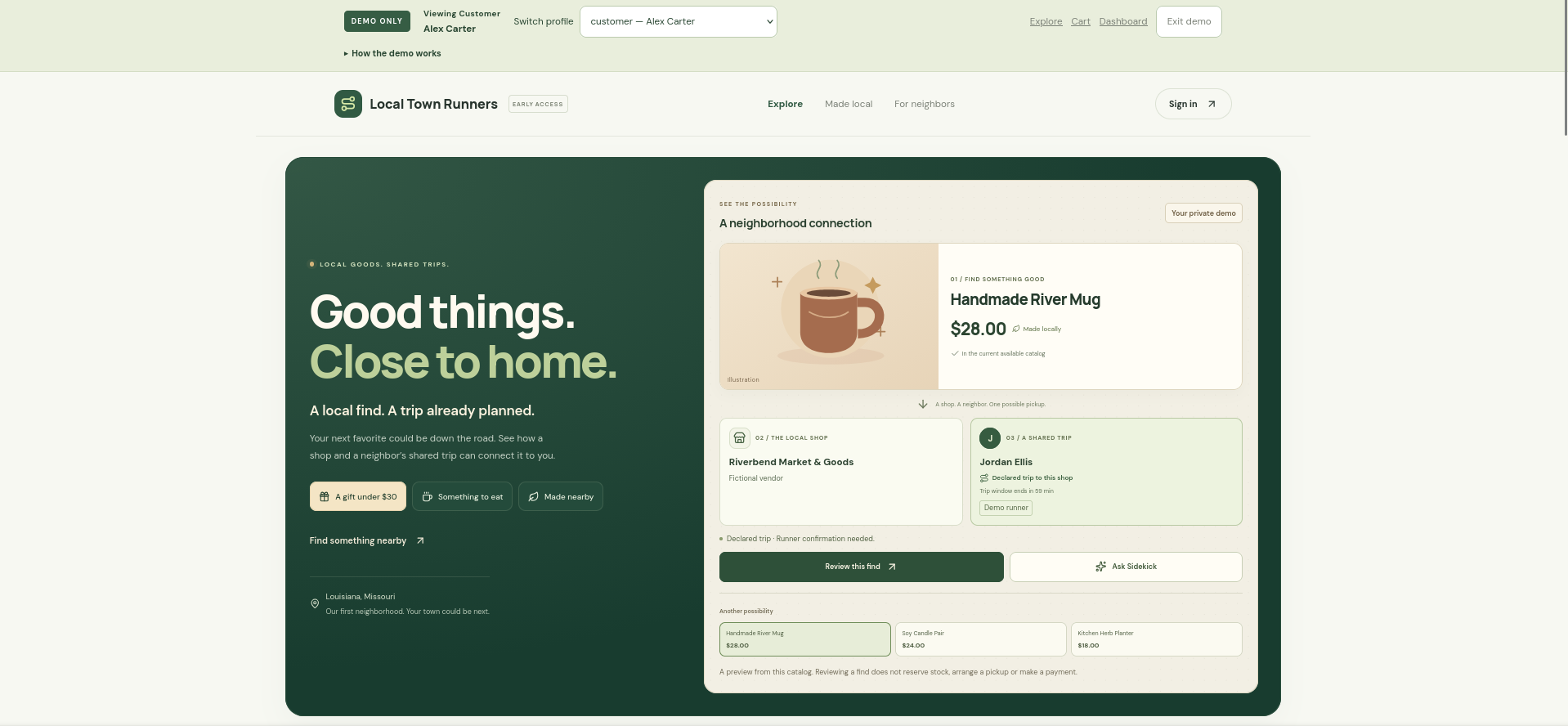
Local Town Runners is a working local-commerce prototype connecting customers, vendors, and community runners.
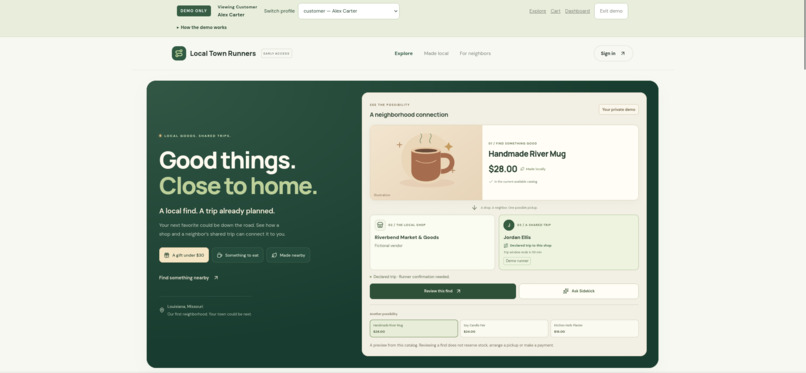
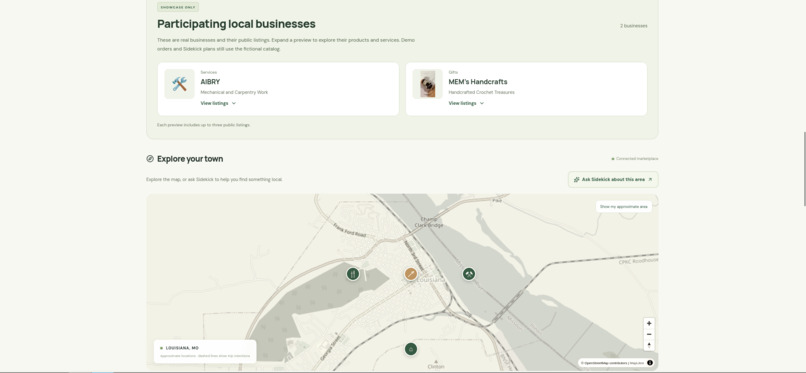
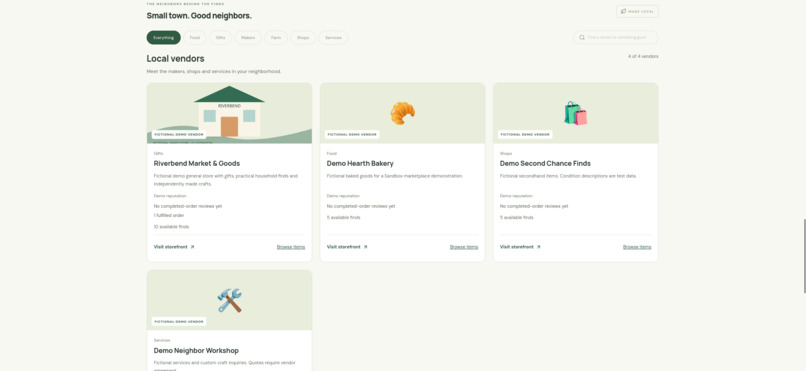
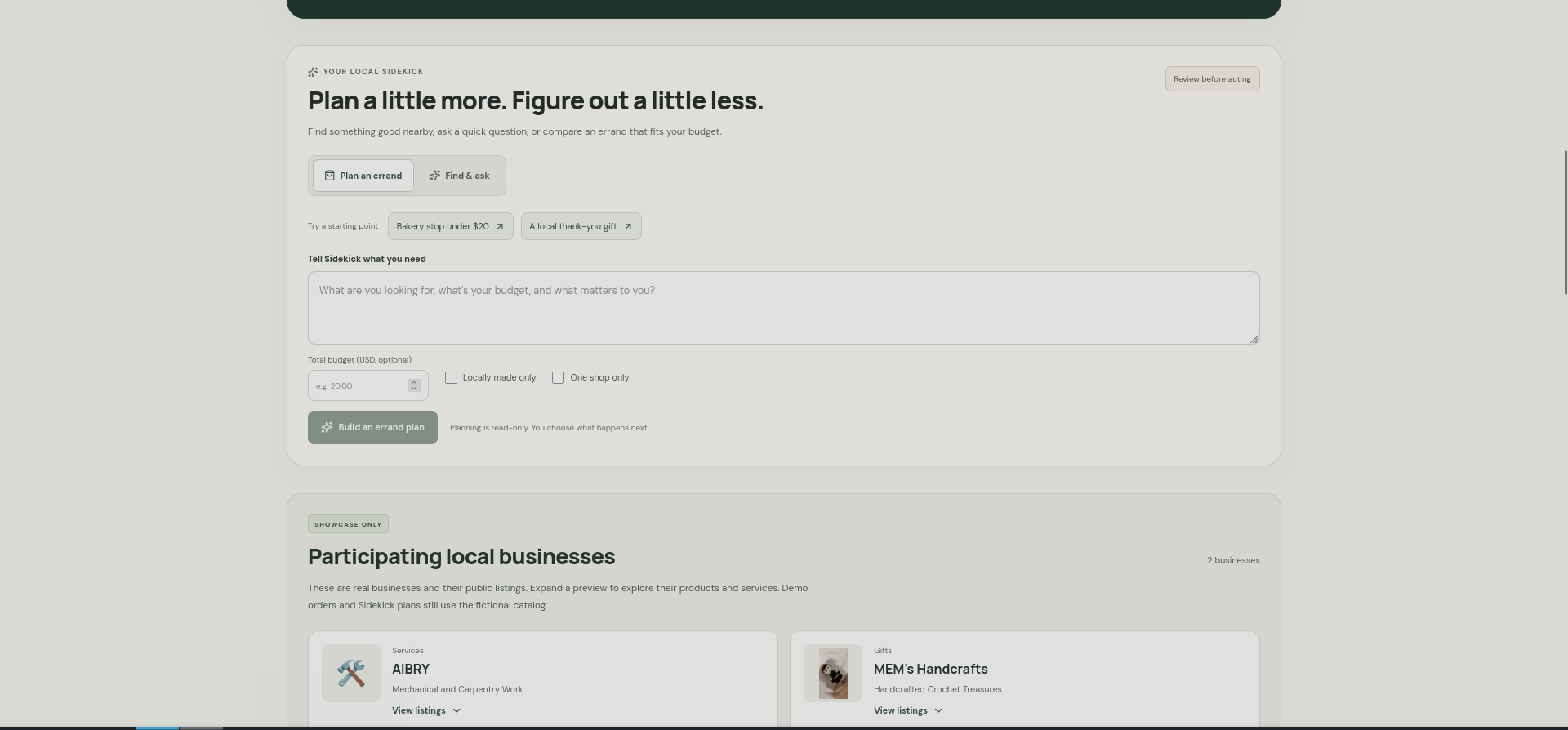
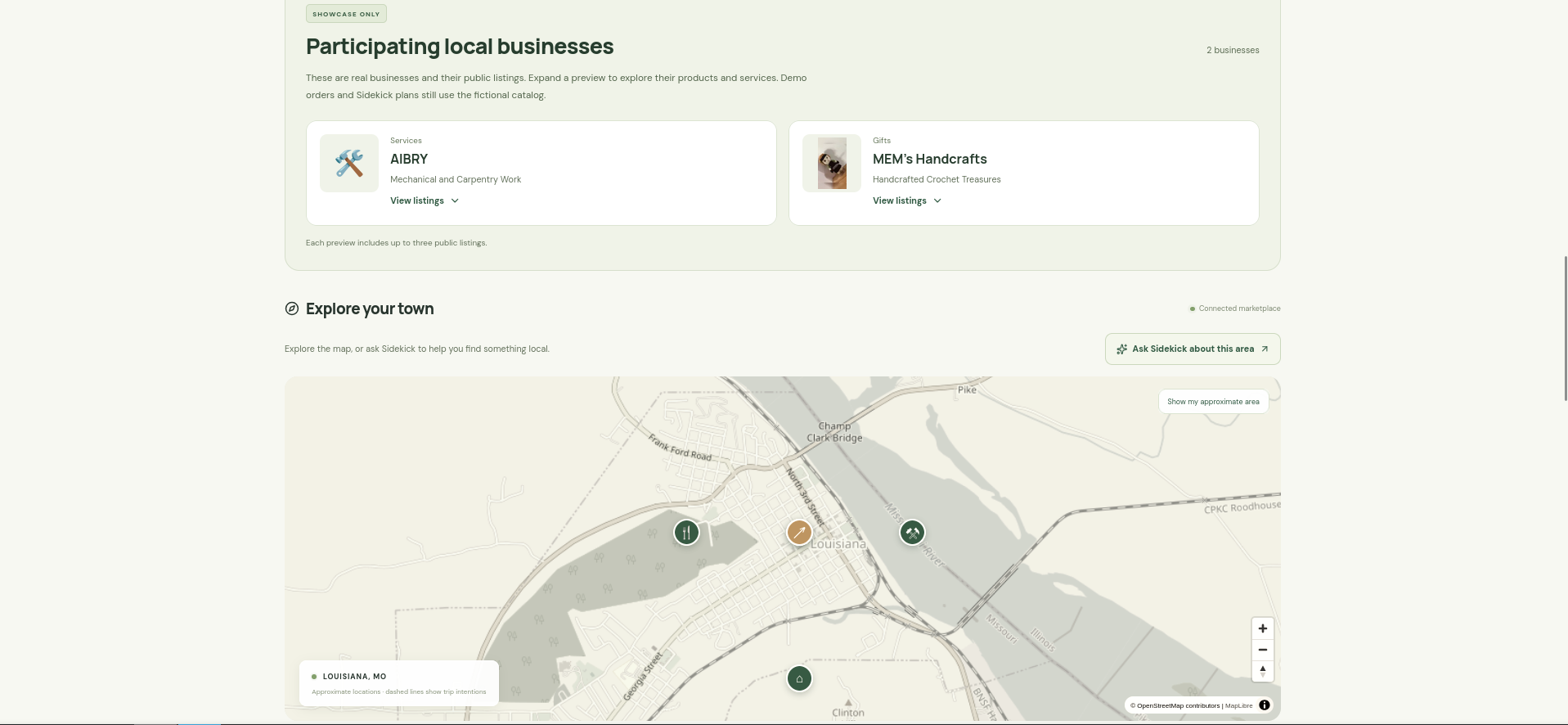
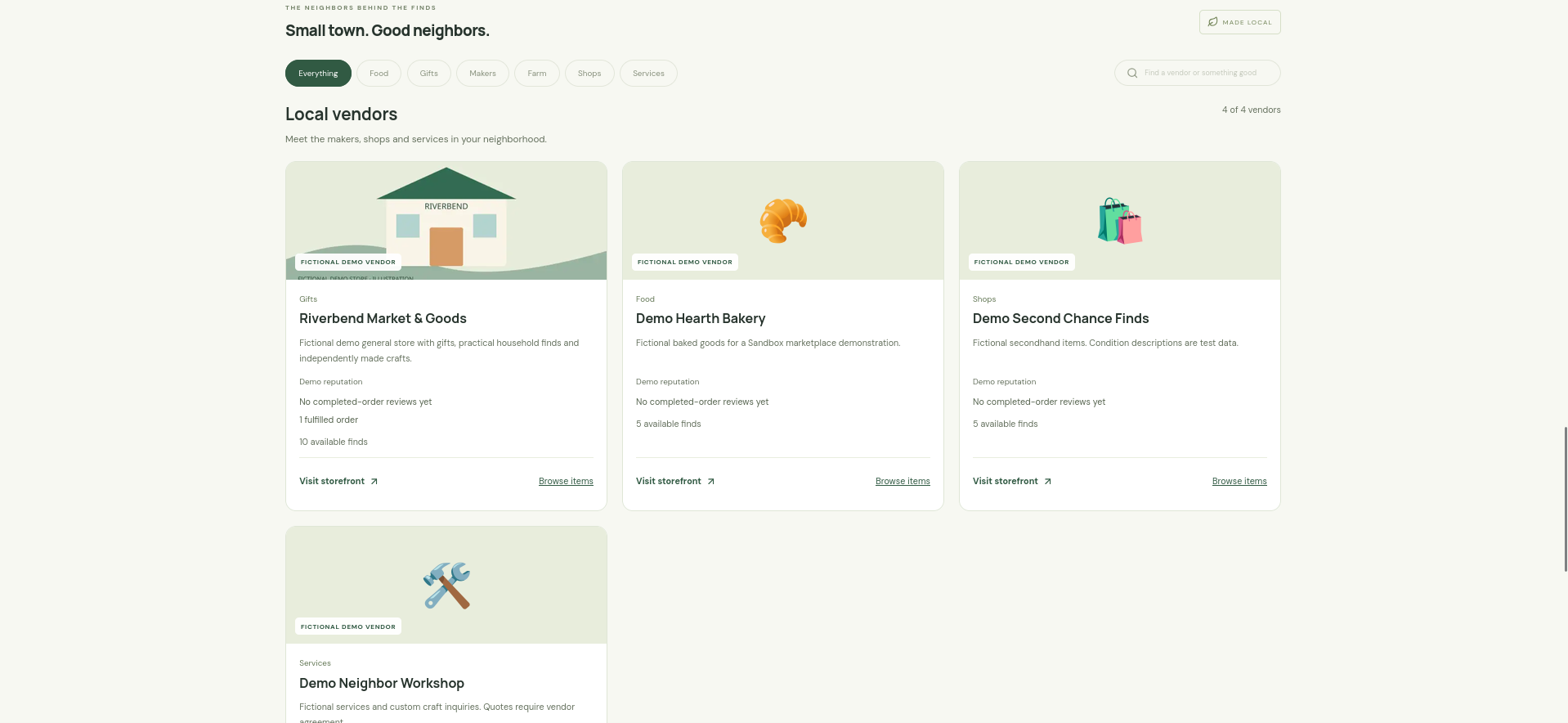
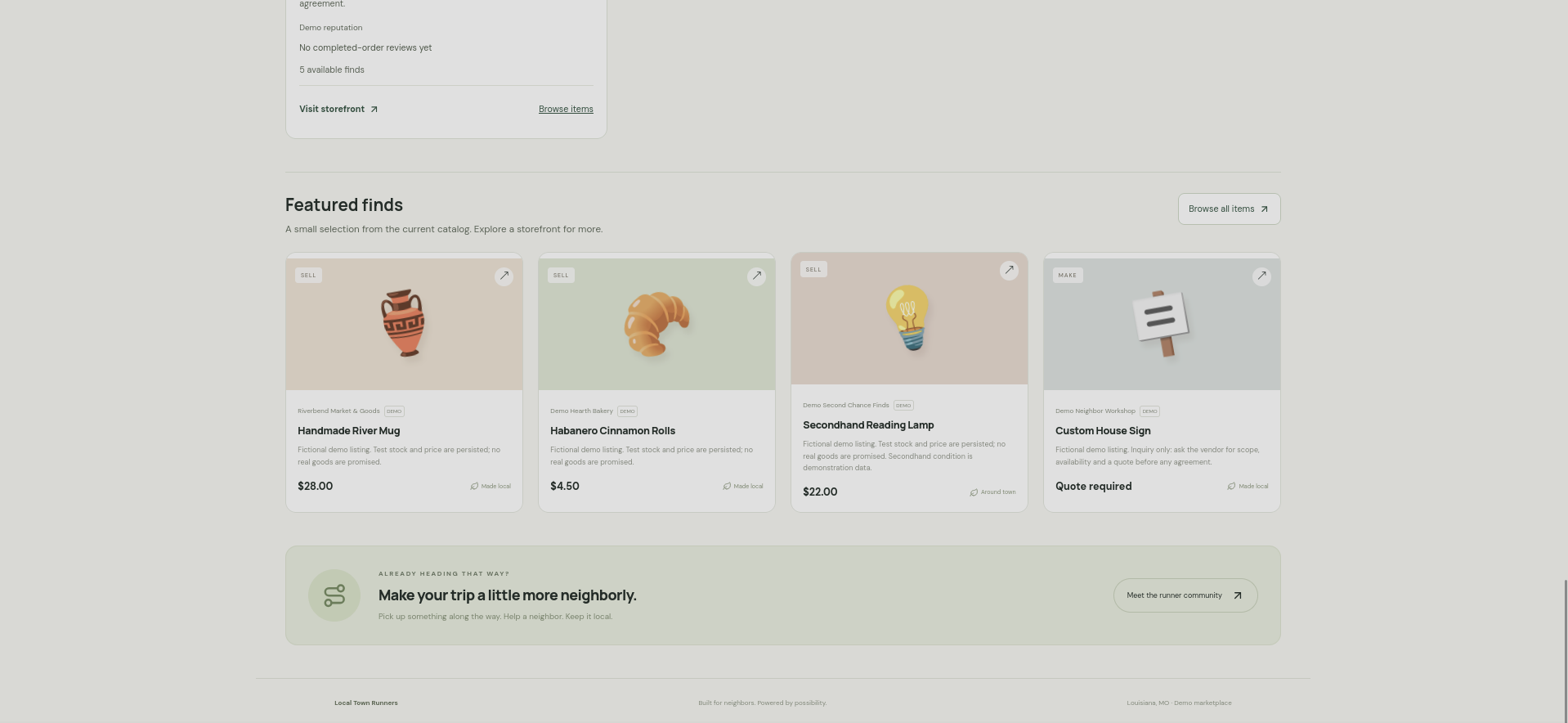
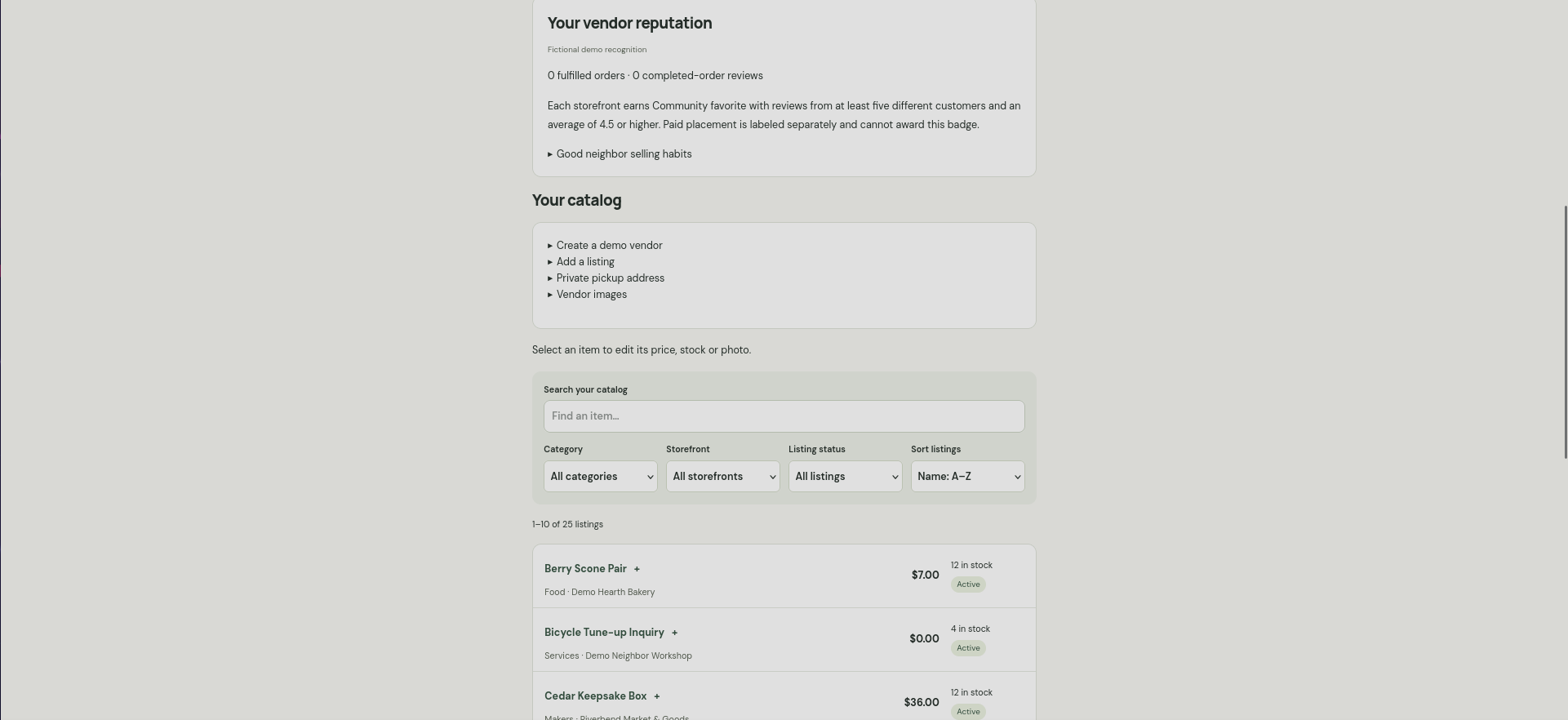
- Discover locally: Browse storefronts and goods through the catalog and map. Public showcase previews introduce participating local businesses while keeping their listings separate from the fictional demo ordering workflow.
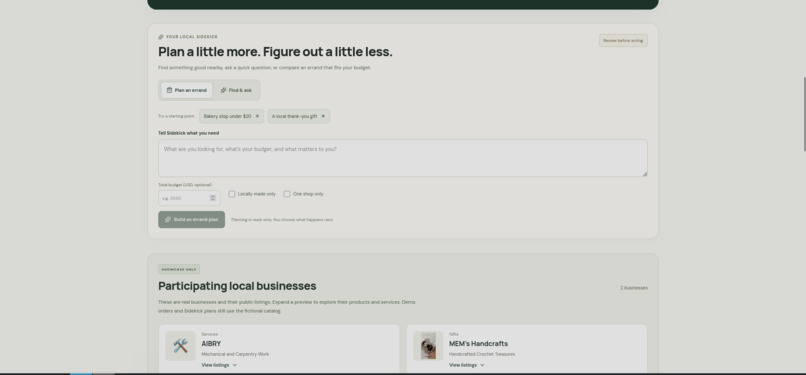
- Plan with AI: Sidekick interprets natural-language requests, compares catalog options within a budget, and revises a shopping plan through conversational follow-ups.
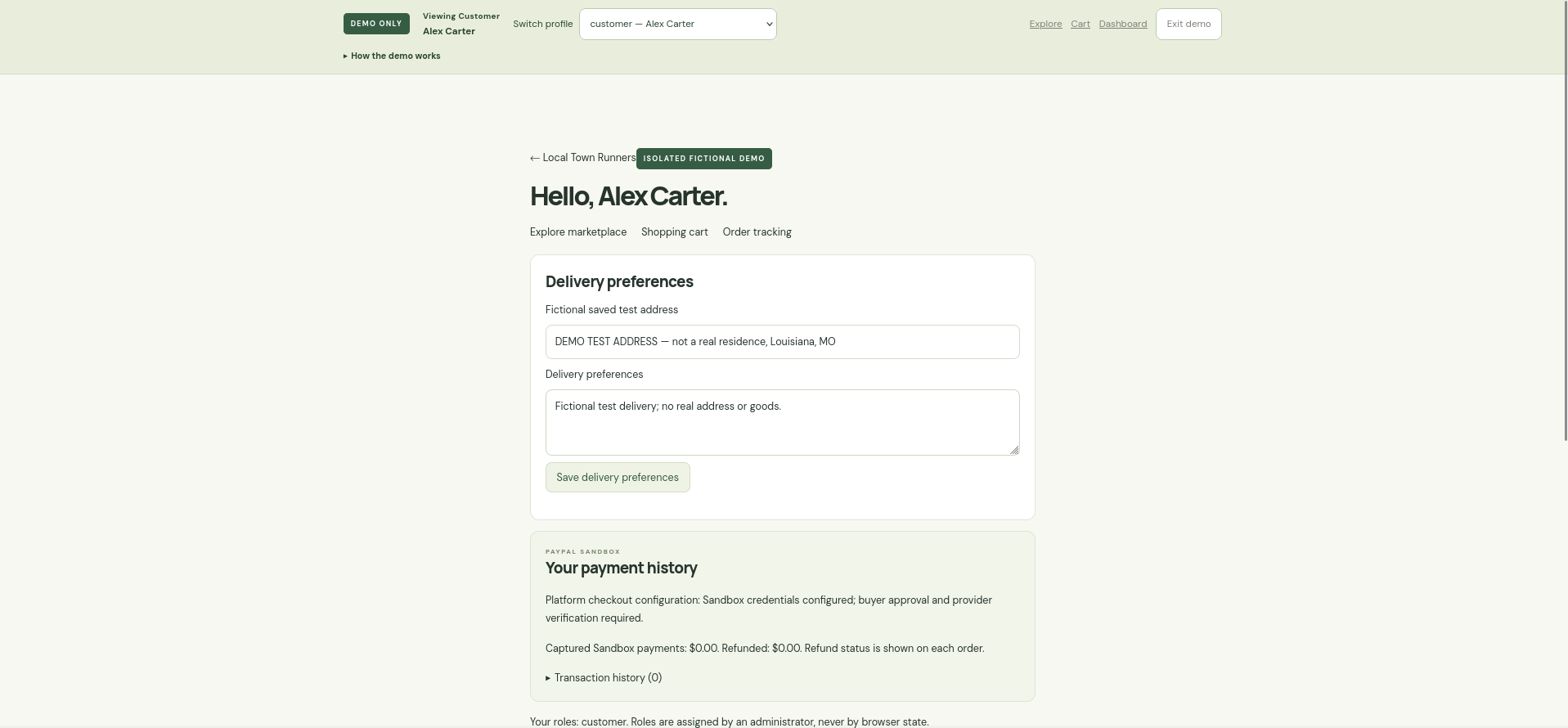
- Review and shop: Customers review suggested items, save an editable multi-item cart, and prepare an order. The application checks availability, quantities, prices, and permissions.
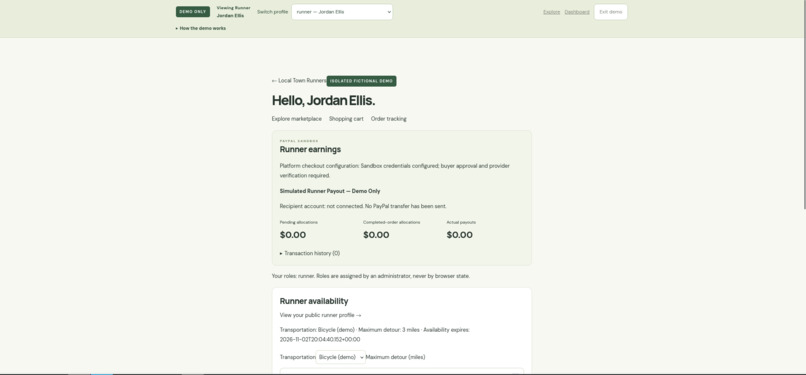
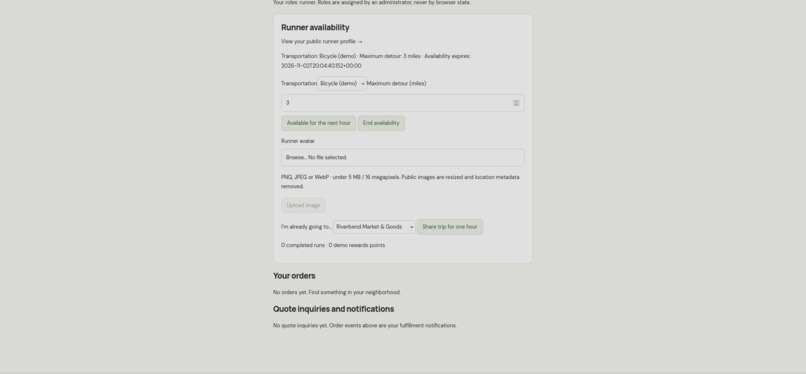
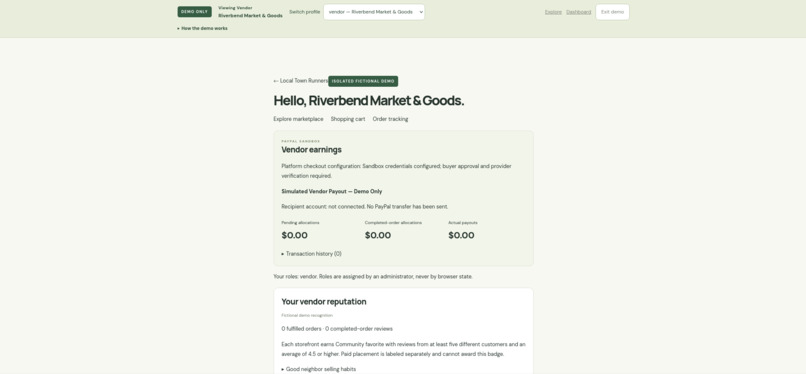
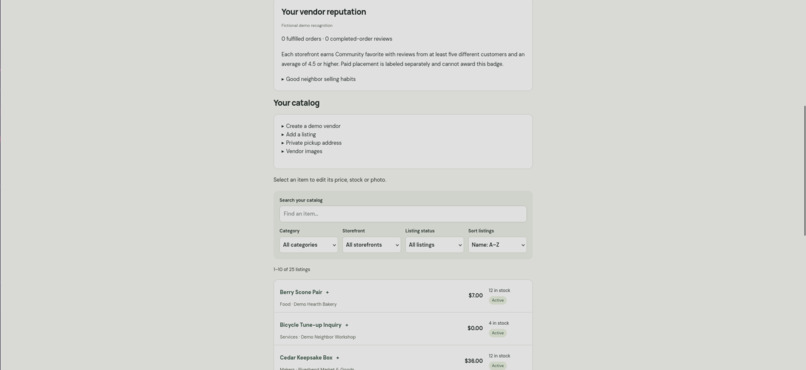
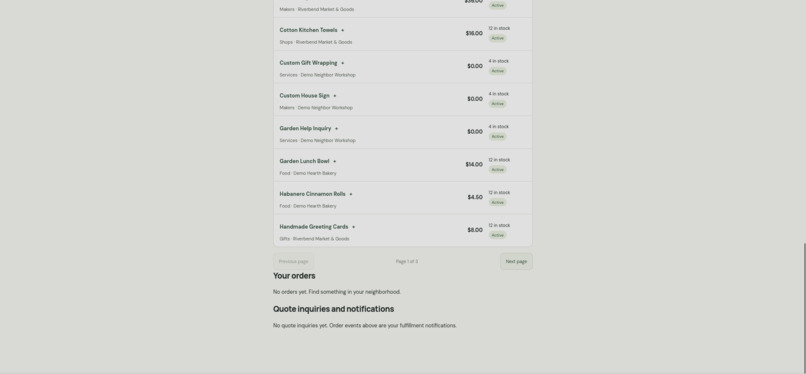
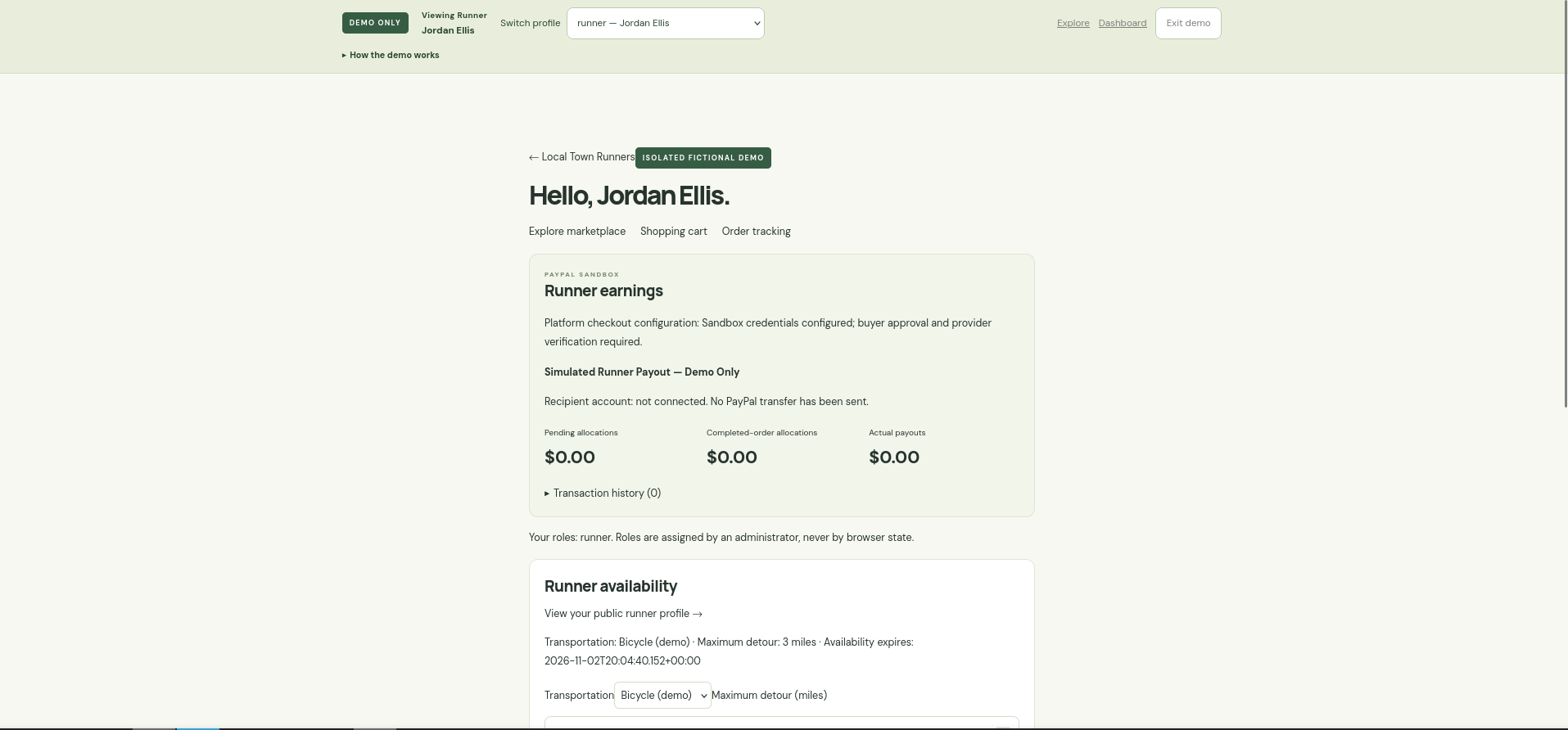
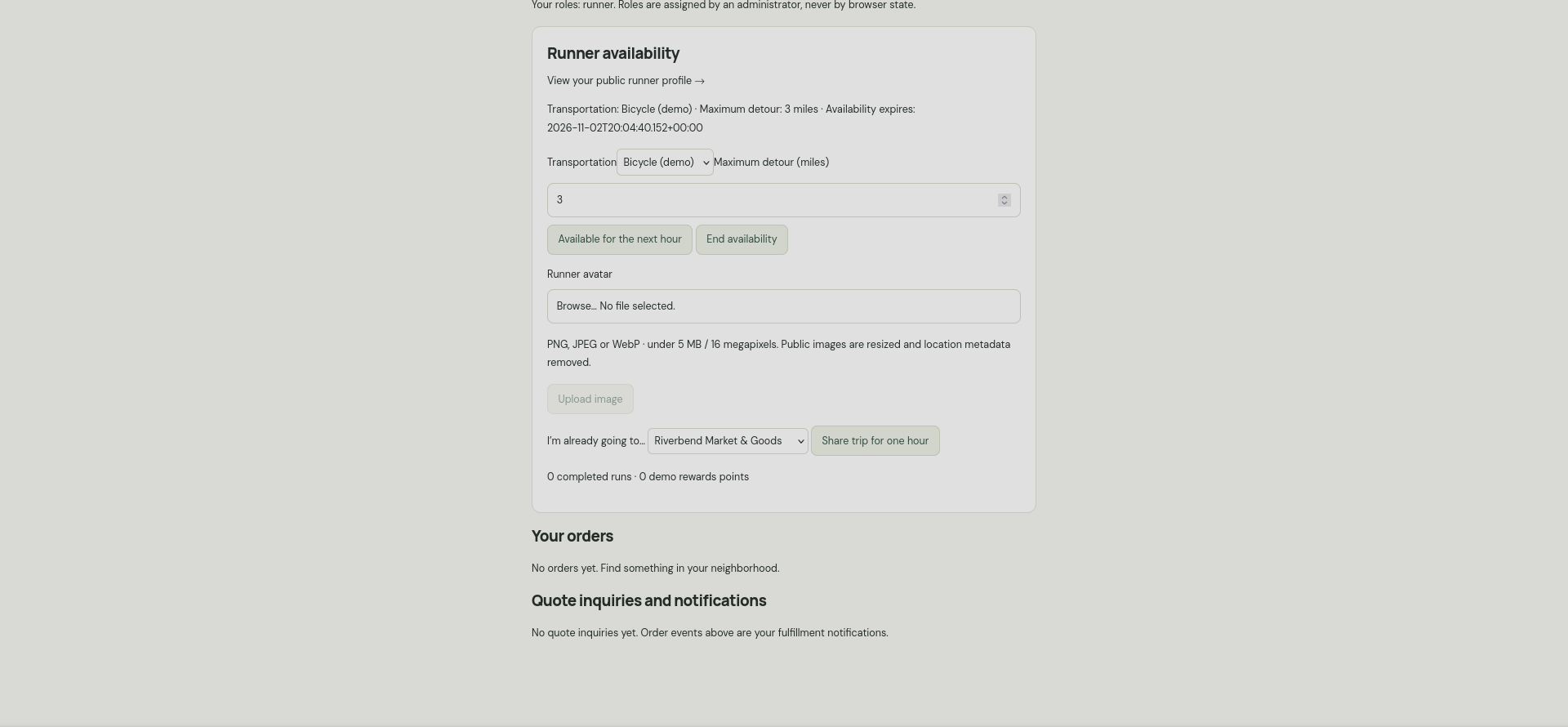
- Coordinate the handoff: Vendors accept orders and prepare pickups. Runners share trips, accept eligible requests, and confirm pickup and delivery. Customers provide the final completion confirmation.
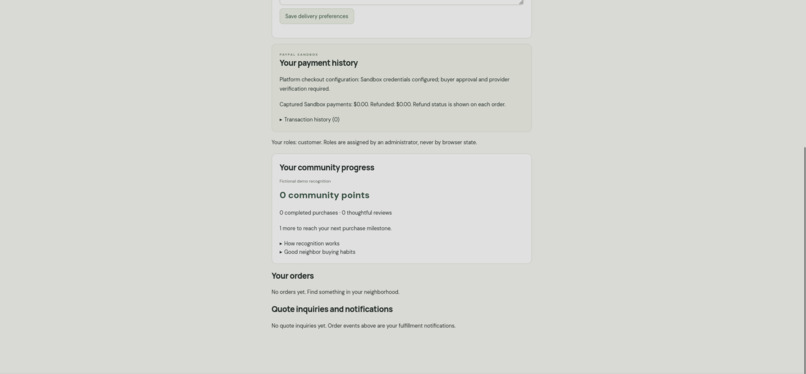
- Integrate payments: PayPal Sandbox checkout and capture connect to server-side verification, signed webhook processing, reconciliation, and a payment ledger designed to prevent duplicate credit.
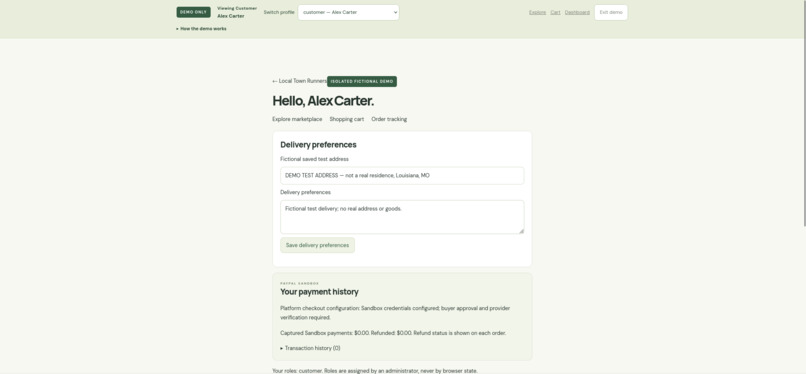
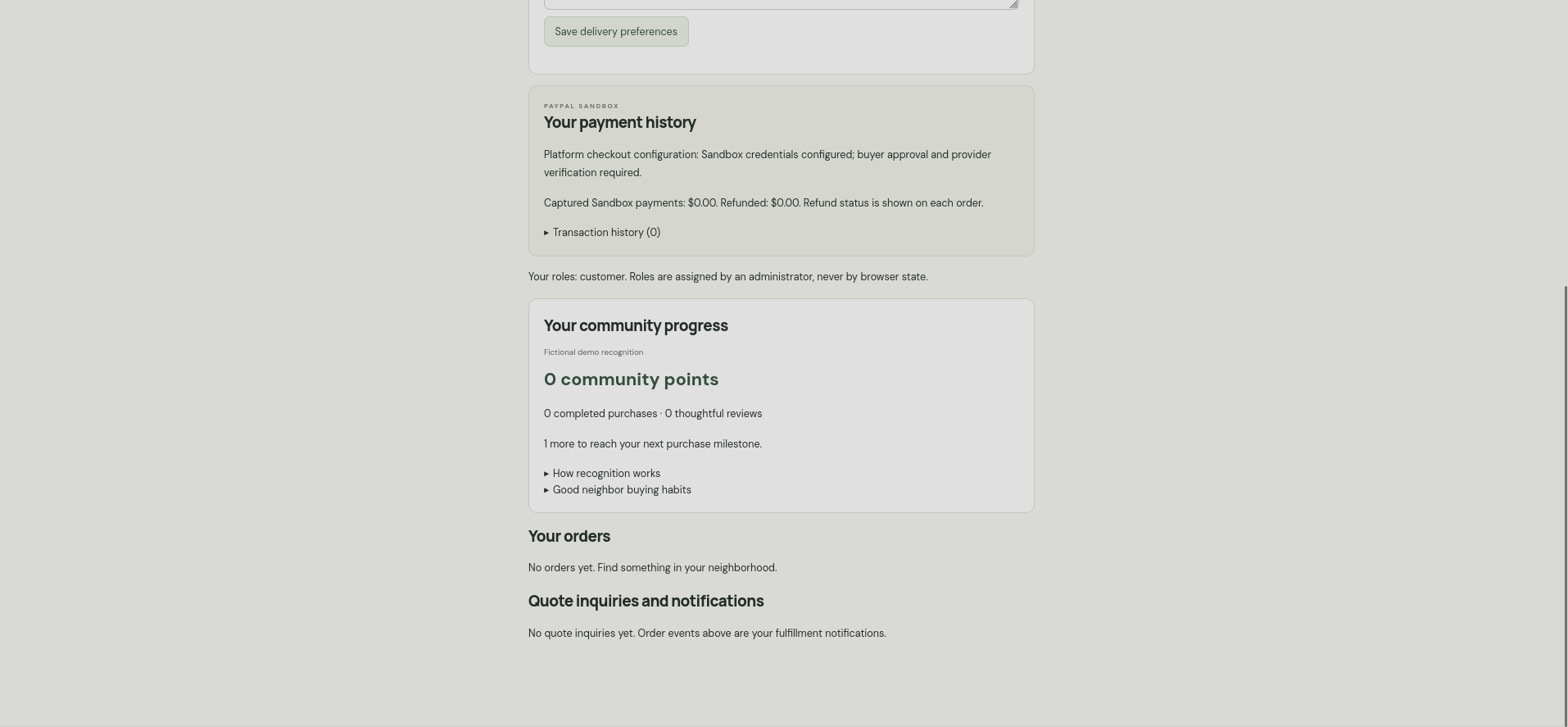
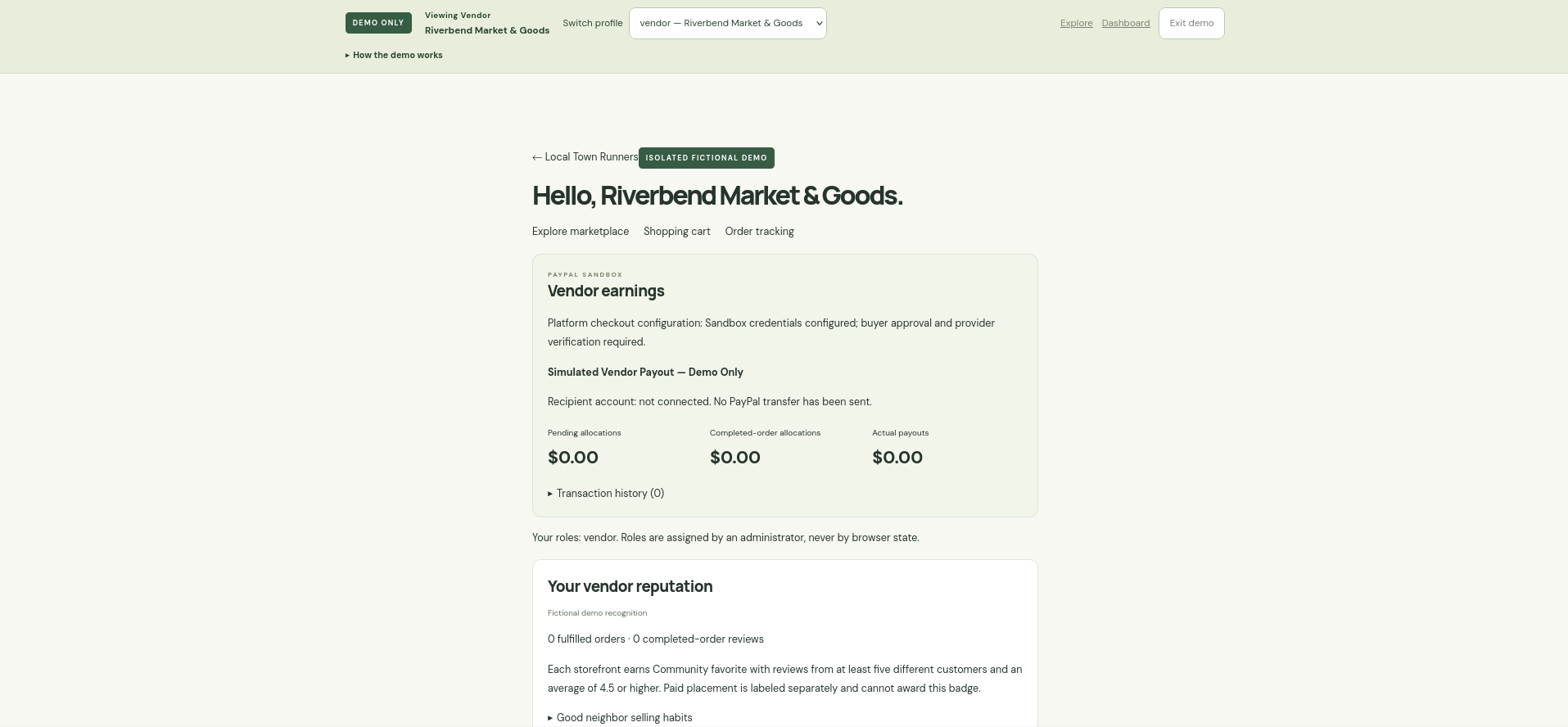
- Try every role: Private Demo Mode lets judges switch between fictional Customer, Vendor, and Runner profiles and complete a simulated fulfillment journey without a PayPal charge.
Sidekick in action
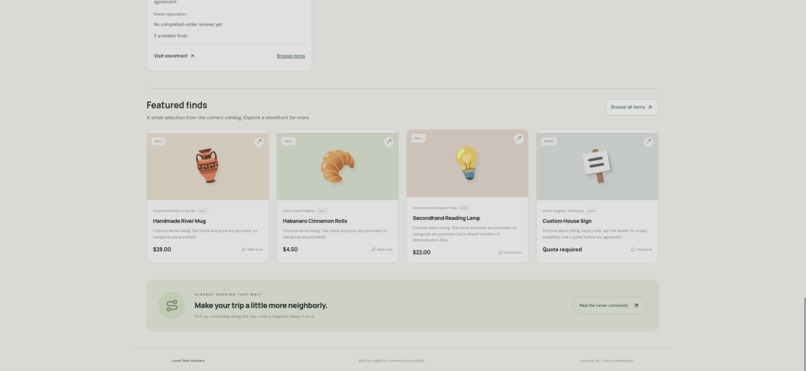
In the recorded demo, the customer asks for two cinnamon rolls and another bakery item within a $20 budget. Sidekick compares combinations totaling $16.00 and $17.50.
The customer then says, “Actually just the two rolls.”
Sidekick revises the plan to $9.00, ready for customer review before it enters the cart. This demonstrates AI interpreting an intention, comparing alternatives, and adapting to a changed request.
What makes it different
The central idea is a pickup that fits a trip someone is already making.
Runner candidates are checked against current availability and declared trips, and the runner explicitly chooses whether to accept. Each participant has a clear responsibility and next action throughout fulfillment.
Sidekick helps turn a request into reviewable choices. Application rules control inventory reservations, order preparation, authorization, payment verification, and fulfillment transitions.
How it was built
The application uses Next.js, React, TypeScript, Supabase/PostgreSQL, MapLibre, Zod, Vercel, and PayPal Sandbox, with configurable OpenAI-compatible language model integration.
The AI planner receives scoped catalog context and returns structured proposals. The server independently rechecks product references, stock, quantities, totals, constraints, and current pickup candidates. If AI is unavailable, catalog suggestions are clearly labeled as a fallback.
Role-based access controls, inventory reservations, isolated demo workspaces, and automated unit, database, and browser tests support the core workflows.
Challenges
- Keeping AI-generated plans grounded in available products and accurate whole-cart totals.
- Coordinating permissions and order transitions across three distinct roles.
- Handling Sandbox payments that remained pending after buyer approval, then reconciling completed captures and webhook events without duplicating payment records.
- Making a complete demonstration easy to explore while keeping simulated activity separate from genuine Sandbox evidence.
Working prototype and payment evidence
The hosted prototype supports discovery, AI-assisted planning, cart review, vendor and runner workflows, and a complete simulated fulfillment journey.
Verification records audited October 26, 2026 document three completed PayPal Sandbox payments totaling $44.00 USD. Each is matched to a PAID marketplace order, authenticated completed-webhook evidence, and exactly one customer-payment ledger entry.
Additional vendor, runner, and platform allocation rows remain simulated. No real payouts were sent.
The current judge walkthrough follows two Habanero Cinnamon Rolls totaling $9.00. Its payment is explicitly simulated and does not initiate PayPal checkout or capture. The video presents the genuine Sandbox evidence separately.
What we learned
AI is especially useful when it turns an everyday request into choices people can inspect and revise.
Reliable coordination also requires explicit responsibilities: customers approve their selections, vendors accept orders, runners accept runs, and payment status comes from verified provider evidence. Combining those decisions with AI-assisted planning became the foundation of the project.
Try it
- Hosted demo: https://runners.aibrylabs.com
- Public source and setup instructions: https://github.com/bryan060807/local-town-runners
- Judge walkthrough: https://github.com/bryan060807/local-town-runners/blob/main/docs/hackathon-demo.md
- Dated Sandbox verification report: https://github.com/bryan060807/local-town-runners/blob/main/docs/phase-4.3-sandbox-verification.md
Choose Enter Demo Mode and use Switch demo profile to explore all three roles within the same private workspace.
What's next
Continue real-world onboarding and usability testing, strengthen monitoring and recovery procedures, improve road-aware pickup matching, and evaluate commercial payment, payout, and operating requirements before a live marketplace launch.
Local Town Runners is currently a Sandbox/demo prototype. Live payments and real payouts remain disabled.
Built With
- maplibre
- next.js
- paypal
- playwright
- postgresql
- react
- supabase
- typescript
- vercel
- zod


Log in or sign up for Devpost to join the conversation.