-
-
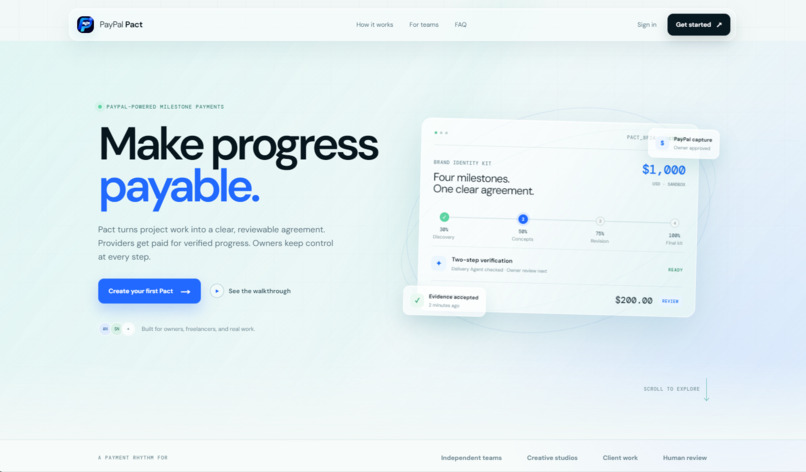
Homepage
-
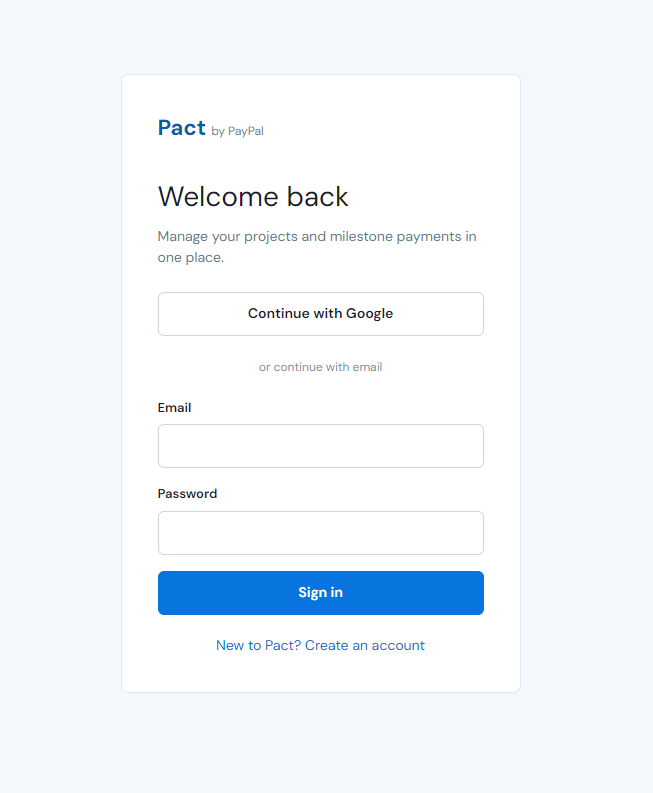
Login/Signup
-
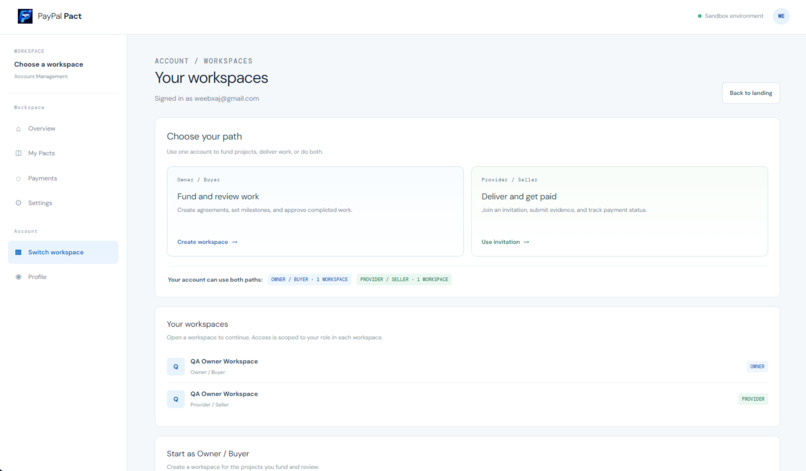
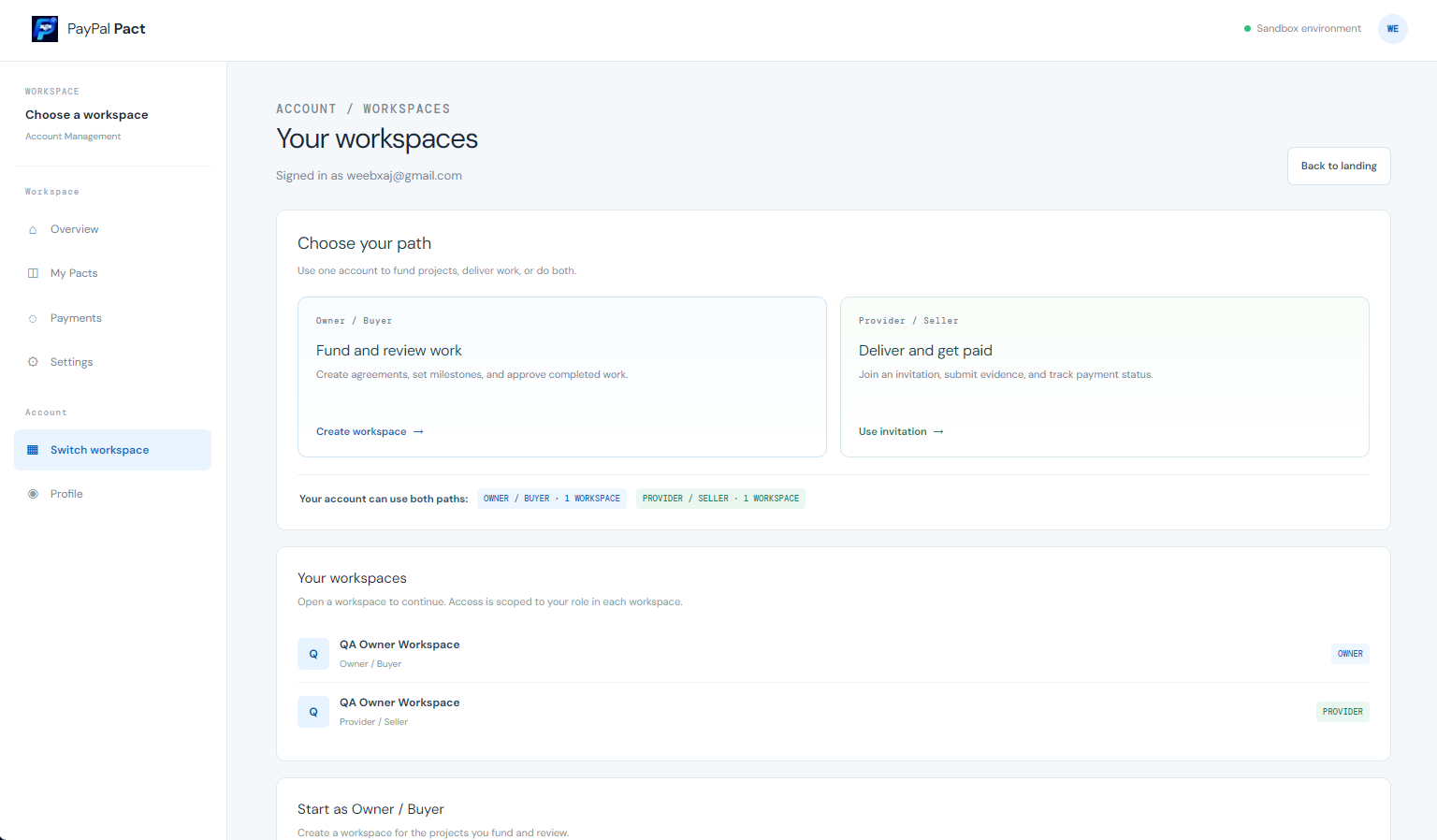
Workspace Chooser
-
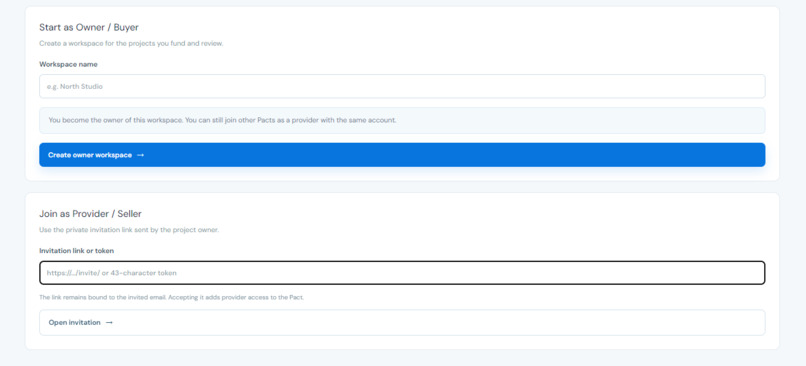
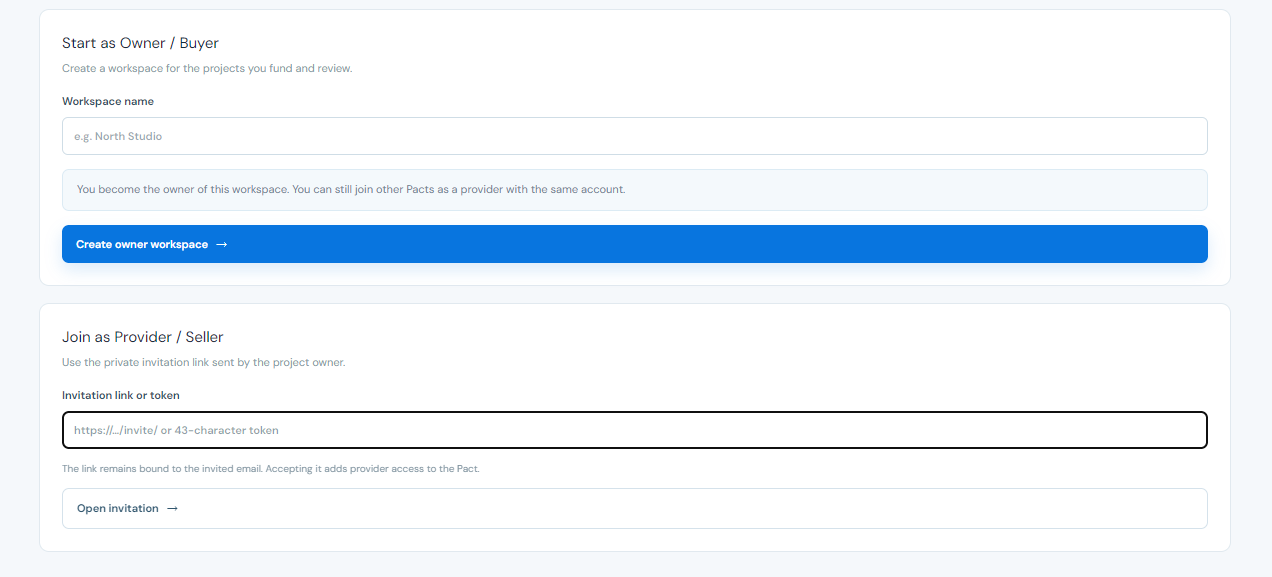
Workspace Chooser 2
-
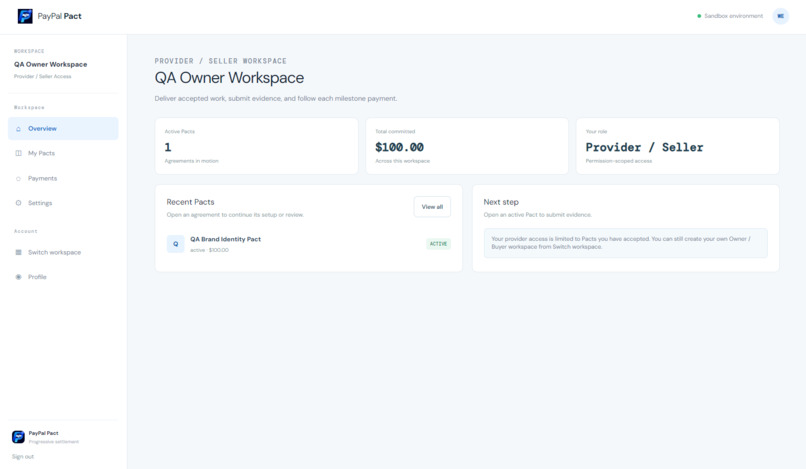
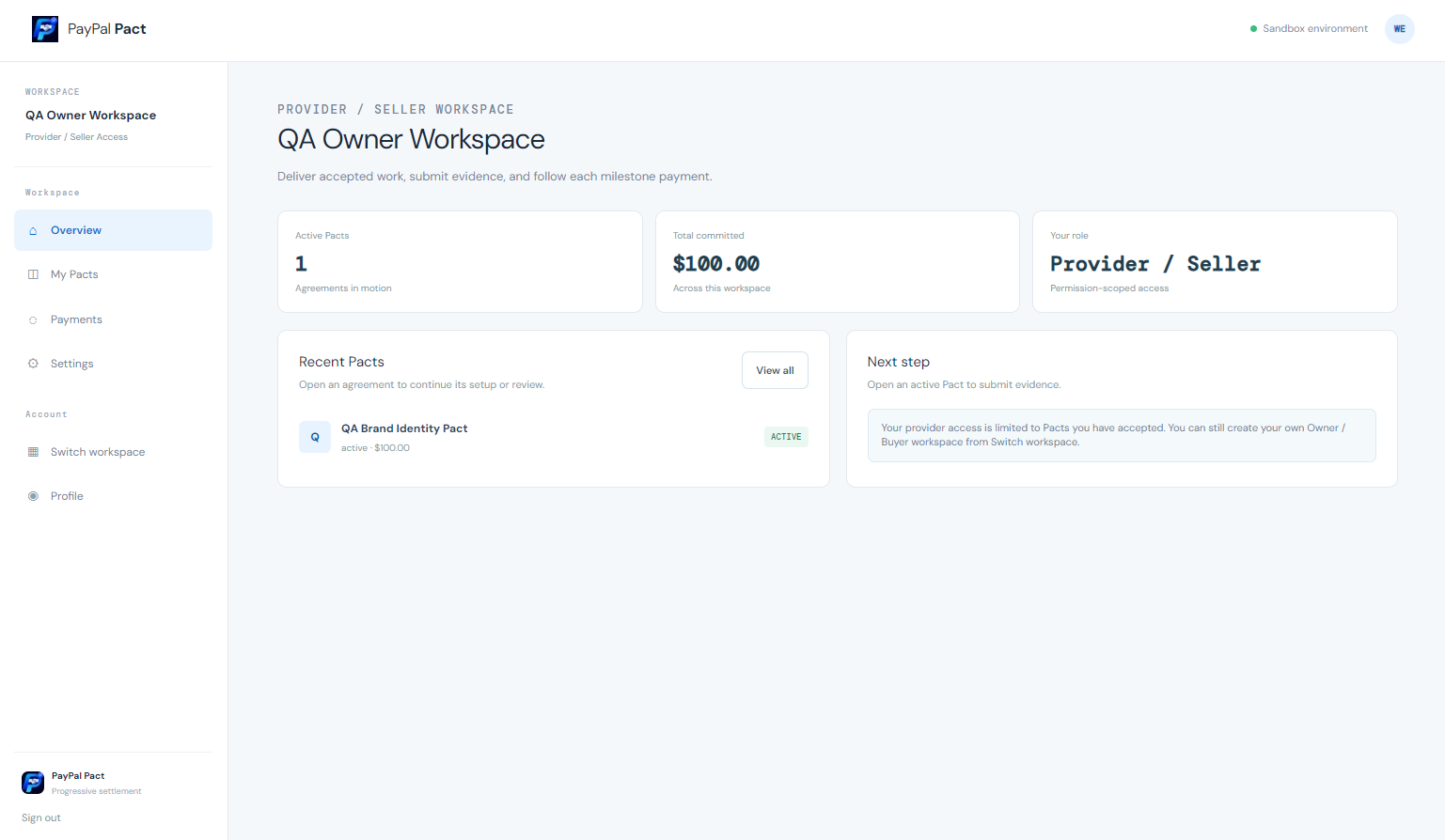
Workspace
-
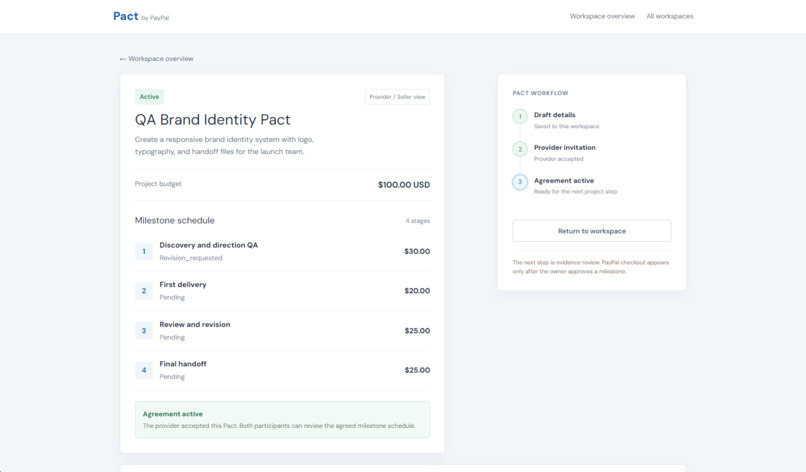
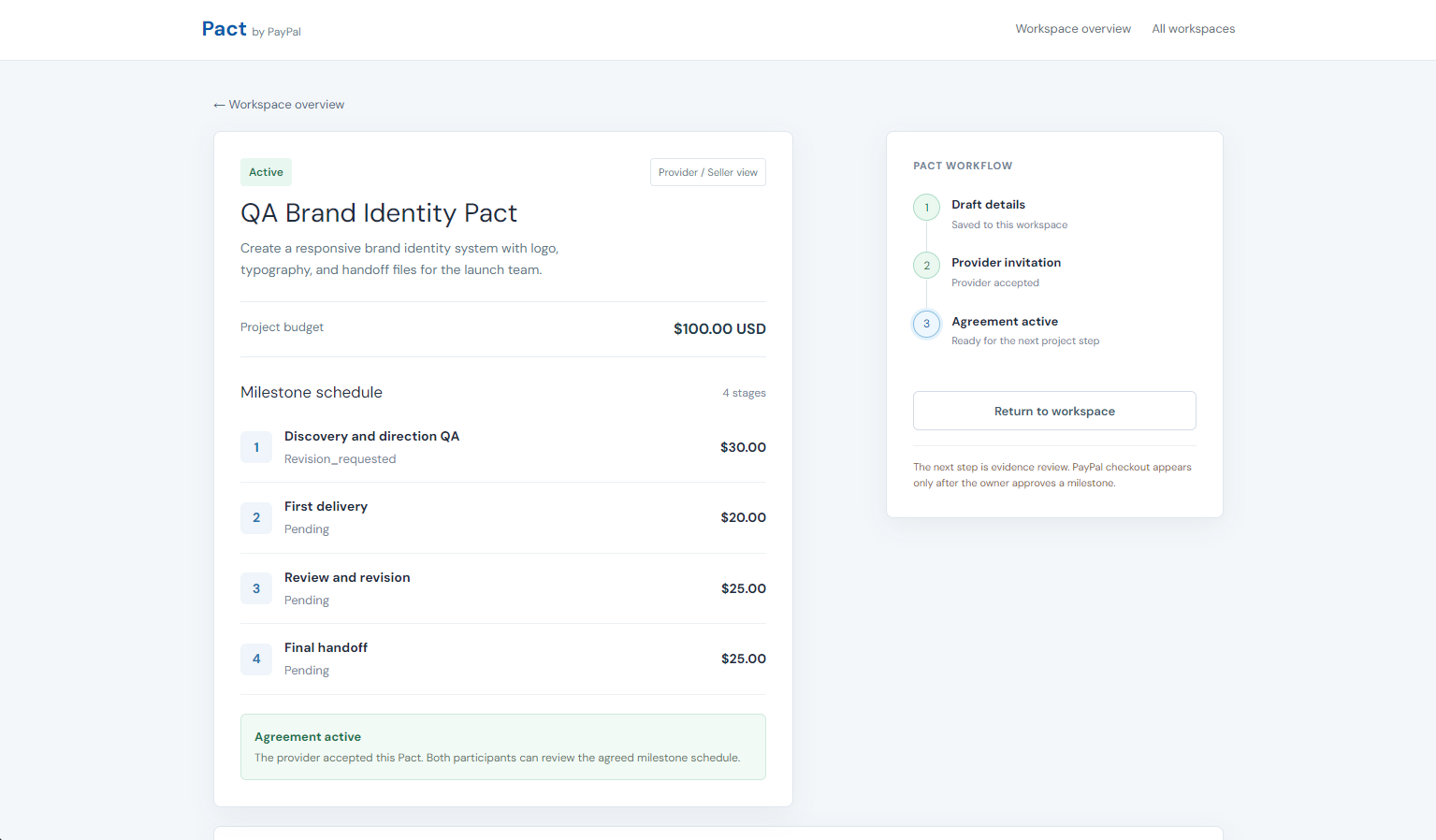
Pact
-
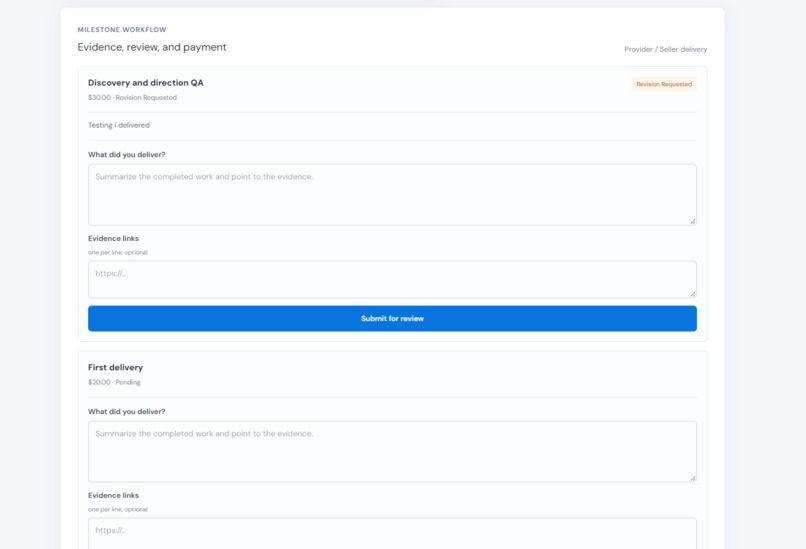
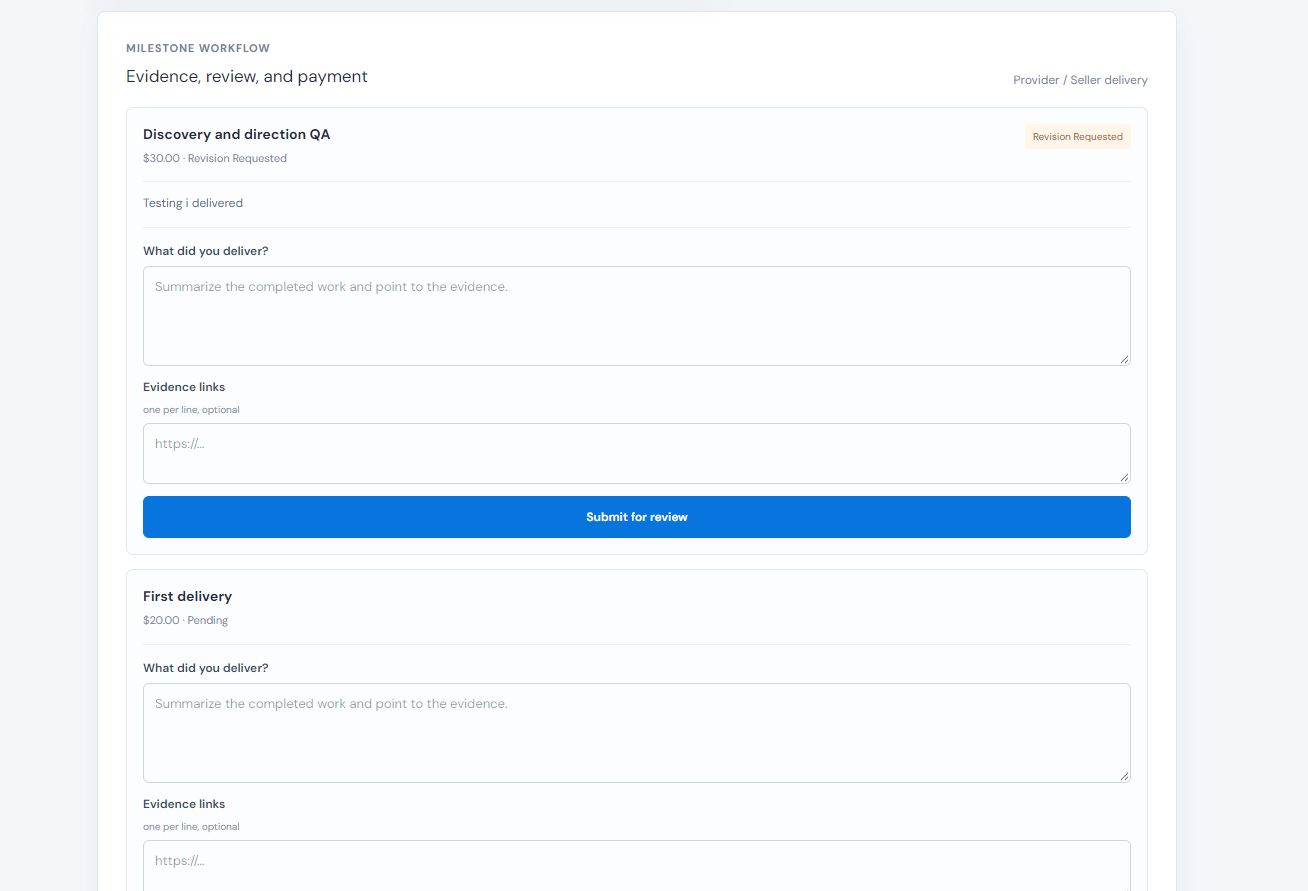
Pact : Milestone
-
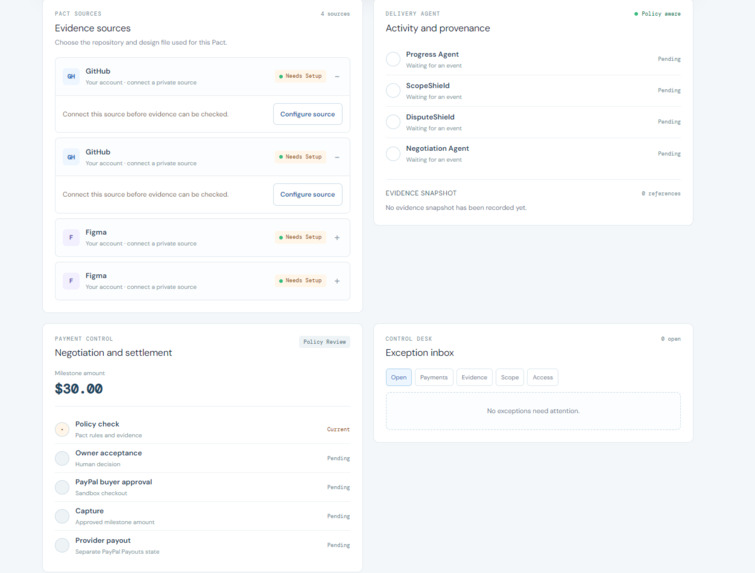
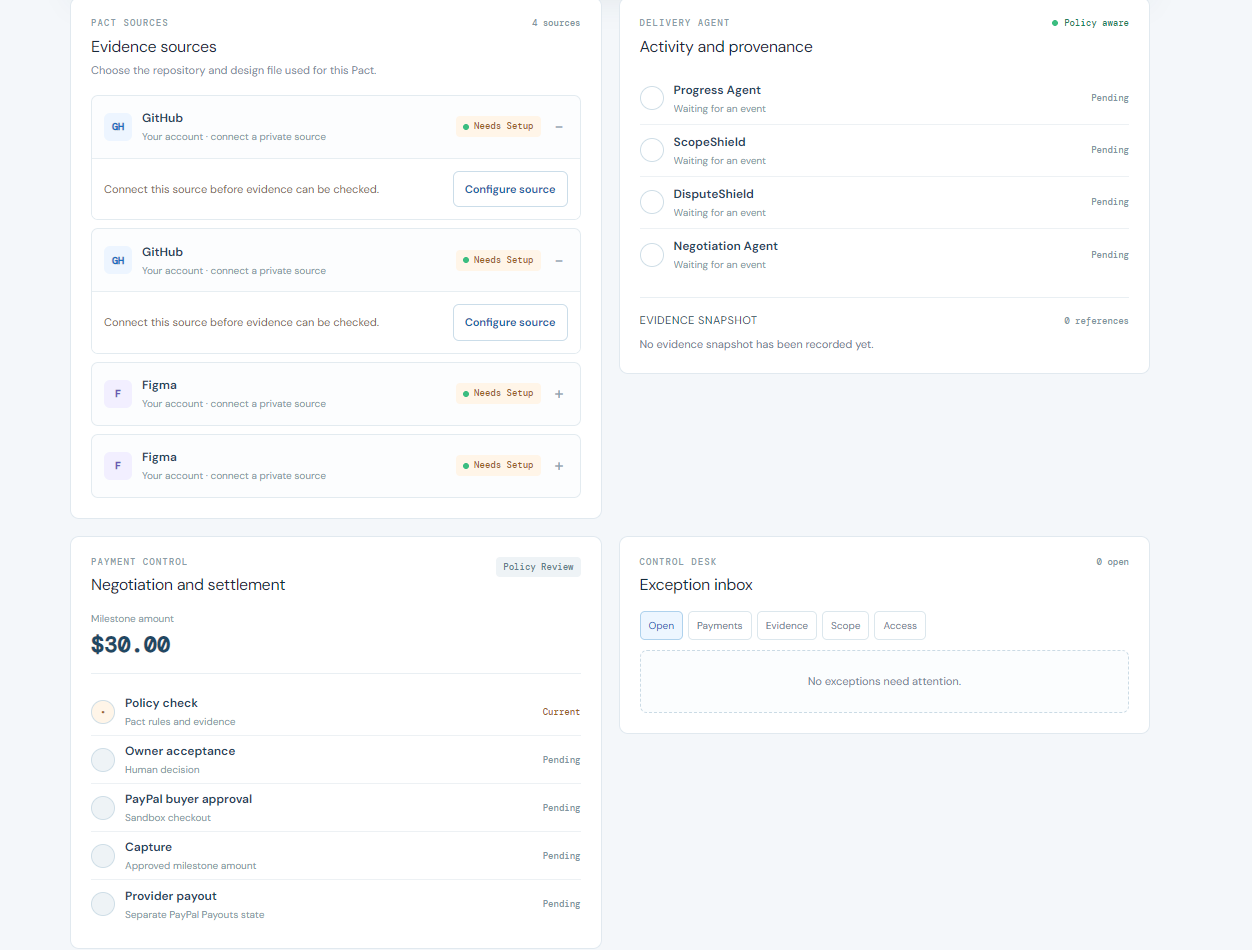
Pact : AI
-
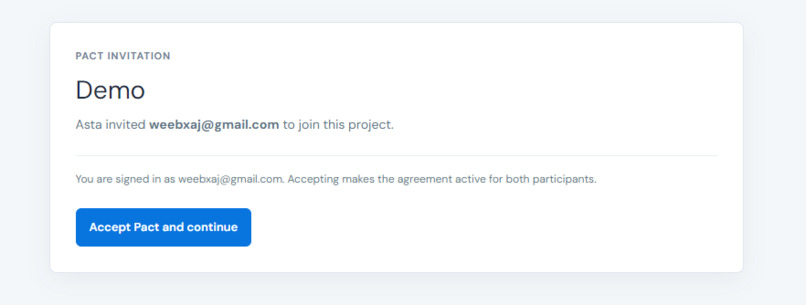
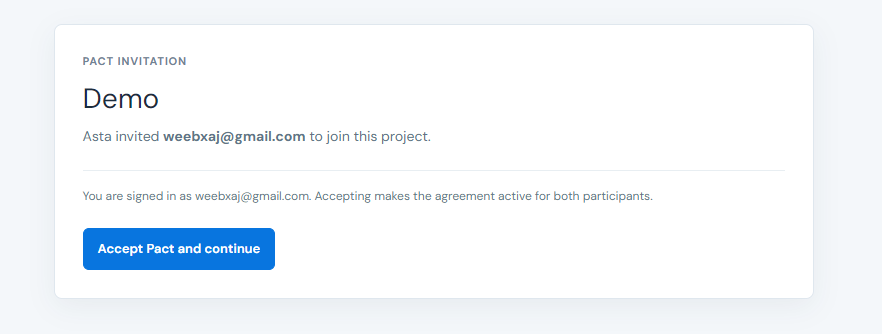
Pact : Invitation
-
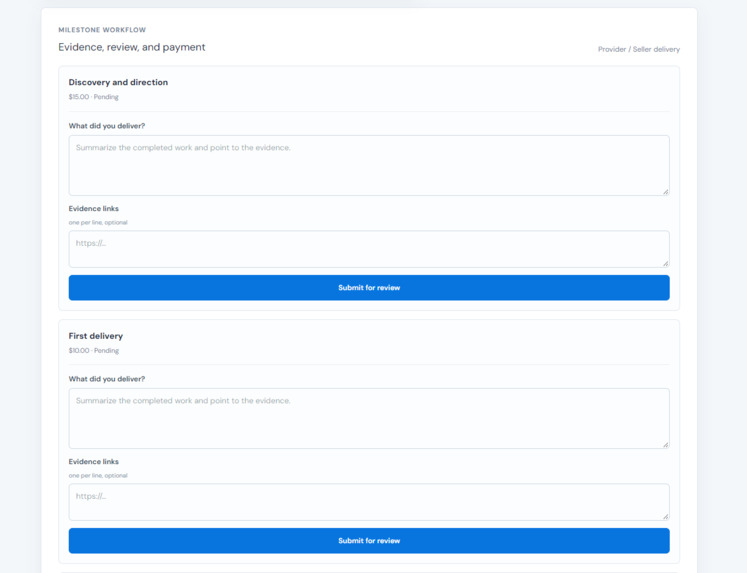
Pact : Milestone - Seller
-
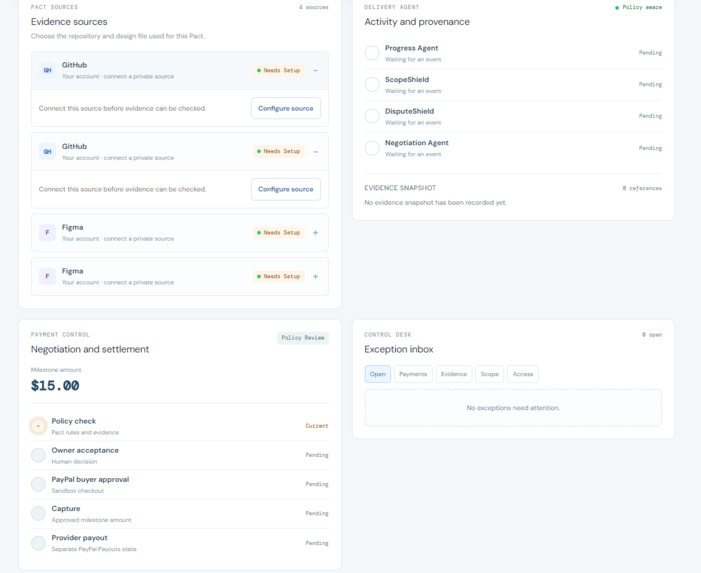
Pact : AI - Seller
Inspiration
Remote projects often fail at the trust boundary: owners pay before they can verify delivery, while providers work without knowing whether payment is secure.
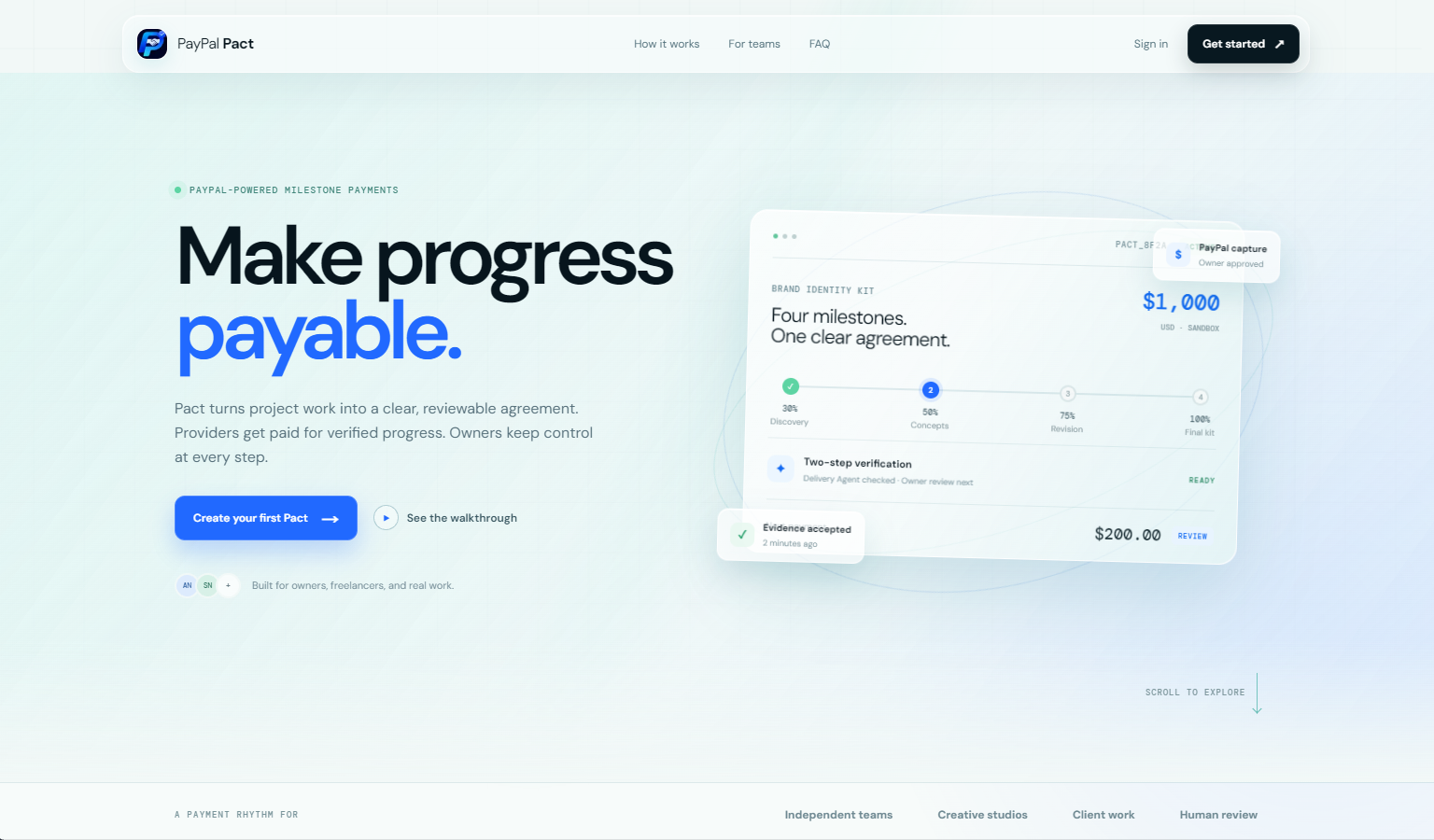
PayPal Pact turns a project into measurable milestones such as 30%, 50%, 75%, and 100%. Evidence is checked first, the owner approves the result, and PayPal controls the actual payment.
What it does
PayPal Pact connects project owners and providers through a shared Pact.
- Owners create milestones, budgets, deadlines, and acceptance criteria.
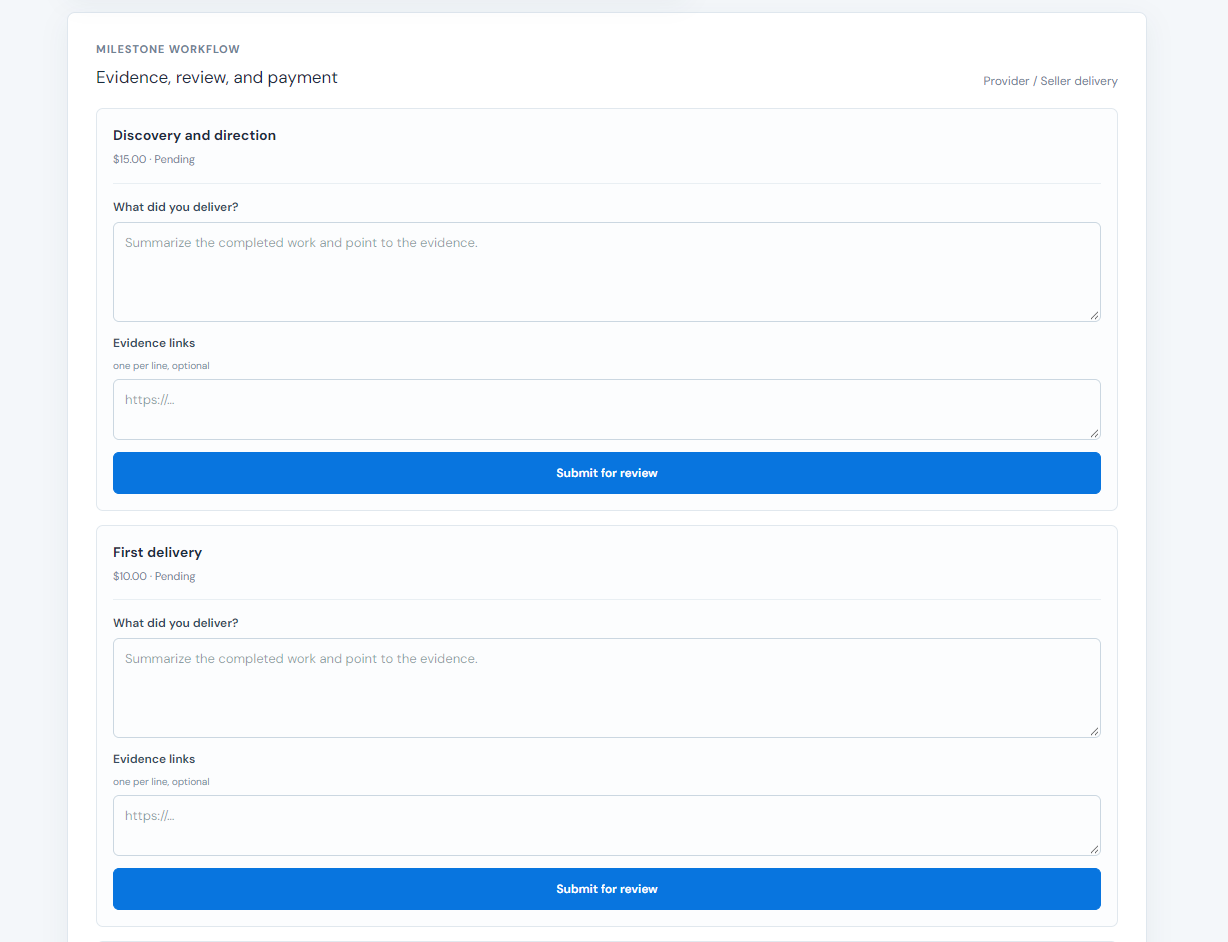
- Providers submit files, links, notes, GitHub activity, and Figma work.
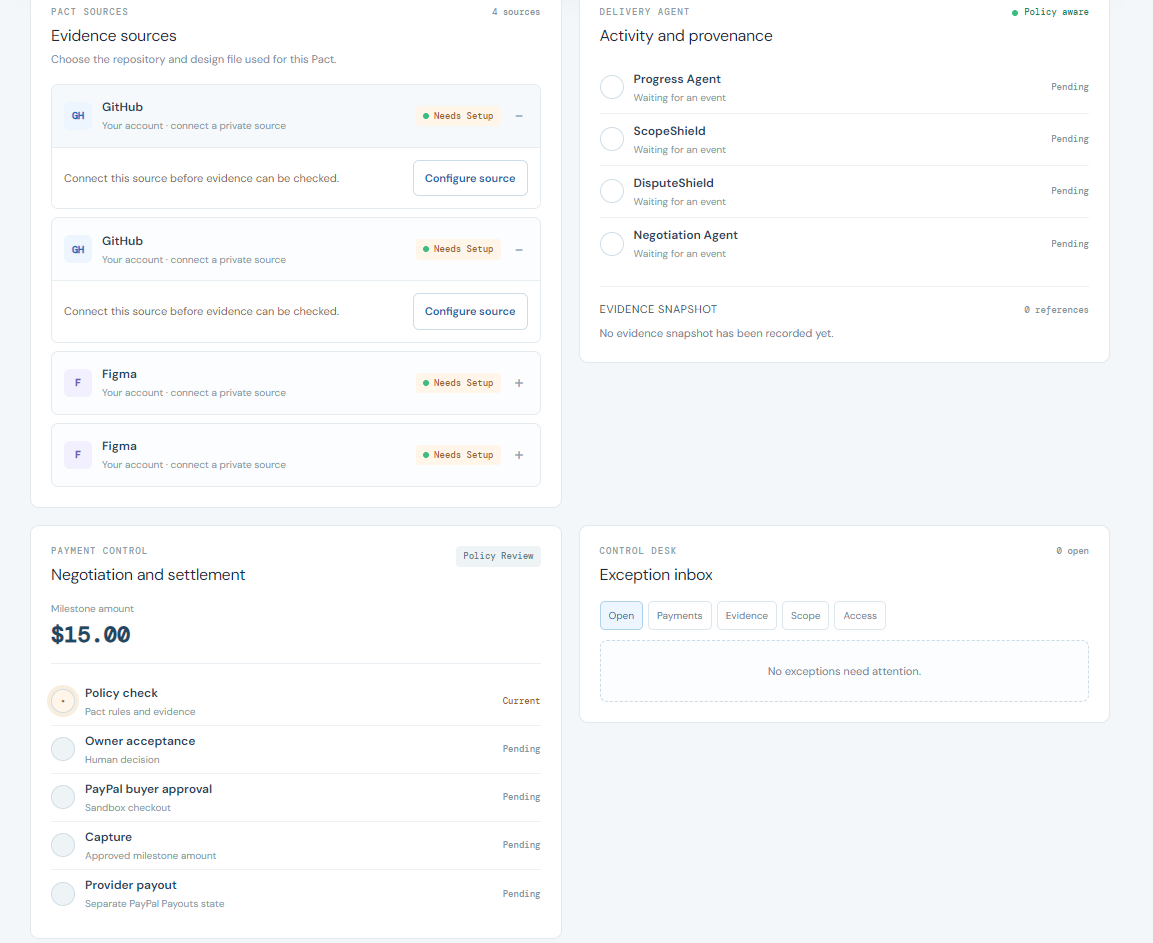
- Participants connect private GitHub repositories and Figma files, then select the exact evidence source for each milestone.
- Connector events become timestamped evidence snapshots with source, version, hash, and freshness status.
- Four Meta Muse agents analyze progress, scope changes, conflicting evidence, disputes, and negotiation options.
- AI proposes decisions but cannot approve work, capture payment, change Pact terms, or mark anyone paid.
- Owners can approve, request revisions, open disputes, or accept a negotiated change.
- PayPal creates an order for the exact milestone amount. The buyer approves and captures it, after which a separate provider payout is requested.
- The ledger distinguishes
captured,payout pending,paid to provider,failed, andblocked.
How we built it
We built the application with Next.js, TypeScript, Supabase Auth, PostgreSQL, Row Level Security, private Supabase Storage, and Vercel-compatible workers.
PayPal Orders, Capture, Payouts, and signed webhooks handle authoritative payment state. Meta Muse is accessed through a typed server-side adapter with validation, retries, provenance, and safe fallbacks only for low-risk progress and scope checks.
GitHub App authorization and Figma OAuth use scoped permissions, encrypted server-side tokens, replay-protected OAuth state, resource pickers, signed webhooks, reconciliation, and idempotent event processing.
Every evidence snapshot, agent run, approval, revision, dispute, negotiation, and payment event is persisted for auditability.
Challenges we ran into
The hardest problem was deciding what “complete” means for subjective work. We solved this by combining connector-backed evidence, AI analysis, clear confidence levels, and mandatory owner approval.
We also had to separate PayPal capture from provider payout. A captured buyer payment cannot be displayed as provider-paid until PayPal confirms the payout.
Private OAuth resources, expired tokens, deleted files, duplicate webhooks, stale evidence, failed captures, and unavailable Payouts required explicit recovery and blocked states instead of silent success.
Accomplishments that we're proud of
We built a complete evidence-to-payment workflow rather than a payment mockup or an AI-only dashboard.
PayPal remains the settlement authority. AI is useful because it evaluates real project evidence, detects scope and dispute risks, and prepares actionable recommendations. Humans remain in control of acceptance, exceptions, negotiations, and payment approval.
The system supports revisions, resubmissions, immutable history, connector reconciliation, idempotency, responsive owner and provider workspaces, and clear explanations when an integration is unavailable.
What we learned
AI should propose and explain decisions, not silently control money.
Evidence quality matters more than the number of integrations. A selected private repository, Figma version, timestamp, and change history are more useful than an unverified link.
Financial workflows must be modeled as state machines with an audit trail. “Pending” and “blocked” are valid outcomes and must be visible to users.
What's next for PayPal Pact: AI-Verified Milestone Payments
Next, we will expand connector coverage, improve production-grade payout eligibility, add configurable approval policies, support more marketplace workflows, and provide deeper dispute resolution and reporting.
The long-term goal is a trusted payment layer for freelancers, agencies, startups, and platforms where work is verified continuously, scope changes are negotiated transparently, and PayPal moves funds only when the right people and systems confirm the result.
Built With
- ai-agents
- github
- metamuse
- model
- next.js
- oauth
- paypal
- postgresql
- react
- tailwindcss
- typescript
- vercel
- webhook

