-
-
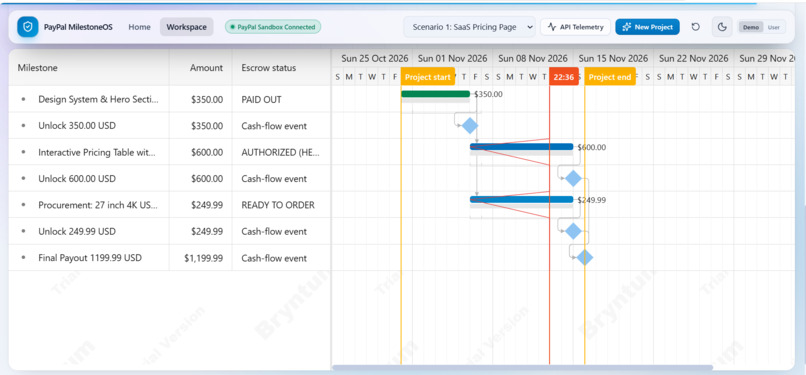
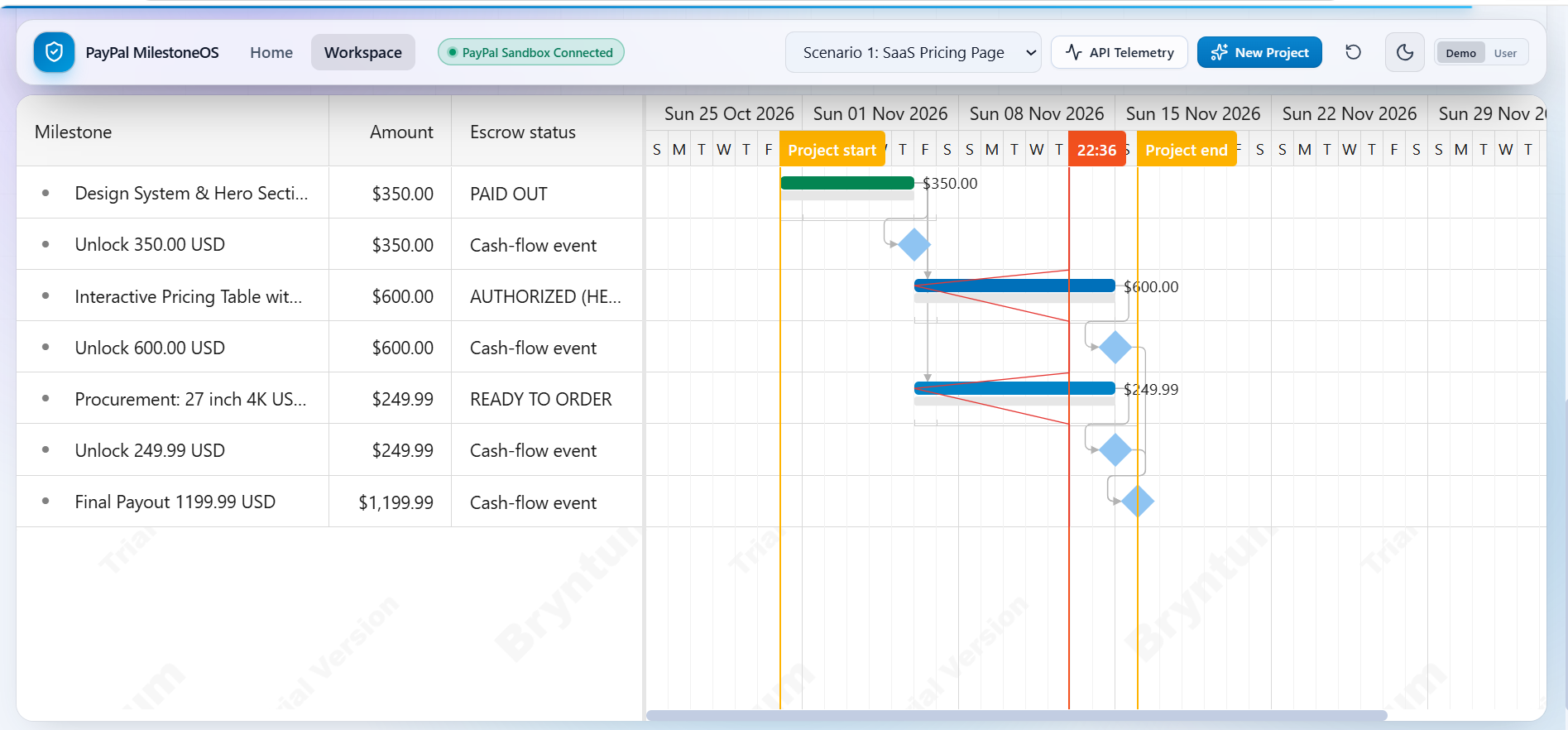
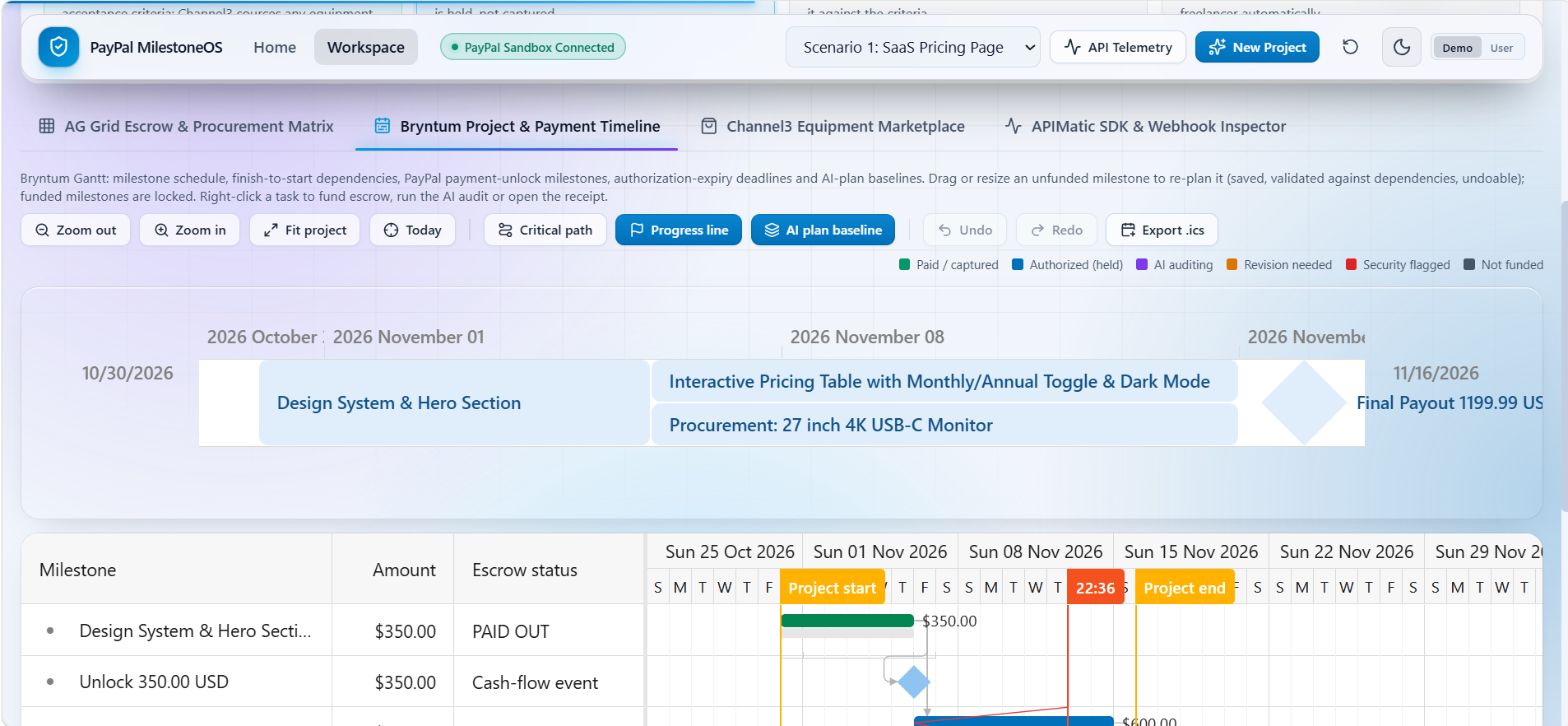
BRYNTUM VIEW
-
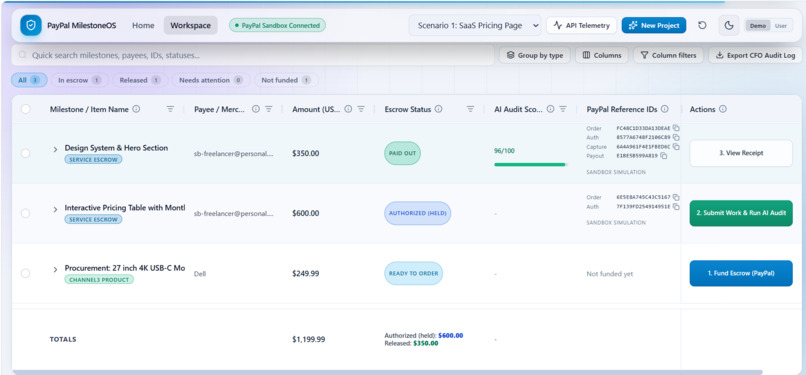
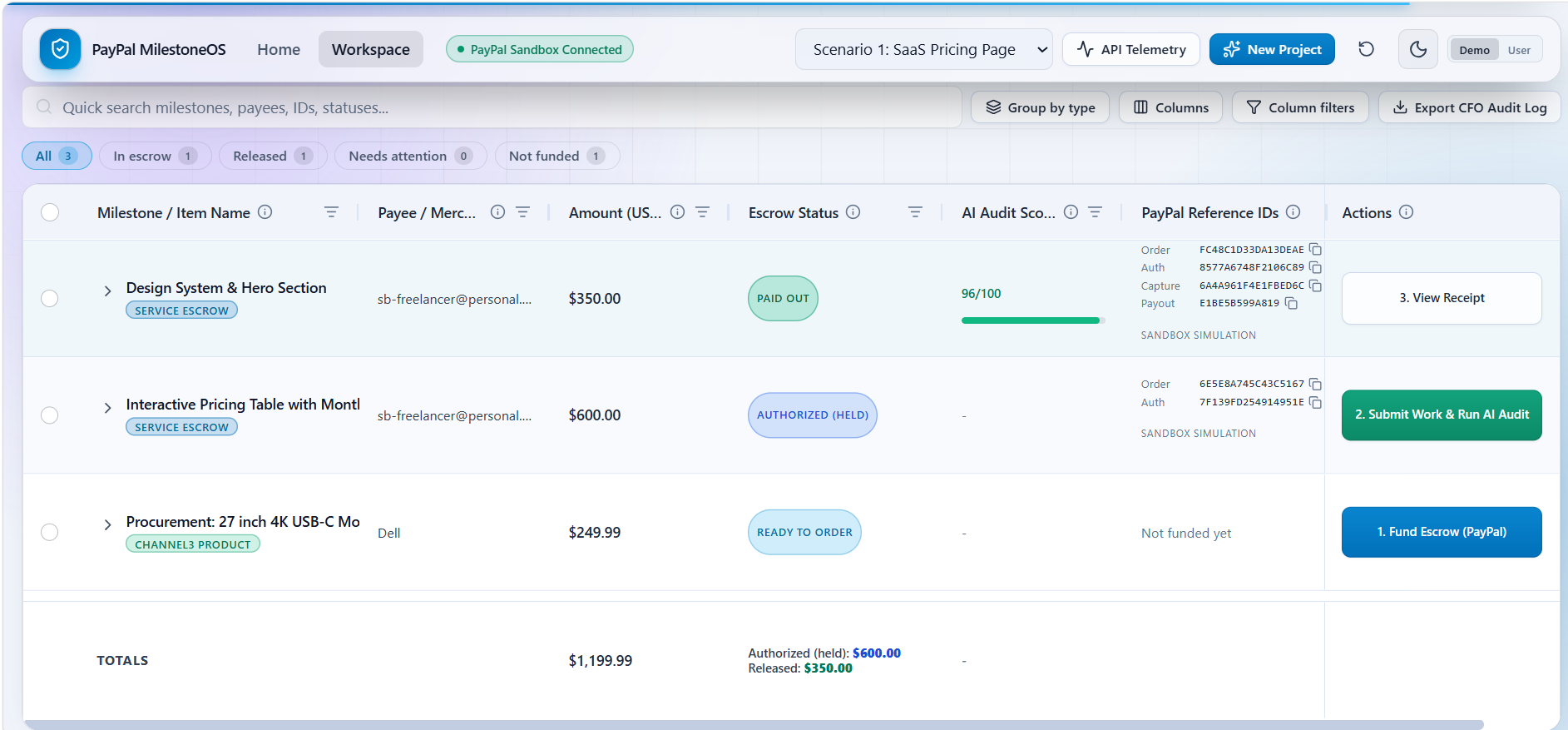
AG GRID VIEW AND MILESTONES FOR THE SCENARIO
-
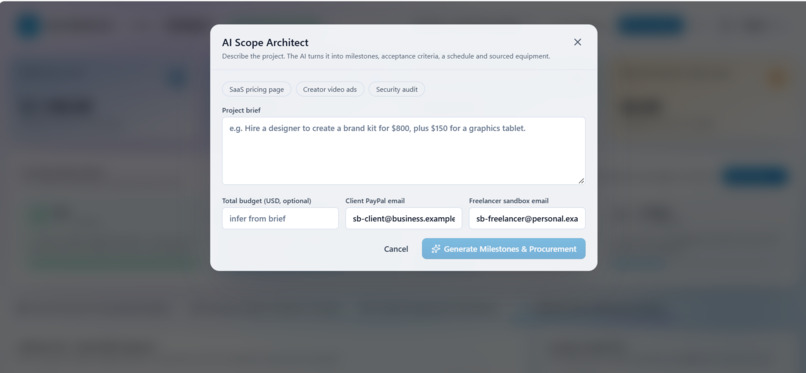
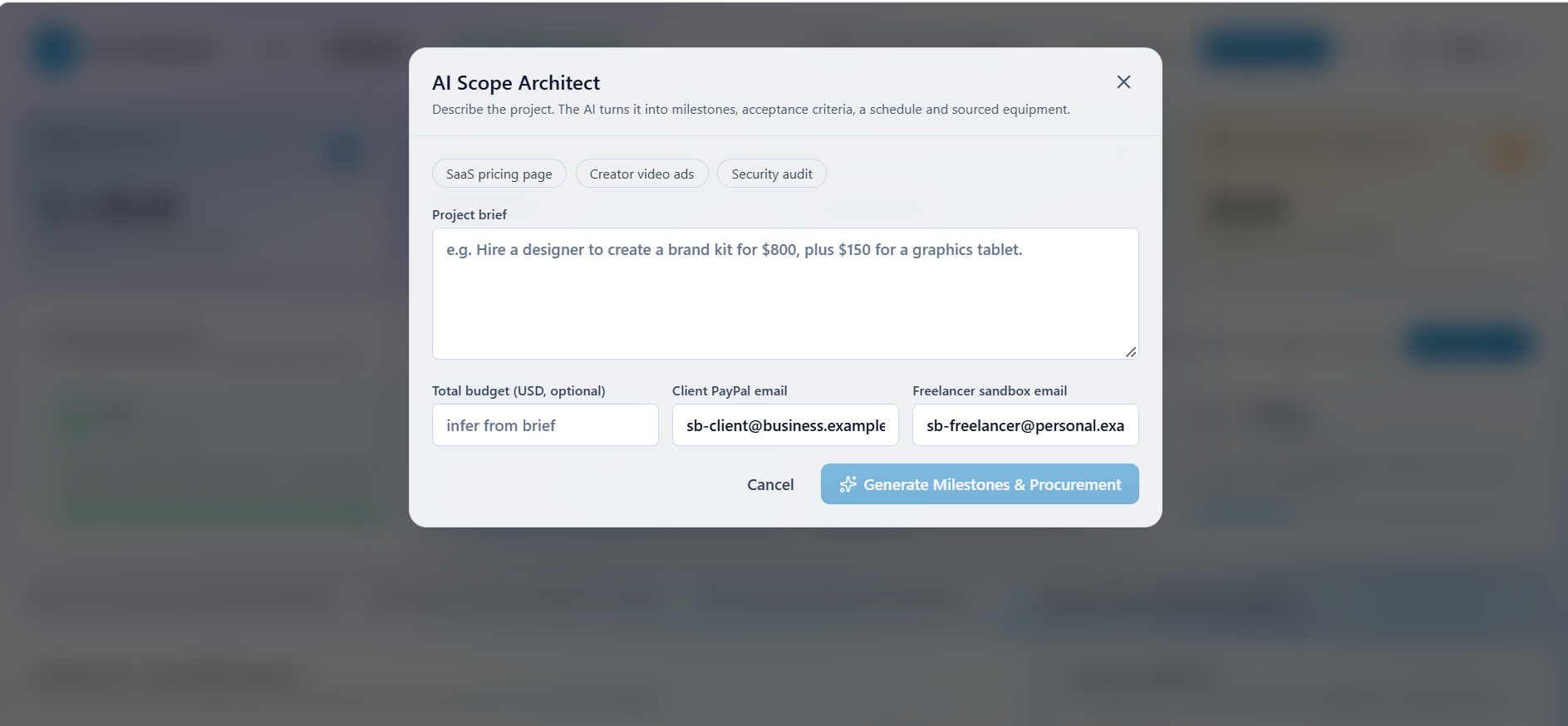
HOW TO CREATE NEW PROJECT
-
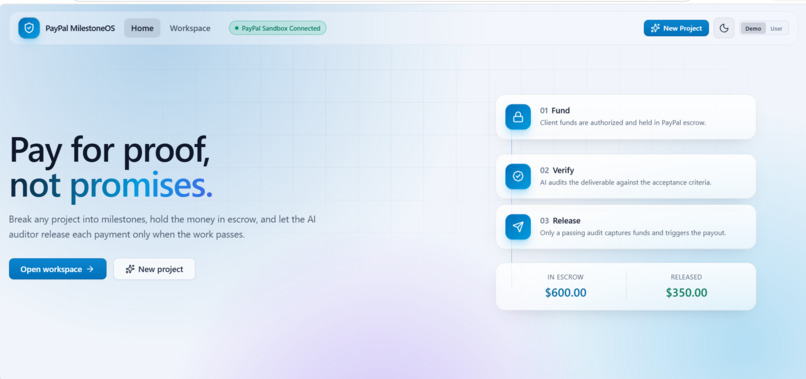
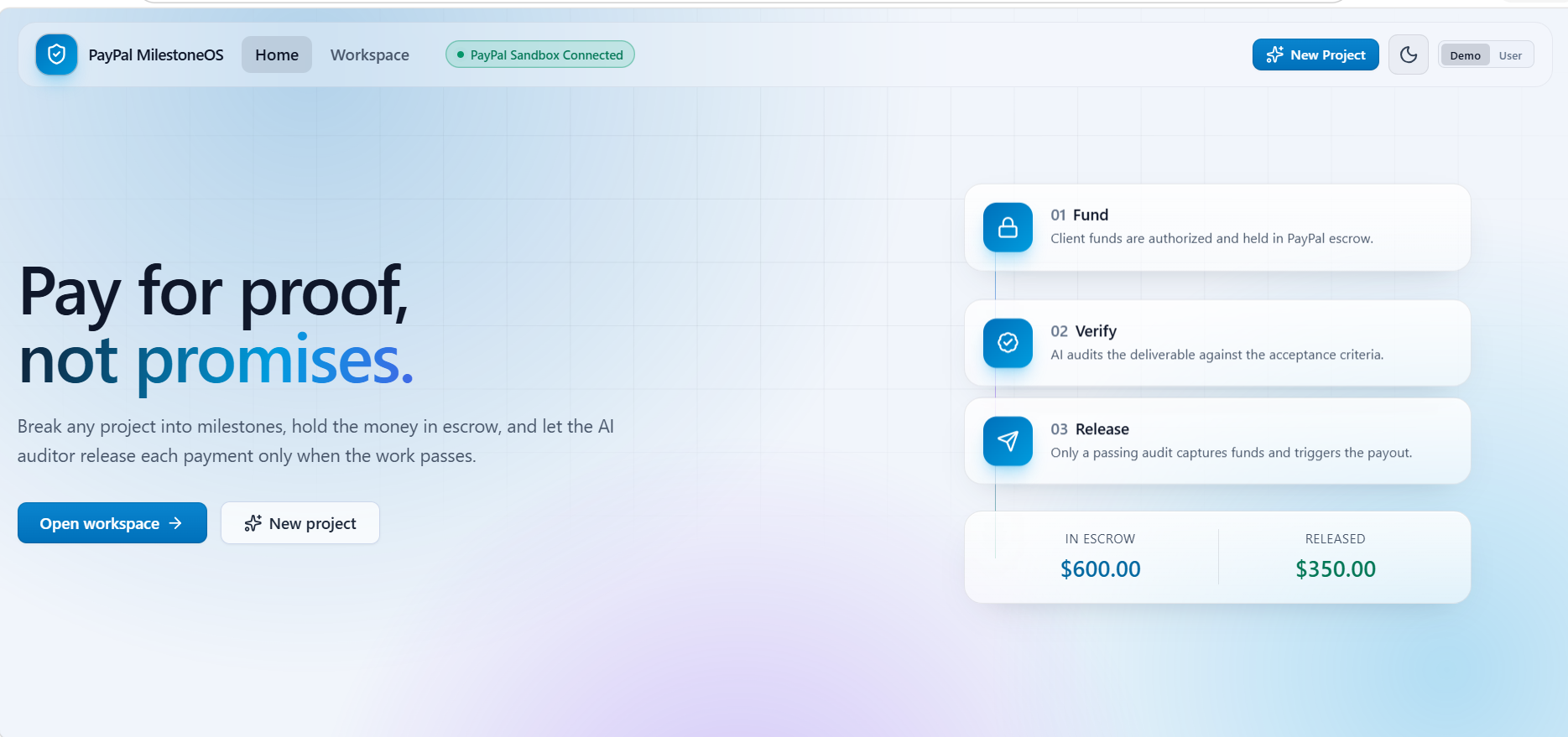
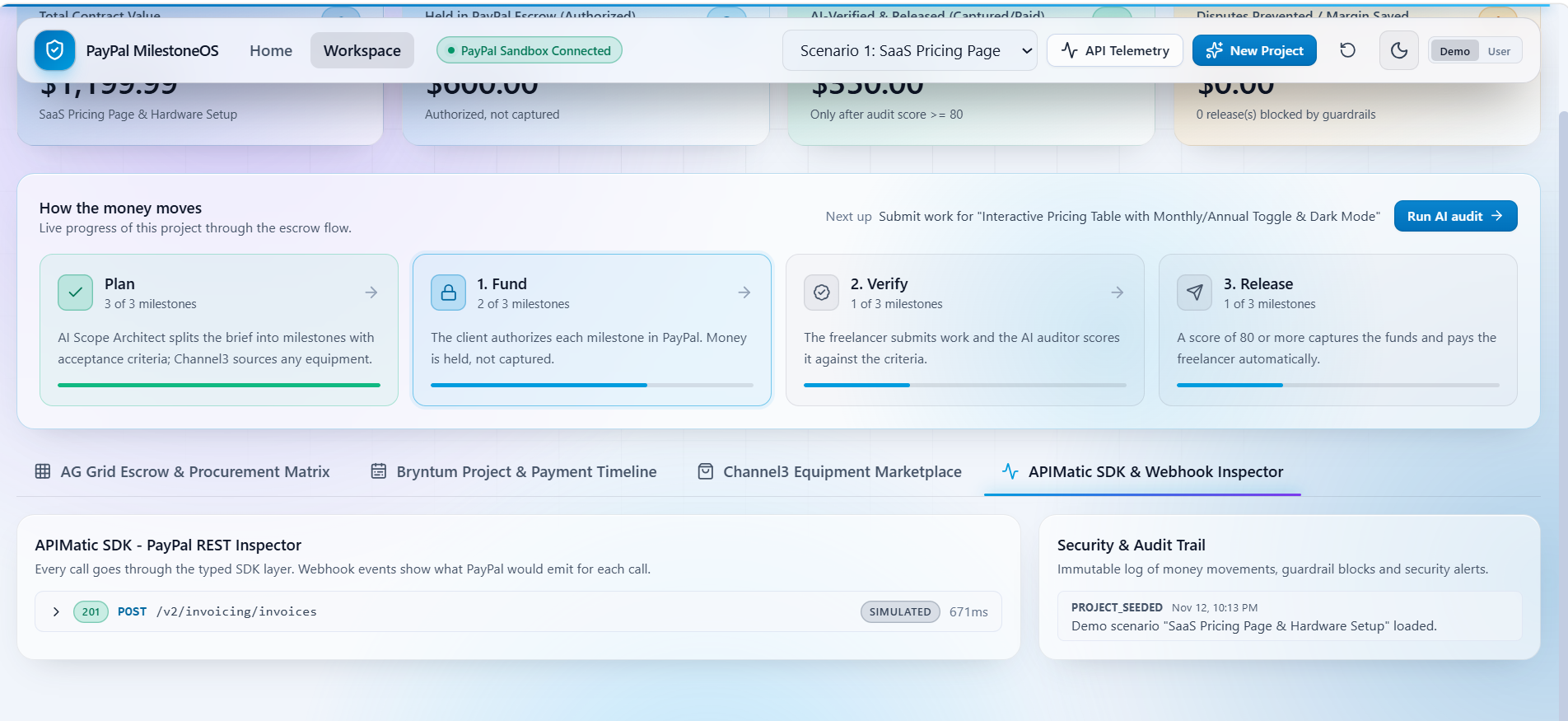
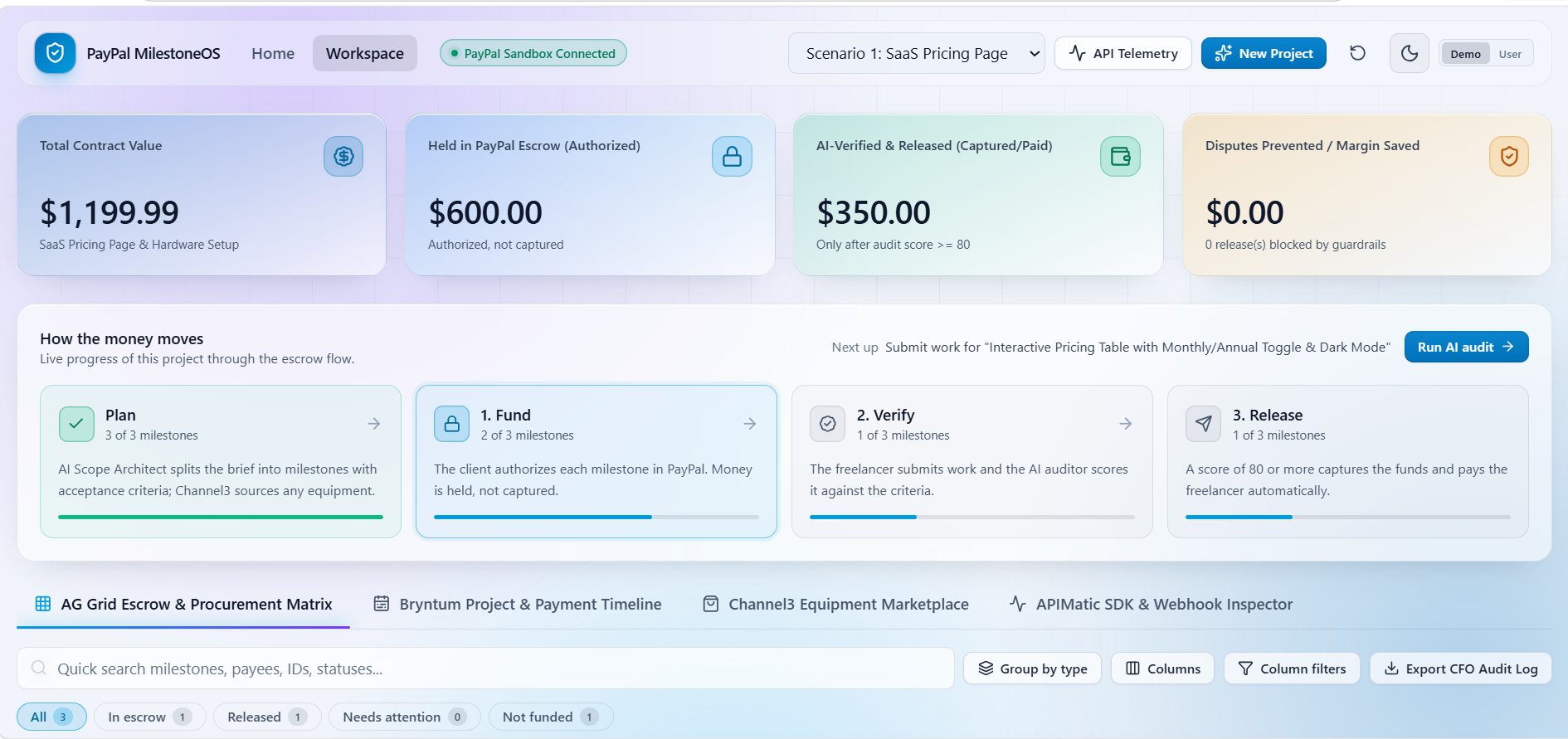
PAYPAL MILESTONEOS UI
-
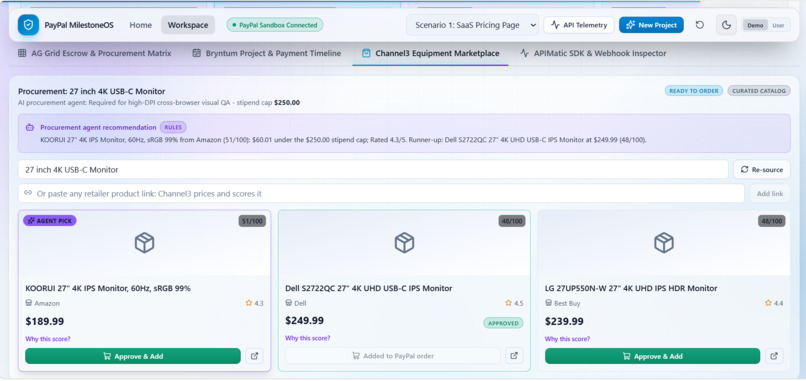
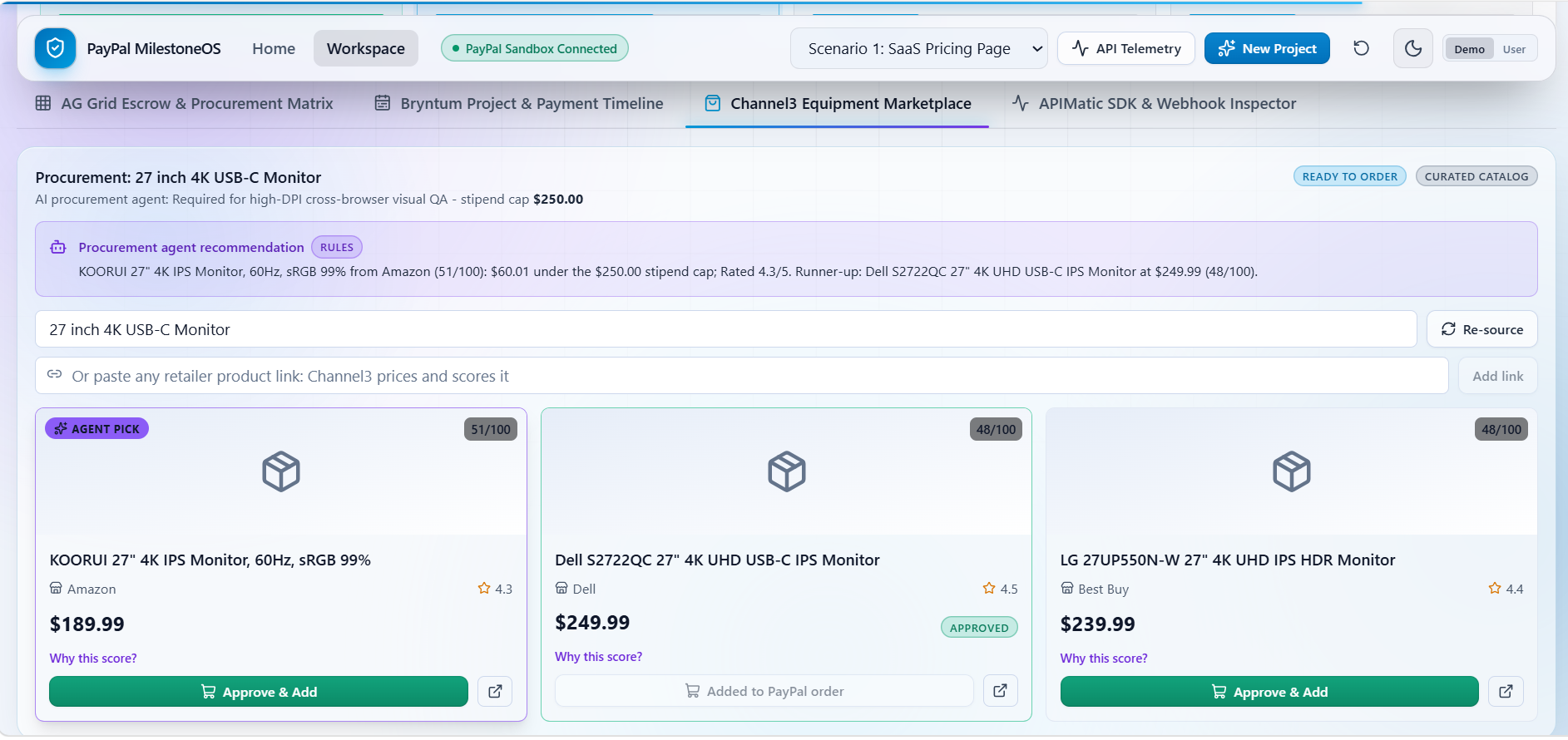
CHANNEL3 VIEW
-
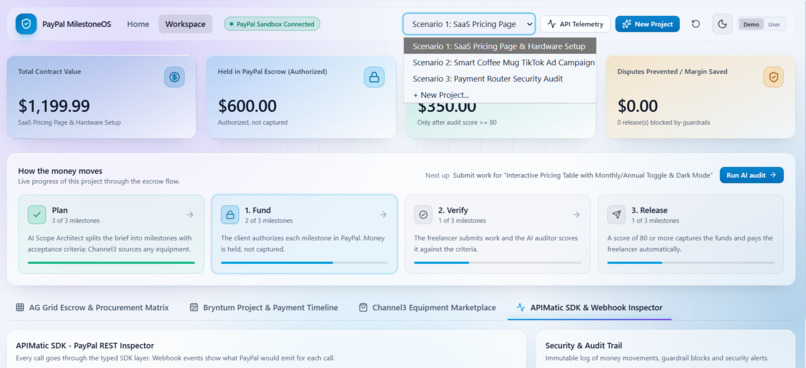
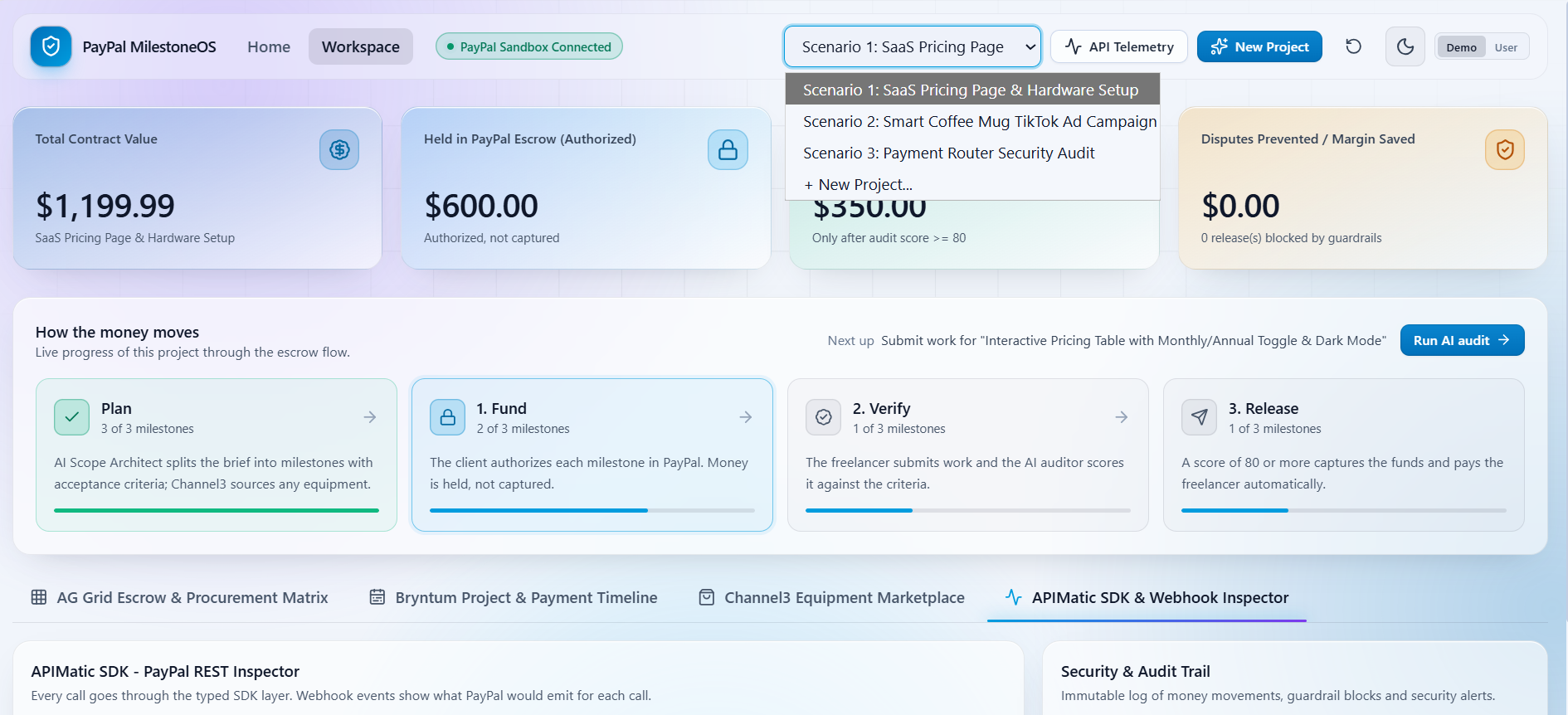
EXISTING SCENARIO
-
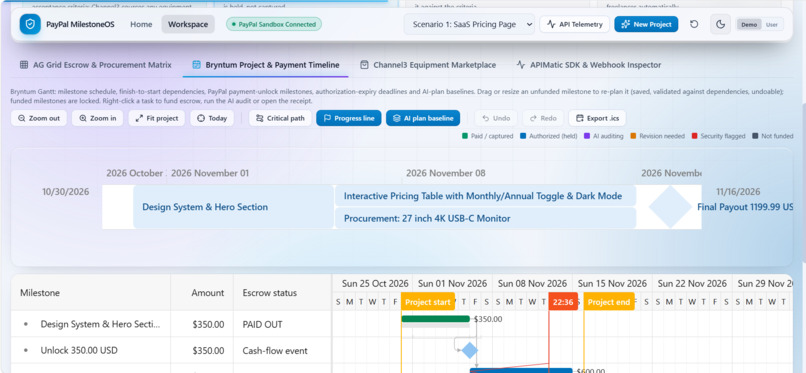
BRYNTUM VIEW
-
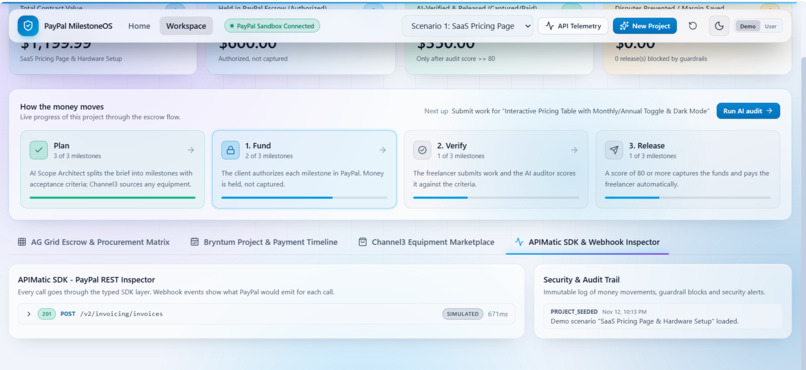
APIMATIC VIEW
-
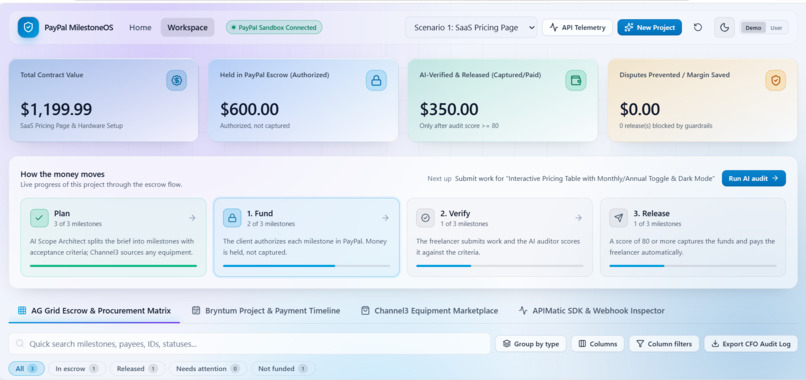
WORKSPACE
Inspiration:
Every freelancer has been ghosted after delivering work. Every client has paid upfront and received something half-finished. Escrow is the obvious answer — and it has existed for decades — but it only works if a human sits in the middle, reads the deliverable, and decides who gets the money. That human is slow, expensive, inconsistent, and the single reason programmable escrow has never scaled.
PayPal already has every primitive needed to fix this: Orders v2 can authorize funds without capturing them, Payouts can send money to any email, and Refunds can unwind a mistake. What was missing was the referee.
So we asked a harder question: can an AI agent be trusted to move real money?
Our answer is that the agent should never be trusted — it should be constrained. That idea shaped every line of PayPal MilestoneOS.
What it does
PayPal MilestoneOS turns a plain-English project brief into a programmable, AI-verified escrow contract settled entirely on PayPal.
- AI Scope Architect — you describe the project in one sentence. The AI returns milestones, dates, dependencies, a hardware stipend, and — critically — objective, verifiable acceptance criteria. That becomes the contract.
- Fund escrow — the client pays with a real PayPal order using
intent: AUTHORIZE. PayPal holds the funds. Nothing is captured. PayPal is the vault. - Procure equipment — a Channel3 agent sources real products against the stipend cap and adds the exact SKU price to the ledger as a fundable row.
- AI Deliverable Auditor — the freelancer submits work. The agent grades it criterion
by criterion in a live streaming terminal, then:
- score ≥ 80 → autonomously calls PayPal Capture, then PayPal Payouts
- score 50–79 → computes a pro-rated settlement; captures with
final_capture: truefor the agreed amount and releases the remainder back to the client - score < 50 → funds stay locked, freelancer gets a line-by-line fix list
- prompt injection detected → score forced to 0,
SECURITY_FLAGGED, every PayPal API call blocked, security alert written to the audit trail
No human approves the payment. But no model ever decides it either.
How we built it
A single Next.js 15 (App Router, TypeScript) application — frontend and API routes deploy
as one Render web service. SQLite via better-sqlite3 means judges need zero database
setup.
Built With
- ag-grid
- agentic-commerce
- ai-agents
- apimatic
- better-sqlite3
- bryntum
- channel3
- escrow
- fintech
- gpt-4o
- idempotency
- next.js
- node.js
- openai
- paypal
- paypal-orders-v2
- paypal-payouts
- prompt-injection-defense
- react
- render
- rest-api
- sqlite
- tailwindcss
- typescript
- zod
