PayPal Invoice Collection Agent
Inspiration
Managing unpaid invoices is more than just checking payment statuses. Businesses and freelancers must constantly monitor due dates, identify overdue payments, prioritize customers, write reminders, and remember when to follow up again.
We wanted to solve this repetitive problem by building something more intelligent than a conventional invoice dashboard: an agent that understands invoice situations, recommends appropriate actions, and helps automate the collection process while keeping humans in control.
What it does
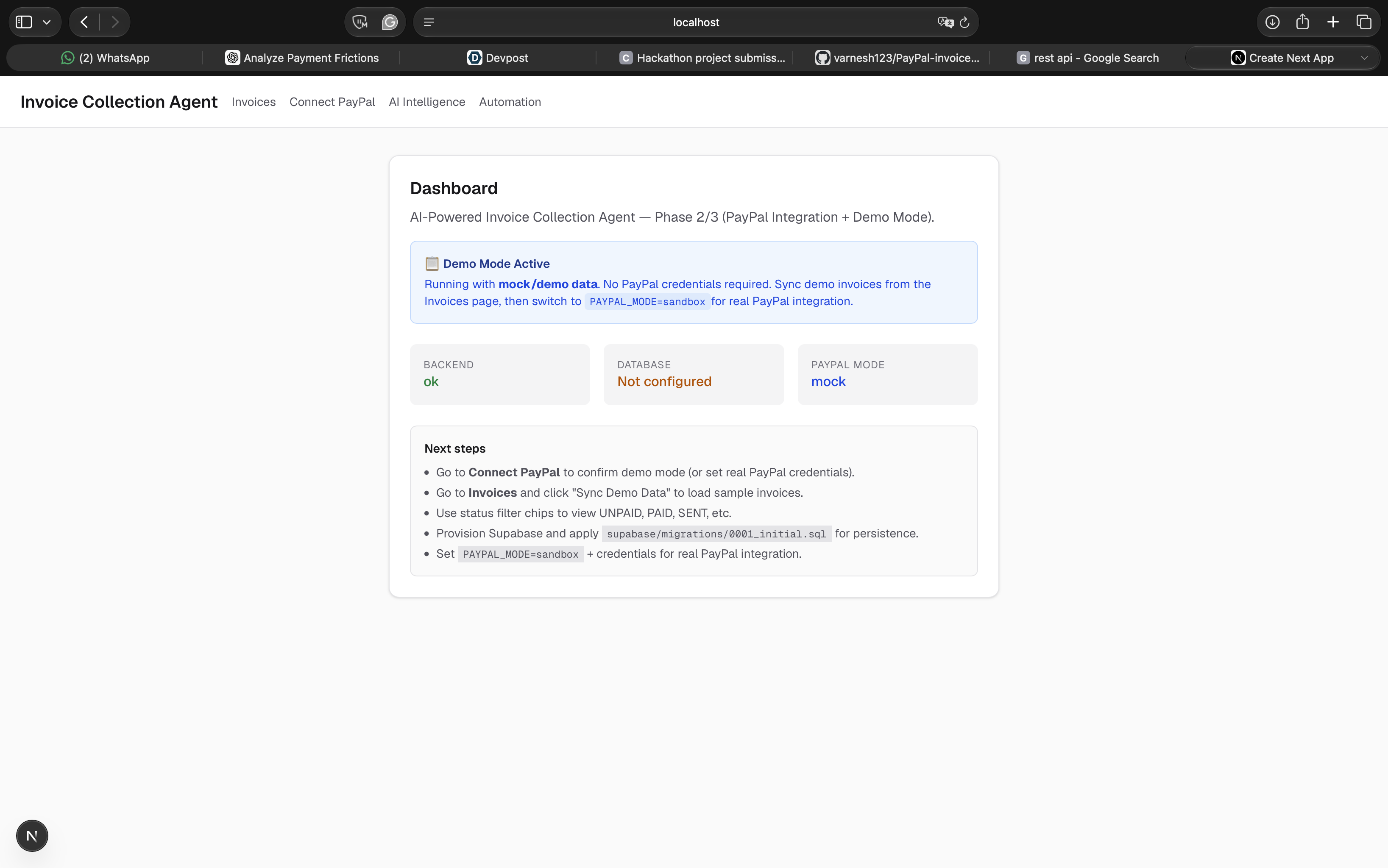
The PayPal Invoice Collection Agent is designed to simplify the invoice collection lifecycle through a combination of payment management, AI-powered insights, and controlled automation.
Its core capabilities include:
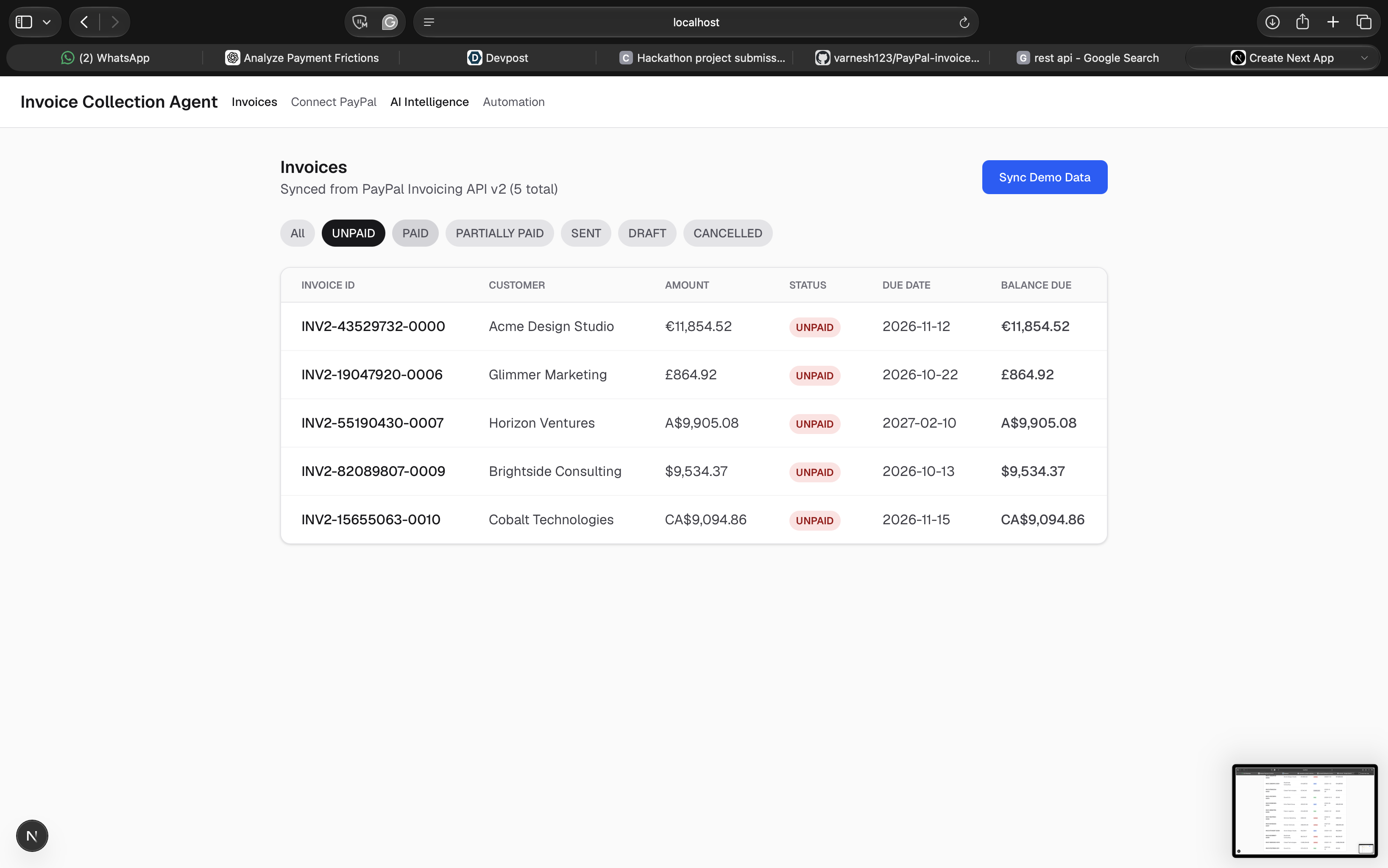
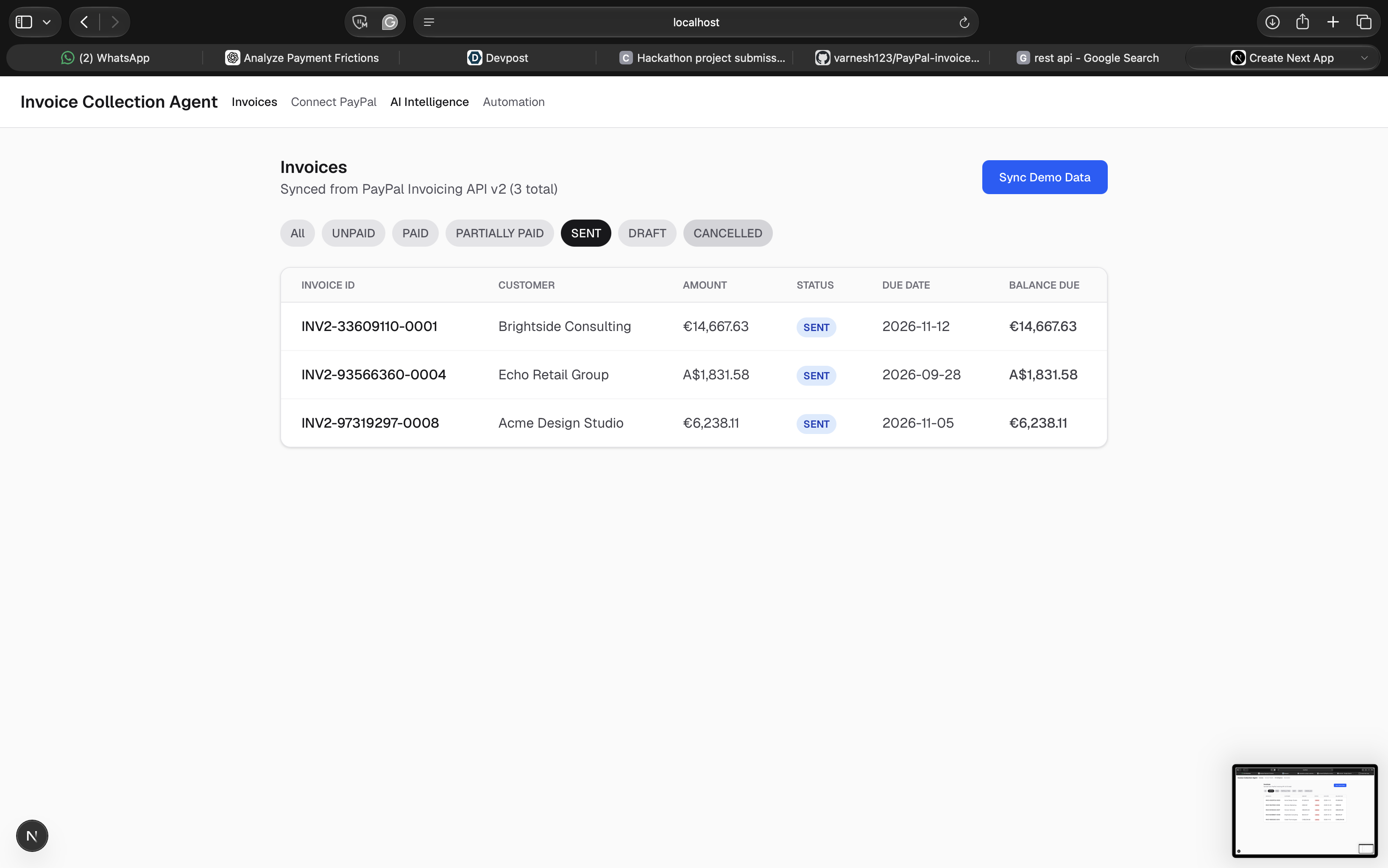
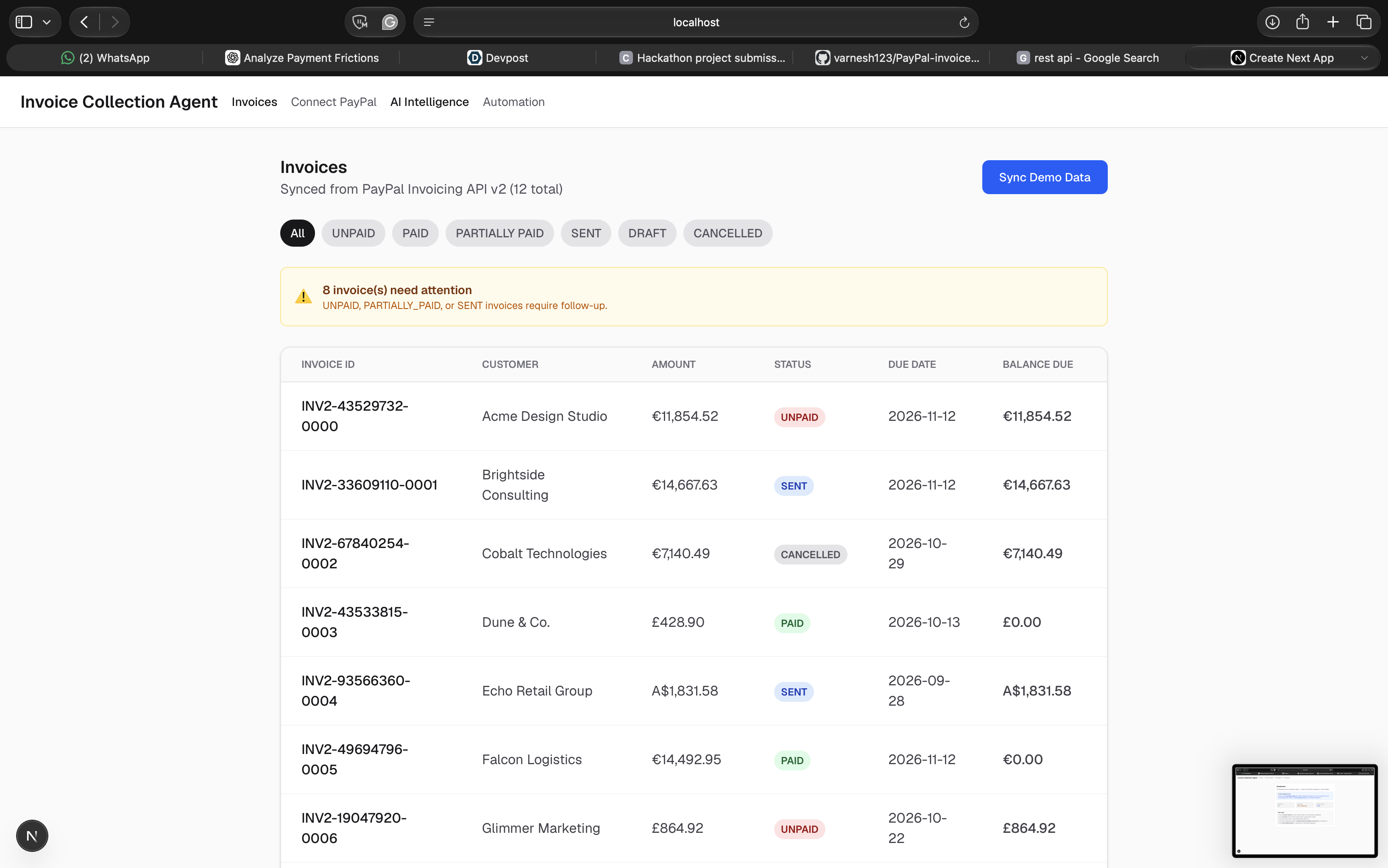
- Invoice Management: Organizes invoice information and tracks payment statuses.
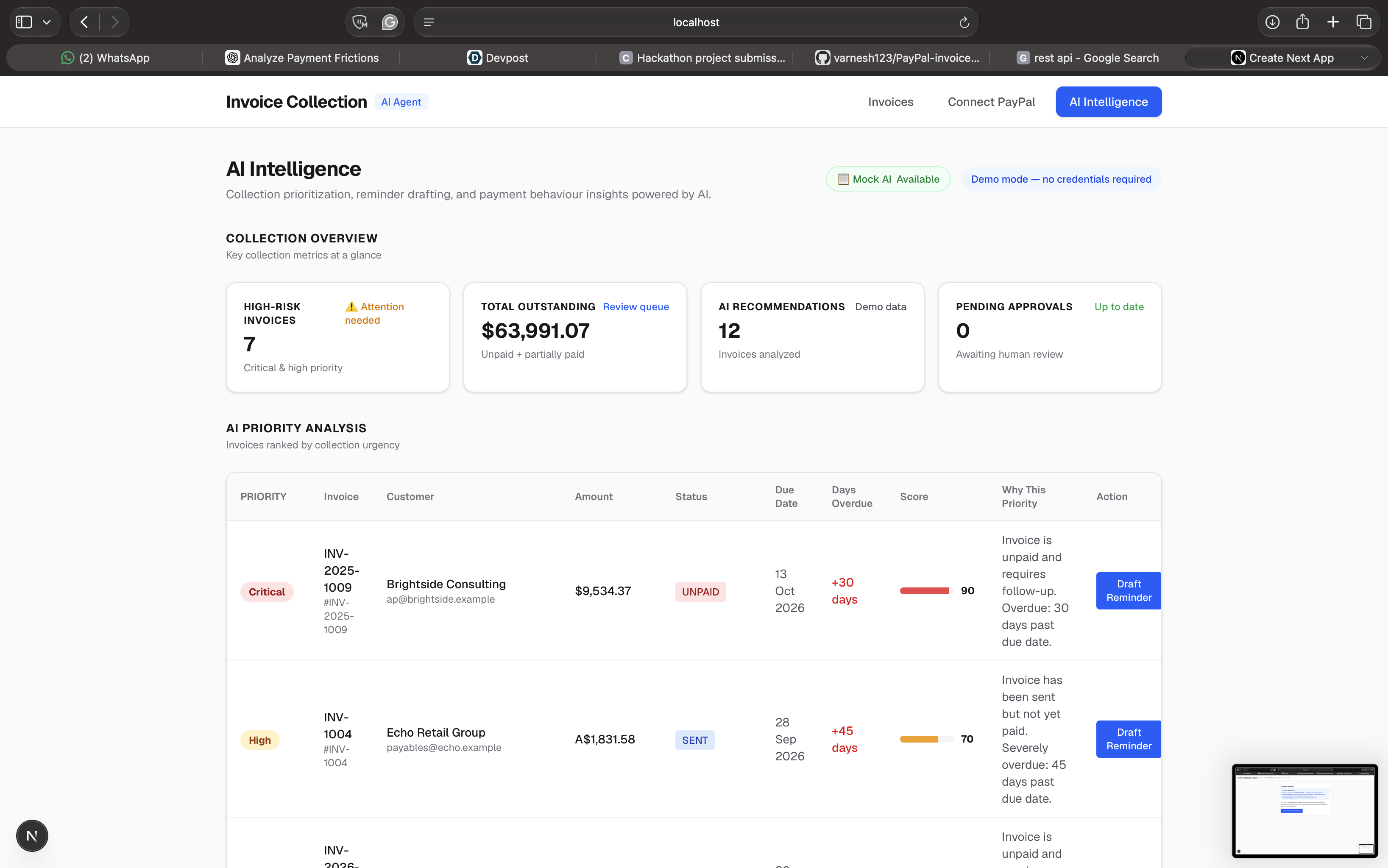
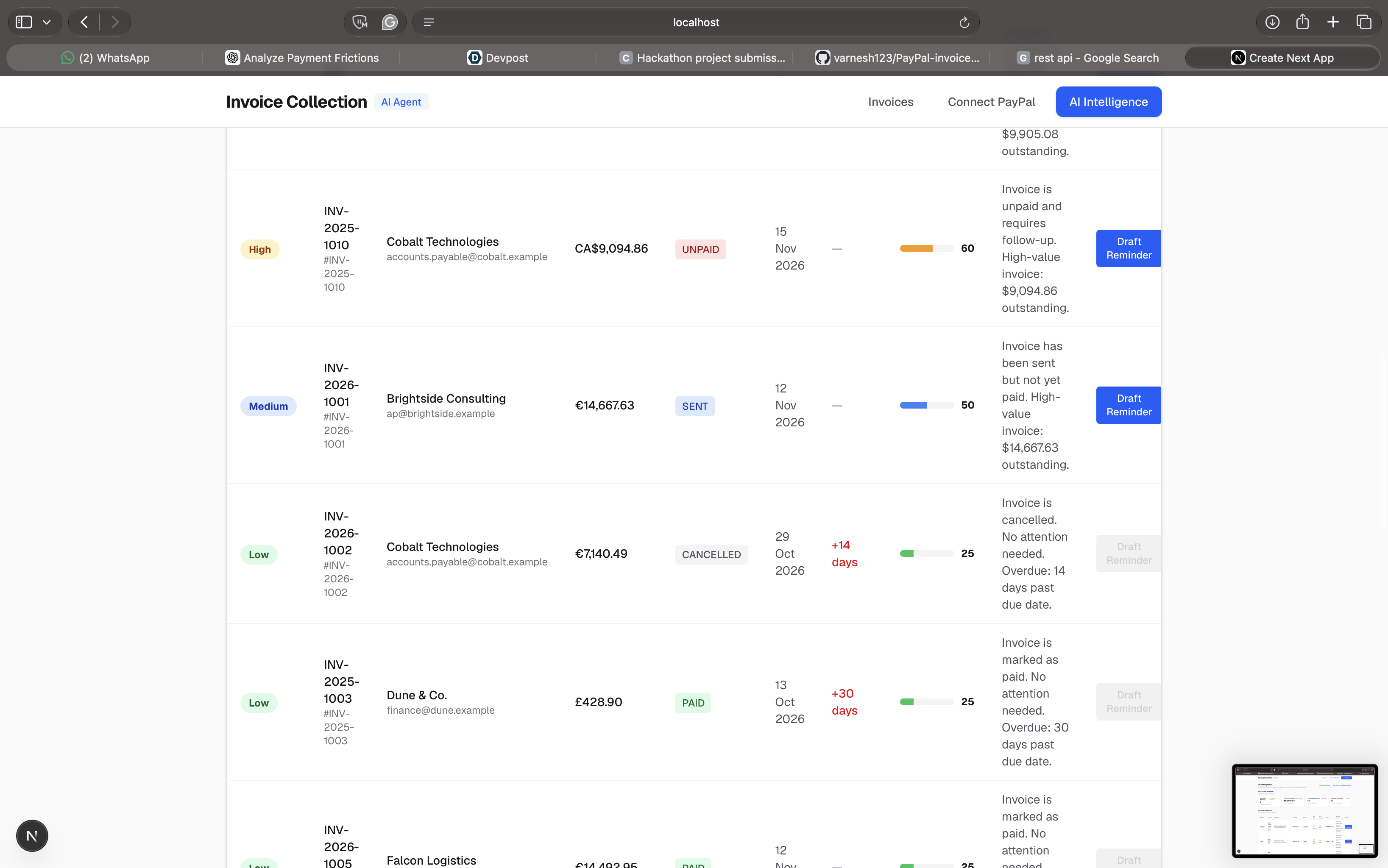
- AI-Powered Analysis: Evaluates invoices using factors such as amount, due date, and overdue duration.
- Smart Prioritization: Assigns priority levels to invoices and explains why certain payments need attention.
- AI Reminder Generation: Creates contextual payment reminder drafts in different communication tones.
- Human Approval: Allows users to review, edit, approve, or reject suggested reminders.
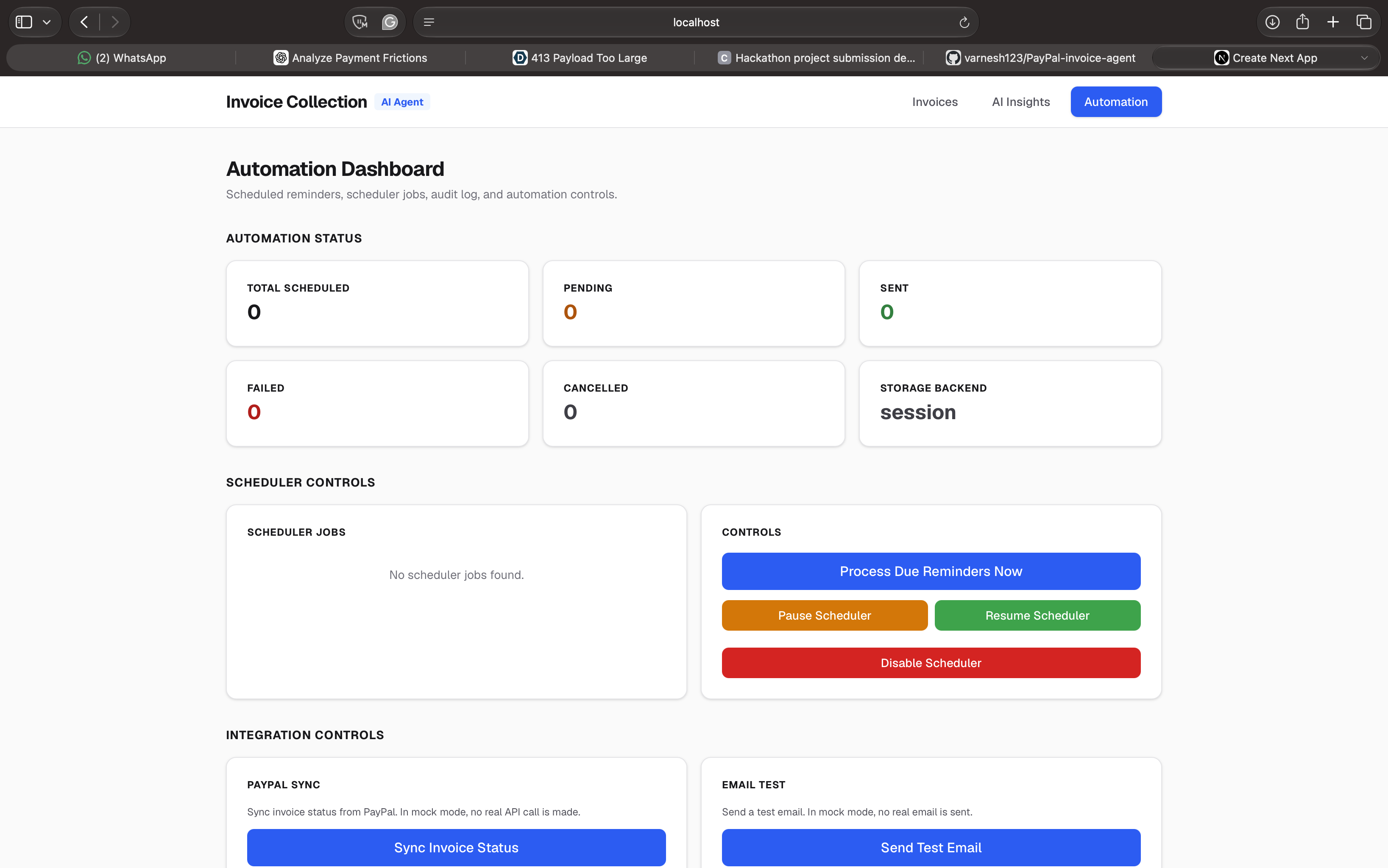
- Automated Follow-ups: Supports scheduling and tracking approved reminders.
- Activity Tracking: Maintains a history of important actions and execution events.
How we built it
The application uses a Python FastAPI backend and a Next.js frontend, with Supabase/PostgreSQL as its intended persistence layer.
We structured development into six phases:
- Foundation: Established the backend, frontend, API communication, and initial database architecture.
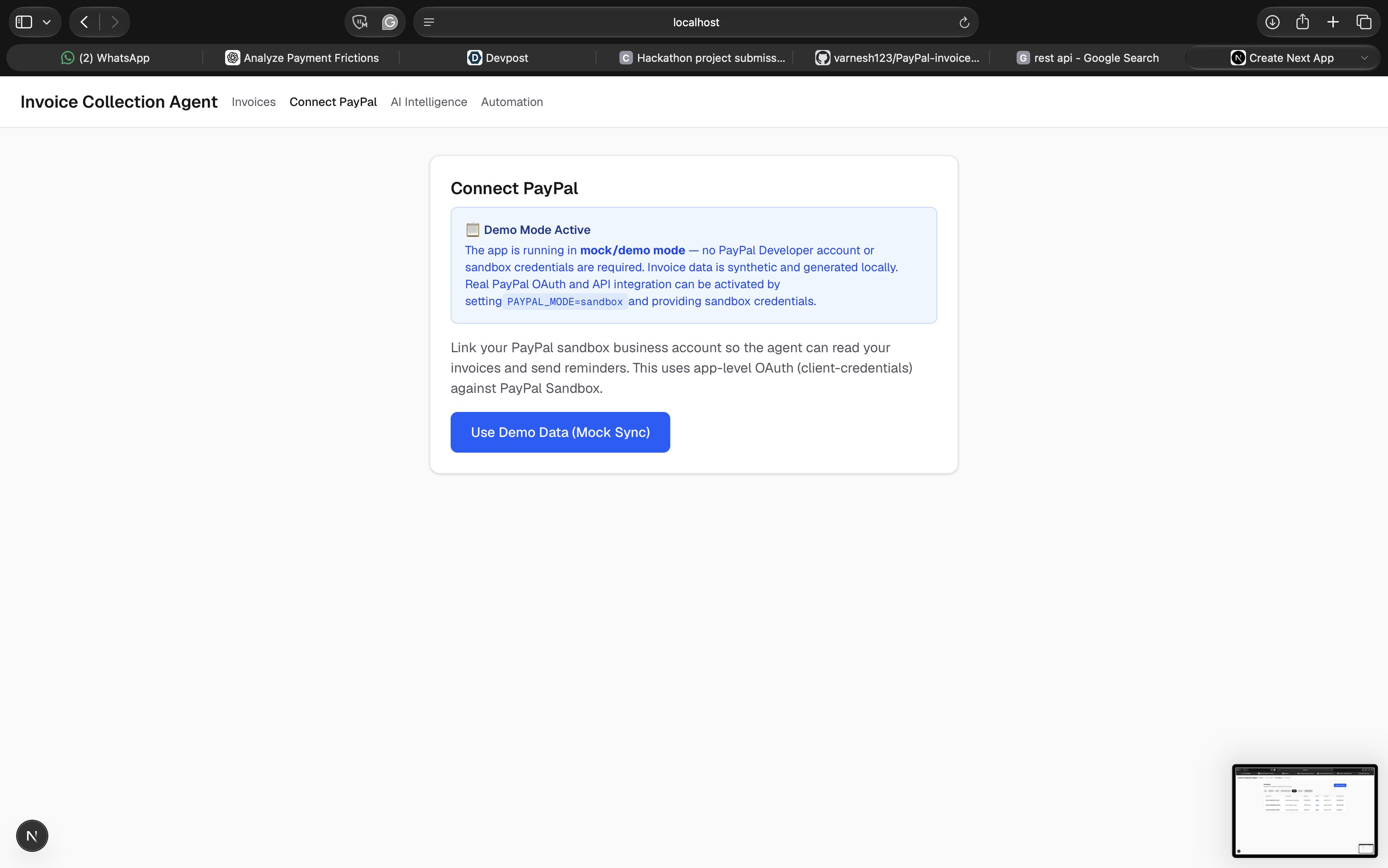
- PayPal Integration: Designed the PayPal provider layer and mock/Sandbox integration approach.
- Invoice Management: Built the invoice management experience and synchronization foundation.
- AI Intelligence: Developed invoice analysis, priority recommendations, reminder generation, and approval workflows.
- Automation: Implemented the architecture for approvals, scheduled reminders, email execution, follow-up tracking, and audit logs.
- Reporting and Deployment: Planned reporting, reliability improvements, and deployment readiness.
What we learned
Building this project helped us understand how to design a full-stack application, structure REST APIs, connect frontend and backend services, work with database schemas, and design modular integrations.
We also explored how AI can be combined with deterministic business logic to make recommendations more explainable and useful.
An important lesson was that automation should not mean removing human control. External actions such as sending payment reminders need approval, execution tracking, and duplicate prevention.
Challenges
Some of our main challenges included designing a reliable invoice data model, separating AI-generated recommendations from actual business decisions, handling external service dependencies, and making automation safe against duplicate execution.
We also designed a mock integration approach so that the application could be developed and tested without depending entirely on external credentials.
Our vision
We want to make invoice collection less repetitive and more intelligent — helping businesses spend less time chasing payments and more time focusing on their actual work.
Built With
- artificial-intelligence
- css
- fastapi
- github
- next.js
- oauth
- openai
- opencode
- paypal
- paypal-developer-platform
- paypal-invoicing-api
- postgresql
- python
- react
- rest-api
- supabase
- tailwind
- typescript
- vscode
