-
-
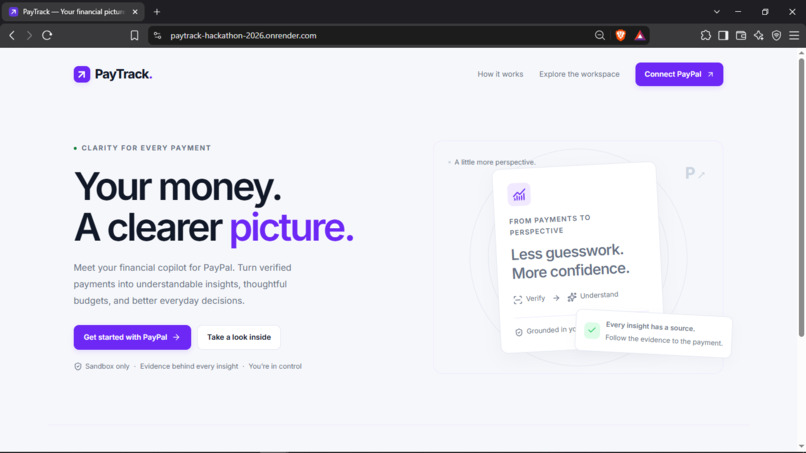
Welcome Page
-
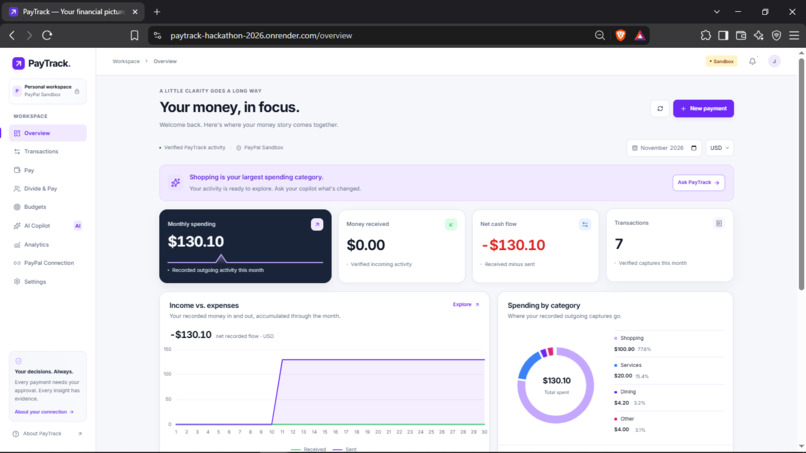
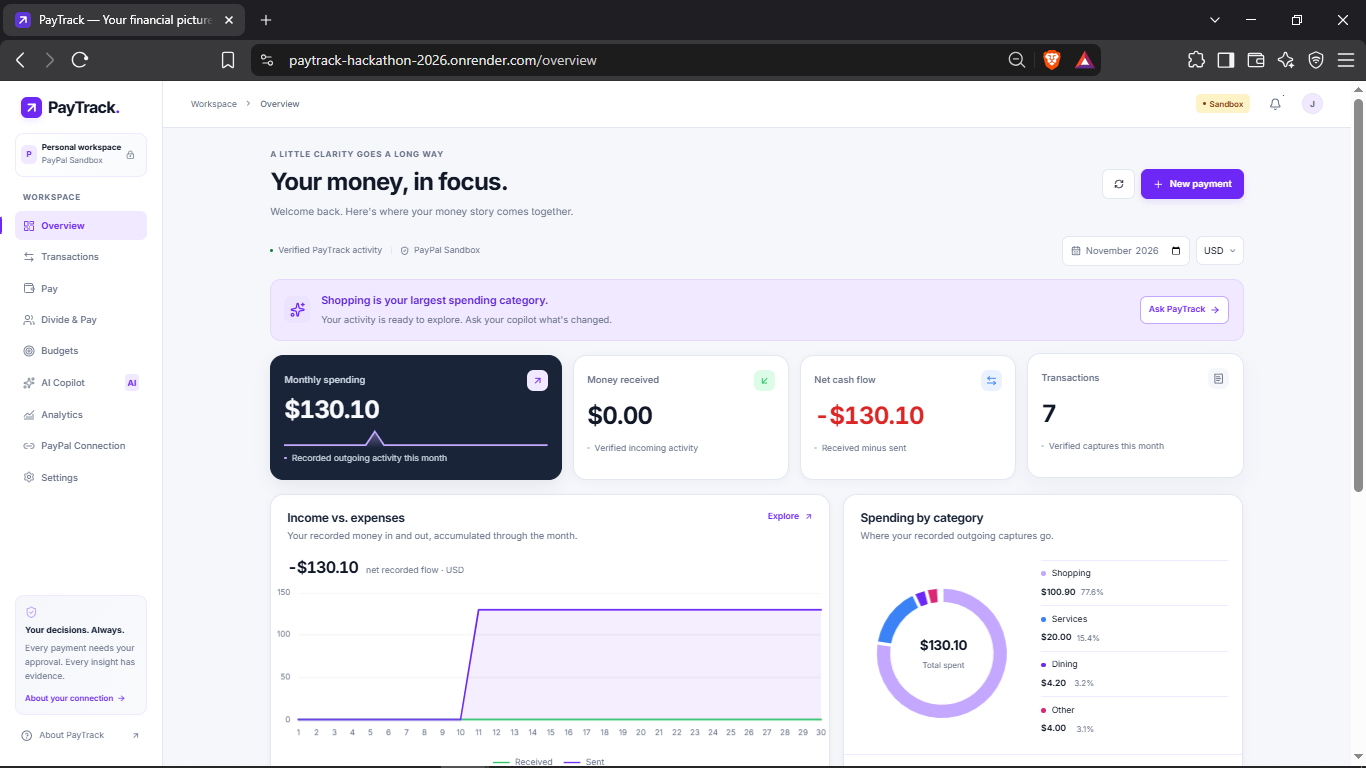
Dashboard Page
-
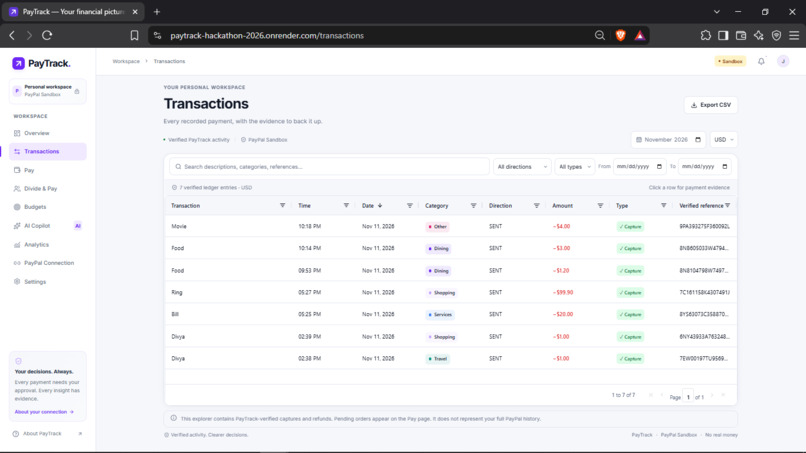
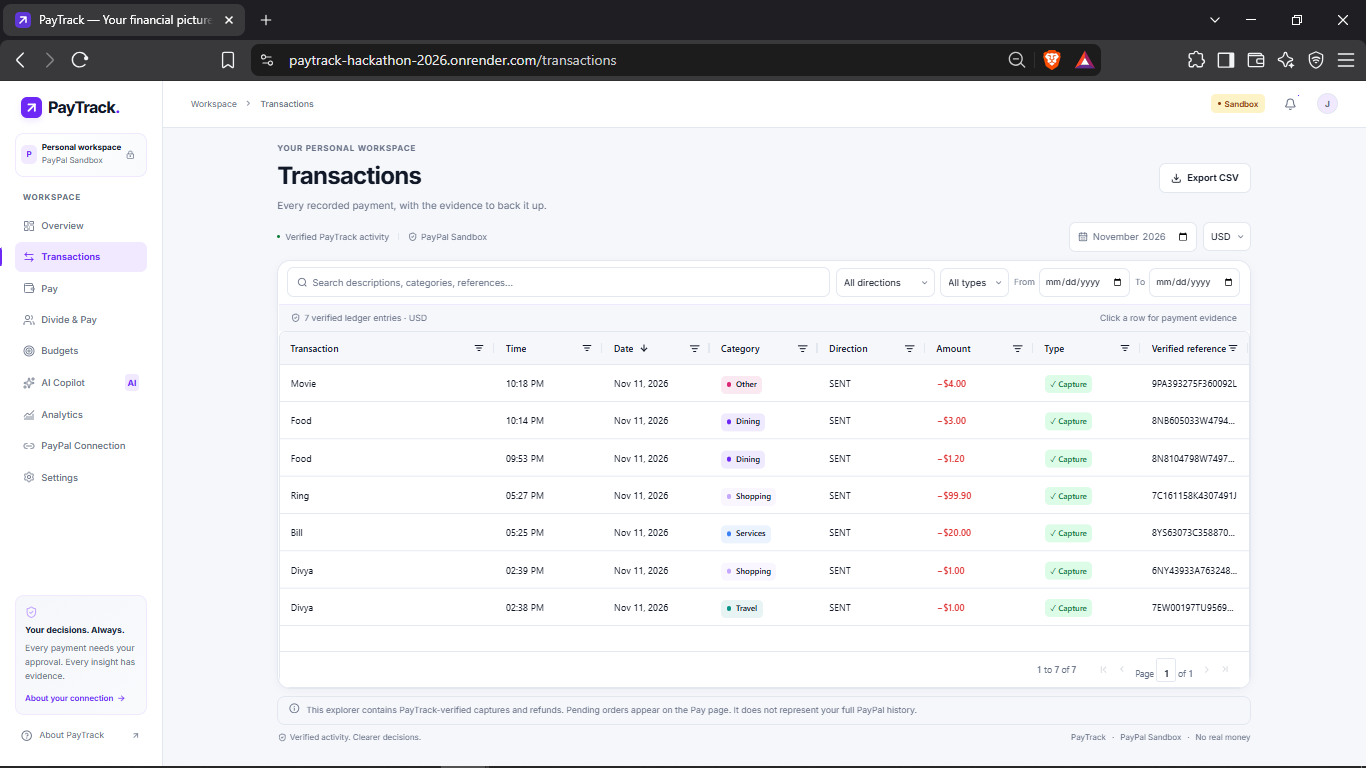
Transaction Page
-
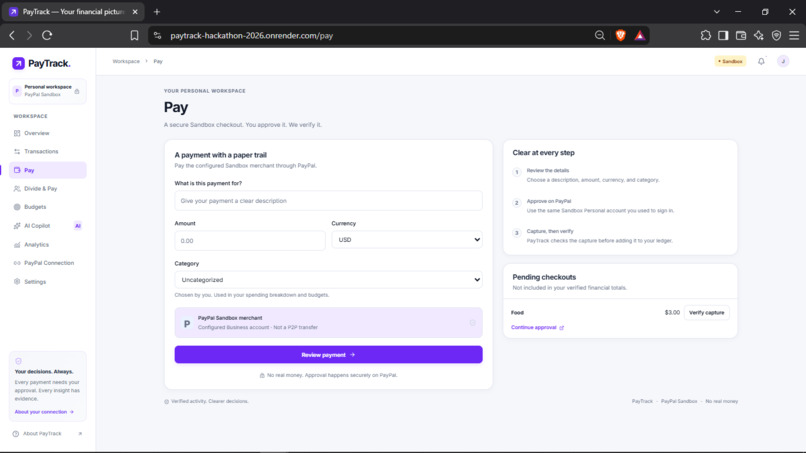
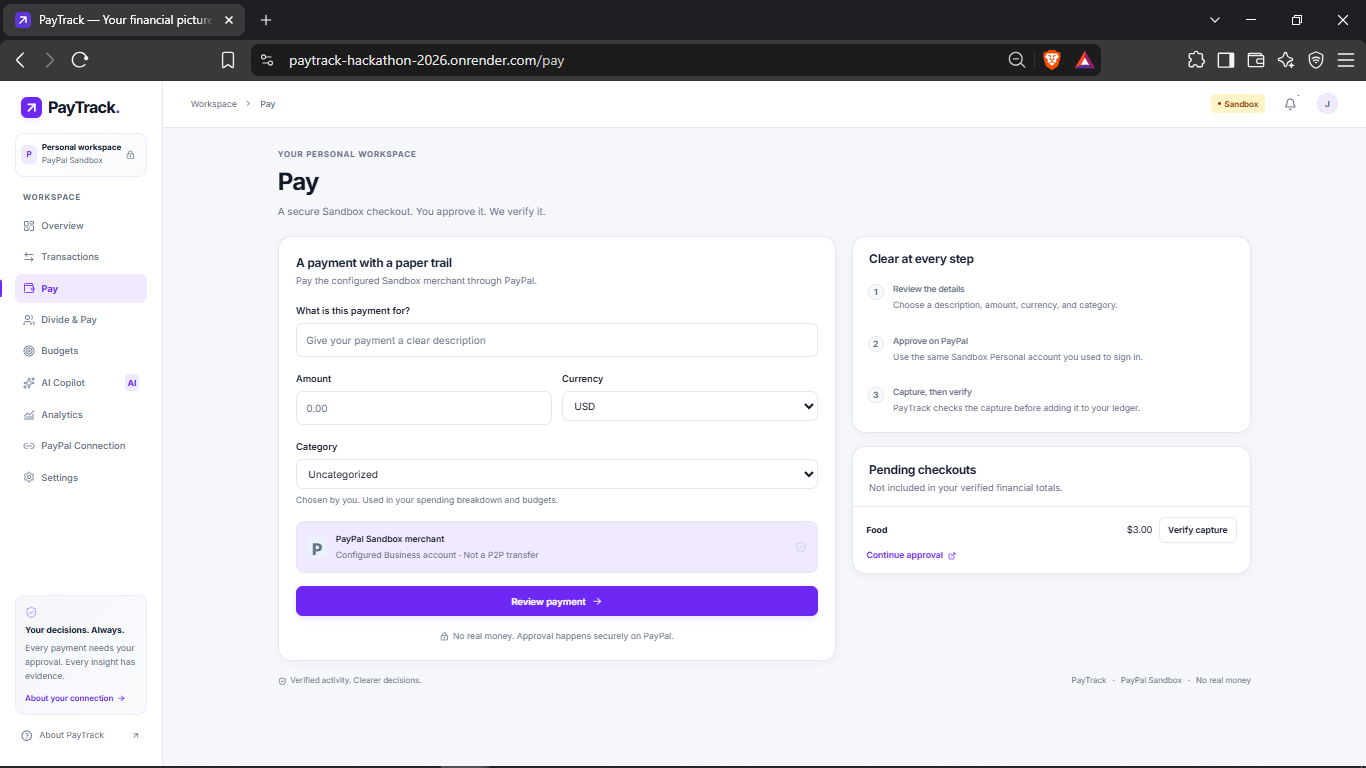
Pay Page
-
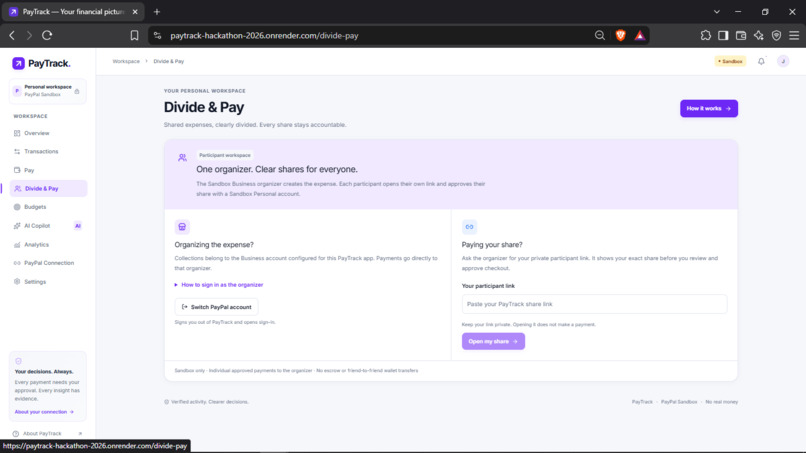
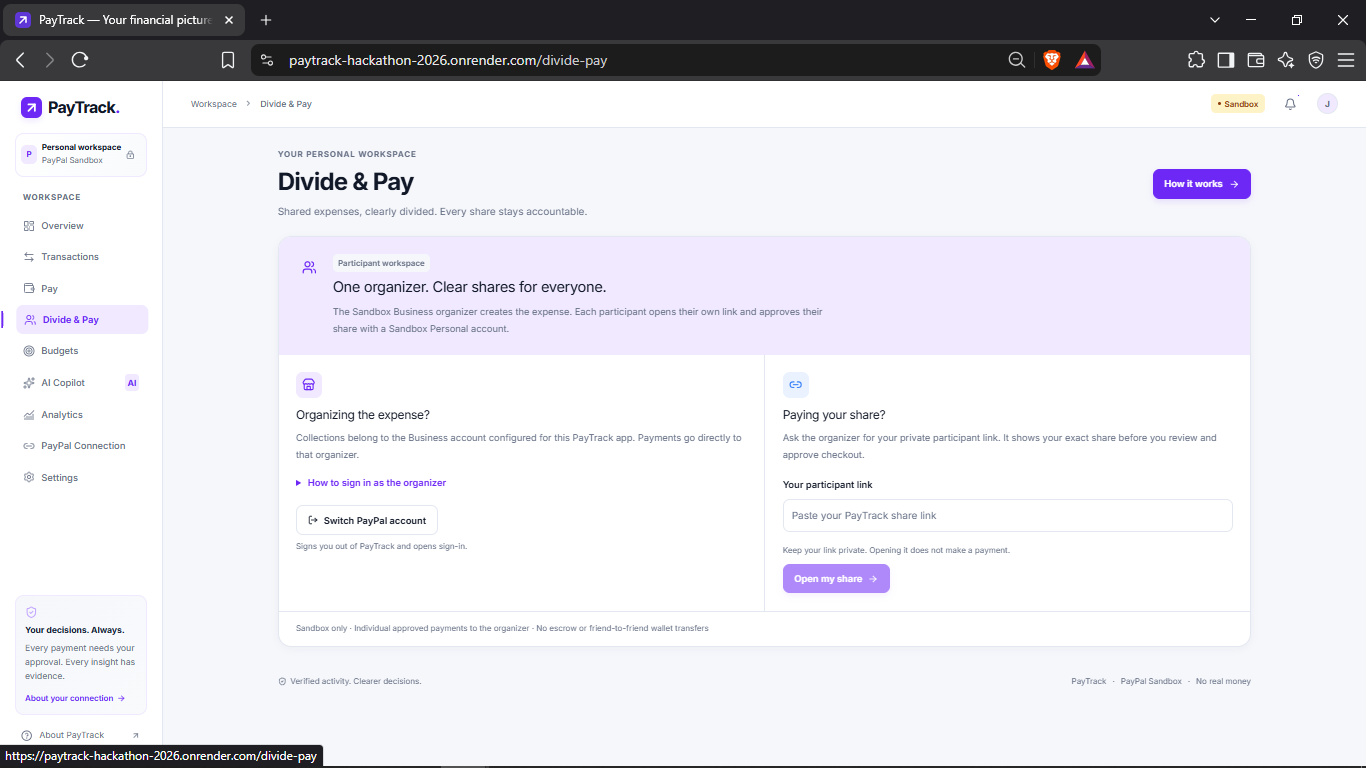
Divide & Pay Page
-
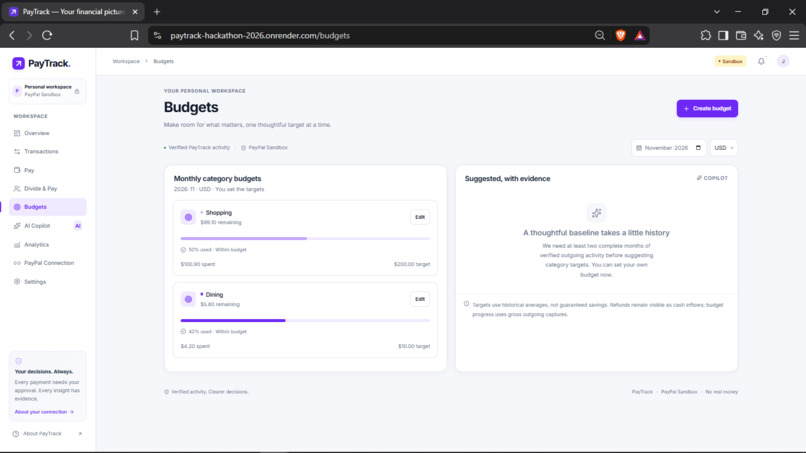
Budget Page
-
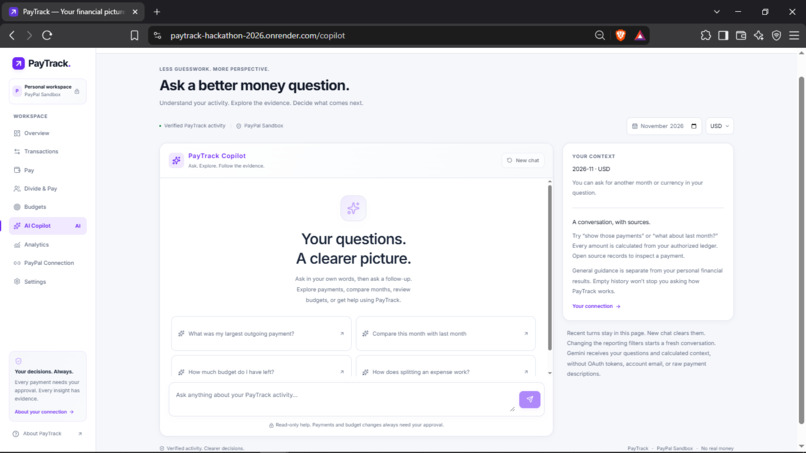
AI Copilot Page
-
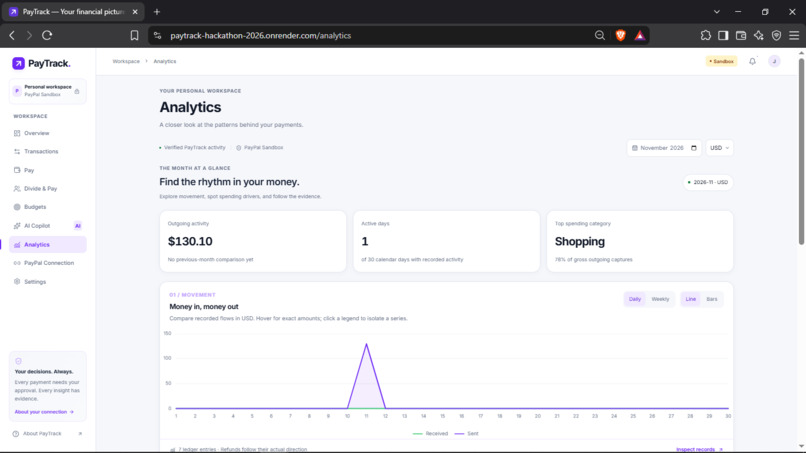
Analytics Page - 1
-
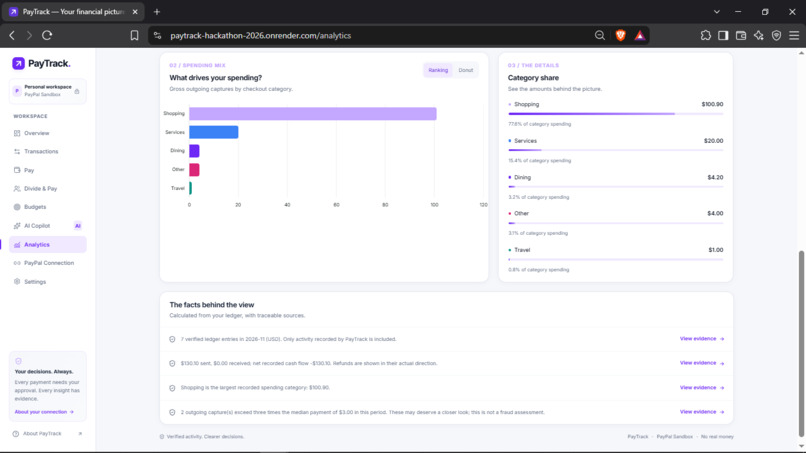
Analytics Page - 2
-
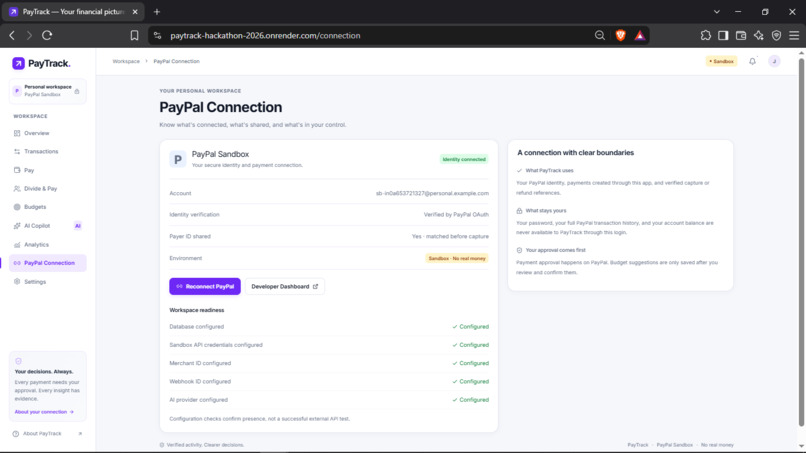
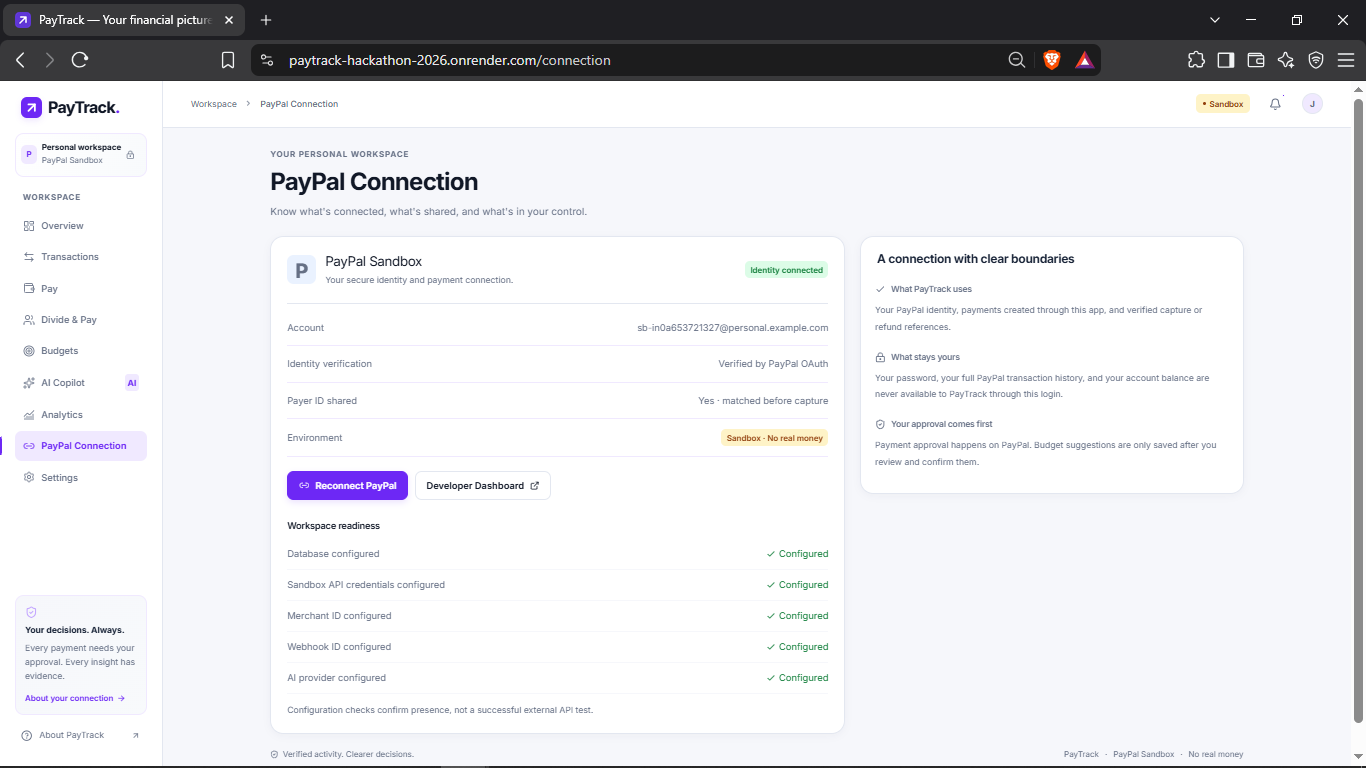
Paypal Connection Page
-
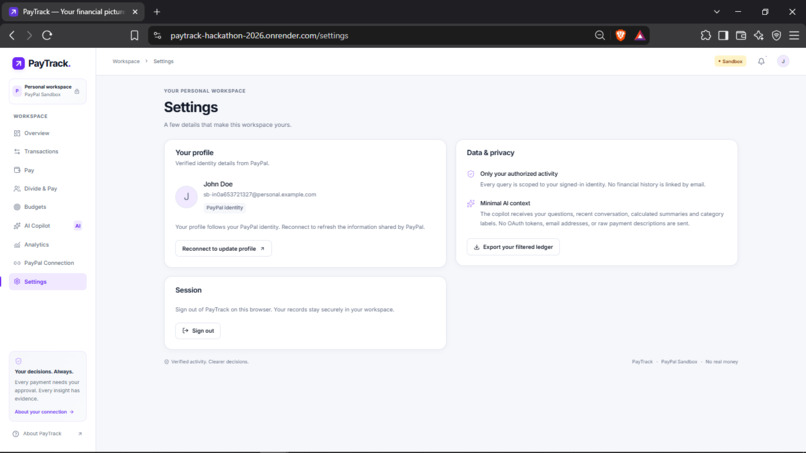
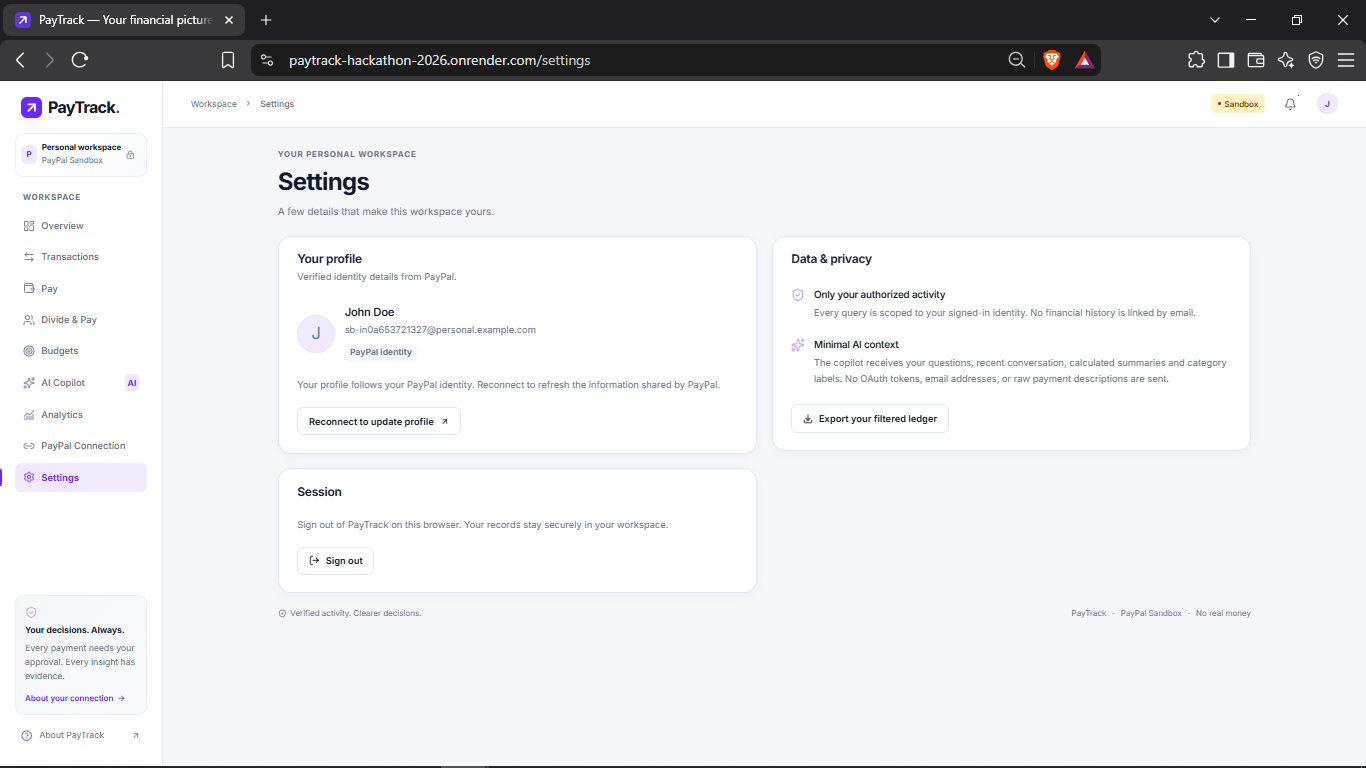
Setting Page
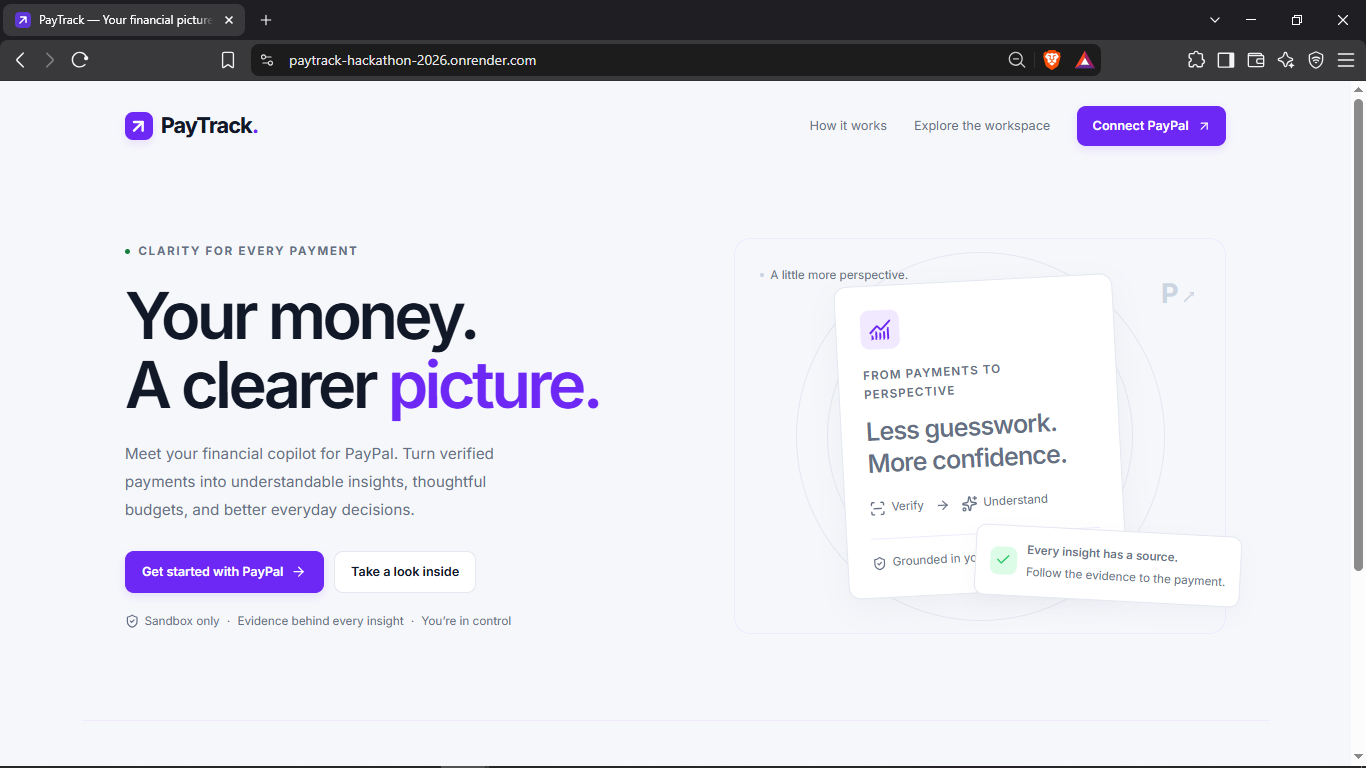
Inspiration
Payment history tells us what happened, but understanding it often means switching between transaction lists, spreadsheets, and budgeting tools. We built PayTrack to bring those pieces together: a clear financial workspace where users can explore their PayPal activity, plan spending, and ask questions with evidence behind the answers.
What it does
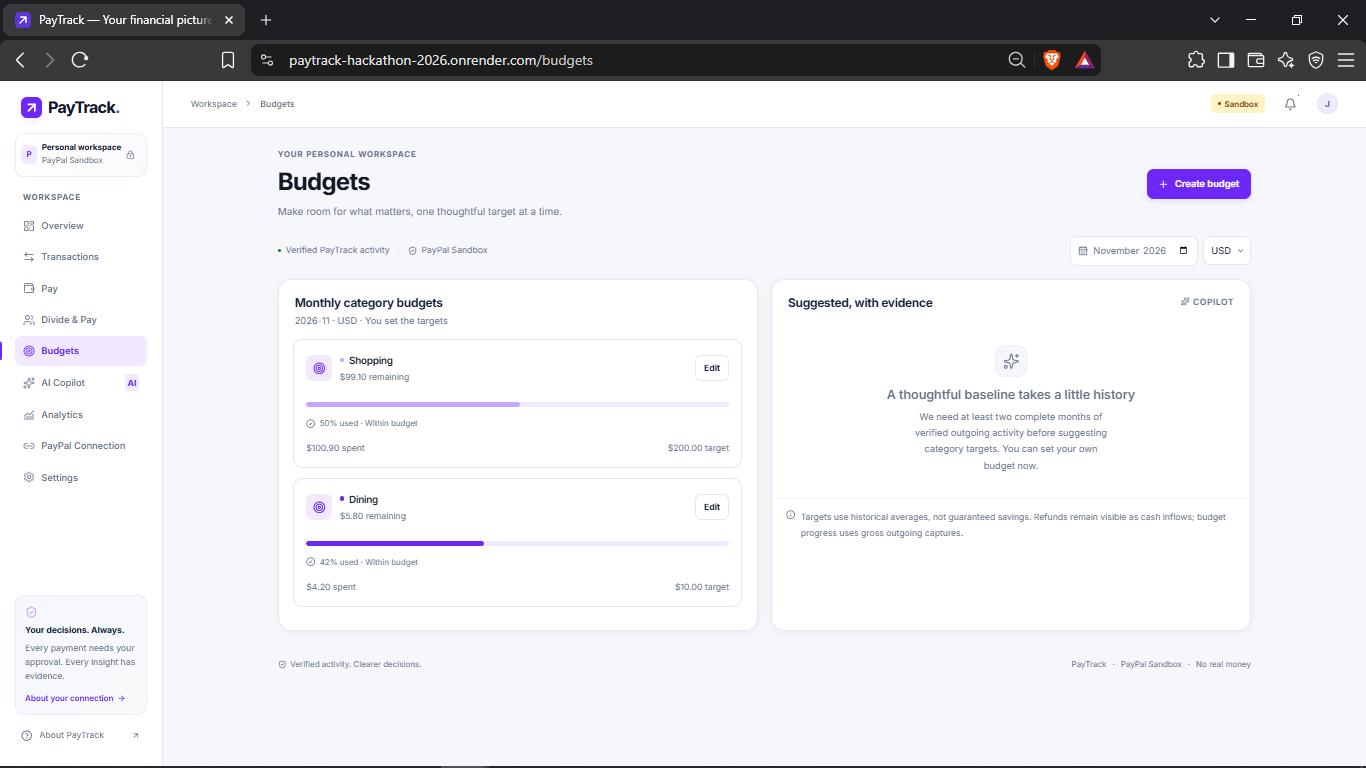
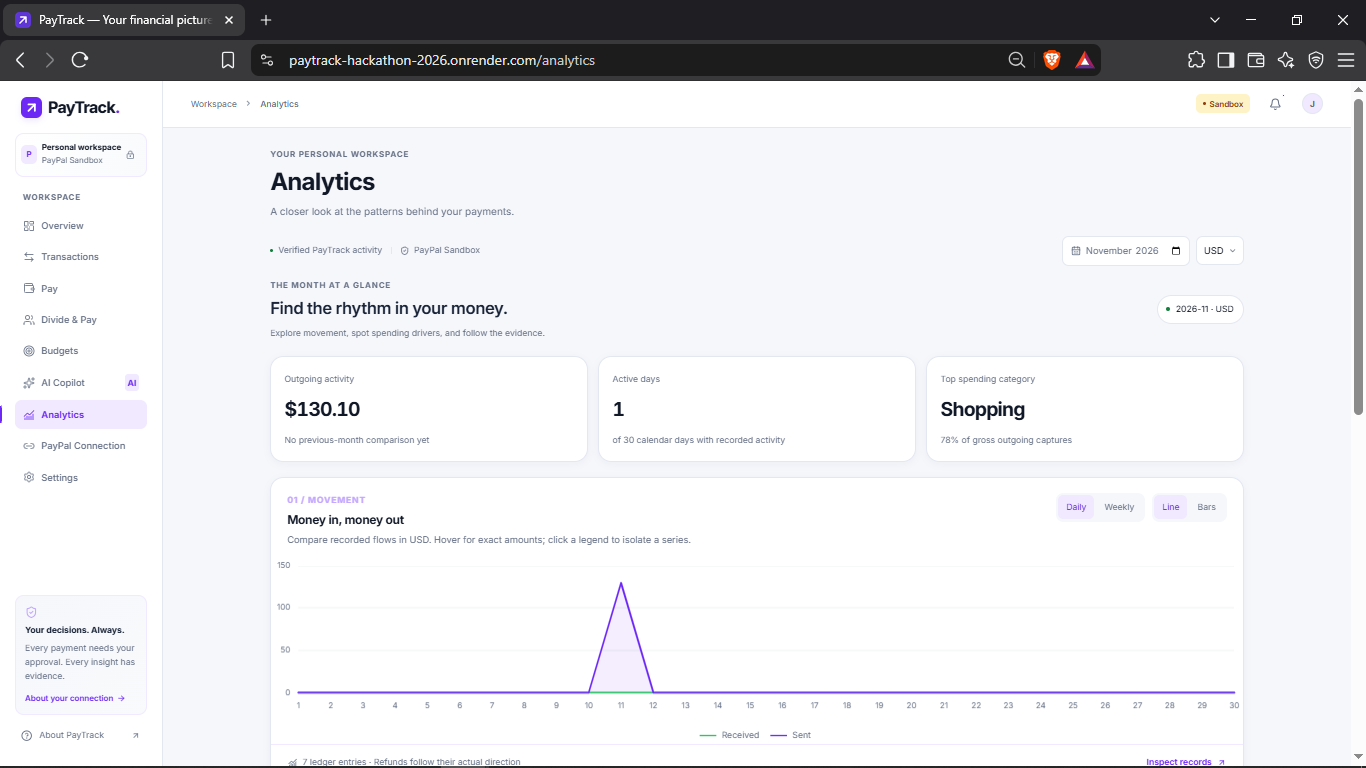
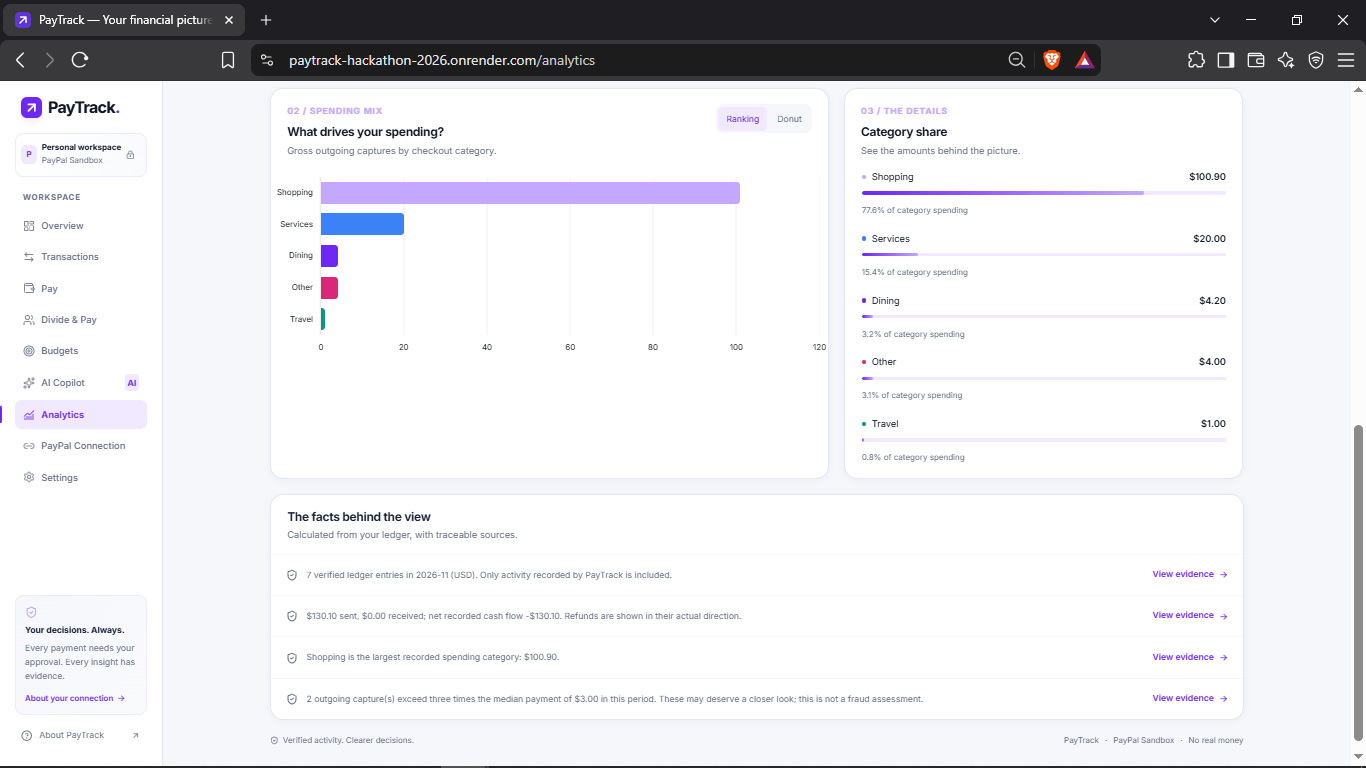
PayTrack turns payments verified through our app into an organized financial picture. Users can review spending, incoming payments, net cash flow, and recent transactions; explore interactive charts; and set monthly category budgets with clear progress indicators.
Divide & Pay lets a configured Sandbox Business organizer create a shared expense, divide it into exact shares, and give participants individual checkout links. Each participant approves their own payment, and verified captures update the organizer’s collection progress.
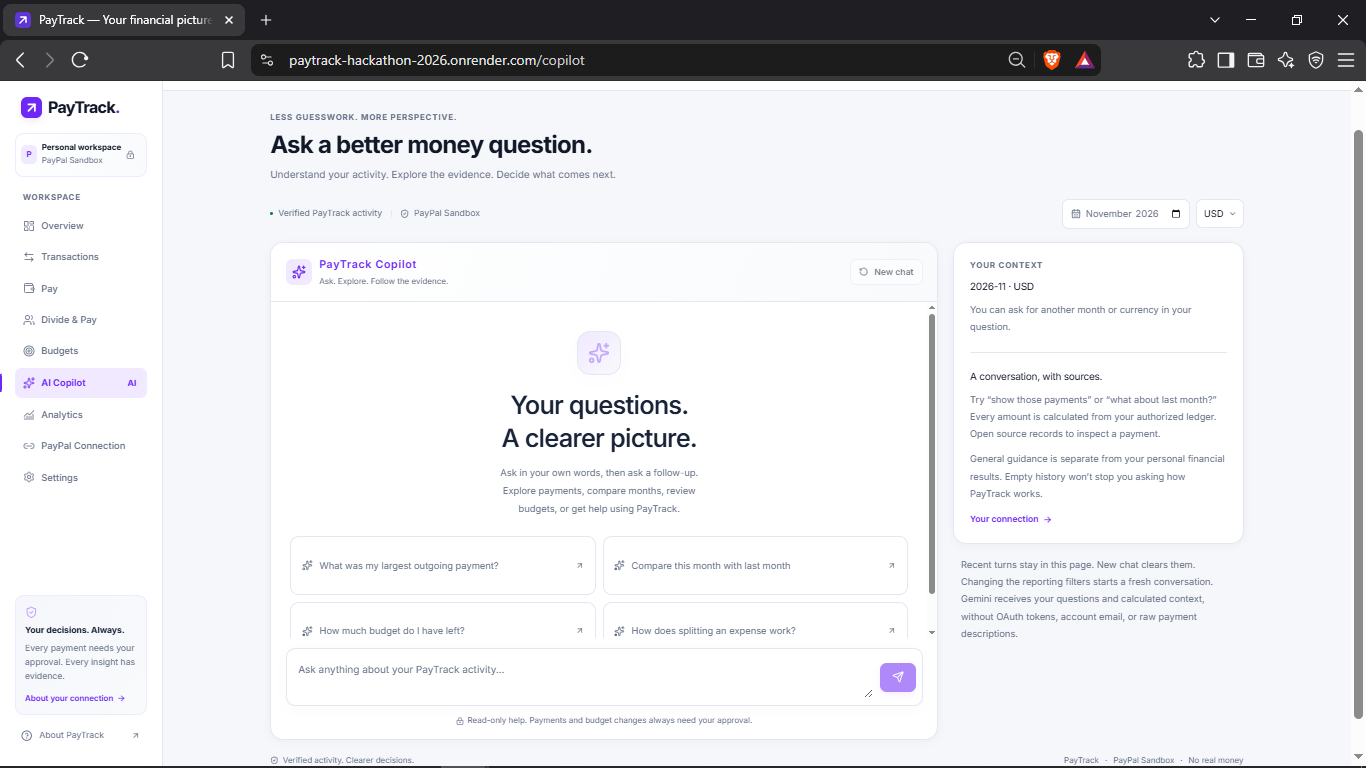
The conversational copilot supports questions about payment rankings, category spending, monthly comparisons, refunds, and budgets. It uses Gemini to interpret questions and explain results, while the server calculates financial figures from the authorized ledger. Supporting records remain accessible. If Gemini is unavailable, PayTrack clearly identifies the fallback and provides calculated results.
How we built it
We built PayTrack with Next.js, React, TypeScript, and a shared responsive design system. Authentication uses Log in with PayPal, while PayPal Sandbox Checkout provides the payment approval flow. Prisma and Neon PostgreSQL store users, payments, budgets, shared expenses, and ledger records.
Server-side validation checks payment amounts, currencies, merchant identity, and completion status before recording captures. Verified webhook handling supports payment updates and refund reconciliation. AG Grid powers the transaction explorer, AG Charts provides interactive visualizations, and Render hosts the application.
Challenges we faced
The hardest challenge was preserving financial meaning throughout the application. An approved checkout is not automatically a completed payment, refunds must follow their actual cash-flow direction, and shared expenses must allocate every cent correctly.
We also worked through OAuth configuration, account-role differences between organizers and participants, AI availability, and responsive layouts. These challenges shaped the product: clearer account guidance, explicit payment review, traceable evidence, and useful fallback behavior.
Accomplishments we’re proud of
We brought authentication, user-approved checkout, verified payment records, budgeting, shared expenses, analytics, and conversational assistance into one working application. We’re especially proud of keeping calculations independent of AI-generated prose and making the supporting payment records available to users.
What we learned
We learned that a useful financial assistant needs more than a convincing answer. It needs reliable calculations, clear data boundaries, understandable permissions, and honest handling of missing information or unavailable services. We also learned how much readable typography and consistent interaction design matter when presenting financial information.
What’s next for PayTrack
We want to improve conversational coverage, make organizer onboarding simpler, add richer comparisons across longer periods, and expand accessibility testing. Our current implementation uses PayPal Sandbox and includes activity verified through PayTrack—not a user’s complete PayPal account history or balance.
Built With
- ag-charts
- ag-grid
- auth.js
- google-gemini
- neon
- next.js
- paypal
- postgresql
- prisma
- react
- render
- tailwind-css
- typescript


