Inspiration
What it does
Inspiration
Online payment fraud is a growing challenge for individuals, businesses, and digital payment platforms. Fraudulent transactions can be difficult to identify before financial damage occurs.
PayPal AI FraudShield was inspired by the need for accessible, explainable, and intelligent tools that help identify suspicious payment activity and support safer financial decisions.
What it does
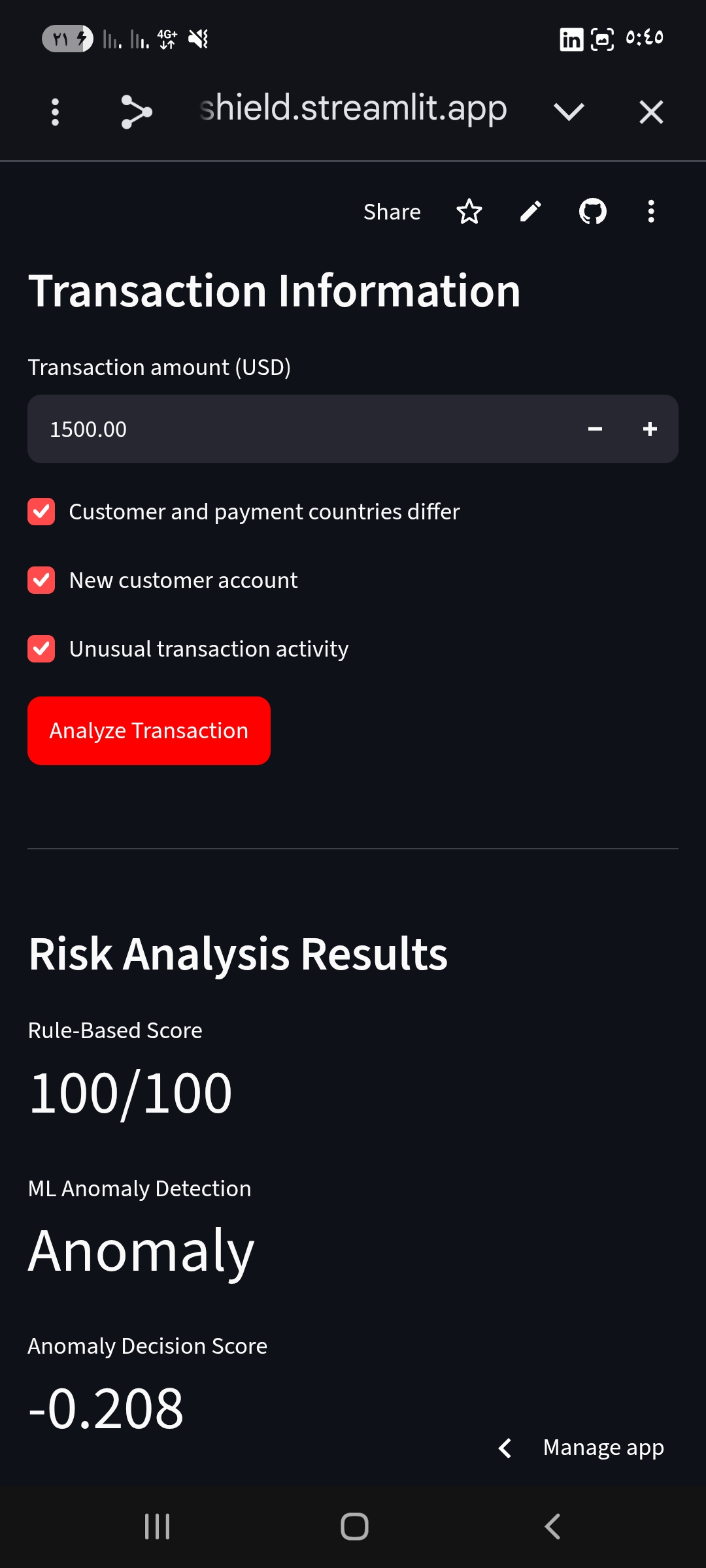
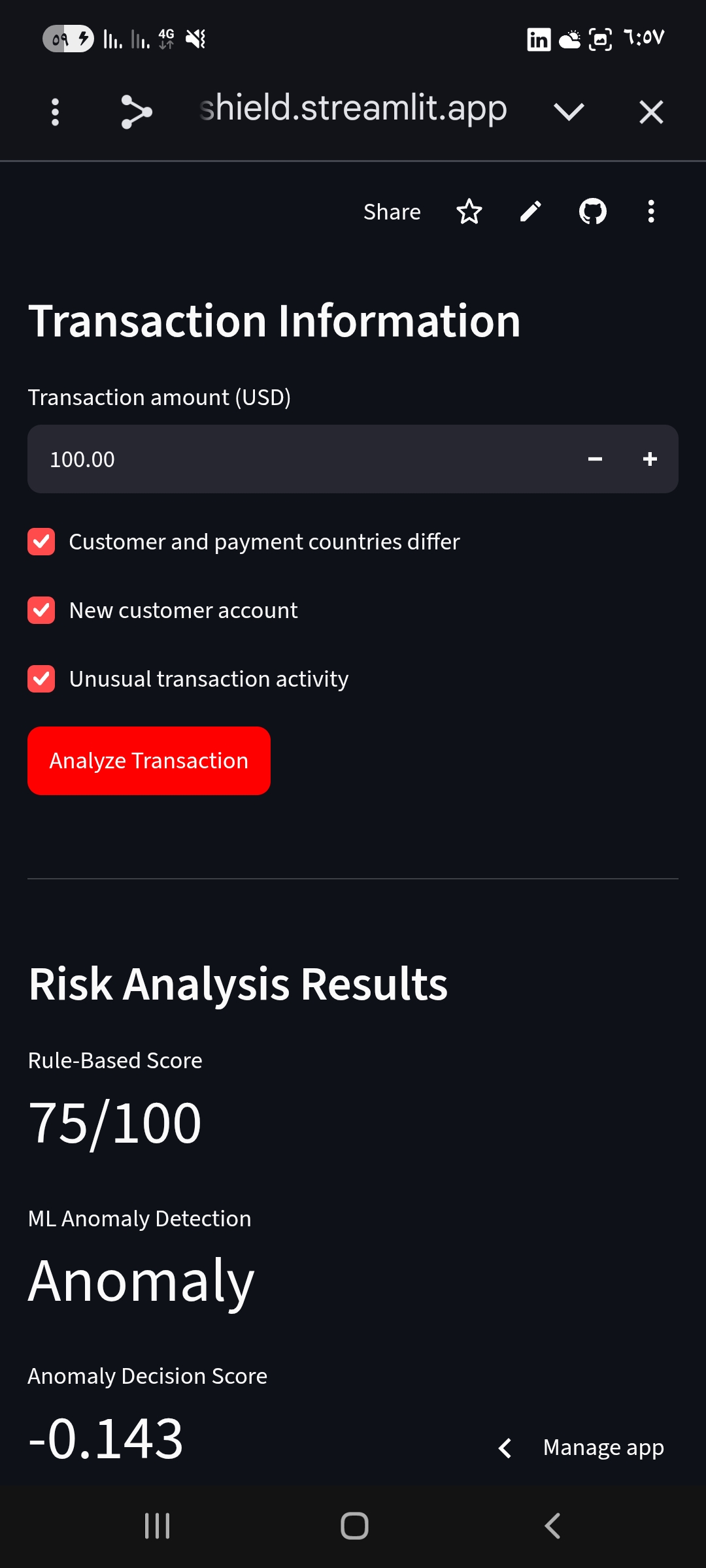
PayPal AI FraudShield is a working demonstration prototype that combines rule-based risk assessment with machine learning to identify potentially unusual payment transactions.
The application allows users to:
- Enter a transaction amount in USD.
- Identify risk indicators such as country mismatches, newly created customer accounts, and unusual transaction activity.
- Calculate a rule-based risk score.
- Detect statistical anomalies using an Isolation Forest machine learning model.
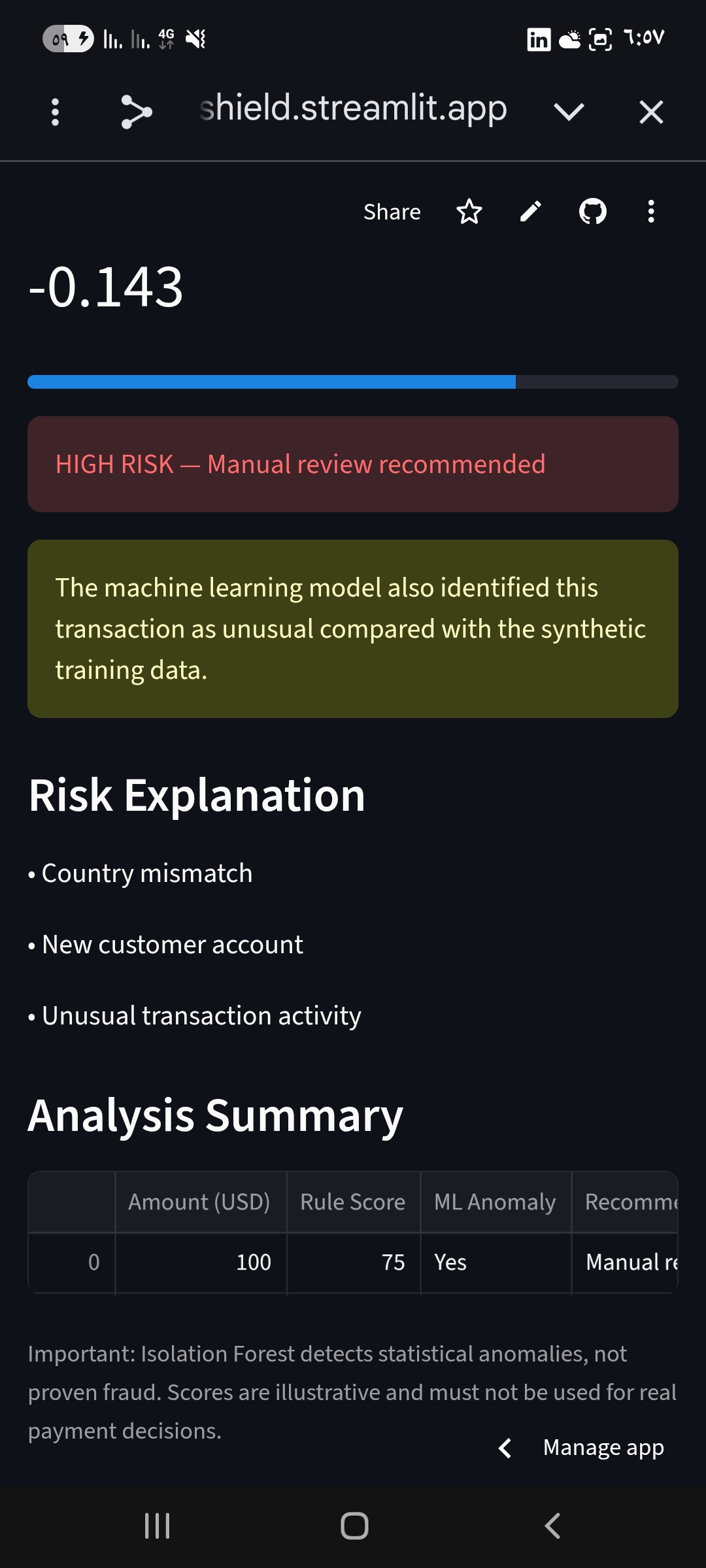
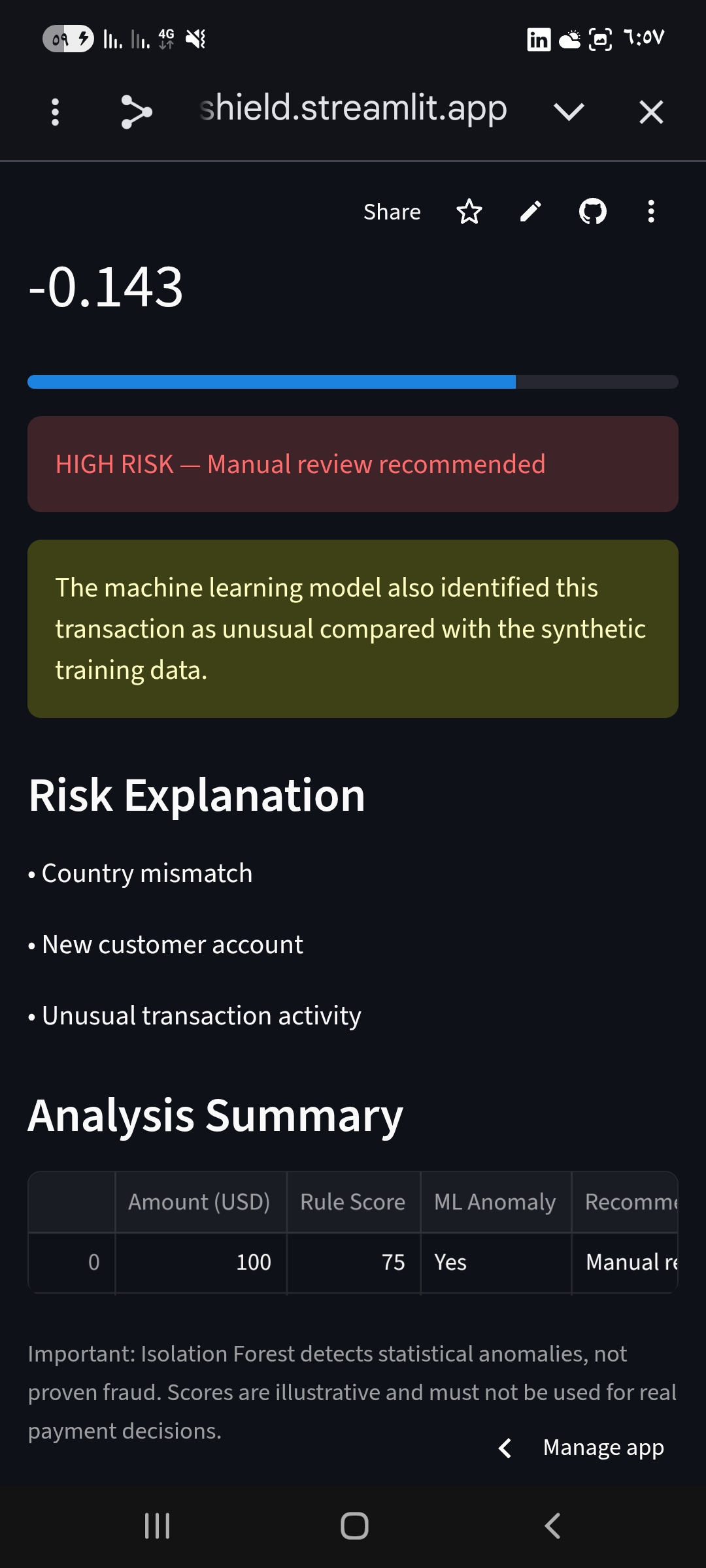
- Display explainable risk indicators and recommended actions.
- Generate fictional PayPal-style transactions for demonstration and testing.
The system is designed as a decision-support prototype, not a production payment authorization system.
How we built it
The application was developed in Python using Streamlit for the interactive interface, NumPy and Pandas for data processing, and Scikit-learn for machine learning.
An Isolation Forest model analyzes patterns learned from synthetic transaction data. A separate rule-based scoring mechanism evaluates predefined transaction risk indicators.
The results are presented through an interactive dashboard with risk scores, anomaly detection results, explanations, and recommendations.
A dedicated transaction simulator generates fictional payment records in a structured JSON format.
The source code is maintained on GitHub, and the prototype has been deployed through Streamlit.
Challenges we faced
Key challenges included combining rule-based risk scoring with machine learning, presenting understandable risk explanations, implementing a transaction simulator, and maintaining compatibility between Python dependencies and the deployment environment.
Another important challenge was distinguishing statistical anomalies from confirmed fraudulent transactions.
Accomplishments
We successfully built and deployed an interactive fraud-risk analysis prototype.
Demonstration testing confirmed that the application can process simulated transaction inputs, calculate risk scores, identify statistical anomalies, and display explanations and recommendations.
These demonstrations establish functional behavior, but do not establish real-world fraud detection accuracy.
What we learned
We learned how to combine explainable rules with unsupervised machine learning, build an interactive financial-risk dashboard, and deploy a Python application.
We also recognized the importance of reliable training data, model validation, and responsible use of AI in financial services.
What's next
Future development priorities include:
- Exploring integration with official PayPal sandbox APIs.
- Evaluating the model against appropriately labeled transaction datasets.
- Improving anomaly detection and reducing false positives.
- Adding transaction history and analytical dashboards.
- Expanding explainability and risk reporting.
- Strengthening security, privacy, and deployment readiness.
Important: The current prototype uses synthetic data and fictional PayPal-style transactions. It does not connect to PayPal APIs, process real payments, or establish that any transaction is fraudulent.
How we built it
Challenges we ran into
Accomplishments that we're proud of
What we learned
What's next for PayPal AI FraudShield
Built With
- anomaly-detection
- fraud-detection
- isolation-forest
- machine-learning
- numpy
- pandas
- python
- scikit-learn
- streamlit

Log in or sign up for Devpost to join the conversation.