Inspiration
Ordering a custom outfit remotely involves a lot of trust. A customer sends a design, discusses measurements and pays an advance, often through a conversation spread across several messages. The tailor then buys and cuts fabric without knowing whether the customer will accept the finished work.
If the sleeves are different from what was requested or the price changes halfway through, both sides have to piece together the original agreement. We wanted to give them something clearer to work with.
StitchSafe brings the requirements, garment checks and payment steps into one order history.
What it does
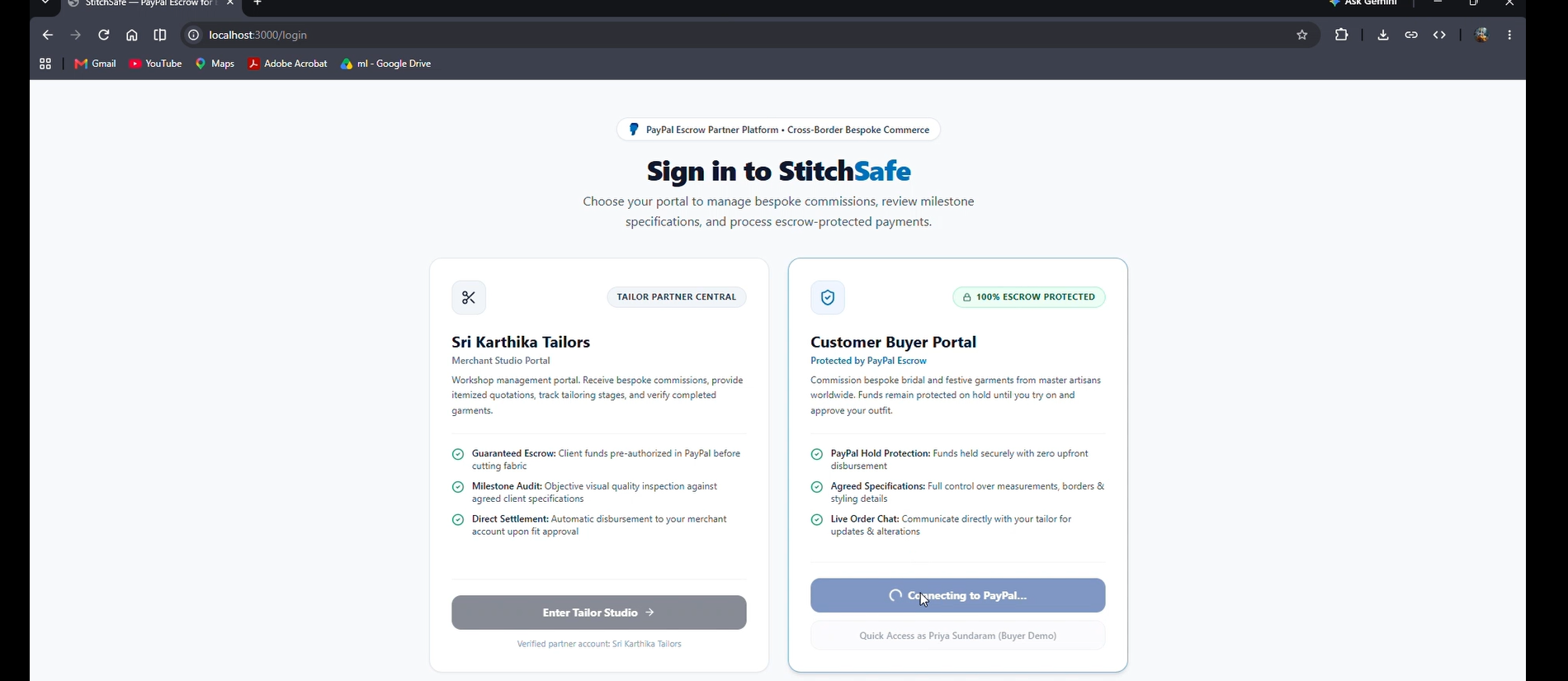
StitchSafe gives customers and tailors separate portals for managing a custom garment order.
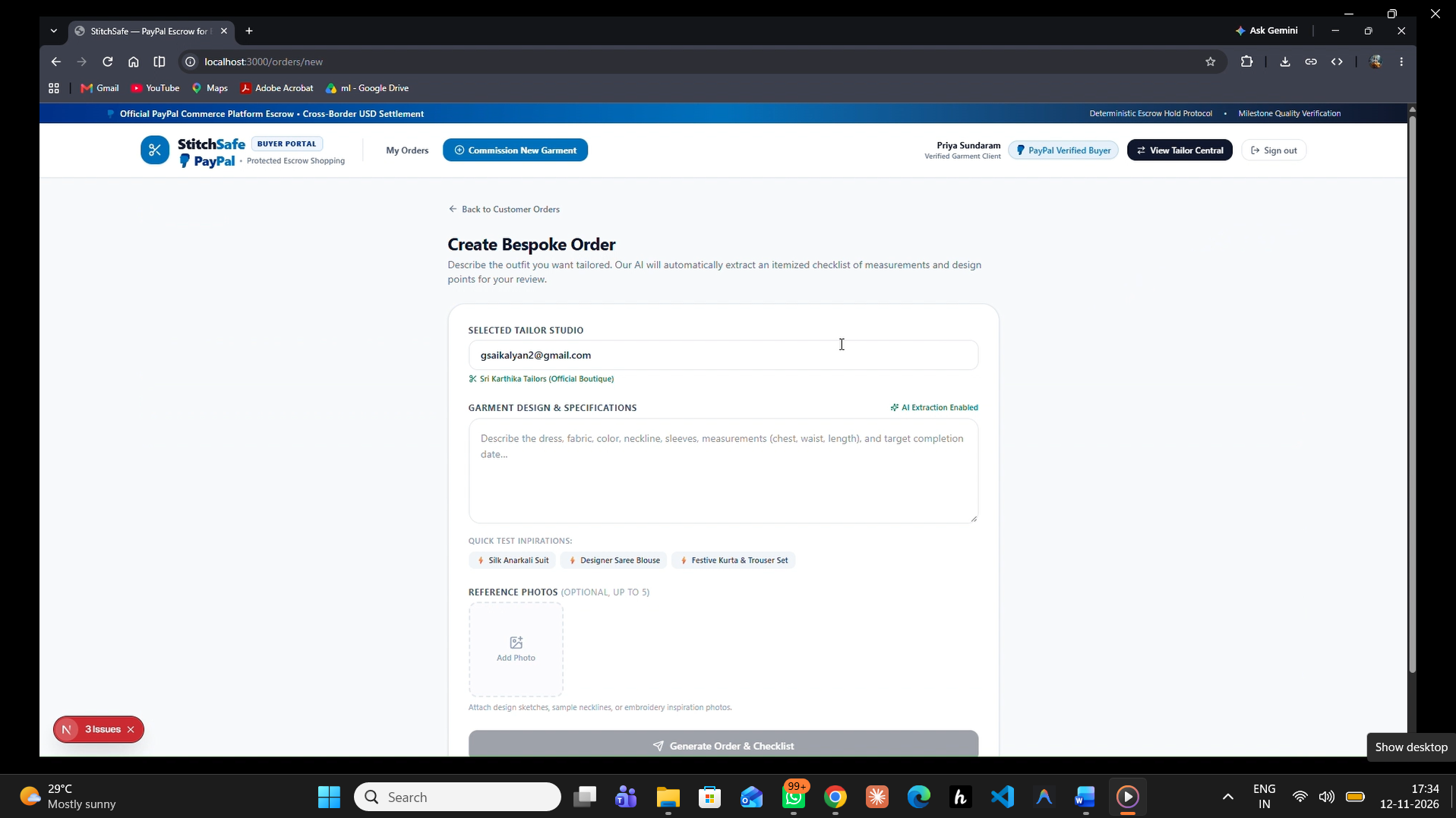
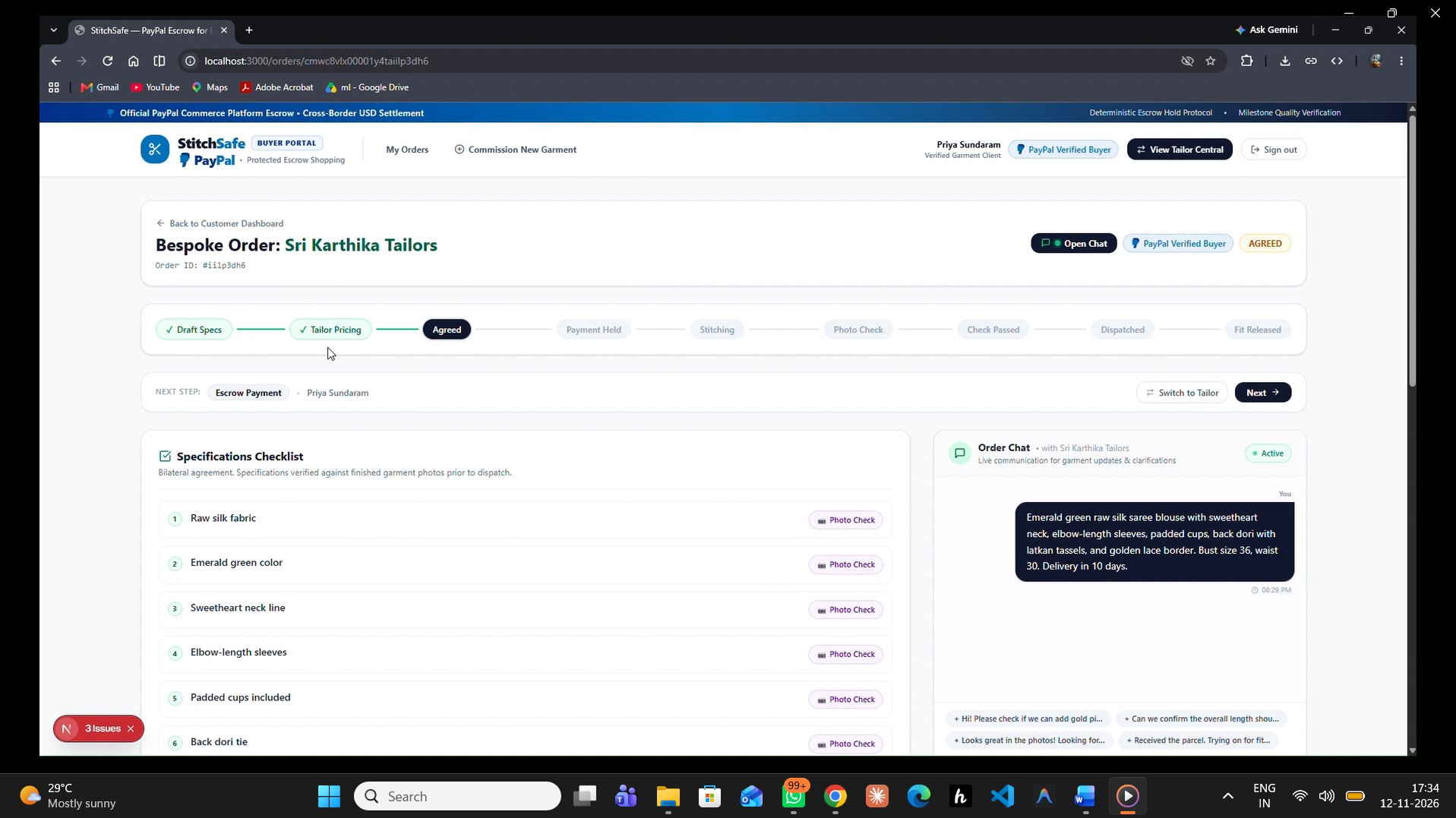
The customer starts with a description or reference photo. Gemini generates a checklist covering details such as the neckline, sleeve length, embroidery and fabric. Before agreeing, the customer can add, edit or remove items and choose how each requirement should be checked.
That distinction matters. Some details can be assessed from a photo; others need the customer to try on the garment. StitchSafe separates these into PHOTO and FIT items.
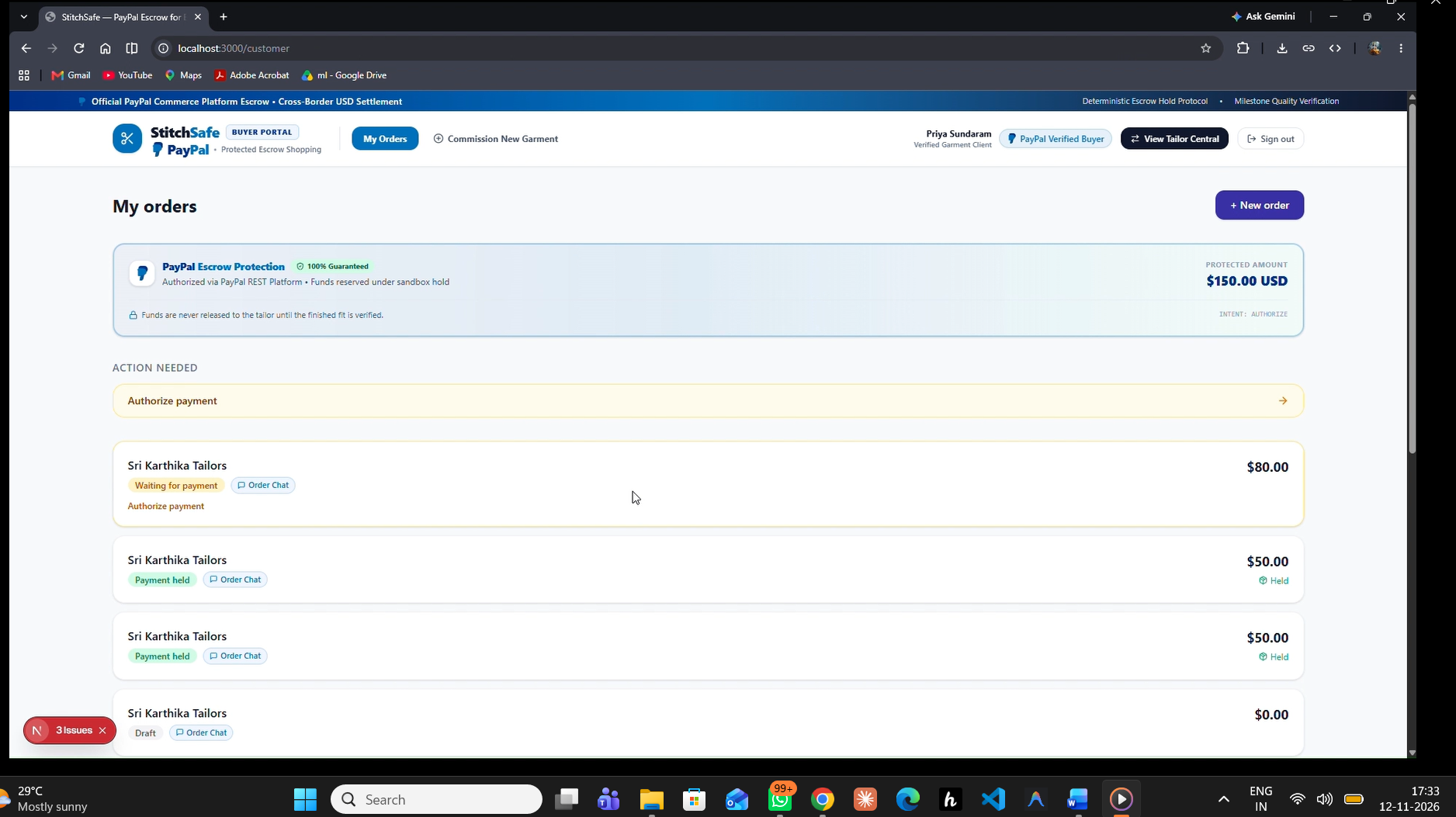
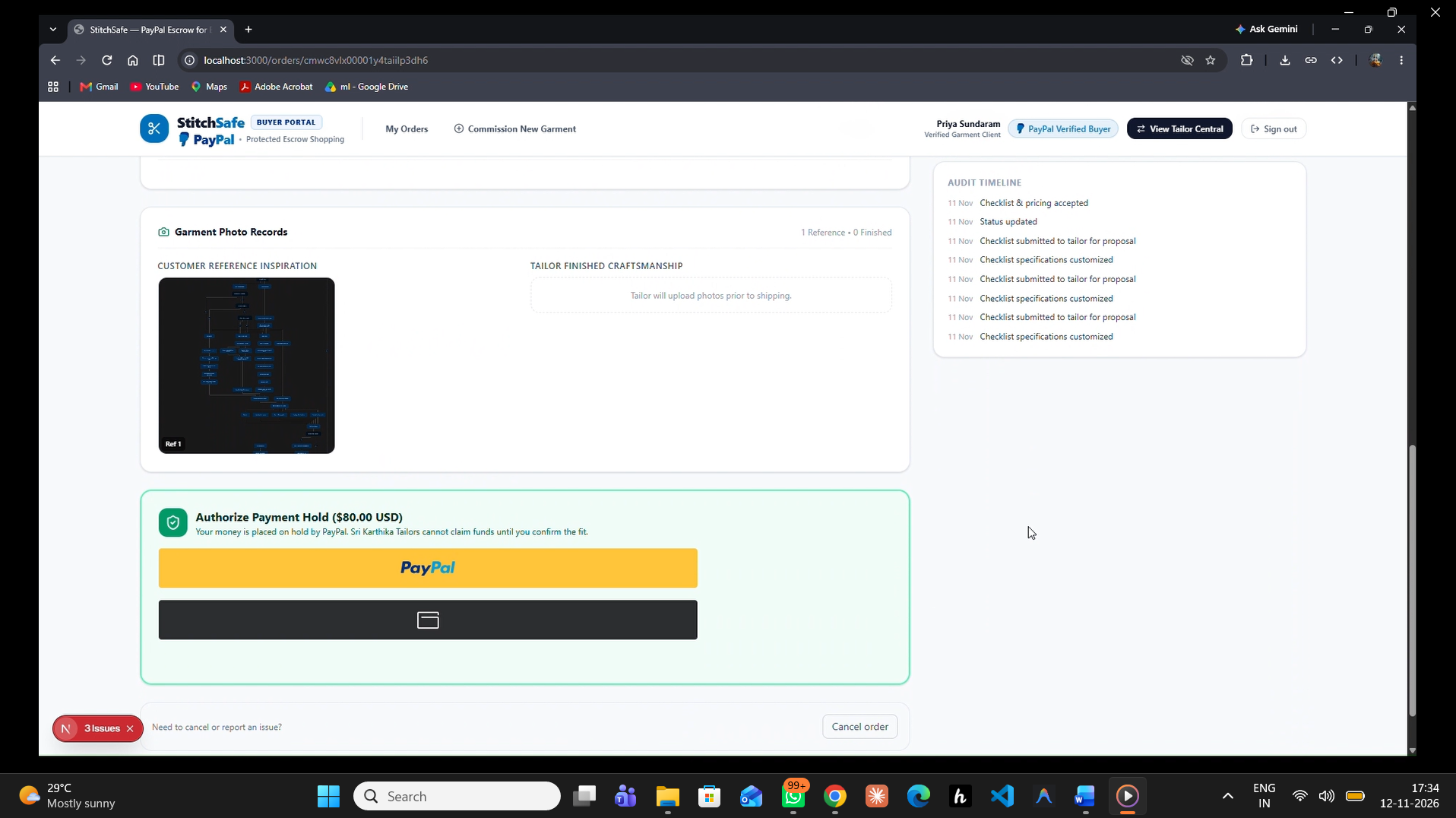
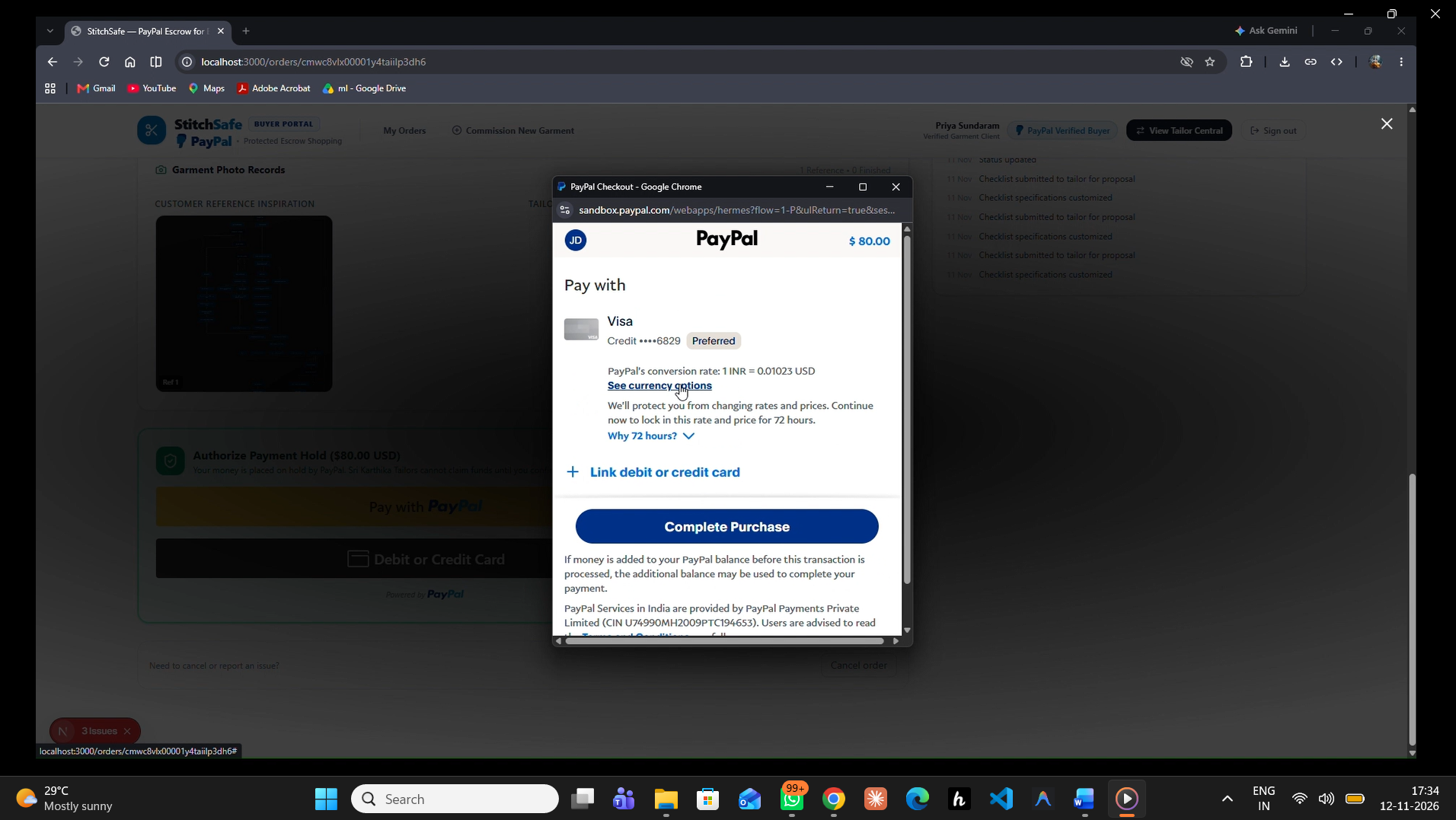
Once the agreement is accepted, the customer approves a PayPal payment authorization. Authorization and capture are separate steps, so approving the order does not immediately complete the payment.
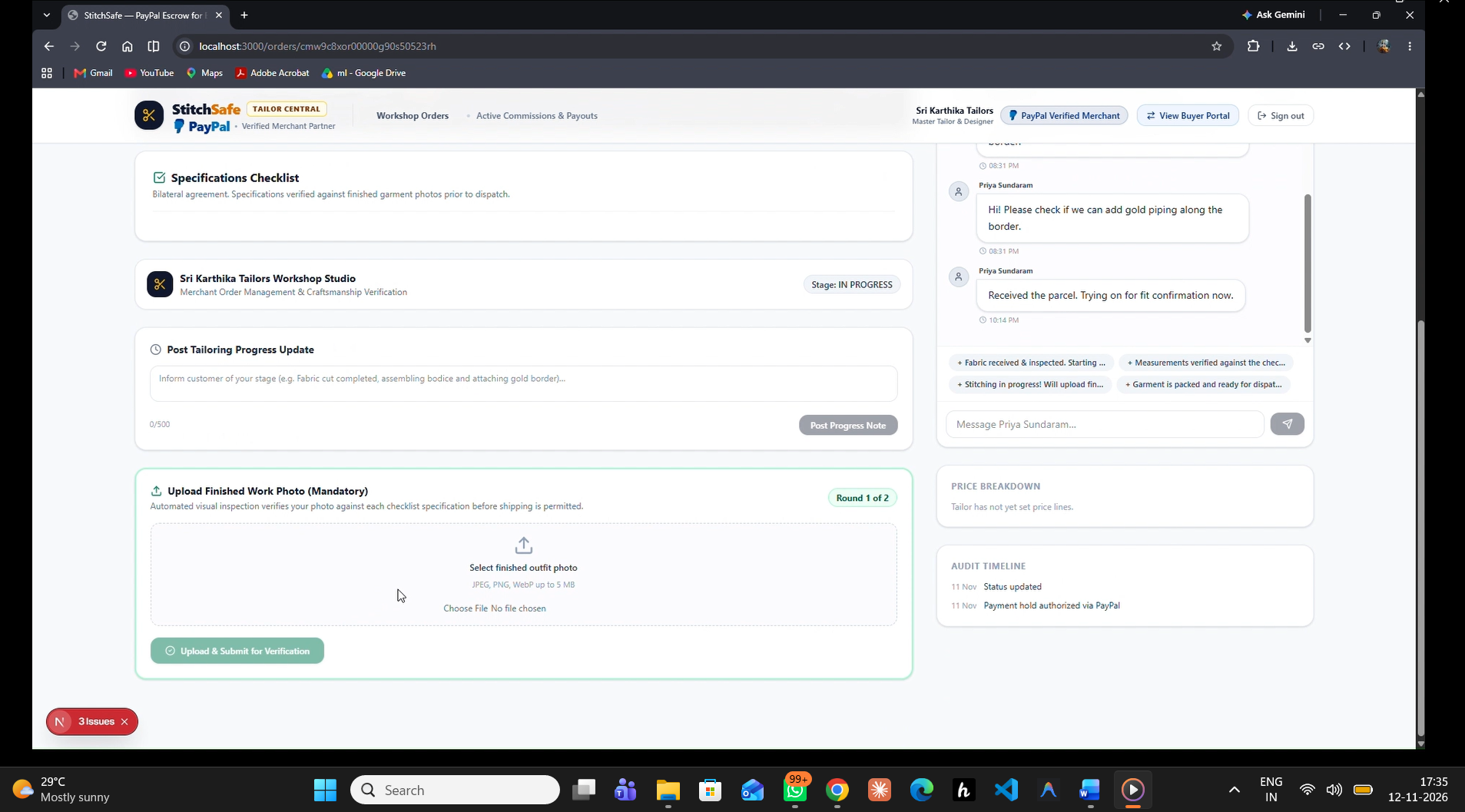
Before dispatch, the tailor uploads finished garment photos. AI compares them with the PHOTO checklist items and returns MET, PARTLY_MET or NOT_MET verdicts with explanations. Unclear or unrelated images are flagged rather than treated as successful checks.
After delivery, the customer can confirm the FIT requirements. The application handles payment capture according to its release rules and records the result in the order timeline. Cancelling an uncaptured order triggers a request to void its active authorization.
Customers and tailors can also clarify details through order chat. Alteration requests are compared with the existing checklist, and accepted changes become a new version so the earlier agreement remains available.
How we built it
We used Next.js App Router, React, TypeScript and Tailwind CSS for the application, with Next.js API routes handling the backend.
Google Gemini processes descriptions and reference images, generates checklists, reviews finished garment photos and helps identify changes to an order. Structured JSON responses let the application work with individual requirements and verdicts.
Supabase provides PostgreSQL and image storage, while Prisma manages the database models. Auth.js handles Google and PayPal sign-in, and dedicated demo access lets judges enter the customer and tailor portals.
PayPal Orders API v2 handles order creation and authorization. Payments API v2 handles capture and void operations. Payment calls stay on the server, with deterministic request identifiers helping protect against duplicate operations.
Challenges
The hardest design question was deciding what a photograph can reasonably prove. A visible neckline can be compared with a reference, but comfort and fit require the customer’s judgment. Separating PHOTO and FIT requirements helped us make that boundary explicit.
We also had to account for incomplete evidence. Poor lighting, an unsuitable angle or an unrelated image should not become a confident approval. The workflow includes failed checks and manual-review outcomes for those cases.
Another challenge was keeping order changes understandable. Customers need flexibility, but an accepted requirement should not disappear without a record. Versioned checklists let both sides see how the order developed.
What we learned
We learned to treat AI output as an assessment that needs validation and context. A useful result explains which requirement was checked, what the image showed and what still needs attention.
Working with payments also made us think beyond the checkout button. Authorizations, captures, cancellations and expiration are different events, and the application needs to handle each one clearly.
Accomplishments we are proud of
We are particularly proud of the editable checklist and its connection to the garment review. Customers can correct the AI’s interpretation before agreeing, and tailors receive feedback tied to those same requirements.
Bringing those decisions into a shared order history gives both sides a clearer starting point when something needs clarification.
What's next
We want to add staged milestone payments, payouts to individual tailors and a human dispute-review workflow supported by the recorded evidence.
Further improvements include multilingual checklists and a WhatsApp integration to make the service easier to use alongside existing tailoring conversations.
StitchSafe is a PayPal sandbox prototype. Its AI checks assist with visible design review; they do not guarantee garment quality or fit.
Built With
- google-gemini
- google-gen-ai-sdk
- next.js
- node.js
- paypal
- postgresql
- prisma
- react
- supabase
- tailwind-css
- typescript
