-
-
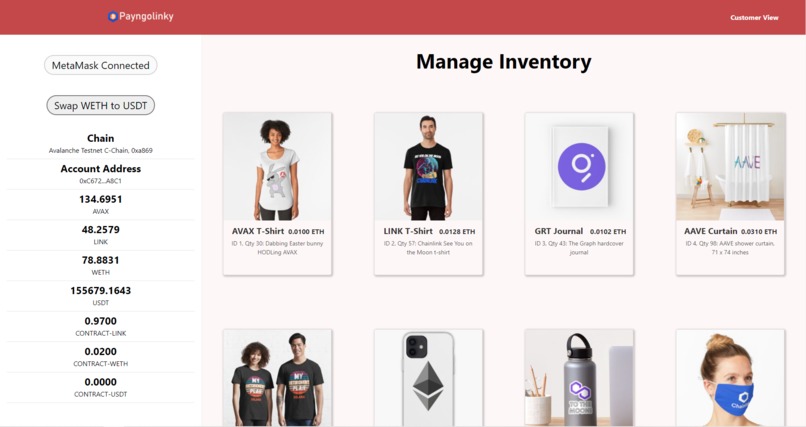
Merchant UI
-
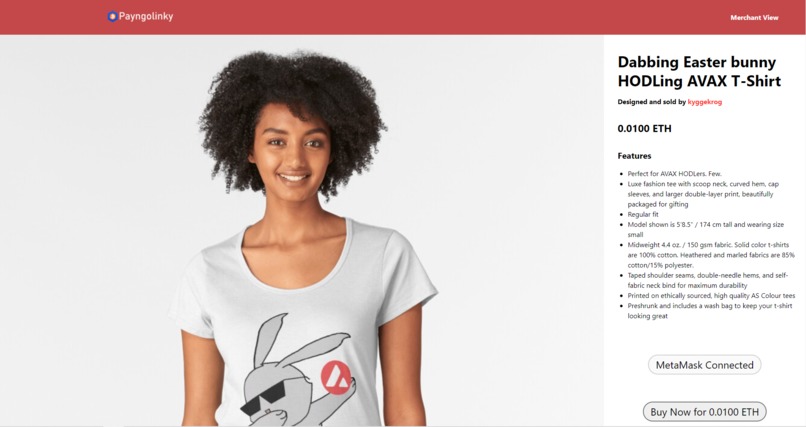
Customer UI


Inspiration
We noticed that cryptocurrencies are frequently traded on exchanges but rarely used in the payment of goods. We realized that merchants are unwilling to accept cryptocurrencies due to their volatility, thus Payngolinky was born. As developers, we wanted to take full advantage of the subsecond finality of Avalanche and merge it with the decentralized price feeds that Chainlink offers. We also wanted to perform the swaps on a true, community-governed DEX Pangolin.
What it does
Payngolinky swaps Ethereum for Tether on the Pangolin decentralized exchange when an optimal pairing is detected. The Pangolin exchange is used since it is built upon the lightning fast Avalanche framework. Chainlink is integrated to determine the optimal swapping price.
How we built it
We built Payngolinky using React and Javascript and deployed a demonstration smart contract via Remix on the Fuji testnet of the Avalanche blockchain. The smart contract references a Chainlink price feed to ensure fair pricing for the decentralized swap execution.
Challenges we ran into
Initially we planned for the customer to make payments in AVAX and perform swaps to DAI but we realized that the Chainlink price feeds on the Avalanche Fuji testnet did not support those assets. We had to switch our logic to accept Ethereum payments from the customer in the last two days of the hackathon. The fast development of the crypto space caused a lot of catching up in terms of knowledge to make use of the newest tools and standards when coding up dapps.
Accomplishments that we're proud of
We formed our team at the midway checkpoint. All but one of our members had never developed on blockchains before and we managed to accomplish our goal. None had worked with Chainlink before so we overcame that hurdle. Last minute resilience. Chainlink node getting deployed in the last minute made it interesting. Grateful for the help Chainlink and Avalanche team provided on Discord.
What we learned
- How to develop with Chainlink, Avalanche, and Ethereum
- How to programmatically perform token swaps on the Pangolin exchange
- How to program in Javascript
- The abundance of different approaches to new financial applications showcases the flexibility and strength of the underlying blockchain foundations. We expect to witness many new applications in the next years.
What's next for Payngolinky
This project serves as the first implementation of a decentralized payment processor on our demonstration shop. We would like to expand its functionality to offer an API to use in general stores with automatic contract deployment for merchants to integrate our payment processing functionality.
Built With
- chainlink
- javascript
- metamask
- react
- solidity
- tether


Log in or sign up for Devpost to join the conversation.