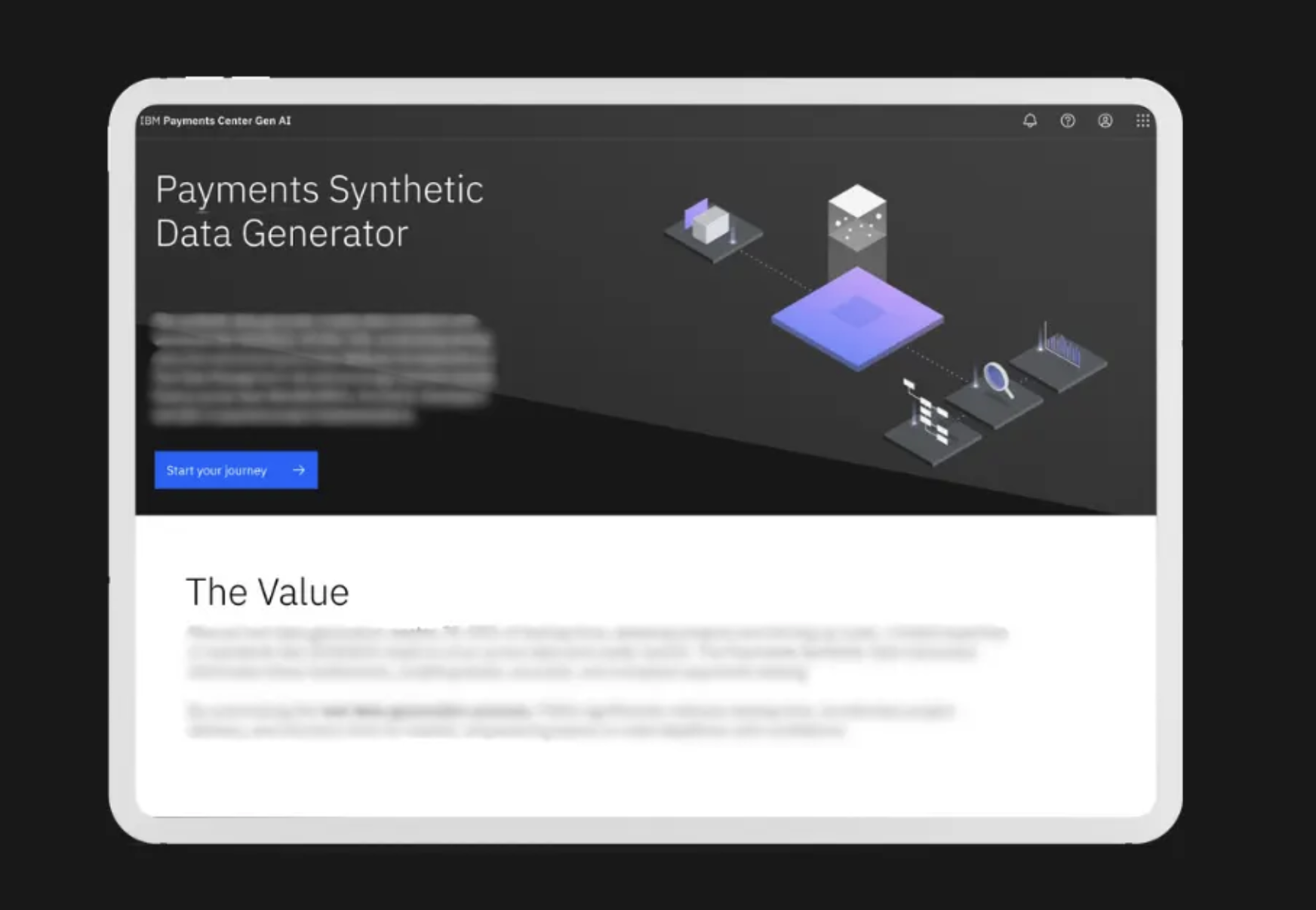
Product Overview
The Synthetic Data Generator is an AI-powered tool that transforms testing workflows by generating high-quality, standards-compliant synthetic datasets within minutes. It removes the need for slow, error-prone manual data creation and accelerates testing cycles through automation. Built on a scalable, cloud-native architecture, the generator supports complex message schemes and global standards, making it valuable for organizations with large, distributed testing environments.
Problem Space
Testing teams rely heavily on manual methods that create delays, inconsistencies, and scalability issues.
- 30–40 percent of QA teams’ time is spent generating test data manually
- Manual data preparation delays projects by 2–3 weeks
- 60 percent of test engineers lack deep knowledge of standards like ISO20022
- This skills gap leads to a 20 percent higher defect rate
- Transaction volumes are increasing by 15 percent annually, making manual methods unsustainable These challenges created a clear need for a compliant, automated, and scalable test data generation solution.
Outcomes
- Secured USD $200,000+ in internal funding through a strong business case
- Built a cross-functional team and delivered a proof-of-value demo in two months
- Designed scalable architectures supporting diverse message schemes for future expansion
- Validated measurable improvements in speed, accuracy, and compliance during early testing
- Established KPIs and verified cost/time savings in stakeholder reviews
My Role
As Lead Product Manager, I defined the strategic vision and roadmap, aligning SMEs, target users, and leadership around a clear product direction. I conducted workshops and interviews with QA engineers and architects to identify pain points and translate them into user stories. I led agile ceremonies, removed blockers, ensured MVP delivery, and guided design and development teams in building a user-friendly, cloud-native, compliant data generator. I collaborated closely with AI/ML teams to refine model accuracy and ensure compatibility with complex standards such as ISO20022.
Product Ownership
- Defined product roadmap aligned with SME guidance and leadership priorities
- Prioritized features addressing efficiency, compliance, and accuracy gaps
- Translated research insights into structured user stories and requirements
Execution
- Led sprint planning, backlog refinement, retrospectives, and milestone tracking
- Oversaw design of intuitive UI flows for customizable data generation
- Worked with developers on cloud-native components supporting multiple integrations
- Partnered with AI/ML teams to optimize prompting and model accuracy
Leadership
- Built and motivated a cross-functional team across design, engineering, and architecture
- Communicated progress and validated outcomes with senior leadership
- Influenced funding decisions through clear storytelling and analytical framing
4. Discovery
- Conducted user workshops and interviews with QA engineers and architects
- Identified bottlenecks in manual test data creation workflows
- Mapped out compliance gaps tied to ISO20022 and similar standards
- Analyzed pain points around data complexity, accuracy, and reproducibility
5. Solution
Core Features & Deliverables
- Standards-compliant synthetic data generated in minutes
- Customizable scenarios allowing users to define attributes and edge cases
- Cloud-native architecture supporting multiple environments
- User-friendly interface for non-experts
Workflow Simplification
- Eliminated manual data creation across QA teams
- Reduced dependency on standards experts
- Automated compliance checks through model orchestration
Decision Logic
- Used single-shot + multi-shot prompt engineering
- Combined LLM orchestration with validation layers to ensure accuracy
6. System / Architecture View
Components Worked With
- Cloud-native platform supporting scalable integrations
- LLM-based generation pipeline with prompt optimization
- Validation layers enforcing syntax + business rules
- Custom scenario builder for advanced testing needs
My Role Across Components
- Defined technical requirements and constraints
- Worked with AI/ML teams to tune prompting strategy
- Ensured architectures remained scalable and extensible
7. Execution & Delivery
- Conducted iterative testing to identify and resolve bottlenecks
- Validated outputs for compliance against syntax and business rule criteria
- Delivered a functional PoV and live demo under aggressive timelines
- Established KPIs to measure improvements in accuracy and generation speed
9. What I Learned
- How to bridge AI/ML research with practical QA workflows
- How to design prompt-engineered systems for accuracy and repeatability
- How to plan and deliver cloud-native MVPs with cross-functional engineering teams
- How to quantify and communicate business value to secure funding
Built With
- amazon-web-services
- fast-api
- figma
- langgraph

Log in or sign up for Devpost to join the conversation.