-
-
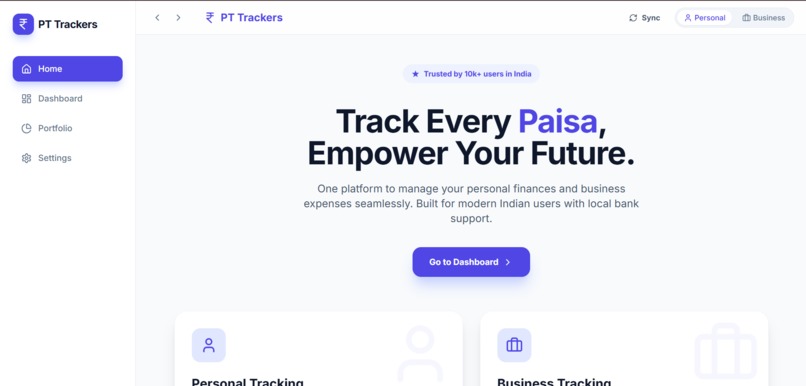
Home
-
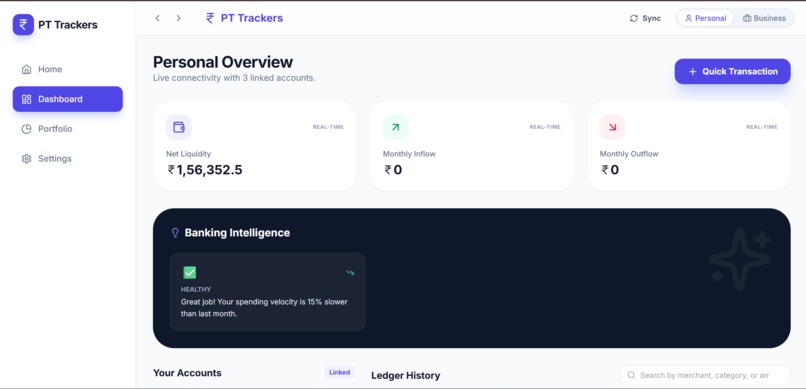
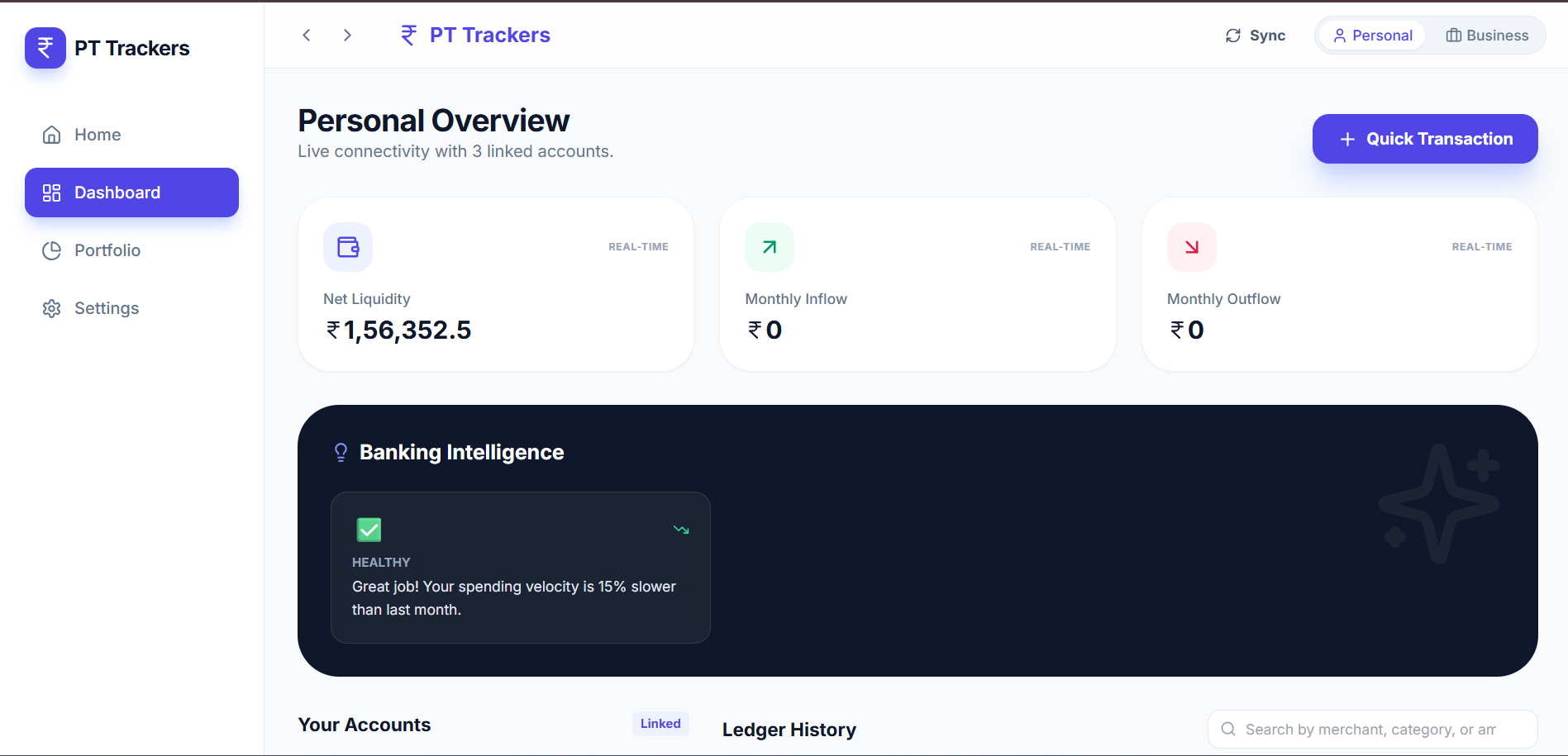
Dashboard inclu AI assistance
-
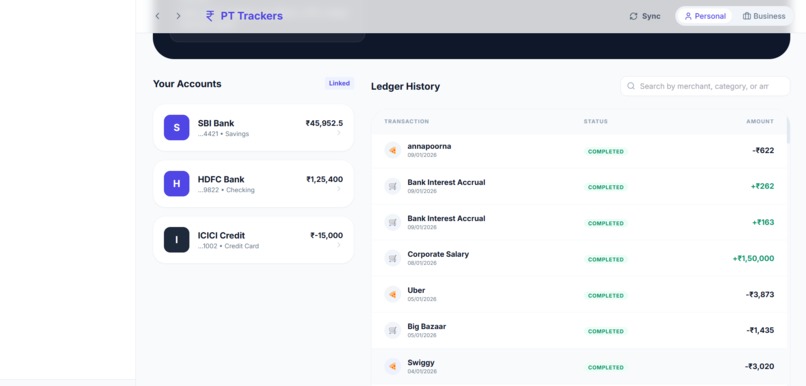
transaction and bank listing
-
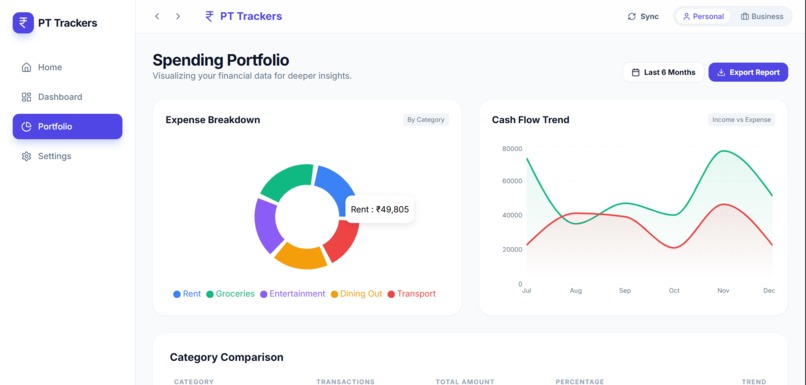
portfolio
-
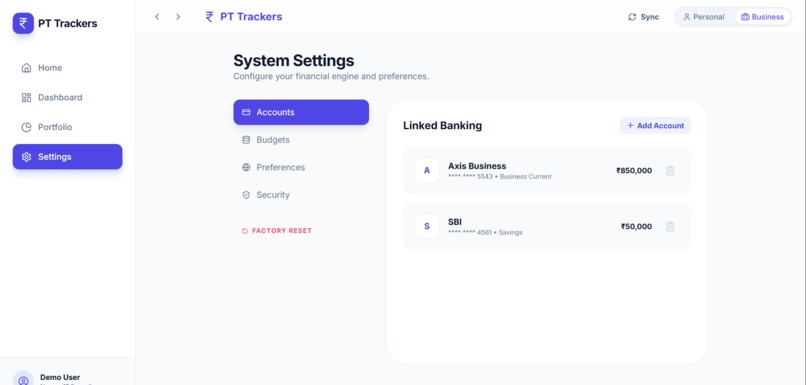
settings ,add bank acc,mode ,limit



Inspiration
In an era where personal data is often treated as a commodity, I was inspired to create a financial tool that prioritizes user sovereignty. Most payment aggregators require uploading sensitive transaction history to a cloud server. My goal was to build a "Financial Command Center" that proves high-end AI insights and multi-account tracking don't have to come at the cost of privacy
What it does
Payment Trackers (PT Trackers) is a cross-platform, zero-server financial aggregator. It allows users to track expenses across multiple cards and wallets in a single, unified interface. The app features a Dual-Mode Engine that separates personal and business finances with a simple toggle, full INR localization, and mock UPI flows to simulate real-world transaction environments
How we built it
The project is built on a modern, high-performance tech stack:Frontend: React 19 and TypeScript for robust state management.Styling: Tailwind CSS to achieve a sleek, Glassmorphic UI.Architecture: A local-first design using browser storage to ensure data never leaves the device.
Challenges we ran into
The biggest technical hurdle was managing Data Serialization for a zero-server architecture. Mapping complex, nested transaction structures into local storage without a traditional database required deep optimization. We also faced challenges in maintaining high-speed performance while rendering the translucent Glassmorphic layers across different mobile screen sizes.
Accomplishments that we're proud of
We are incredibly proud of successfully building a fully functional, privacy-first application during the "Intern to Innovator" hackathon. Achieving a "zero-server" footprint while still offering complex features like the Dual-Mode Engine and mock UPI flows was a major win for our technical design.
What we learned
This project was a deep dive into React 19’s latest features and the intricacies of Privacy-by-Design. I learned how to handle complex data aggregation flows and the importance of localized UI/UX. It also taught me that the most powerful "feature" you can give a user is the peace of mind that their data is secure.
What's next for Payment Trackers
The next phase involves deep integration with the Google Gemini API to enable: Natural Language Entry: "I spent 500 on coffee" automatically categorizes the expense. Predictive Budgeting: AI-driven forecasts based on historical spending patterns. Automated Insights: Identifying subscription "leakage" and suggesting savings.

Log in or sign up for Devpost to join the conversation.