Inspiration
PayLens started from something close to our team. One of our teammates has seen their dad's family business go through its ups and downs, and it made us think about how unpredictable cash flow can be for small businesses.
We realised that winning a large contract does not always mean being financially better off. A business may need to pay staff, materials and other costs long before the customer pays them.
This led us to a simple question:
Can a small business actually afford the contract it just won?
What it does
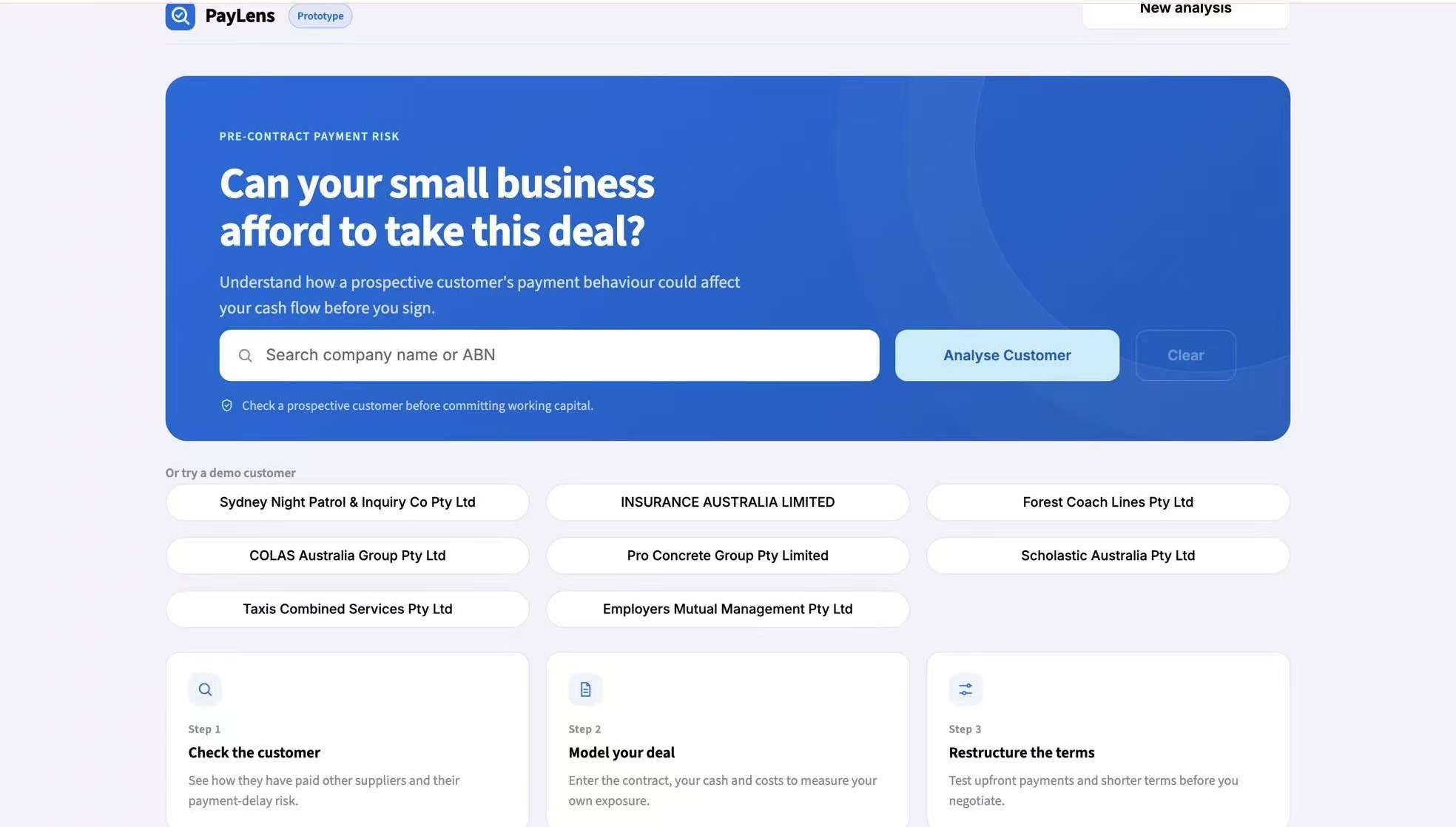
PayLens helps small businesses understand the cash-flow impact of a contract before committing to it.
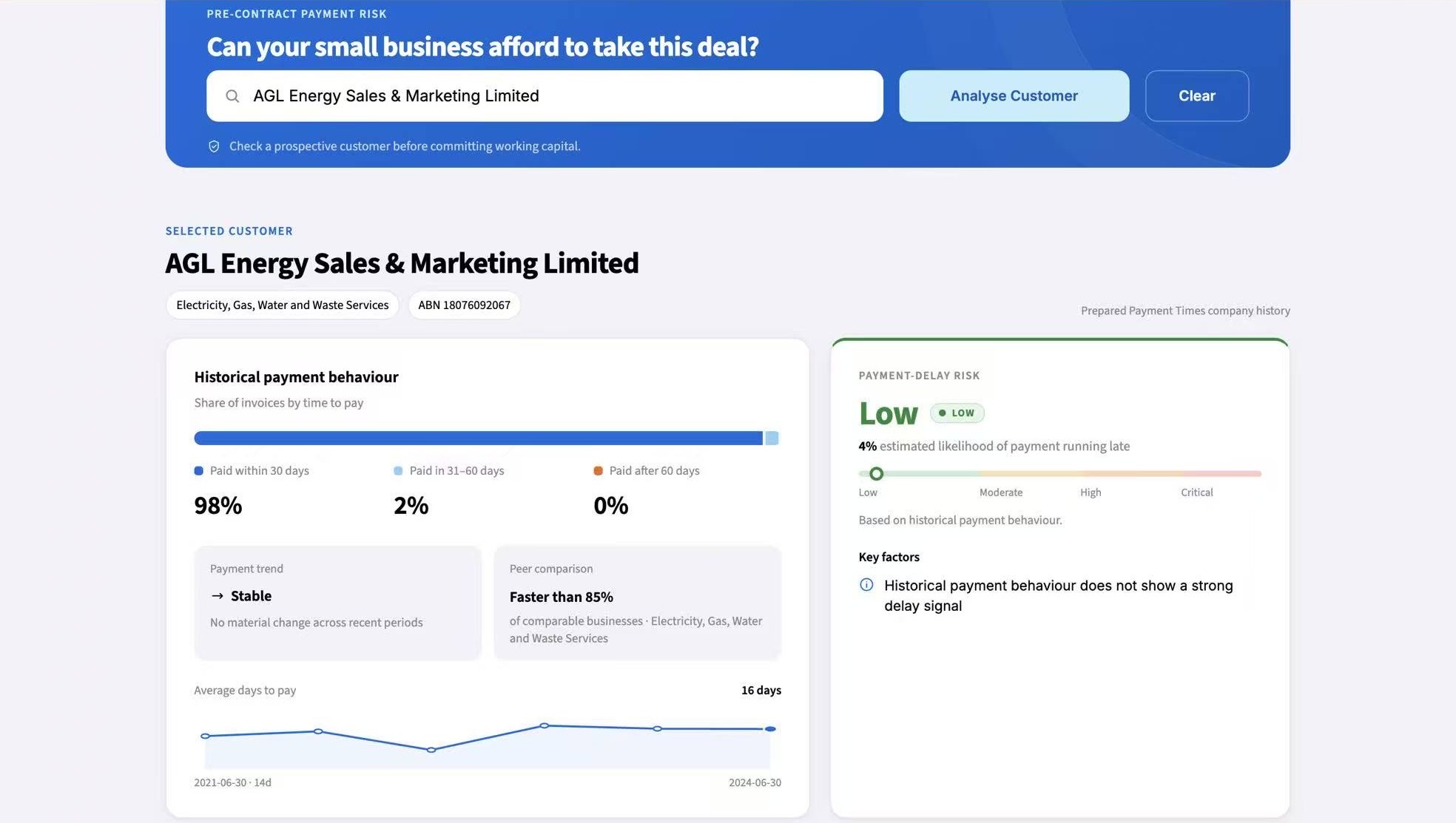
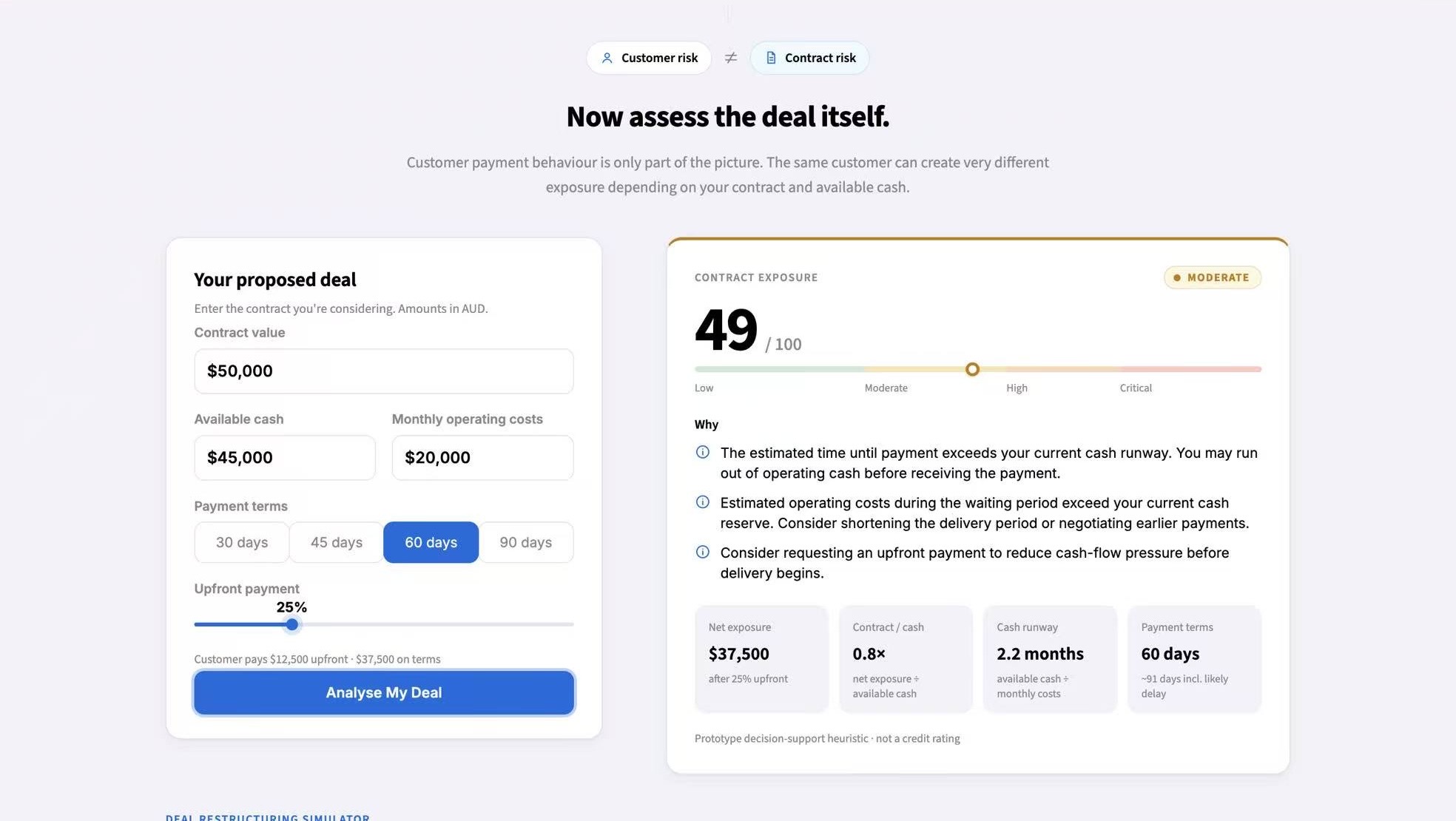
It combines historical customer payment behaviour with information about the proposed deal and the business's own financial position. It then stress-tests the contract under different payment scenarios.
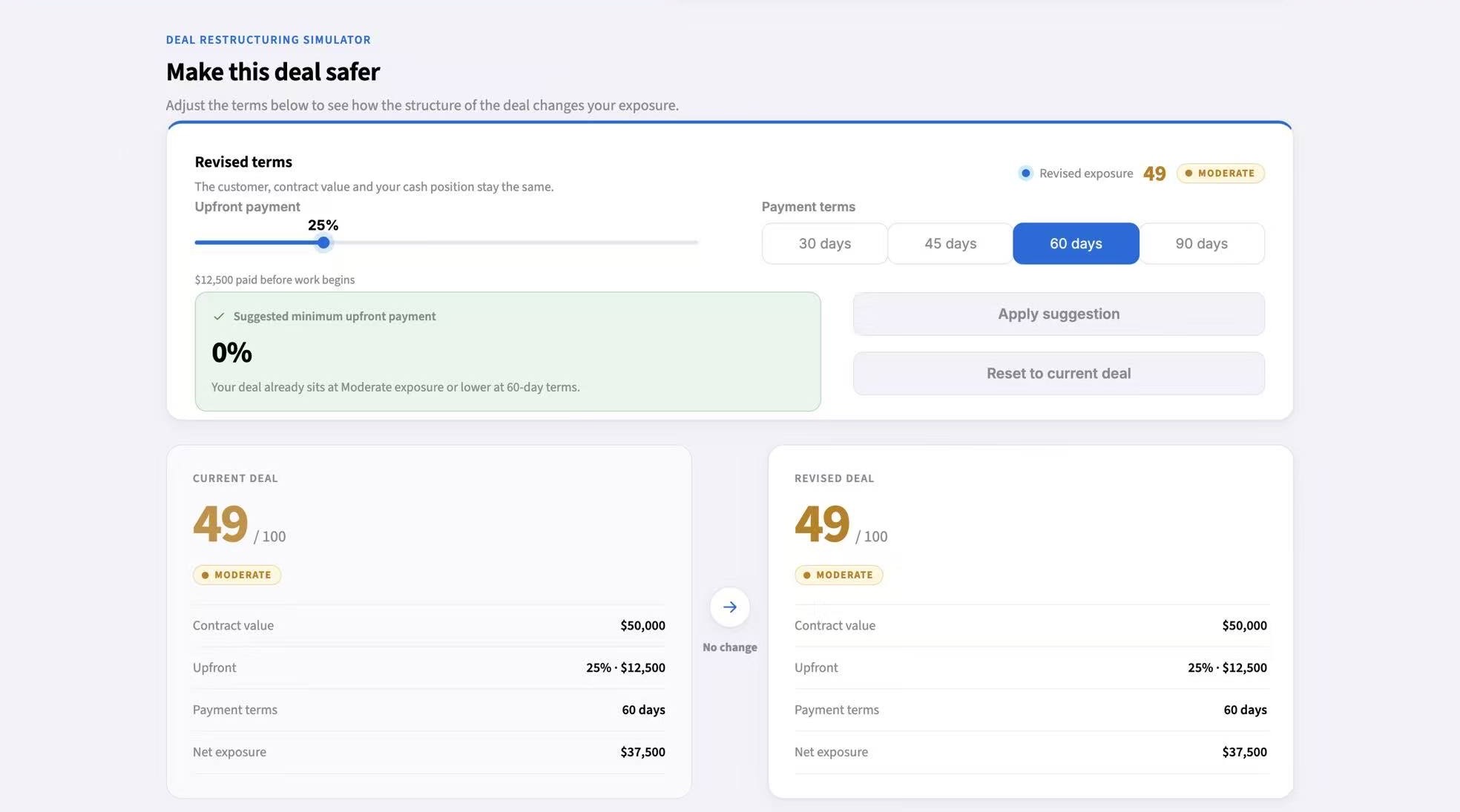
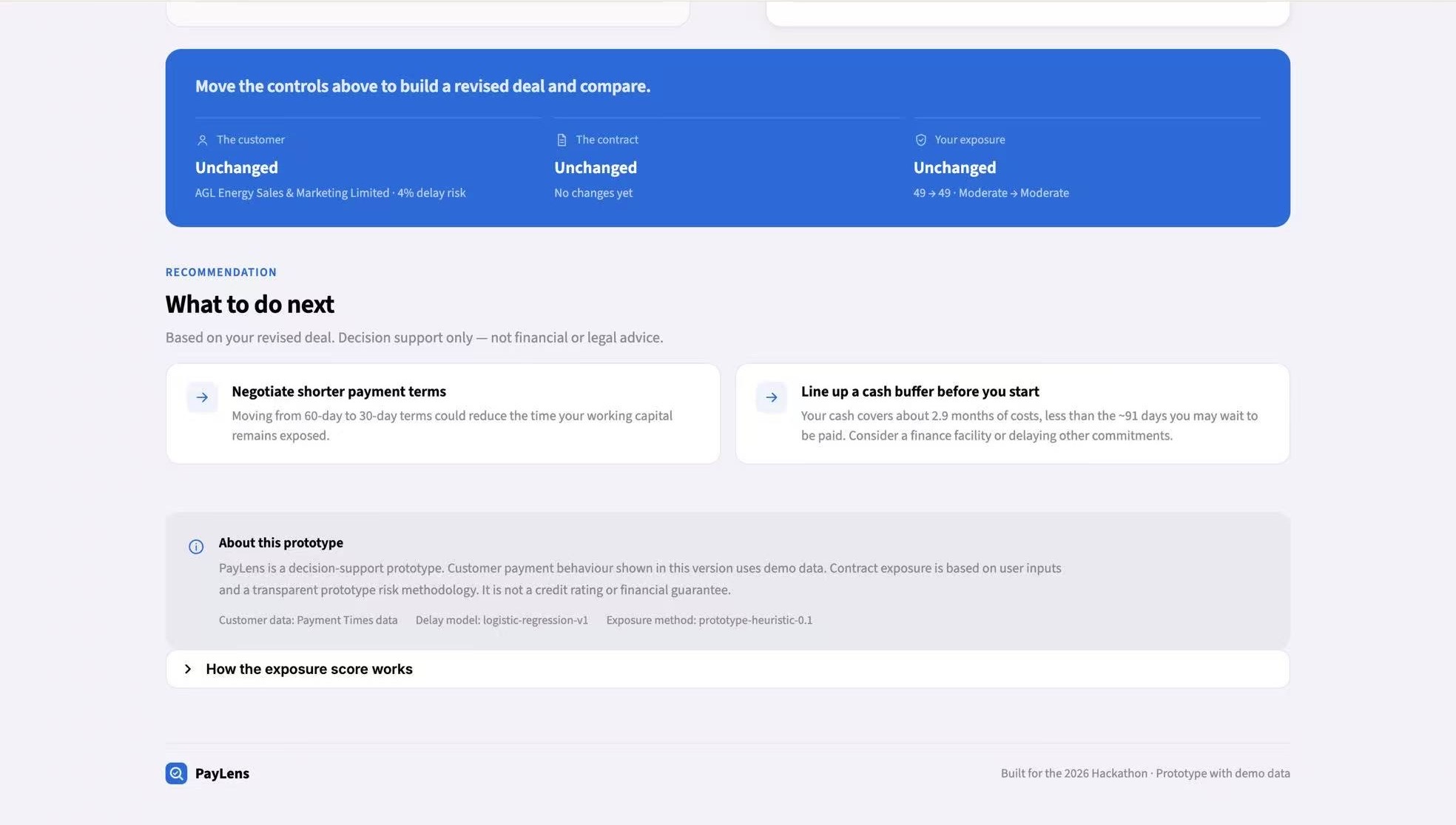
If a deal creates too much financial pressure, PayLens also lets the business test changes such as increasing the upfront deposit to see what could make the deal more sustainable.
How we built it
We used Australia's Payment Times Reporting Scheme data to understand historical payment behaviour.
We built a machine-learning pipeline using past reporting periods to help construct payment-delay scenarios, while making sure future information was not leaked into the model.
We then combined these scenarios with a deterministic cash-flow model and built an interactive interface where users can explore how different contract terms affect their financial position.
Challenges we ran into
One of our biggest challenges was figuring out what PayLens should actually solve.
At first, we focused heavily on predicting late payments. But we realised that simply giving businesses another risk score was not enough.
The more useful question was:
What does that risk mean for this particular business and this particular deal?
That changed PayLens from a customer-risk tool into a contract stress-testing and decision-support tool.
Accomplishments that we're proud of
We're most proud of turning the project from something that simply identifies risk into something actionable.
Our negotiation simulator allows a business to see how changing contract terms can turn a financially difficult deal into a more sustainable one.
We're also proud that we brought together real Australian payment data, machine learning, cash-flow modelling and an interactive prototype within the hackathon.
What we learned
We learned that a good customer does not necessarily mean a good deal.
The same payment delay can have completely different effects on different small businesses.
We also learned that building a useful ML product is not just about the model — the data, assumptions, explainability and what the user can actually do with the result matter just as much.
What's next for PayLens
We would like to make PayLens more personalised by integrating a business's own invoice history, accounting data and previous contracts.
We also want to expand the negotiation simulator beyond deposits to explore milestone payments, staged invoicing and different payment terms.
PayLens started from a simple observation:
Having more work doesn't always mean having more cash.
We want to help small businesses understand that risk before signing the deal.
Built With
- css
- html
- javascript
- logistic-regression
- machine-learning
- numpy
- pandas
- pipeline
- preprocessing
- pytest
- python

Log in or sign up for Devpost to join the conversation.