Inspiration
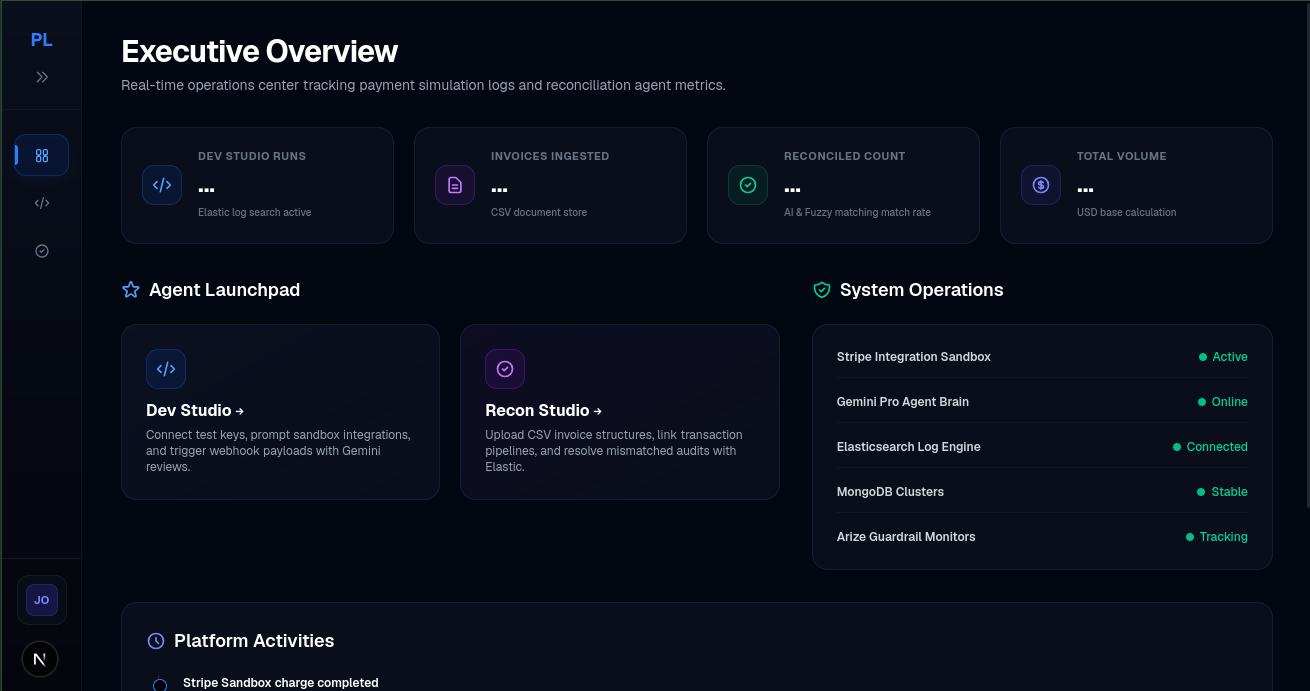
Payment integration is one of the most painful parts of building a product. Developers waste hours reading Stripe docs, setting up test environments, and debugging webhook failures — only to get walls of raw JSON they have to interpret themselves. On the finance side, reconciling invoices against transactions manually is slow, error-prone work. We built PayLens to solve both.
What it does
PayLens has two AI agents:
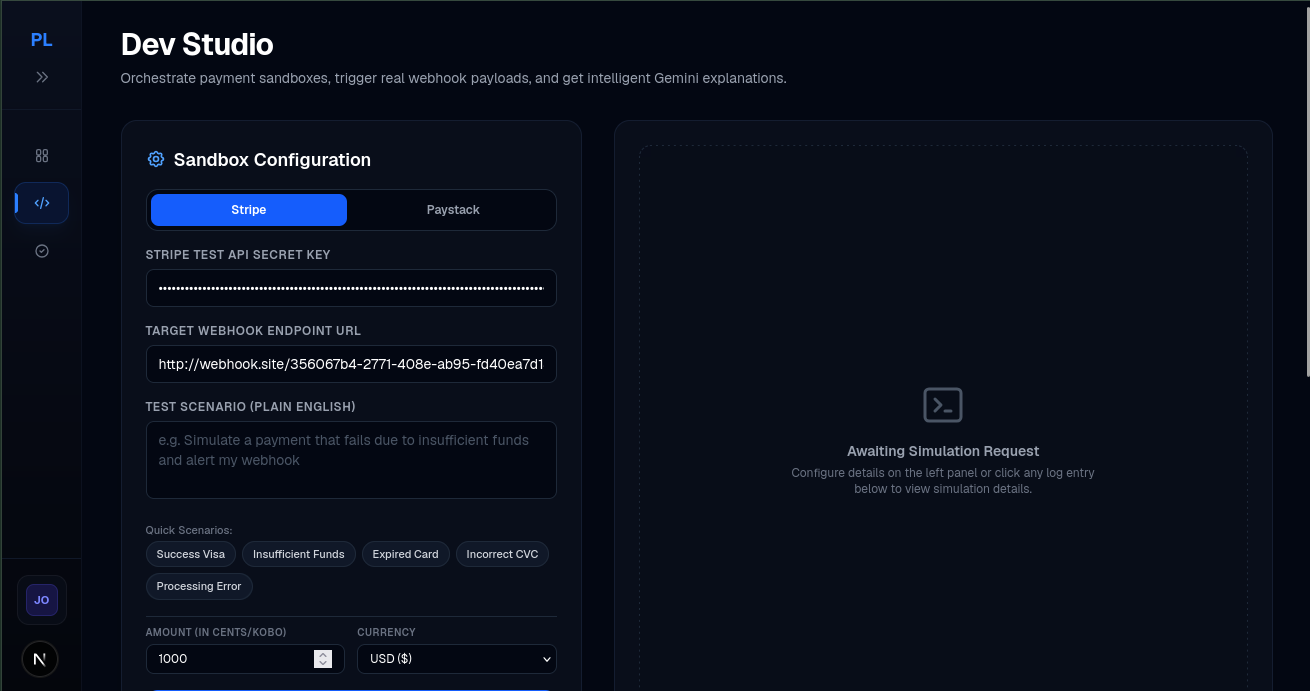
Dev Studio — A developer types what they want to test in plain English ("simulate a card declined due to insufficient funds"). PayLens picks the right Stripe or Paystack test token, fires the payment simulation, sends a real webhook to their server, and uses Gemini to explain exactly what happened and what to fix. Every test run is saved to Elasticsearch for searchable history.
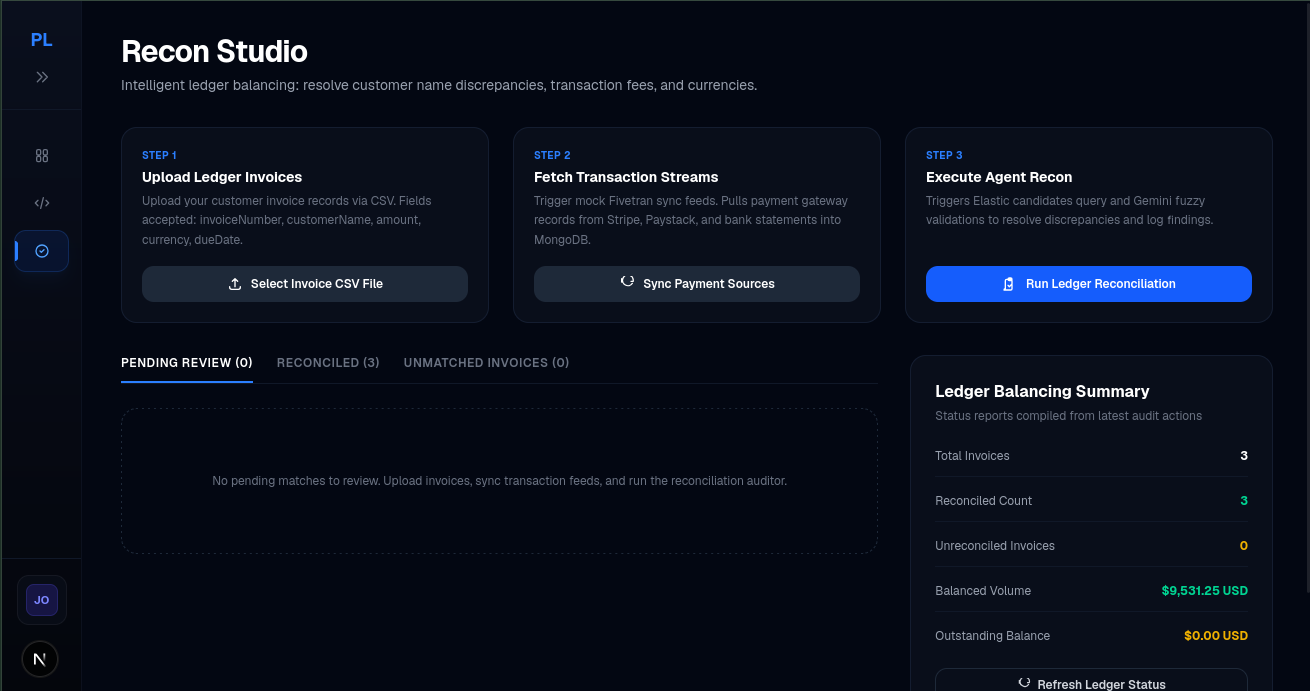
Recon Studio — A finance team uploads their invoice CSV. PayLens syncs payment transactions from Stripe/Paystack, then uses Elasticsearch fuzzy matching combined with Gemini AI validation to automatically match invoices to payments — even when customer names or amounts don't match exactly.
How we built it
- NestJS backend with MongoDB Atlas for data storage
- Google Gemini (via AI Studio API) for plain English explanations and match validation
- Elasticsearch for test log history and fuzzy invoice reconciliation
- Stripe and Paystack sandbox APIs for payment simulation
- Next.js frontend with full authentication (JWT + bcrypt)
- Arize for AI observability and LLM monitoring
- Webhook firing with real HTTP capture to test developer endpoints
Challenges we ran into
- Gemini regional quota limits in Nigeria — solved by switching to the gemini-flash-latest model alias
- Stripe PCI compliance blocking raw card numbers — solved by using Stripe's official test tokens
- Coordinating a two-person team across separate features while keeping a shared dev branch clean
What we learned
One of the biggest things we learned from this hackathon was the power of collaboration and problem solving in real time. Working closely as a team exposed us to a problem space we had not deeply considered before, and helped us see how technology can be applied to solve practical challenges at scale.
We also had the opportunity to work with tools and platforms we were using for the first time — especially Elasticsearch and Arize. Learning how to connect and integrate them into our workflow gave us hands-on experience with search, fuzzy matching, and AI observability systems.
Beyond that, the hackathon pushed us to explore several Google technologies including Google Gemini, Google AI Studio, and Google Cloud. It was a great experience that expanded our understanding of modern cloud-based development and AI-powered workflows.
We also learned how to chain multiple AI and infrastructure services into a single agent workflow — and the difference between building something that works in isolation vs. something that integrates with a developer's real workflow.
Overall, the experience improved our technical skills, teamwork, adaptability, and ability to quickly learn and build under pressure.
What's next
Fivetran MCP for real transaction syncing, webhook signature verification, and a hosted version for teams.
Built With
- arize-(ai-observability)
- cloud
- docker
- elasticsearch
- google-gemini-api
- jwt
- mongodb
- mongoose
- nestjs
- next.js
- node.js
- paystack-api
- react
- stripe
- tailwind-css
- typescript


Log in or sign up for Devpost to join the conversation.