-
-
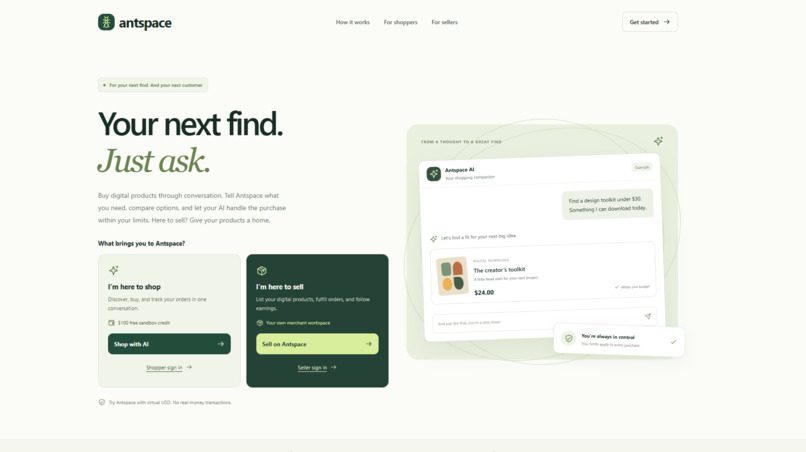
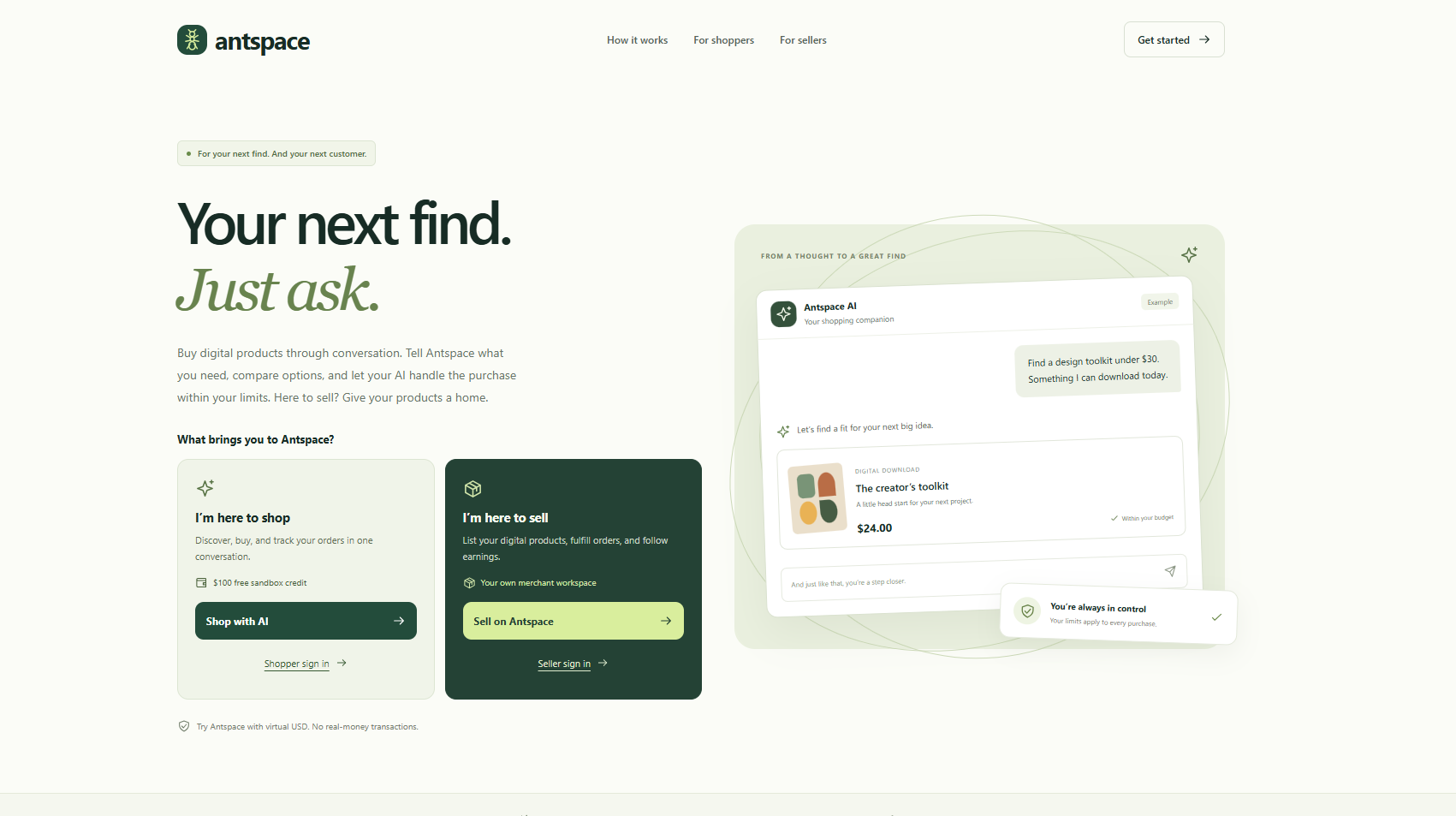
Landing page: shop with AI or manage your digital-product business in the merchant workspace.
-
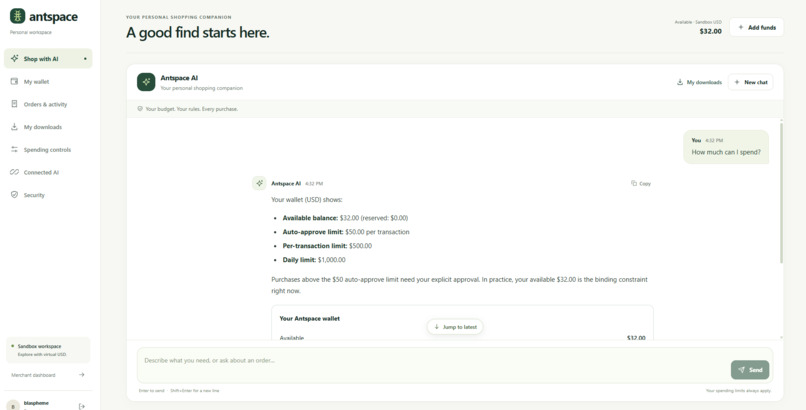
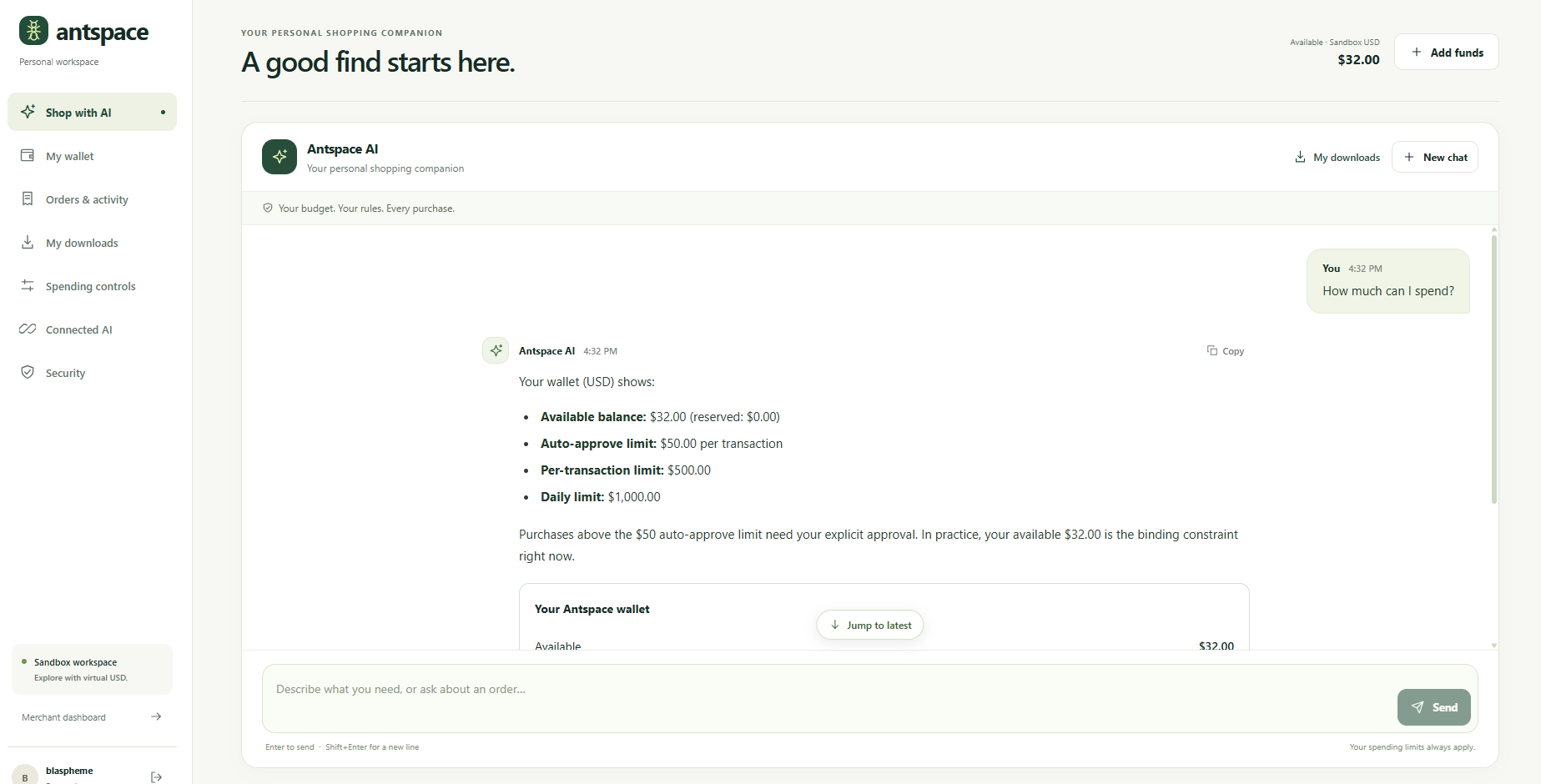
Wallet and spending controls: Check your balance and spending limits in chat.
-
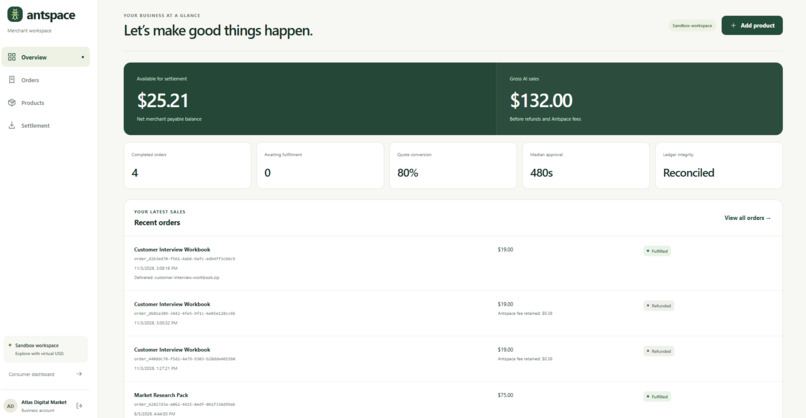
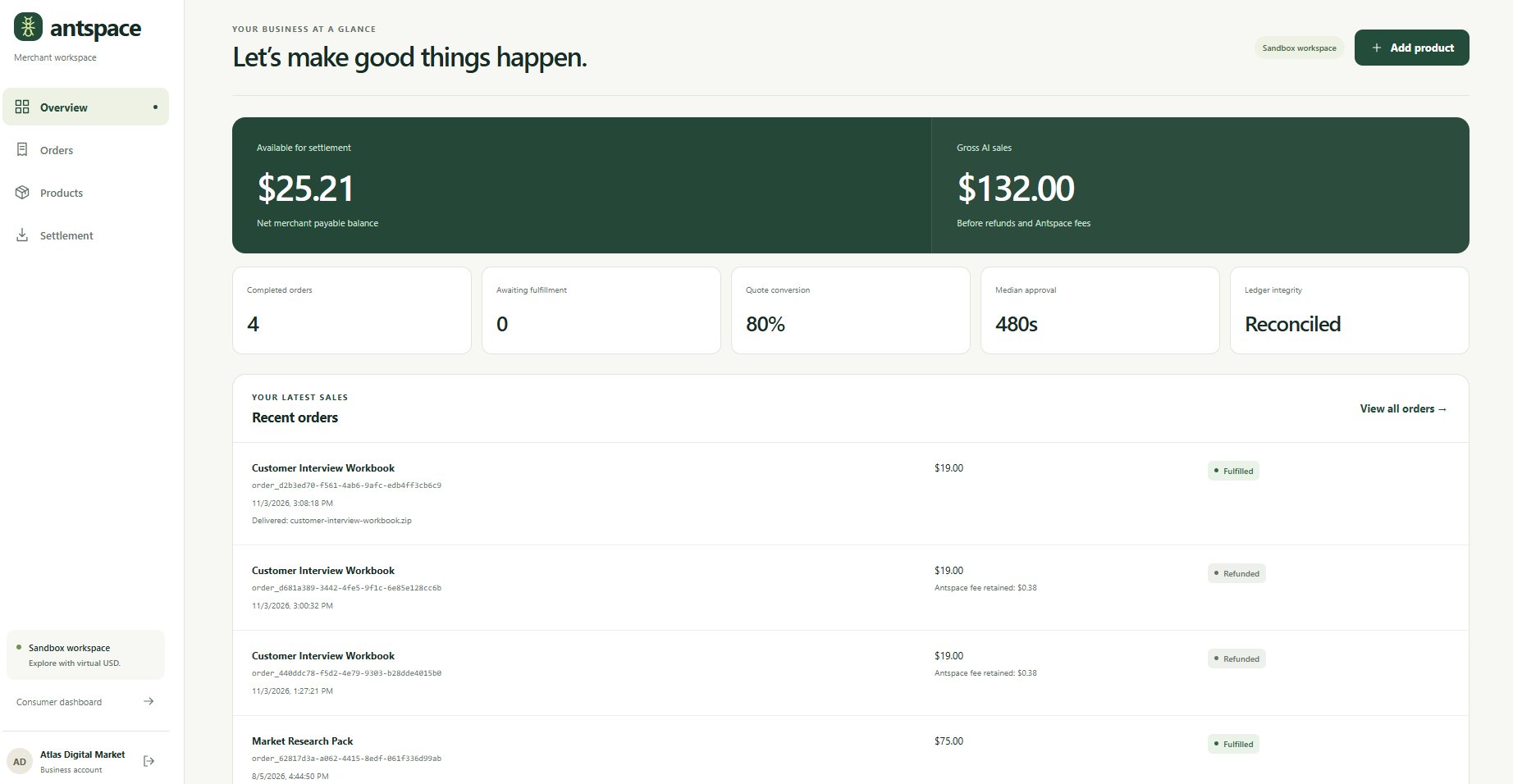
Merchant settlement: Track merchant earnings, retained reserves, and withdrawal status through PayPal Sandbox Payouts.
-
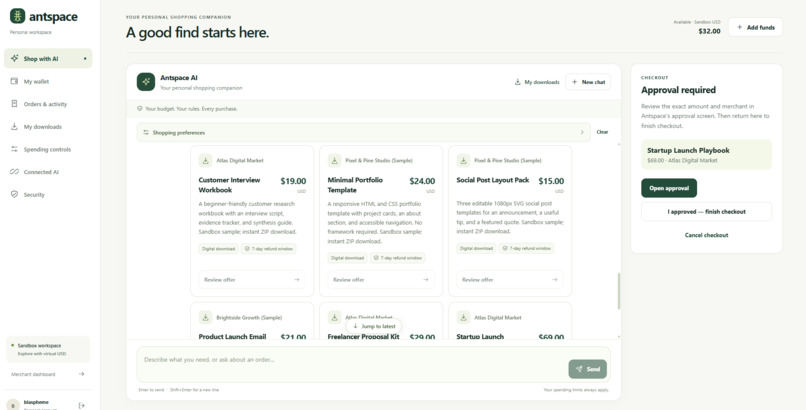
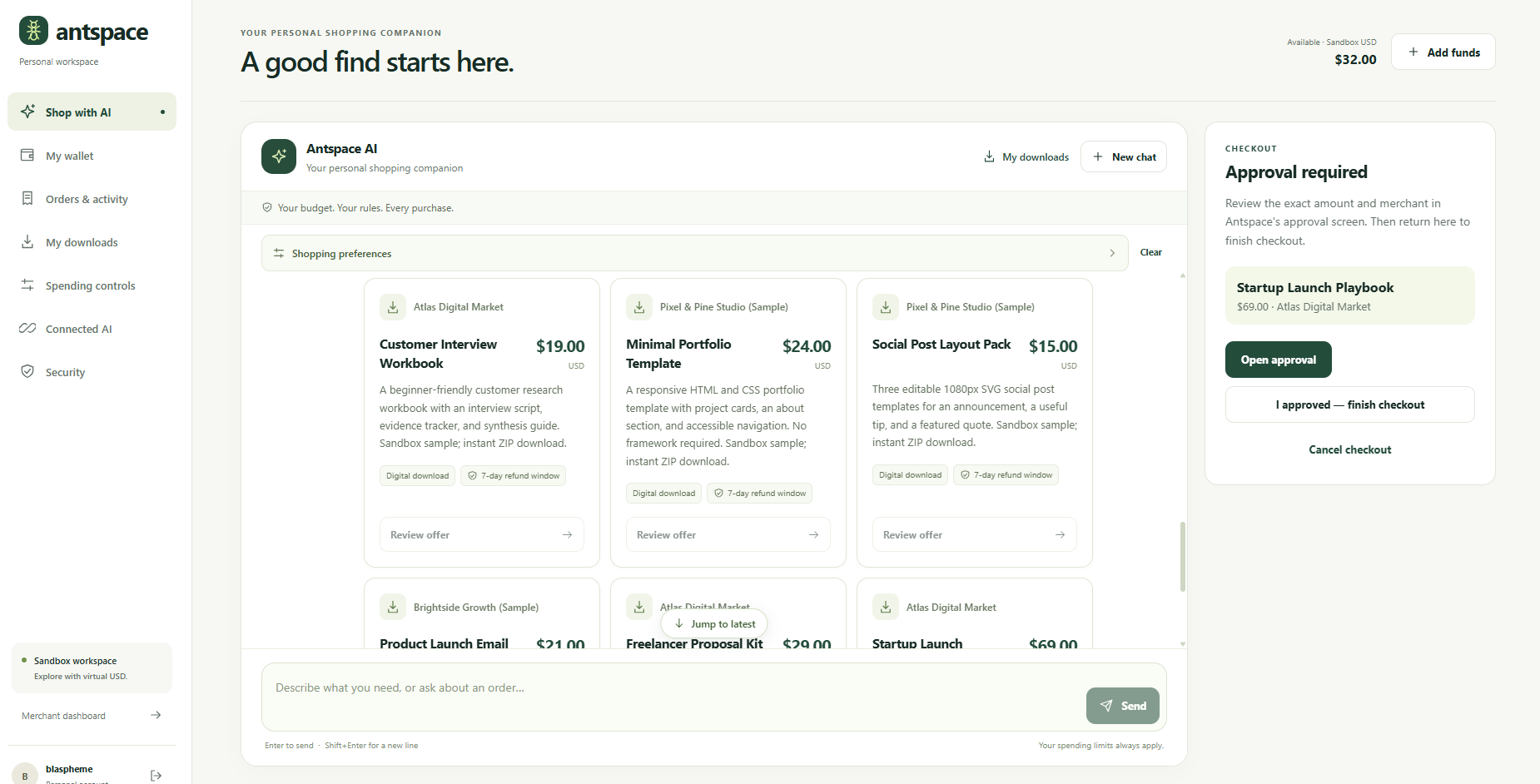
Product review and approval: Compare products and approve purchases before checkout.
-
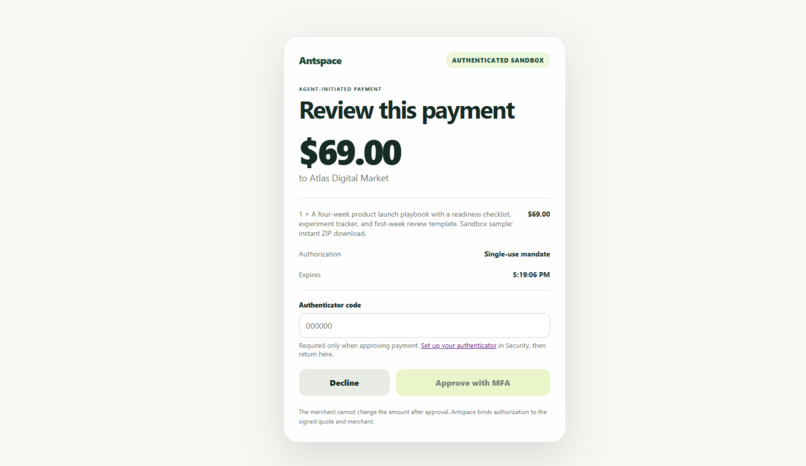
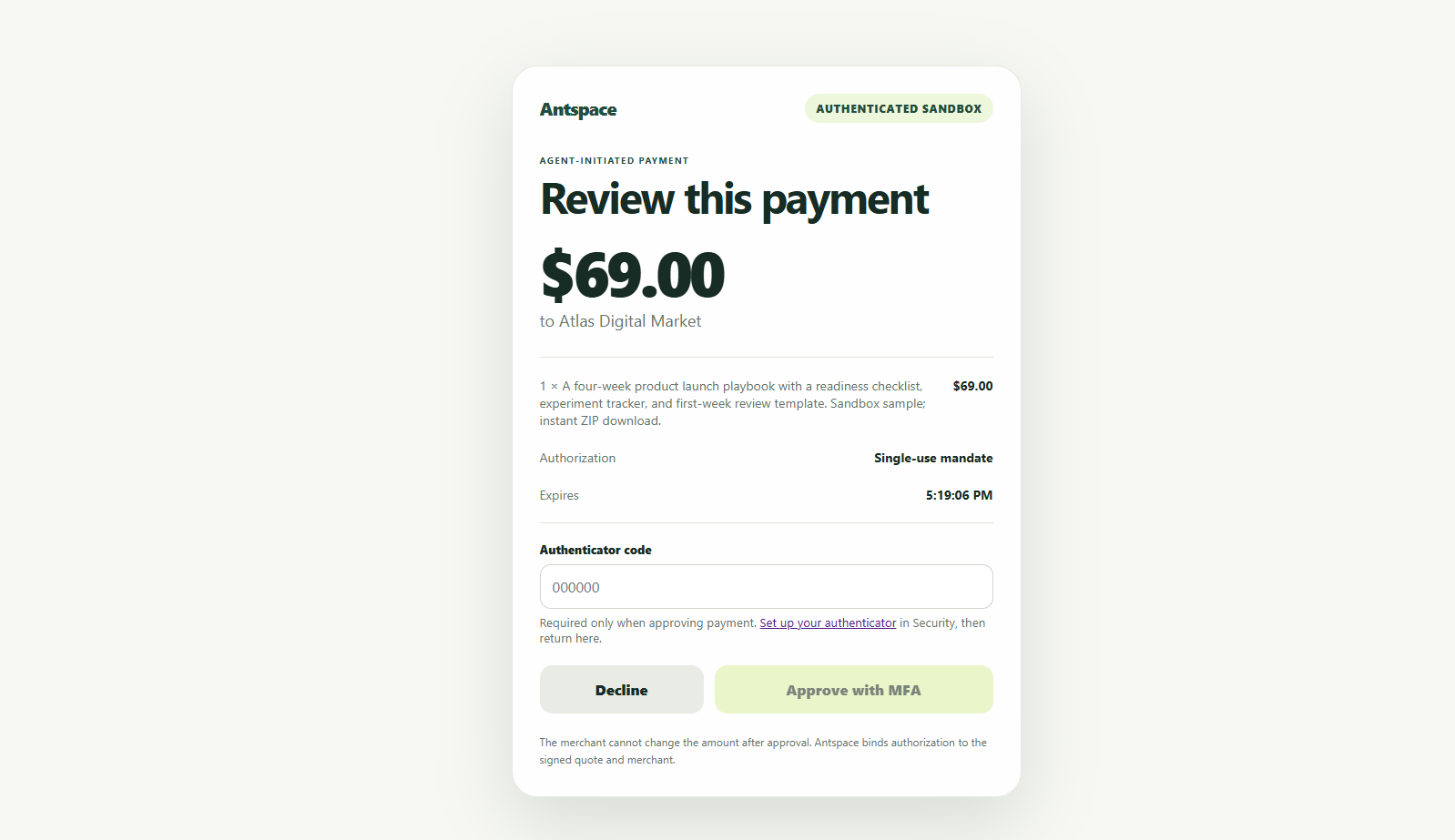
Purchase approval: review the product, price, and spending limits before approving a purchase.
Inspiration
AI can help people decide what to buy, but completing a purchase still usually means browsing product pages, managing a cart, checking out, and finding the download afterward.
Antspace brings that journey into a conversation. The goal is to let people describe what they need and have an AI assistant help them discover, compare, and purchase digital products while keeping control over their spending.
What it does
Antspace is an AI shopping marketplace for digital products, with separate consumer and merchant workspaces.
Consumers can describe a goal, budget, and preferences in chat. The assistant searches the available catalogue, compares relevant products, explains prices and refund terms, and helps complete purchases. Spending policies govern transactions, with human approval when required.
After purchasing, consumers can access their digital files through My Downloads and track purchases in their order history. New consumer accounts receive $100 in virtual sandbox credit to explore the experience.
Merchants can publish offers, upload digital products, manage orders, and track settlement and withdrawals. The demo catalogue includes 18 sample digital products across six fictional merchants.
PayPal supplies the funding and withdrawal rails:
- Consumers add funds to their Antspace wallets through PayPal Sandbox Checkout.
- Agent purchases use Antspace’s own authorization and ledger flow.
- Merchants request withdrawals through PayPal Sandbox Payouts, with a 10% reserve retained.
The demo uses virtual USD. No real money is transferred.
How it was built
The consumer and merchant interfaces use Next.js, React, and TypeScript. A Node.js and Express API manages authentication, catalogue access, purchasing, digital delivery, and settlement. PostgreSQL stores application data and the double-entry ledger.
DeepSeek powers the conversational assistant. Its tools connect to the actual catalogue and commerce APIs so recommendations and actions are grounded in available products.
The API enforces spending policies and validates signed quotes independently of the language model. Purchase preparation, approval, and commitment are separate steps, allowing the system to request human approval or additional funding when needed.
PayPal Checkout handles wallet funding, while PayPal Payouts handles merchant withdrawals. Capture verification, idempotency, verified webhooks, and reconciliation help keep provider events and internal balances consistent.
The application runs on Render with Neon PostgreSQL. GitHub Actions runs automated checks, and the public source code is available under the MIT license.
Existing foundation and hackathon development
Antspace builds on an earlier project called PAYL, which established the core agent-commerce and ledger foundation.
The hackathon work expanded that foundation with PayPal Sandbox funding and merchant withdrawals, DeepSeek-powered shopping chat, conversational shopping preferences, approval and funding recovery flows, consumer registration with sandbox credit, digital-product uploads and downloads, and redesigned consumer and merchant experiences.
The project was also rebranded as Antspace and deployed behind a shared public entry point at antspace.online.
Challenges
A major challenge was connecting conversational intent to reliable financial actions. Product prices can change, quotes can expire, requests can be retried, and payment notifications can arrive more than once.
Antspace addresses these cases through fresh signed quotes, server-side policy checks, idempotent operations, and explicit transaction states. Merchant withdrawals hold funds while a payout is pending, and digital downloads require a valid purchase entitlement.
Another challenge was making these controls understandable in the interface without overwhelming the shopping conversation.
Accomplishments
Antspace connects AI discovery, controlled purchasing, digital delivery, and merchant settlement in one application.
The project includes downloadable sample products, separate consumer and merchant workspaces, PayPal Sandbox integrations, and automated checks covering important commerce and payment behavior.
What was learned
An effective shopping agent needs more than a persuasive conversation. It needs accurate catalogue data, clear authority to act, reliable transaction records, and a useful experience after the purchase.
The language model interprets intent; the application must enforce prices, permissions, and financial state.
What's next
Next steps include improving product matching, onboarding independent digital creators, expanding merchant analytics, and moving larger digital assets to dedicated private object storage.
A future production release would also require completing the relevant PayPal onboarding and operational requirements before enabling real-money transactions.
Built With
- deepseek
- docker
- express.js
- github-actions
- mcp
- neon
- next.js
- node.js
- oauth
- paypal
- postgresql
- react
- typescript
- vitest


Log in or sign up for Devpost to join the conversation.