-
-
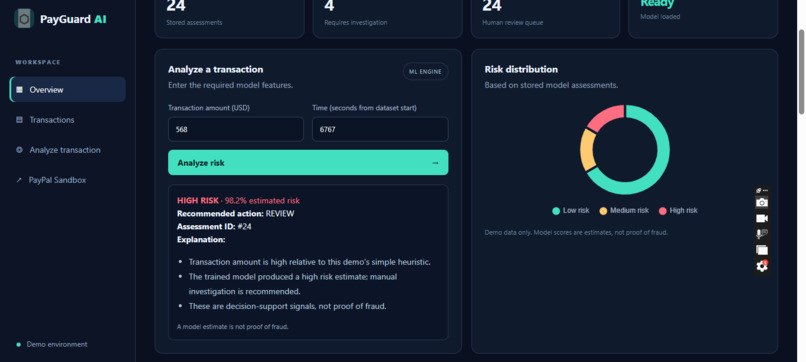
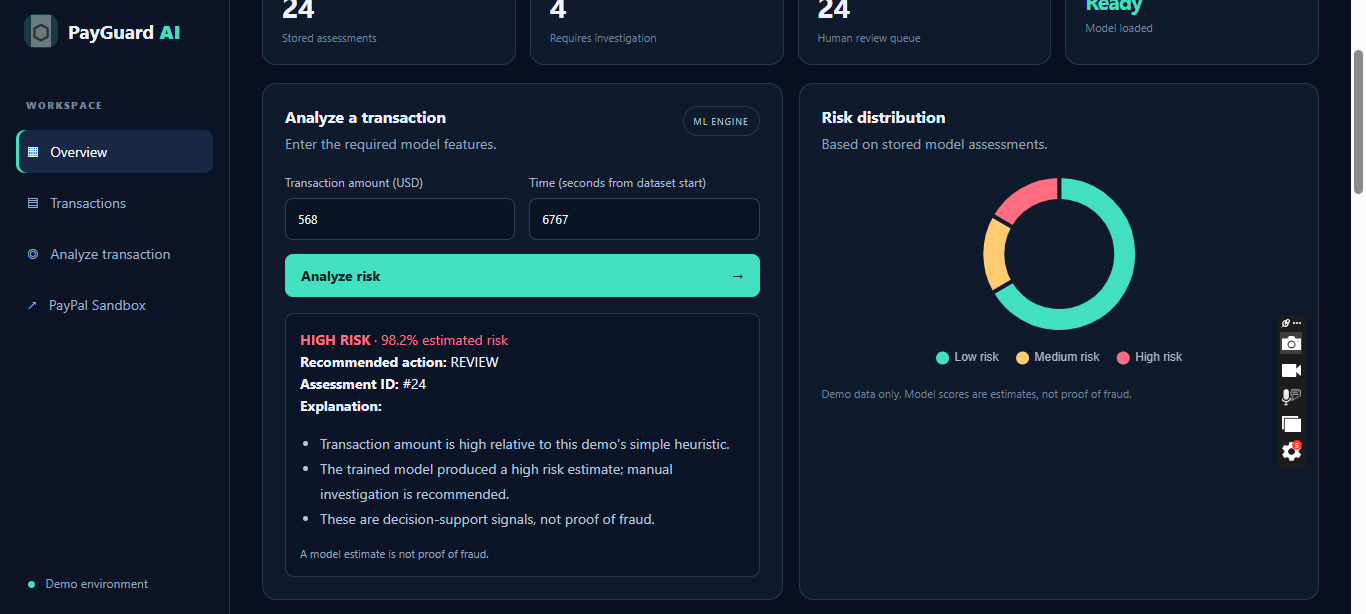
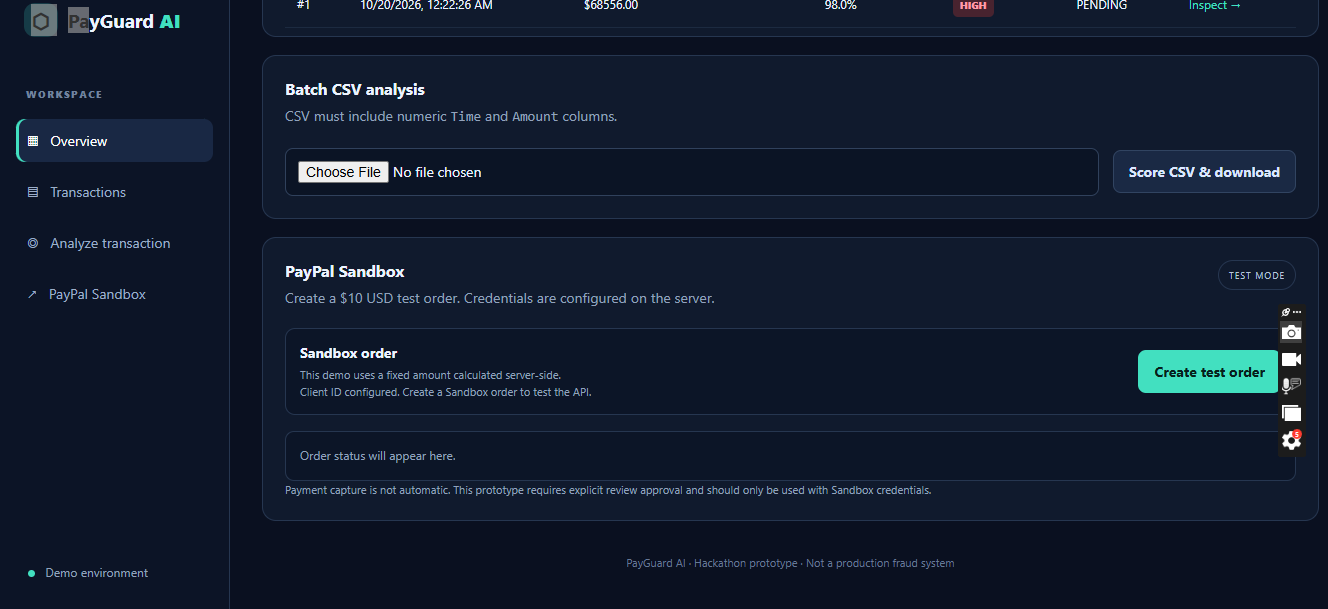
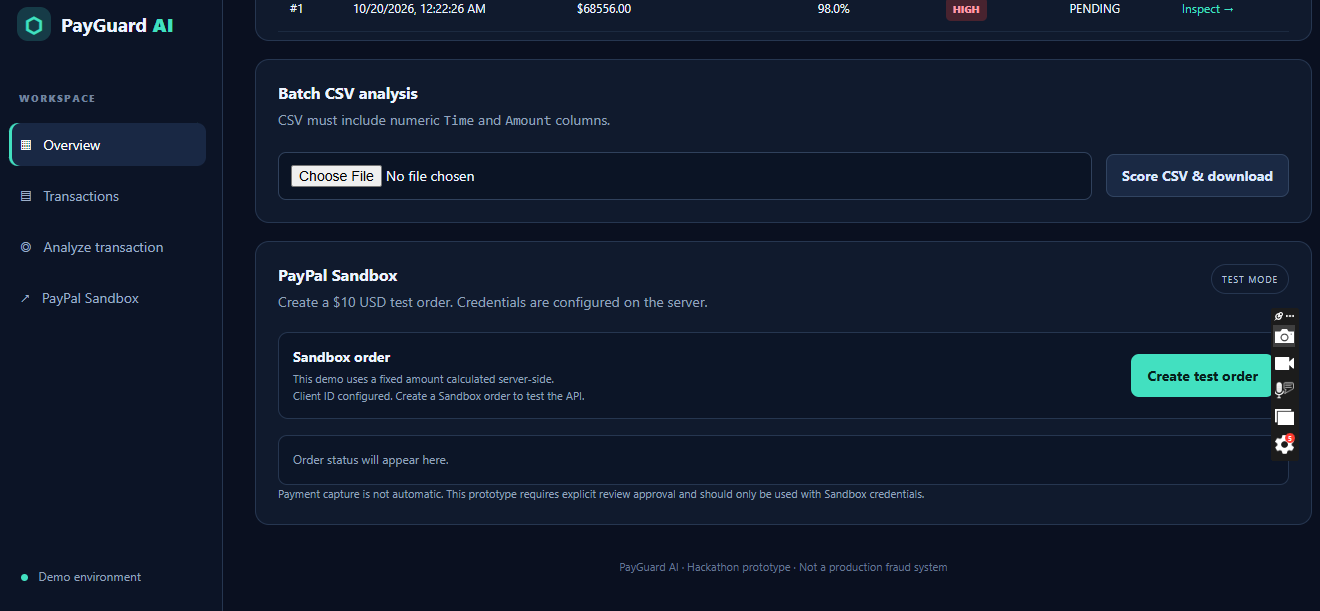
this is our project dashboard
-
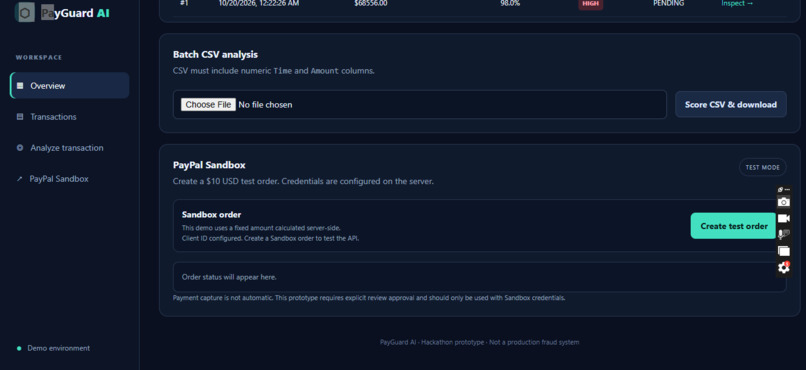
this is transaction history
-
Inspiration
Online payments have made our lives easier, but they have also created new opportunities for fraud. A single suspicious transaction can lead to financial loss and a lack of trust in digital payments. We wanted to explore how AI could help make online transactions safer and smarter. This idea inspired us to build PayGuard AI, a project that combines artificial intelligence and payment technology to identify potential risks and help protect users from fraudulent activity.
What it does
PayGuard AI is an AI-powered payment security platform that analyzes transactions and identifies potentially suspicious activity. It assigns risk levels to transactions, helping users understand which payments may need closer attention.
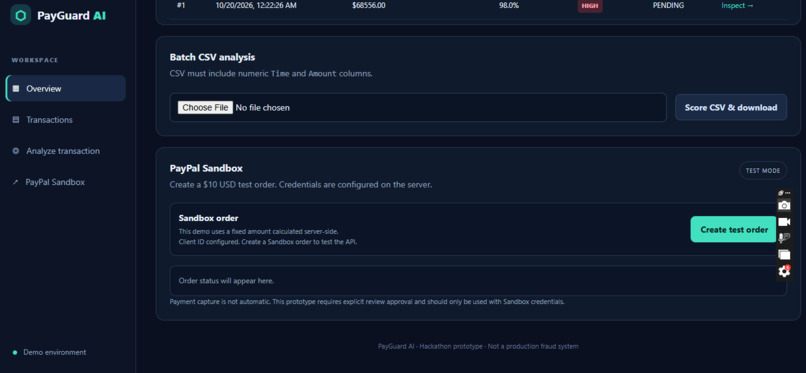
The platform includes an interactive dashboard for monitoring transactions, viewing risk information, and tracking suspicious activity. It also integrates with the PayPal Sandbox to demonstrate a payment workflow in a testing environment.
Our goal is to make payment risk easier to understand and help users make more informed decisions before completing a transaction.
How we built it
We built PayGuard AI by combining machine learning, backend development, and a simple dashboard experience. Python powers the backend and AI-based risk analysis, while the dashboard provides a user-friendly way to view transaction details and risk results.
We used a machine learning model to analyze transaction data, a database to store transaction records, and a web interface to display the results. We also integrated the PayPal Sandbox to test the payment flow without using real money.
The main focus was to connect these components into one working prototype that demonstrates how AI-assisted fraud detection can fit into a digital payment workflow.
Challenges we ran into
One of our biggest challenges was getting all the components to work together smoothly. Setting up the PayPal Sandbox, configuring API credentials, and testing the payment approval and capture flow required careful debugging.
We also had to work through issues related to transaction risk analysis, model predictions, and displaying accurate information on the dashboard. Another important challenge was understanding how to use AI predictions responsibly, since a high-risk score should trigger further review rather than automatically prove that a transaction is fraudulent.
Each challenge helped us improve our understanding of backend integration, debugging, and the importance of testing a complete application rather than individual components alone.
Accomplishments that we're proud of
We are proud to have developed a working PayGuard AI prototype that brings AI-based transaction risk analysis and payment testing together in one platform.
Some of our key accomplishments include:
- Building an interactive dashboard for transaction monitoring.
- Integrating PayPal Sandbox for testing payment workflows.
- Implementing machine learning-based risk analysis.
- Creating a system to record and review transaction information.
- Connecting the frontend, backend, database, and payment workflow into a single project.
Most importantly, we turned an idea about safer digital payments into a functional prototype that we can continue to test, improve, and expand.
What we learned
Building PayGuard AI taught us that creating a useful AI application involves much more than training a model. We learned how important API integration, database management, frontend-backend communication, and systematic testing are when developing a complete product.
We also learned that fraud detection is not simply about labeling transactions as safe or unsafe. Real-world systems need to consider false positives, missed fraud, and the balance between security and a smooth user experience.
This project gave us practical experience in connecting AI with payment technology and showed us how machine learning can support better risk assessment when used carefully.
What's next for PayGuardAI
We see PayGuard AI as a starting point for building a smarter payment security platform. Our next steps are to improve the accuracy of the risk detection model, test it against more diverse transaction data, and strengthen the way high-risk payments are handled.
We also plan to explore real-time risk scoring, explainable AI that shows why a transaction was flagged, improved fraud analytics, and alerts for suspicious activity. In the longer term, we want to investigate secure integrations with production payment systems, along with stronger authentication and monitoring.
Our vision is to make PayGuard AI a reliable assistant for safer digital payments — helping identify potential threats earlier while keeping legitimate transactions simple and convenient.
Built With
- chatgpt
- claude
- flask
- git
- github
- javascript
- machine-learning
- numpy
- pandas
- paypal
- python
- sandbox
- scikit-learn

Log in or sign up for Devpost to join the conversation.