-
-
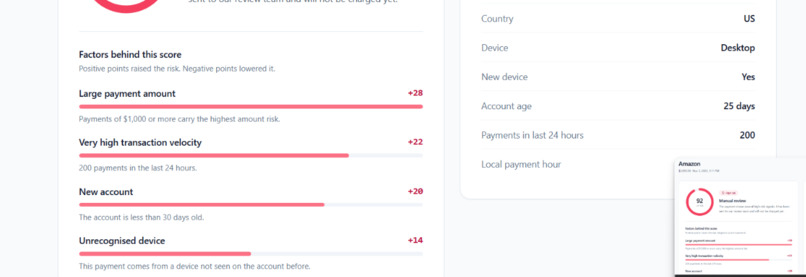
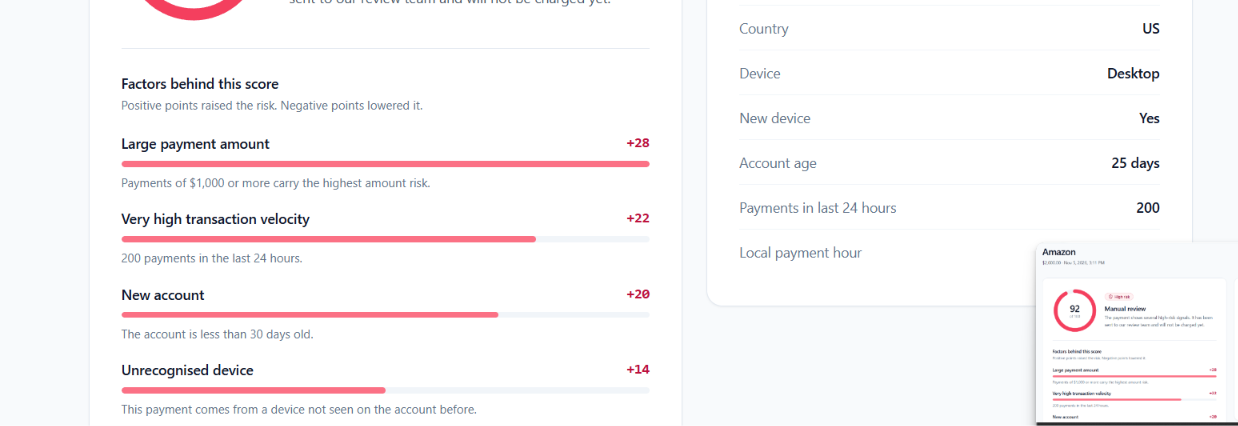
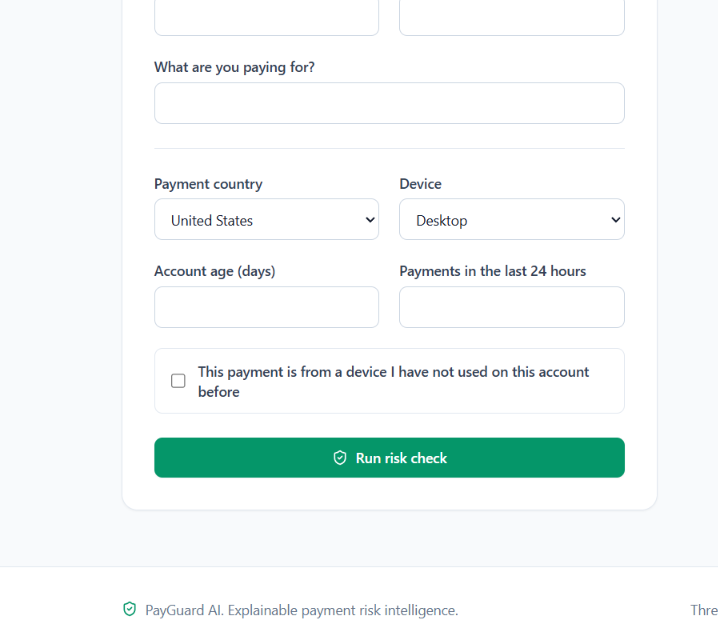
It is a risk analysis page when we enter the merchant name and paymount amount and account age and type of product
-
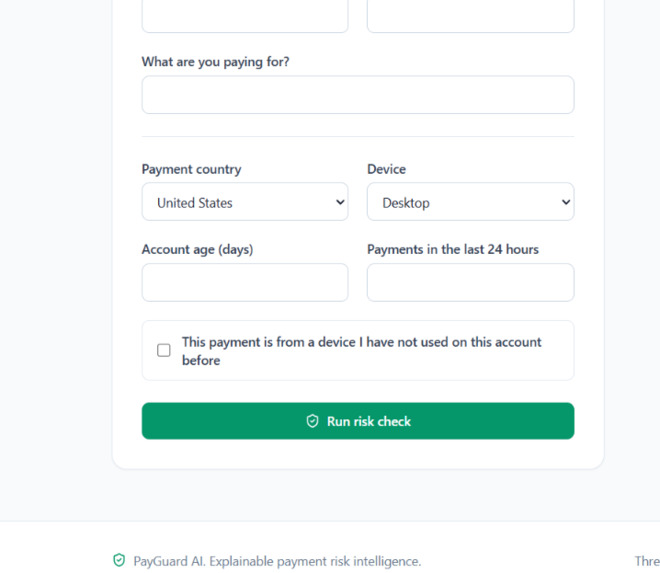
this page when we enter the merchant name and paymount amount and account age and type of product
-
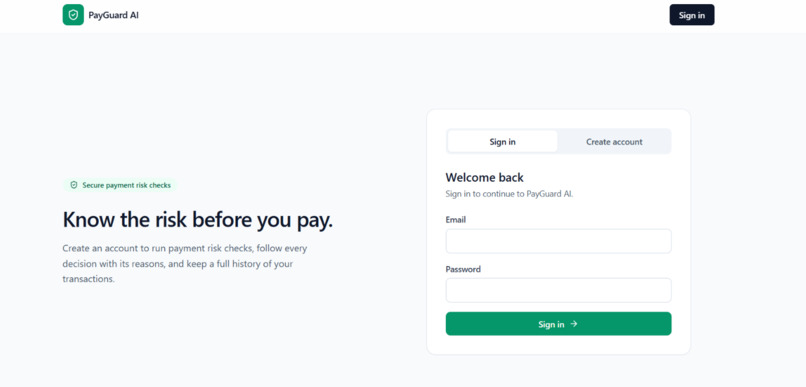
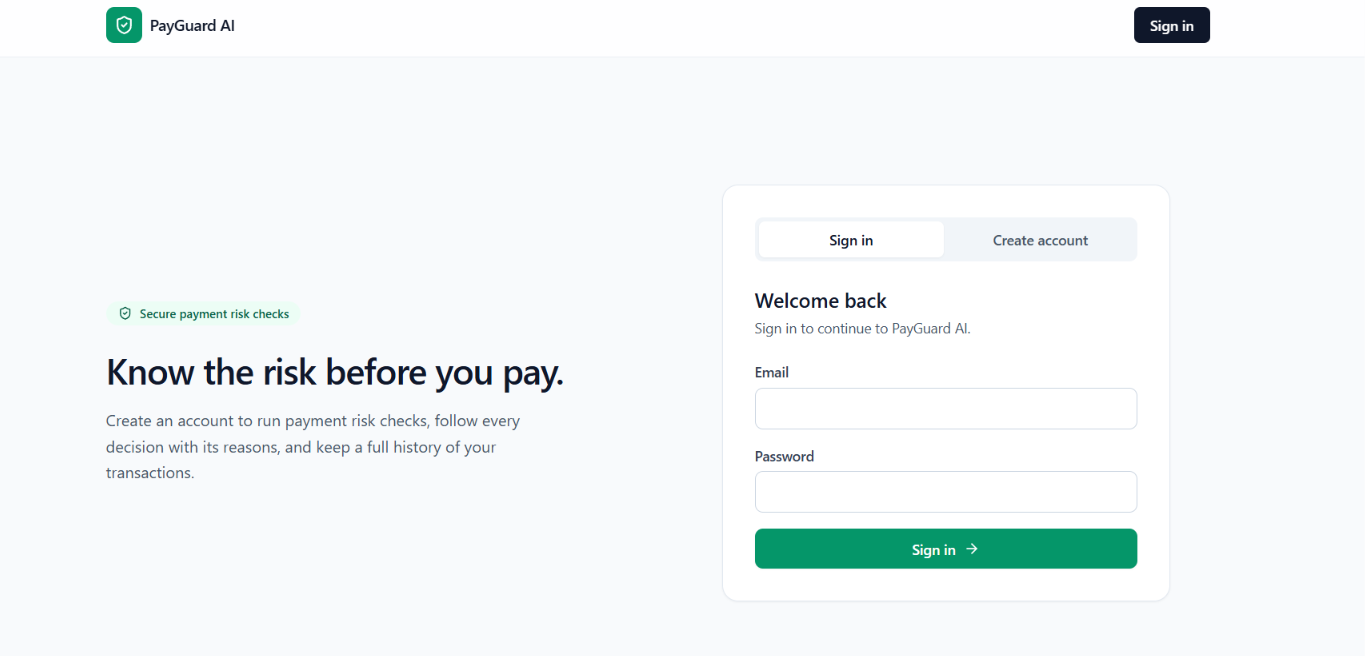
it is a sign in page or login page and create account page
-
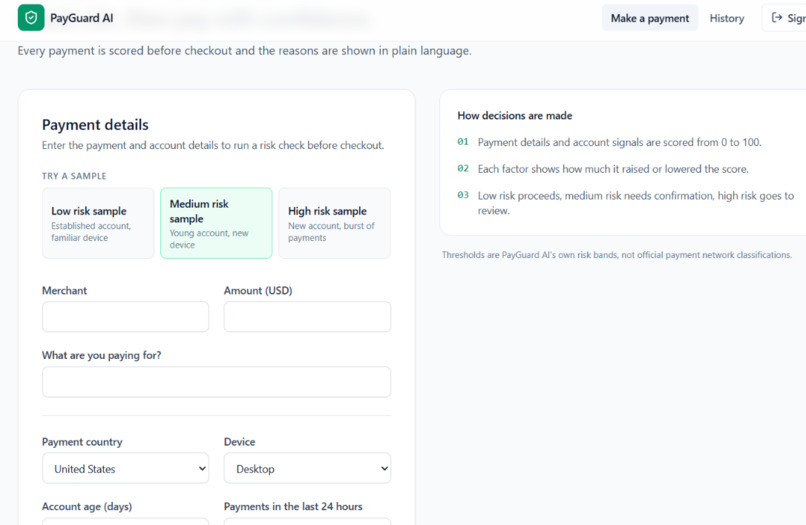
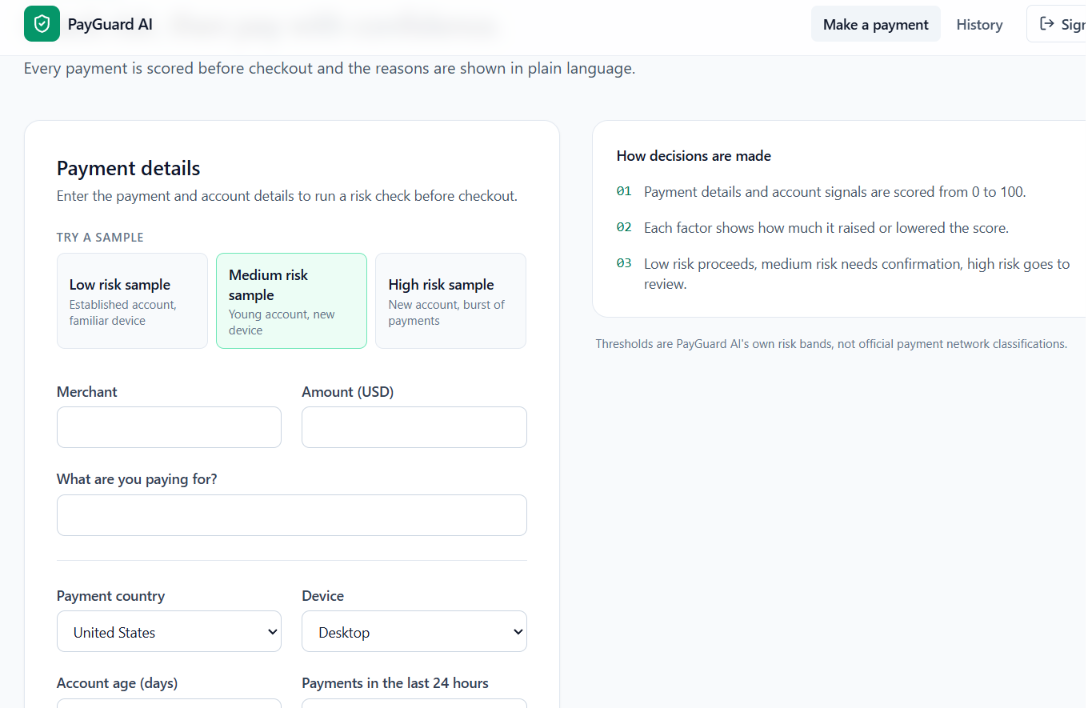
this is full page when we enter the merchant name and paymount amount and account age and type of product
Inspiration
Digital payments have become an essential part of everyday life, but the risk of online payment fraud continues to create challenges for customers and merchants. Suspicious transactions, unusual payment patterns, and unauthorized activities can affect financial security and customer trust.
We wanted to build a solution that makes digital payments safer by using Artificial Intelligence to identify potentially fraudulent transactions before they are processed.
This inspired us to develop PayGuard AI, an intelligent payment fraud detection platform that combines Machine Learning and Explainable AI to improve payment security and transparency.
What it does
PayGuard AI is an AI-powered platform that analyzes payment transactions and identifies potentially suspicious activities.
Its key features include:
- AI-Based Fraud Detection: Uses machine learning to identify suspicious transaction patterns.
- Risk Score Generation: Assigns risk scores to transactions based on analyzed features.
- Explainable AI: Uses SHAP to explain the factors influencing fraud predictions.
- Risk-Based Recommendations: Suggests allowing transactions, requesting additional verification, or sending them for manual review.
- PayPal Sandbox Integration: Demonstrates payment processing through a test payment environment.
- Analytics Dashboard: Provides transaction monitoring, risk statistics, and suspicious activity insights.
How we built it
We designed PayGuard AI using a full-stack architecture that connects a web application, backend services, a machine learning component, and a payment gateway.
Frontend:
- React.js and Vite
- Tailwind CSS
- Interactive dashboard and transaction monitoring interface
Backend:
- Java and Spring Boot
- REST APIs for communication between frontend and backend
- Spring Security for authentication and authorization
Database:
- PostgreSQL
- Stores users, merchants, transactions, risk assessments, and payment records.
Artificial Intelligence:
- Python and Scikit-learn for machine learning.
- SHAP for explaining model predictions.
- Transaction features are analyzed to identify potentially suspicious patterns.
Payment Integration:
- PayPal REST API
- PayPal Developer Sandbox for demonstrating test payment workflows.
Challenges we ran into
During the design and development of PayGuard AI, we identified several important challenges:
- Fraud Pattern Identification: Identifying meaningful transaction patterns that distinguish normal and suspicious activities.
- Model Accuracy: Designing a machine learning approach that can produce useful predictions while minimizing false positives and false negatives.
- Explainability: Making AI predictions understandable instead of presenting users with unexplained risk scores.
- System Integration: Connecting the React frontend, Spring Boot backend, Python ML component, and PostgreSQL database.
- Payment Integration: Understanding the PayPal Sandbox order creation, approval, and capture workflow.
- Data Reliability: Ensuring that transaction features are validated and obtained from trusted sources.
Accomplishments that we're proud of
We are proud of designing a unified platform that brings together payment processing, AI-based risk assessment, and explainable fraud detection.
Our key accomplishments include:
- Designed a complete full-stack architecture for intelligent payment security.
- Combined machine learning with explainable AI.
- Developed a risk-based transaction assessment approach.
- Planned integration with PayPal Sandbox for payment demonstrations.
- Designed an analytics dashboard for transaction monitoring.
- Created an extensible architecture that can support future fraud detection improvements.
What we learned
Through this project, we explored how Artificial Intelligence can be applied to real-world financial security challenges.
We learned about:
- Machine learning approaches for fraud detection.
- Transaction feature engineering and anomaly detection.
- Explainable AI and SHAP.
- REST API development using Spring Boot.
- Frontend and backend integration using React.
- Database design using PostgreSQL.
- Payment gateway workflows using PayPal Developer Sandbox.
- The importance of data quality, model evaluation, security, and user trust.
What's next for PayGuard AI – Smart Fraud Detection
We plan to expand PayGuard AI with more advanced capabilities:
- Real-Time Fraud Monitoring: Analyze transactions continuously.
- Advanced Machine Learning: Improve fraud detection using more representative transaction datasets.
- Graph-Based Fraud Detection: Identify suspicious relationships between accounts and transactions.
- Device and Behavioral Analysis: Detect unusual device and user behavior with appropriate privacy safeguards.
- Adaptive Risk Assessment: Improve risk thresholds based on evaluated transaction patterns.
- Merchant Trust Scoring: Introduce merchant-level risk insights.
- Mobile Application: Extend the platform to Android and iOS.
- Advanced Analytics: Provide deeper fraud trends, reports, and monitoring tools.
Our long-term vision is to make PayGuard AI an intelligent and explainable payment security platform that helps build safer and more trustworthy digital payment experiences.
PayGuard AI – Smarter Payments. Safer Transactions. Powered by AI.
Built With
- artificial-intelligence
- data-science
- docker
- explainable-ai
- fintech
- fraud-detection
- java
- machine-learning
- paypal
- paypal-sandbox
- postgresql
- postman
- python
- react
- render
- rest-api
- scikit-learn
- shap
- spring-boot
- spring-security
- tailwind-css
- vite
