-
-
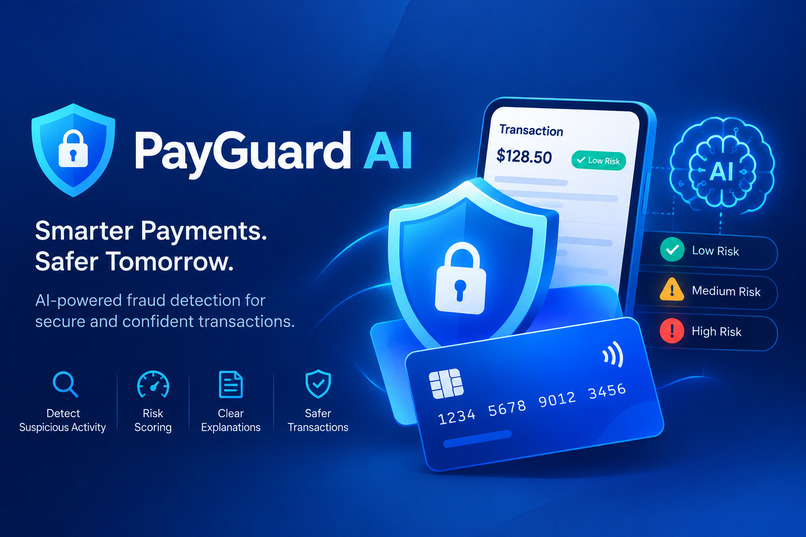
PayGuard AI detects suspicious payment patterns and highlights possible fraud risks to help users make safer digital payments.
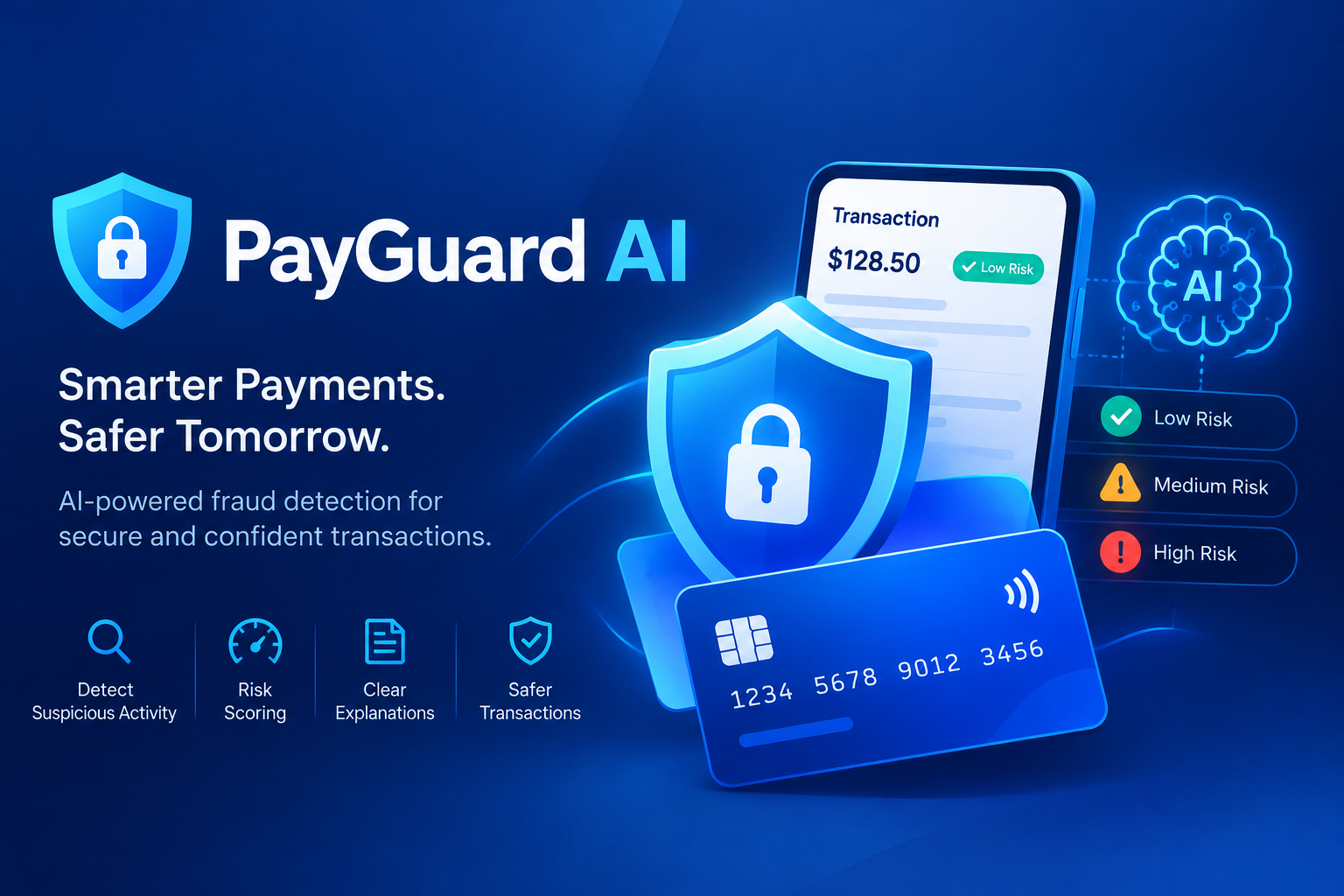
PayGuard AI — AI-Powered Payment Fraud Detection
Inspiration
Digital payments are convenient, but suspicious transactions and online payment fraud can create financial risks. We wanted to explore how AI could help identify unusual transaction patterns and make digital payments safer.
What it does
PayGuard AI is a prototype concept for intelligent transaction risk analysis. It aims to analyze transaction details, identify suspicious patterns, assign risk levels, and explain why a transaction may require attention.
Key features:
- Fraud Risk Analysis: Analyze transaction data to identify potentially suspicious activity.
- Risk Scoring: Classify transactions as low, medium, or high risk.
- Explainable Alerts: Display understandable reasons for flagged transactions.
- Risk Dashboard: Visualize transaction patterns and risk summaries.
How we plan to build it
The proposed prototype uses Python for analysis, Pandas for data processing, and Streamlit for an interactive dashboard. A public or synthetic transaction dataset can be used to demonstrate the workflow. A machine learning model may be added if suitable data and evaluation are available.
Challenges
Key challenges include handling imbalanced transaction data, reducing false alarms, protecting sensitive information, and explaining risk predictions clearly. The prototype will need testing to evaluate its performance.
What we hope to learn
This project is an opportunity to learn about AI-assisted fraud detection, data analysis, responsible use of transaction data, and building useful tools for financial safety.
Future scope
Future improvements could include real-time transaction analysis, stronger model evaluation, and integration with authorized payment systems. PayGuard AI is a prototype concept and is not currently an official PayPal product or connected to real PayPal accounts.

