-

settings
-
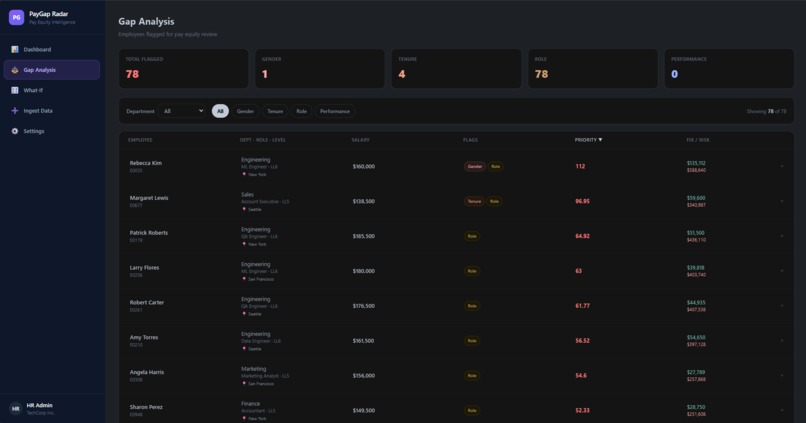
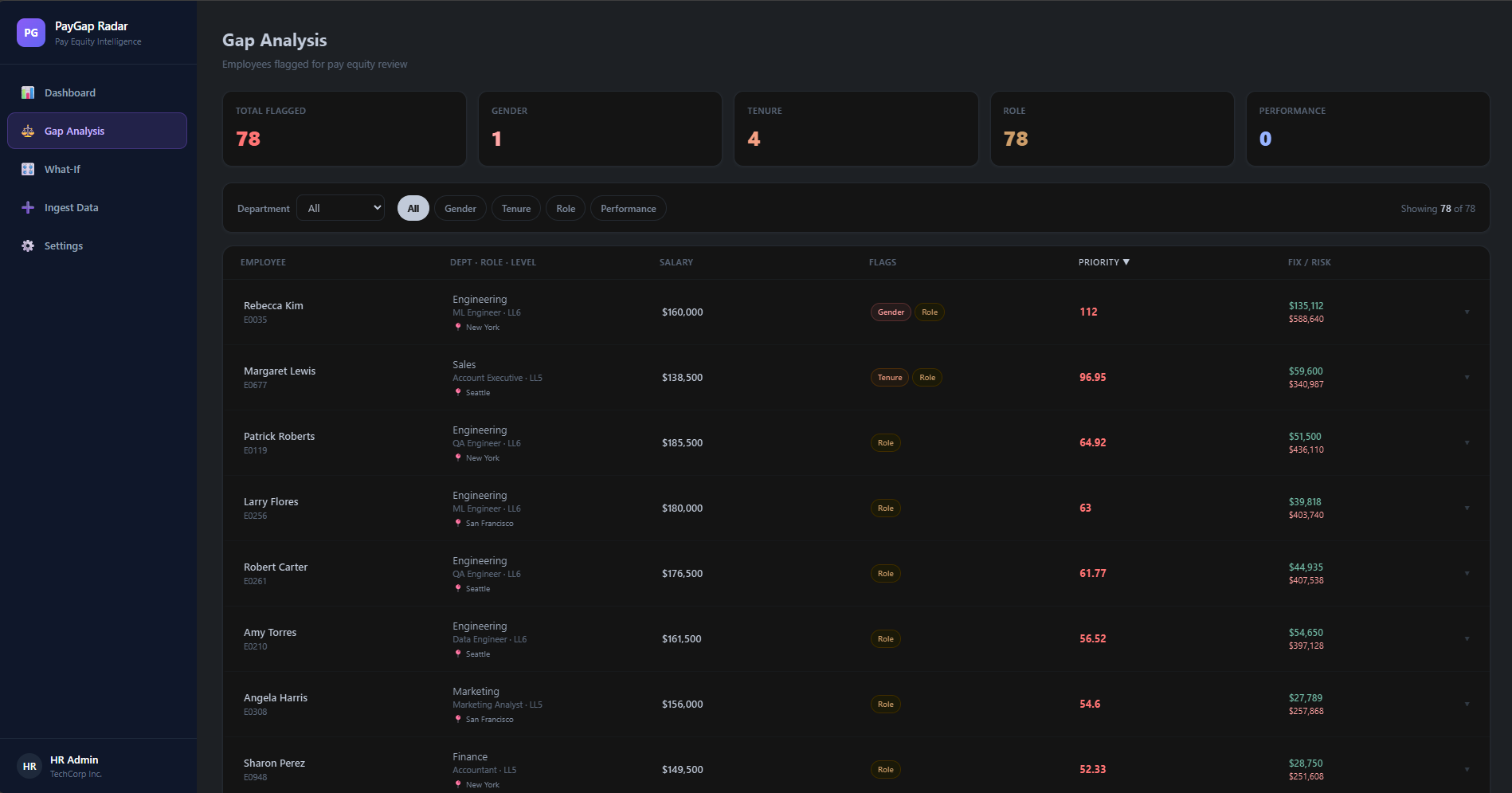
gap anlaysis
-
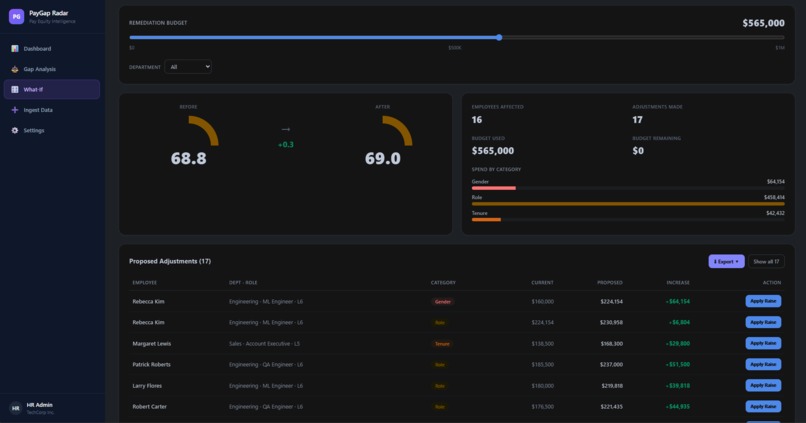
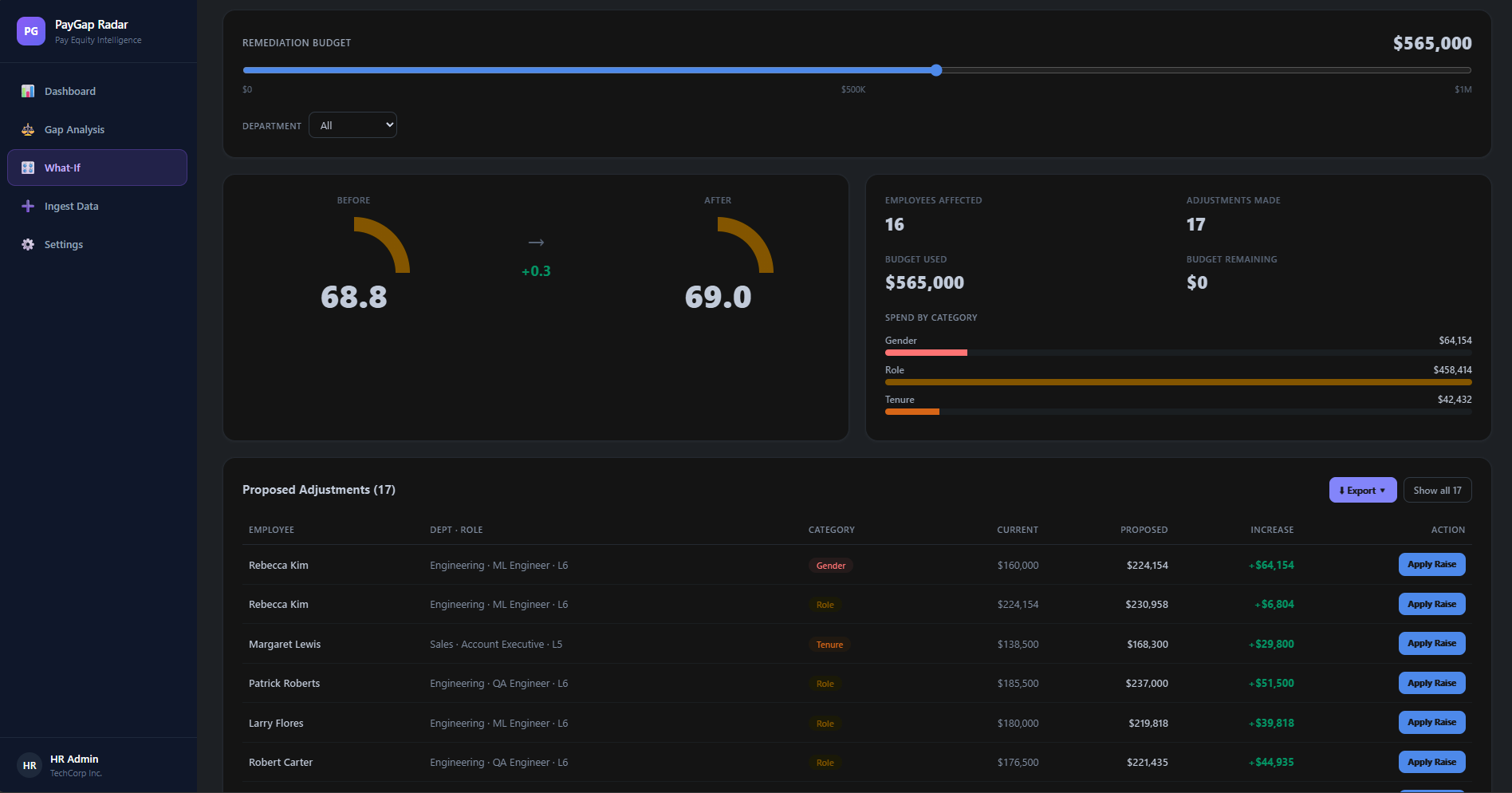
simulator
-
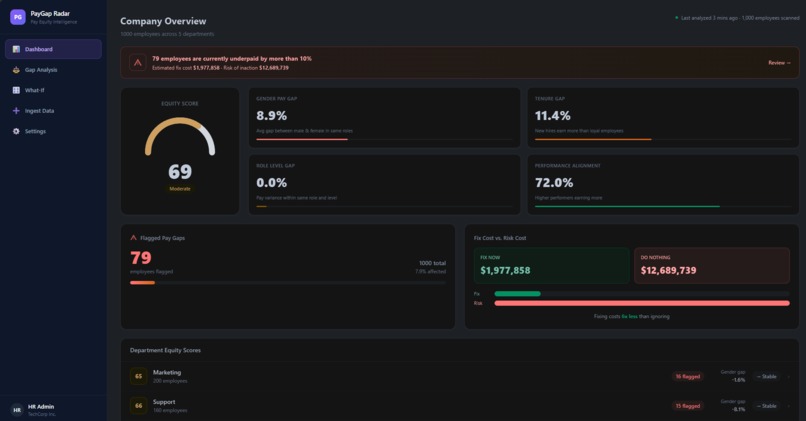
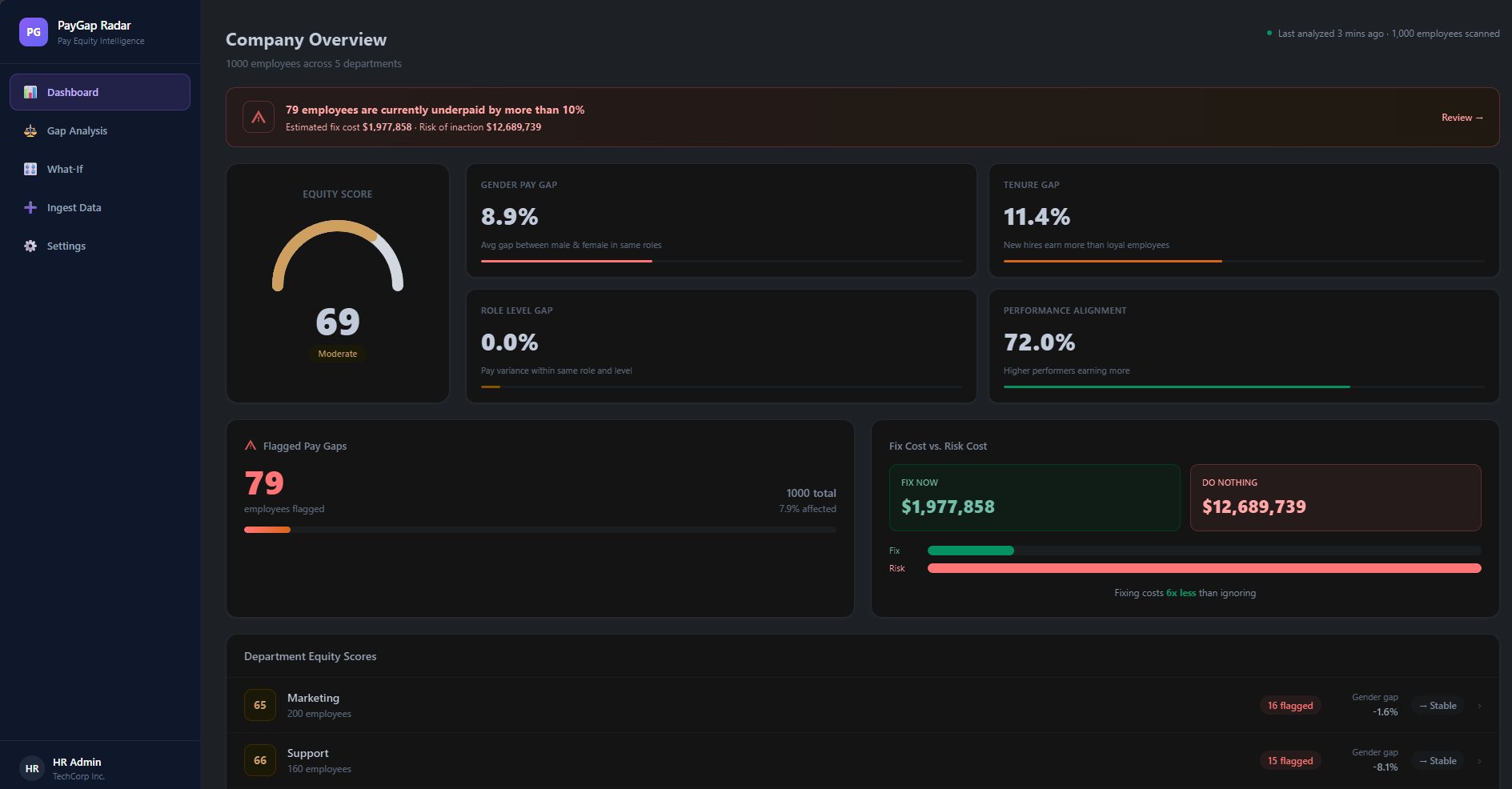
dashboard
-
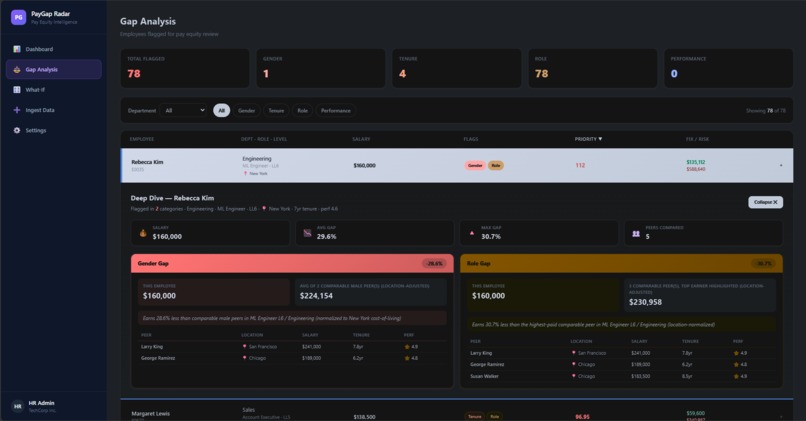
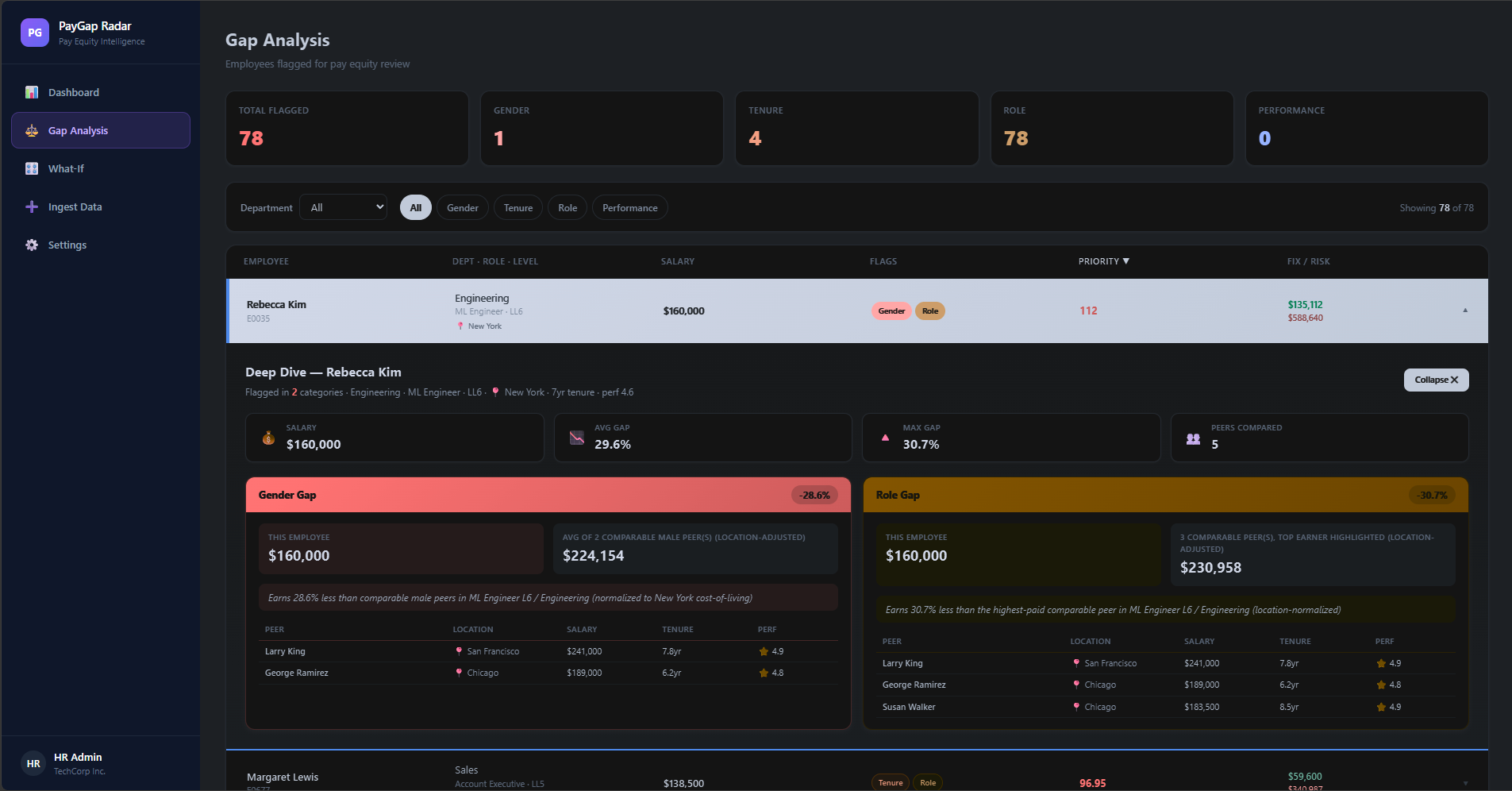
analysis drilldown

Inspiration
Pay inequity is one of those problems everyone knows exists, but nobody can see clearly. HR teams sit on spreadsheets with thousands of salaries, yet spotting a 15% gap between two engineers with identical roles and tenure takes hours of manual slicing and most companies never do it until a lawsuit forces them to. We wanted to build the tool we wished every HR team already had something that makes invisible bias visible, measurable, and fixable in minutes.
What it does
PayGap Radar is an AI-powered pay equity platform that:
- Scans your entire workforce and flags every pay gap by gender, tenure, role, and performance alignment
- Scores your company's fairness on a 0–100 Equity Index
- Generates specific, prioritized fix recommendations with cost-of-inaction modeling
- Lets HR run what-if budget simulations ("I have $50k — what's the fairest way to spend it?")
- Exports audit-ready PDF reports
## How we built it
- Frontend: React + Vite + Recharts for interactive dashboards, with a custom dark-mode design system
- Backend: FastAPI serving a REST API with detection, scoring, simulation, and recommendation engines
- Data layer: Supabase (Postgres) for employee records and analysis results
- Detection engine: Rule-based algorithms grouping employees by role+level and flagging statistically significant gaps (>10% threshold), plus tenure-compression and performance-misalignment checks
- Scoring: Weighted composite formula — gender (30%) + tenure (25%) + role (25%) + performance (20%) severity
- Simulator: Greedy budget allocator that applies fixes to worst gaps first and recomputes the score live
Challenges we ran into
- Defining "fair" mathematically was harder than expected. A raw salary gap isn't always unfair — tenure, performance, and market rate all matter. We iterated on the scoring weights repeatedly.
- Supabase HTTP/2 connection errors kept popping up mid-demo; we had to rethink our connection pooling.
- Balancing depth vs. polish in 20 hours — we cut two pages to keep the core flow flawless.
- UI density — showing hundreds of gaps without overwhelming the user took several redesigns.
Accomplishments we're proud of
- A working end-to-end pipeline from raw CSV → flagged gaps → simulated fixes, all under one dashboard
- An equity scoring model we can actually defend
- A what-if simulator that updates in real-time
- Clean, presentable UI built in hackathon hours
What we learned
- How to translate a fuzzy social problem into a concrete scoring model
- That rule-based AI is often more trustworthy than ML for high-stakes HR decisions
- How to ship a multi-page React app + FastAPI backend + Postgres schema in one night
Built With
- api
- claude
- css
- fastapi
- framer
- git
- javascript
- jspdf
- motion
- node.js
- postgresql
- python
- react
- recharts
- rest
- supabase
- tailwind
- vite

Log in or sign up for Devpost to join the conversation.