-
-
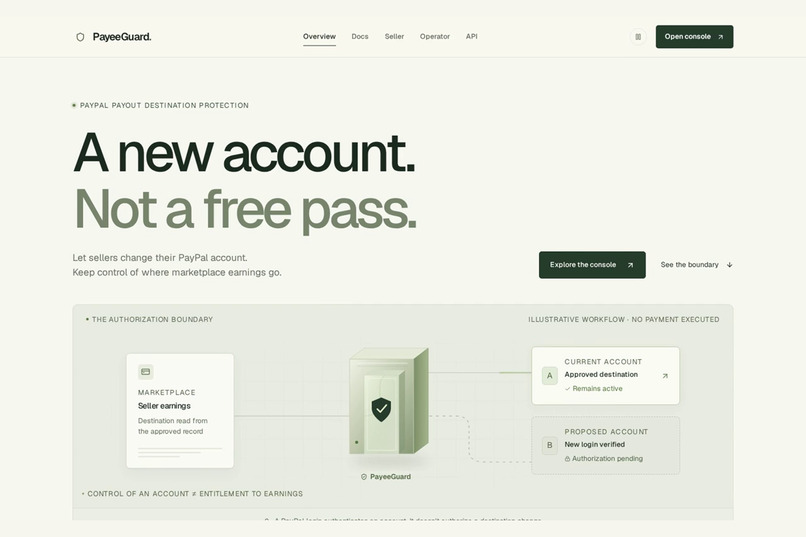
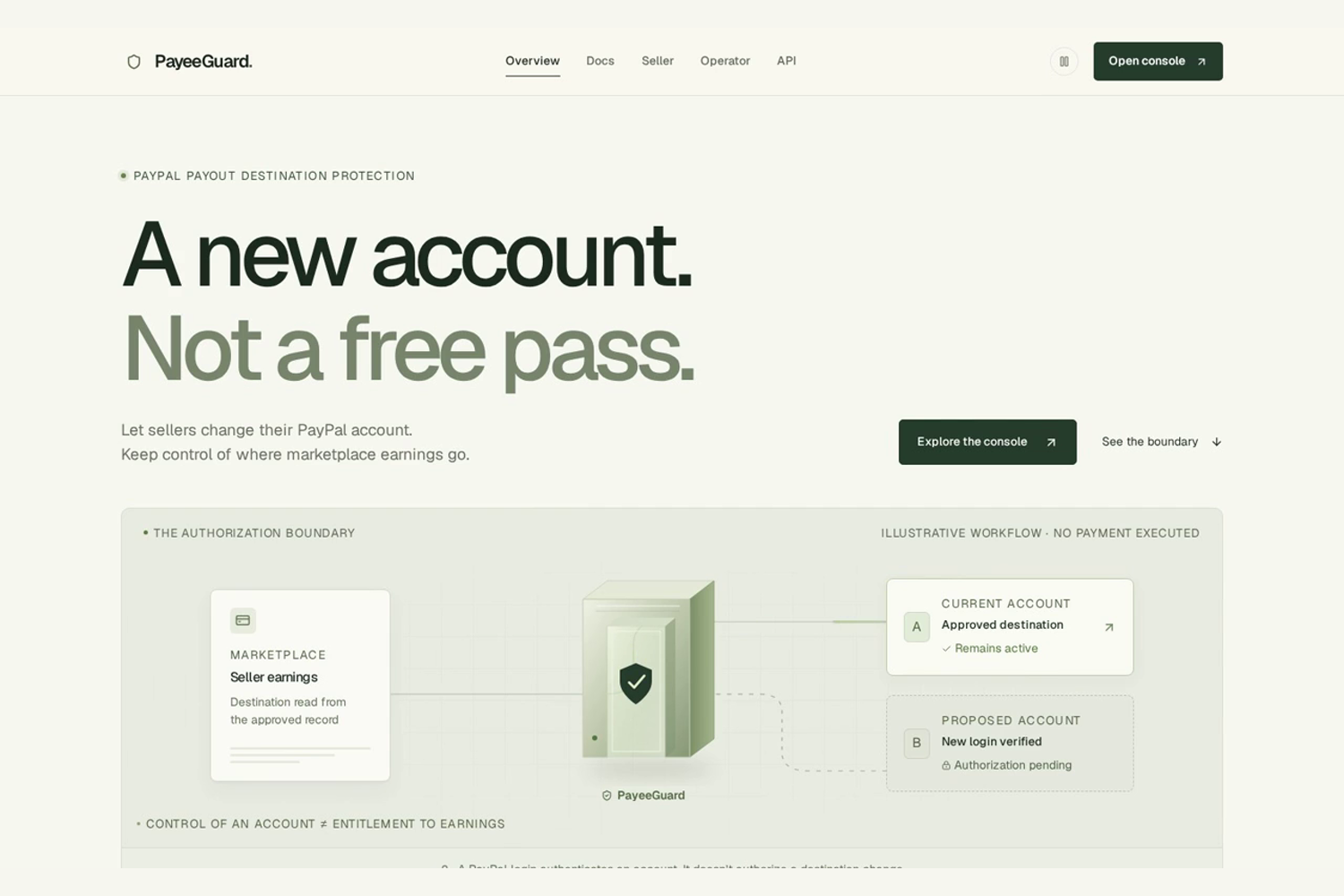
A new PayPal account is not a free pass. PayeeGuard protects payout-account changes.
-
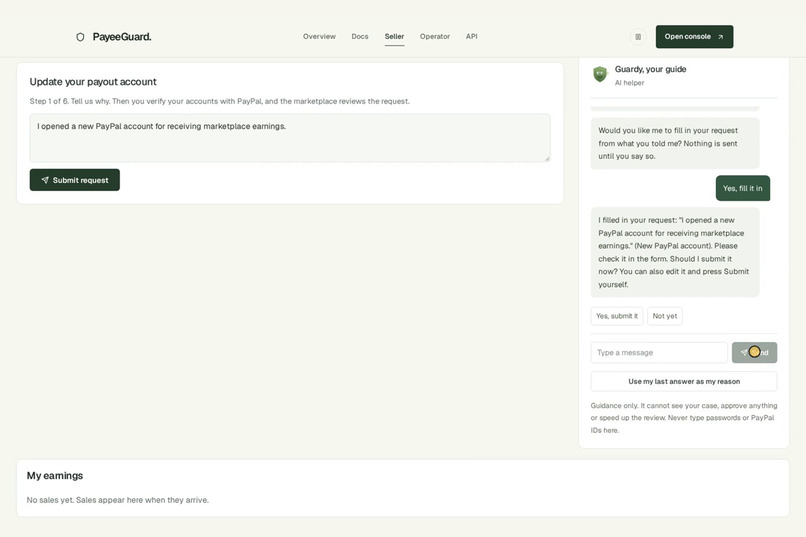
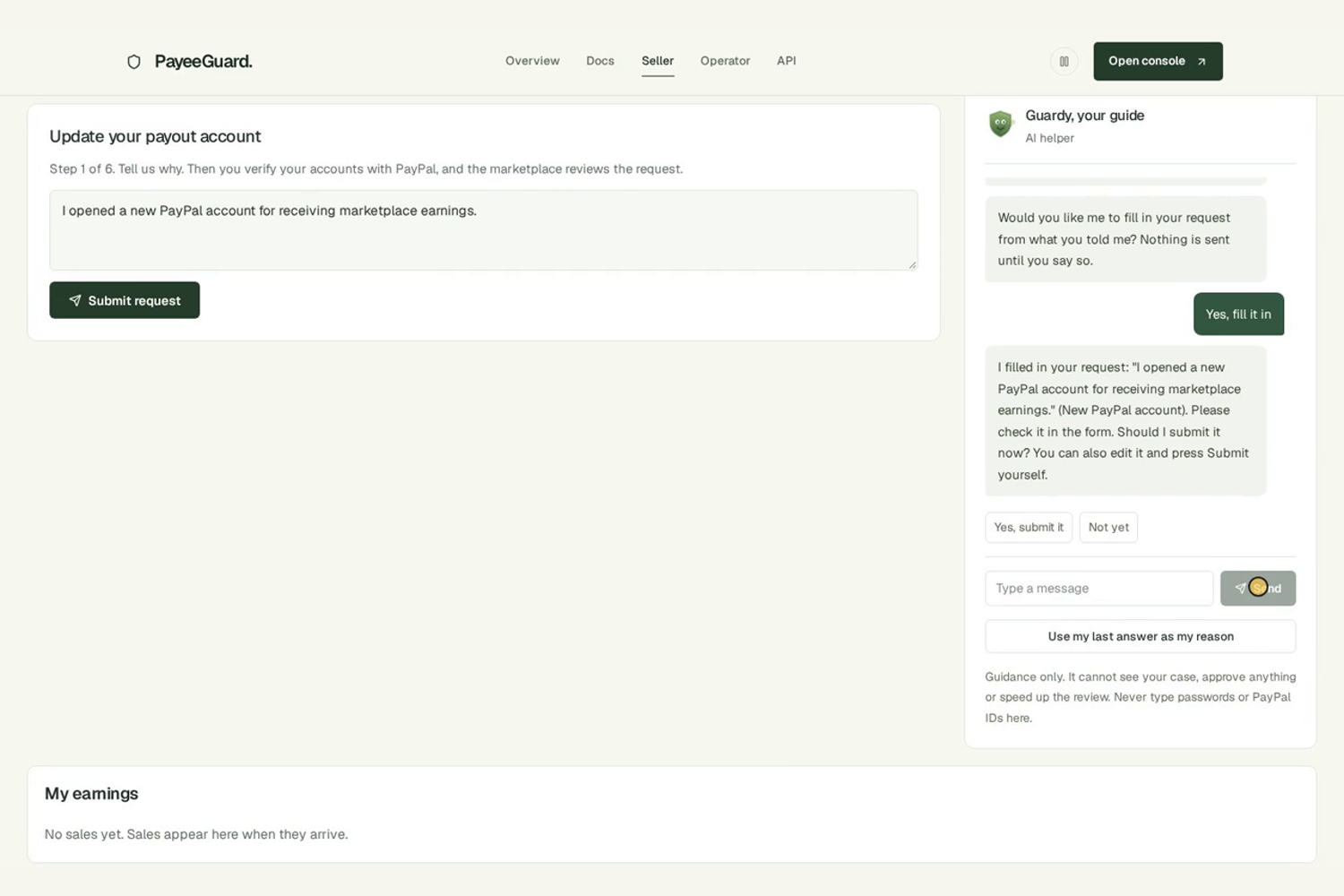
Guardy AI helps a seller explain the change and fills the request for them, after a yes.
-
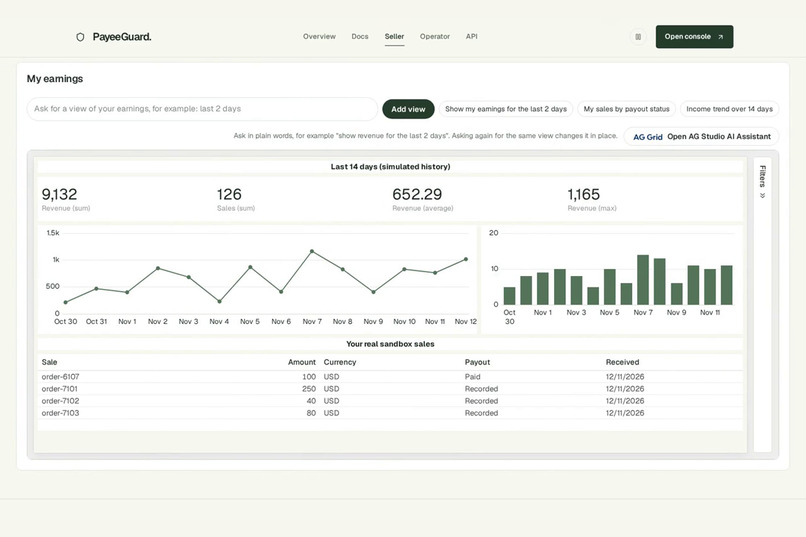
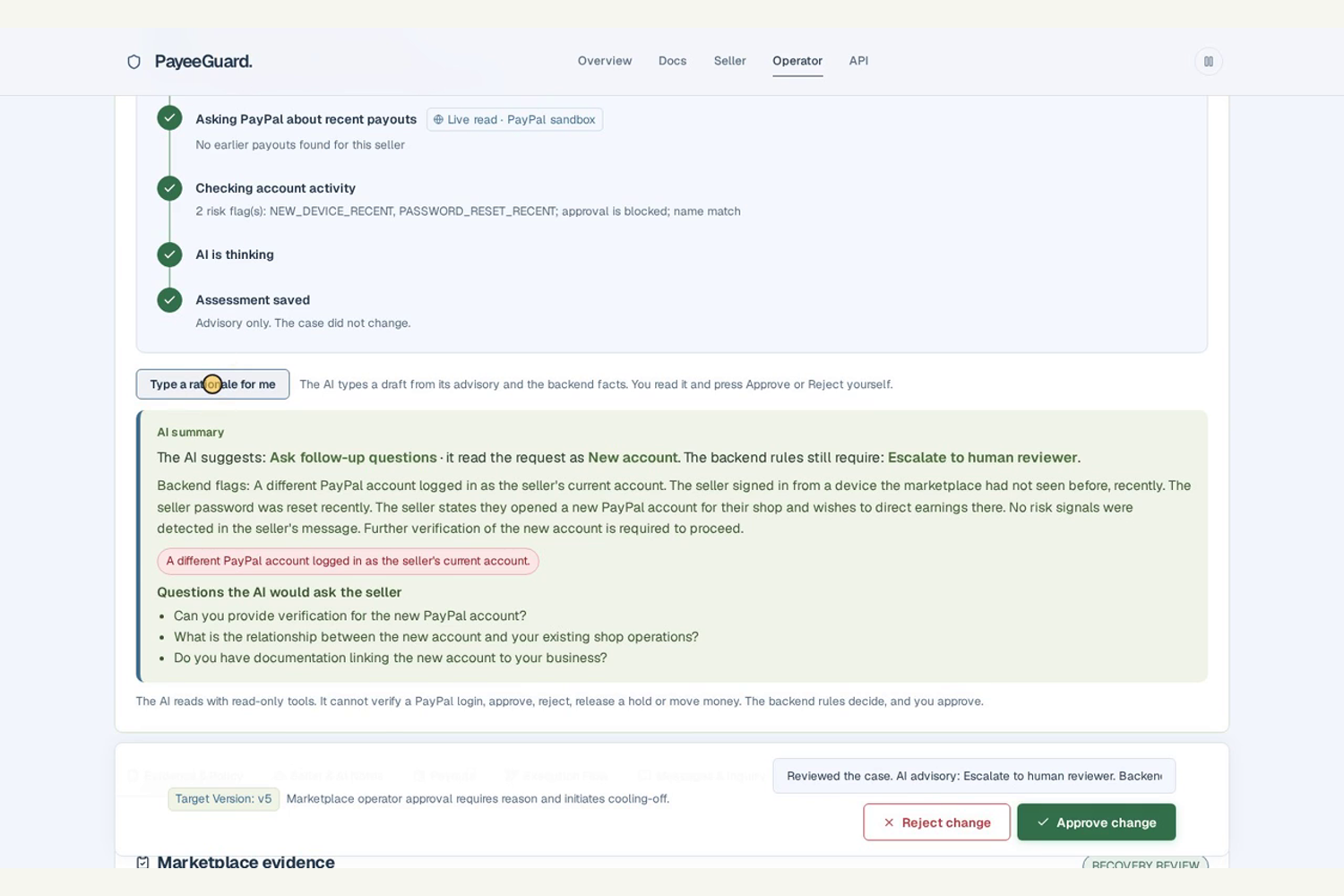
On a takeover attempt, the AI summary shows the risk flags in plain words.
-
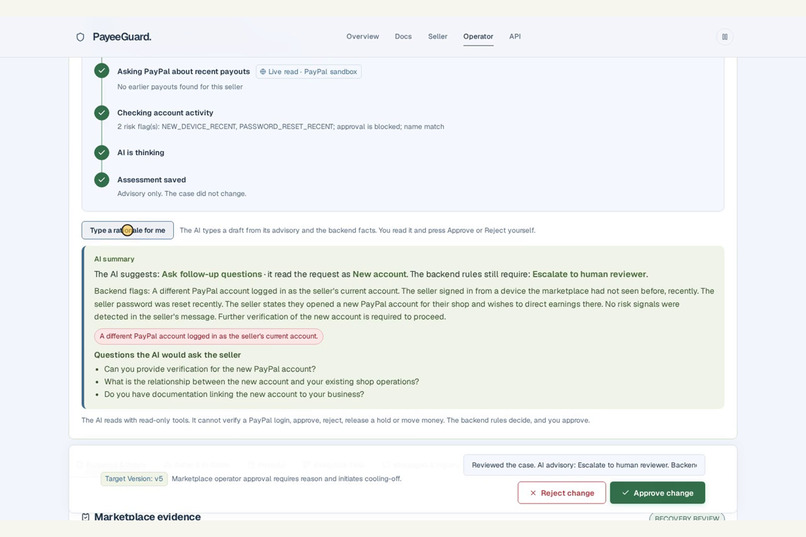
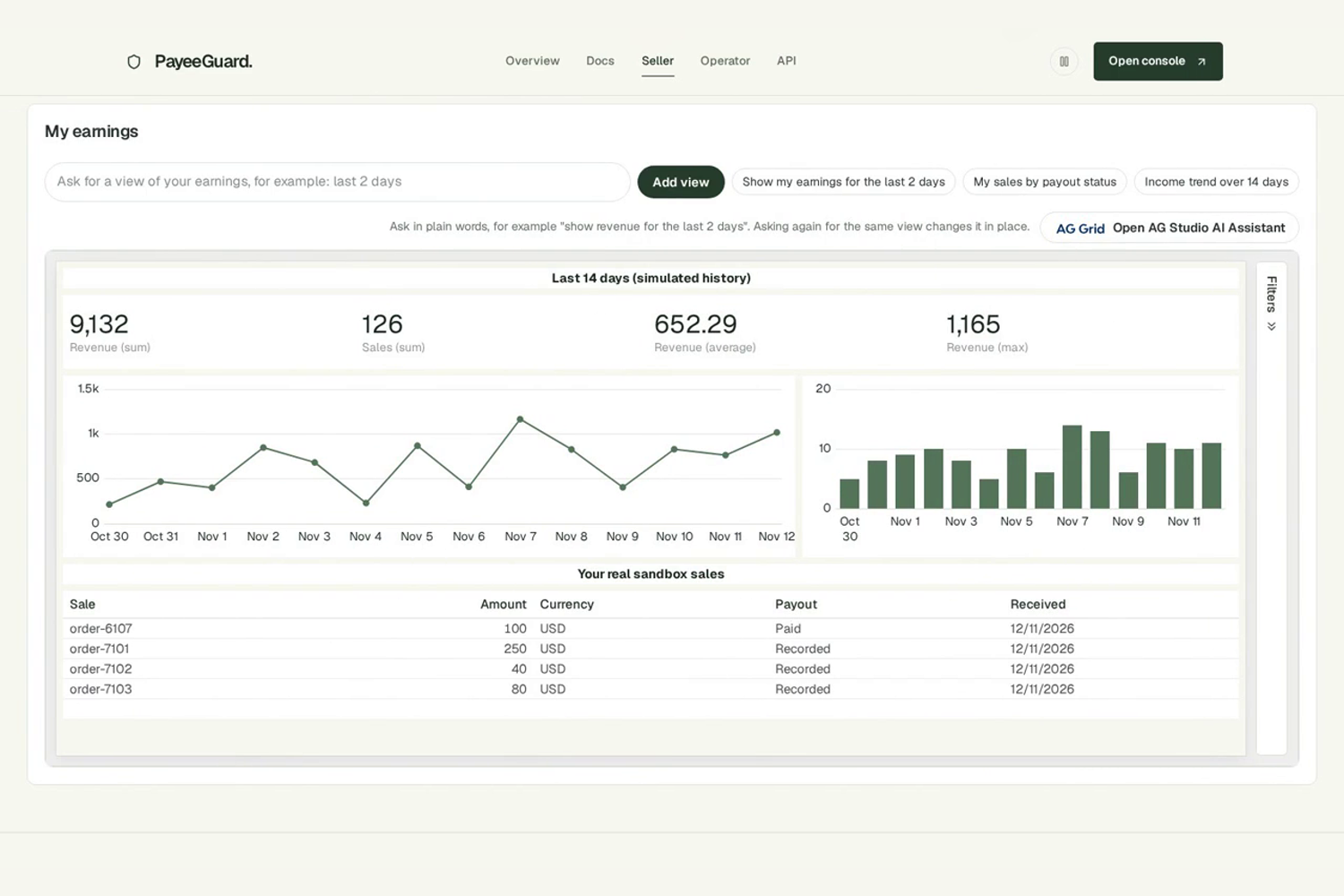
Seller dashboard built with AG Studio. Type "show my earnings for the last 2 days".
-
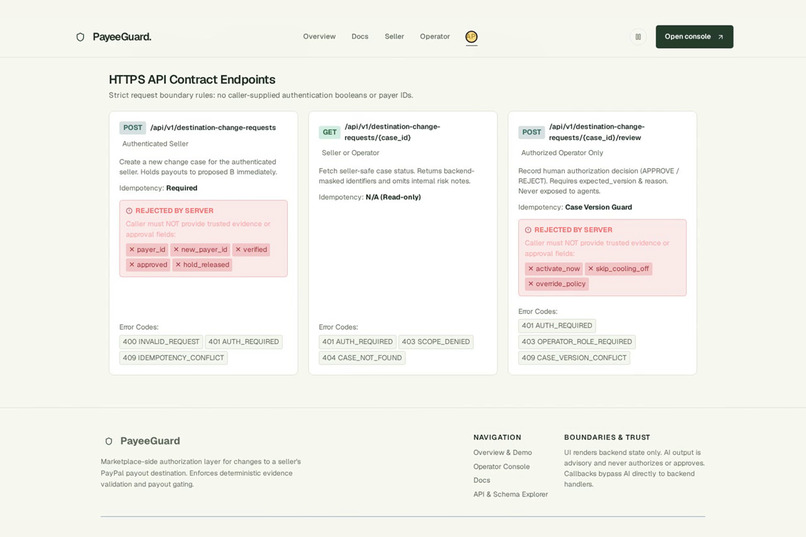
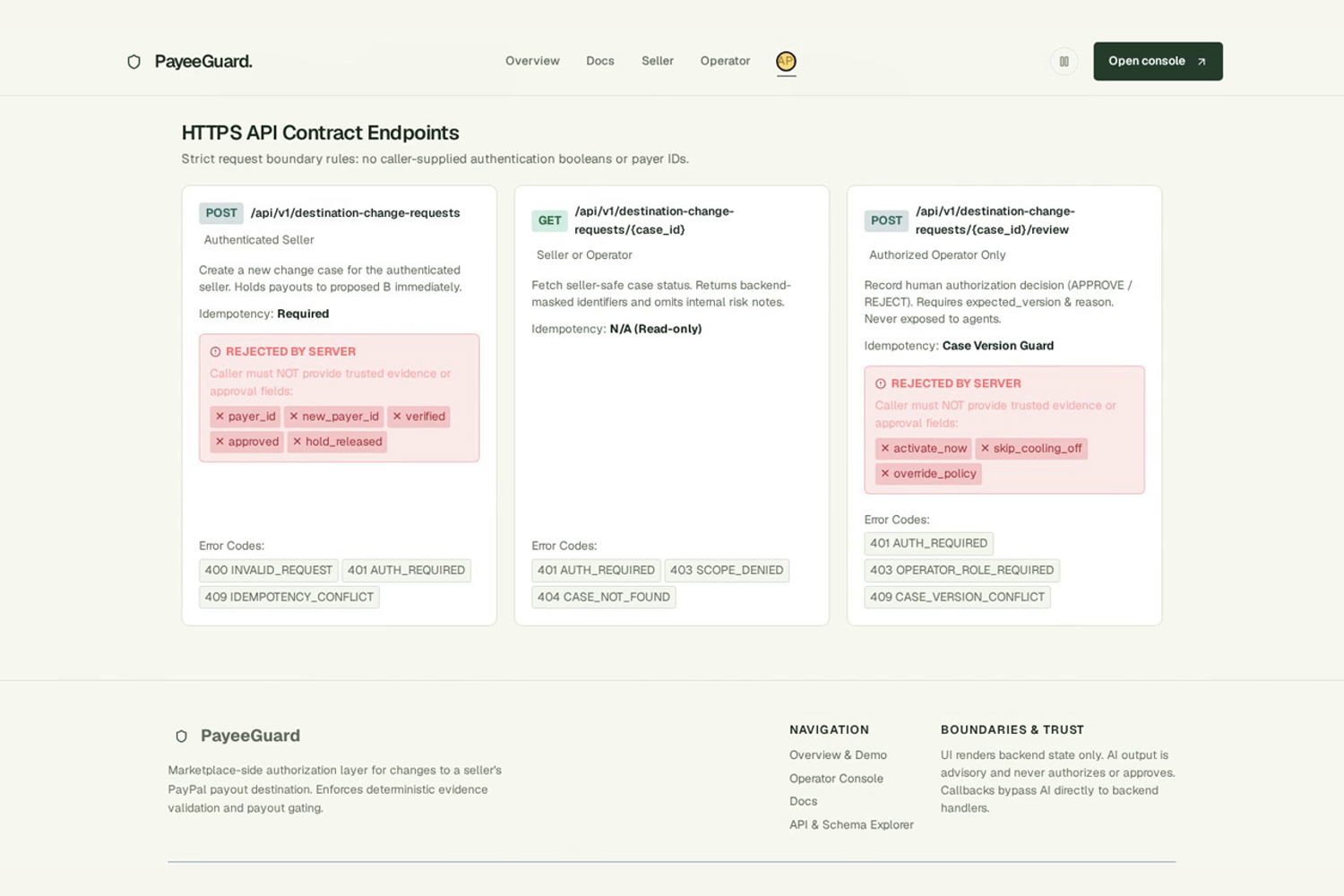
Documented API: request, review and payout endpoints, with the error codes explained.
-
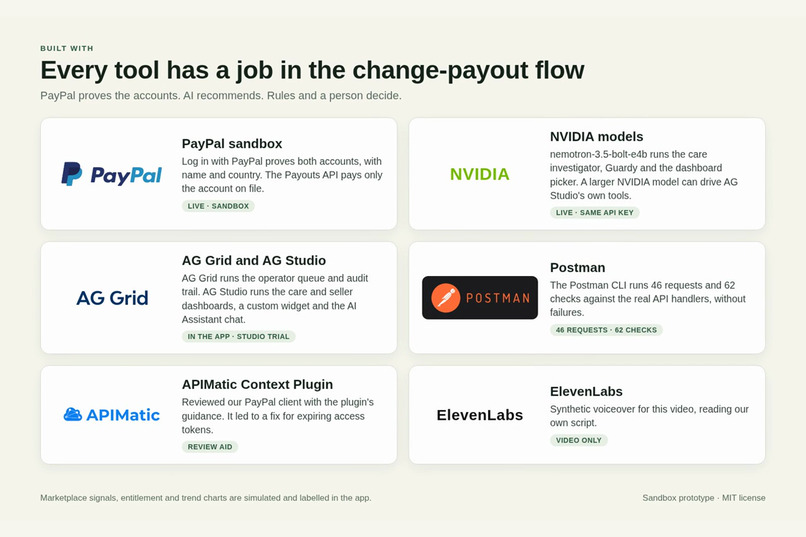
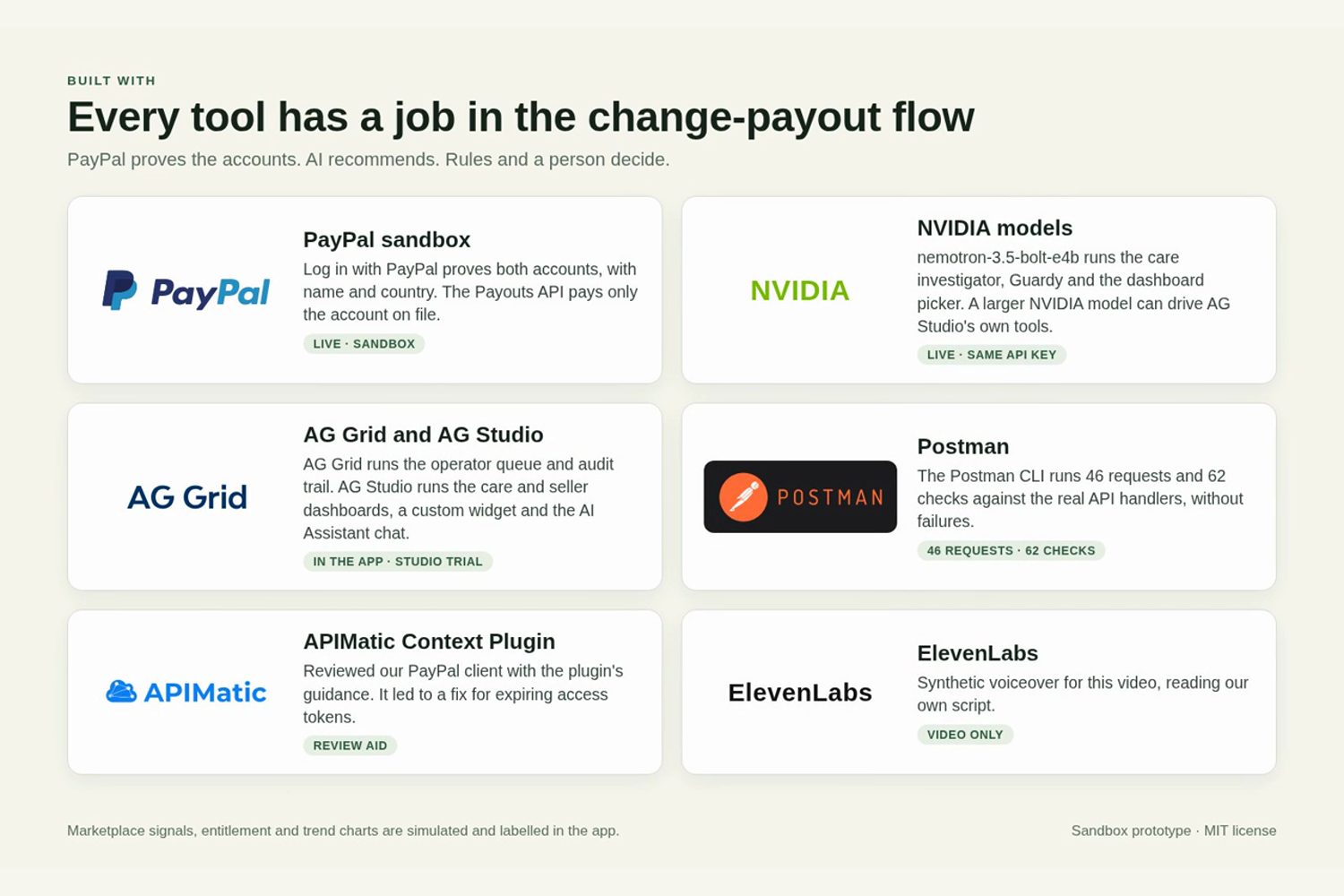
PayPal sandbox, NVIDIA AI, AG Grid and AG Studio, Postman and APIMatic.
Inspiration
Marketplaces pay sellers through PayPal. If someone takes over a seller's marketplace login, they do not need to touch the seller's money. They can simply change where future earnings go. A PayPal login proves someone controls an account. It does not prove that account is entitled to the seller's earnings.
At the same time, a real seller who opens a new business or loses an old PayPal account needs that change to work quickly. We wanted both: fast for genuine sellers, safe against takeover.
What it does
PayeeGuard is a marketplace-side safety layer for one risky action: changing the PayPal account that earnings are paid to.
- Verified logins. The seller proves both the new and the current PayPal account with Log in with PayPal (sandbox). A different account logging in as the current one is flagged at once.
- Clear rules. A deterministic policy checks marketplace signals: new device, recent password reset, name and country mismatch. Two or more flags block approval. One flag lengthens the safety wait.
- AI that explains, in seconds. An NVIDIA-hosted model reads each case with read-only tools, checks recent payouts with PayPal, and writes a plain summary and a recommendation. Guardy, a seller help chat, explains the request with the seller and can fill the form for them.
- A safe payout gate. Payouts always go to the account stored in the backend, and every step is saved in an append-only audit trail. Clean changes can take a fast lane with no manual review, while the safety wait still runs.
- Dashboards. Care and seller dashboards built with AG Grid and AG Studio, including a chat that builds a chart from plain words.
How we built it
- Backend: Python and SQLite, a REST API with marketplace API keys, and an MCP server so a marketplace's own agents can create and track requests. They can never approve or pay.
- PayPal sandbox: Log in with PayPal for identity, name and country, and the Payouts API for the payout gate.
- AI: one NVIDIA API key covers everything. The small nemotron-3.5-bolt-e4b model powers the investigator, Guardy and the dashboard picker. A larger model, mistral-large, is an optional native AG Studio mode.
- Interface: React and TypeScript. AG Grid for the queue and the audit trail, AG Studio for the dashboards.
- Tools: Claude Code, Codex and Antigravity helped write the code. Postman CLI checked the API. The APIMatic PayPal Context Plugin helped review our PayPal client. ElevenLabs made the demo voiceover.
Challenges we ran into
- Small models miss facts. In one test the AI wrote no risk signals next to four real flags. We fixed it by having the backend state its own flags in a separate box, so the AI explains and never contradicts the facts.
- Free model endpoints are unpredictable. Larger models timed out during testing. We made the fast small model the default, kept the larger one optional, and documented the measured speeds.
- Judge-friendly setup. We built a setup that creates the demo logins once, never regenerates them on a redeploy, and gives judges two ready-made cases: a genuine seller and compromised marketplace credentials.
Accomplishments that we're proud of
- A complete flow that works end to end on the real PayPal sandbox, including verified logins and real sandbox payouts.
- Both cases run cleanly: a genuine seller moves to a new account, and a takeover attempt is flagged with a plain-words reason.
- 269 Python tests, and a Postman run of 46 requests and 62 assertions with 0 failures.
- The APIMatic plugin review found a real bug in our PayPal client (the app token was cached forever), and we fixed it with a test.
- An honest, labelled demo: simulated parts are marked in the app, and everything is sandbox-only.
What we learned
- Trust comes from separating roles: PayPal supplies facts, rules decide, AI explains, and the backend controls the money.
- Showing the reason for a block, in plain words and in red and green, matters as much as blocking.
- Honest labelling builds trust. Marketplace signals and trend charts are simulated, and the app says so. Everything runs on the PayPal sandbox, with no real money.
- Free hosted AI models vary in speed, so the product should work well with the small one and treat larger models as a bonus.
What's next for PayeeGuard
Connect real marketplace signal feeds, cover more risky account changes (such as bank or tax details), and run on live PayPal once reviewed.
Built With
- ag-grid
- ag-studio
- apimatic
- claude-code
- javascript
- langchain
- log-in-with-paypal
- mcp
- nvidia
- openapi
- paypal
- paypal-payouts-api
- paypal-sandbox
- pixi
- playwright
- postman
- python
- react
- render
- sqlite
- typescript
- vite
