Inspiration
Most code is not hard because it is complex — it is hard because nobody understands it anymore. We call that cognitive debt. Agents can read one file, but they cannot see which file is dangerous to change, what breaks if it changes, who owns it, or what the agent tried last time. A graph can.
What it does
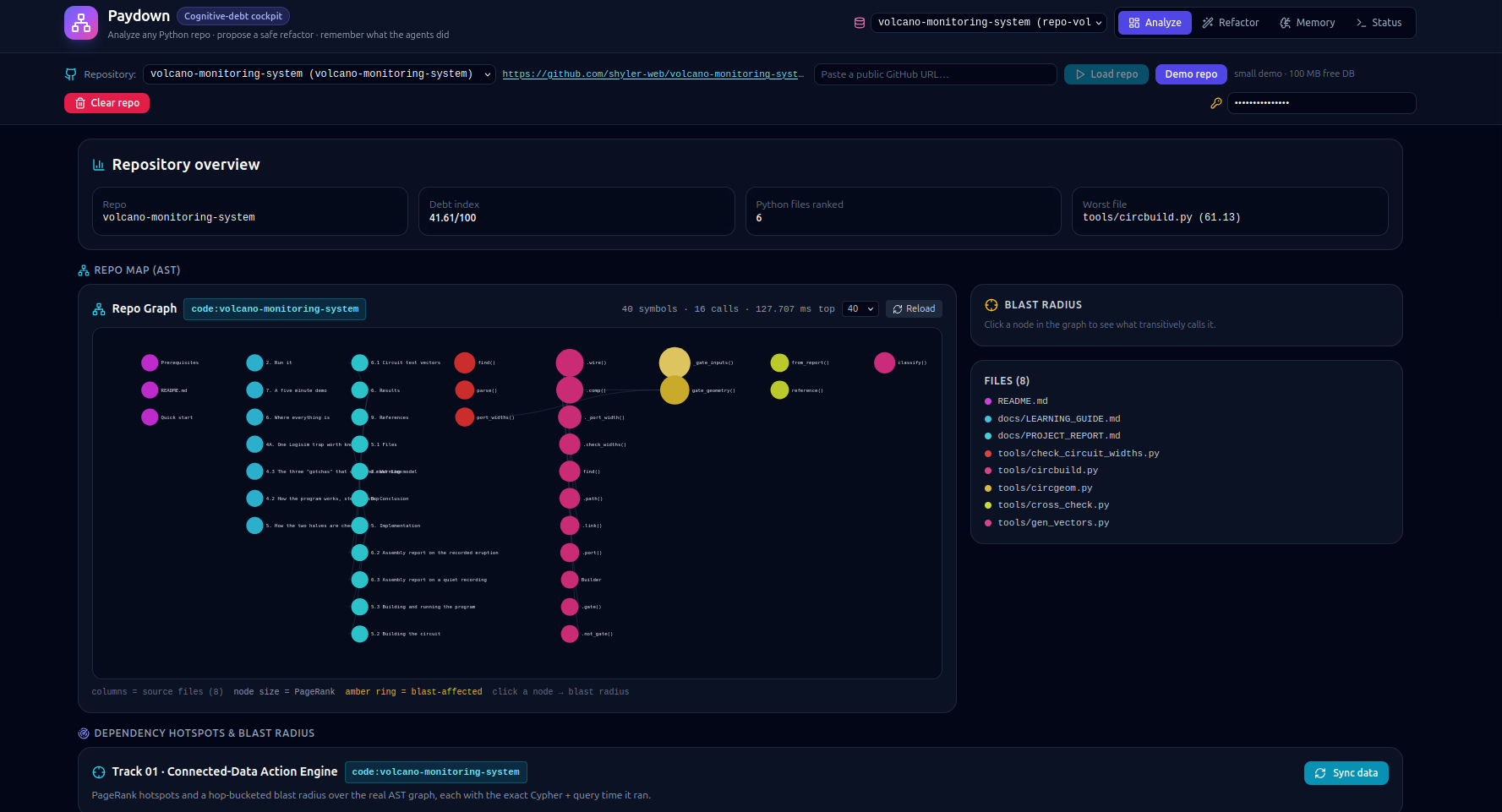
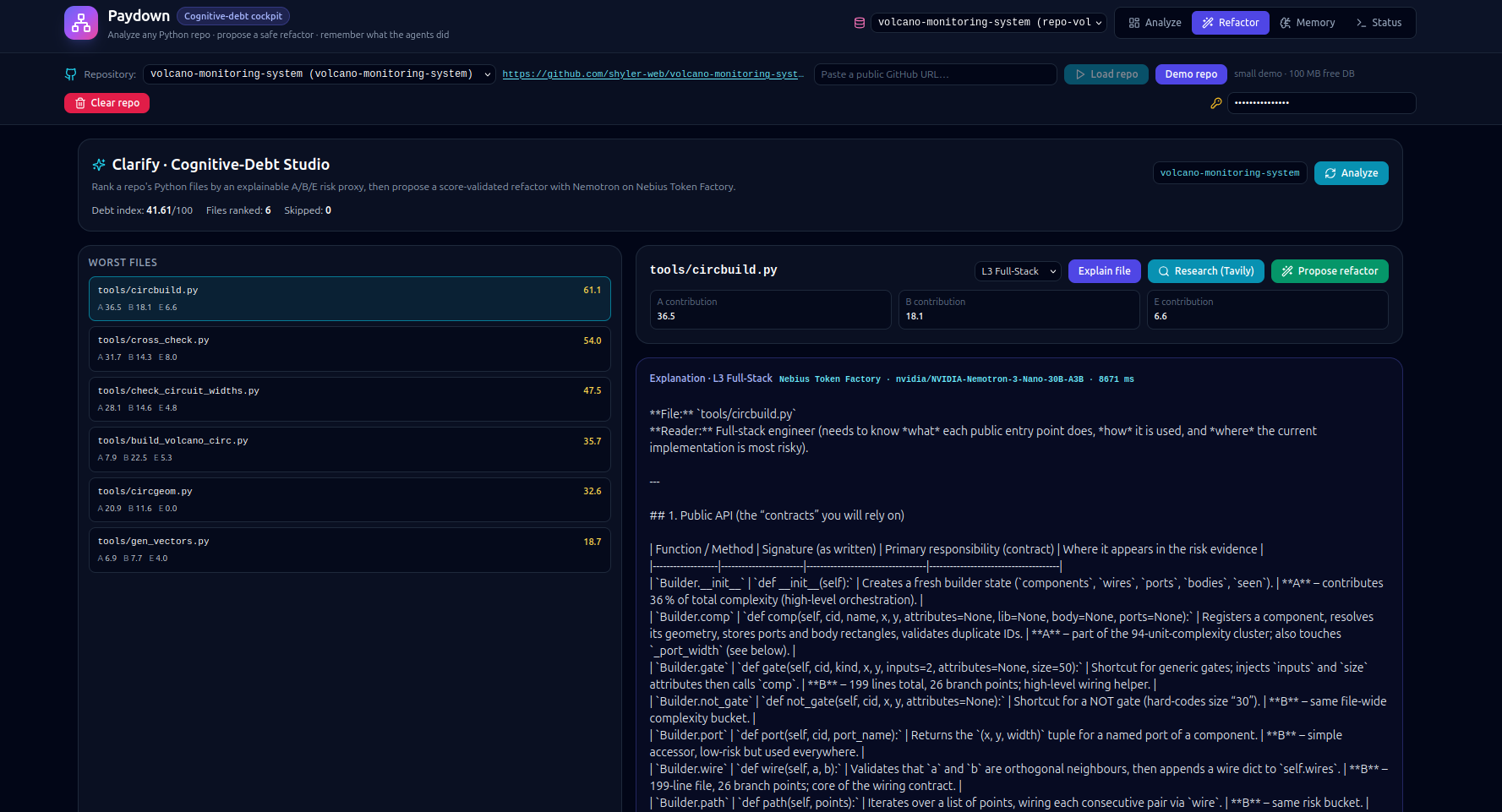
Paydown is an agentic developer cockpit. Paste a public GitHub repo and it:
- ranks every Python file with an explainable A/B/E comprehension-risk score,
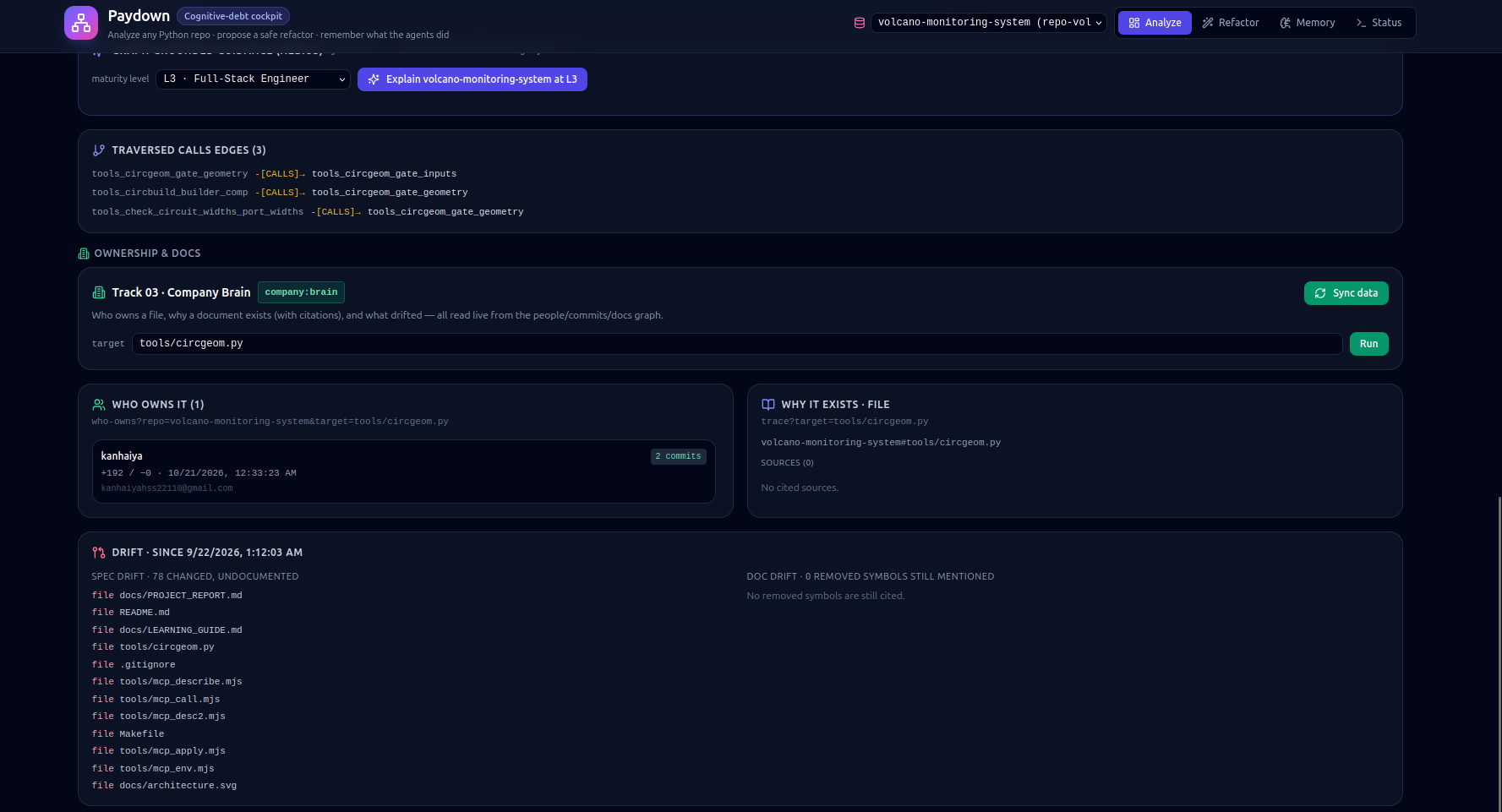
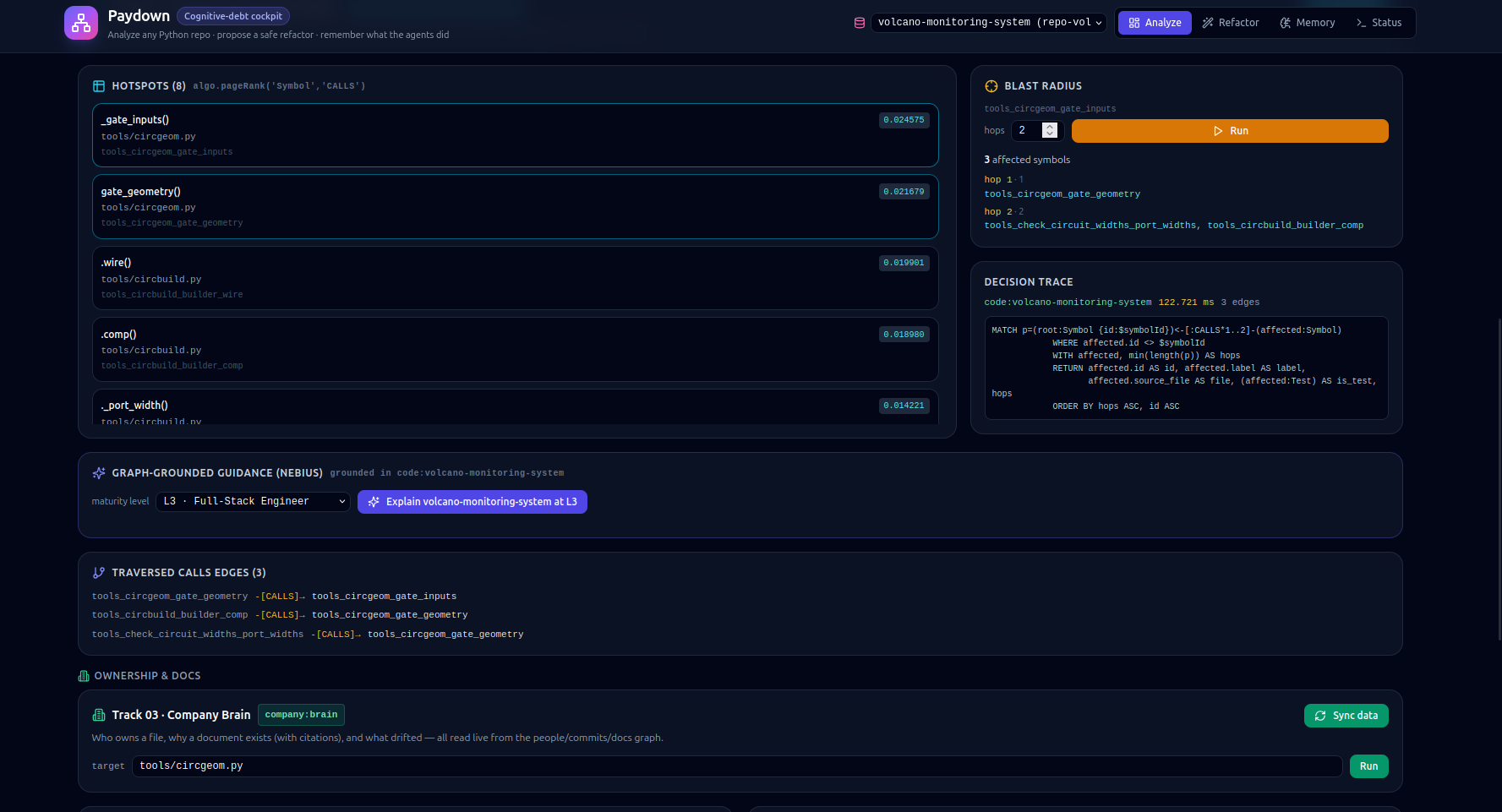
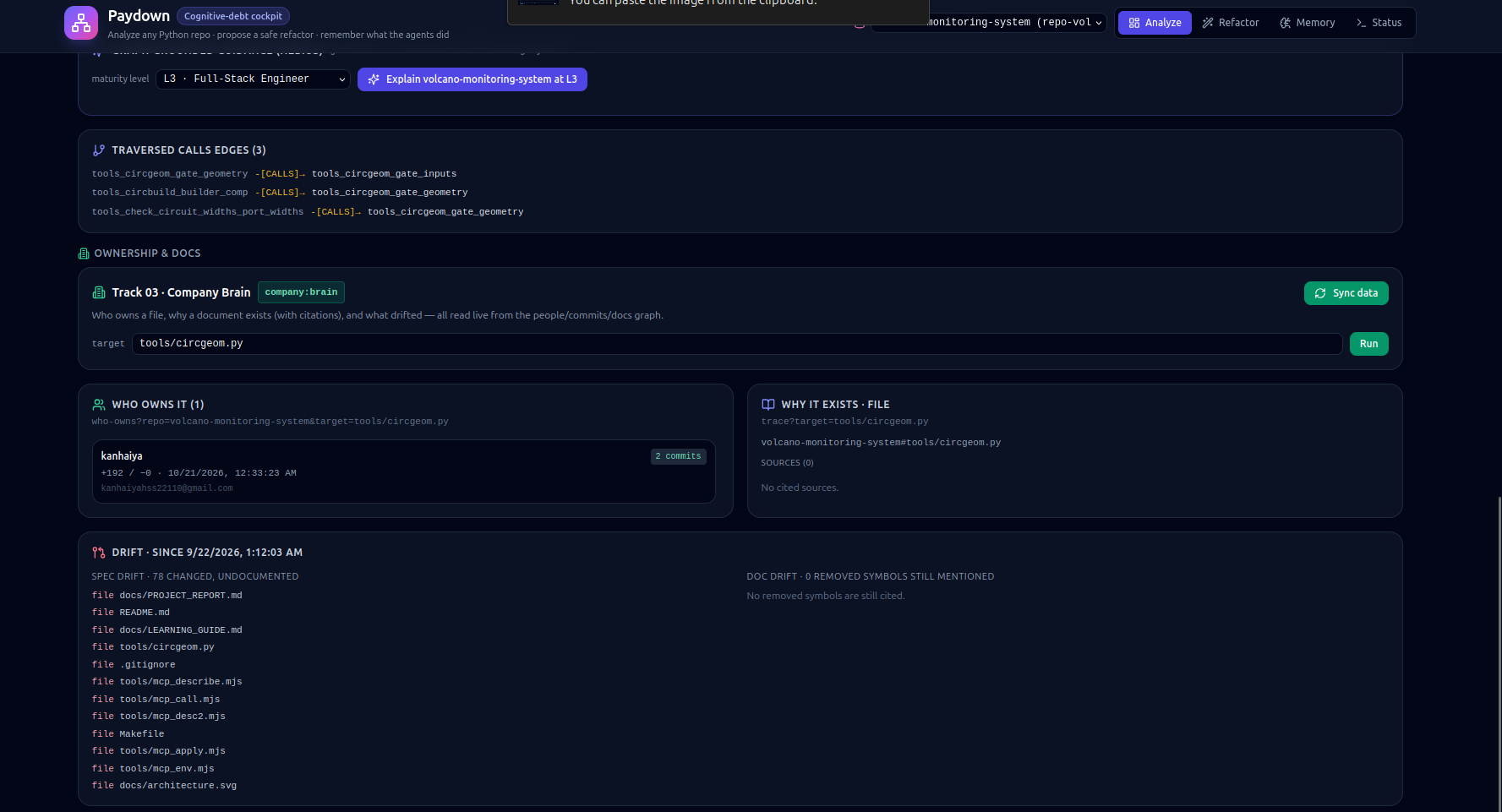
- shows the AST repo map, dependency hotspots, and ownership/docs,
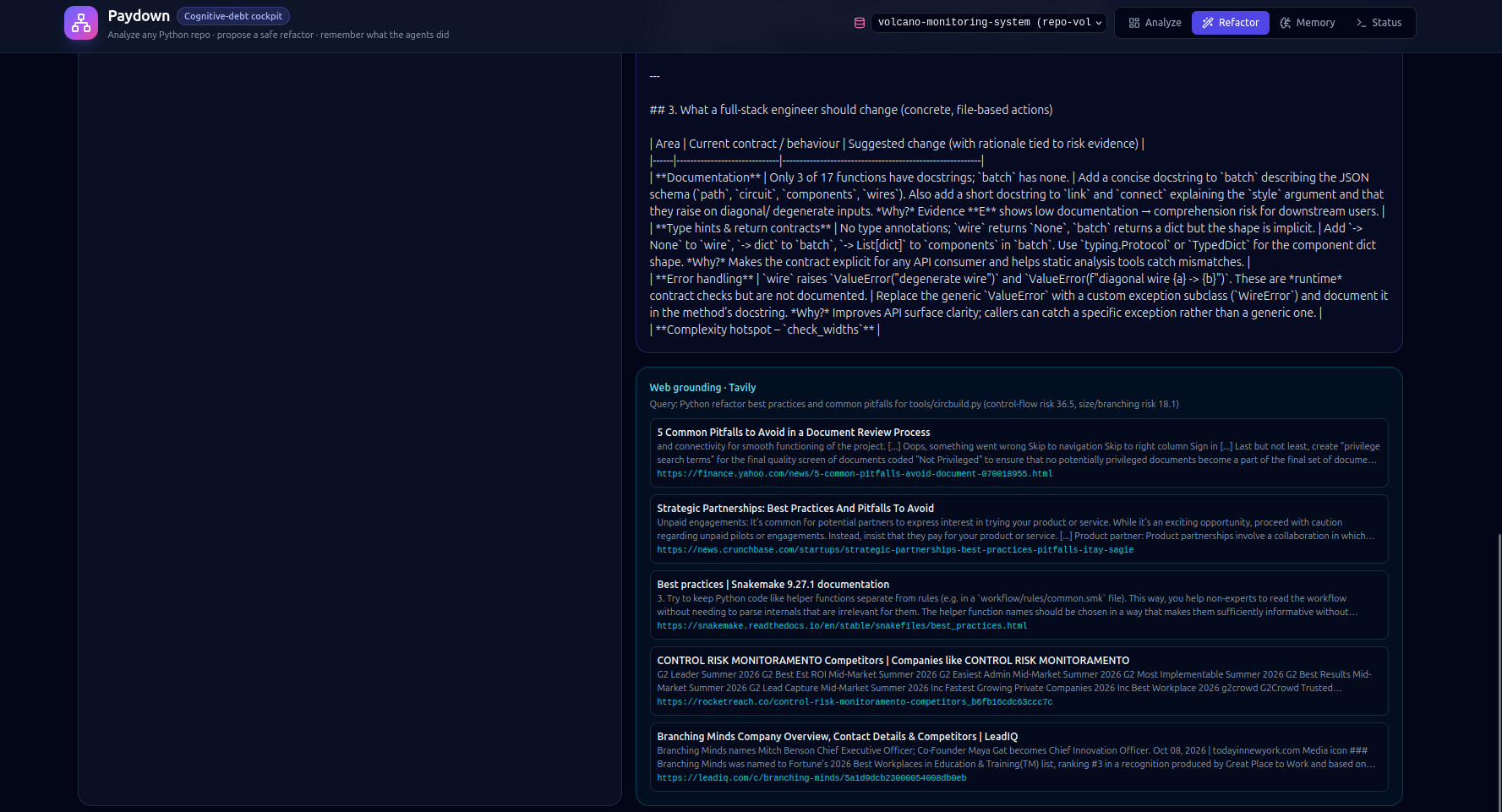
- asks NVIDIA Nemotron on Nebius Token Factory for a behaviour-preserving refactor,
- validates the proposal (syntax, score drop, anti-gaming checks),
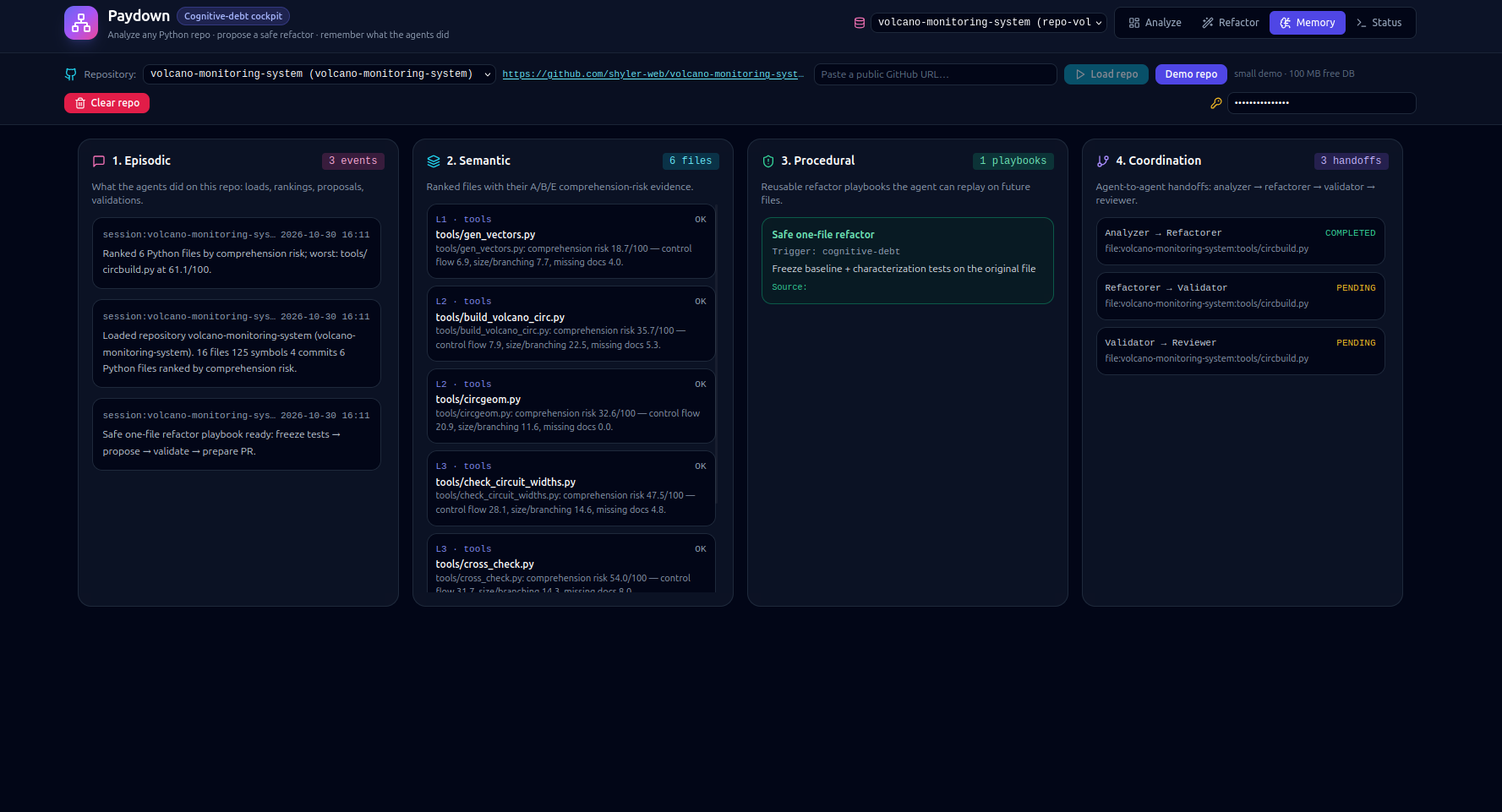
- records every run in a per-repo, four-tier agent memory (episodic, semantic, procedural, coordination) in FalkorDB.
How we built it
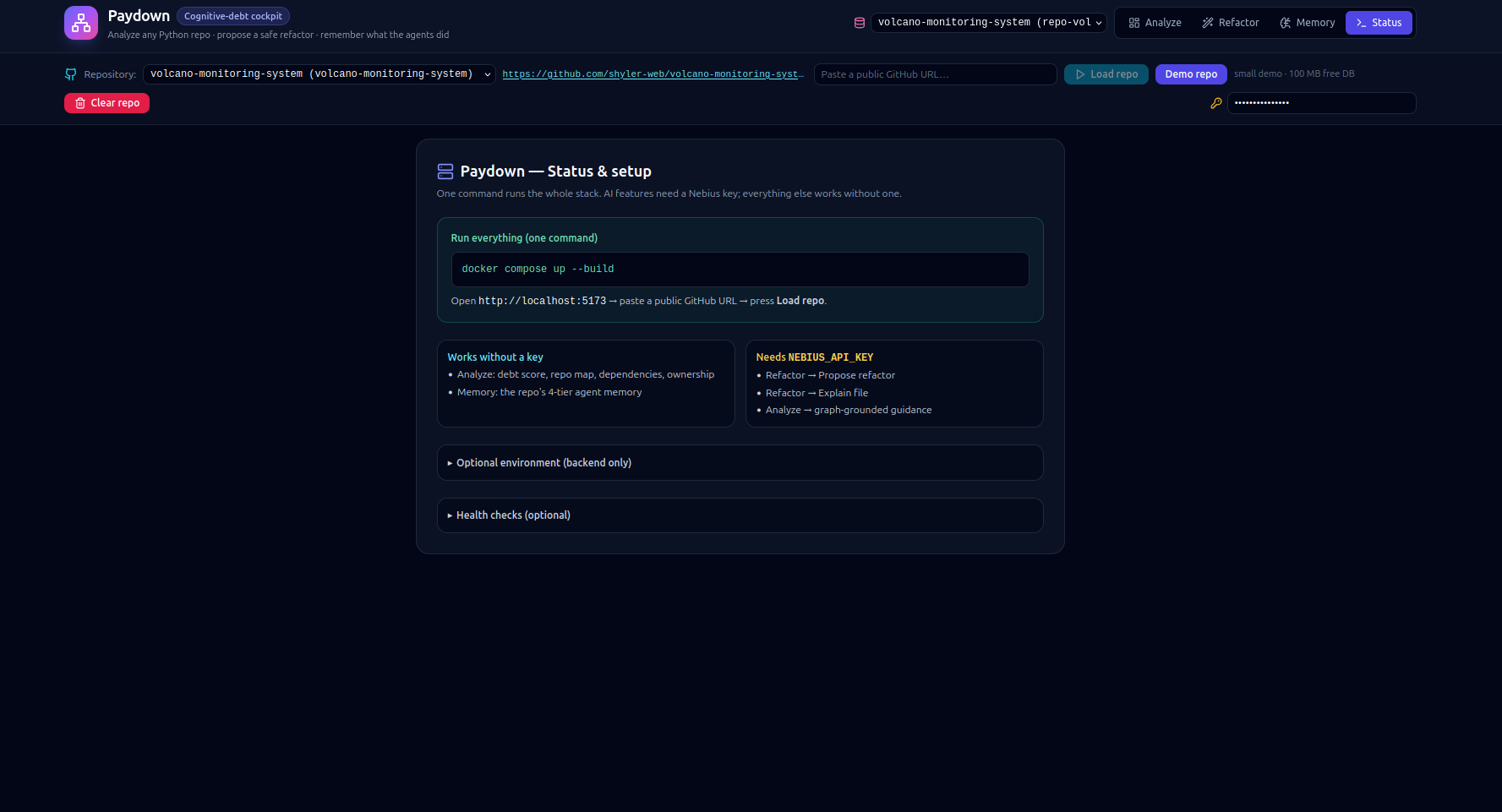
React + Vite + TypeScript frontend, FastAPI backend, FalkorDB for graph memory, and Nebius Token Factory for inference. The A/B/E score is deterministic and tokenless; the LLM is used only for the hard part (the refactor and reader-level explanations). The backend enforces a demo access code, a daily AI budget, a per-call token cap, and an AI kill switch.
Challenges
Large repos exceed a free graph DB, so we added a small demo repo and a 5s DB timeout. Behaviour verification needs a Docker runner, so the web flow is clearly labelled “Behavior not verified” while the strict frozen-test path remains in the CLI.
Accomplishments
A real repo → real score → real AI refactor → validated → remembered, on a public URL, with Nebius/NVIDIA calls visible (provider · model · ms).
What we learned
Memory is only useful when agents actually do work: the memory must be a by-product of the runs, not seeded fiction.
What's next
Auto-generate characterization tests, run frozen tests in Docker from the web flow, and support more languages.
Built With
- docker
- falkordb
- fastapi
- nebius-token-factory
- nvidia-nemotron
- python
- react
- tavily
- typescript
- vite


Log in or sign up for Devpost to join the conversation.