-
-
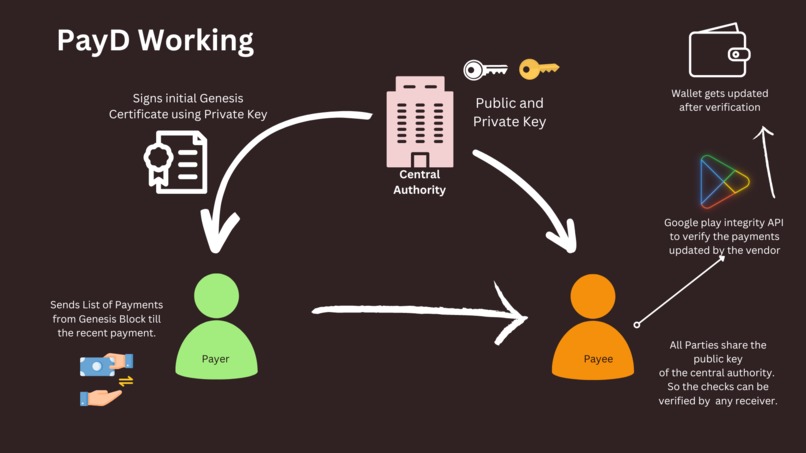
Architecture diagram
-
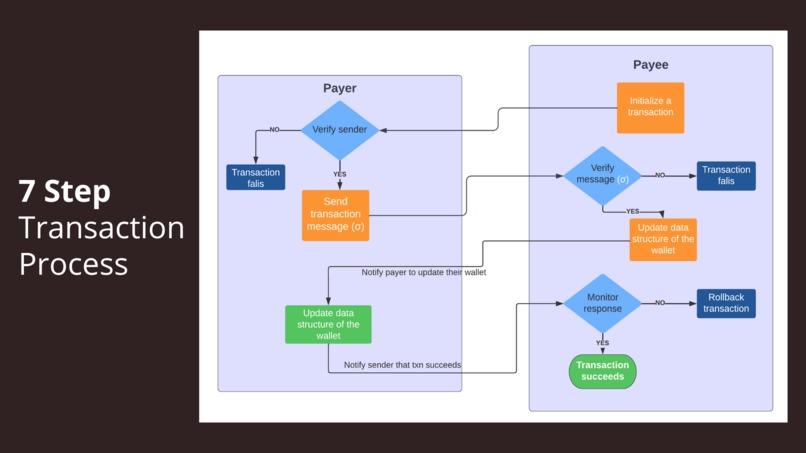
Process flow
-
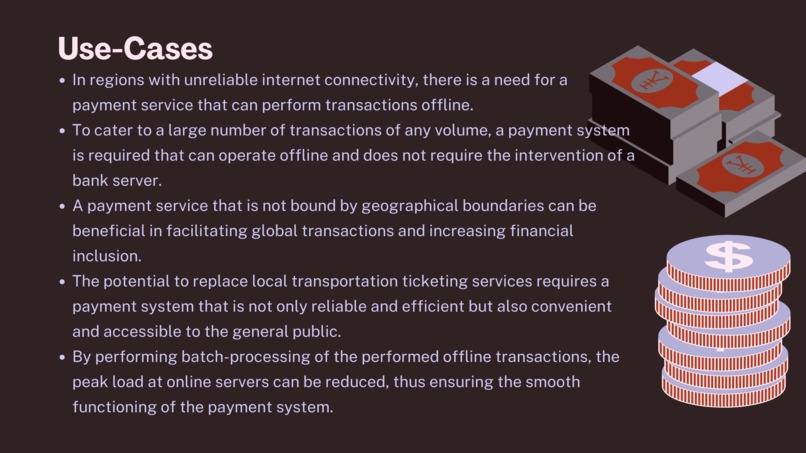
Use Cases

Project Name: Payd Project Tagline: Easier Payd than Done.
Why Payd?
Poor network connectivity poses significant challenges for digital payments in both individual and business contexts. Traditional payment methods are inconvenient and slow. While NFC payment options exist, they are limited to costly smartphones. Payd addresses these issues, providing a simple offline payment solution.
What is Payd?
Payd is an offline payment app that enables transactions even when both devices are offline. It operates through QR code scanning, making payments convenient. Payd can process payments even if one party is online. For offline communication, it utilizes WiFi Direct technology, with central authority verification. Payd can alleviate transaction issues, allowing users to exchange money offline when both parties are online, reducing the server load and promoting environmentally friendly batch processing.
How Payd Works?
Payd operates similarly to how domain names and SSL certificates ensure the authenticity of websites. Each Payd user is issued a private key, which is securely stored and not accessible by anyone other than the user. Users also have a public key, certified by a central authority, allowing others to verify their authenticity. Transaction history is analyzed and conducted offline using these keys.
Technology Used
Android (Java) Node.js Backend with Express.js WiFi Direct Security Measures
Trusty TEE (Trusted Execution Environment) for isolating sensitive Android apps. ProGuard, an Android tool for code obfuscation. Google Play Integrity API for secure device verification. Transaction Verification
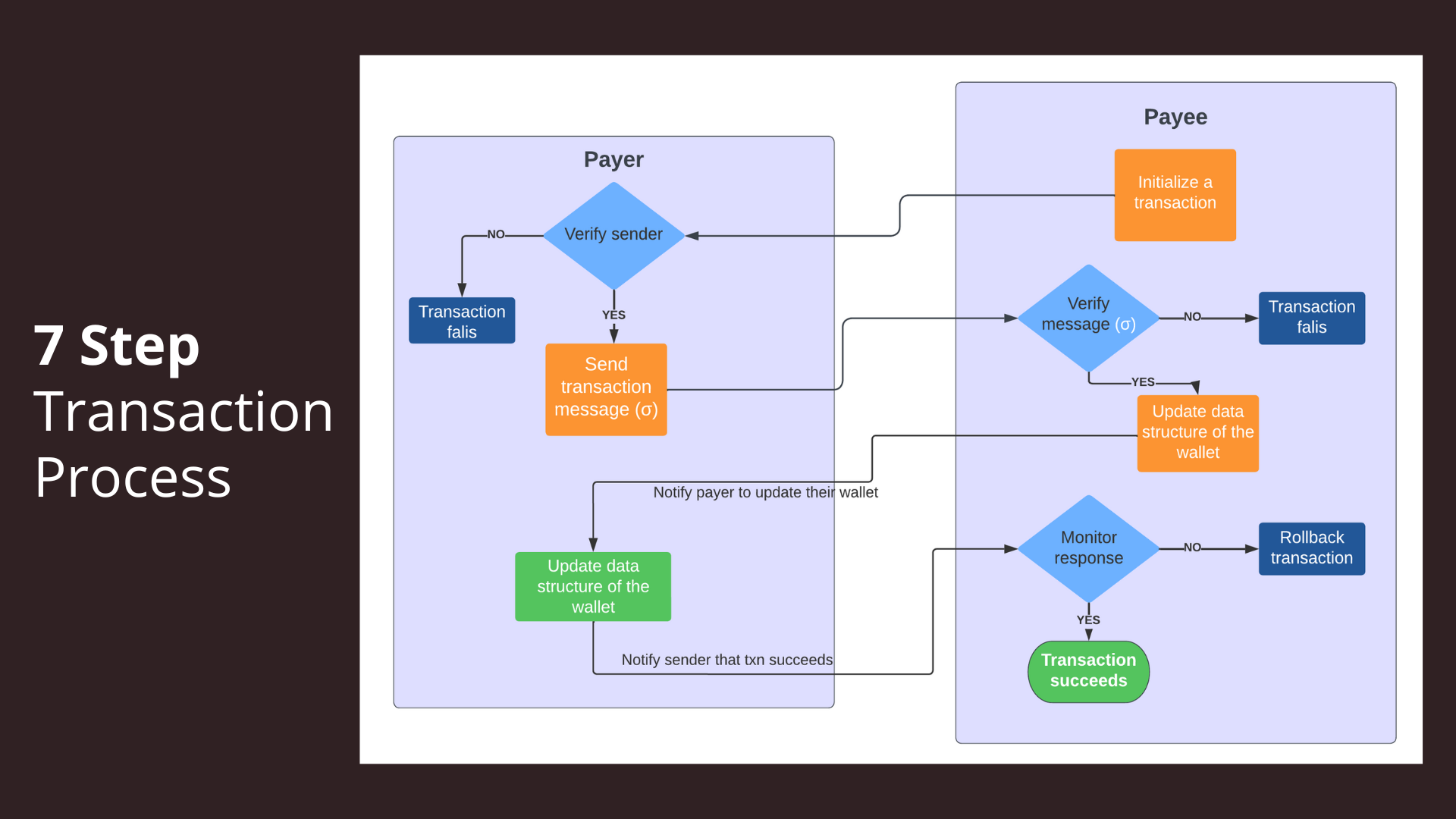
When a user, say Alice, wants to send money to Bob, Alice's Payd app first verifies Bob's Payd app using Bob's public key. Bob requests Alice's list of past offline transactions for verification. If the transactions don't verify, Bob cancels the transaction. Bob then checks his available balance before accepting the money. If Bob attempts any illegal tampering with the transaction, he won't be able to transact with others.
Lost Phone
In the event of a lost phone, transaction data is securely stored on the other party's device and can be recovered from the central authority server without issues.
Can It Be Tampered?
No, even if a user's phone is rooted, the data remains secure due to the Trusty TEE (Trusted Execution Environment).
Business Model
Freemium Model: Offer a basic version for free and charge for additional functionality such as increased transaction limits or advanced reporting tools. Transaction-based model: Charge a small fee for each transaction, ideal for individuals who don't transact frequently. Why Financial Services in Remote Areas?
In remote areas, people often rely on paper money for transactions, which are not recorded. This lack of financial history makes it difficult for banks to assess their creditworthiness. Payd can help analyze a person's creditworthiness, enabling offline lending and financial inclusion across the country.

Log in or sign up for Devpost to join the conversation.