
💡 Inspiration
- Financial Isolation: AI models are smart enough to write code and hold conversations, but they are completely isolated from real-world banking rails.
- The Dead End: If an autonomous agent needs to purchase a subscription or a user wants to pay an invoice inside a chat, they hit a barrier.
- The Bridge: We were inspired to link the reasoning power of modern AI directly with the world’s most trusted payment network—PayPal.
- The Vision: Our goal was to create a secure ecosystem where natural language can orchestrate reliable financial workflows instantly.
🛠️ What it does
- Conversational Commerce: Enables users to trigger secure PayPal Orders, Payouts, or Subscriptions using casual language (e.g., "Pay the designer $75").
- Smart Intent Parsing: The AI system extracts financial variables (recipient, amount, currency) from messy user text and maps them to valid PayPal schemas.
- Algorithmic Guardrails: Automatically checks payment requests against strict user-defined safety limits before executing anything.
- Execution Dashboard: Provides a clean developer interface to monitor live AI transaction habits, sandbox requests, and state balances.
🚀 How we built it
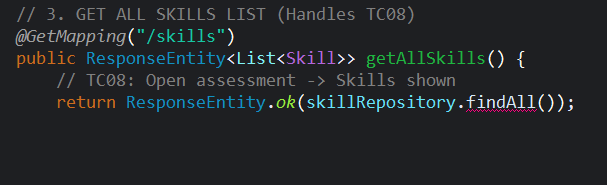
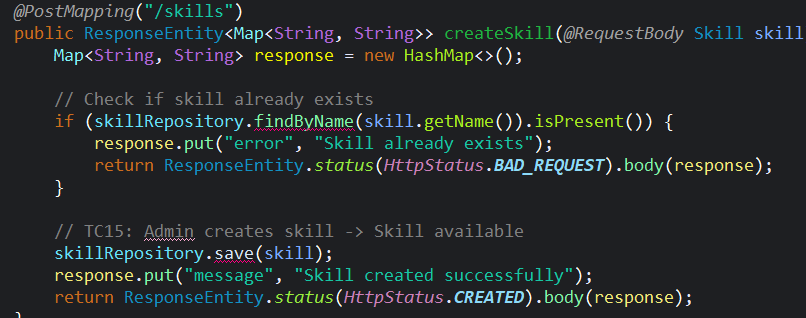
- Robust Backend: Powered by Java (Spring Boot) to securely handle routing, session states, and asynchronous PayPal transaction webhooks [://devpost.com].
- AI Orchestration: Integrated Large Language Models using the official PayPal AI-Toolkit and its sandbox Model Context Protocol (MCP) servers [://devpost.com].
- Schema Optimization: Leveraged the APIMatic Context Plugin to generate precise, strongly-typed Java components matching exact PayPal API structures [://devpost.com].
- Data Dashboard: Designed a responsive interface utilizing AG Grid to monitor active AI spending rules and sandbox execution logs cleanly [://devpost.com].
- Statistical Security: Implemented an automated safety boundary check layer modeled using a strict constraint algorithm:
$$T = \mu + k \cdot \sigma$$
🚧 Challenges we ran into
- API Hallucinations: Passing bulky documentation caused the LLM to invent wrong parameters. We solved this by using APIMatic to trim and filter the context window down to precise schemas [://devpost.com].
- Java Asynchronous Processing: Handling real-time transaction states when a user delays a payment was tough. We resolved it by building reactive Spring Boot listeners to track custom session metadata inside PayPal's
custom_idpayloads. - State Synchronization: Keeping the AI's internal state machine synced with asynchronous PayPal Sandbox webhooks required deep architecture tuning.
- Latency Bottlenecks: Sequential parsing of AI prompts and safety math checks caused UI lags. We fixed it by parallelizing validation logic inside our Java backend.
🏅 Accomplishments that we're proud of
- End-to-End Automation: Successfully built a working Java prototype where AI accurately extracts financial variables from a simple prompt and creates a valid PayPal Sandbox link [://devpost.com].
- Flawless Tooling Integration: Smoothly connected the ecosystem by utilizing the PayPal AI-Toolkit alongside sandbox Model Context Protocol (MCP) servers [://devpost.com].
- Enterprise Safety Layer: Designed a robust, automated statistical risk check layer to ensure an AI machine cannot execute unauthorized financial transactions.
- Production-Grade UI: Built a highly reliable monitoring interface using AG Grid to track AI spending logs and live sandbox metrics seamlessly [://devpost.com].
📚 What we learned
- MCP Capabilities: Mastered using the PayPal AI-Toolkit and its sandbox Model Context Protocol (MCP) servers to securely expose payments architecture to AI runtimes [://devpost.com].
- Context Optimization: Realized that passing raw, bulky API documentation hurts performance, and learned how APIMatic helps isolate precise, strongly-typed endpoints [://devpost.com].
- Fintech Safety Mindset: Learned how to treat security as a primary design tier by establishing strict algorithmic safety boundaries before any financial rails are touched.
- Java Asynchronous Webhooks: Deepened our knowledge in managing asynchronous transaction states by mapping custom system metadata directly through secure PayPal payloads.
🔮 What's next for PayBrain
- Multi-Agent Orchestrations: Introduce advanced workflows allowing multiple autonomous AI bots to securely interact with a shared corporate PayPal wallet.
- Predictive Fraud Analysis: Integrate lightweight anomaly detection models to scan natural language prompts for social engineering hacks before invoking APIs.
- Production Scaling: Migrate from the PayPal Sandbox environment into production-grade rails with encrypted OAuth tokens and stricter compliance layers.
- Cross-Platform Extensions: Release a lightweight browser extension and a Slack/Discord plugin to let users trigger safe PayPal workflows directly from their daily workspaces.
Built With
- collabinate
- html
- java
- securedb
- spring
- springboot
