-
-
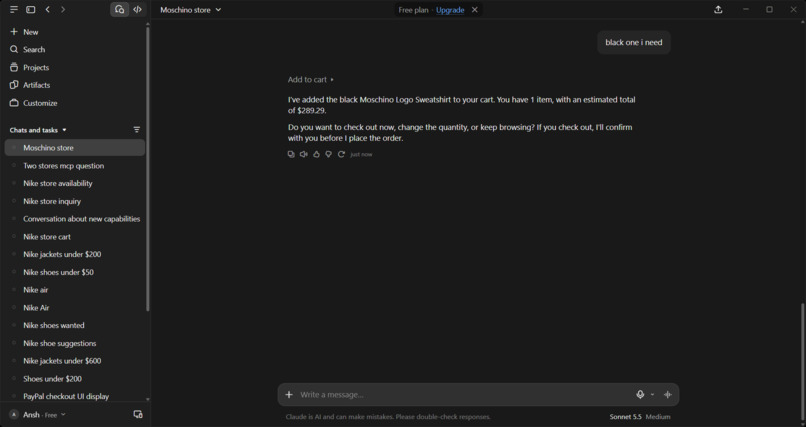
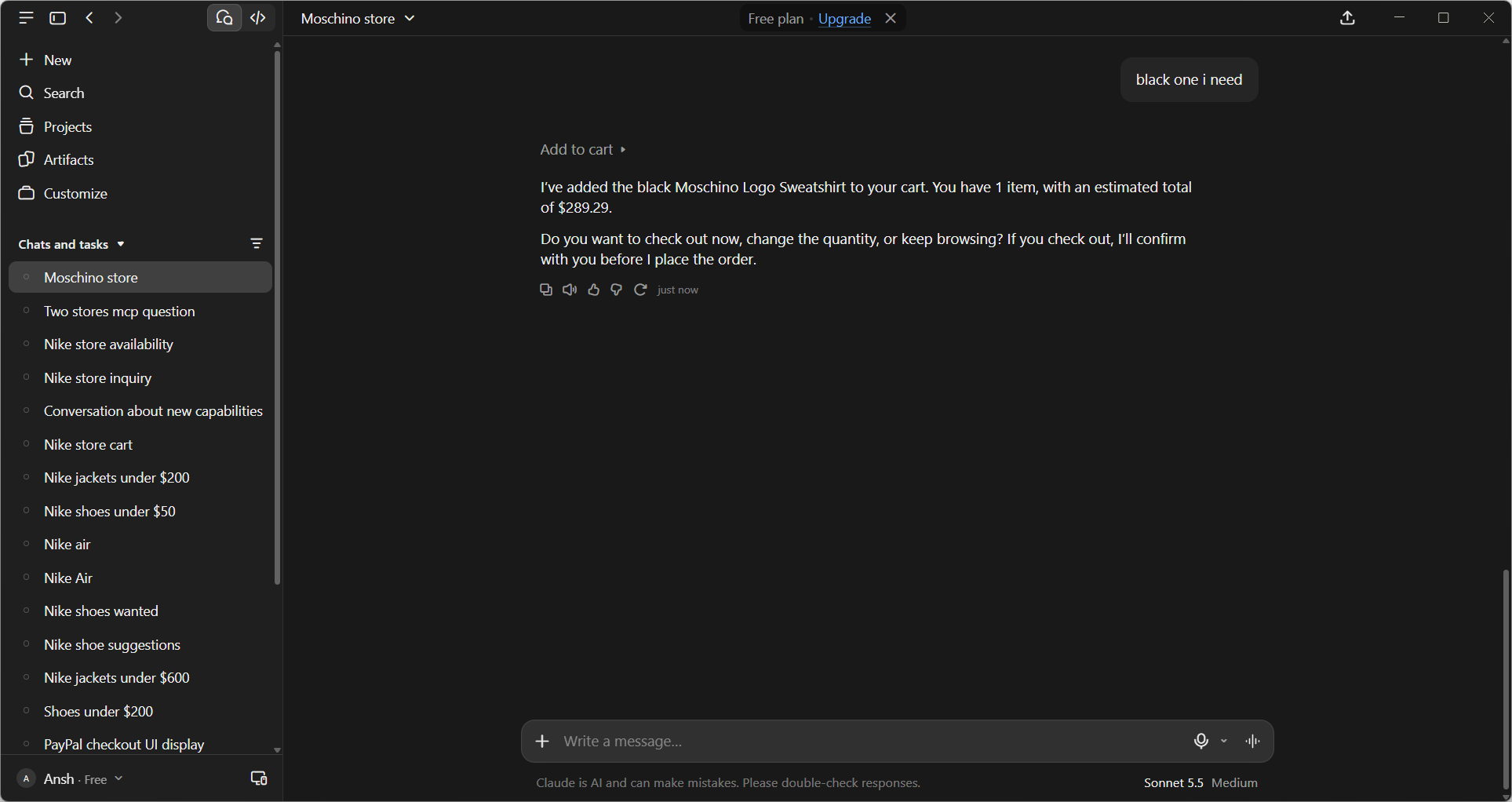
Customer add to cart product inside Claude
-
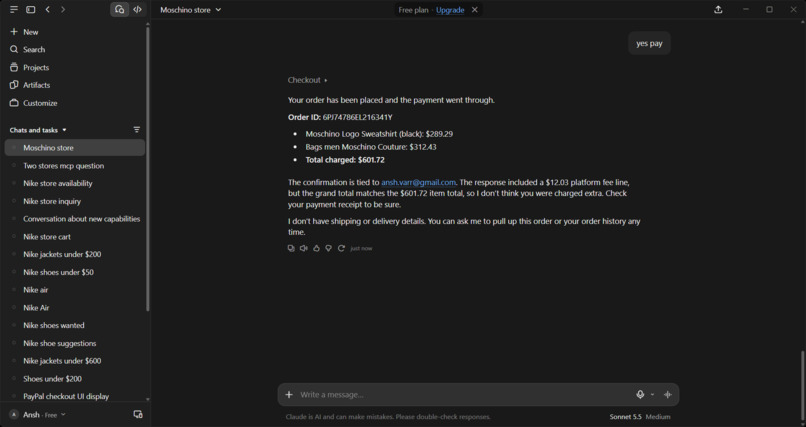
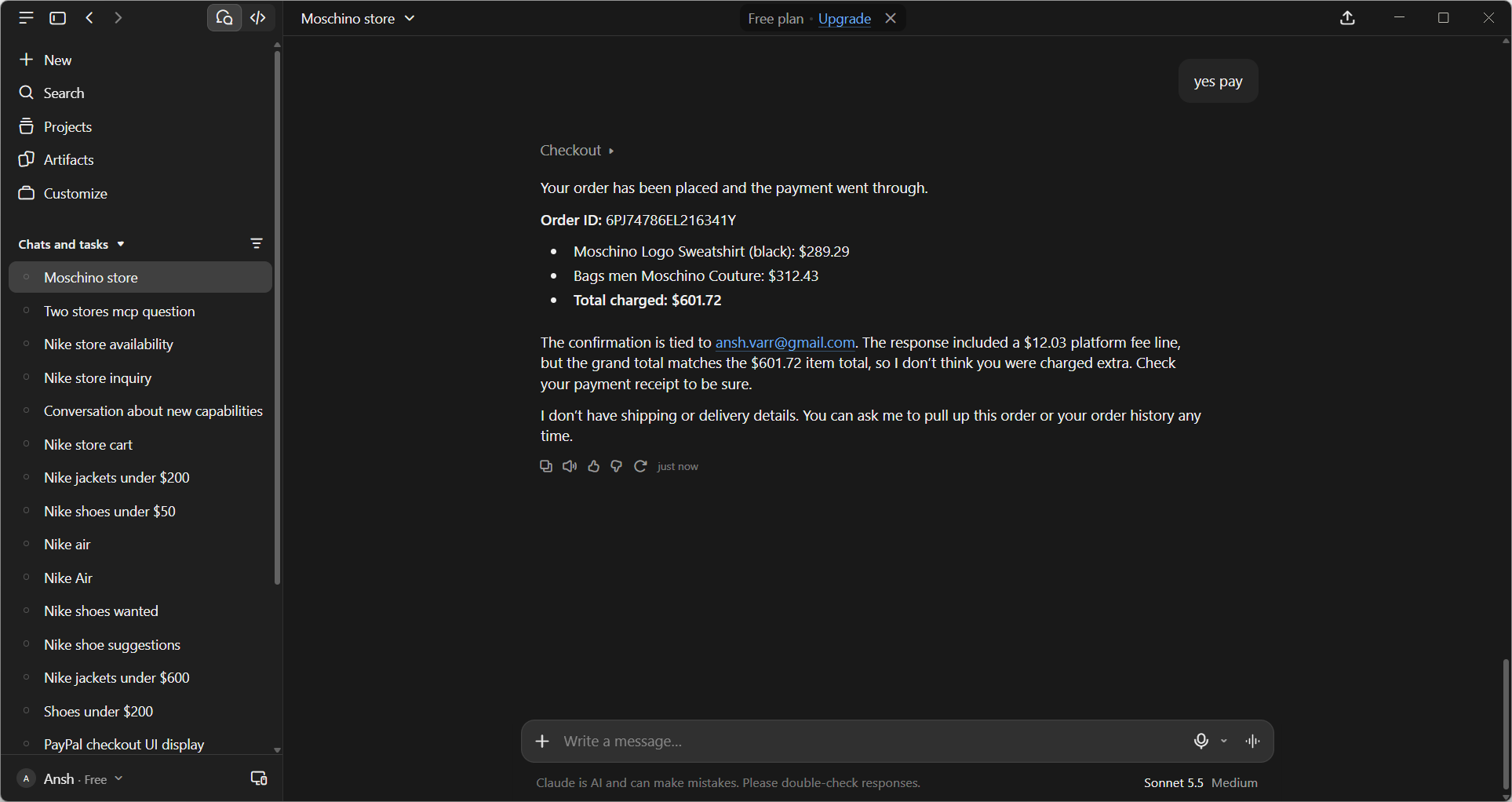
Order completed inside Claude after checkout in 10sec automatically without any customer redirect or approval on paypal
-
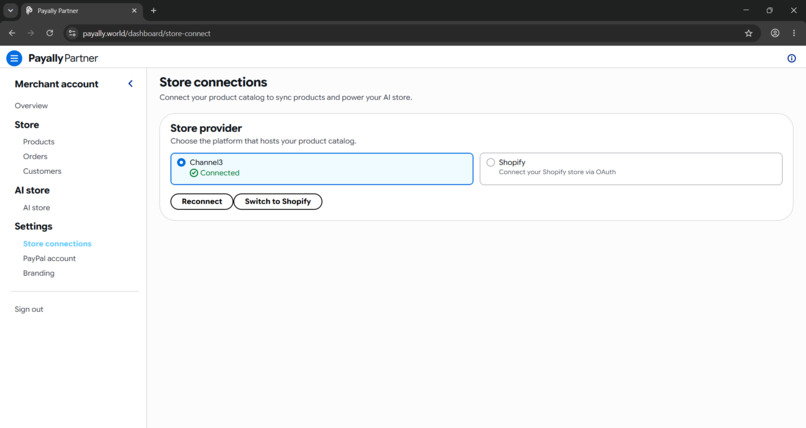
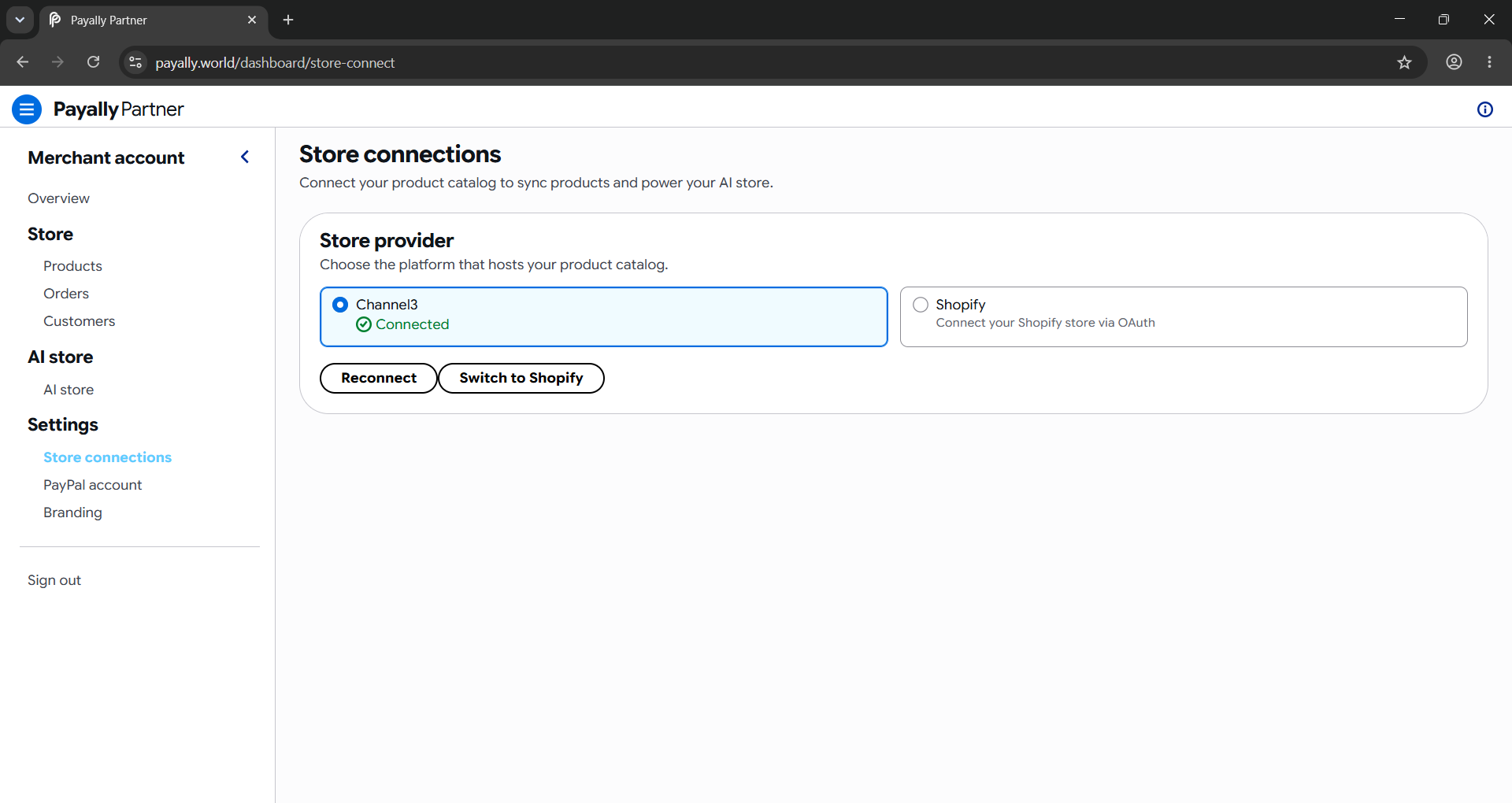
store connect either via channel3(only for demo) or shopify
-
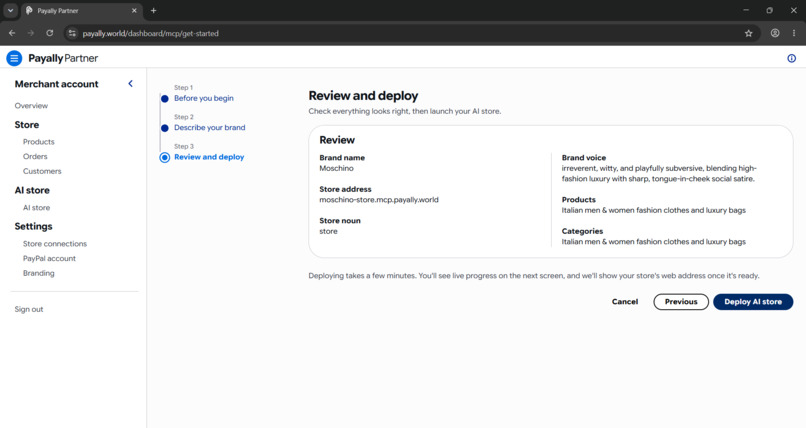
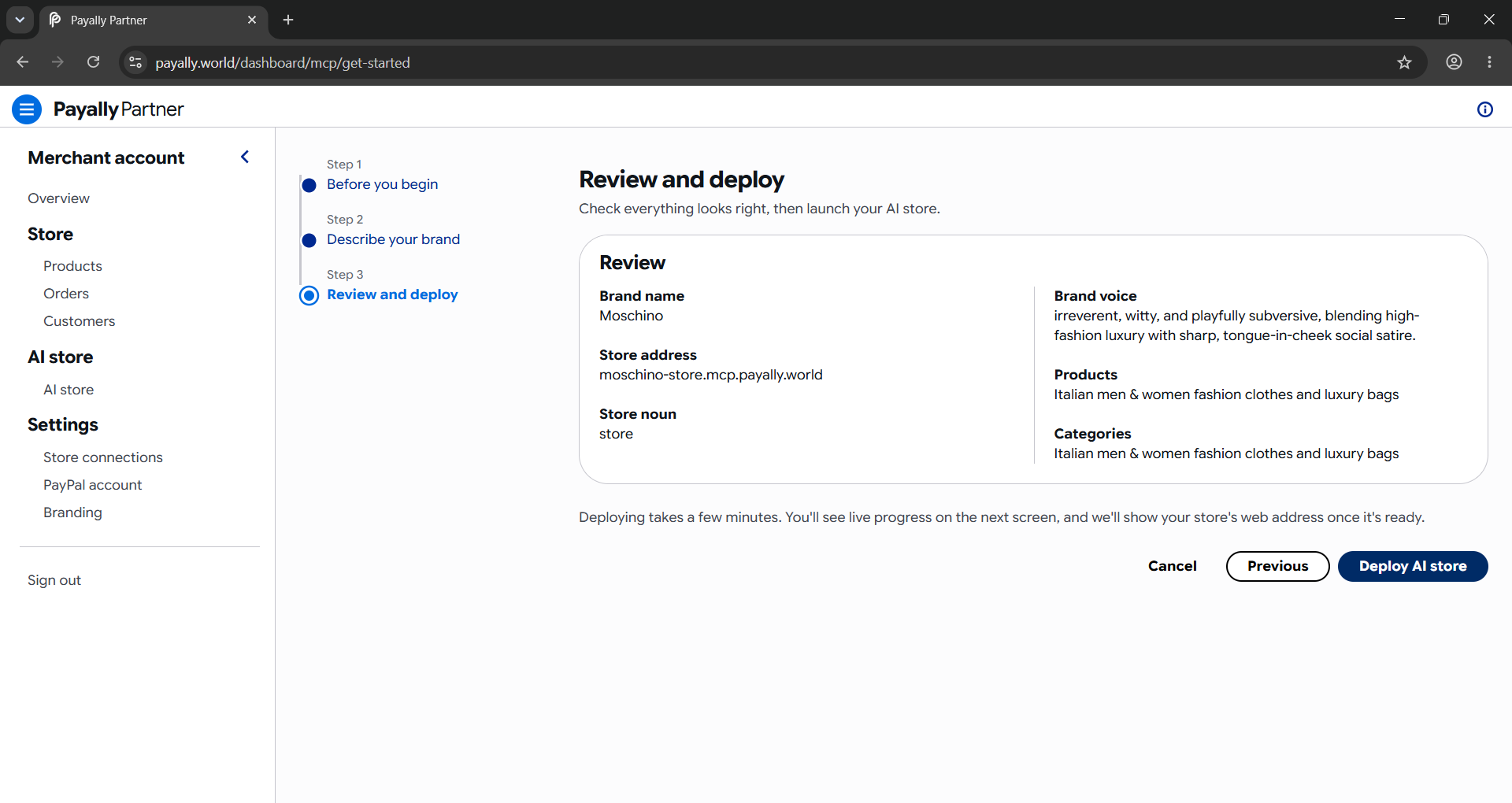
merchant deploy their AI Storefront
-
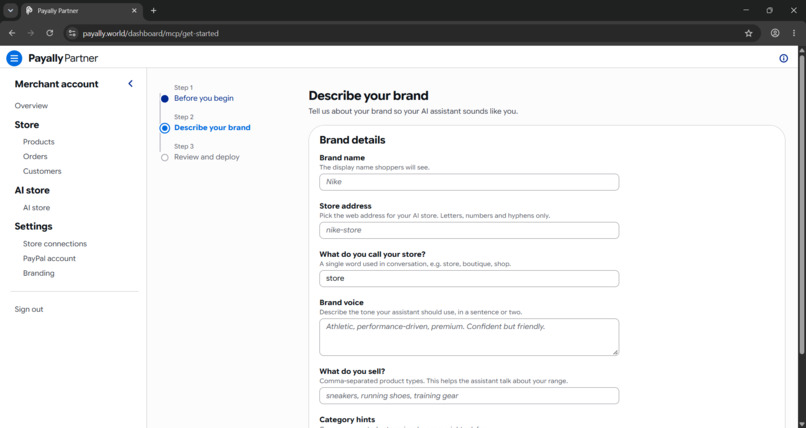
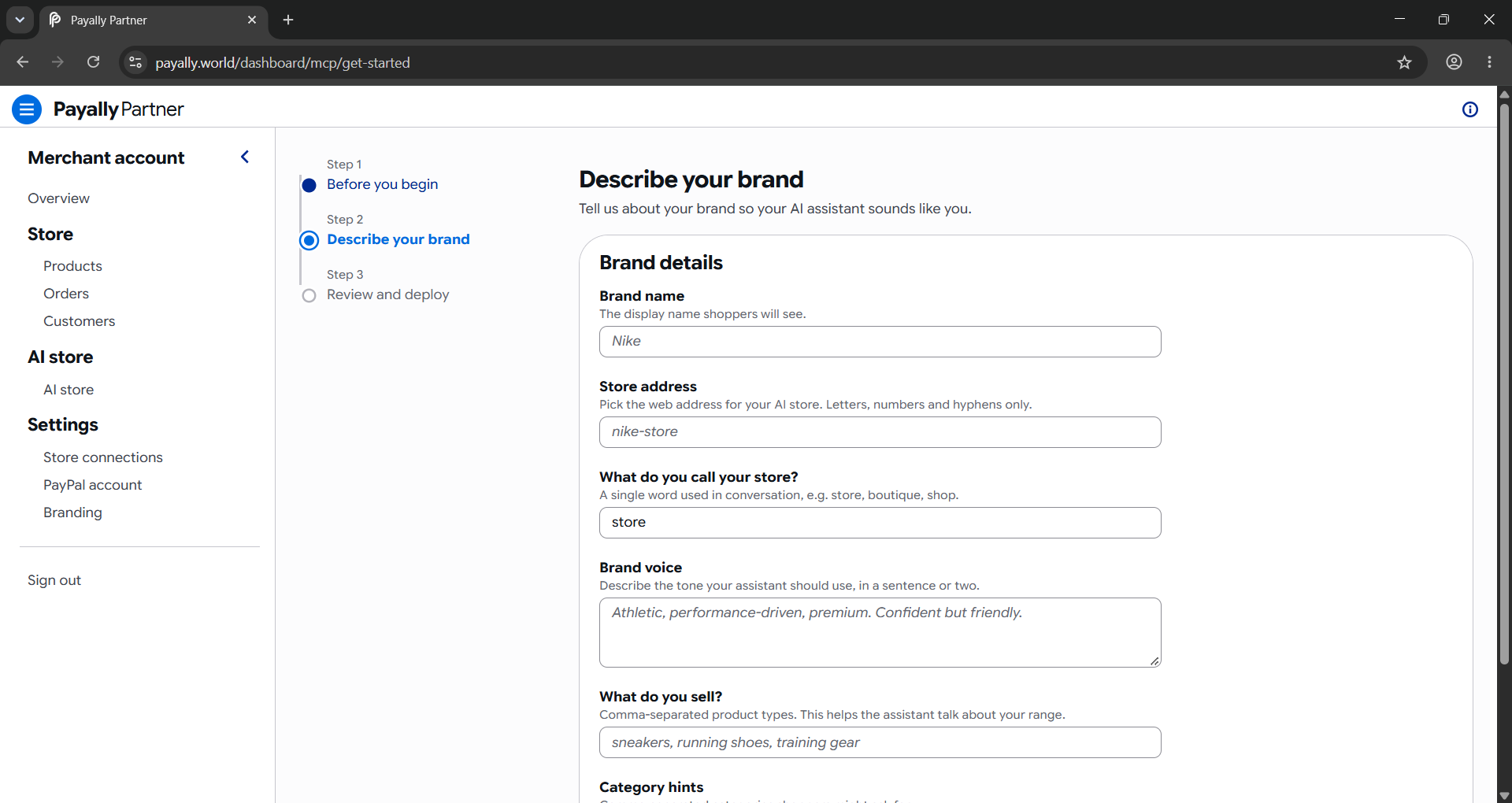
Merchant configures their brand settings before deploy
-
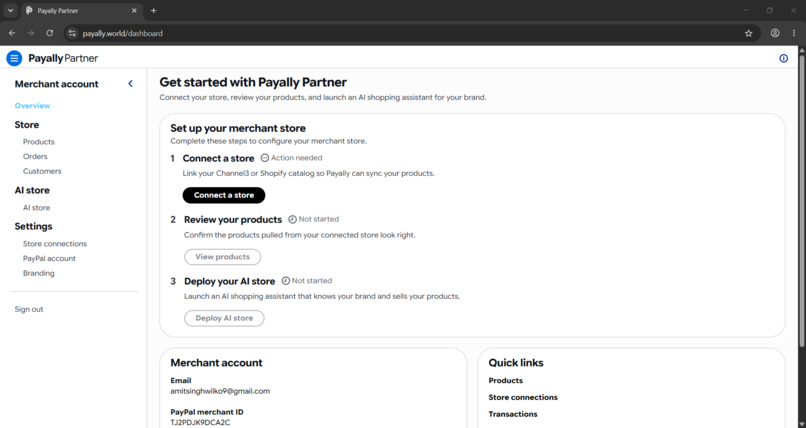
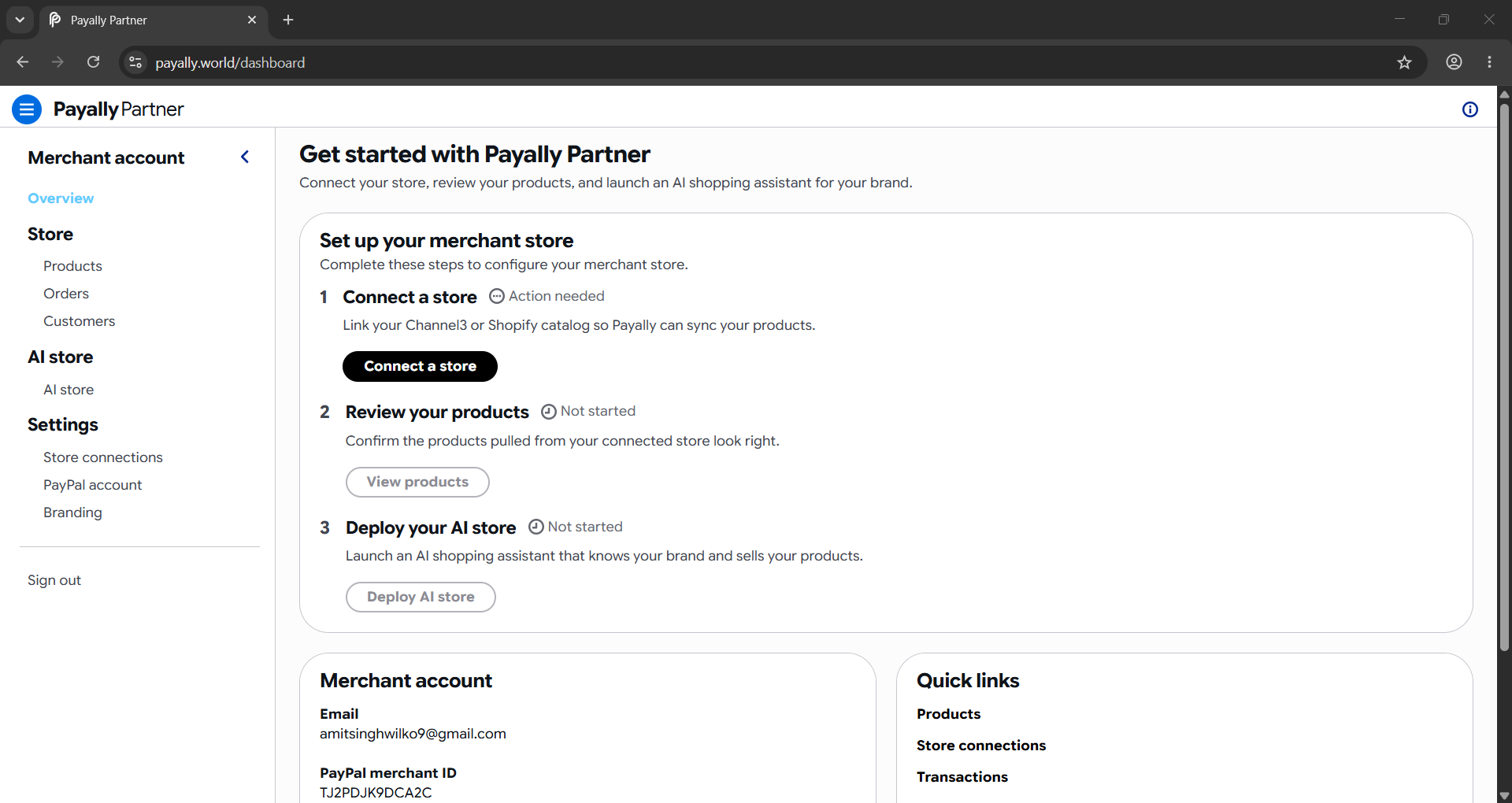
merchant dashboard overview
-
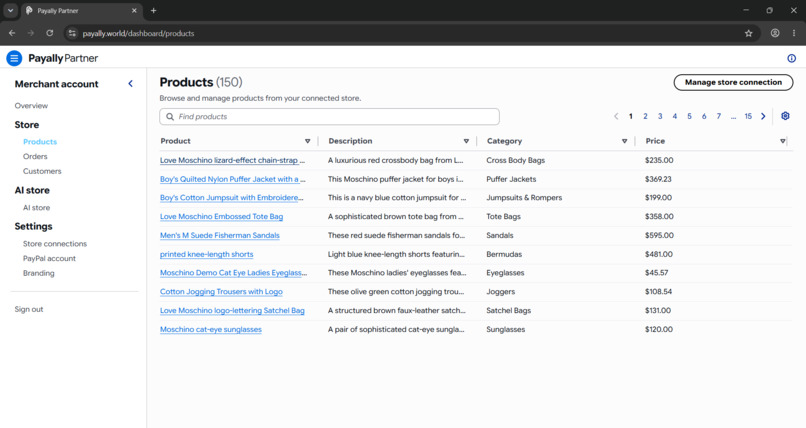
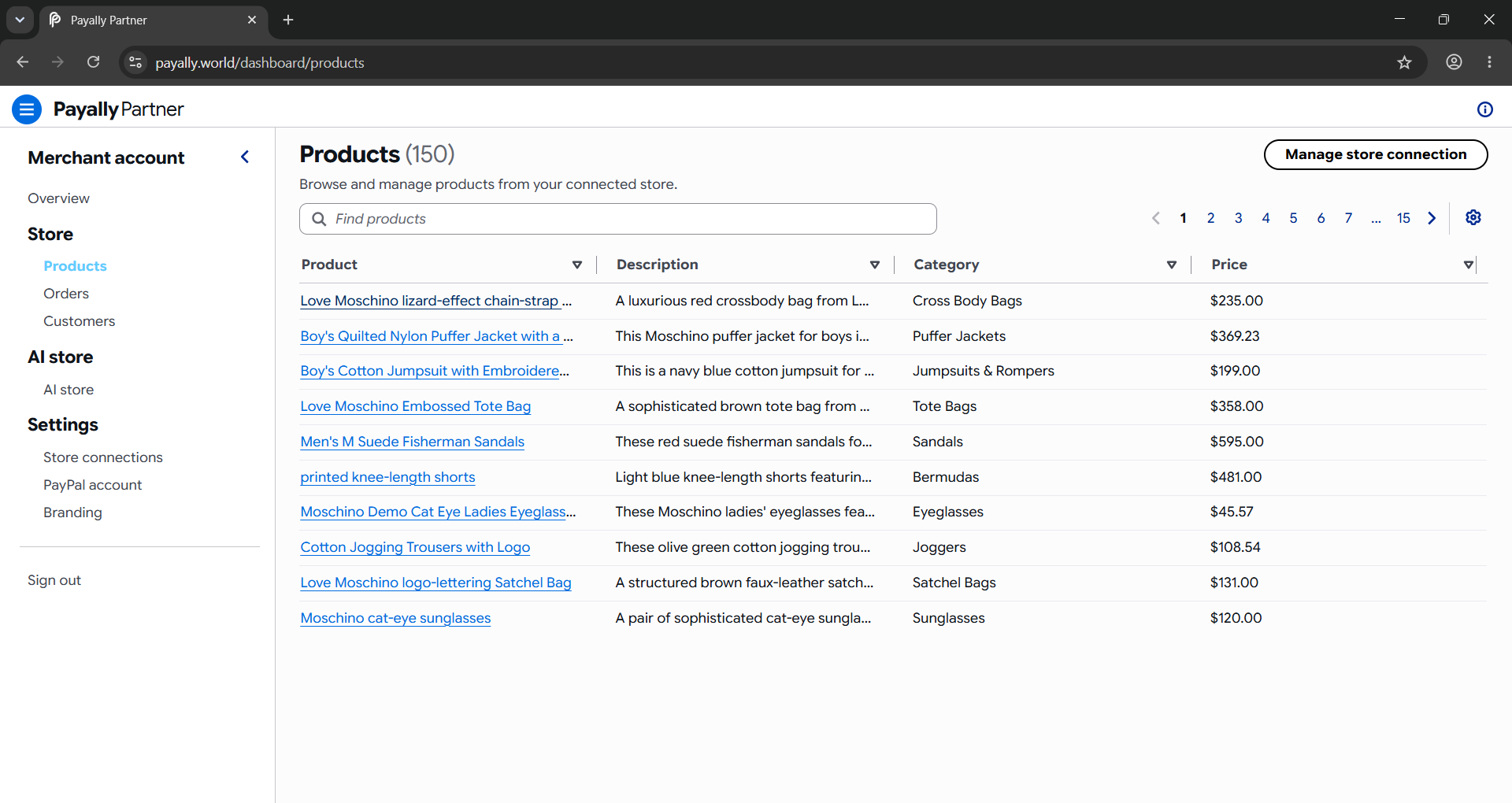
products synced from merchant store connection
-
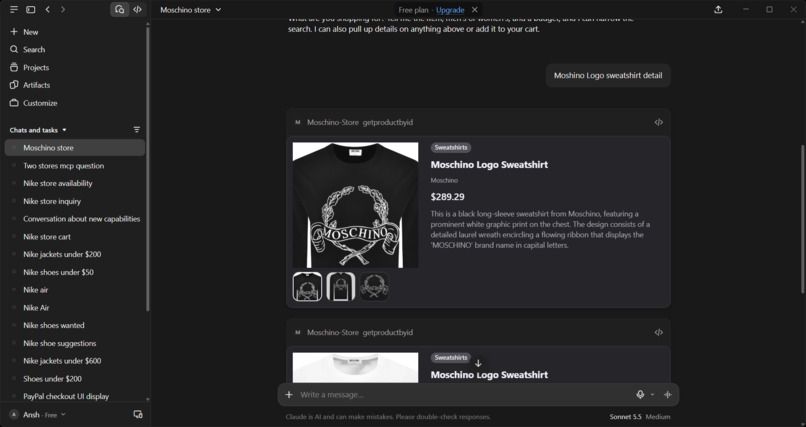
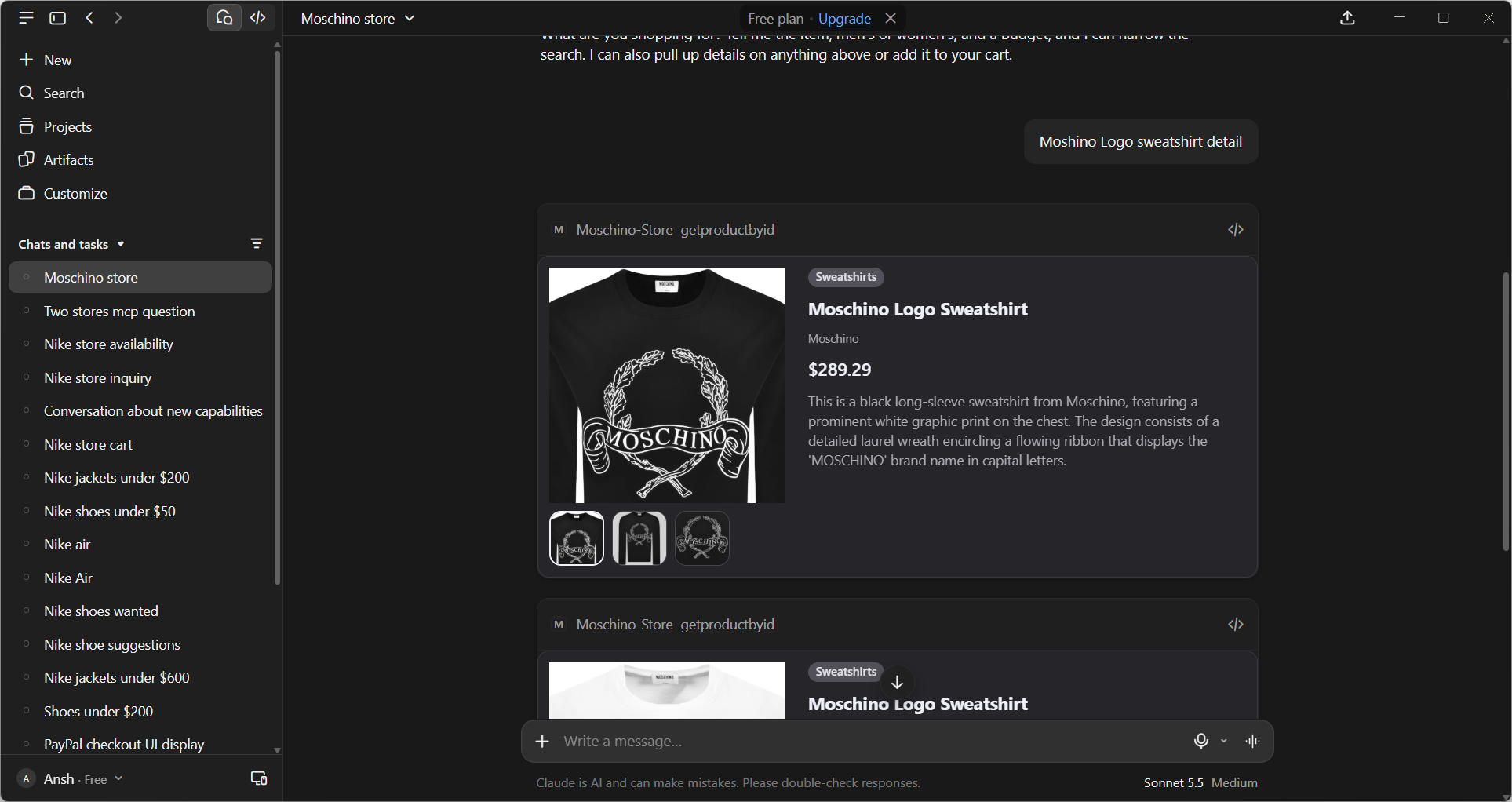
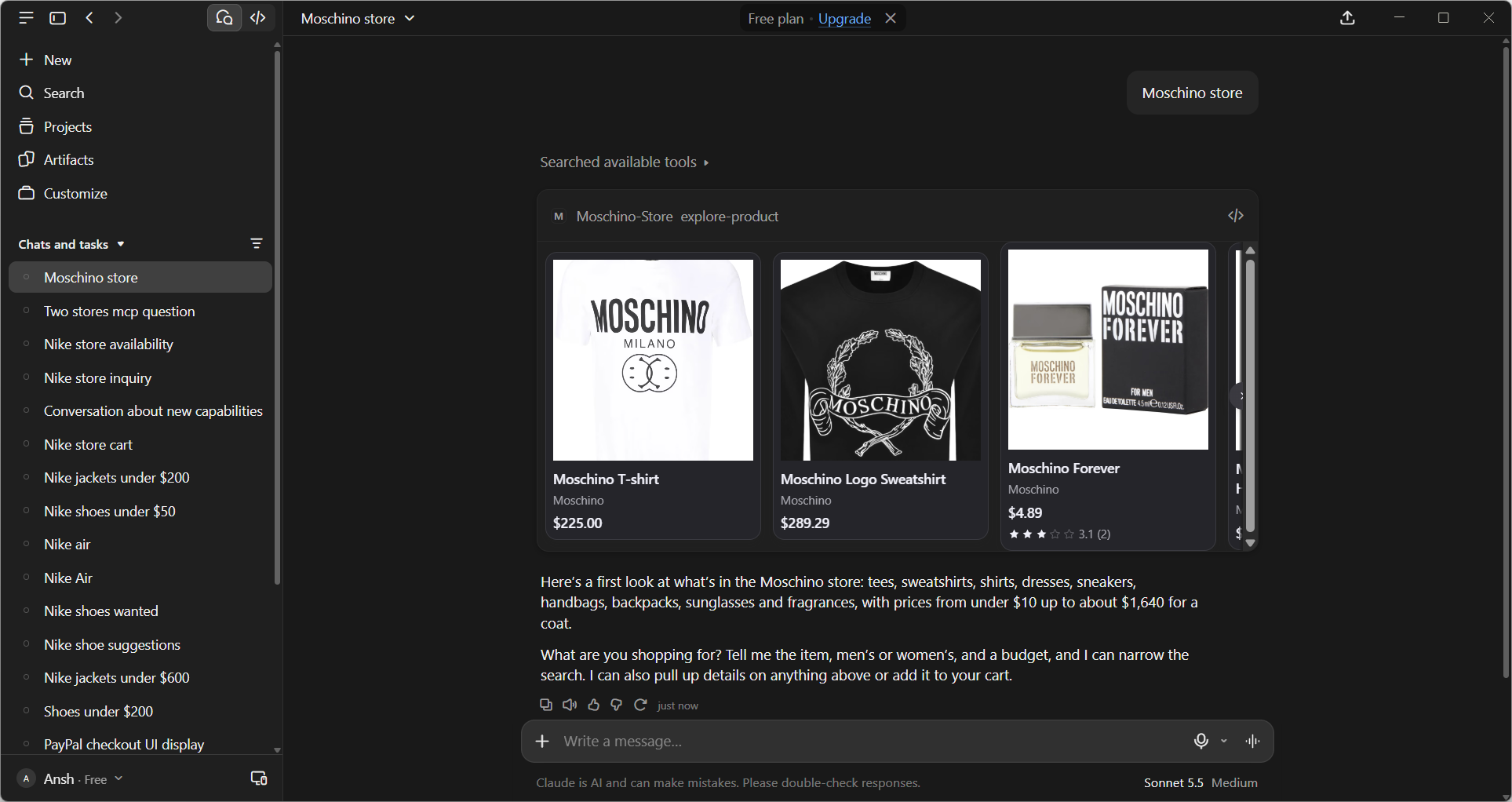
merchant store inside claude
-
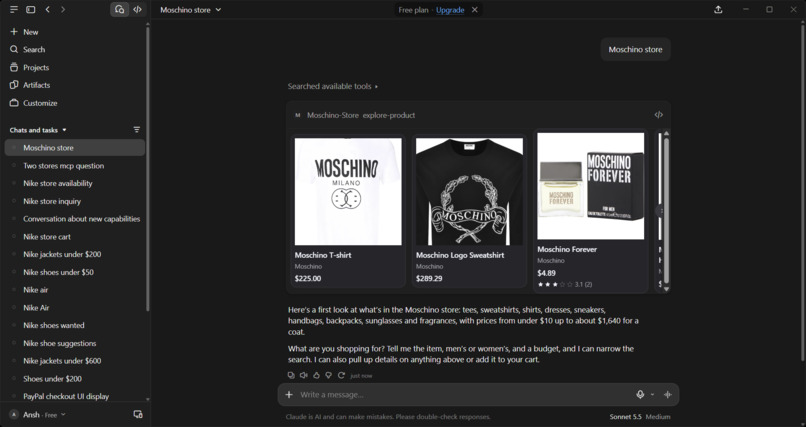
merchant store visible inside Claude when customer asks
Payally Partners — Agentic Commerce for every brand.
Payally Story Video, check it out also - https://www.youtube.com/watch?v=zlLB2LUXJc8
Inspiration
It started with a midnight phone call.
My friend Farhan runs a branded saree and shirt business on Shopify. One night he called me, crying. At his closed friend birthday party, he'd seen a guest wearing one of his store saree — and when he asked where she bought it, she said "Amazon." She had asked an AI assistant for "a silk saree for a party," and the AI sent her to Amazon, where Farhan's brand name sat in small print. She never knew his brand existed.
That sale wasn't a win for Farhan — no brand, no margin, no repeat customer. And his own store was declining because shoppers no longer scroll Google results; they ask ChatGPT, Gemini, or Claude. In AI answers, his brand was nowhere.
The data confirmed what Farhan felt: half of Google searches already show AI summaries (McKinsey, Oct 2025), brand websites are only 5–10% of what AI search references, and 29% of AI shoppers say AI chat most influenced their last purchase. Meanwhile, big tech — PayPal, Google, Stripe, OpenAI — is building agentic commerce for enterprise giants. McKinsey estimates $3–5 trillion in global commerce will flow through AI agents by 2030, but the 99% of brands without engineering teams get nothing.
payally exists so the next Farhan's brand is the one the AI recommends.
What it does
payally gives any Shopify or WooCommerce brand ($1M–$20M revenue) its own white-labeled AI shopping assistant in 10 minutes:
- Branded MCP app per store — customers browse, search, and purchase products inside AI assistants like ChatGPT, Gemini, and Claude, without ever leaving the chat.
- 100% white-label — shoppers see the brand's name, voice, and design end-to-end; payally is invisible.
- Real checkout — transactions complete via PayPal, completely inside AI Chat.
- Zero upfront cost — merchants pay only 2% per completed sale, so pricing scales with success:
$$\text{Merchant cost} = 0.02 \times \text{gross merchandise value}, \qquad \text{Cost}_{\text{setup}} = \$0$$
No engineering team, no $100K+ custom build, no months of waiting. One click, and the brand is discoverable by every AI assistant that speaks the open MCP protocol.
How we built it
The platform has three core components:
- Partner Portal — the merchant dashboard where brands configure their AI storefront, connect their store, give their brand voice, and deploy with one click. Order management lives here too.
- Branded MCP Server — the heart of the product. Each brand gets its own dedicated MCP (Model Context Protocol) endpoint that exposes product discovery, cart operations, checkout, and order history as tools that any AI assistant can call. Per-brand architecture keeps every store isolated and independently scalable.
- White-Label Experience Layer — handles branded logins and end-to-end theming so the customer journey never breaks brand immersion.
The stack is deliberately boring where it should be and novel where it counts:
- MCP protocol for universal AI-assistant interoperability — build once, be discoverable everywhere
- Auth0 for authentication, with the AI Agents add-on securing agent-to-store interactions
- PayPal for payments and checkout — real transactions, merchant of record preserved, customers vault their paypal token when they login merchant's mcp app.
- AWS for hosting and elastic scaling, so a brand survives its first viral festive season without an ops team
Challenges we ran into
- The MCP standard is young. Tool schemas, auth flows, and discovery conventions are still evolving across assistants. We had to design for a moving target — building first-mover expertise while accepting that parts of the protocol would shift under us.
- White-label is harder than it sounds. Every surface — login, product cards, receipts, even error states — had to carry the brand's identity, not ours. we have to integrate our login flows with auth0 actions to tokenize customer vault during login.
- Checkout trust inside a chat. Getting customers comfortable completing a purchase inside an AI conversation required real PayPal careful customer vault token completed against the merchant.
- Paypal API sometimes gives unexpected responses during developing and integrating the paypal API, we encounterred a lot of unexpected responses such as Not Authorized, 403 Forbidden, Invalid syntax, etc. however we resolved each one by ourselves.
Accomplishments that we're proud of
- 10-minute deploy: from "connect store" to a live, branded AI storefront — versus the 6 months and $100K+ a custom build demands
- A working end-to-end loop: a shopper can ask an AI assistant for a product, browse the brand's catalog in-chat, and check out via PayPal, inside AI chat in 10secs without redirecting the customer to paypal — fully white-labeled.
- Pricing aligned with SMB reality: 2% per sale means a merchant's gain/pain ratio looks like this:
$$\text{Gain/Pain ratio} = \frac{\$125{,}000+\ \text{(build + time saved)}}{1\ \text{hour of setup}} \gg 10\times$$
- Category legitimacy: agentic commerce is being validated by PayPal, Google, and Stripe — and we're positioned as the only path into it for the 99% of brands they ignore
What we learned
- The shift is structural, not cyclical. AI-mediated discovery isn't a marketing channel to optimize — it's replacing the search bar. Brands that treat it as optional will repeat Farhan's midnight call.
- White-label is the product. For D2C brands, brand identity is the moat. Any solution that inserts its own name between brand and customer is dead on arrival.
- SMBs don't want software; they want outcomes. "Pay only when you sell" removes the risk objection entirely — merchants don't buy payally, they rent a new sales channel.
- First-mover in a protocol beats first-mover in a feature. Owning the SMB MCP category with a 2+ year head start is more defensible than any single feature.
What's next for Payally Partners
- AI brand voice v2 — deeper personalization so the assistant genuinely sounds like the brand, currently it's simple enough.
- Multi-platform expansion — beyond Shopify/WooCommerce to every commerce stack SMBs run on
- AIO optimization tools — analytics showing brands exactly how AI assistants discover, cite, and recommend them (and how to improve)
- Partnerships — PayPal partner, AWS startup credits, Shopify App Store and WooCommerce, plus the Auth0 for Startups relationship we've already secured
- Analytics dashboard — attribution for AI-driven sales so merchants can finally see the channel that's been invisible to their dashboards
Your brand deserves to be seen inside AI Chat. → payally.world


