-
-
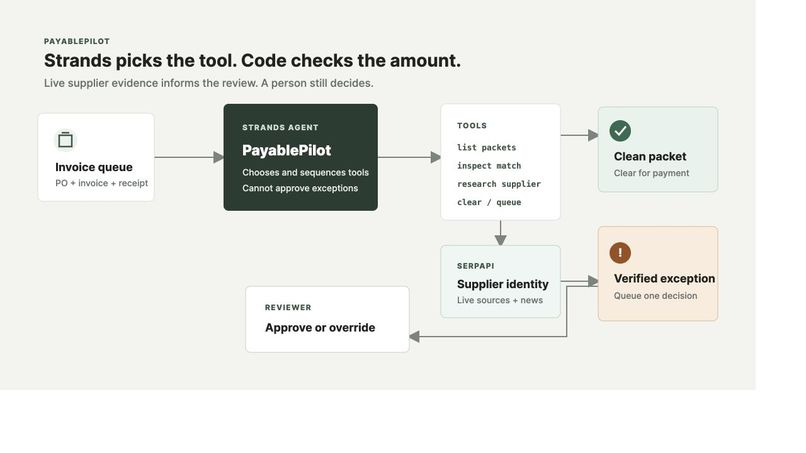
The exact $200 invoice hold and its supporting evidence.
-
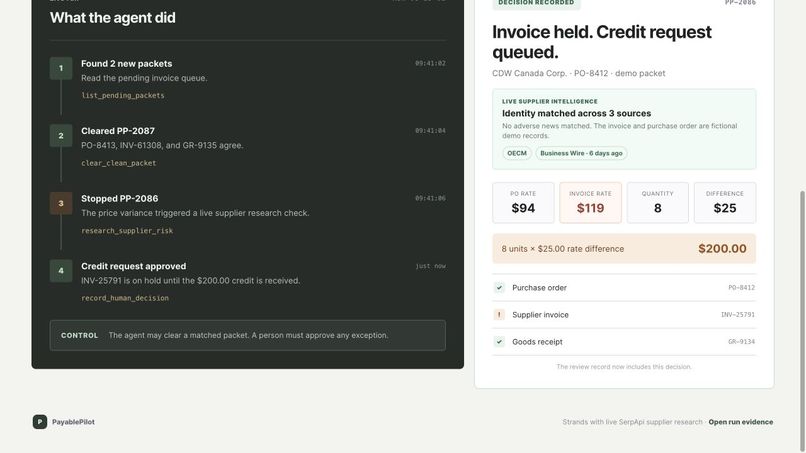
The agent can stage a draft. A person confirms or dismisses it.
-
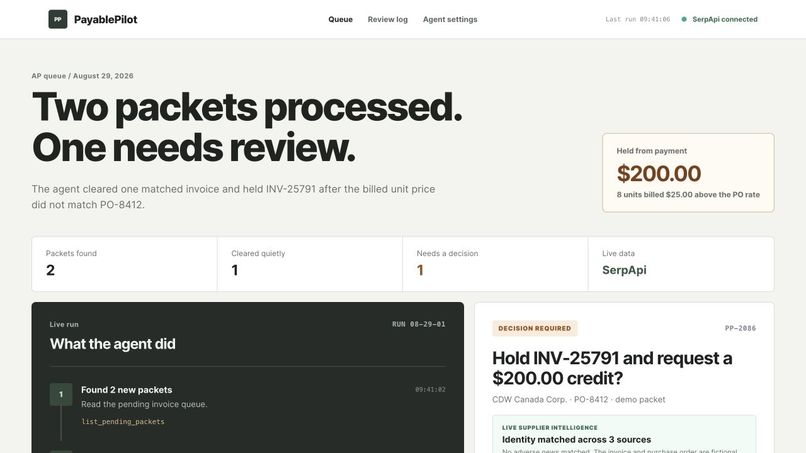
Deterministic checks stay separate from the agent actions.
Inspiration
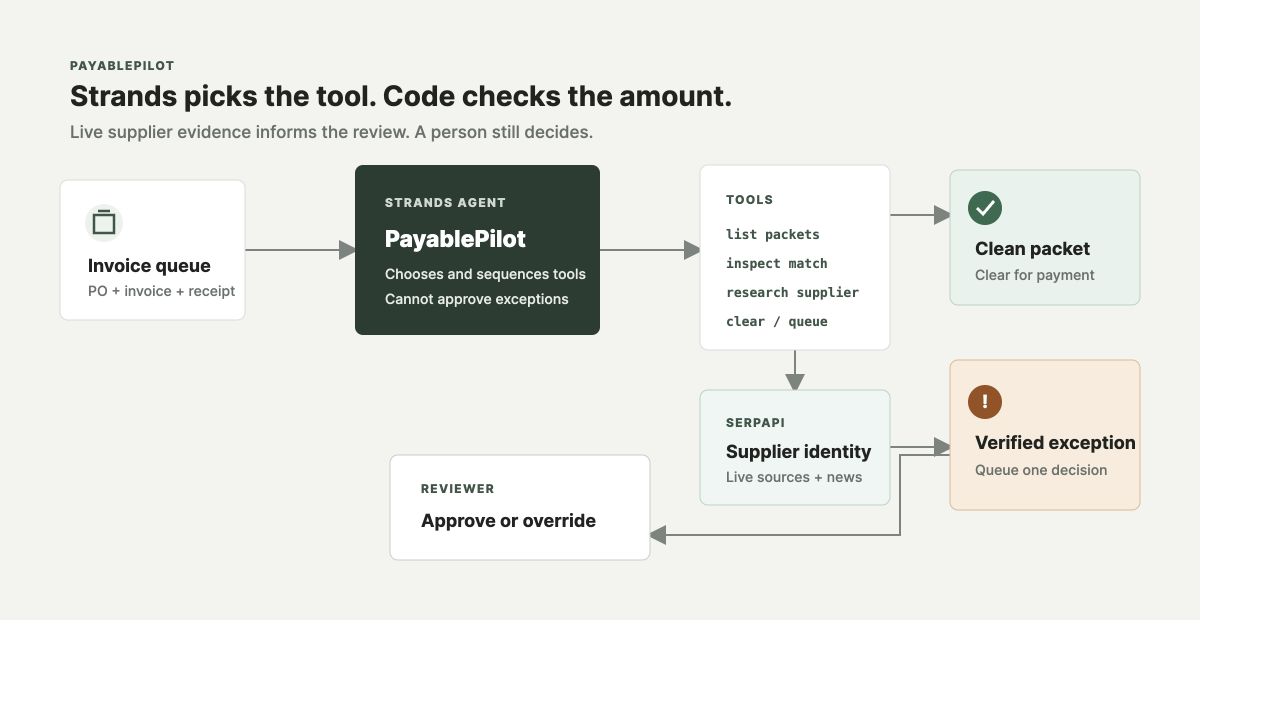
PayablePilot already had a clear safety boundary: the agent could finish routine work, but a person had to decide what happened to an invoice exception. WebMCP made it possible to carry that same boundary into the browser. The agent no longer needs to infer state from a dense dashboard or click the same buttons as the reviewer.
What it does
The page exposes two WebMCP tools. review_payables_queue returns the current
run, source document IDs, exact price variance, allowed actions, and decision
status. stage_invoice_resolution puts one permitted choice into a visible
Agent Draft. It cannot confirm the draft, release a payment, or contact the
supplier.
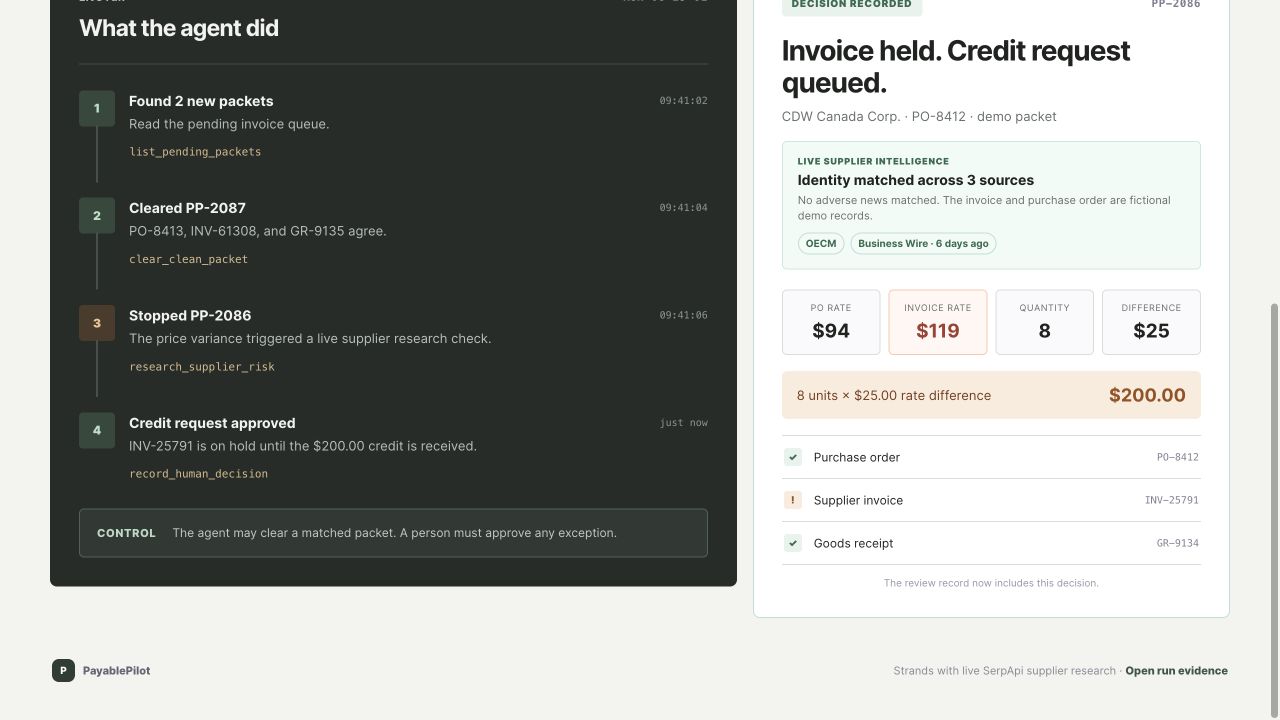
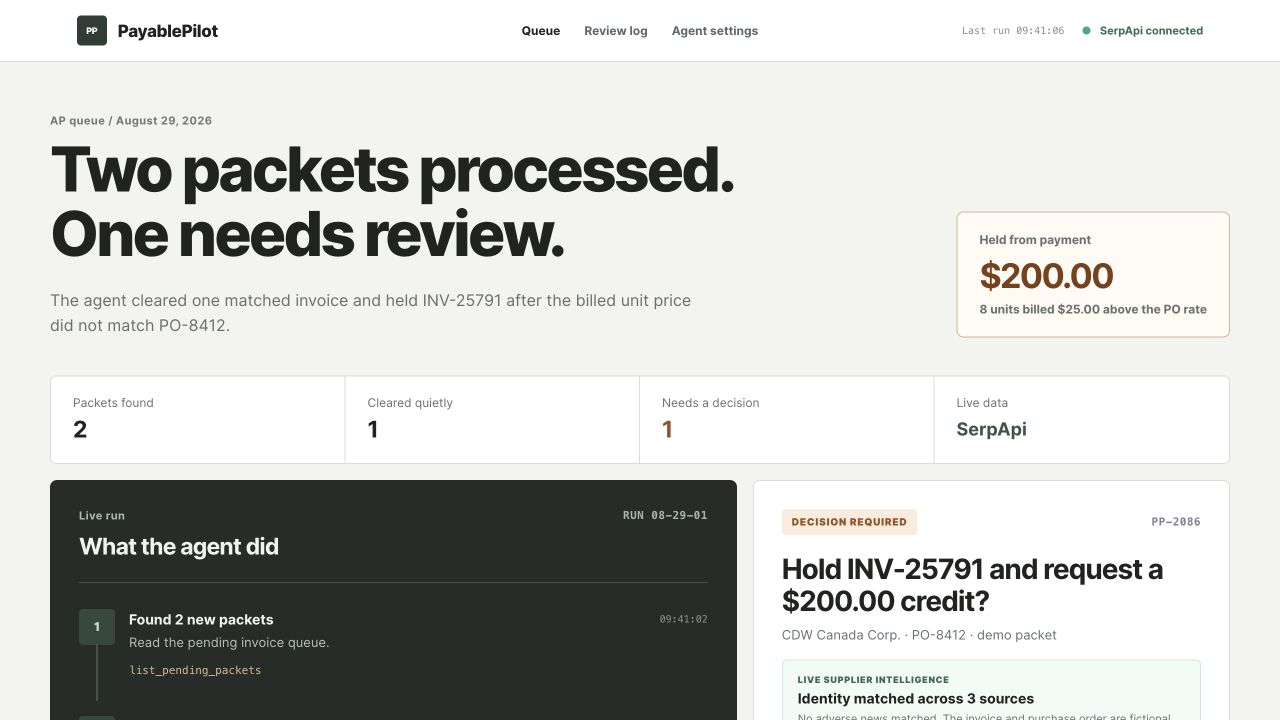
The included run has two fictional invoice packets. One clears. PP-2086 stops because eight units were invoiced at $119 instead of the $94 purchase-order rate. The deterministic difference is $200. An agent can read that evidence and stage the credit-and-hold option. A person still checks the evidence and either confirms or dismisses the draft.
How I built it
The live page is a React and TypeScript app. It registers two tools with
document.modelContext.registerTool(), uses strict JSON Schema inputs, and
returns concise JSON. The review tool carries the read-only annotation. The
staging tool updates visible page state but has no code path to record a final
decision. An AbortController unregisters both tools with the component
lifecycle.
The queue facts live in one typed module shared by the tools and tests. The test suite independently checks the $200 calculation, the pending human-confirmation status, and rejection of actions outside the two visible choices.
Challenges
The hard part was making the browser tool useful without quietly widening the agent's authority. A tool that clicked the final button would have been easy to demo and wrong for the product. I split the flow at the decision boundary: the agent can prepare the review, while the final click stays with the person who is accountable for the payment.
I also had to treat the existing project honestly. PayablePilot predates this challenge, so the repository documents exactly what was added after August 25 and the dated commits isolate the WebMCP work.
Accomplishments
- Both tools are detected and callable on the public page in ChatGPT's in-app browser.
- The live staging call produces the same visible Agent Draft shown in the demo.
- No agent tool can approve an exception or send anything to a supplier.
- All 17 tests pass, including three focused WebMCP boundary tests.
What I learned
The most useful browser tools are often smaller than the interface around them. Two narrow tools were enough here. One reports exact state. One prepares a reversible draft. Keeping those jobs separate made the agent easier to guide and the safety boundary easier to verify.
What's next
The next step is connecting the same tools to a real authenticated review queue. The browser contract would stay narrow, while the server would add organization policies, duplicate-invoice checks, reviewer identity, and a durable audit log.
Why WebMCP fits
Invoice review is a poor place for an agent to guess from button text. The page contains a purchase order, invoice, receipt, arithmetic, and a hard approval boundary. WebMCP gives the agent a small, typed contract for reading that state and putting one allowed choice in front of the reviewer.
The agent does not scrape the page, calculate the difference, invent an action, or click through a payment decision. PayablePilot returns the exact $200.00 variance from deterministic application data. The write-capable tool can only stage one of the two choices already present in the interface. It cannot confirm either choice.
Work added during the challenge
PayablePilot existed before The WebMCP Challenge. The WebMCP implementation, visible agent draft, safety boundary, tests, and this documentation were added after the submission period began on August 25, 2026. Git history provides the dated record required for a pre-existing project.
Built With
- github
- json-schema
- next.js
- react
- typescript
- webmcp

Log in or sign up for Devpost to join the conversation.