Inspiration
For many people with visual impairments, making a digital payment can be stressful. A small mistake in the amount, an incorrect recipient, or a confusing confirmation screen can lead to serious consequences.
We wanted to explore a simple but important question: What if a payment assistant could help users understand what they are about to pay before they confirm a transaction?
That idea inspired PayAble AI Guardian, an accessibility-focused payment assistant designed to make digital payments safer, clearer, and easier to understand.
What It Does
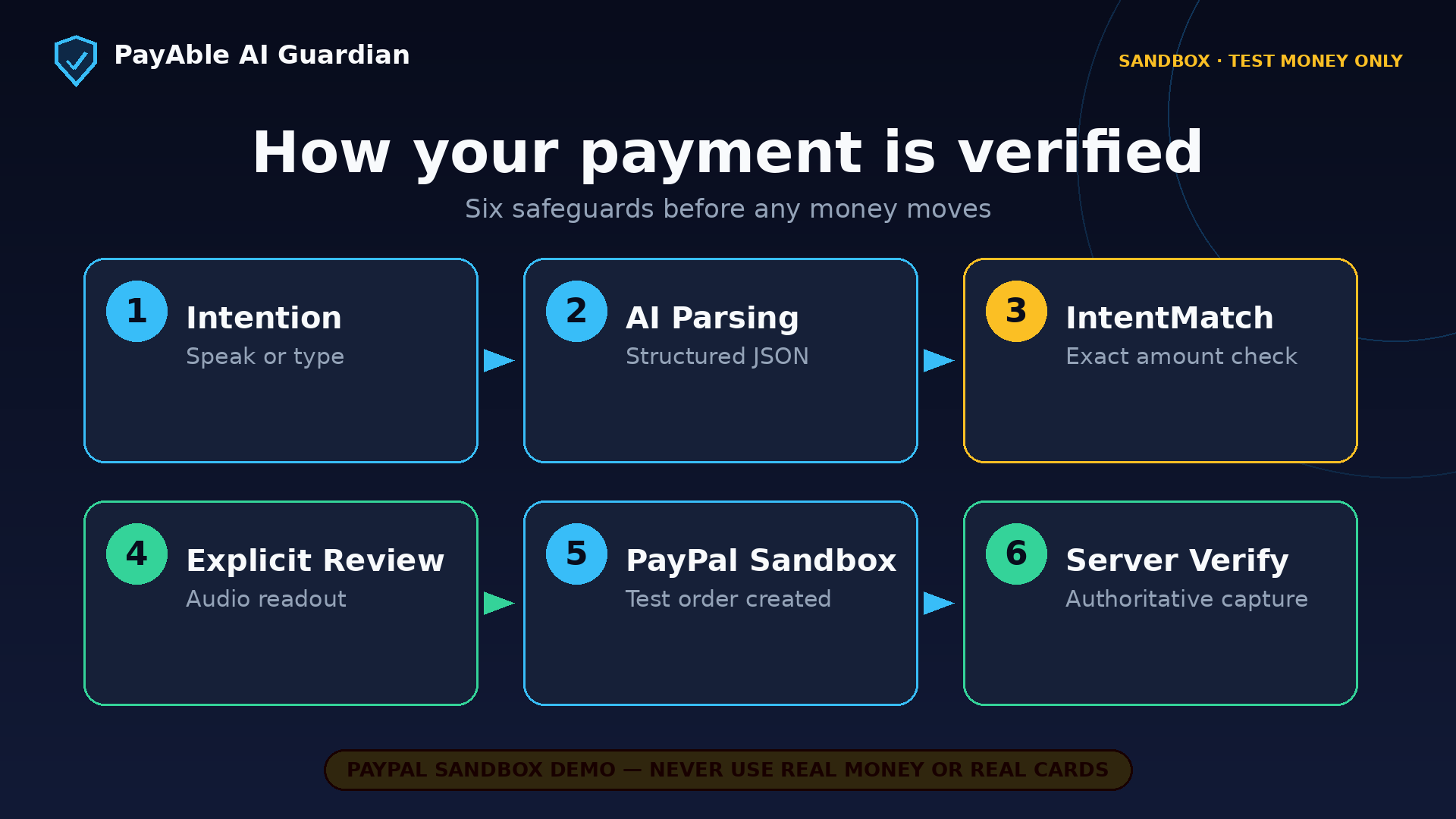
PayAble AI Guardian is a payment-assistance prototype that explores how natural-language intent matching and transaction validation can help users catch mistakes before confirmation.
The project focuses on three key capabilities:
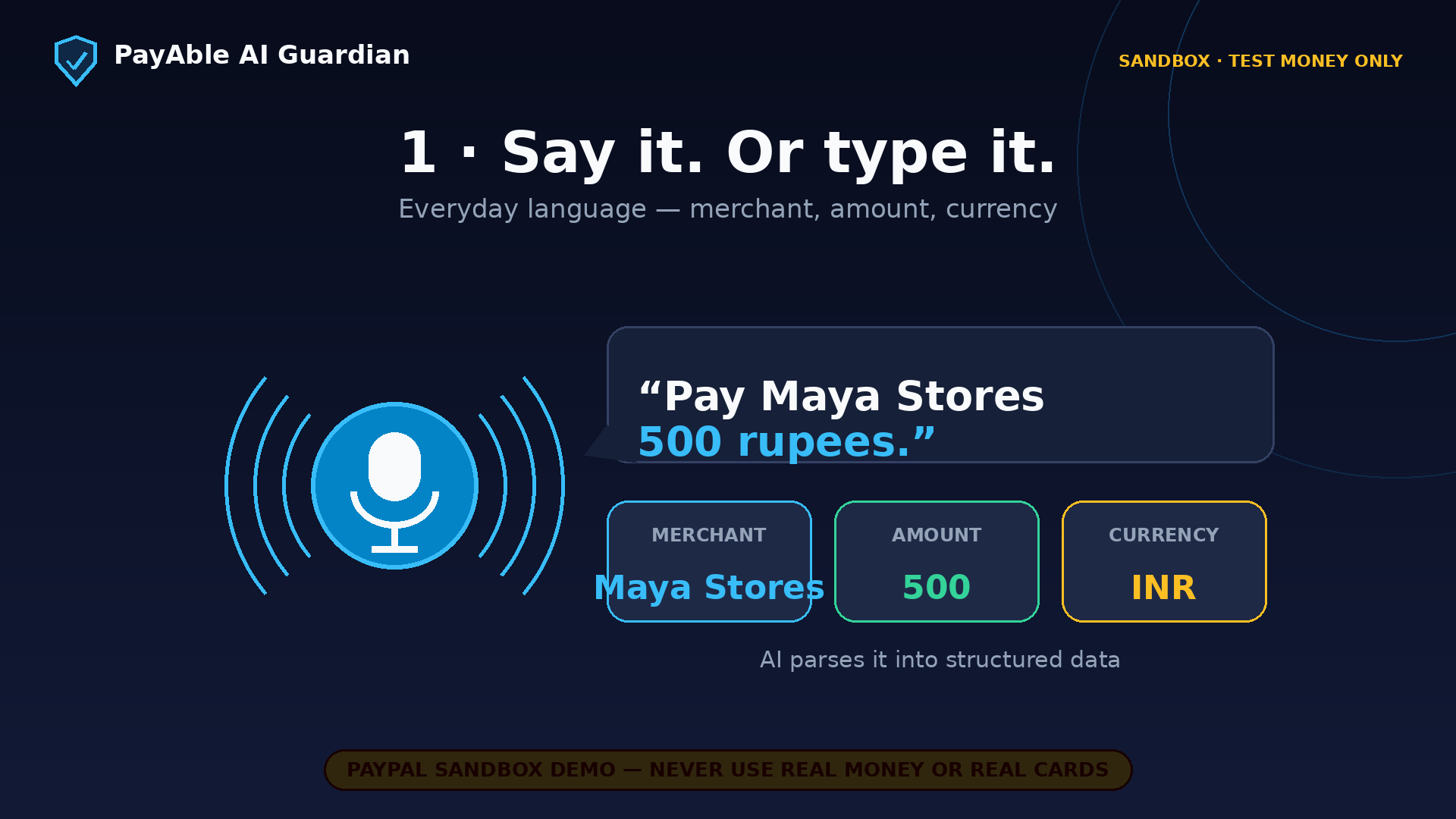
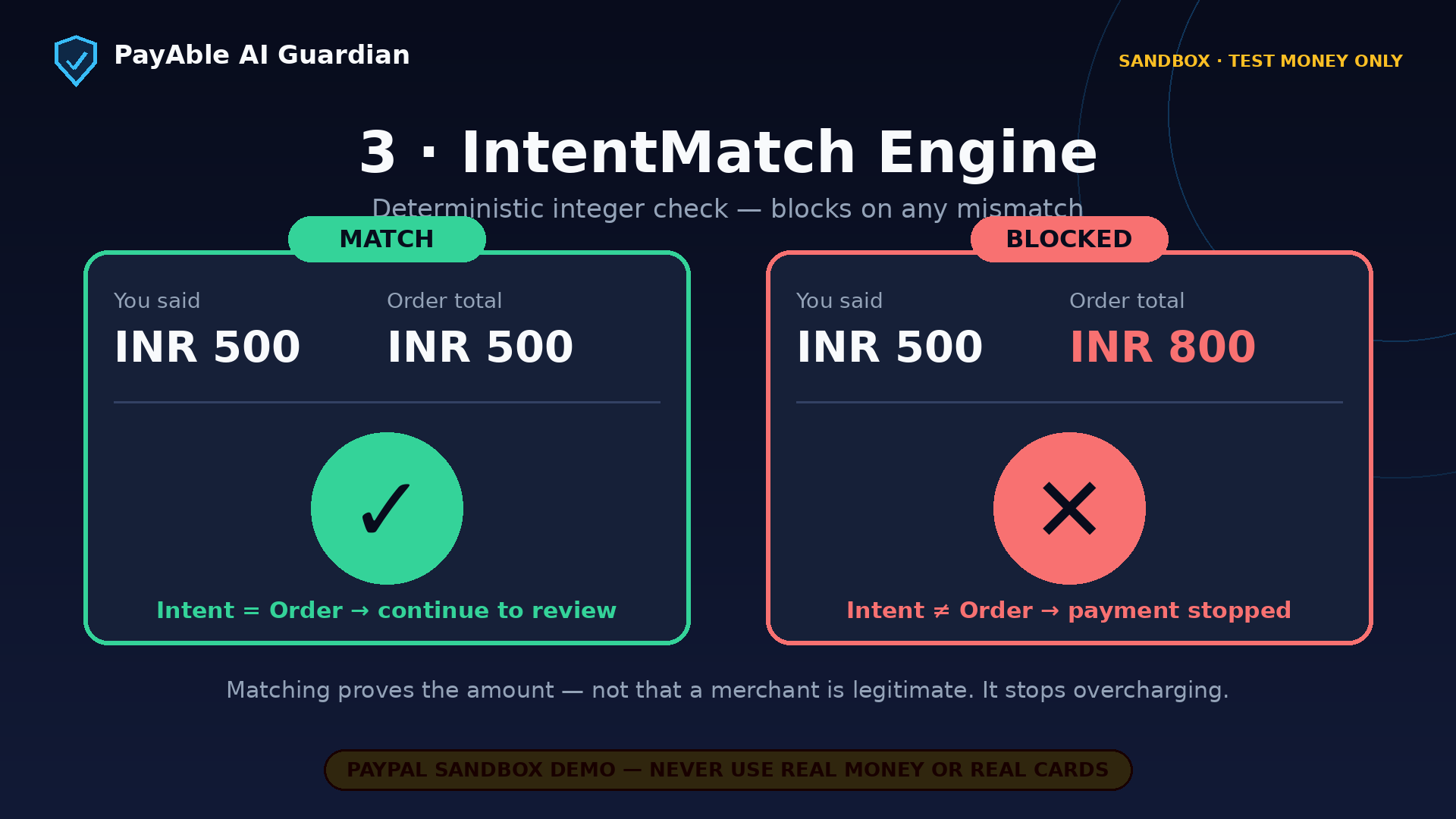
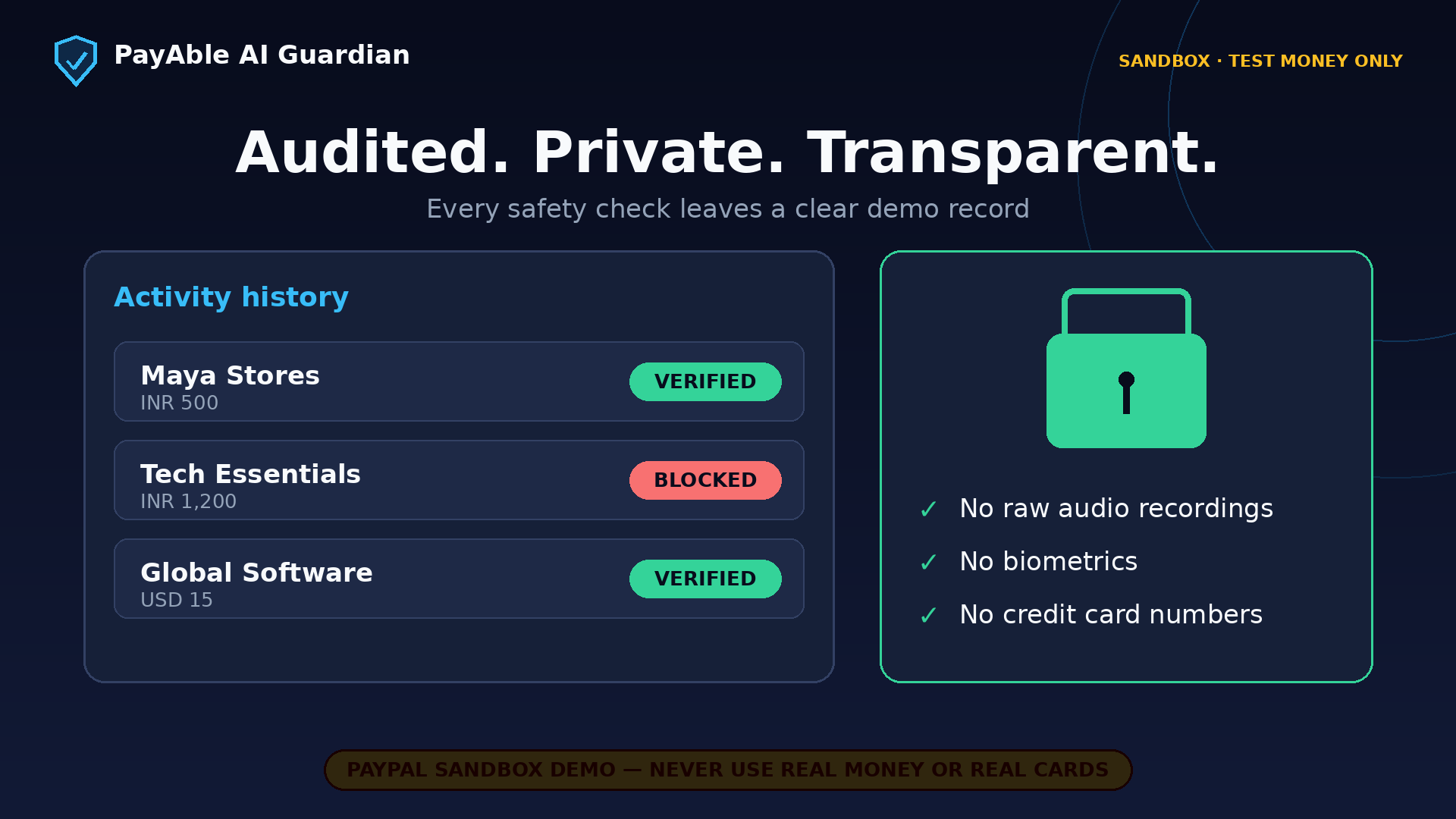
Payment intent understanding:Compare a user's payment request with the intended recipient and amount. Amount mismatch detection:Identify discrepancies between the requested amount and the order amount, helping users notice potential mistakes. Safer confirmation:Make transaction details easier to review before a payment decision is made.
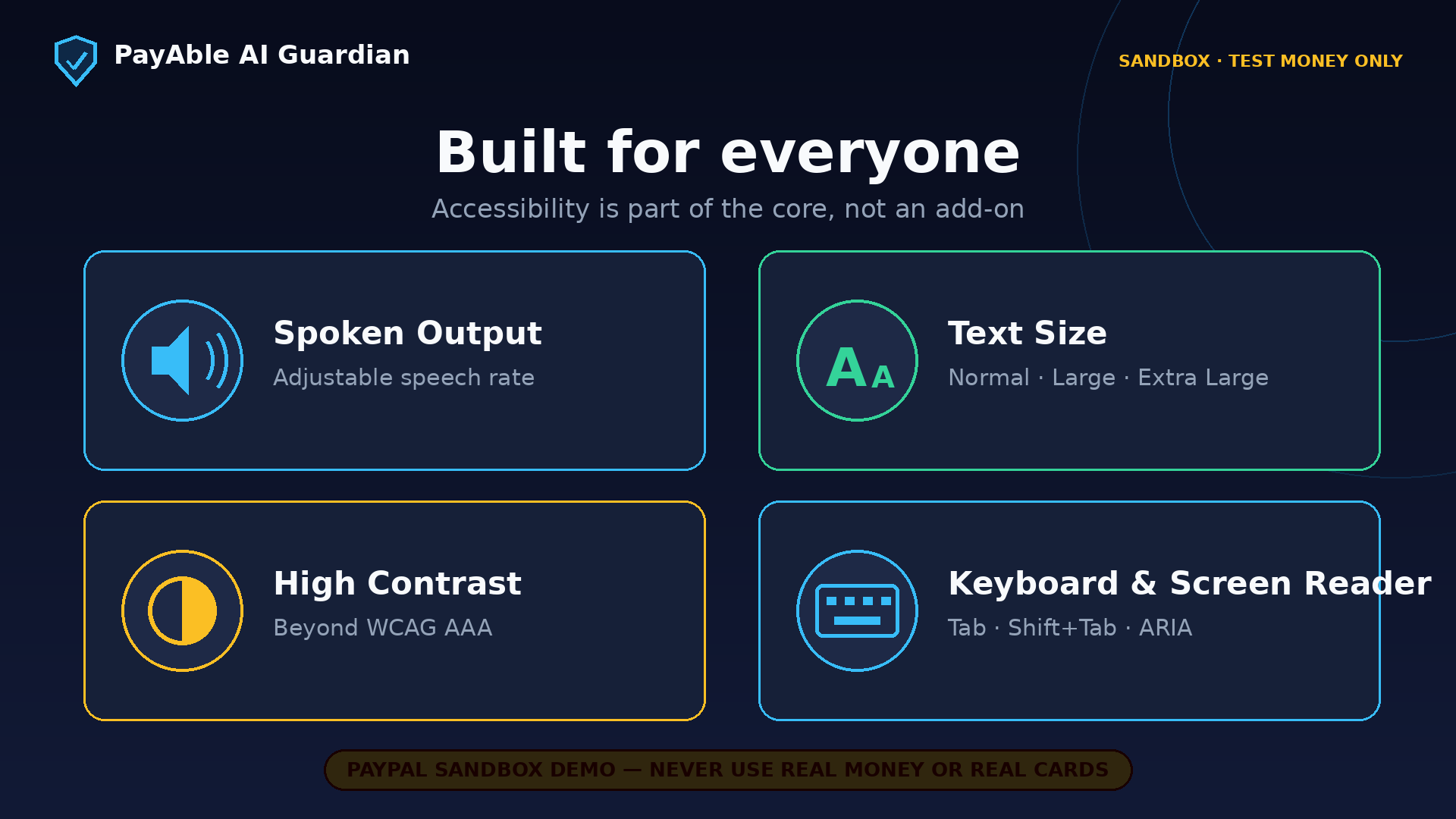
The long-term vision is a voice-first, accessible experience for visually impaired users, with clear feedback and a more understandable payment confirmation process.
How We Built It
We built PayAble AI Guardian as a client-server application, separating the user interface from the backend logic.
The frontend provides the interface for interacting with the payment workflow. The backend processes requests, checks order information, and runs the intent-matching and validation logic.
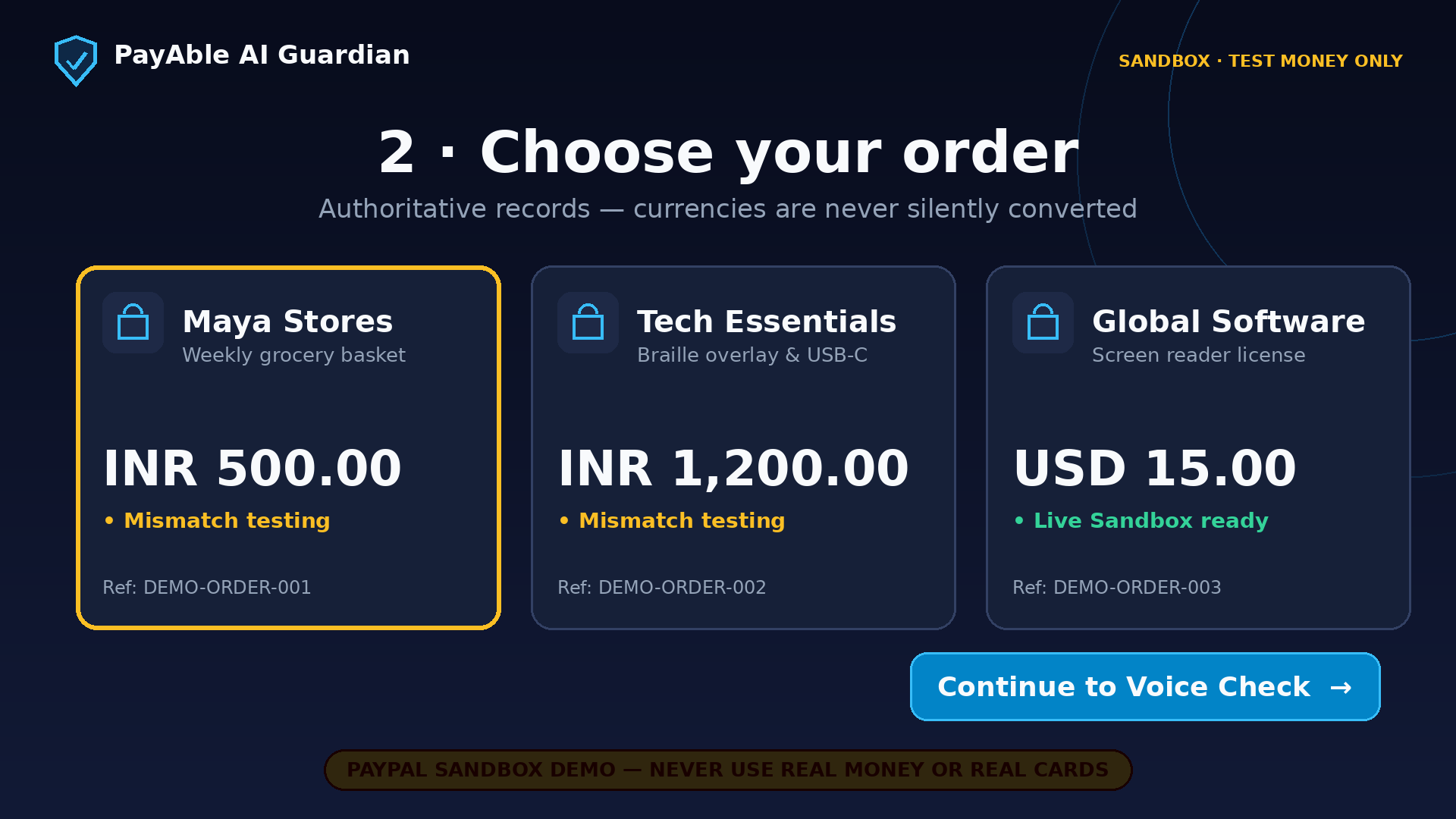
The current prototype includes an order service and an IntentMatch engine. It also supports a sandbox-oriented configuration for exploring a safer payment workflow without claiming to process live transactions.
Our development approach focused on building and testing the core validation flow first, with accessibility and more advanced integrations as important parts of the product's future development.
Challenges We Faced
One of the biggest challenges was thinking beyond simply initiating a payment. A useful payment assistant must help users understand what they are paying, identify inconsistencies, and make an informed decision before confirming.
Another challenge was separating the frontend, backend, order information, and intent-validation logic into a working application. We also needed to distinguish between a prototype that demonstrates the payment-safety concept and a production system that would require verified payment-provider integration, stronger security controls, and extensive testing.
These challenges helped us understand that building trustworthy financial technology requires more than a functional interface. It requires careful validation, transparent feedback, secure design, and honest communication about system capabilities.
What We Learned
Building PayAble AI Guardian helped us explore full-stack development, client-server communication, backend validation, payment workflow design, and the role of AI-assisted intent matching in financial technology.
We also learned that accessibility should be considered from the beginning of product design rather than added as an afterthought. A safer payment experience should help users understand their choices without taking away their control.
What's Next
Our next goals are to improve voice interaction and screen-reader support, strengthen transaction validation, expand automated testing, and investigate the appropriate PayPal sandbox integration for the intended workflow.
We also aim to evaluate the system against incorrect recipients, amount mismatches, repeated requests, and other edge cases before considering a production deployment.
PayAble AI Guardian is our step toward a future where digital payments are more accessible, understandable, and safer for everyone.
Built With
- accessibility
- artificial-intelligence
- cybersecurity
- html
- javascript
- node.js
- paypal
- rest-api
- typescript
