-
-
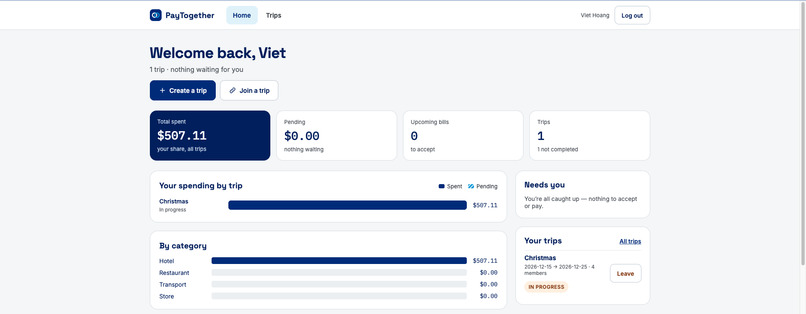
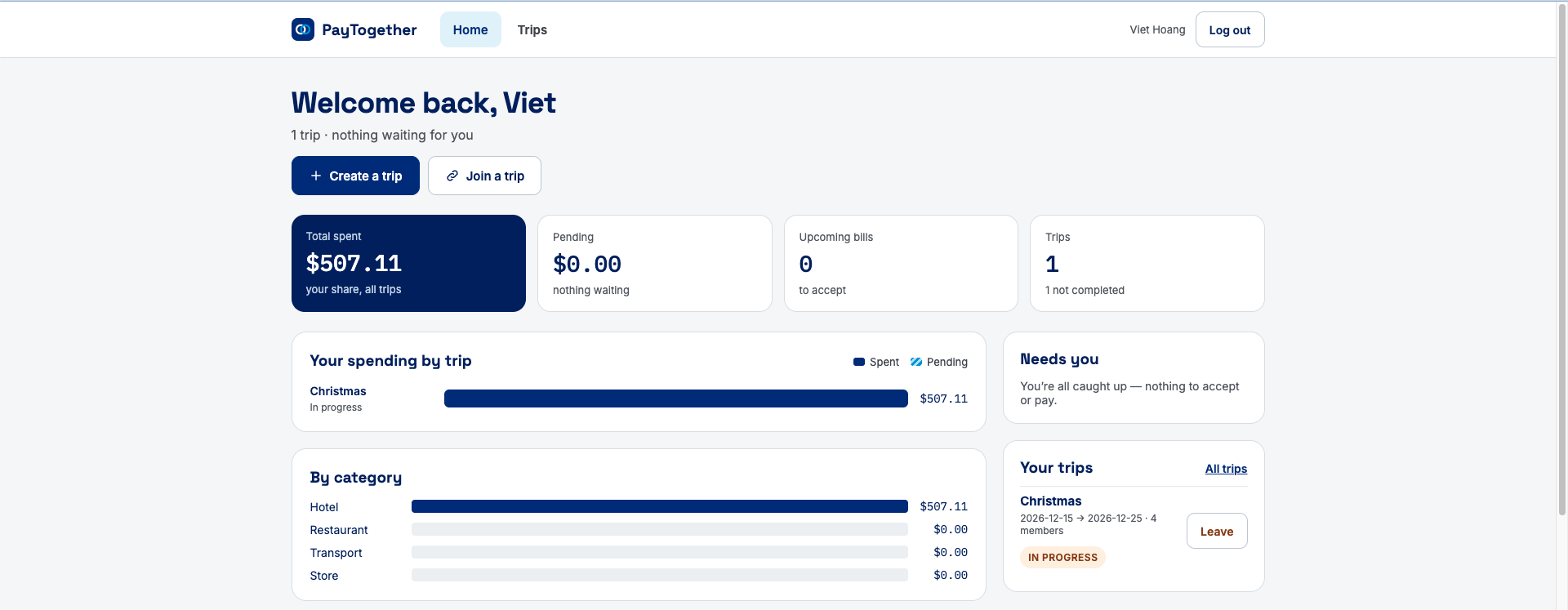
Home dashboard
-
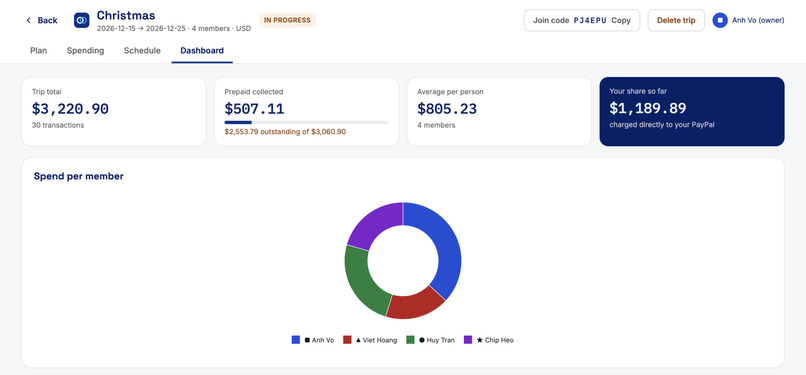
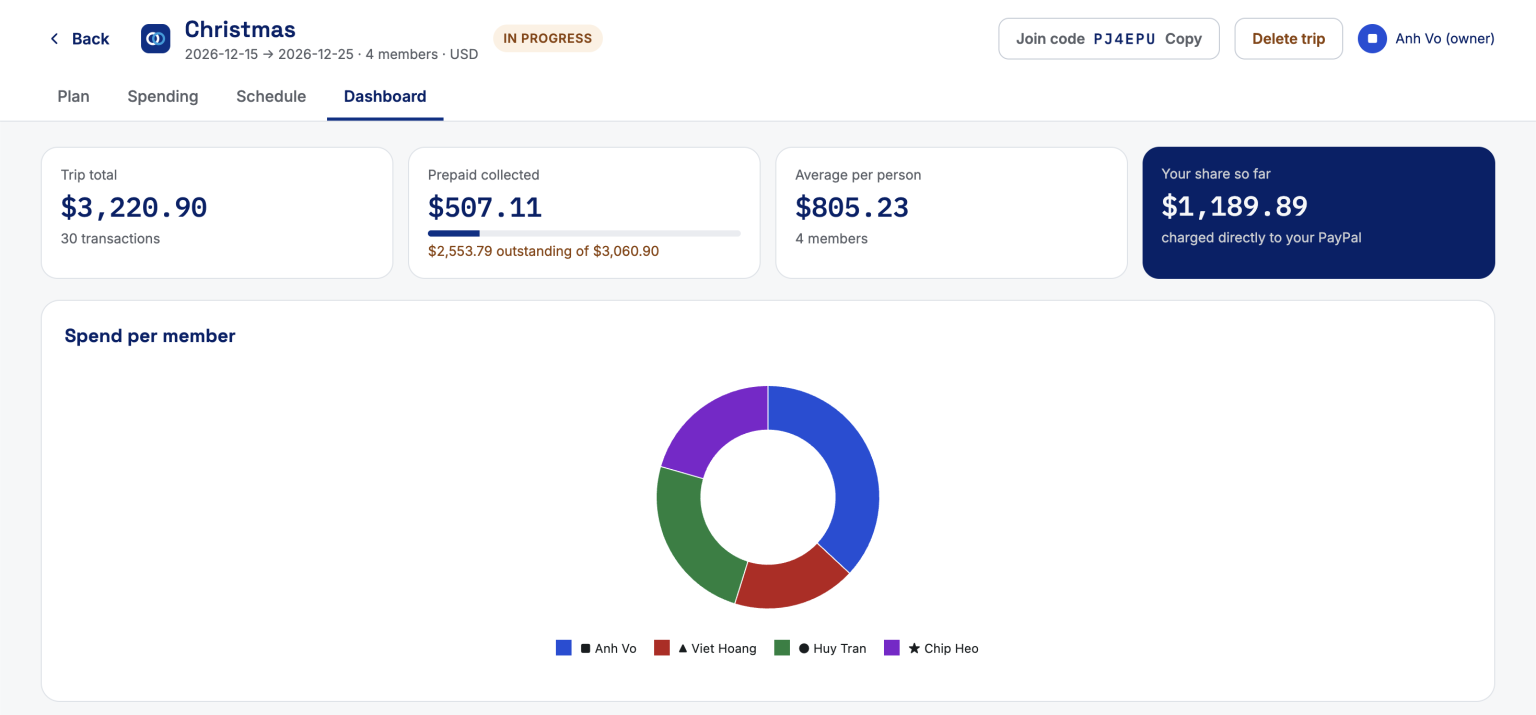
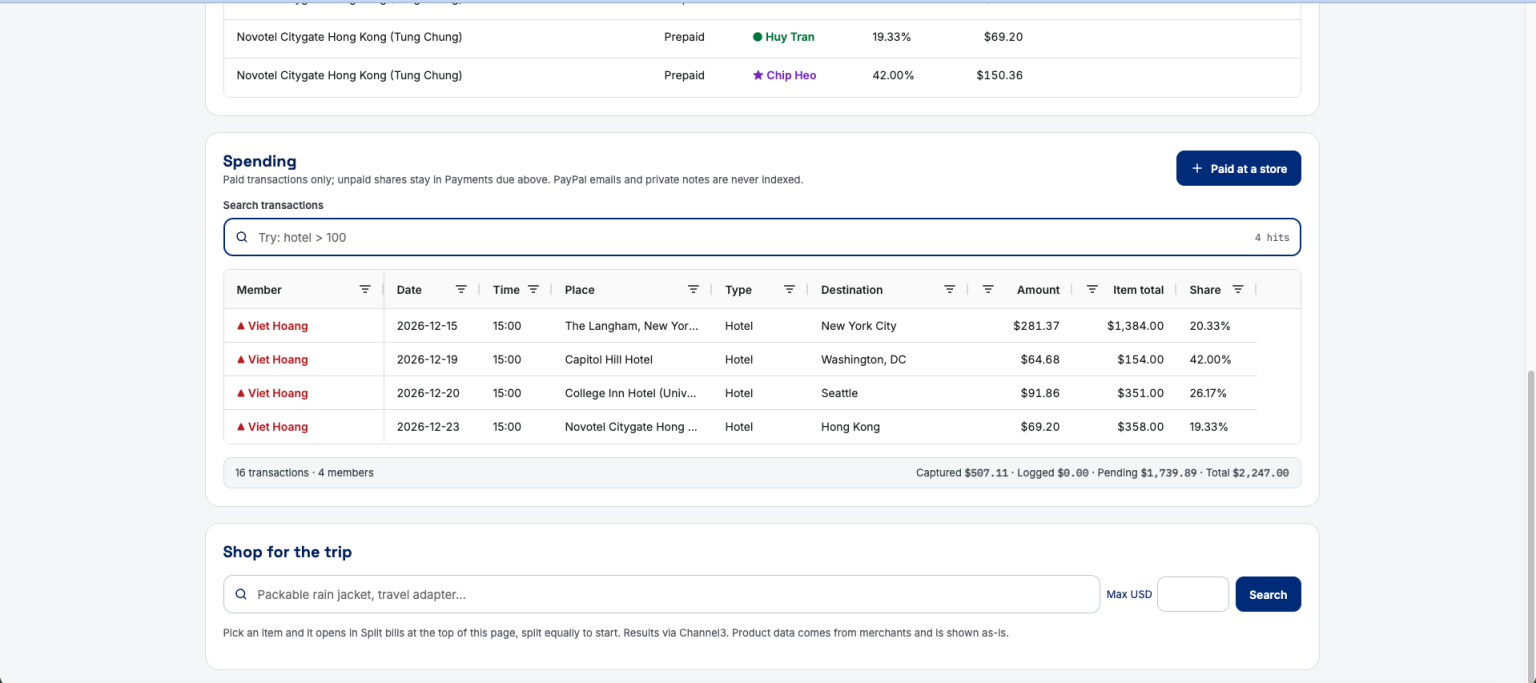
Total spending summary by AG Gird
-
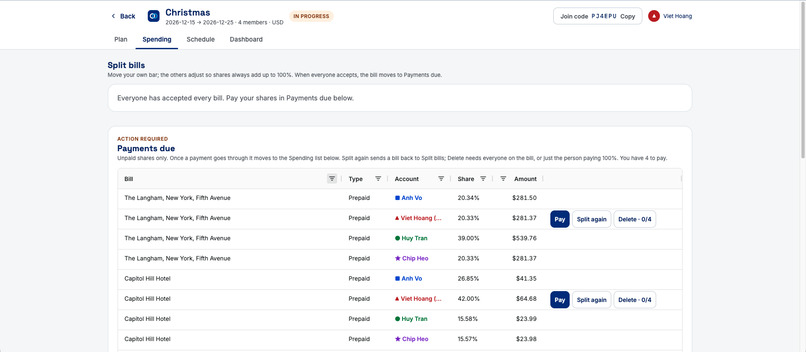
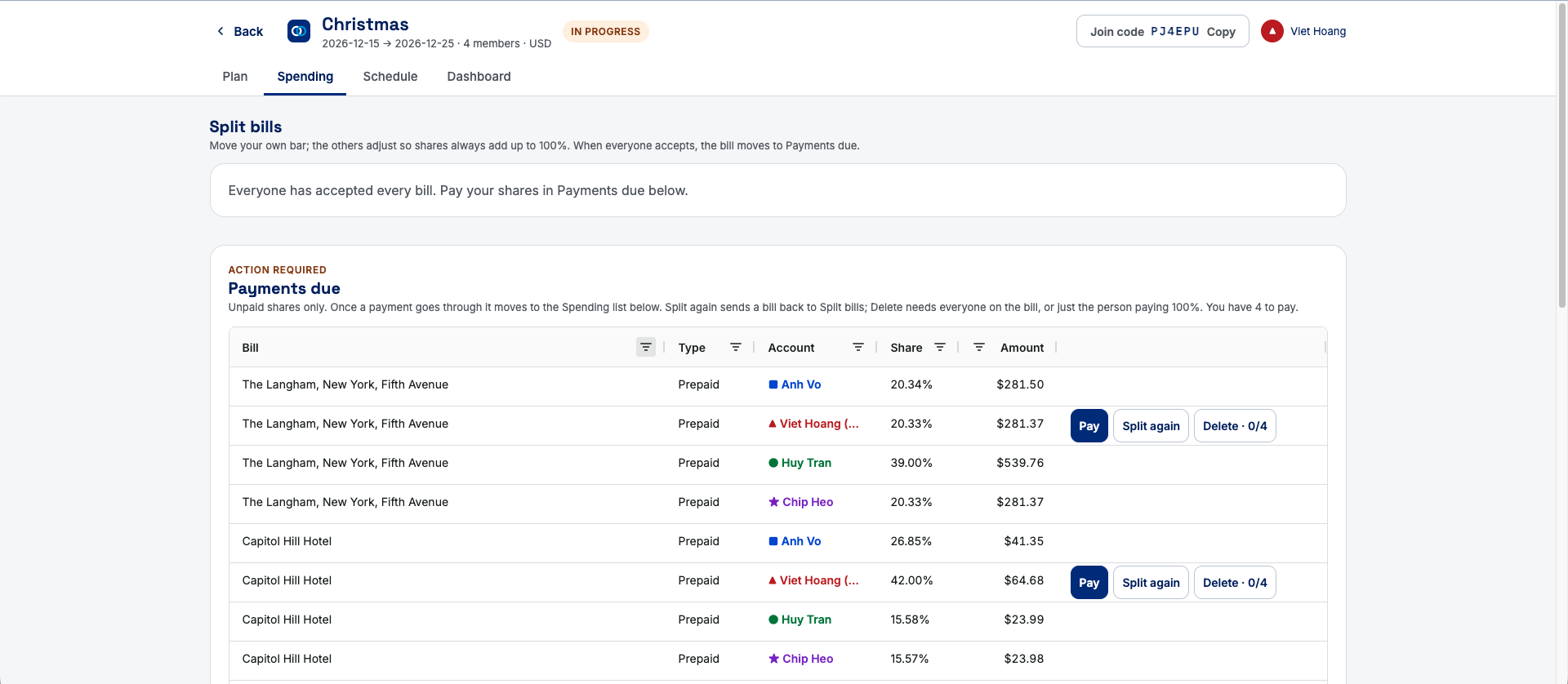
Due payment log
-
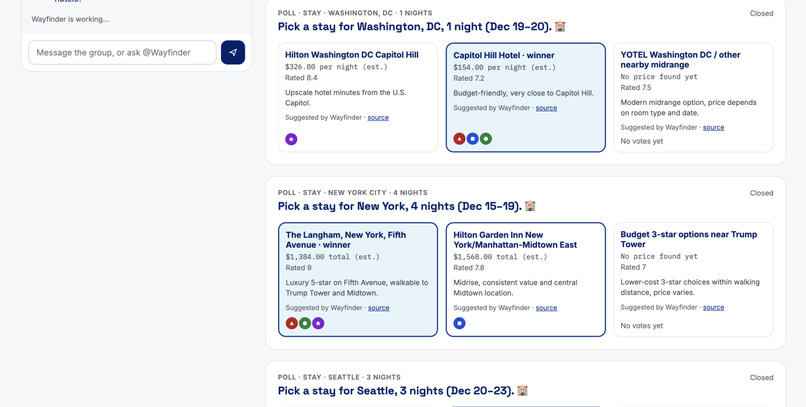
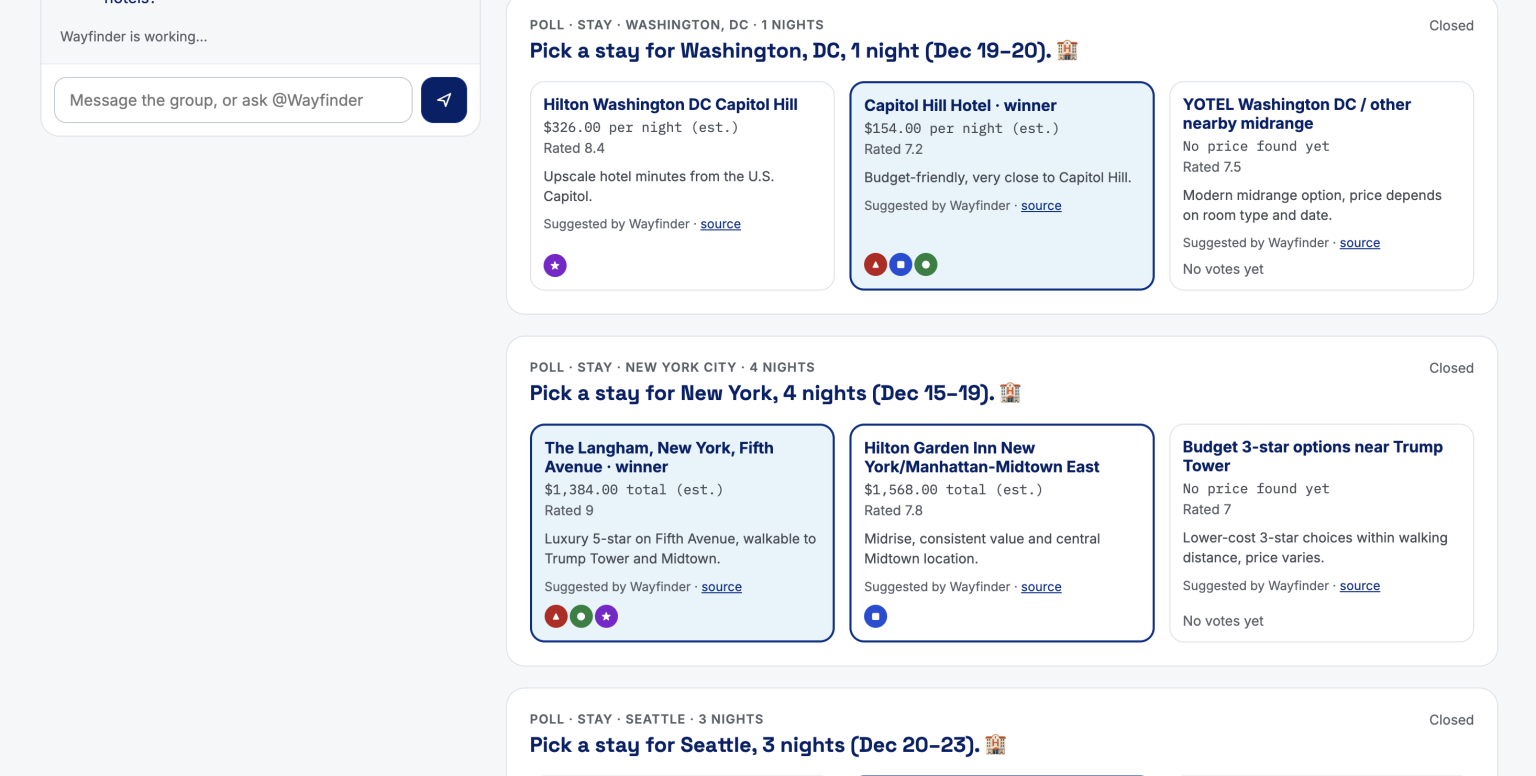
Hotel selection by AI
-
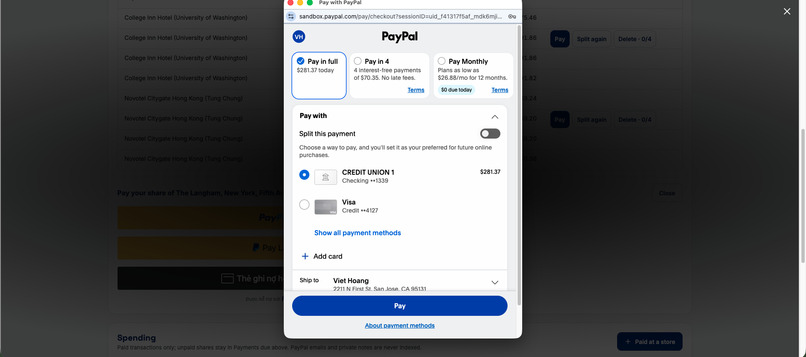
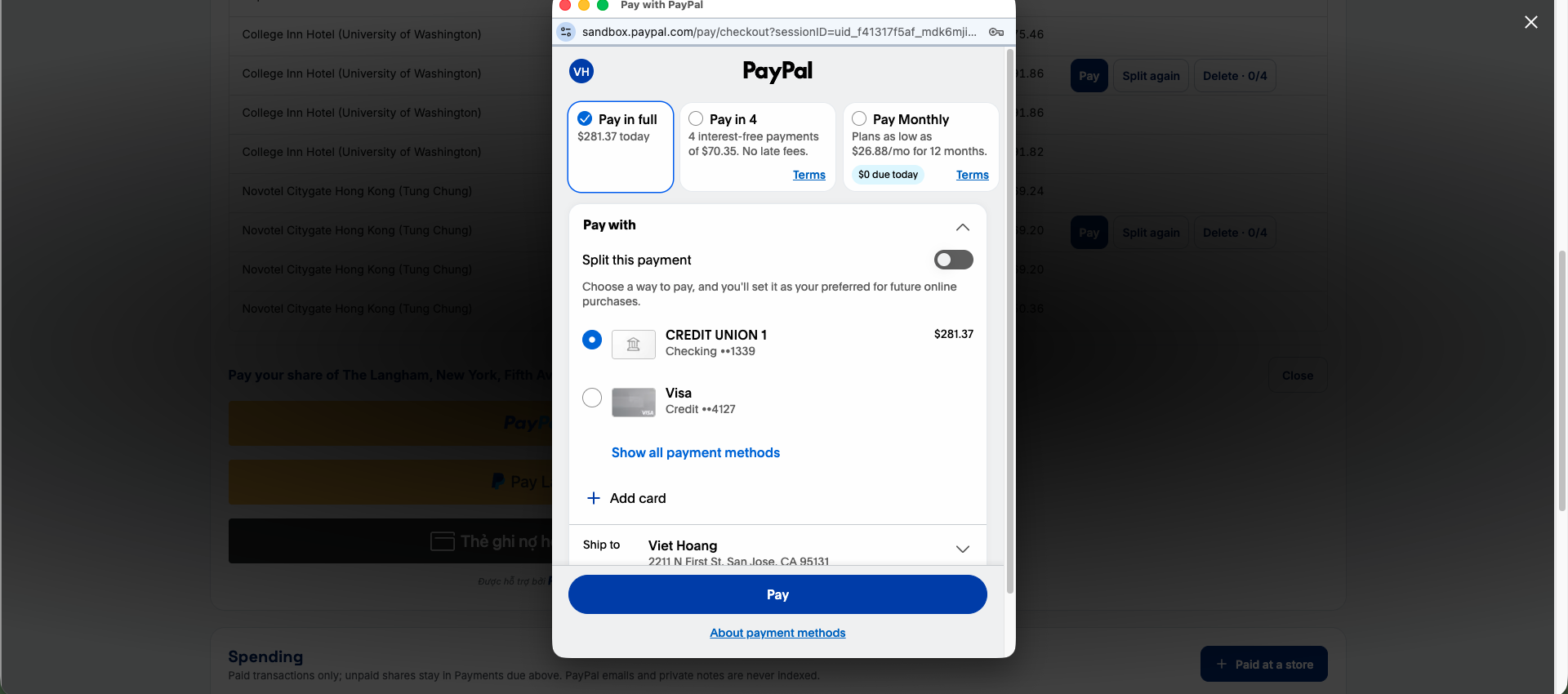
Payment screen
-
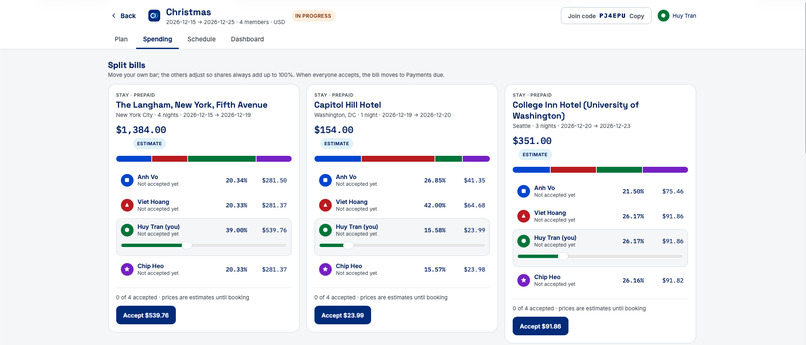
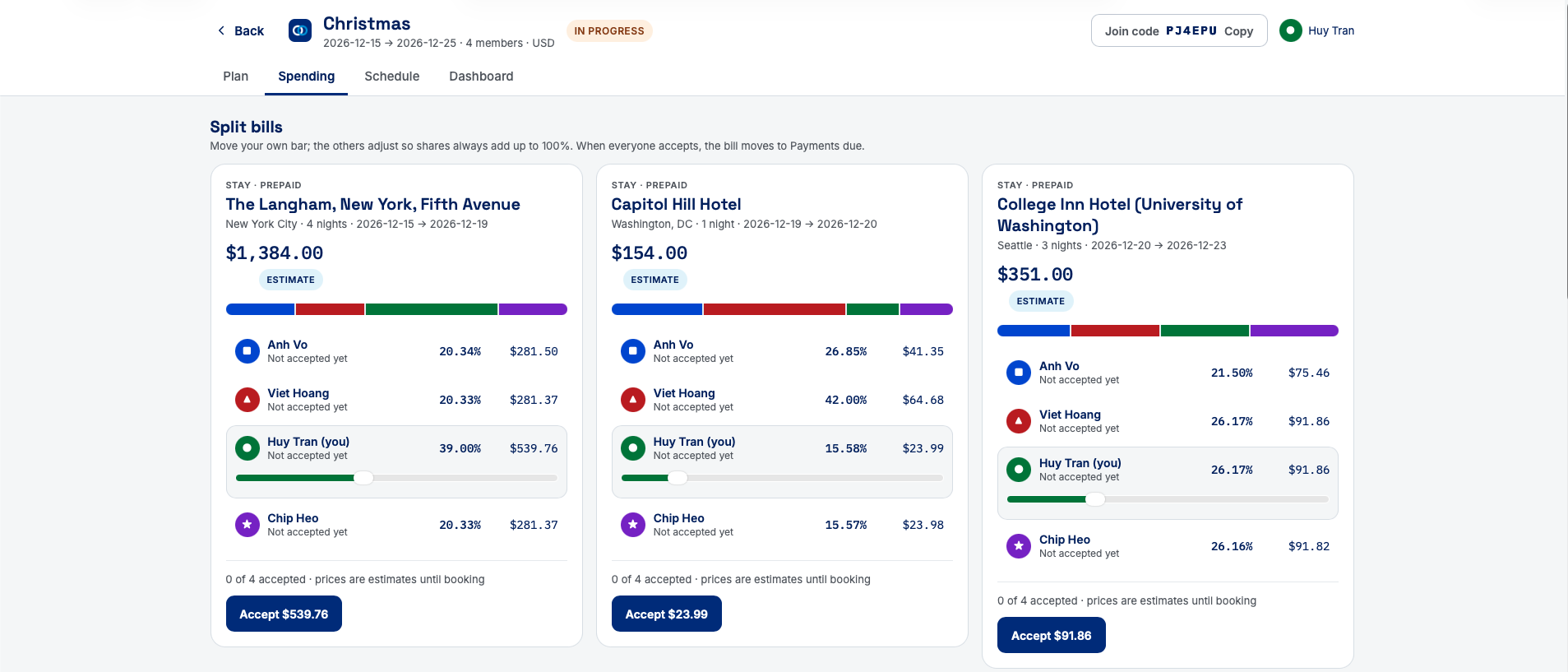
Split bills feauture
-
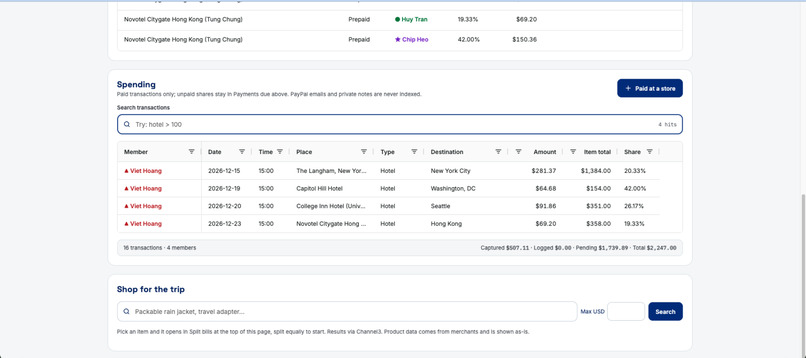
Due payment by AG Gird
-
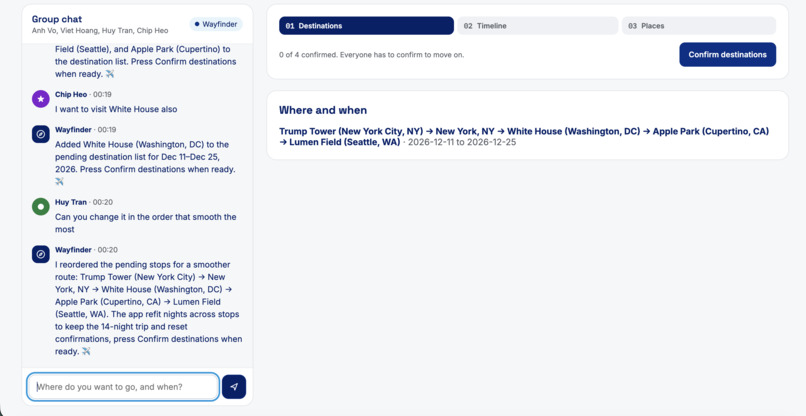
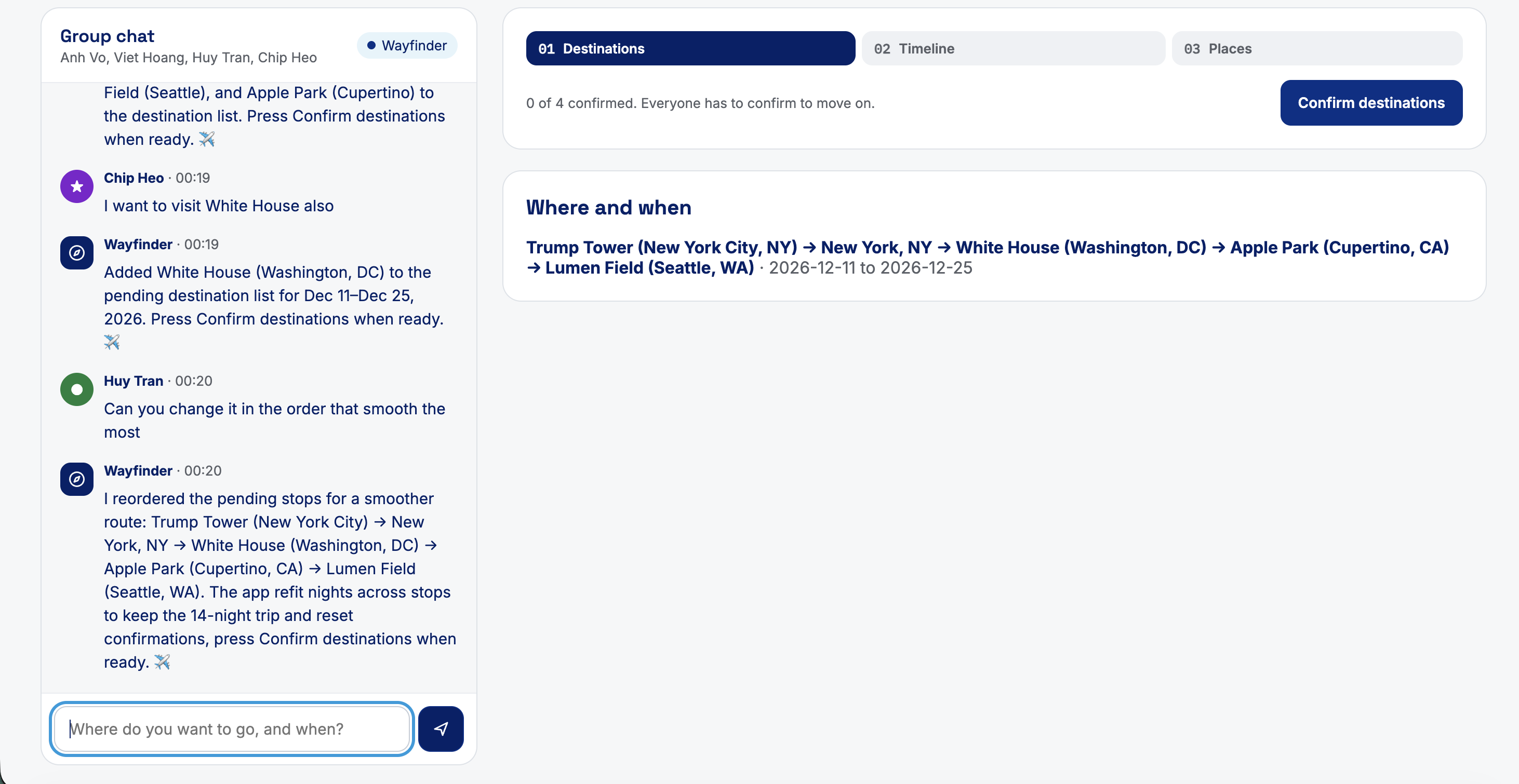
A chat bot that can arrange your trip
-
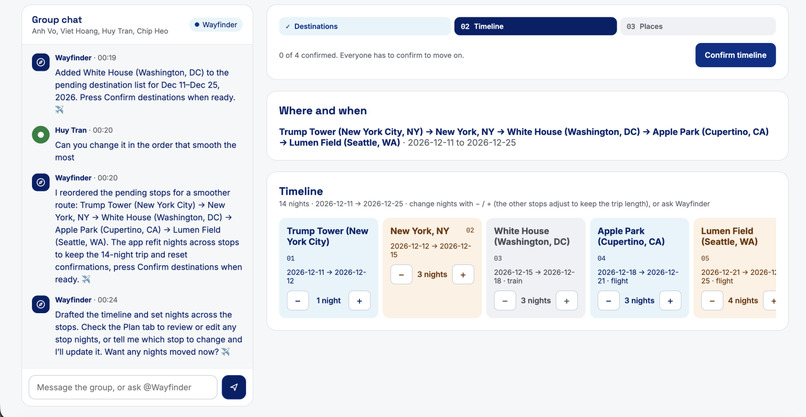
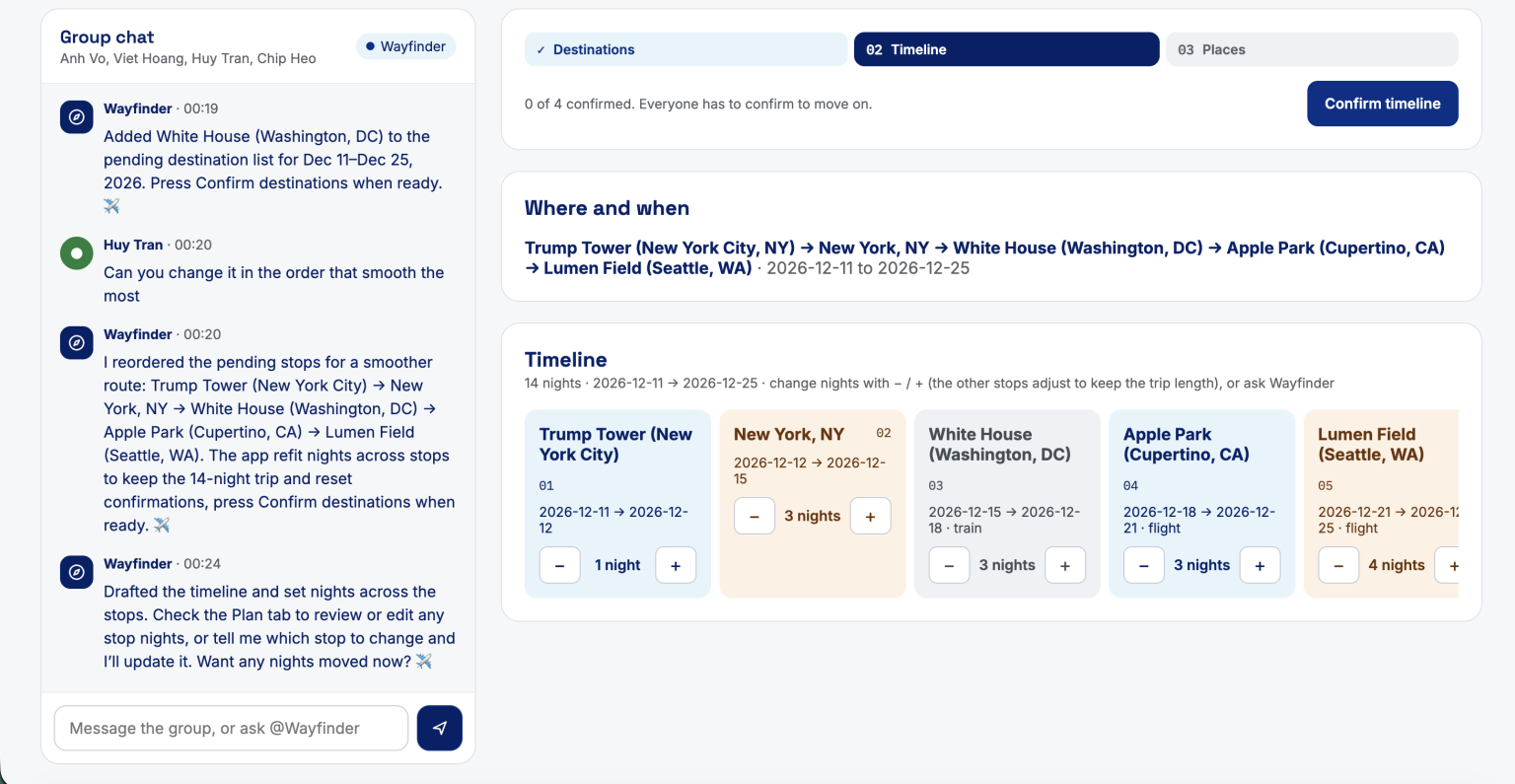
Making the detailed trip description
-
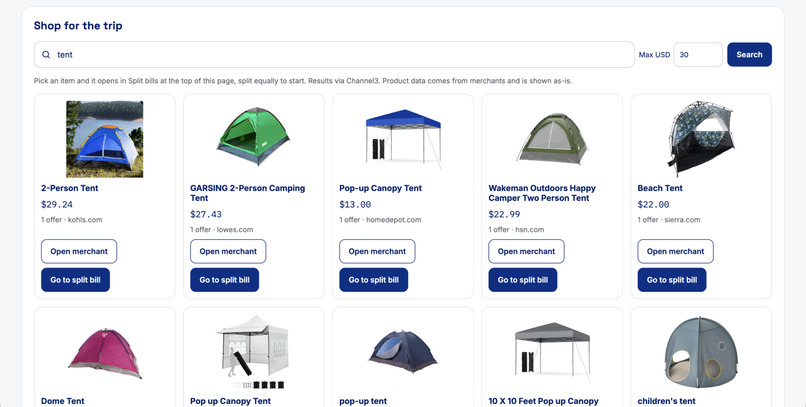
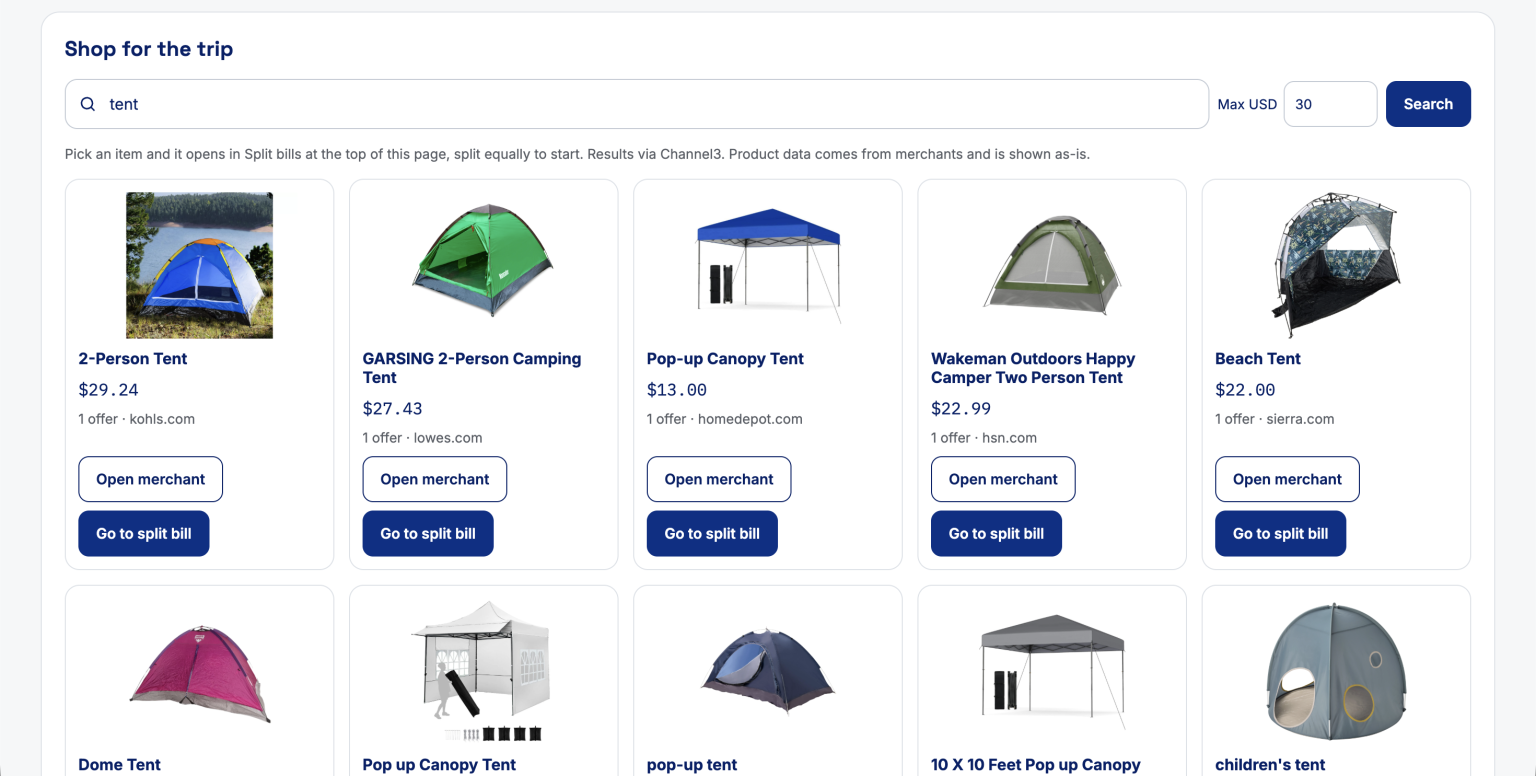
Logistic search by Channel3
-
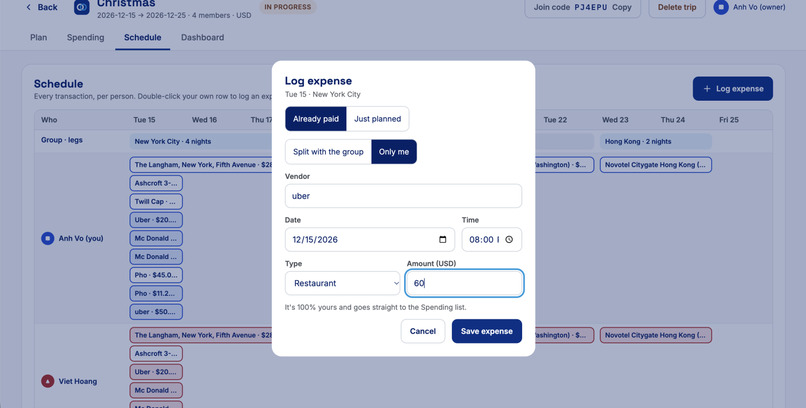
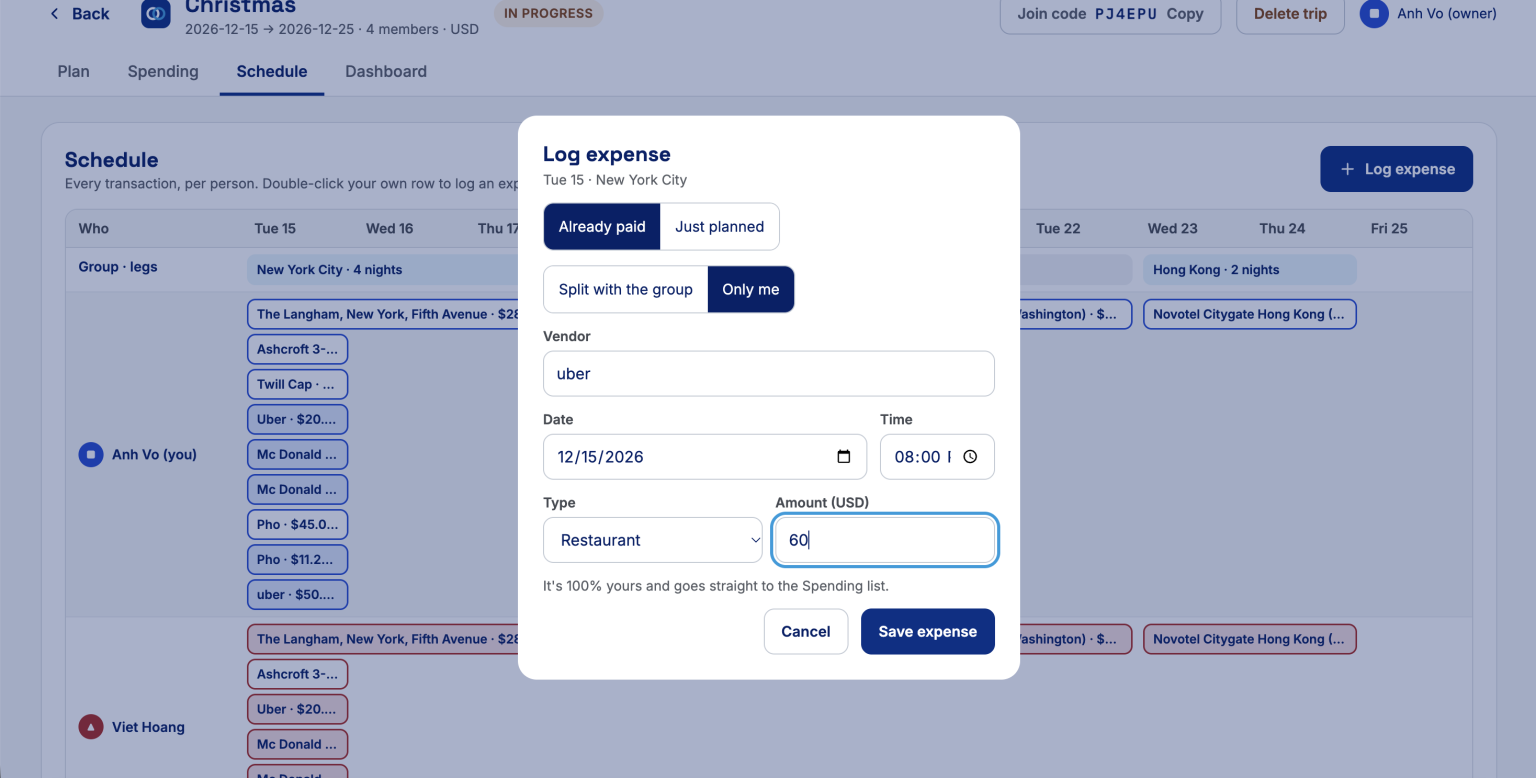
Log-expense to write down your outstanding pays
-
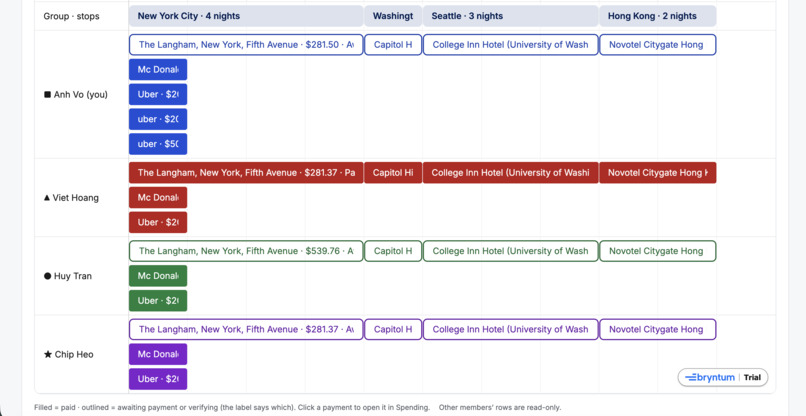
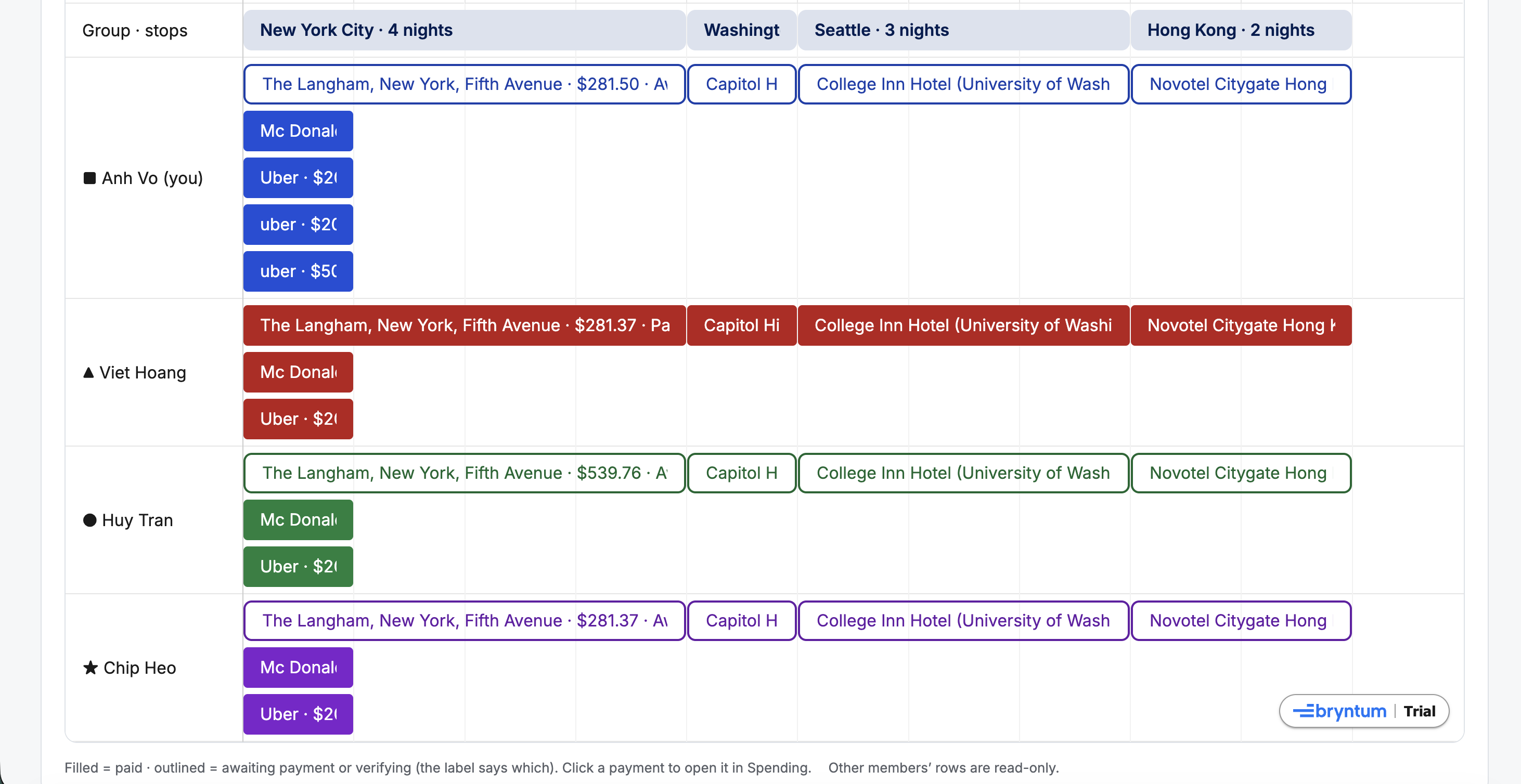
Schedule of the trip by Bryntum
-
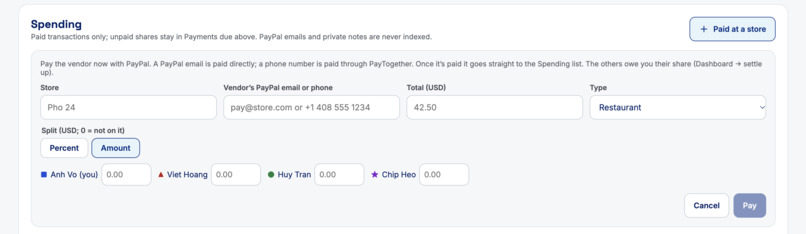
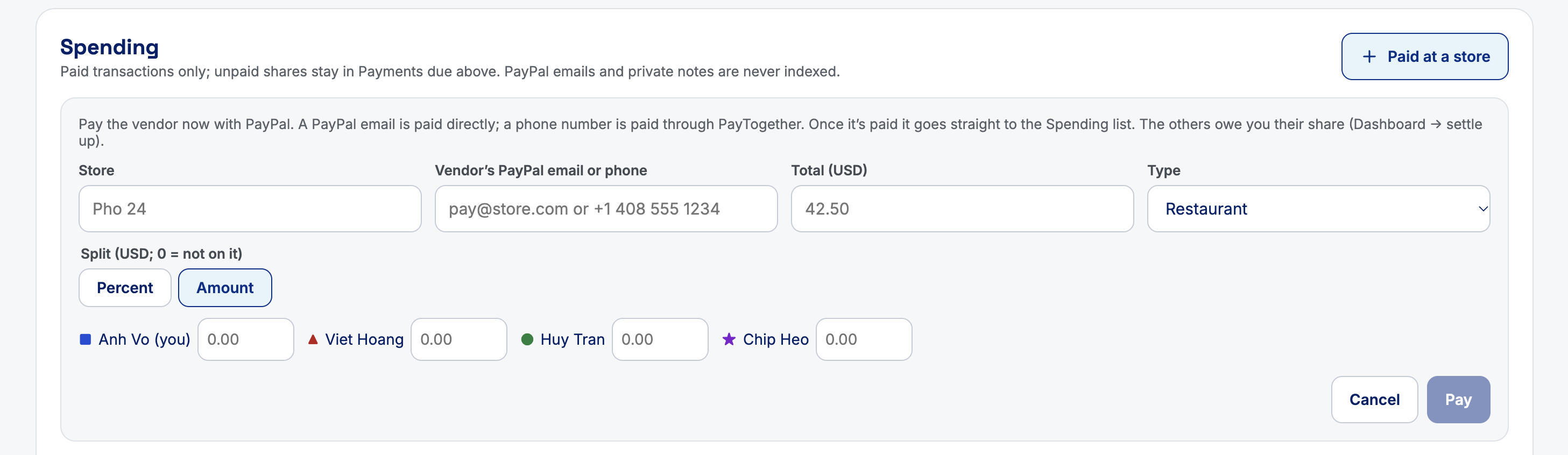
Pay at store feature powered by PayPal
Inspiration
Where you want to go. What you need to buy. Who's coming. Every group trip starts with excitement in the group chat, and then reality sets in.
Planning is a part-time job. Expedia Group's Path to Purchase study found that travelers spend 303 minutes (over 5 hours) with travel content and view 141 pages in the 45 days before booking a trip. U.S. travelers view as many as 277. That's for one person. Add a group of friends with different opinions, and the work falls on whoever volunteers to "figure it out."
Money is where friendships crack. In Experian's June 2025 survey of people who travel with friends, unexpected costs and splitting costs fairly were the two biggest financial stress points across every generation. More than half of Gen Z and millennial travelers have had a money disagreement with friends on a trip, 1 in 5 has ended a friendship over money, and only 1 in 4 friend groups sets a budget upfront.
Whoever fronts the money pays the price. Zelle's Avoidance Economy report found that 76% of Gen Z who covered a group expense were never fully repaid, and 47% went into debt because of it. 1 in 5 has canceled plans or muted the group chat just to avoid a conversation about paying someone back. The chat where the trip was born becomes the place people hide.
So people pay a "peace tax." A 2026 CIT Bank survey conducted by The Harris Poll found that 82% of group travelers are willing to pay more than their fair share to avoid a money argument, rising to 90% among Gen Z. And 72% of Gen Z group travelers have already had money problems on a trip.
These travelers are already on PayPal. According to SimilarWeb traffic data, 25–34 is PayPal's largest age group (27.6%), and 18–24 adds another 19.0%. That puts nearly half of PayPal's audience under 35, the same generation that struggles most with group-trip money.
So we asked: what if the trip planned itself in the chat where it already starts, and no one ever had to front the money?
That's PayTogether.
What it does
PayTogether splits the bill before checkout. Each traveler pays their own share from their own PayPal account, so nobody fronts the money and nobody chases anyone afterwards. An AI host, Wayfinder, plans the trip in the group chat so the organizer doesn't have to.
- Log in with PayPal. Your PayPal identity is your account, and the same identity pays your share.
- Trips for one or for a group. Friends join with a 6-character code or an invite to their PayPal email. Home shows what you've spent, what's pending and which bills wait for your approval, across all your trips.
- Wayfinder walks the group through the trip: Destinations → Timeline → Places → Pricing → Booked → On trip → Settled. It proposes destinations, drafts a night-by-night timeline, finds real stays with web search and Channel3 product search, runs polls, and prices the winners. It edits the plan on request ("one more night in Porto") and keeps the trip length the same. Every phase needs every member to confirm.
- Split bills, paid separately. Each bill starts as an equal split. A member sets their own share and the others rebalance in proportion, so it always totals 100%. Once everyone accepts, each member gets their own PayPal order and pays it.
- Pay at a store, split later. One member pays a vendor now (to the vendor's PayPal email, or to a phone number through PayPal Payouts), and the bill becomes the group's split.
- Log expenses as Already paid (the others owe the logger, settled through PayPal) or Just planned (each pays their share later).
- See the money: a Bryntum schedule with a row per member, AG Grid split bills and transactions, an AG Charts dashboard, and Elasticsearch search over transactions ("hotel > 100"). Every payment shows Awaiting payment → Verifying → Paid.
How we built it
- Web app: React 19 + Vite + TypeScript. Plan, Spending, Schedule and Dashboard tabs; AG Grid 36 and AG Charts 14 for the money views, Bryntum Scheduler 8 for the timeline, KaTeX for math in the chat.
- API: a small Node.js 24
node:httpserver (no framework), with Zod validating every request body. Trip state lives in a JSON file store on a persistent disk; all trip rules (quorum confirms, poll ties, split math, payment status) are in one module. - Shared money math: an import-free TypeScript module used by both the web app and the API. Money is integer cents, shares are basis points summing to 10,000, and the largest remainder method makes every split add up to the cent.
- AI agent: Wayfinder runs on the OpenAI Responses API.
gpt-5.5handles chat turns and tool calls;gpt-5-minidecides whether Wayfinder should reply at all. A hand-written tool loop (up to 20 steps) validates every tool argument with Zod, tools are gated by trip phase, and OpenAI's built-inweb_searchfinds real stays. - Payments: PayPal Log in with PayPal for identity, Orders v2 with one order per member share,
payee.email_addressto pay a store's PayPal directly, Payouts to a phone number, Webhooks with signature verification, and the JS SDK Pay buttons. Everything runs in the PayPal Sandbox. - Sponsors: Channel3 for product search (inside Wayfinder and the Shop), Elasticsearch as a trip-scoped search index over transactions, Render for hosting (API, static site) and Render Workflows for every AI job, AG Grid / AG Charts, Bryntum, and Kernel cloud browsers wired in the backend for assisted checkout.
- Testing:
node --testfor the store rules, sessions, Wayfinder tools and all split math; payments tested by hand in the PayPal Sandbox (approve → capture → webhook → Paid). - Coding assistant: we wrote the code with Claude Code. Claude is our development tool only; the product's AI is OpenAI.
The split math
Money has to add up to the cent, every time, for every person. All of it lives in one import-free TypeScript module (FrontEnd/shared/trip.ts) that the web app and the API both use, so the browser and the server always compute the same numbers.
- No floats for money. Amounts are integer cents. Shares are basis points (1 bp = 0.01%) that always sum to 10,000 (100%).
- Largest remainder. Each member gets
floor(total × bp / 10000)cents. The few cents left over go one at a time to the members with the largest fractional remainders (ties go in seat order), so the shares always add up to the bill's total exactly.- Example: $187.45 split four ways is 4,686.25 cents each. Everyone gets 4,686, and the one leftover cent goes to the first member: $46.87 + $46.86 + $46.86 + $46.86 = $187.45.
- Rebalancing. A member can only set their own share. The rest of the 10,000 bp is spread over the others in proportion to their current shares, again with largest remainder, so the total stays at 100%.
- Example: four people at 25% each. Ana takes 40%, so the other 60% splits evenly over the other three: 40 / 20 / 20 / 20. On $187.45 that is $74.98 + $37.49 + $37.49 + $37.49.
- Consent resets. Changing any share clears everyone's approval for that bill, so nobody pays a number they didn't agree to. If one member takes 100%, only that member has to accept.
- Settling up. When someone did front the money (an Already paid expense),
balancescomputes paid minus owed for each member, andsettlegreedily matches the biggest debtor with the biggest creditor. That gives at most n − 1 transfers, with every cent accounted for. Wayfinder can only suggest these transfers; members pay them in PayPal.- Example: Ana pays a $300 dinner for three. Balances are Ana +$200, Ben −$100, Chi −$100, so the suggestion is Ben → Ana $100 and Chi → Ana $100.
- Tested.
node --testchecks that shares always sum to the total after every write and that settlement leaves nobody owing anything.
Challenges we ran into
- Knowing when the agent should talk. Group chats are noisy. A fast
gpt-5-miniclassifier sits in front of Wayfinder so it steps in for real decisions and stays quiet during jokes and side conversations. An @mention always gets a reply. - Letting an AI near money, safely. Wayfinder can research, poll and price, but it has no tool that creates, captures, refunds or transfers a payment, or edits anyone's split. Search results and product data reach the model as untrusted tool data, never in the system prompt.
- Payment status you can trust. The browser only updates the UI optimistically. Status changes only through a verified PayPal webhook (deduplicated by event id) or our own server-side capture and order lookup. Every create and capture call sends a
PayPal-Request-Id, so a retry never charges twice. - Bills that wait for days. PayPal orders expire. Before a member pays, the server replaces an expired order and captures one that is already approved.
- What if someone doesn't pay? Each share is its own PayPal order, so one person's payment never depends on anyone else's card. The trip only moves to Booked once every stop has a paid stay, and the whole group sees who has paid.
- No surprise charges. Members edit only their own share, and changing any share resets everyone's approval for that bill. No order exists until everyone has accepted.
- Pennies matter. $187.45 split four ways doesn't divide evenly. The largest remainder method gives $46.87 + $46.86 + $46.86 + $46.86, never a cent lost or invented.
- Running AI jobs off the API. Render Workflows runs Wayfinder turns remotely, but trip state stays on the API's disk, so workflow tasks call back to the API over Render's private network. If a workflow run fails, the API runs the job itself.
- Private by default. Every Elasticsearch query is built on the server with the trip id filter, so nobody can search another group's spending.
Accomplishments that we're proud of
- A working end-to-end flow: from "let's go somewhere" in the chat to a split stay paid in the PayPal Sandbox by each member from their own account.
- Turning the most awkward part of a trip, asking friends for money, into something that happens at checkout.
- An AI host that is useful when money is involved while being structurally unable to move money.
- Split math that always adds up to the total, tested for every write.
What we learned
- Group trip problems are social first, technical second. People don't fight over math; they fight over awkwardness and being stuck with the bill.
- Splitting before paying is far easier than collecting after paying.
- The safest agent is defined by the tools it doesn't have. A small, phase-gated toolset made Wayfinder easier to trust and to test.
- In payments, PayPal is the truth and everything else is a guess.
What's next for PayTogether
- PayPal Pay Later and Venmo as ways to pay a share.
- Kernel-assisted checkout in the web UI (the backend is ready).
- The mobile app (Expo) on the live backend.
- Private budgets and smarter uneven splits: each friend shares a budget only with Wayfinder; splits by room, by night or by who's going.
- Every occasion, not just trips: shared houses, events, birthdays and group gifts.
