-
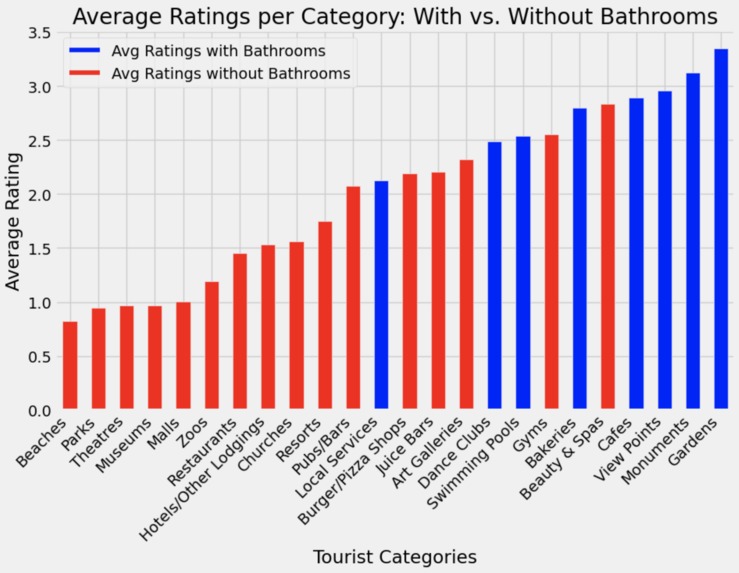
Average Ratings Per Category: With vs. Without Bathrooms
-
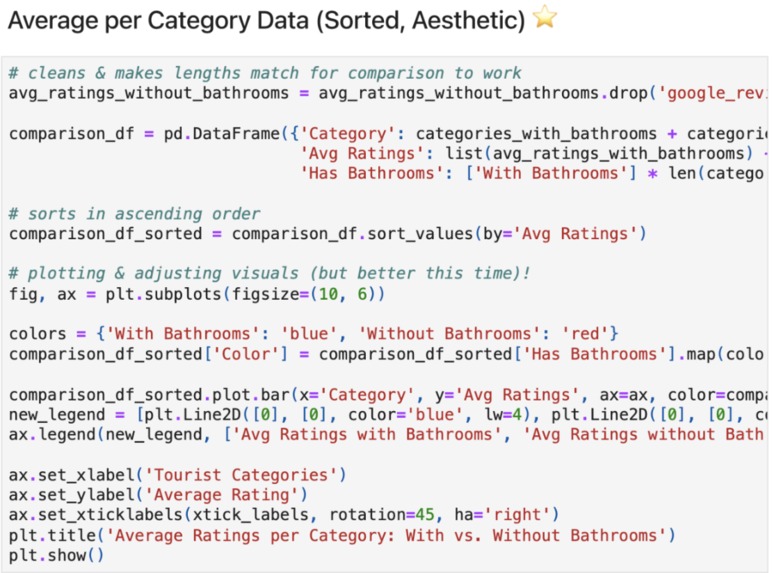
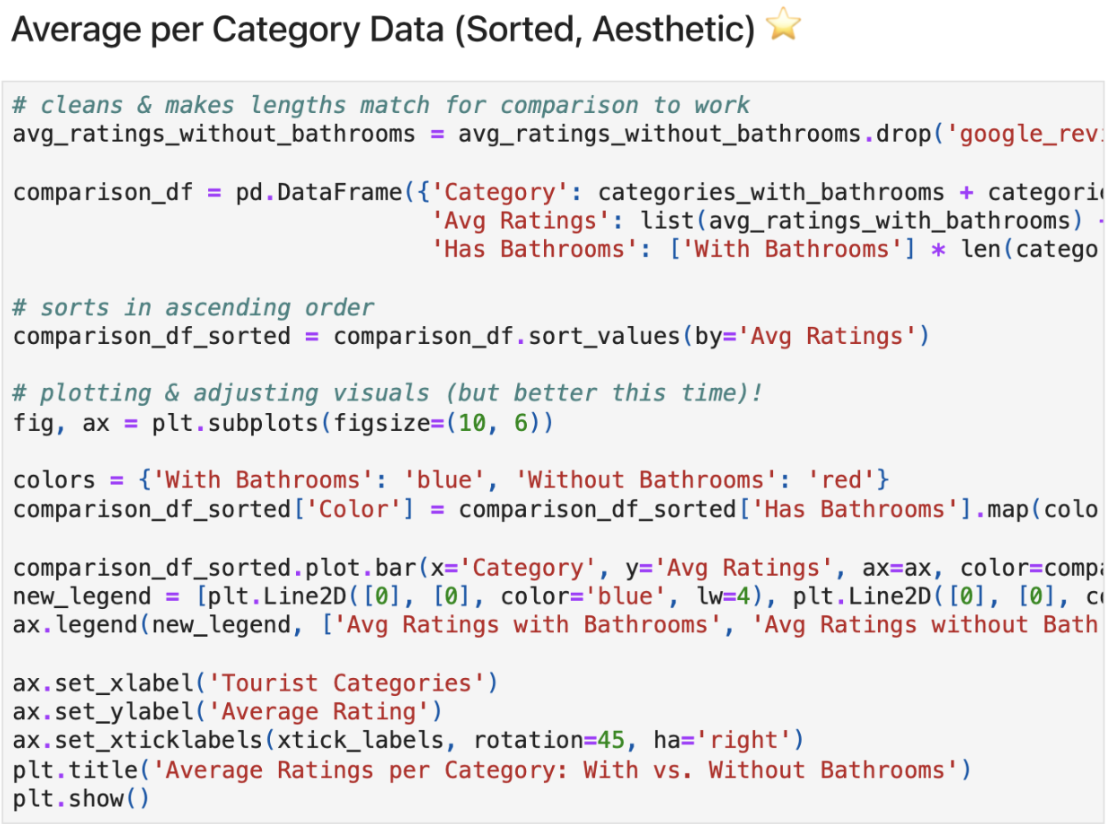
Glimpse of Code
-
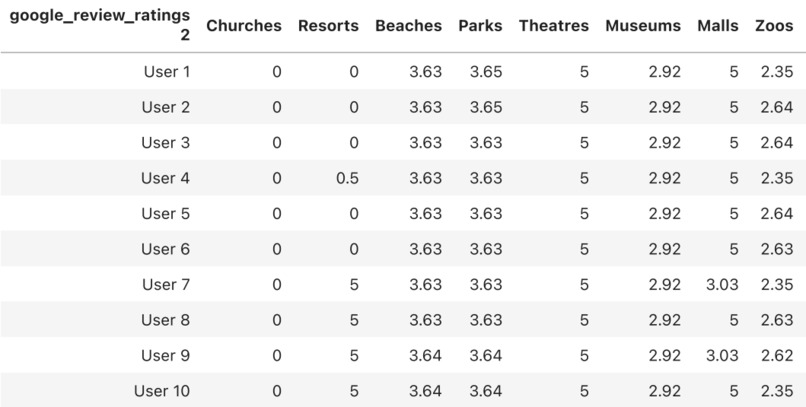
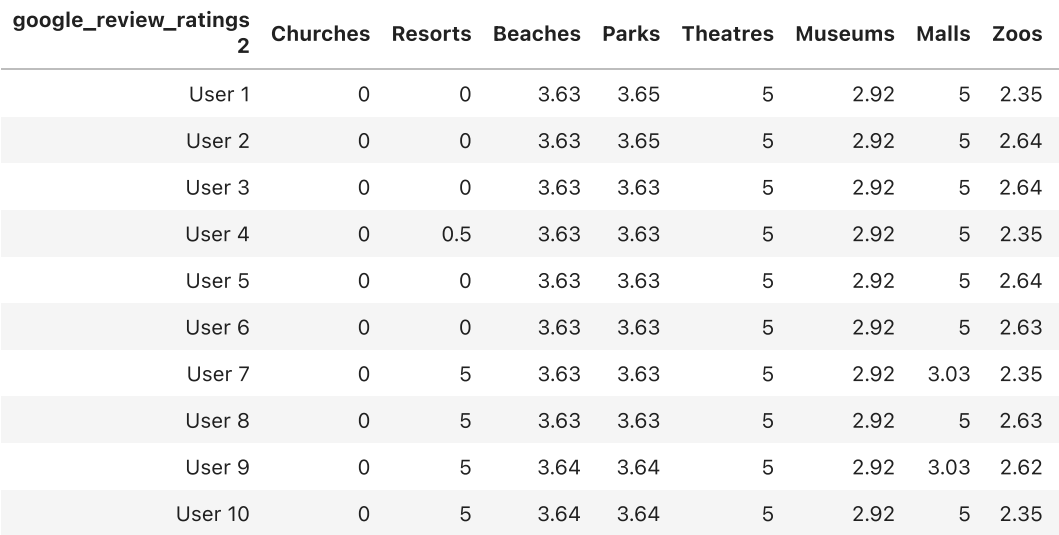
Insights from the Data
Inspiration
We both want to visit Europe, but we’ve heard about the difficulty of accessing public restrooms. This inspired us to explore whether bathroom availability affects how tourists rate attractions.
What it does
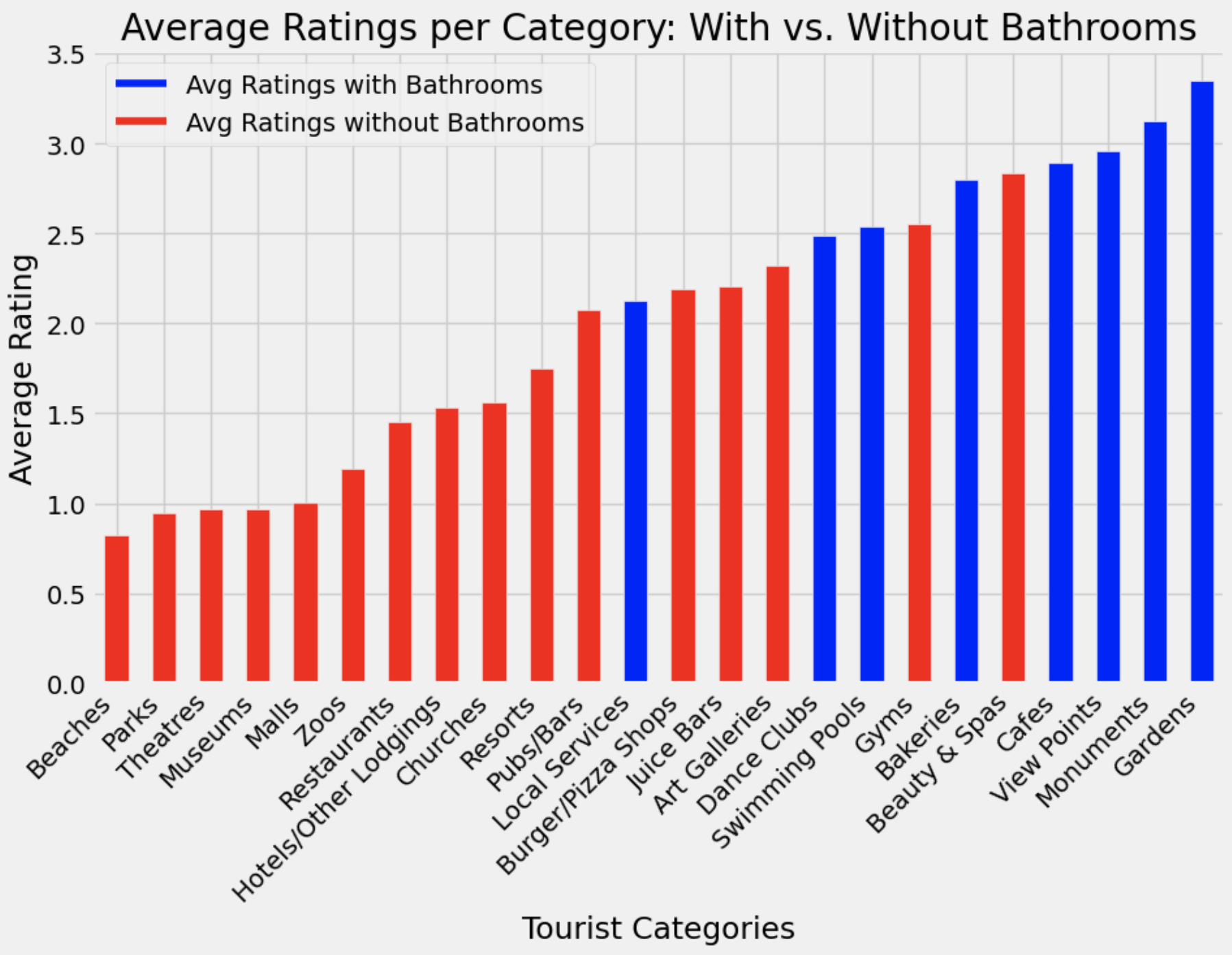
Our project analyzes user ratings of various tourist attractions, comparing average ratings between attractions likely to have accessible bathrooms and those without. It shows a clear correlation between bathroom access and higher user satisfaction.
How we built it
We cleaned and prepared a large dataset of tourist attraction ratings, categorizing locations by the likelihood of having bathrooms. Using Python, we calculated the average ratings for both groups and visualized the results with clear graphs.
Challenges we ran into
A key challenge was determining which attractions likely had bathrooms, as the data didn’t explicitly state this. We also had to deal with missing data and experiment with visualizations to best convey our findings.
Accomplishments that we're proud of
We’re proud of transforming a simple idea into a data-backed analysis that reveals clear insights about tourist satisfaction. Our visualizations clearly highlight how bathroom availability impacts ratings.
What we learned
We learned how to clean and analyze large datasets, and how simple amenities like bathrooms can significantly influence visitor satisfaction. The project also sharpened our skills in data visualization and storytelling with data.
What's next for Pay to Pee
We plan to expand this analysis to specific cities and regions, and potentially incorporate other amenities like parking or Wi-Fi. Ultimately, we aim to build a tool that helps tourists find well-equipped attractions.

Log in or sign up for Devpost to join the conversation.