-
-
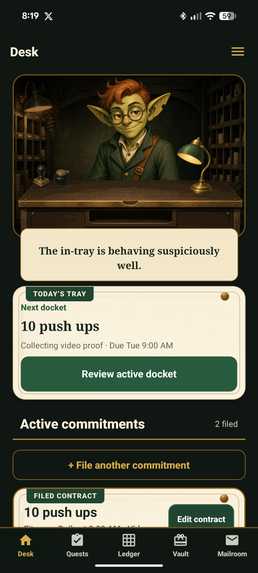
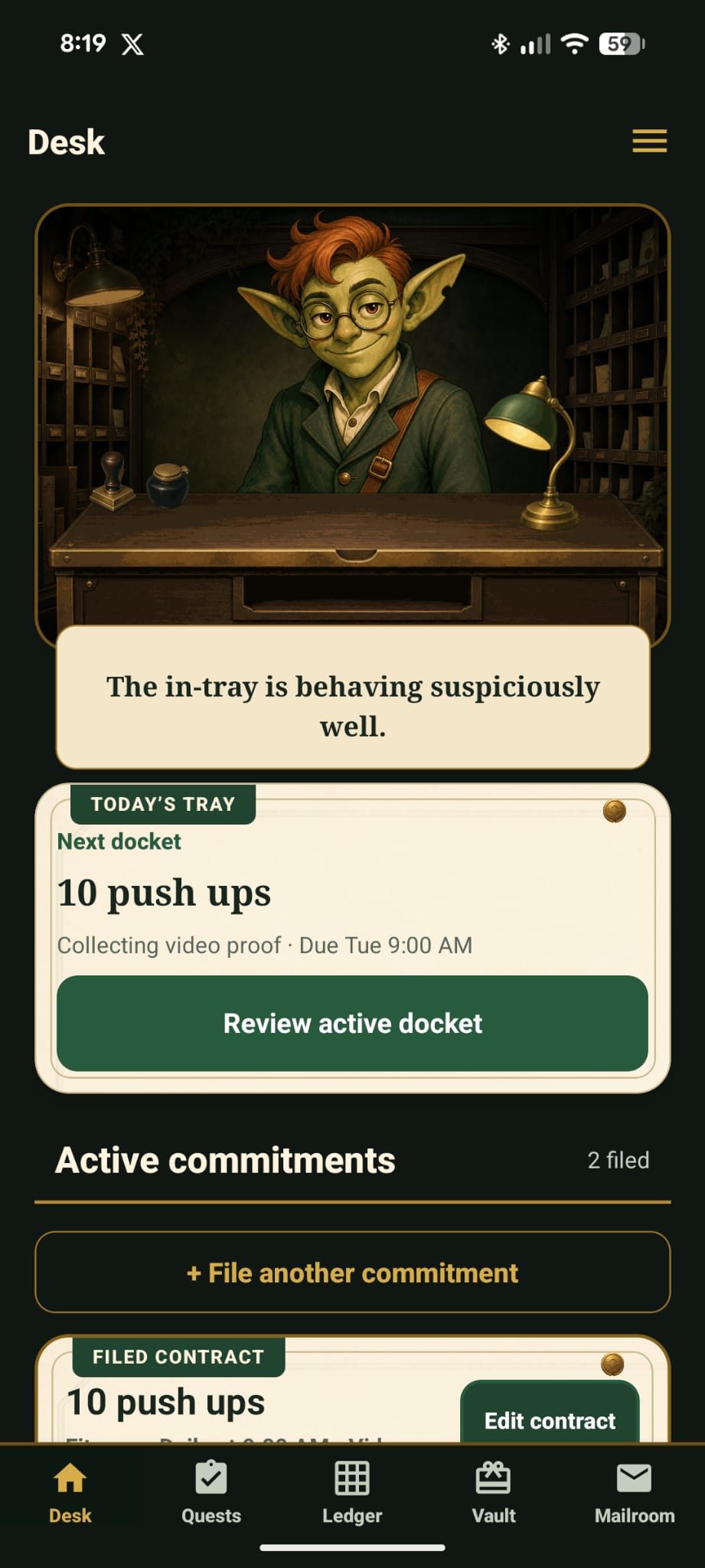
The desk is your home page to file and complete your goals
-
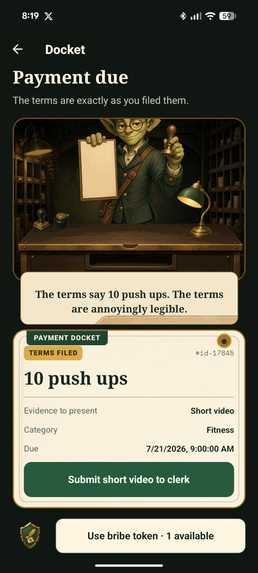
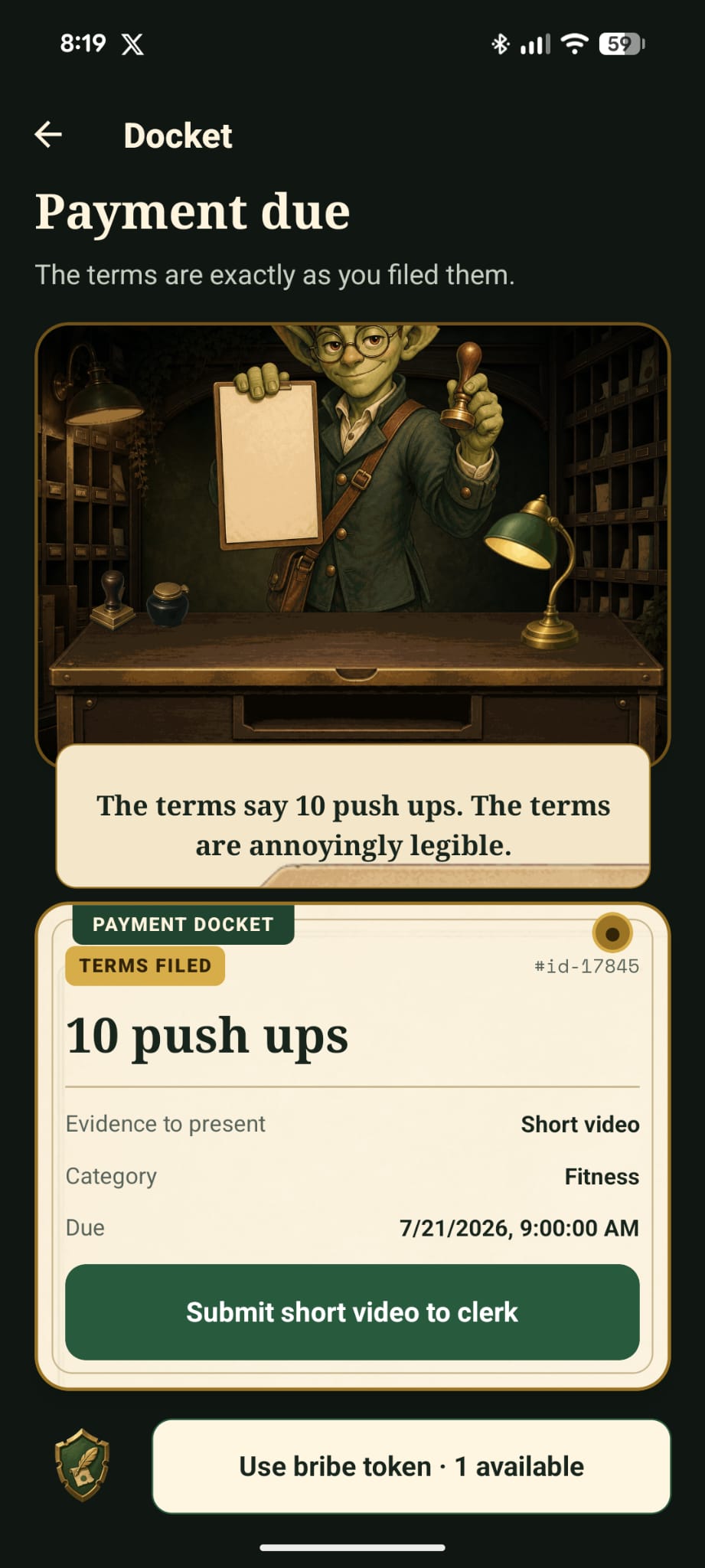
Filing your payment
-
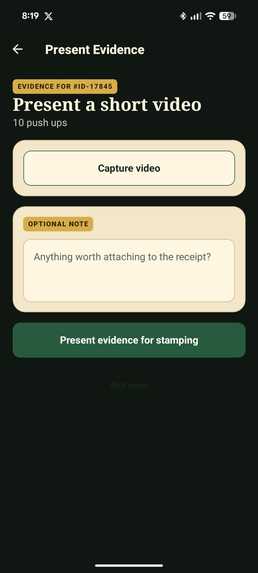
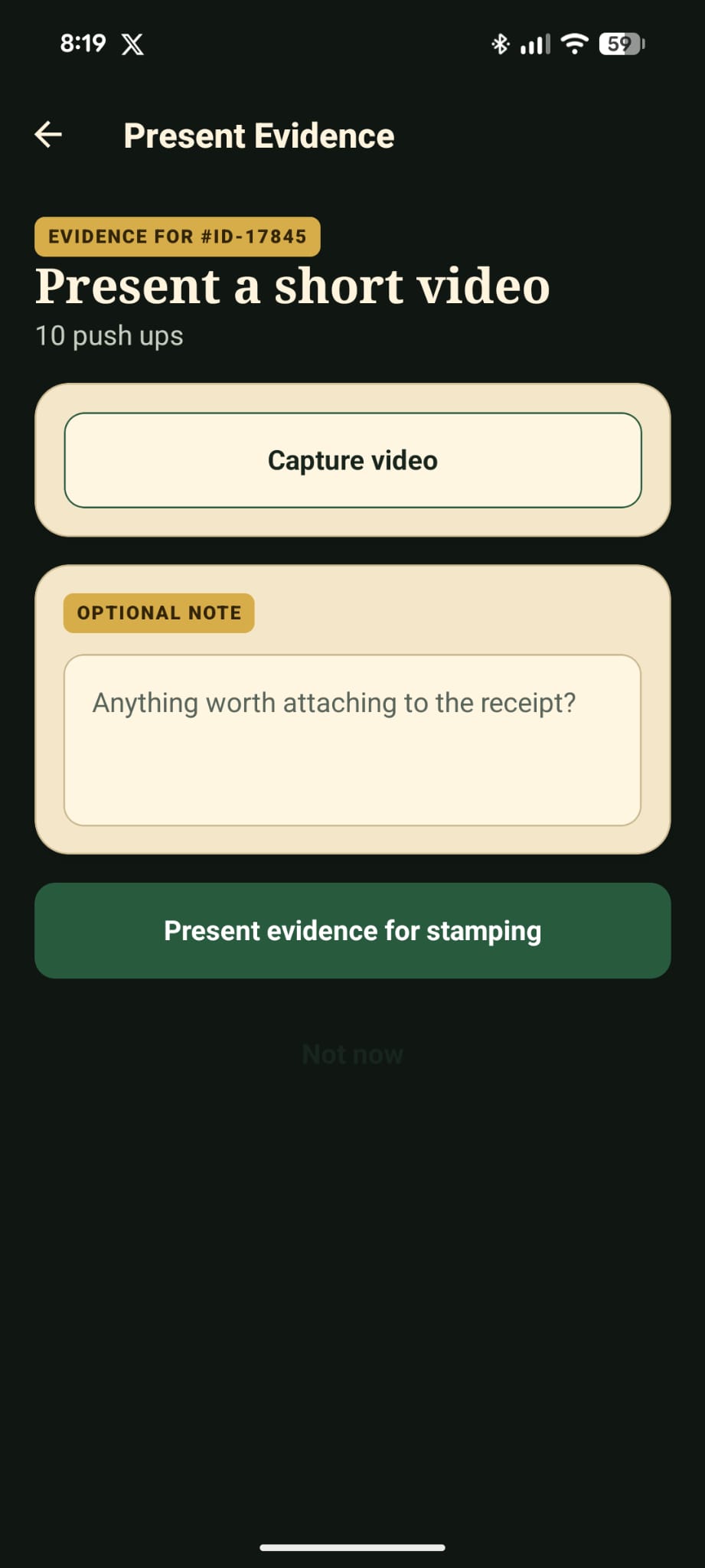
Capture your evidence
-
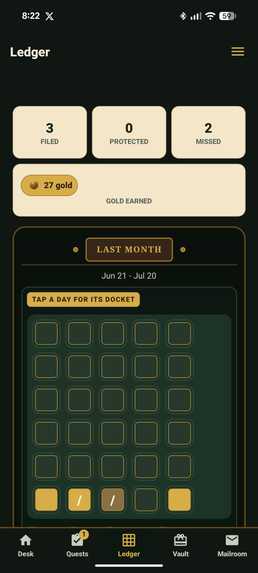
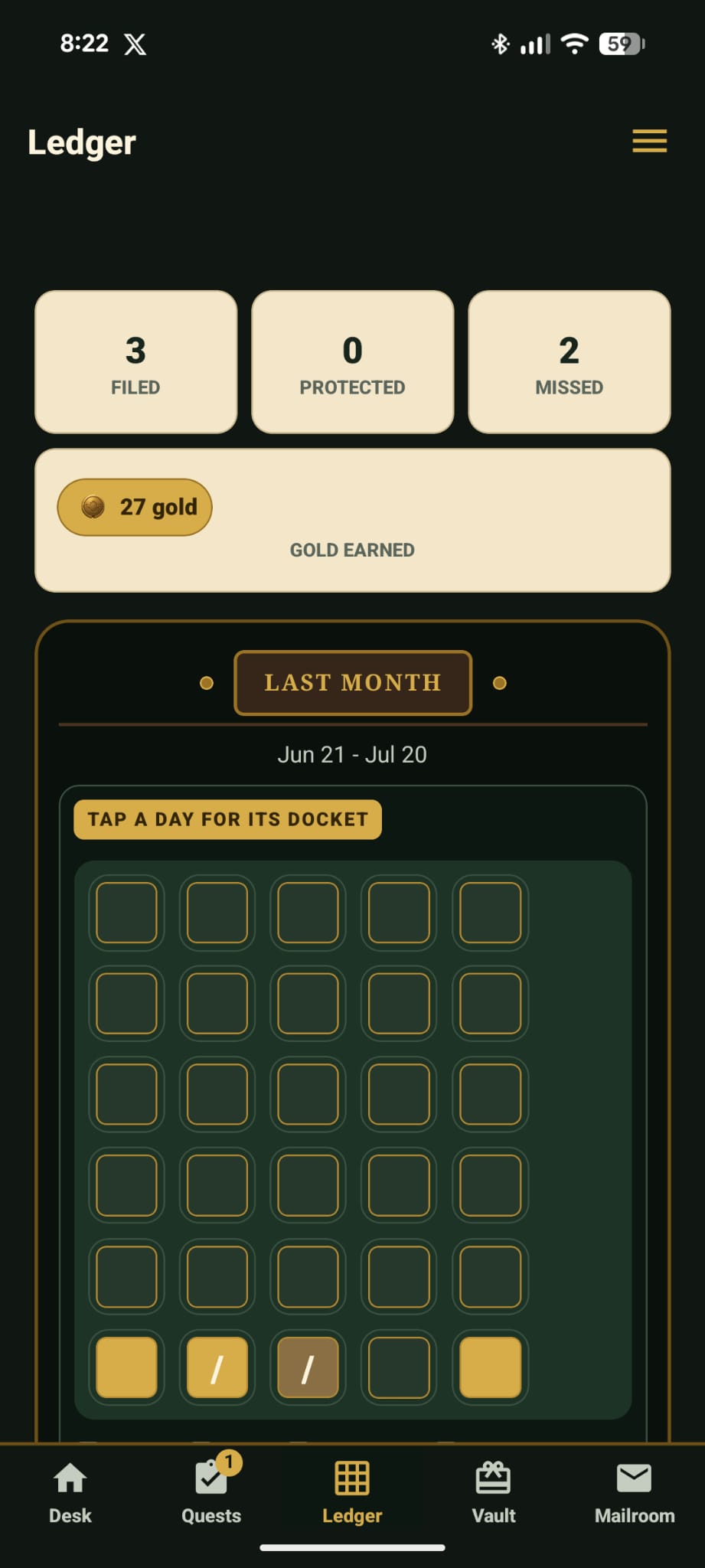
Ledger tracks days you hit and days you miss
-
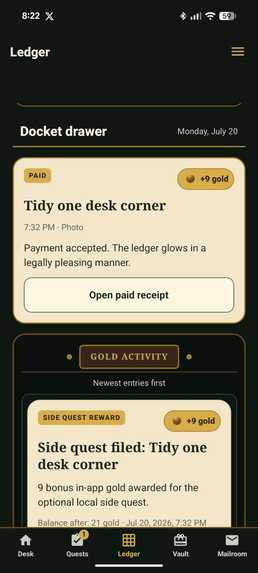
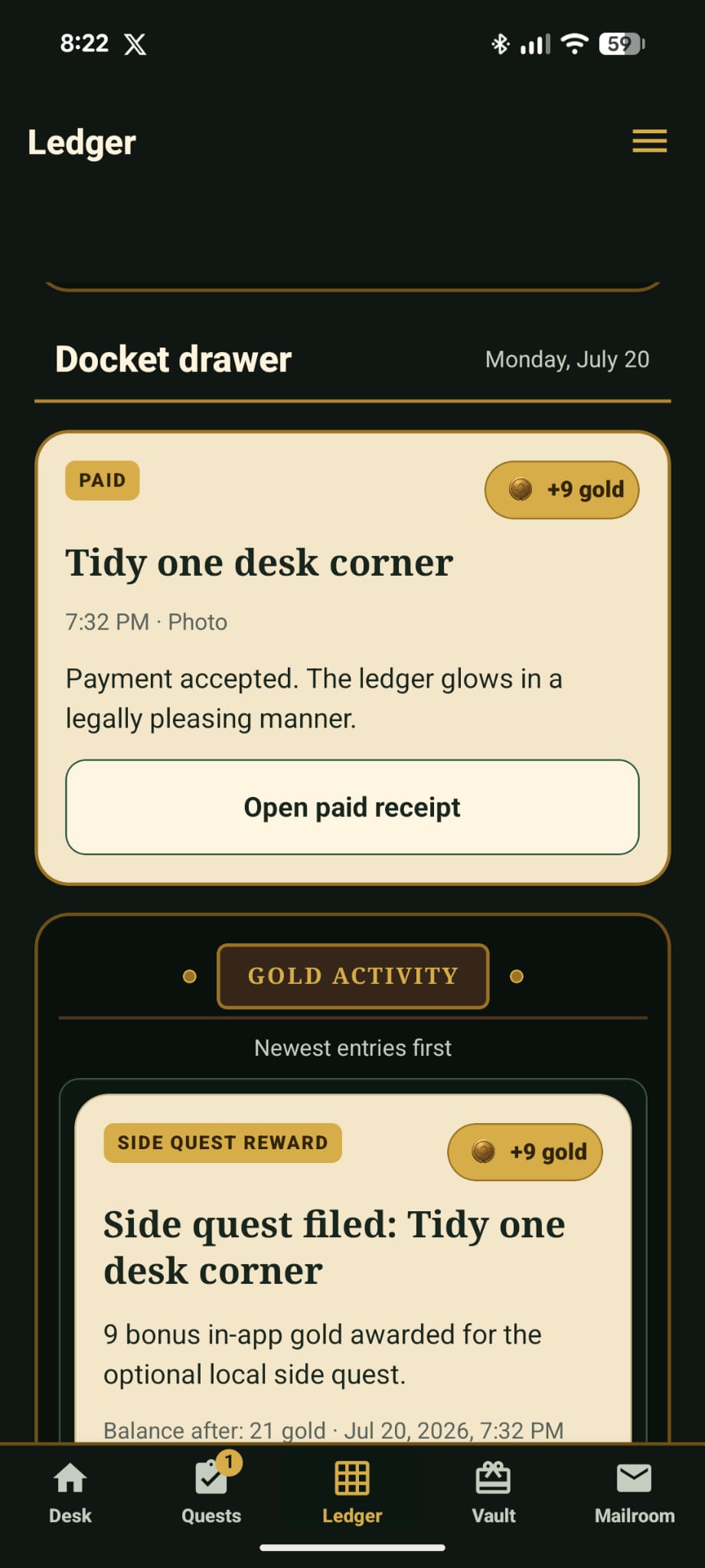
Tracks your history
-
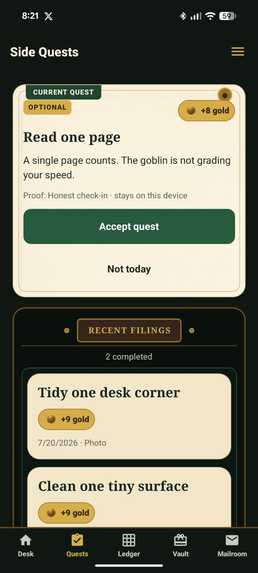
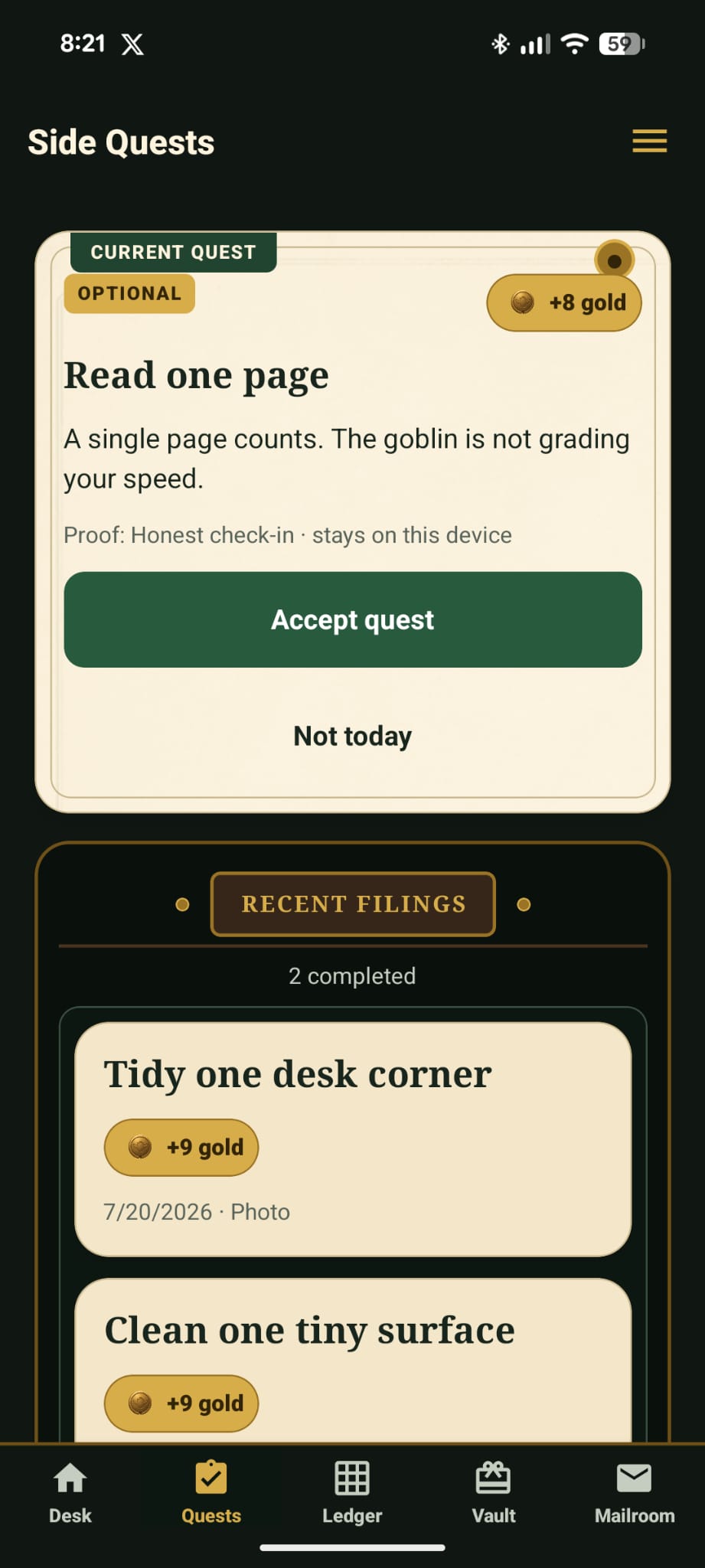
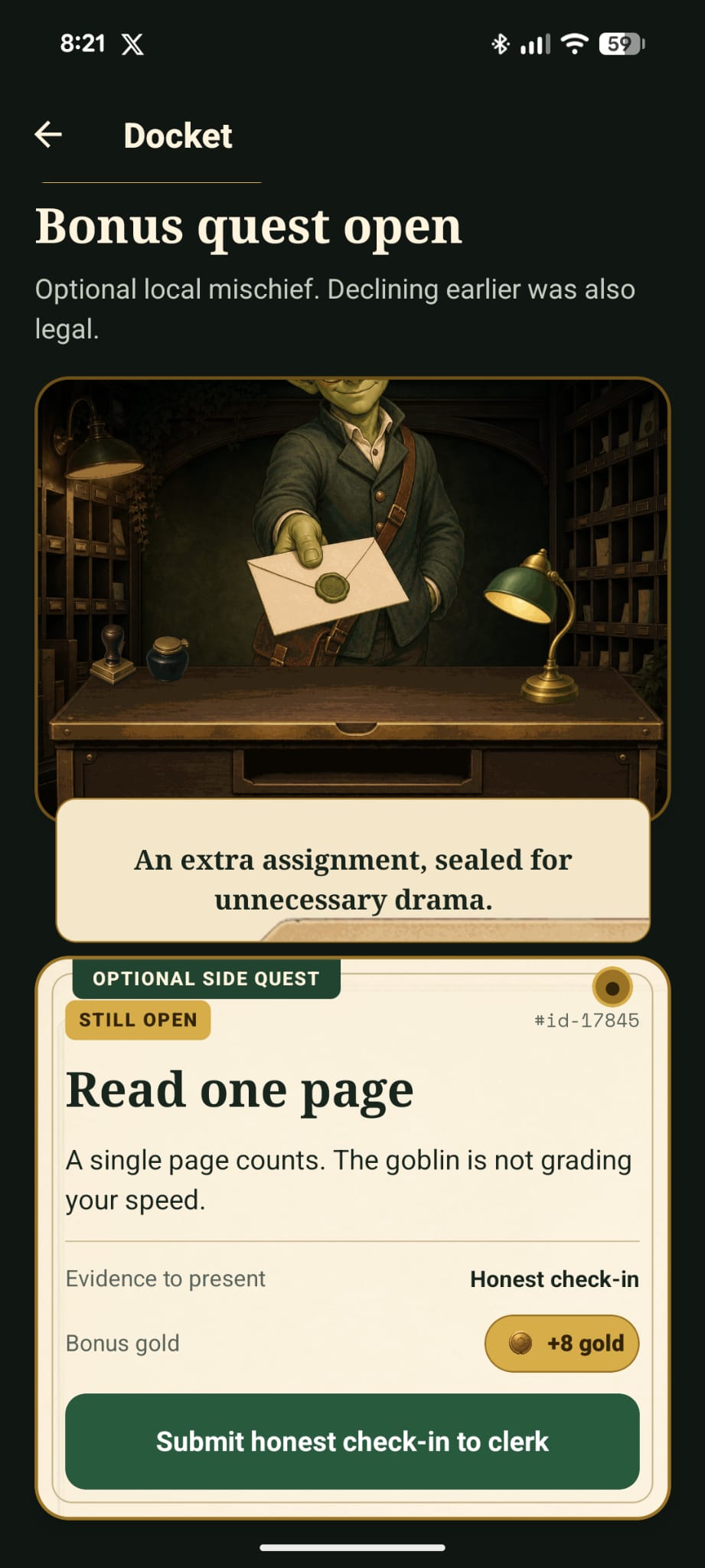
Side quests - optional extras to do something a bit different
-
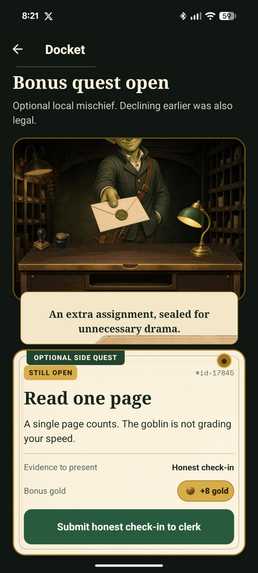
Takign a side quest
-
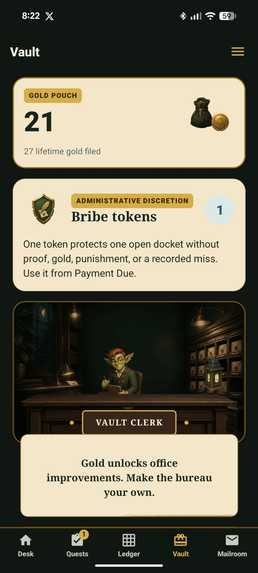
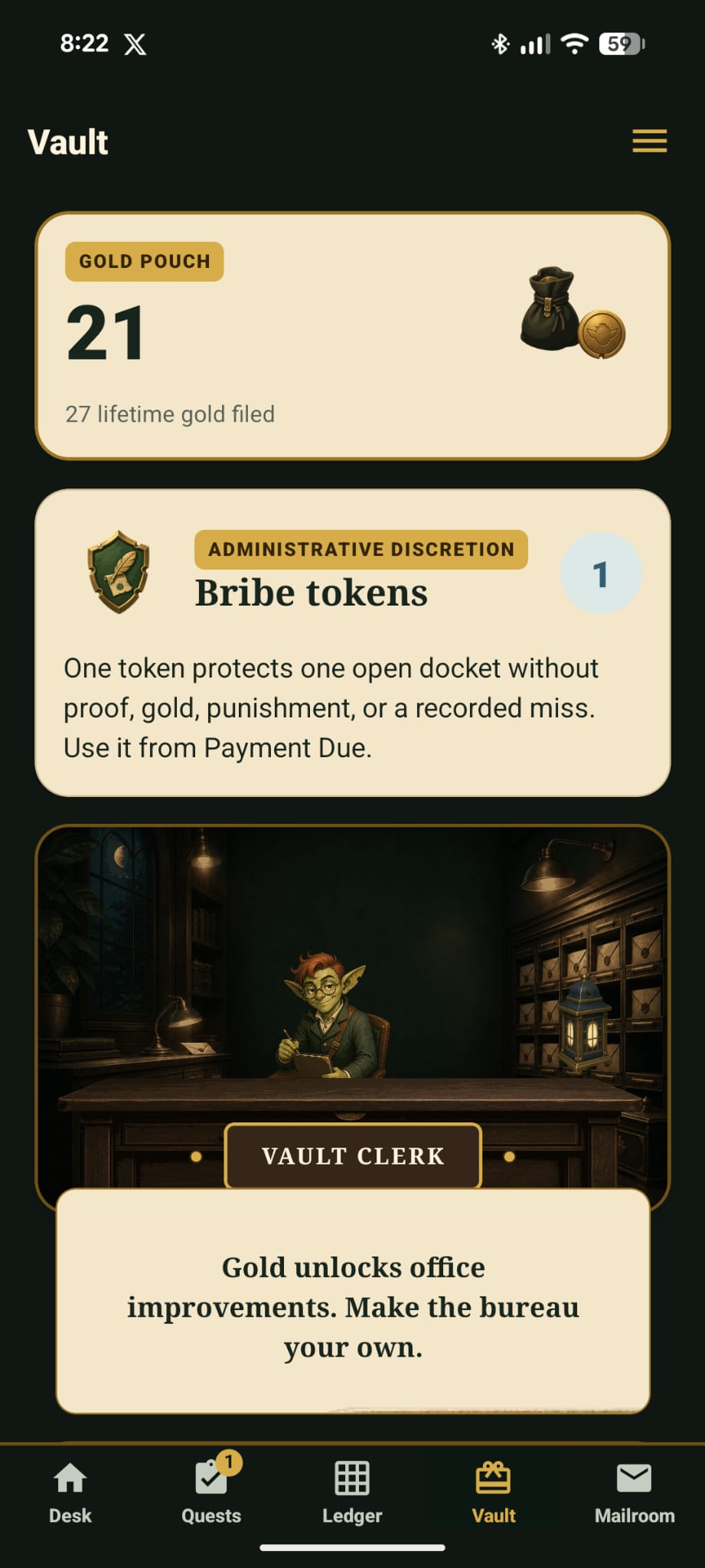
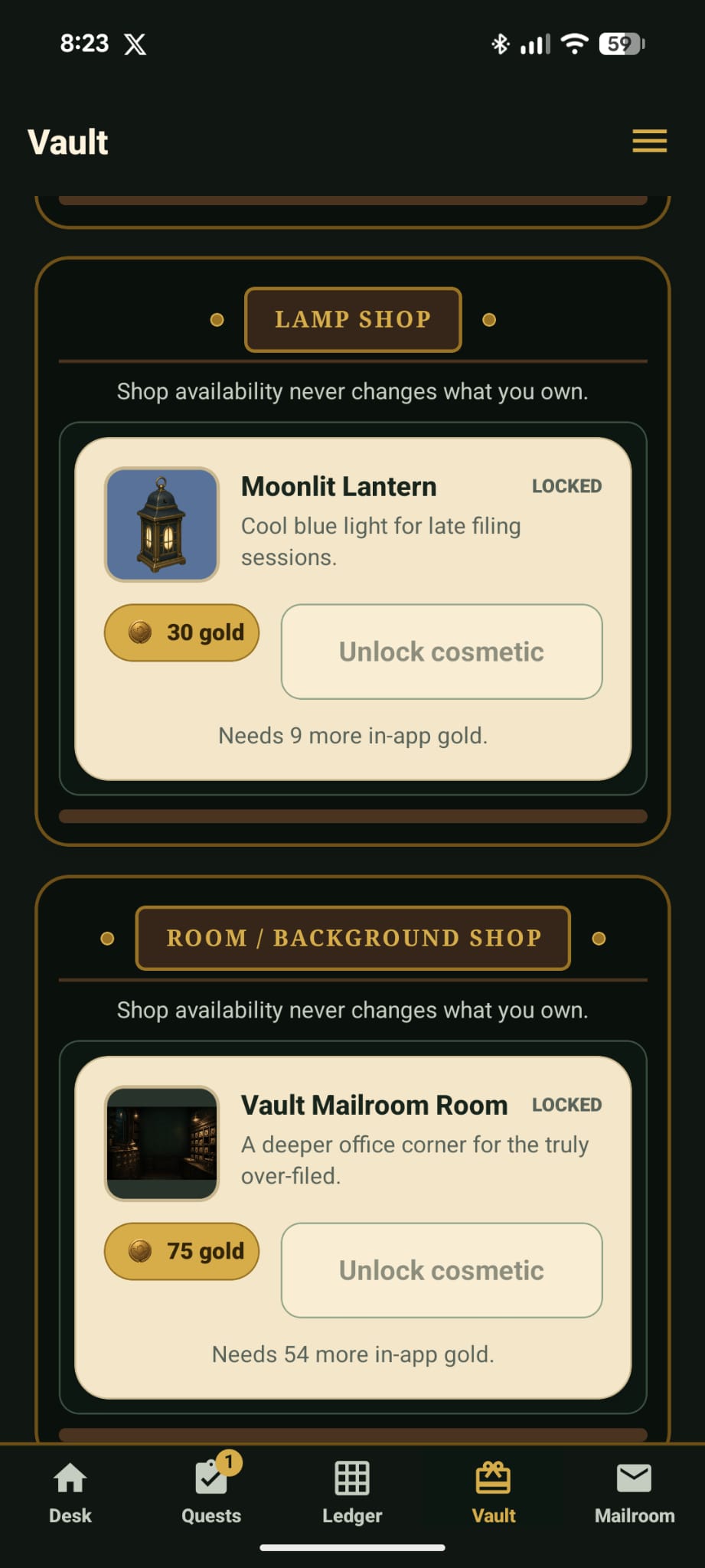
Brides let you skip a filing and how much is in your wallet
-
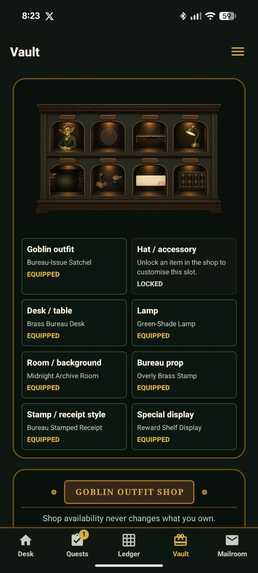
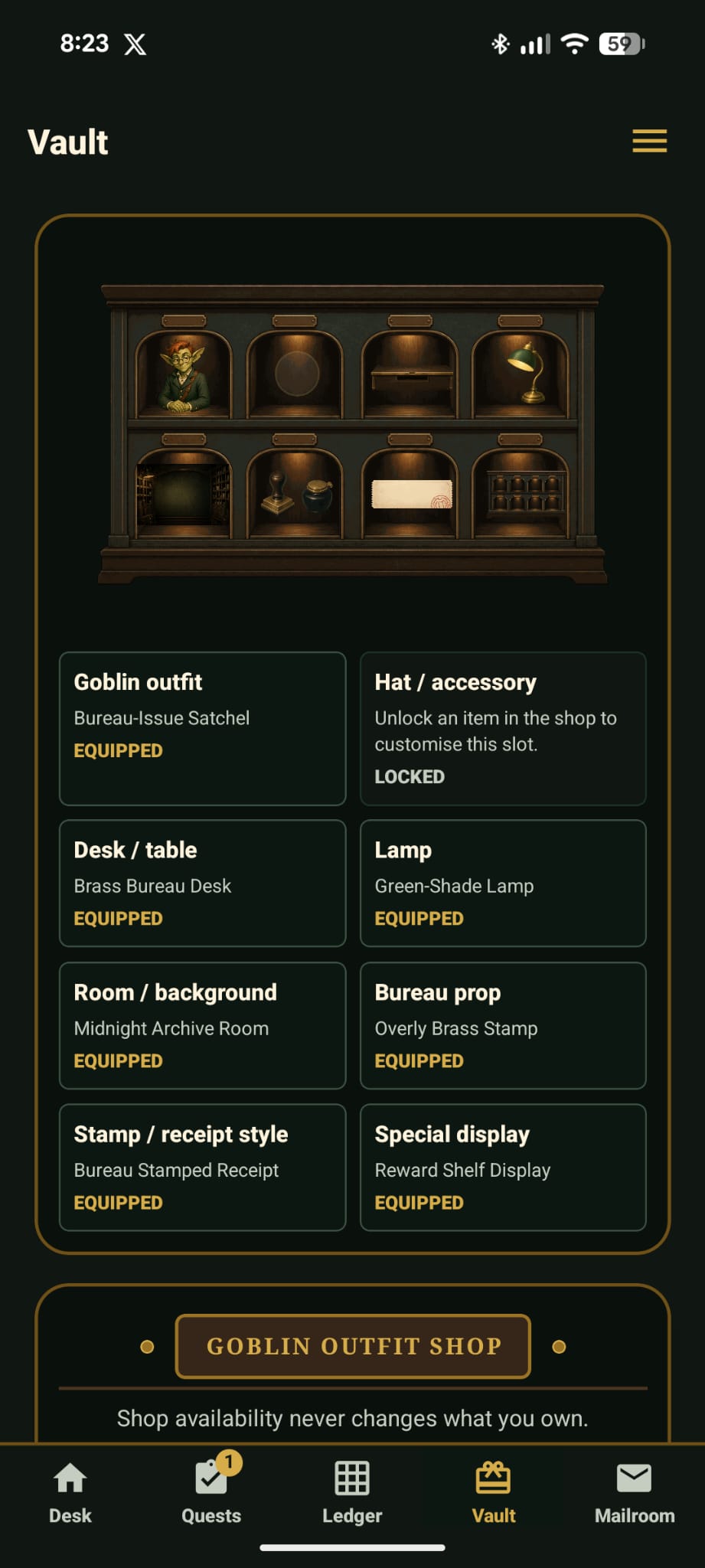
What you have equipped
-
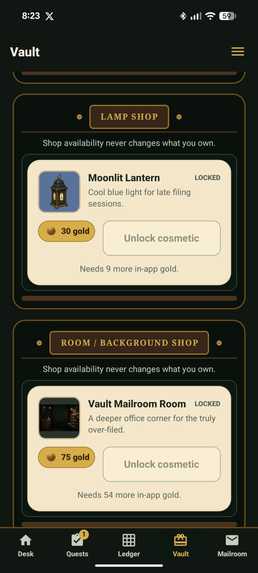
Whats on offer in the shop
-
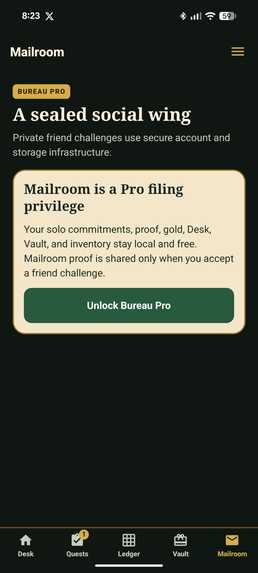
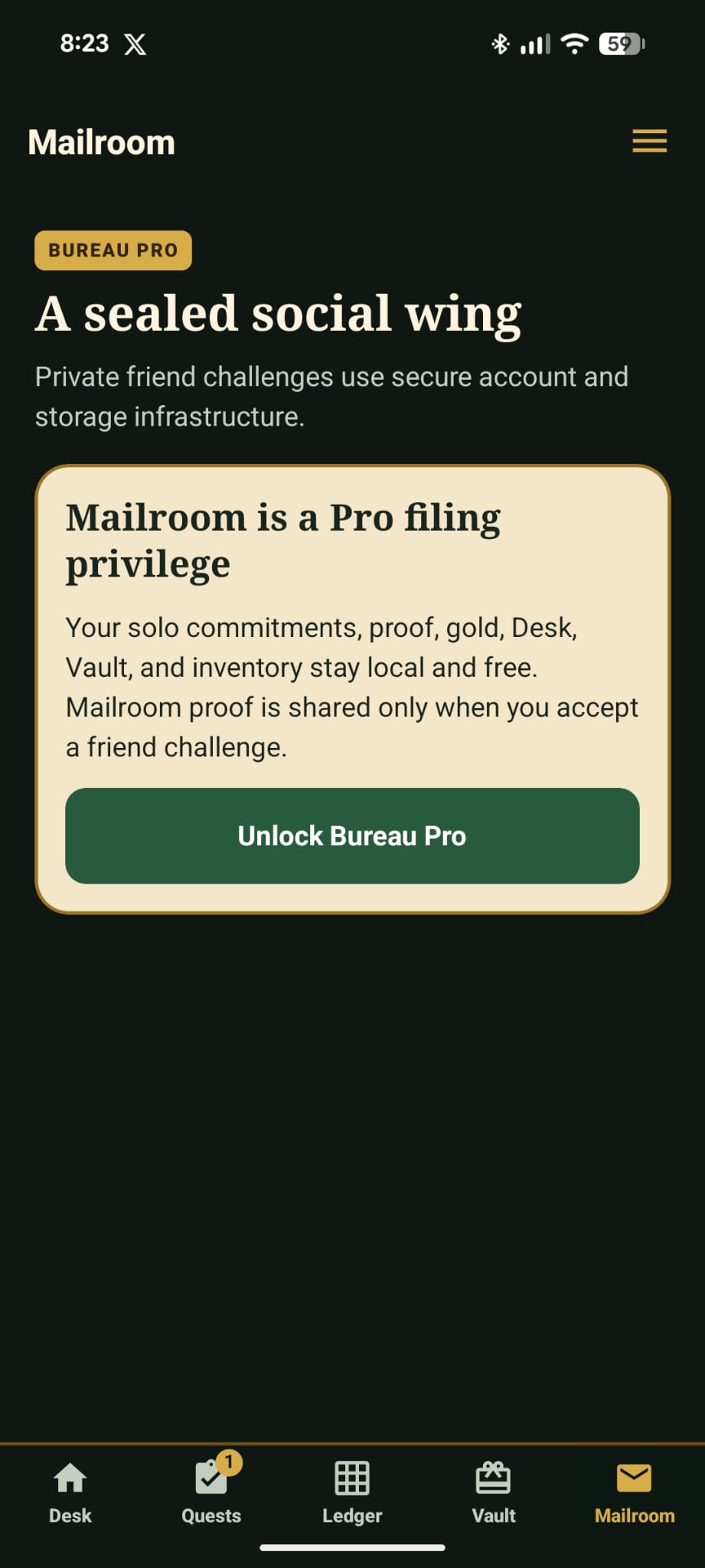
Mail Room - connect with friends to send each other side quests
Inspiration
Interestingly I never really thought of building a habit tracker. I just had and idea around a little Goblin coming to collect and then from there, the idea grew and as I build it out it turned into a little habit tracker with a fun twist.
Pay the Goblin started with a problem I know well: I ignore normal reminders. Most habit trackers feel sterile, and a lot of accountability tools either become public performance or shame. I wanted something smaller, stranger, and more useful — a playful way to make small promises feel real without turning them into punishment.
The idea became a tiny goblin clerk. You file a commitment, choose when it is due, and decide what proof counts. When the time comes, you “pay” the Goblin with proof — an honest check-in, timer, photo, or short video. If you show up, you earn in-app gold and your ledger grows.
Payment means proof, not money. There are no real-money penalties, no public leaderboard, and solo goals stay local by default.
What it does
Pay the Goblin is a local-first mobile accountability app built with Expo / React Native and SQLite.
It includes commitments, proof flows, reminders, a wallet and ledger, Vault cosmetics, Desk equipment, themed docket screens, and a feedback form for early testers. Supabase powers the optional Mailroom/private friend-challenge direction, and RevenueCat is used for the Bureau Pro subscription path.
The core personal loop is intentionally local-first. You should be able to file and complete your own promises without needing an account or a backend.
How I built it
I'm sure many have done it in different ways, but I currently like to discuss ideas with my hermes agent until I have a very detailed understanding of what my idea actually is. I then have Hermes (running GPT5.4 mini) to build out different documents before I start building.
I broke the app into phases, wrote focused prompts, let Codex implement narrow slices, then validated with TypeScript, SQLite checks, ledger reconciliation, notification harnesses, Supabase policy checks, Expo Doctor, and manual review. Completed phases were committed and archived into a running prompt index.
I started off using cursor to do the inital scaffold, then I moved to ChatGPT and used Sol 5.6 High to start building out the features, which went well, but I burned way to many credits - fast. So I moved to GPT-5.6 Terra, it was useful for turning messy product decisions into concrete implementation prompts, spotting edge cases, and helping with audits and validation. I did not use it as a black box. I used it more like a fast technical partner, with clear boundaries and evidence required before claiming something worked.
Challenges I ran into
The most challenging parts were probably around actually getting my thoughts out and functioning in the way I want them to in the app, and I haven't got it right yet either. This is probably because the thought is half baked when I start and while build I realise the actual physicality of it in the app actually happens a bit different. Even getting the layout I actually wanted took a number of attempts.
Accomplishments that I'm proud of
My main accomplishment is a functional React Native app, first attemp at an actual mobile app. But I also greatly enjoyed the use of GPT Remote. I was able to sit at work, during a quiet moment and get ChatGPT at home to install Android Studio and then run and emulator to test the app and send me screenshots - later I then had it build an apk and upload it to google drive so I could test it on my phone - absolutely execllent!
What I learned
Pay the Goblin is for people who ignore ordinary reminders and want private, playful accountability without shame or real-money consequences. That is the part I care about most: making follow-through feel a little more tangible, a little more fun, and a little easier to come back to. This is not meant to be a serious application, its more a prompt to keep you on track with the little (and big) goals you have.
What's next for Pay the Goblin
There are a number of things I want to continue on with this app. Next will be the initial release, most likely during the Shipaton hackathon. I want to build out the vault with items to purchase. I want to continue building on the mailroom/ friend and social side of the app. And I also think I can make this more interesting by integrating AI into different aspects of the app. lastly, for now, would be to start adding actual animations to the different scene components.
Built With
- codex
- expo.io
- gpt-5.6
- react-native
- revenuecat
- sqlite
- supabase
- typescript

Log in or sign up for Devpost to join the conversation.