-
-
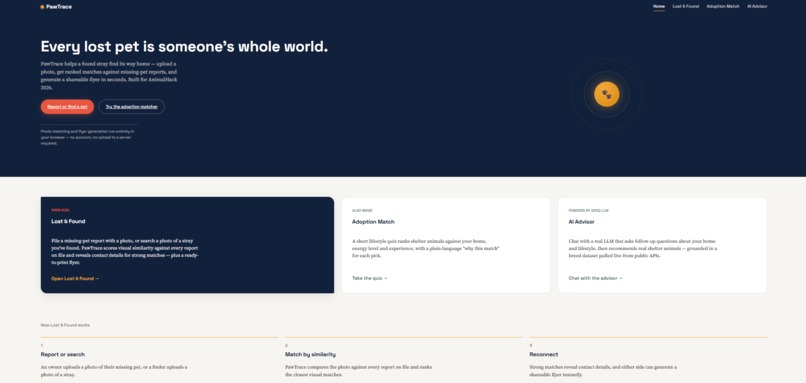
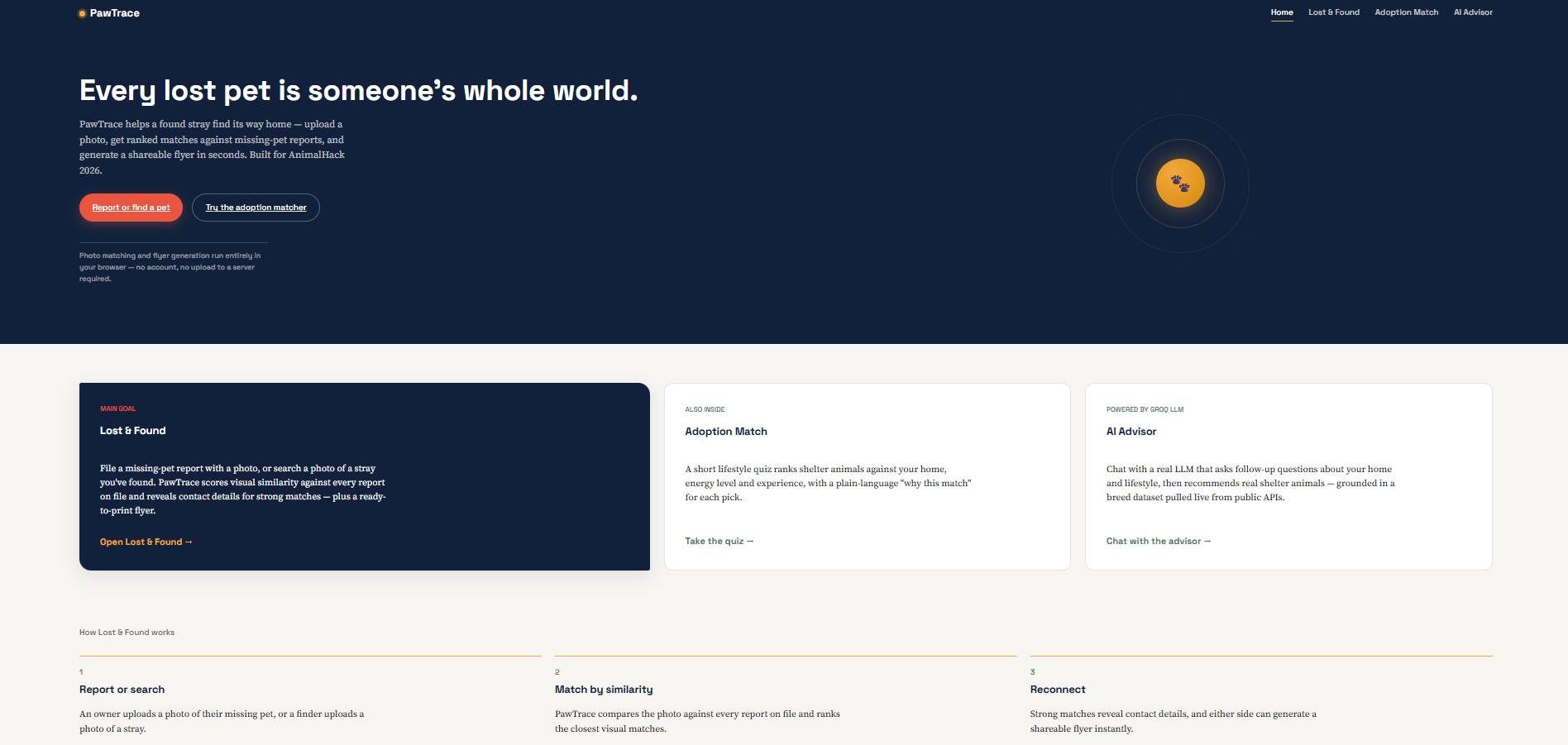
our website dashboard
-
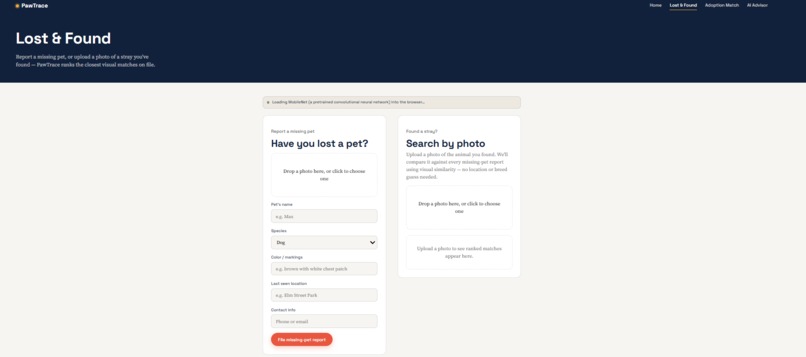
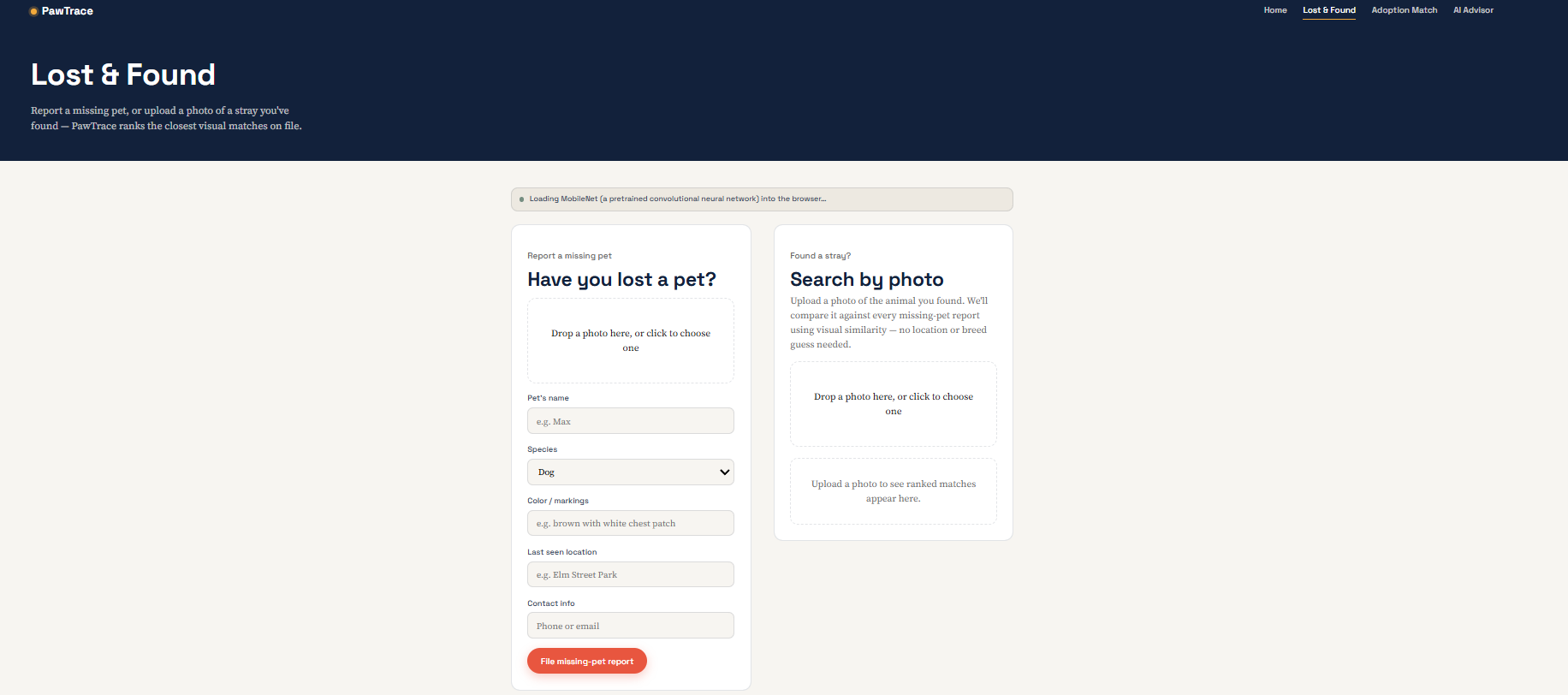
Lost & Found
-
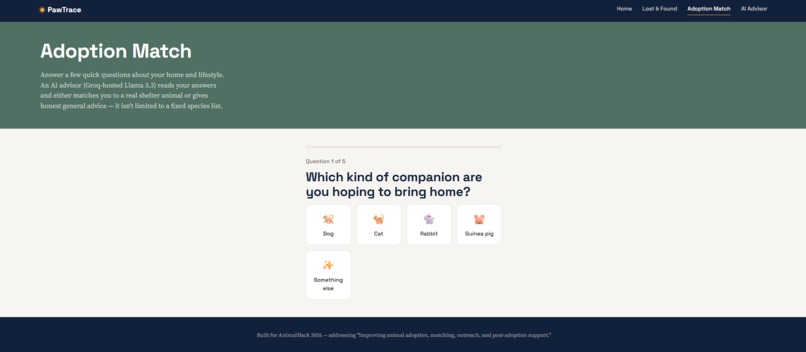
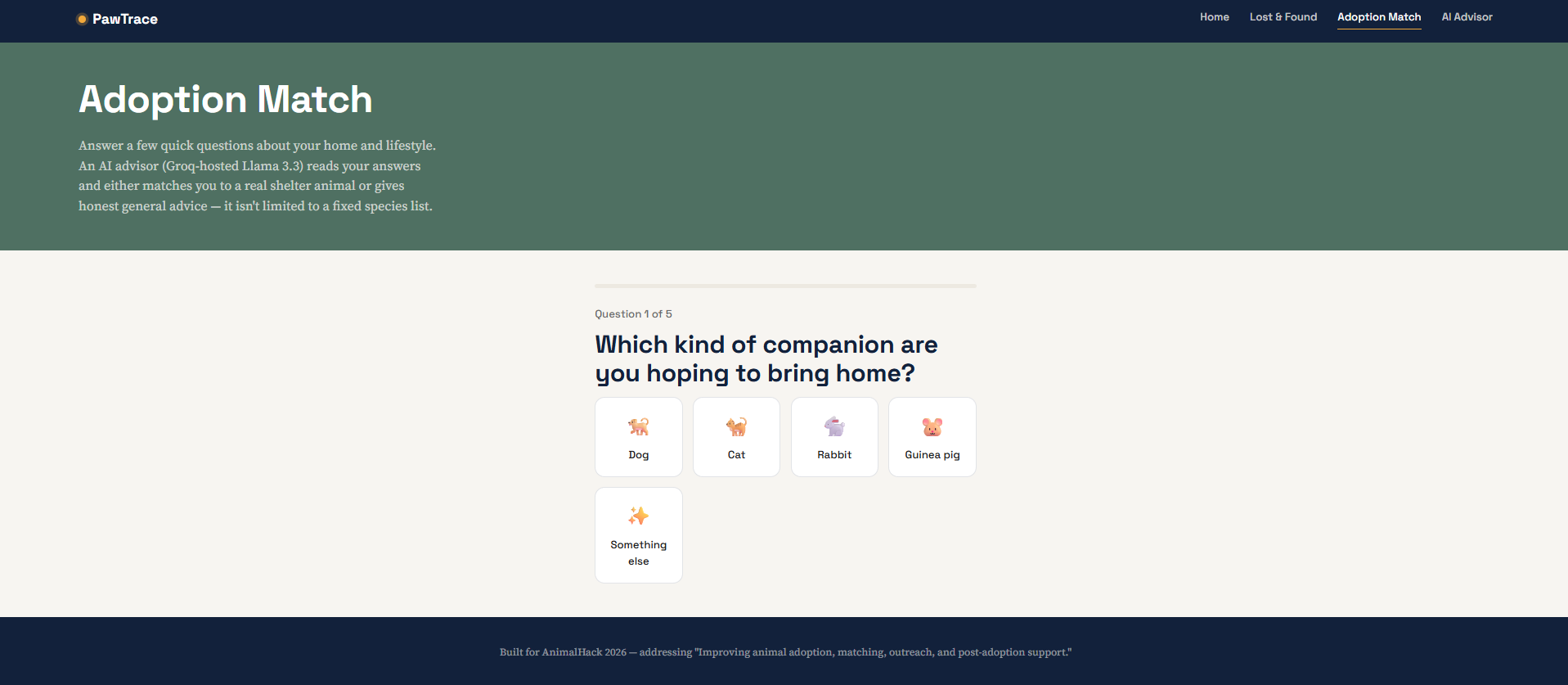
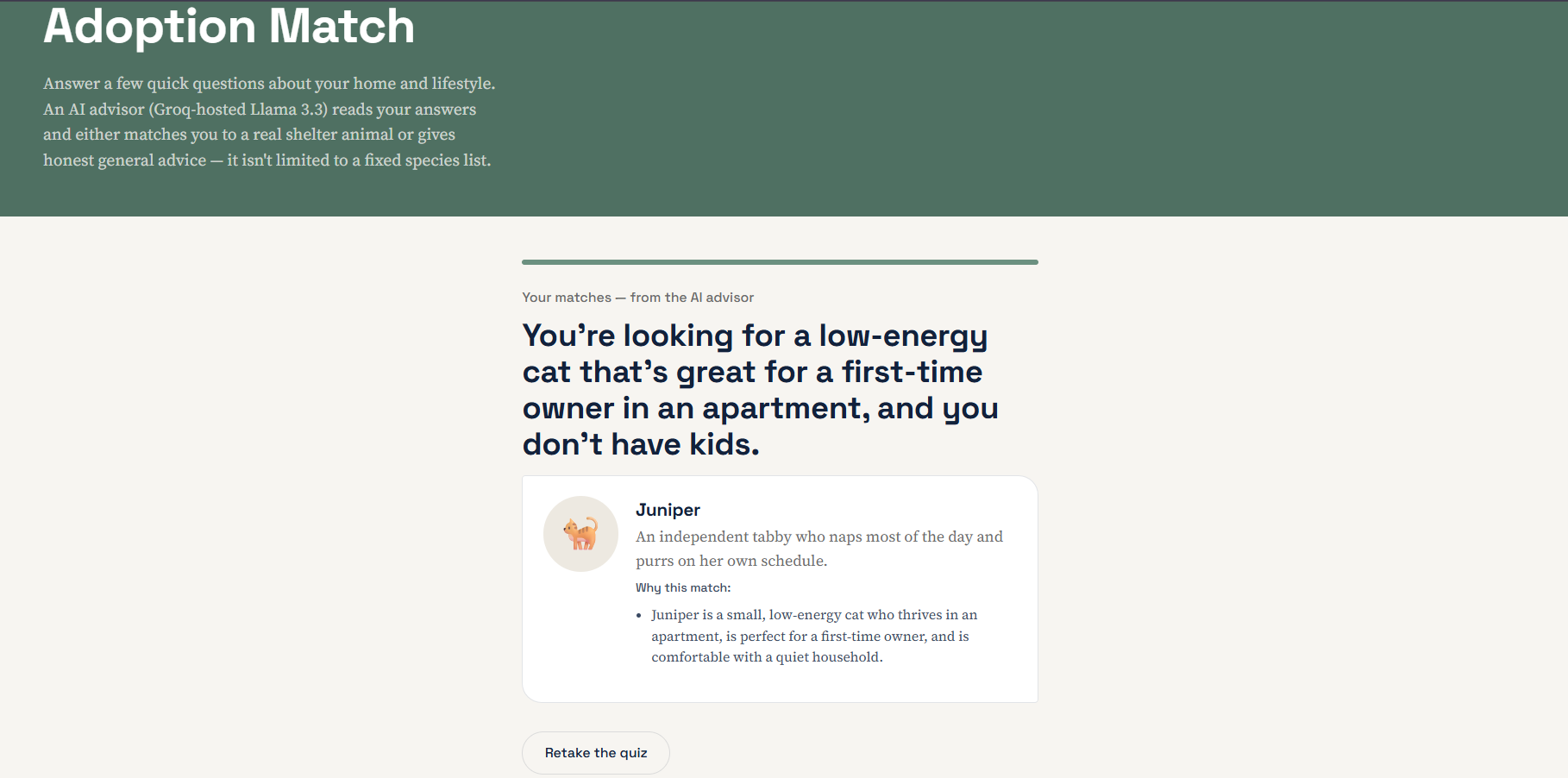
Adoption Match
-
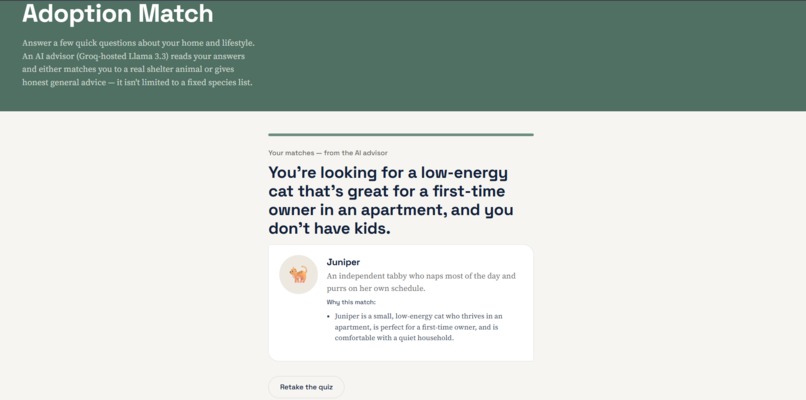
Gives the result for adoption match
-
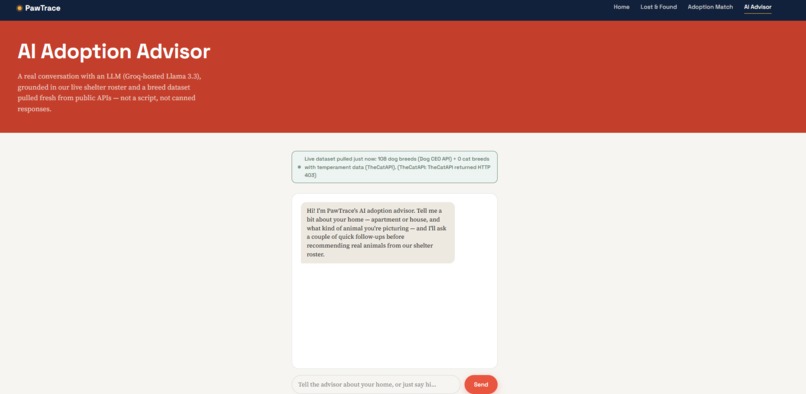
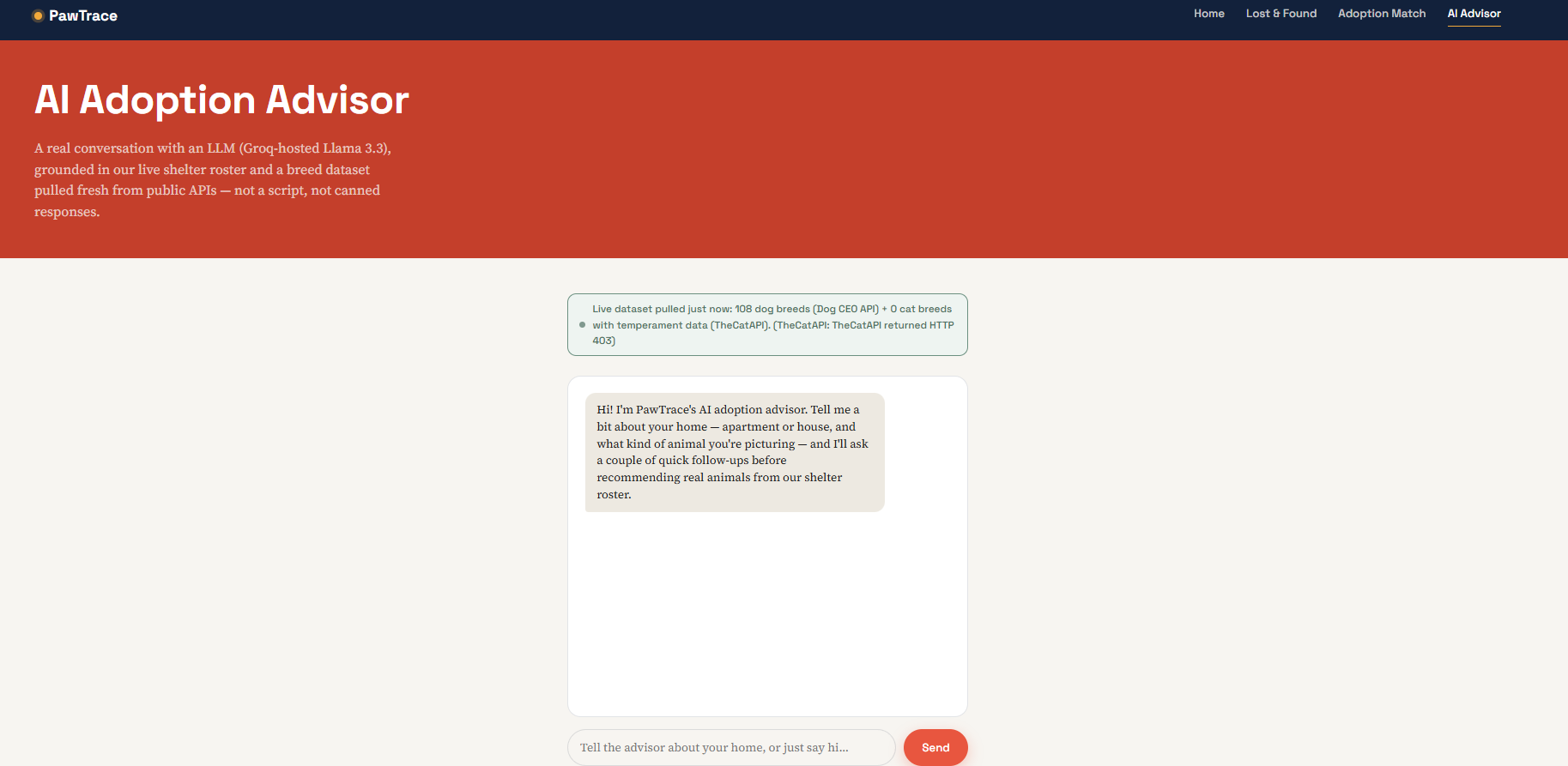
AI Adoption Advisor
Inspiration
PawTrace was inspired by a simple idea: technology should make it easier for people to help animals. We noticed that lost pets, found animals, and shelter pets often depend on scattered information and quick decisions. We wanted to create one platform that connects these problems and uses AI where it can genuinely help.
What it does
PawTrace is an animal-welfare platform with three core experiences:
- 🐾 Lost & Found — helps people report and discover lost or found animals.
- 🏠 Pet Adoption Matching — matches adopters with suitable shelter animals based on their lifestyle, living situation, preferences, and experience.
- 🤖 AI Adoption Advisor — lets users ask adoption-related questions and receive personalized guidance through an AI-powered conversation.
The goal is to make the adoption process more informed and help create better long-term matches between animals and adopters.
How we built it
We built PawTrace as a full-stack web application using HTML, CSS, and JavaScript with server-side API routes for backend functionality. We integrated animal/breed data APIs and AI services to power the adoption advisor and matching experience.
For the AI functionality, we initially experimented with a Groq-hosted Llama model and later adapted the implementation to OpenAI GPT after running into model/API compatibility issues.
We also used environment variables to keep API credentials secure instead of exposing them in the frontend.
Challenges we ran into
One of our biggest challenges was getting the AI integration to work reliably. We encountered issues while using the Llama model through Groq, which required us to troubleshoot the API setup and eventually switch to OpenAI GPT.
We also faced challenges with API routes, environment variables, and deployment, especially when moving from local development to a production environment.
Another challenge was designing an adoption matching experience that felt meaningful rather than simply showing users a list of animals. We wanted the recommendations to consider the adopter's actual lifestyle and compatibility with a pet.
Accomplishments that we're proud of
We're proud of bringing lost & found, adoption matching, and AI assistance together in a single platform.
More importantly, we built PawTrace around a real-world problem rather than adding AI just for the sake of using AI. The AI advisor is designed to assist users with adoption decisions, while the matching system focuses on finding pets that are more compatible with their lifestyle.
What we learned
PawTrace taught us that building an AI-powered application involves much more than connecting an AI API. We learned about API integration, backend/serverless functions, environment variables, deployment, data handling, prompt design, and user experience.
We also learned how important it is to design technology around the actual needs of users—in this case, both the people adopting and the animals that need homes.
What's next for PawTrace
We want PawTrace to become a more intelligent and complete animal-welfare platform. Our next steps include:
- 📸 Improving lost-pet identification and matching using image-based AI.
- 🔎 Making lost & found searches smarter and more personalized.
- 🏠 Improving adoption recommendations with more detailed compatibility scoring.
- 🐕 Expanding shelter and animal data coverage.
- 🤖 Making the AI Adoption Advisor more context-aware and helpful.
- 🌍 Connecting more shelters, rescuers, and adopters through one platform.
Ultimately, we want PawTrace to help more animals get reunited with their families and find the right forever homes.
Built With
- adoption
- ai
- animal
- api
- app
- artificial
- css
- generative
- html
- integration
- intelligence
- javascript
- openai
- pet
- rest
- serverless
- vercel
- web
- welfare


Log in or sign up for Devpost to join the conversation.