-
-
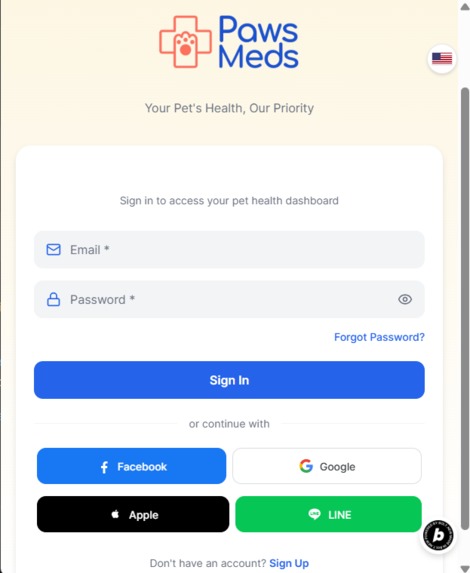
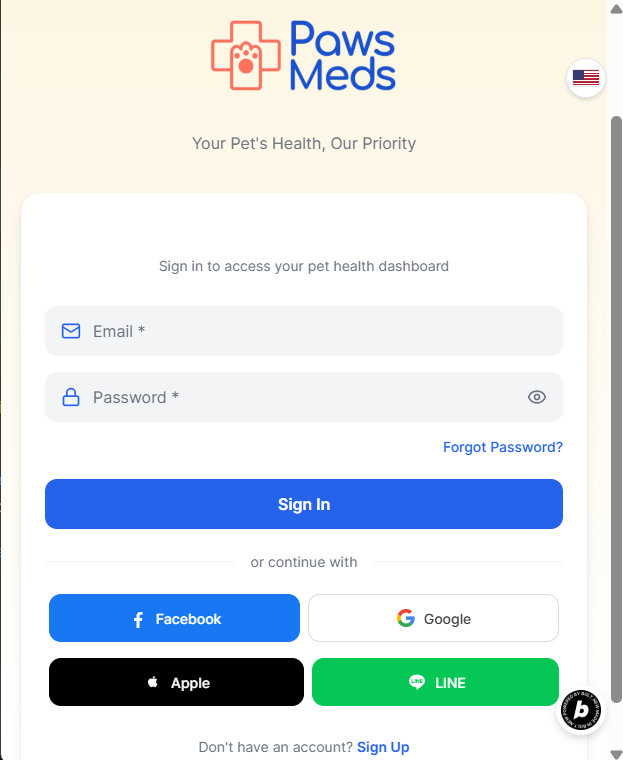
sign-in
-
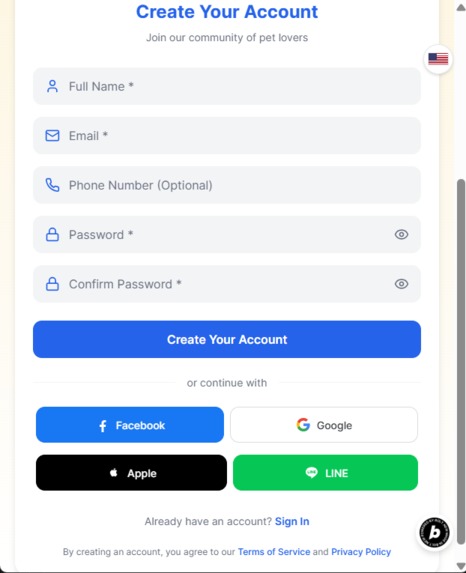
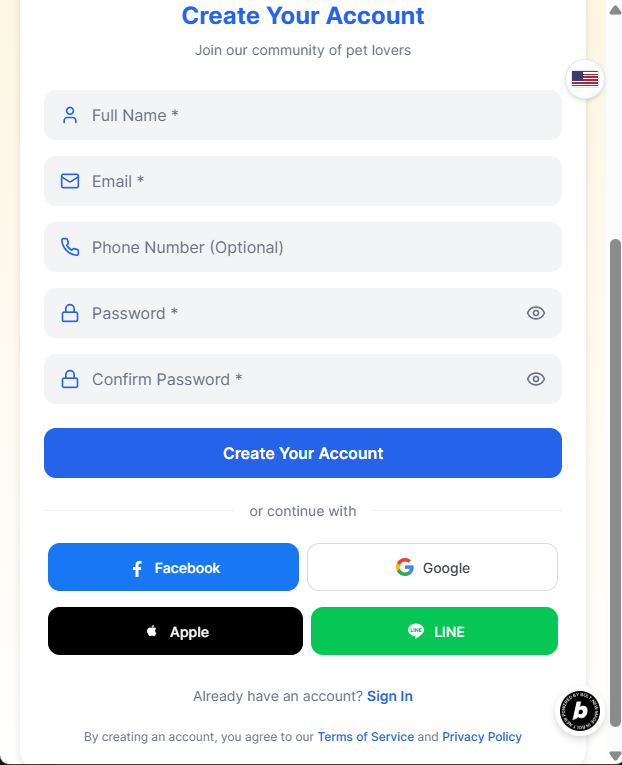
sign up
-
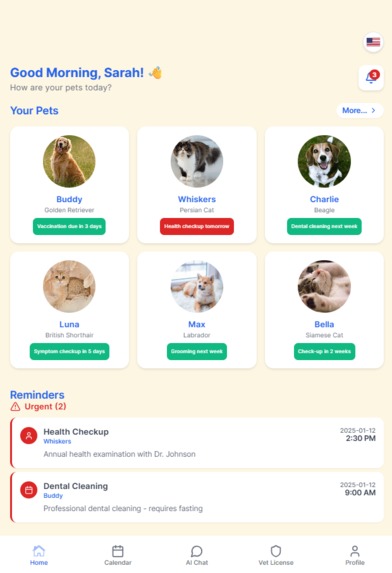
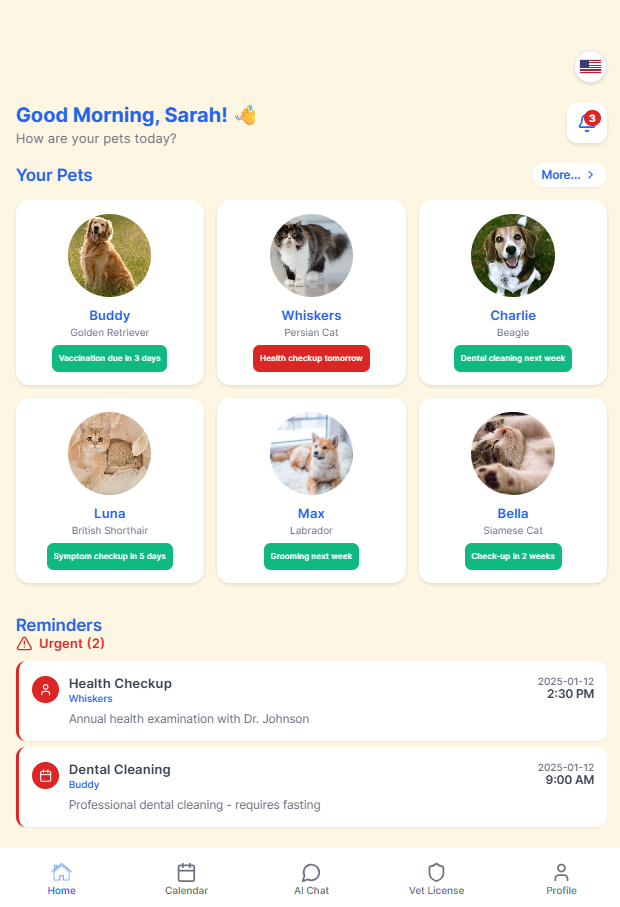
First section of Homepage
-
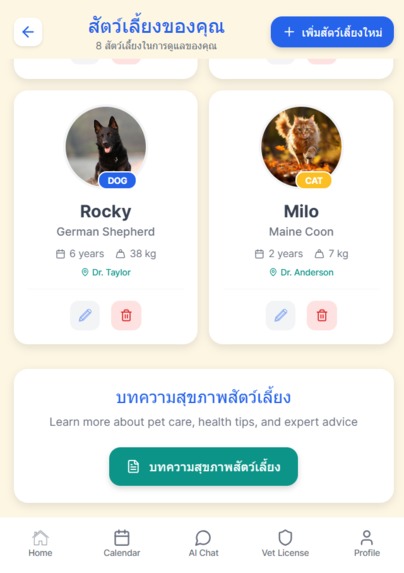
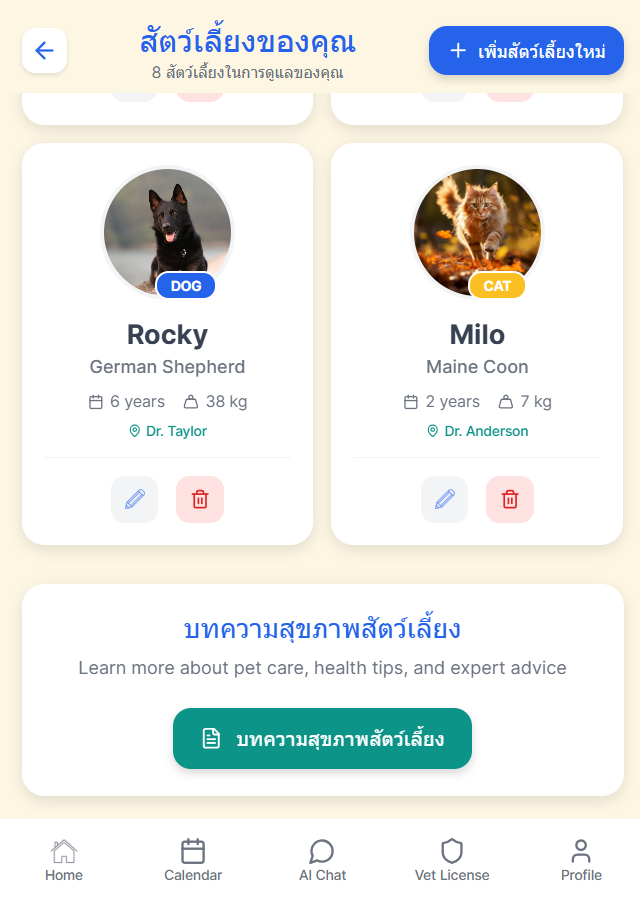
Pet profiles and Articles - Thai
-
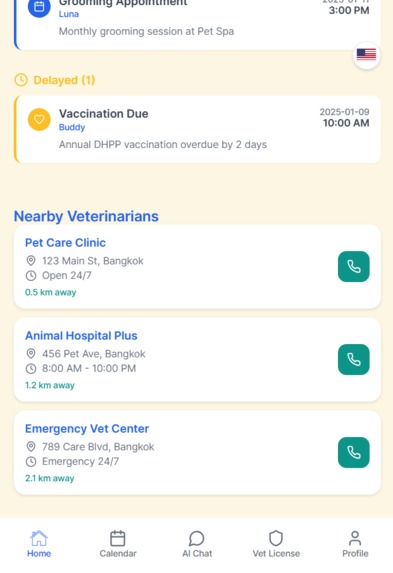
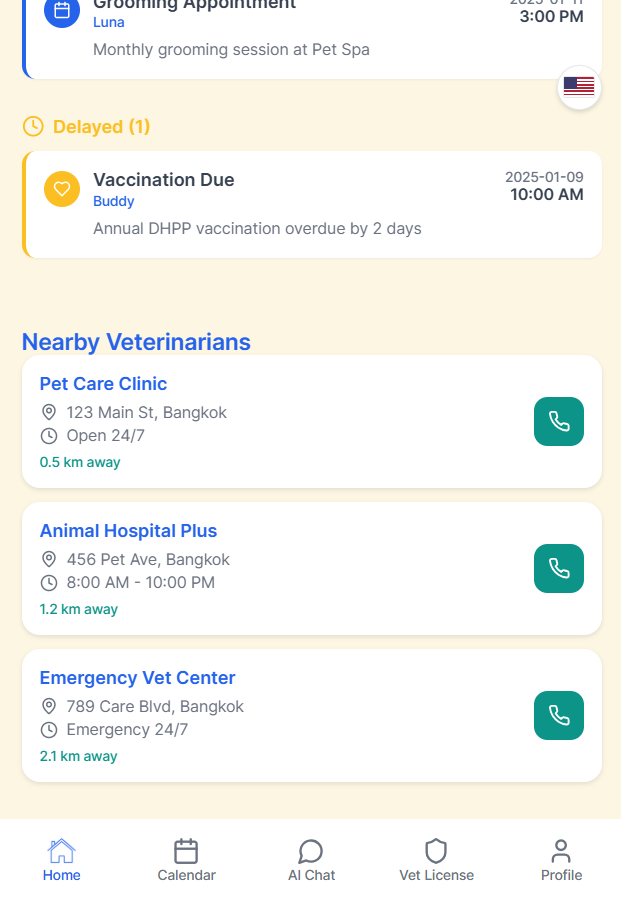
Nearby vet
-
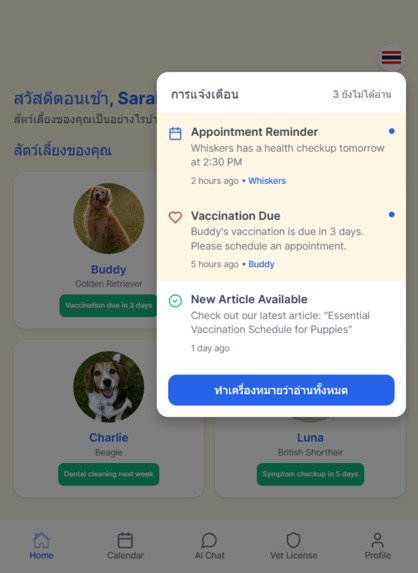
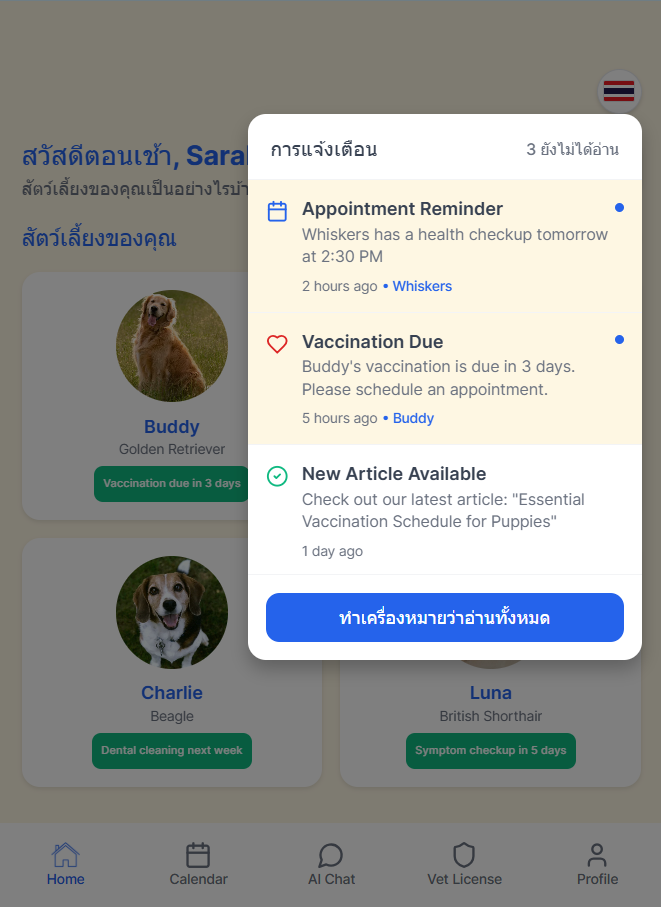
Notify
-
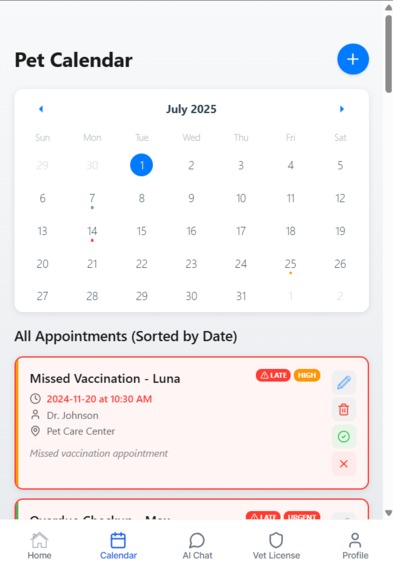
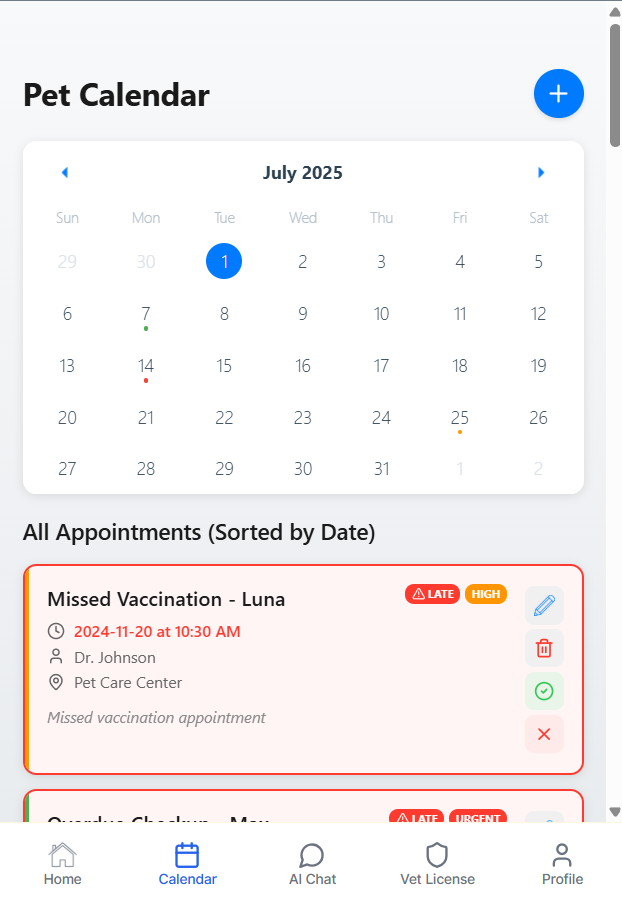
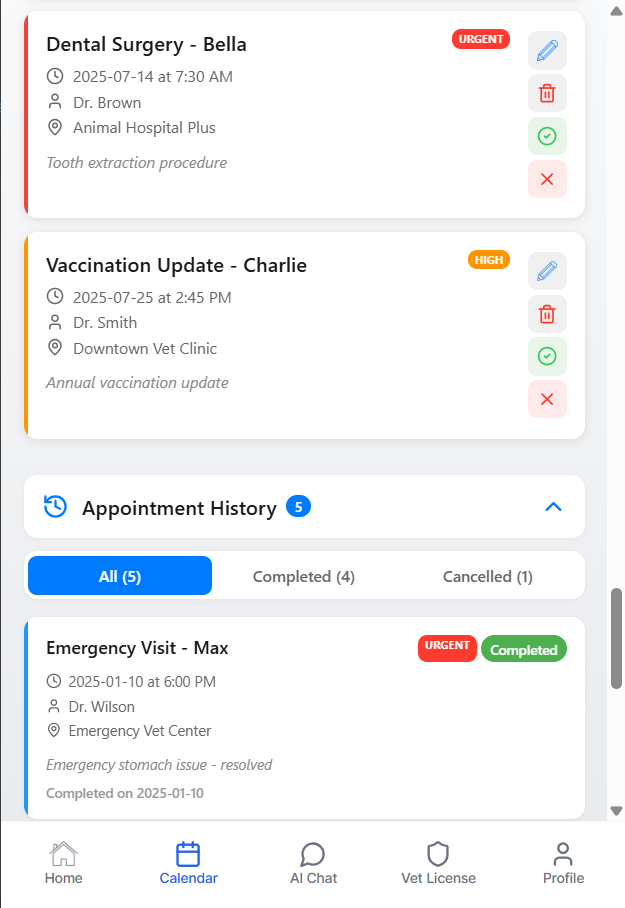
Calendar
-
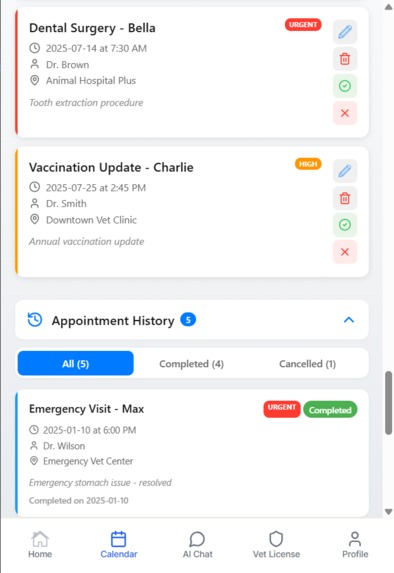
Appointments
-
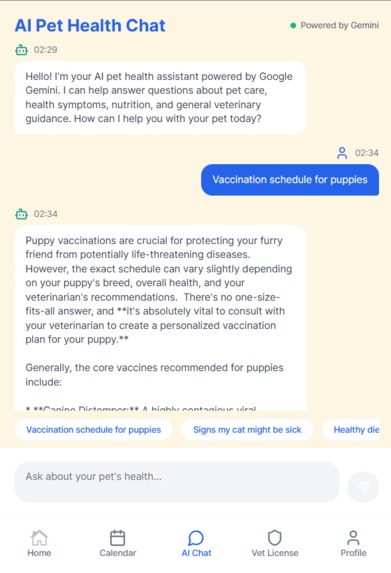
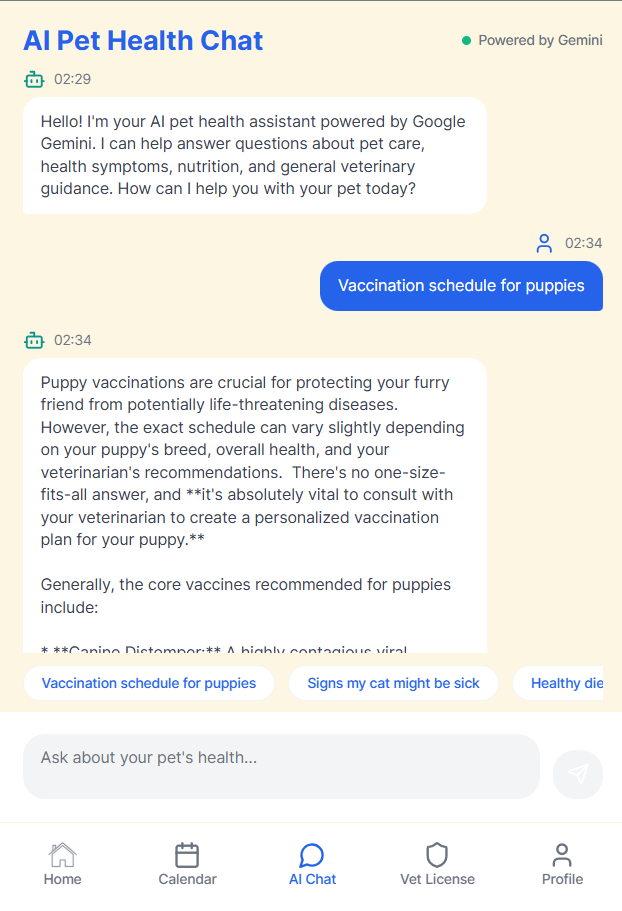
AI Chat
-
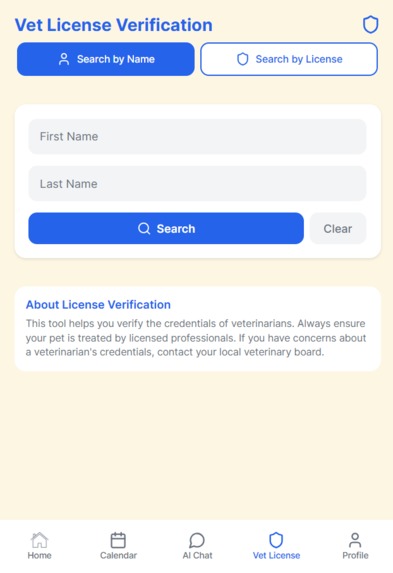
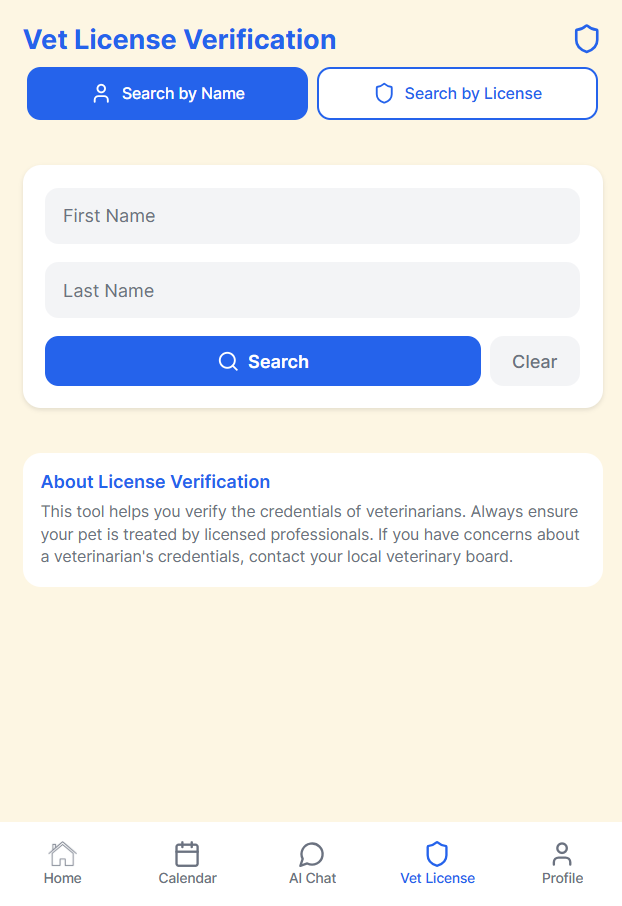
Vet verify
-
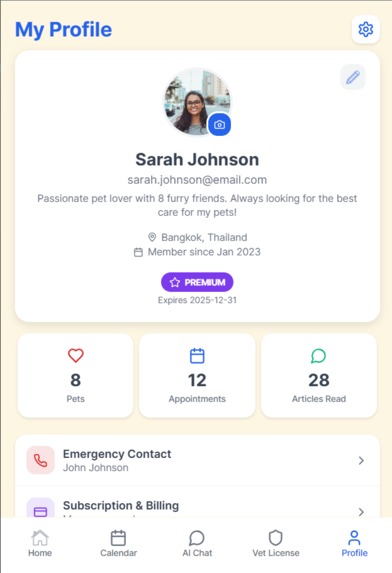
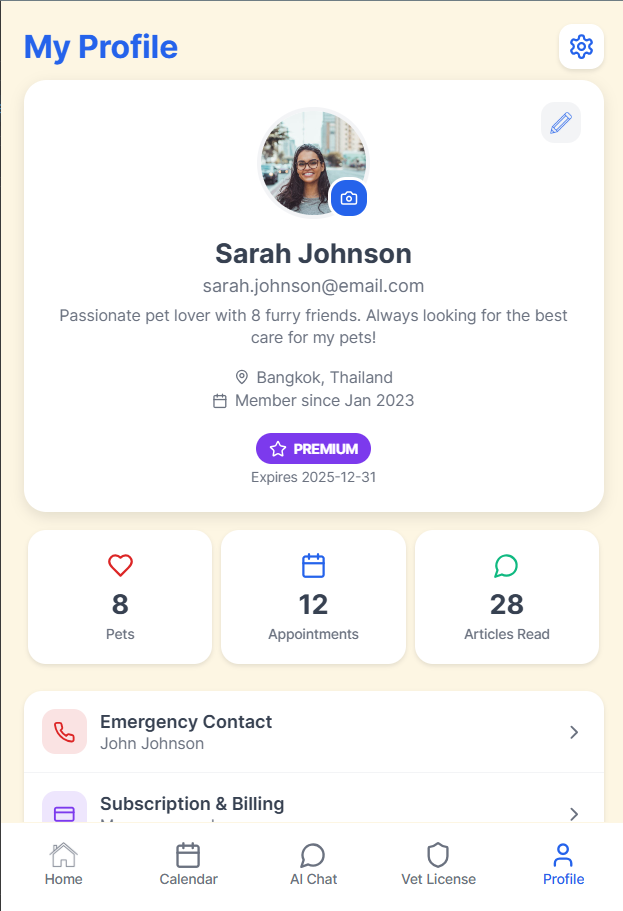
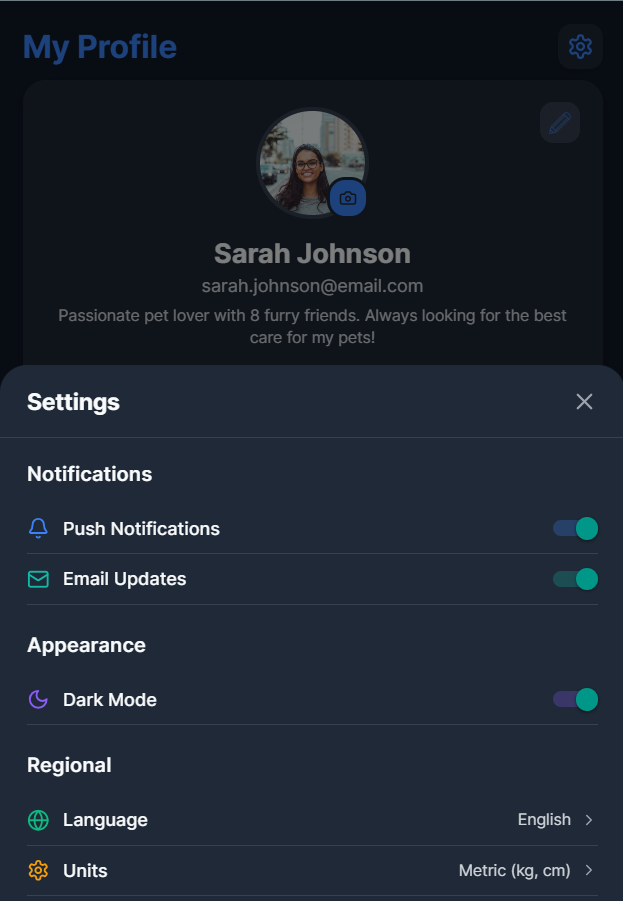
User Profile
-
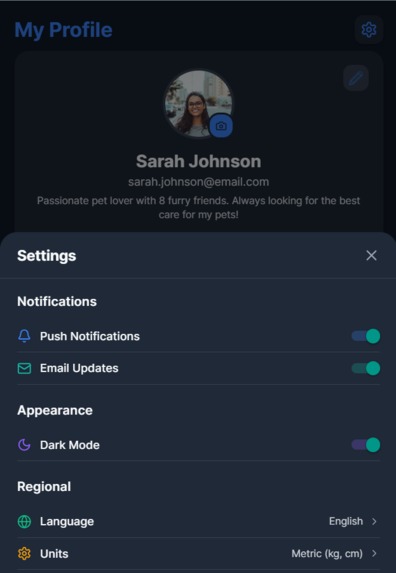
Dark mode
-
Paws Meds
Inspiration: A Pet Parent's Dream
The idea for this app sprang from my own experiences and anxieties as a pet owner. I've often found myself frantically searching for a vet's number during a late-night scare, or realizing a vaccination was due just a day too late. I imagined an app that could be a central hub for all my pets needs – a digital companion to their well-being. I envisioned features like:
Appointment Reminders: Never miss a vet check-up, grooming session, or medication dose again.
Emergency Vet Locator & Advice: Immediate access to nearby emergency veterinary clinics and basic first-aid advice for common pet emergencies, with the ability to directly call a vet through the app.
Health Records: A digital profile for each pet, storing their vaccination history, medical conditions, allergies, and medication details, easily accessible to share with new vets or pet sitters.
Growth & Activity Tracking: A way to log their weight, significant milestones, and even integrate with wearable pet trackers to monitor their activity levels.
Pet-Friendly Places: A directory of local pet-friendly parks, cafes, and shops.
I knew these features could provide immense peace of mind for pet parents like myself. The only problem? I don't know how to program a single line of code.
What I Learned: The Power of No-Code
My research into app development quickly led me to the world of "no-code" platforms. This was a revelation! I learned that tools like [Bolt.new] allow individuals with no programming experience to build fully functional applications using intuitive visual interfaces, drag-and-drop components, and even AI-powered prompts.
Specifically, I discovered that Bolt.new excels in:
AI-Driven Creation: Simply describing what I wanted could generate the basic structure of the app. This was mind-blowing – it felt like the AI was truly understanding my vision.
Rapid Prototyping: I could quickly build and test ideas, iterating on the design and functionality without getting bogged down in complex coding.
Full-Stack Capabilities: While I initially thought of just a front-end interface, Bolt.new’s ability to handle backend tasks, run Node.js servers, and even integrate with databases meant I could create a truly comprehensive app.
Ease of Deployment: The promise of one-click deployment meant I wouldn't have to navigate complex hosting configurations.
This knowledge empowered me, showing me that my dream of a pet care app wasn't as far-fetched as I thought.
How I Built My Project: My Journey with Bolt.new
My journey with Bolt.new began with a clear vision and a series of prompts.
1. Initial Prompting: I started by clearly articulating the core features. My initial prompt might have been something like: "Create a mobile app for pet owners that includes features for tracking vet appointments, emergency vet contacts, and storing pet health records. The app should have a clean, modern design."
2. Iterative Design: Bolt.new quickly generated a basic layout. From there, it was an iterative process. I used follow-up prompts to refine the UI/UX: "Make the appointment reminder section more prominent," "Add a button to directly call the emergency vet," "Create separate profiles for multiple pets," or "Incorporate a calendar view for appointments." The live preview feature was invaluable, allowing me to see changes in real-time.
3. Data Management: For health records and appointment data, I needed a way to store and retrieve information. I prompted Bolt.new to set up a simple database structure for pet profiles, including fields for name, breed, age, vaccination dates, and medication history.
4. Integration Exploration: While I didn't get to full integration with external APIs in this initial build, I explored the potential for features like GPS integration for vet locators. Bolt.new's ability to handle backend tasks and API integration showed me this was feasible for future iterations.
5. User Flow Testing: I constantly tested the app's flow as if I were a user. Could I easily add a new appointment? Was the emergency contact clear? This helped me identify areas for improvement and guide my prompts for refinement.
Challenges I Faced: Learning and Adapting
While Bolt.new significantly lowers the barrier to entry, it wasn't without its challenges:
1. Specificity of Prompts: Early on, I realized the importance of being extremely specific with my prompts. Vague instructions sometimes led to unexpected or generic results. Learning to break down complex ideas into smaller, clearer prompts was a skill I developed. For instance, instead of "make it look good," I'd say "change the primary button color to #FF7F50 and use a sans-serif font."
2. Understanding Platform Limitations (and Workarounds): While powerful, no-code platforms do have limitations compared to custom coding. There were moments where a specific design element or a very complex logical flow wasn't directly achievable through simple prompts. This required me to think creatively about workarounds or simplify certain functionalities. For example, a highly interactive growth chart might have been too complex for a direct prompt, so I settled for a simpler data entry and display.
3. Learning the "No-Code Way of Thinking": Even without code, there's a certain logic to how these platforms operate. Understanding how components interact, how data flows, and the available customization options required a new way of thinking about app architecture. It was less about writing code and more about assembling building blocks intelligently.
4. Backend vs. Frontend Nuances: While Bolt.new handles both, understanding the distinction and how data would be stored and retrieved for features like health records still required some foundational understanding of databases and data structures, even if I wasn't writing SQL queries.
Despite these challenges, the ability to see my ideas come to life without a single line of traditional code was incredibly rewarding. My pet care app, built with Bolt.new, is a testament to how technology can empower anyone, even an animal lover with no programming background, to create solutions that make a real difference in our daily lives and for the well-being of our beloved pets.
Accomplishments that I'm proud of: Empowering Pet Care with No-Code
As someone who loves animals deeply but has no programming background, the idea of building a tech solution for my pets always felt like an impossible dream. My vision was clear: an app to remind me of appointments, provide emergency vet contacts, and offer basic pet advice. The biggest hurdle was my complete lack of coding knowledge. That's where Bolt.new came in, and with its help, I've achieved things I truly didn't think were possible.
Here are the accomplishments I'm most proud of:
1. Bringing a Complex Vision to Life Without Writing a Single Line of Code My absolute proudest accomplishment is creating a fully functional pet care application from scratch, without writing a single line of traditional code. Before discovering Bolt.new, this seemed like science fiction. I had detailed ideas for features like:
Automated appointment reminders for vet visits and medications.
A quick-dial emergency vet locator with integrated first-aid tips.
Digital health profiles for each of my pets, storing vaccination records and medical history.
Translating these complex concepts into a tangible, interactive app using only natural language prompts and visual tools feels like a superpower. It proved that my ideas weren't limited by my technical skills.
2. Gaining a Deep Understanding of App Development Principles While I didn't write code, the process of building with Bolt.new forced me to think like a developer. I learned about:
User experience (UX) design: How to make the app intuitive and easy to navigate for other pet owners.
Data structuring: How to organize information (like pet profiles, appointment dates, and vet contacts) so it's easily accessible and manageable.
Iterative development: The importance of building in small steps, testing, and refining based on feedback (even if that feedback was just my testing!).
This newfound understanding of app logic and design principles is incredibly empowering. It's not just about the app itself, but the knowledge I gained along the way.
3. Creating a Practical Solution That Provides Real Peace of Mind The most rewarding accomplishment is knowing that the app I built genuinely addresses a need for pet owners. I've personally experienced the relief of having all my pet's health information at my fingertips, or receiving a timely reminder for a crucial vaccination.
The emergency contact feature is a source of immense peace of mind, knowing that in a crisis, I can quickly find and contact a vet.
The organized health records mean I'm always prepared for vet visits, able to share accurate information instantly.
This app isn't just a project; it's a tool that makes a real difference in the daily lives of pet parents, including my own. That practical impact is something I'm incredibly proud of.
4. Overcoming Technical Challenges Through Prompt Engineering Even with a no-code platform, there were moments when I hit a wall. A specific layout wasn't quite right, or a data flow wasn't behaving as expected. My accomplishment here was learning to "prompt engineer" effectively. Instead of getting frustrated, I learned to:
Break down problems into smaller, more specific requests for the AI.
Experiment with different phrasings to achieve the desired outcome.
Understand the nuances of how the AI interprets my instructions.
This problem-solving skill, applied through natural language, allowed me to refine the app significantly and achieve a polished, user-friendly result.
What's next for Paws Meds - Pet Health Care
My immediate goal was to create a tool for practical, day-to-day pet management and emergency preparedness. Now that I've achieved that, the next phase involves enhancing its capabilities, deepening its intelligence, and fostering a stronger community.
1. Enhanced AI-Powered Features for Proactive Care Currently, the AI helps with the app's creation. The next step is to integrate AI into the app's core functionality to make pet care even more proactive:
Symptom Checker & Preliminary Advice: While not replacing a vet, an AI-powered chatbot could help pet owners describe symptoms and offer immediate, basic advice or suggest if emergency vet care is needed. This would leverage natural language processing (NLP) to understand queries and provide relevant information from a curated knowledge base.
Personalized Health Insights: Leveraging the collected health data (weight, activity, medication history), AI could analyze trends and offer personalized recommendations. For example, "Fluffy's activity levels have decreased by 15% this month – consider more playtime!" or "It looks like it's time to reorder Sparky's allergy medication."
Behavioral Anomaly Detection: If the app integrates with smart collars or home cameras (a future dream!), AI could analyze patterns in barking, scratching, or sleep, and alert owners to unusual behaviors that might indicate stress or health issues.
2. Integration with Smart Pet Devices (IoT) The rise of IoT (Internet of Things) devices for pets is a huge opportunity. Imagine the app becoming a central hub for various smart gadgets:
Smart Collars: Connect to smart collars to track GPS location, activity levels (steps, play time), and even basic vital signs (if the collar supports it). This data could feed directly into the pet's profile.
Smart Feeders/Water Bowls: Integrate with automated feeders to log meal times, portion sizes, and water intake. This would be invaluable for managing diet and detecting changes in eating habits.
Smart Litter Boxes: For cat owners, integration with smart litter boxes could track usage patterns, weight, and even alert to potential urinary issues based on waste analysis.
Remote Monitoring Cameras: While some cameras have their apps, integrating them could allow users to check in on their pets directly through my app, offering peace of mind when away.
3. Community Building and Social Features Pet owners love to connect and share experiences. The app could evolve into a vibrant community hub:
Pet-Friendly Service Directory: Expand the existing "Pet-Friendly Places" to include reviews and ratings from other app users for vets, groomers, dog walkers, and pet sitters.
Localized Pet Meetup Organizer: Allow users to create and join local groups for dog walks, playdates, or breed-specific gatherings.
Knowledge Sharing Forums: Dedicated sections where pet owners can ask questions, share tips, and offer support to each other, moderated to ensure helpful and accurate advice.
4. Telemedicine & Professional Consultations Given the growing trend of veterinary telemedicine, the app could facilitate:
Direct Vet Chat/Video Consultations: Integrate a secure messaging or video call feature to allow direct communication with veterinary professionals for non-emergency questions or follow-ups.
Referral Network: A vetted list of veterinarians who offer online consultations or are recommended by the app's community.
5. Monetization and Sustainability To ensure the app's long-term viability and allow for continued development, I would explore monetization strategies:
Premium Features: Offer advanced features like unlimited health record storage, priority emergency support, or detailed AI health analytics as part of a subscription.
Partnerships: Collaborate with pet food brands, pet insurance companies, or pet supply retailers for exclusive offers or integrated services.
Veterinary Practice Integration: Offer a tiered service where vet clinics can integrate their appointment systems directly with the app for seamless booking and record sharing.
The journey from idea to a functional app with Bolt.new has been incredibly empowering. The next steps involve pushing the boundaries of what a non-programmer can create, continuously adding value for pet owners, and ultimately fostering healthier, happier lives for our beloved animal companions.
Built With
- bolt.new
- expo.io
- gemini
- react-native


Log in or sign up for Devpost to join the conversation.